
Is There A Calmer Fall Walk In Illinois Than This Japanese Garden Full Of Koi And Waterfalls?
I only stopped because I needed a quiet hour away from the car and the kids needed to stretch their legs. A modest entrance off a regular Illinois road did not promise much.
Twenty minutes later, we were standing on a stone path, watching orange koi the size of house cats rise up to a waterfall’s edge while red maples glowed overhead. If your family craves a slow, peaceful fall walk that still keeps young eyes busy, this spot deserves a place on your autumn list.
A Twelve-Acre Japanese Garden in Northern Illinois
Picture twelve acres of ponds, streams, stone paths, and carefully shaped trees tucked into a regular neighborhood on the east side of Rockford. Anderson Japanese Gardens sits on Spring Creek Road, and from the parking lot you would never guess how much calm waits past the entrance.
At its heart, the place is a seasonal landscape garden built in traditional Japanese style. Winding walkways lead past waterfalls, koi ponds, bridges, tea houses, and quiet benches.
There is also an airy farm-to-table cafe and a gift shop, so a visit can stretch from a short stroll into a relaxed half day.
For Illinois families, the location works well. Rockford is roughly 90 minutes to two hours northwest of Chicago on I-90, which makes the garden an easy day trip from the collar counties.
People driving from Madison, Milwaukee, or even Bloomington also find it within reach.
Visitors often describe the grounds as feeling far removed from city life, even though homes and roads sit just beyond the trees. That contrast is part of the charm.
You step off a busy street, and within a few turns of the path, the sound of falling water tends to take over.
Roots in a Portland Visit
Great gardens often begin with a single spark of inspiration. Here, the spark came when John Anderson visited the Portland Japanese Garden in Oregon and came home determined to create something similar in Illinois.
The result draws on classic pond and rock garden traditions dating back to 12th-century Japan. Those older design ideas focus on balance: water flowing past stones, paths that curve instead of running straight, and plants arranged so each turn reveals a new view.
Nothing feels rushed, and that is by design.
Craftsmanship plays a big role too. Several bridges linking sections of the grounds were handcrafted by Japanese artisans, and the buildings follow traditional architectural styles.
The garden has earned recognition for how authentic its design and details feel, which is impressive for a spot surrounded by Midwest corn and soybean country.
Kids may not care much about design history, but parents might enjoy pointing out little things. Why does the path bend here?
Why is that rock placed right beside the stream? Turning the walk into a gentle guessing game can help curious children notice how every piece was chosen on purpose, and it gives the stroll a bit of storytelling along the way.
Koi Feeding at the Pond’s Edge
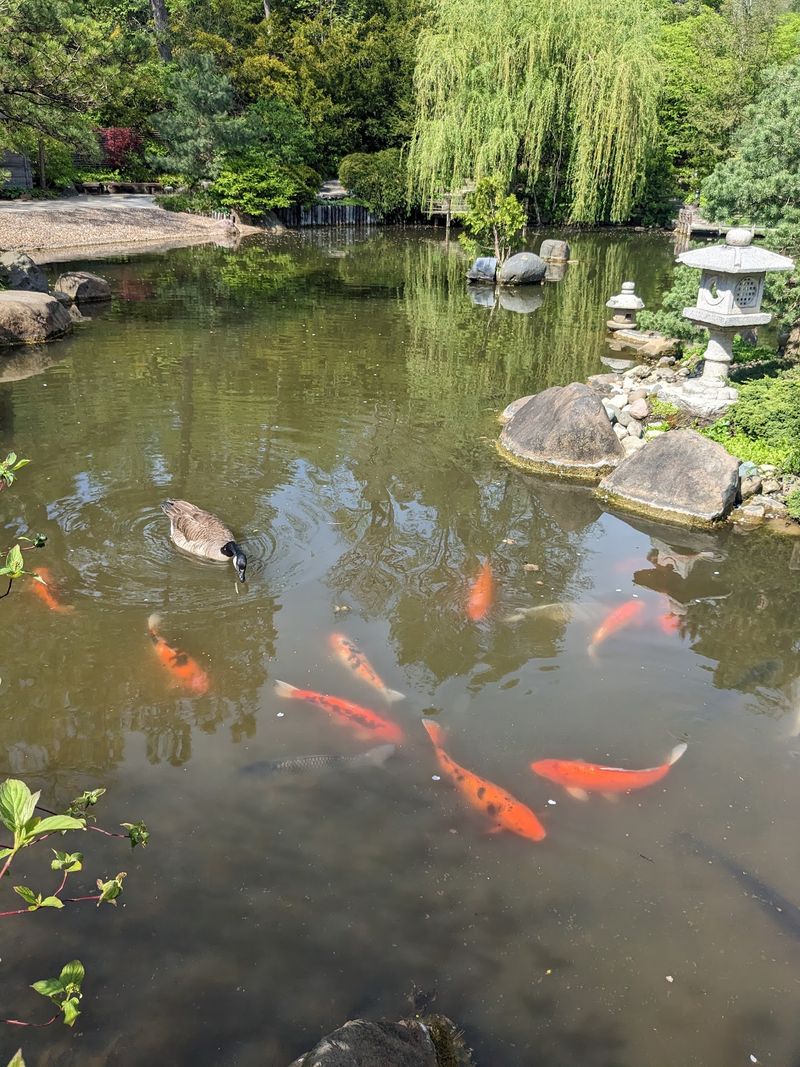
Ask any child what they remember afterward, and the answer will probably be the fish. The koi here are huge, with bright orange, white, and gold patterns, and they swim right up to the surface when they sense a snack.
Fish food is sold when you buy tickets, and visitors report it costs about a dollar a bag. Many families recommend grabbing one bag per person so nobody has to share.
Prices can change, so it helps to check at admissions.
Once you toss a few pellets, the water tends to churn with open mouths. Turtles often join in, and ducks sometimes paddle over to see what the fuss is about.
Visitors frequently mention how entertaining it is to watch the whole crowd of creatures compete for a bite.
A quick tip for parents of little ones: the ponds and creeks sit close to the paths, and some edges are low. Holding hands or staying right beside toddlers during feeding time is a smart idea.
Garden rules also ask that children be supervised. With a bit of care, this simple activity can easily become the highlight of the trip, and it costs less than a snack at a gas station.
Waterfalls and Soft Streams
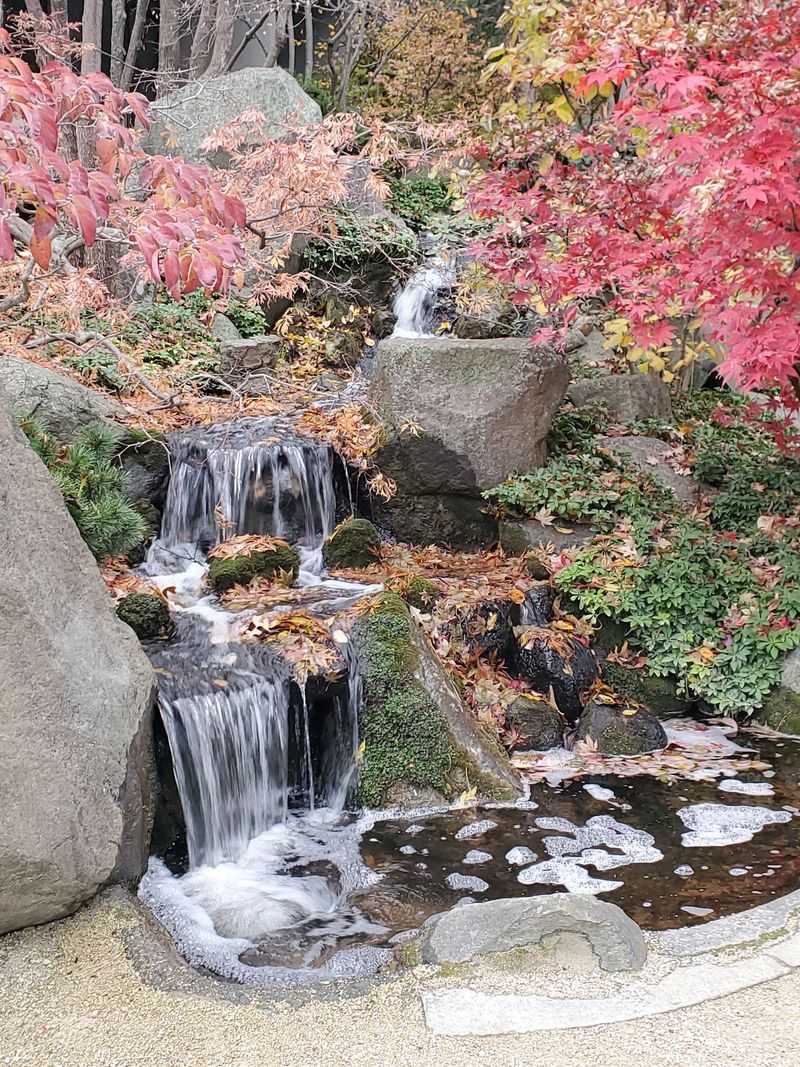
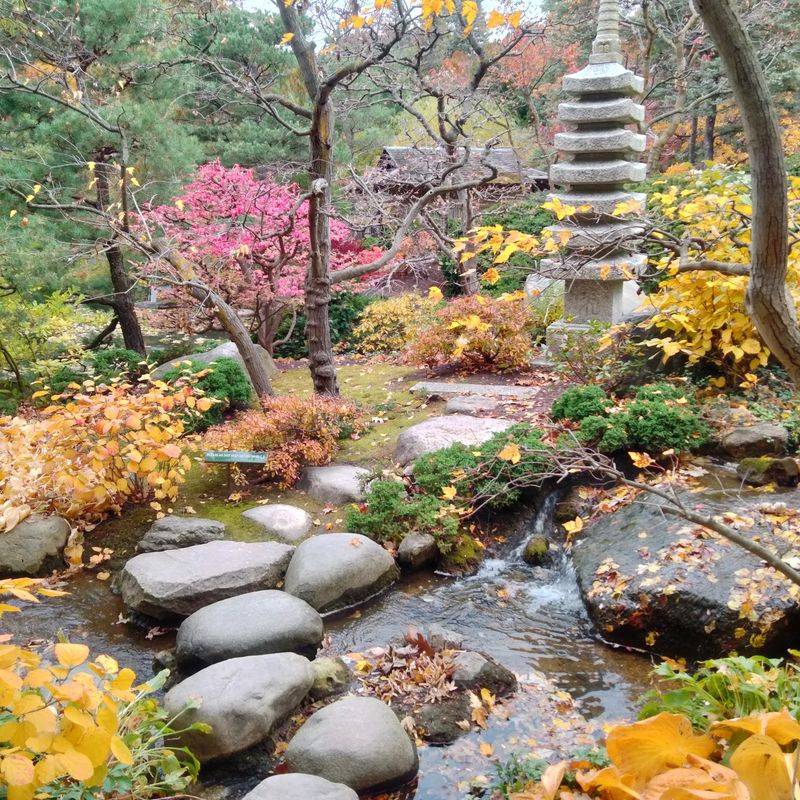
Water sets the rhythm of the whole walk. Waterfalls tumble over stacked stones, streams slide under bridges, and ponds collect everything into still, mirror-like pools that reflect the trees above.
Visitors often say the sound is what relaxes them most. Rather than one loud feature, the garden offers several falls of different sizes.
Some are gentle trickles over mossy rocks, while others spill in wider sheets that create a steady, soothing rush.
In autumn, the view gets even better. Fallen maple leaves drift along the streams, and red and gold branches hang over the falls.
Photographers tend to linger at these spots, since the mix of moving water and fall color makes for striking pictures without any editing.
Families can make the waterfalls a sort of scavenger hunt. How many can your kids count on the loop?
Which one is the loudest? Which one has a bridge nearby?
These small questions keep younger walkers moving forward without complaining about tired legs.
One visitor note worth passing along: some road noise can reach the outer parts of the grounds. Deeper inside, though, the falling water usually covers it, and the sound of the street fades away.
Japanese Maples in Autumn Color
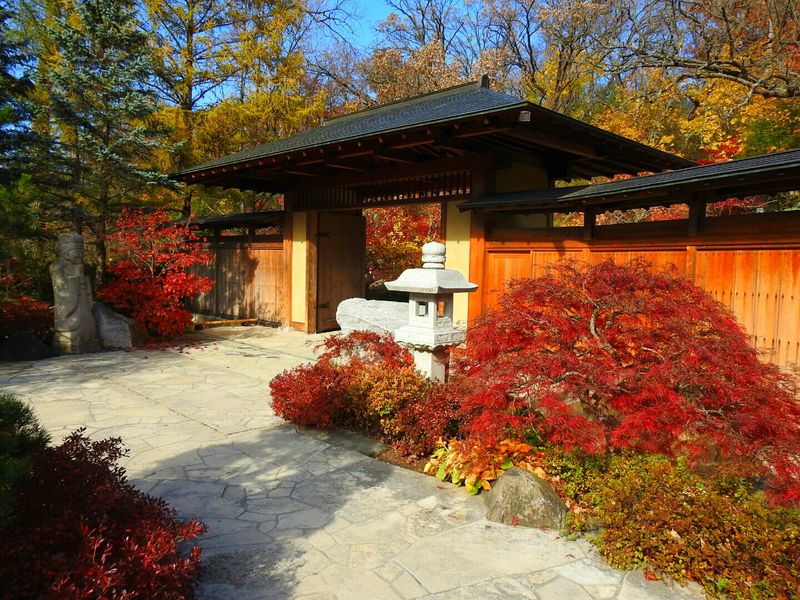
Late September is when the first hints show up. A few leaves on the Japanese maples blush pink at the tips, and by early to mid-October, many trees usually reach their peak shades of crimson, orange, and gold.
Timing depends on the weather each year, so checking ahead before you drive is wise. A warm stretch can delay color, while a sudden cold snap may speed things along.
One late-September visitor noticed colors just starting to turn during a very hot day, so early fall can still feel summery.
Compared with the big forest views at Starved Rock or Matthiessen, the color here feels more personal. Instead of hillsides of trees, you get single maples placed beside ponds, bridges, and lanterns, almost like paintings arranged along the path.
Visitors who come near the end of the season describe bright blue skies over the last bursts of autumn. Since the garden typically closes in mid-November, late October and early November can offer a final chance to catch the show.
Pack layers for the kids. Northern Illinois fall mornings can start chilly and warm up fast, and shady spots near the water often feel cooler than the parking lot.
Handcrafted Bridges and Traditional Buildings
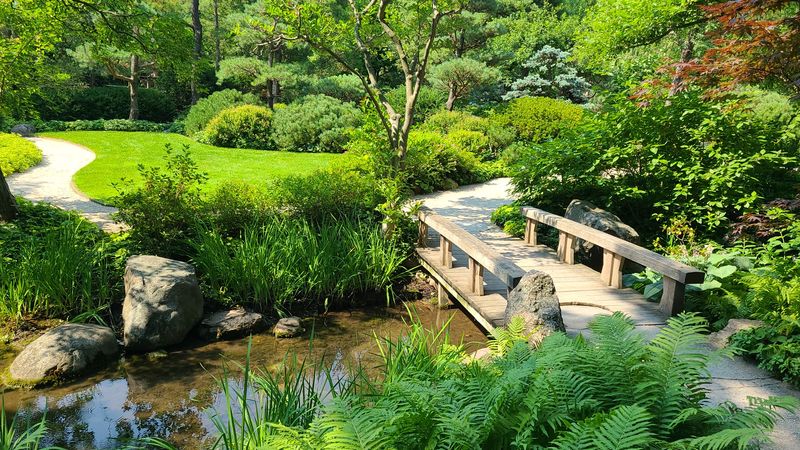
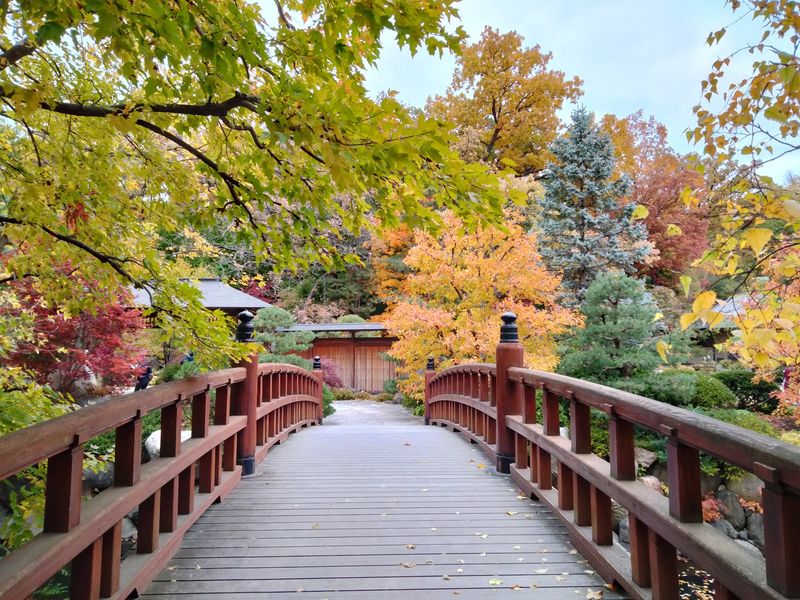
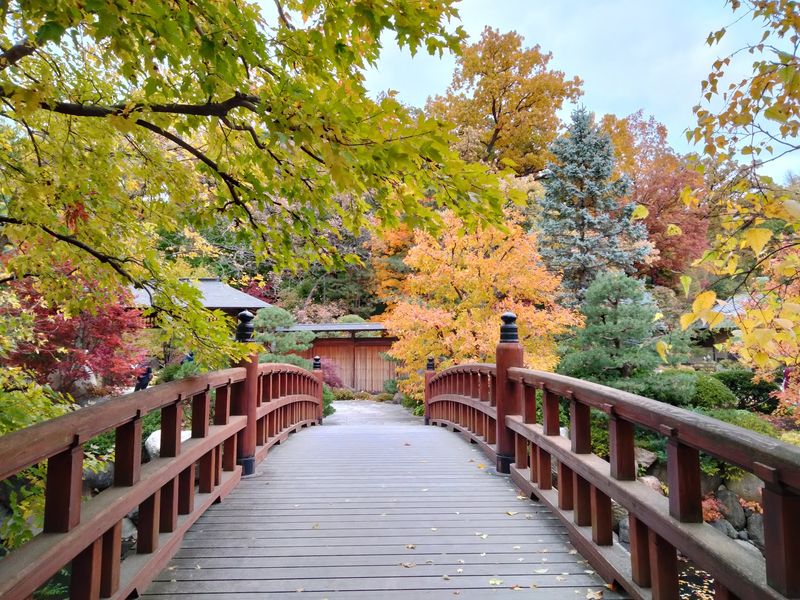
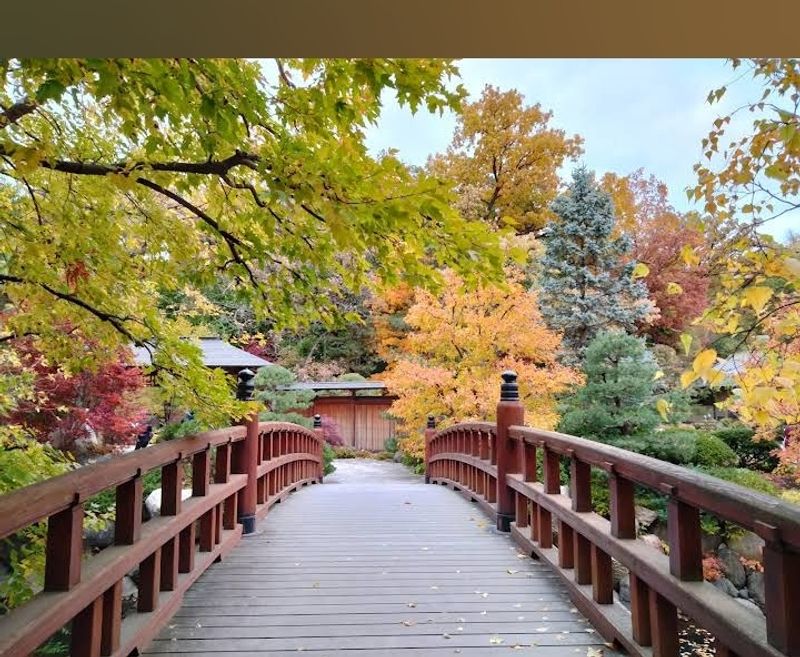
Wooden bridges arch over streams all across the grounds, and each one connects a different section of the garden. Japanese artisans built them by hand, which shows in the smooth curves and careful joinery.
Beyond the bridges, the architecture adds a sense of stepping into another place. A Sukiya-style guest house, a tea house, and a gazebo all follow traditional Japanese building styles.
The Sukiya style is known for simple, natural materials and quiet elegance, with the guest house design linked to 16th-century traditions.
Some visitors also mention unique buildings on the property used for yoga and meditation. These structures fit right into the calm mood and offer another reason to slow down.
History fans have a special treat in the fall. On select days, a combined tour pairs the guest house with the nearby Laurent House, designed by Frank Lloyd Wright.
That tour requires advance reservations, and dates change, so check ahead if it interests you.
For children, the buildings can spark questions about how people live and build in other countries. Pointing out the sliding panels, low roofs, and wood details might turn a simple walk into a small lesson in world cultures, no textbook required.
Ducks, Turtles, Geese, and Chipmunks
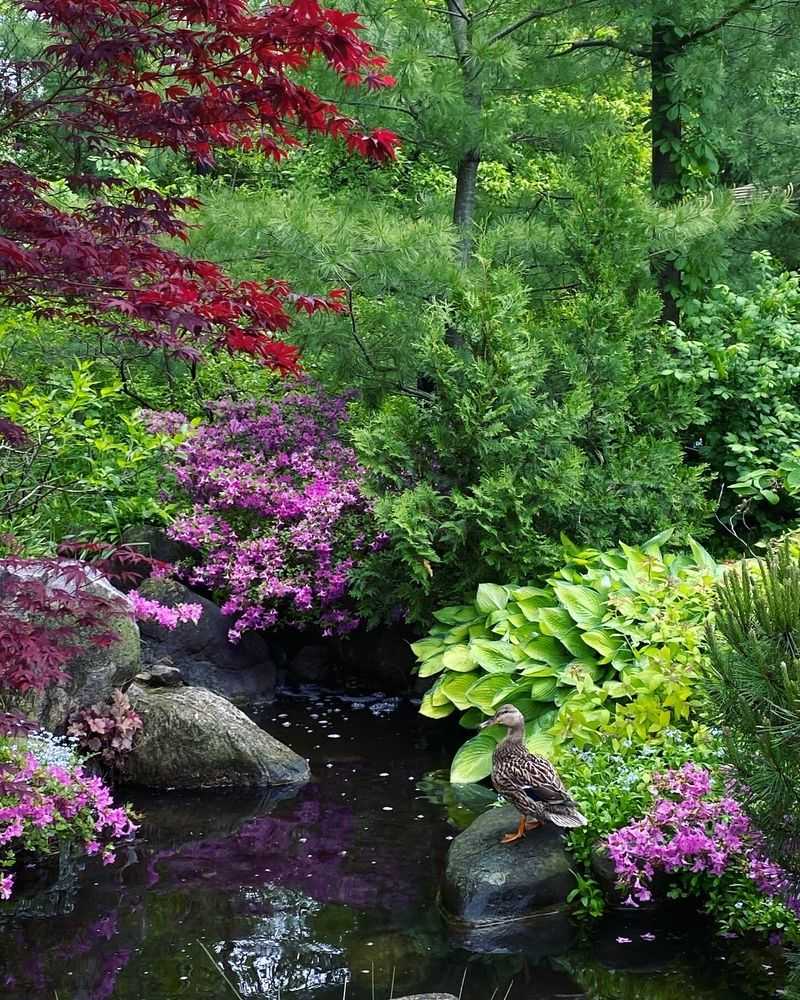
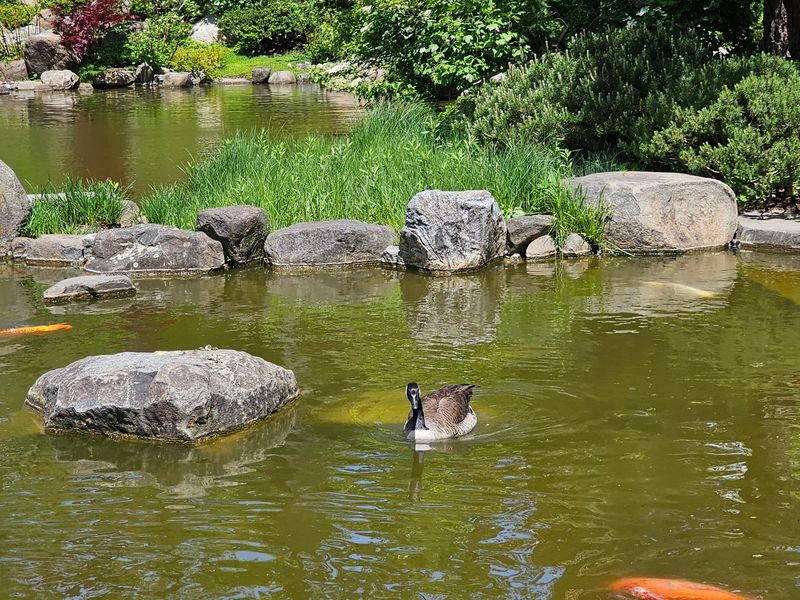
Not every star of the show is planted in the ground. Ducks paddle through the ponds, turtles sun themselves on rocks, geese wander the edges, and chipmunks dart across the paths as if they own the place.
Many visitors say the animals are just as fun as the landscaping. One common comment is that even the usually grumpy geese seem relaxed here, which surprises anyone who has dodged a honking goose at a Chicago-area park.
The ducks often join koi feeding time, so a bag of fish food can bring a whole parade of hungry visitors. Turtles may poke their heads up too, especially on warm afternoons.
Kids tend to squeal with delight when a turtle surfaces right beside a koi.
Chipmunks are harder to predict. They pop out from under rocks and vanish just as fast, which makes spotting one a small victory for younger explorers.
A simple way to add fun is to bring a list and let children check off each creature they find. Keep voices low, though.
The garden asks guests to talk quietly, and calm behavior usually means the animals stick around longer for everyone to enjoy.
Quiet Rules and a Peaceful Mood
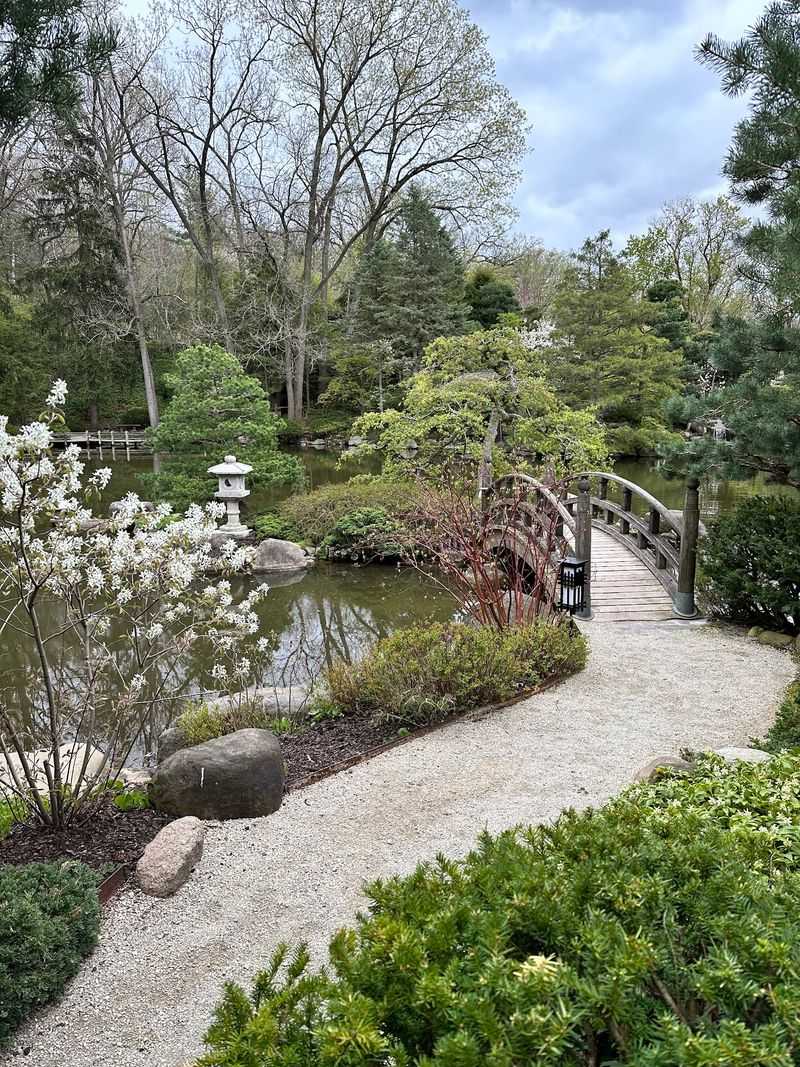
Muted phones, soft voices, and supervised kids. Those simple house rules shape the entire feel of the garden, and they help explain why so many visitors call it one of the calmest places they have walked.
Even on busy days, the layout spreads people out. One visitor described feeling almost alone on the paths, despite a good crowd, thanks to the curving routes and hidden corners.
Benches and shady nooks appear often, so there is always somewhere to pause.
Some guests use the quiet for journaling or reading. Others simply sit and listen to the water.
A few even suggest bringing a book and settling in for a slow morning or afternoon.
For families, the rules are worth talking over before you arrive. Explaining to kids that this is a whisper place, a bit like a library outdoors, can set expectations early.
Younger children who need to burn energy might do better with a playground stop first, then the garden.
Is it right for everyone? Travelers who love wide-open hiking trails may find it compact.
Families wanting a restful, beautiful outing often discover it fits their pace nicely.
Paths, Strollers, and Restrooms
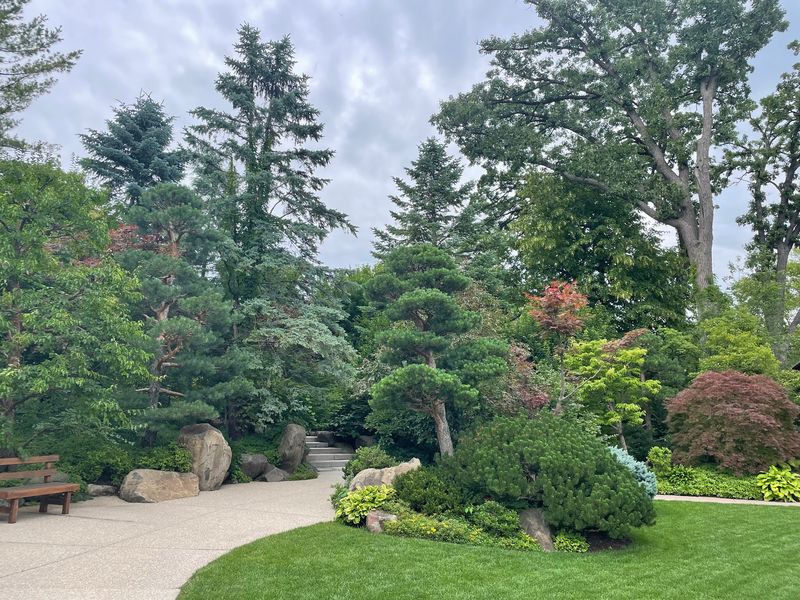
Stroller parents, good news first: much of the garden is navigable on wheels. Paths are made of pavement or crushed limestone, and staff can hand you a flat path tour map at admissions that avoids the trickier spots.
Off that route, expect some rocks, steps, and uneven ground. One visitor using a walker enjoyed the visit but mentioned being careful not to trip, so slower walkers should plan to take their time.
Restrooms show up in several places, both inside the main building and outdoors along the grounds. Families with potty-training kids will appreciate not having to hike back to the entrance every time.
Volunteers often walk the paths to help with directions or questions. Benches line the walkways too, giving tired legs frequent breaks.
Parking is free and sits close to the entrance, which makes unloading car seats and strollers easier. That short walk from the lot matters when you are juggling snacks, jackets, and a sleepy toddler.
One more safety reminder: water features sit right beside many paths. Keeping small children within arm’s reach near creeks and ponds tends to make the visit more relaxing for everyone, especially grown-ups.
Breakfast and Lunch at Fresco at the Gardens
Hungry after the loop? Fresco at the Gardens, the on-site restaurant, serves breakfast and lunch year-round, which means you can eat there even when the garden itself is closed for the season.
The cafe leans farm-to-table, with fresh, locally sourced dishes. Guests describe the food as unique and tasty, and the airy dining room feels bright and open.
Menus can shift with the seasons, so check ahead if you have a picky eater or specific needs.
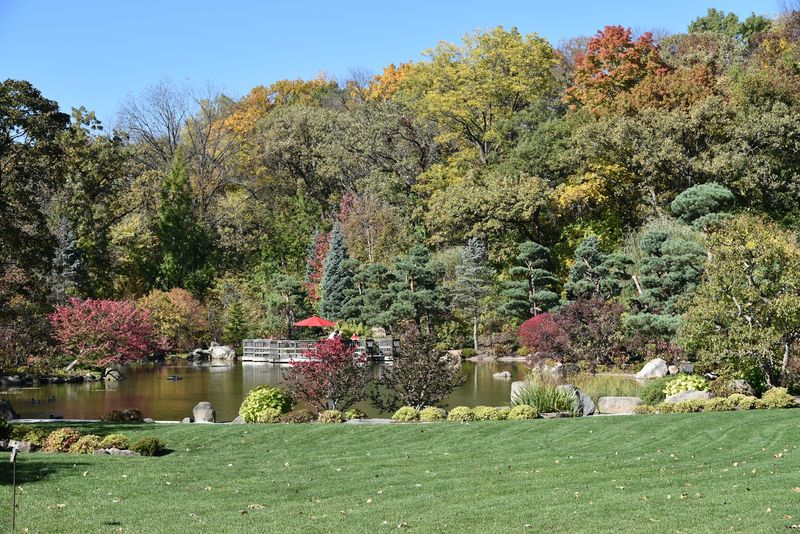
The real draw might be the deck. It overlooks the gardens, giving you a relaxed spot to eat while watching the trees and water.
On a crisp October day, sitting outside with a warm plate can feel like a small reward after walking.
Visitors who have eaten inside also recommend adding it to the trip. It turns a one-hour stroll into a fuller outing and gives kids a chance to rest before the drive home.
Beside the cafe, the gift shop sells souvenirs and is where many families pick up koi food. Browsing a few shelves while waiting for a table can keep little hands busy, as long as budgets are set in advance.
Hours, Admission, and Tour Options
Seasons matter here. The garden generally opens from May through mid-November, and hours during that stretch typically run 9 a.m. to 6 p.m. on weekdays and 9 a.m. to 5 p.m. on weekends.
Schedules can change, so confirm before heading out.
Admission prices differ slightly between weekdays and weekends. Children five and under get in free, a nice perk for families with preschoolers.
Some visitors feel the entry cost is a bit high for the size, while many others consider it reasonable, especially with free parking included.
Budget-minded families should note Donation Day. On the third Thursday of each month during the open season, regular admission is waived and guests are invited to give what they can toward upkeep.
Most people explore on a self-guided walk lasting about an hour to an hour and a half. Docent-led tours run Monday through Friday, and one first-time visitor felt the guided tour added a lot for only a couple of extra dollars.
During summer, programs like Garden Explorers, a music series, and a Japanese Summer Festival keep things lively. Fall visitors get the quieter, color-filled version instead.
A Gentle Verdict for Fall Families
Calm is hard to find on a fall weekend in Illinois. Orchards get crowded, corn mazes get muddy, and state park trails can fill fast when the leaves turn.
Anderson Japanese Gardens offers a different kind of autumn day. You trade hayrides for waterfalls, pumpkin patches for koi ponds, and busy crowds for quiet benches under glowing maples.
The walk is short enough for small legs, yet full enough to keep curious kids pointing at turtles and bridges.
It will not suit every family. Children who need to run and shout may find the quiet rules tough, and anyone expecting miles of trail might want more space.
For households hoping to slow down together, though, the fit tends to be excellent.
A simple plan works well. Arrive on a weekday morning in early to mid-October, buy a bag of fish food for each person, follow the flat path map if you have a stroller, and finish with lunch on the Fresco deck.
Pair it with other Rockford stops for a full day, or keep it simple and head home relaxed. Either way, the garden may just become your favorite quiet tradition each autumn.