
Walking Through Rhyolite’s Bottle House Feels Like Stepping Into A Nevada Postcard From 1905
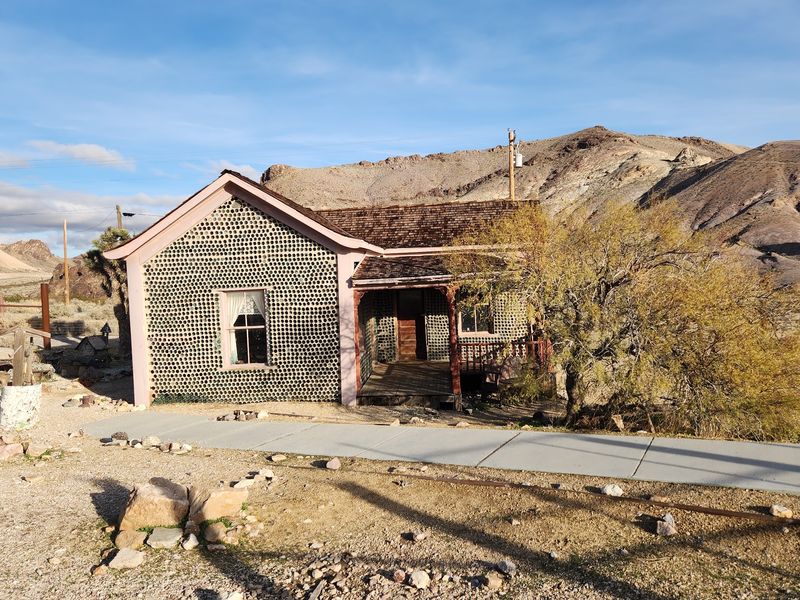
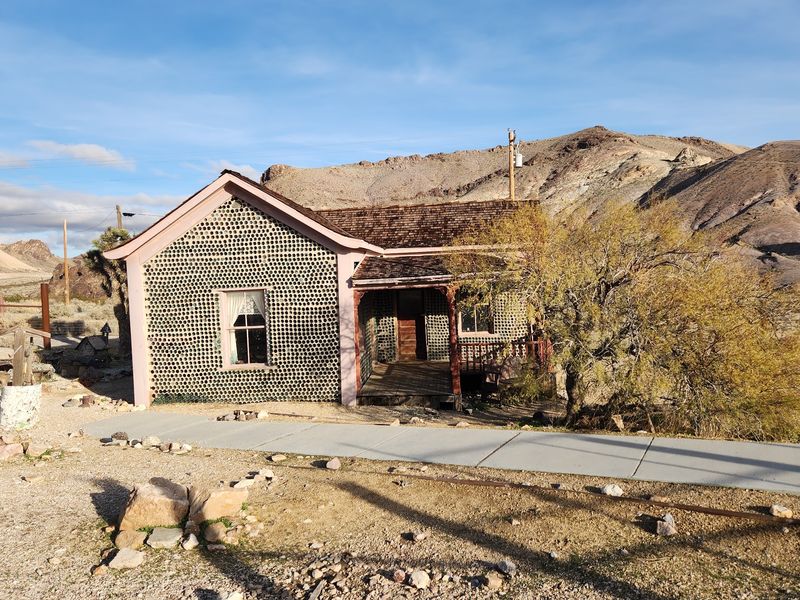
The plan was just to stretch our legs before the long drive home across southern Nevada. Then a little cottage came into view, and it glittered in the sun like it was covered in jewels.
Up close, the walls turned out to be made of old glass bottles pressed into mud more than a century ago. It costs nothing to see, and it turned a quick stop into one of the best free afternoons we have had in the state.
A Glass Cottage Four Miles West of Beatty
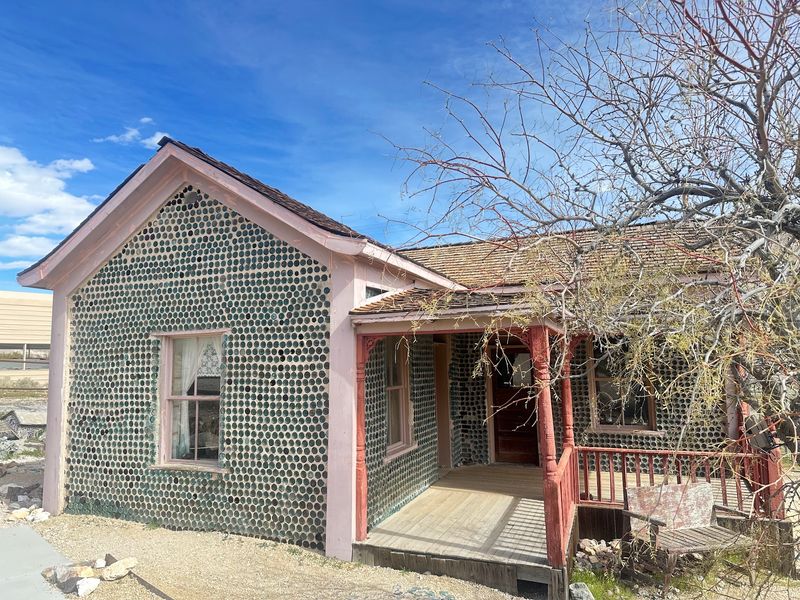
Picture a paved road running west out of Beatty on Highway 374, with brown hills rising on both sides. About four miles in, the ruins of an old gold camp appear, and among them sits a tidy little home that sparkles.
That home is the Bottle House, the best-known building at the Rhyolite Historic Gold Mining Town Site in Nye County.
The site is managed by the Bureau of Land Management, and it sits close to the eastern edge of a big national park that straddles the California line. Rhyolite itself is a true ghost town.
There is no ticket booth, no gift shop at the entrance, and no crowd of staff waiting to greet you.
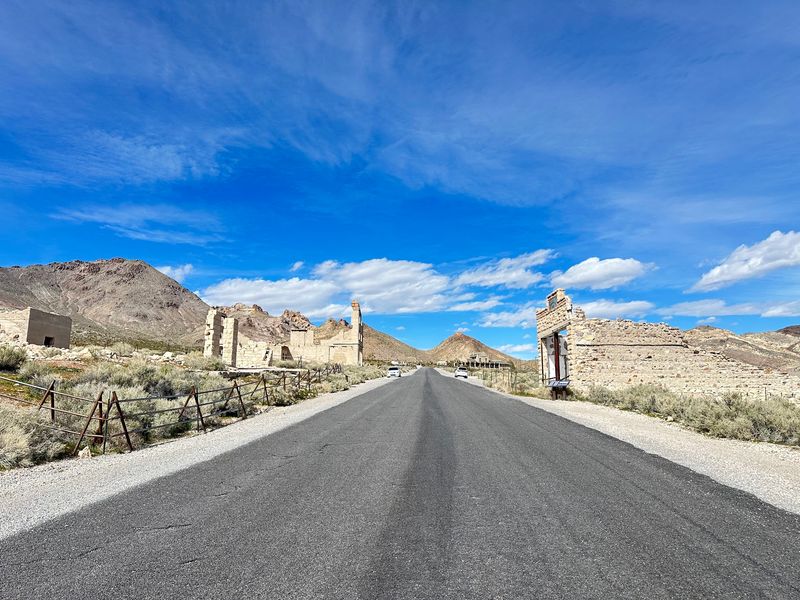
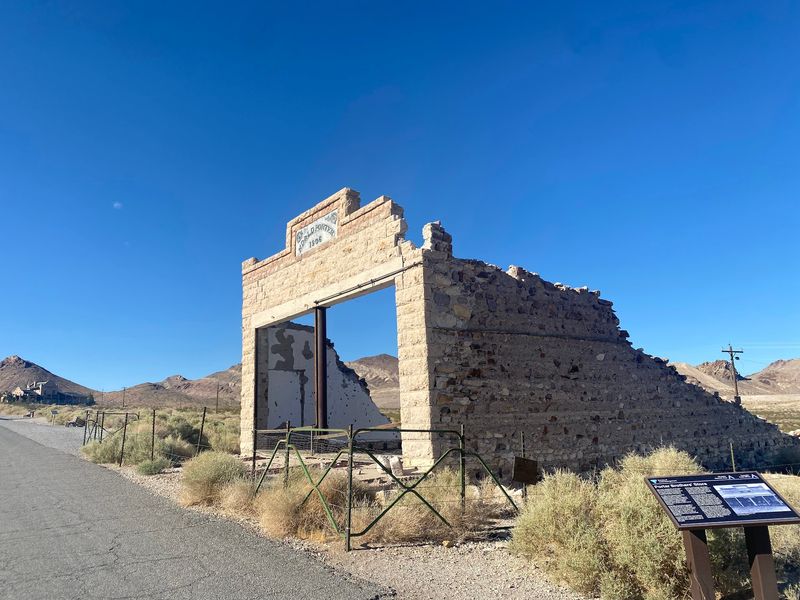
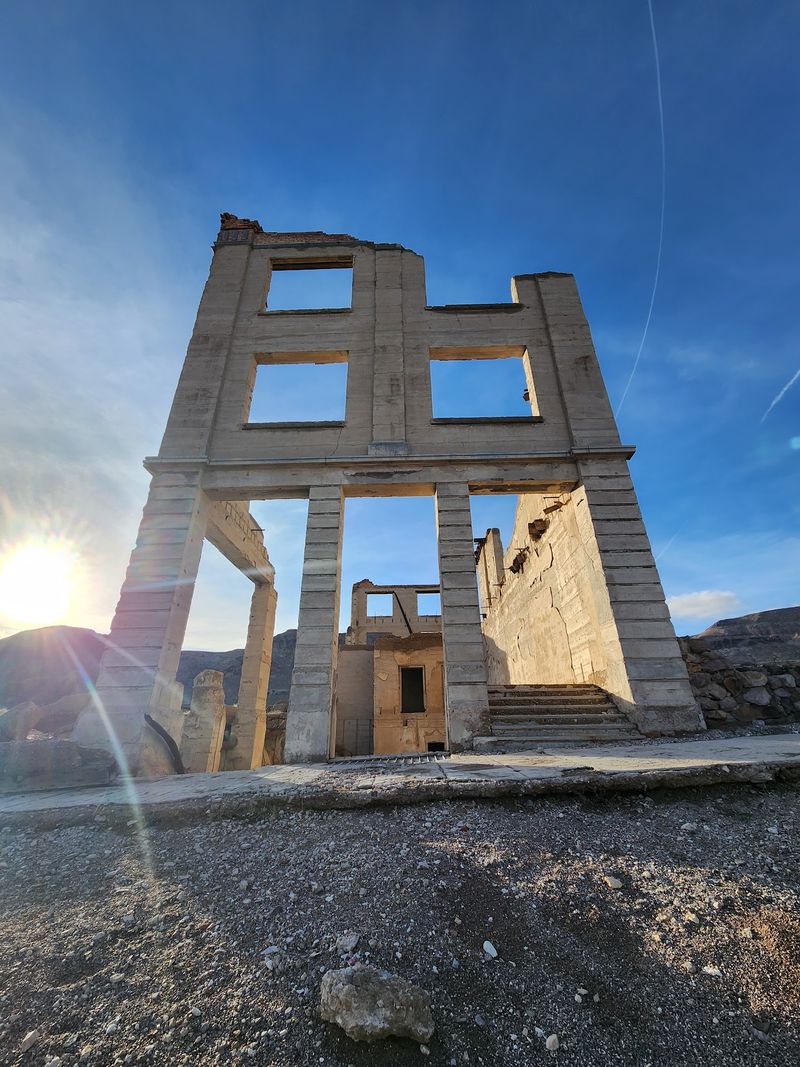
What you do get is a whole stretch of history laid out along the roadside. Crumbling stone walls, an old train depot, and the glass cottage all share the same quiet valley.
Travelers heading between Las Vegas and the park often pull in for a short break and end up staying much longer than they planned.
For Nevada families and retirees watching their budgets, the best part comes first. Entry is free, and the Bottle House alone can fill a good chunk of an afternoon.
The Boom Town That Built It
Gold changed everything here in 1905. Prospectors found promising ore in the hills, and almost overnight a camp of tents grew into a real town called Rhyolite.
By 1907, somewhere between 5,000 and 10,000 people lived in this valley.
Those residents were not roughing it the way you might expect. The town had electric lights, a water system, a school, and a hospital.
Shops, offices, and dozens of busy storefronts lined the streets, and a railroad depot connected the camp to the outside world.
Then the story took a sharp turn. A financial panic swept the country in 1907, and the mines around Rhyolite began shutting down one after another.
Families packed up and moved on to the next promising spot.
How fast did it empty? By 1920, only 14 people were counted as living here.
The grand buildings were left behind, and the desert slowly went to work on them.
Knowing that rise and fall makes the Bottle House feel even more special. It was built right at the start of the boom, when everyone believed Rhyolite would last forever.
Somehow, the little glass home outlasted almost everything around it.
Tom Kelly and His Unusual Building Plan
Most people slow down at 76. Tom Kelly, an Australian immigrant and trained mason, decided that was the perfect age to build a house in the middle of the Nevada desert.
His problem was simple. Good lumber was hard to find and expensive to haul into a remote mining camp.
Kelly reportedly joked about how tough it would be to make boards out of Joshua trees, the spiky desert plants that were about the only things growing tall nearby.
So he looked around for something else, and he found it in huge piles behind the town’s many businesses. Empty glass bottles were everywhere in a boom town, and nobody wanted them.
To a mason, those bottles looked a lot like free bricks.
Work began in September 1905 and wrapped up in February 1906. That is roughly five months of hands-on labor, mixing mud, setting bottles, and shaping walls one row at a time.
Standing in front of the finished house today, it is hard not to admire his grit. There is something heartwarming about an older craftsman turning trash into a home while younger folks rushed off to chase gold in the hills.
Walls Made From Tens of Thousands of Bottles
Count the round glass circles on just one wall, and you will give up fast. Estimates for the whole house run anywhere from about 30,000 to 51,000 bottles.
Kelly used whatever he could gather, including soda bottles, mineral water bottles, and old medicine bottles. He laid them on their sides with the bottoms facing out, then packed them together with adobe mortar made from local dirt.
Inside, the walls were plastered over so the rooms looked like any other home of the time.
From the outside, though, the effect is striking. When the sun hits the walls, the glass glows in shades of amber, green, and pale purple.
Kids tend to lean in close to spot the different colors and shapes.
There was also a practical reason behind the design. The hollow bottles reportedly trapped air and worked as a kind of insulation.
That may have helped keep the rooms cooler during scorching summers and a bit warmer on chilly desert nights.
Fun fact for the car ride: the Rhyolite Bottle House is considered the oldest and largest known bottle house in the United States. It is also called the best-preserved one in Nevada.
Porch, Gingerbread Trim, and a Path of Buried Glass
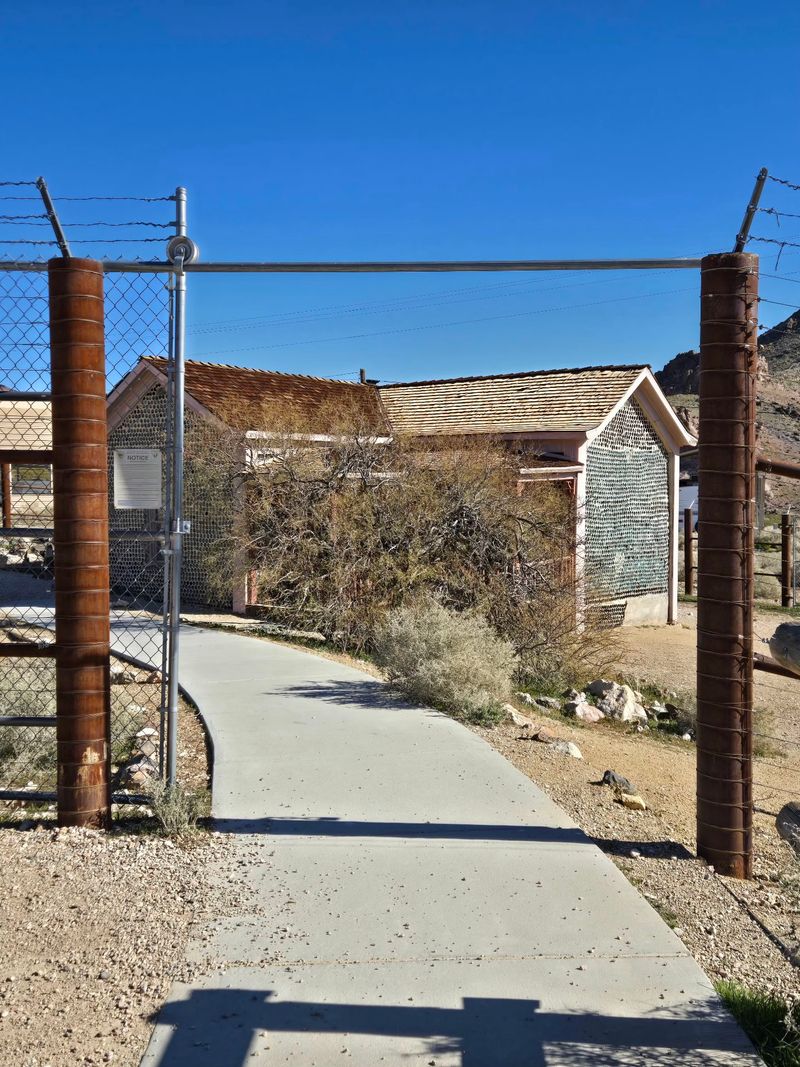
Here is a detail many visitors miss at first: even the front walkway is made of bottles. Kelly buried them in the ground so the path leading to the door shows little glass circles peeking up from the dirt.
The house itself has an L shape with three rooms. A covered front porch shades the entrance, which would have been a welcome spot to sit during a hot Nevada afternoon in 1906.
Look up along the roofline and you will notice decorative gingerbread-style trim. That fancy woodwork gives the home a cozy, almost storybook look.
It softens all that glass and makes the place feel less like an experiment and more like a real family home.
Put it all together, and the house feels like it belongs on an old postcard. The porch, the trim, and the glowing walls look much as they might have when the town was still humming.
Photographers often spend extra time here, moving around the fence to catch different angles. Early morning and late afternoon light can make the glass really shine.
Bring a phone or camera with plenty of storage, because you will likely take more pictures than expected.
A Five-Dollar Raffle and the Bennet Family
Imagine winning a whole house for five dollars. That is exactly what happened here, and it might be the most charming part of the Bottle House story.
After he finished building, Tom Kelly did not simply move in and stay forever. Instead, he raffled the house off, selling tickets for $5 each.
In a crowded boom town, that was a clever way to turn a lot of hard work into a nice payday.
The Bennet family ended up living in the house, and they stayed until 1914. By then, most of Rhyolite had already cleared out.
It is easy to picture them watching neighbors leave one by one while their glass home held steady against the wind and heat.
For grandparents visiting with grandkids, this chapter makes a great conversation starter. Ask the kids what they would do if they won a house in a raffle.
Would they stay in a town that was emptying out, or pack up and move on?
Little stories like this help history feel personal. The house was not just a curiosity.
For years, it was a real home where a family ate meals, slept, and made memories.
Movie Crews, Caretakers, and a Miniature Village
Hollywood arrived in 1925. Paramount Pictures saw the empty town as a ready-made movie set and restored the Bottle House, adding a new roof so it could appear in films like The Airmail.
That repair work may be one reason the house survived when so many other buildings crumbled. After the movie crews left, other people stepped in to look after it.
A caretaker named Louis Murphy and later the Tommy Thompson family ran the house as a small museum and roadside attraction.
The Thompsons added something fun: a miniature village built nearby. Travelers passing through could stop, look around, and learn a little about the old town.
It kept the house in use and kept visitors coming.
More recent help came in 2005. A restoration that year added another new roof and a hidden welded steel framework inside the walls.
You cannot see the steel, but it quietly helps hold the whole structure together.
So when you stand in front of the house today, you are seeing more than Kelly’s handiwork. You are also seeing about a hundred years of people who cared enough to keep this odd little home standing.
The View From Behind the Security Fence
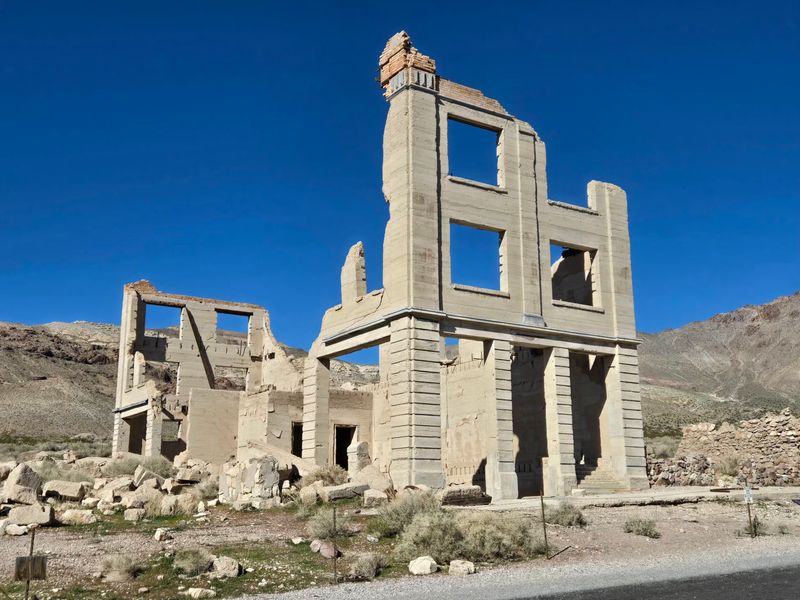
First-time visitors sometimes hope to step inside. The house is protected by a security fence, so everyone views it from the outside only.
That fence exists for a good reason. Over the years, vandals have damaged historic buildings across Nevada’s old mining camps.
Keeping people out of the Bottle House helps protect those fragile walls, which are more than a century old.
Still, you can see a lot from outside the fence. The porch, the trim, the glowing glass, and the buried-bottle walkway are all easy to spot.
Walking slowly around the perimeter gives you different views of the L-shaped layout and the way the walls meet at the corners.
Families with young kids may actually find the fence helpful. It keeps little hands from pulling at the glass and gives everyone a clear boundary.
Parents can relax a little while the children hunt for their favorite bottle colors.
Think of it like looking at a painting in a museum. You do not need to touch it to enjoy it.
Take your time, bring binoculars if you have them, and let your eyes wander over all those thousands of tiny glass circles.
Ruins Scattered Along the Main Road
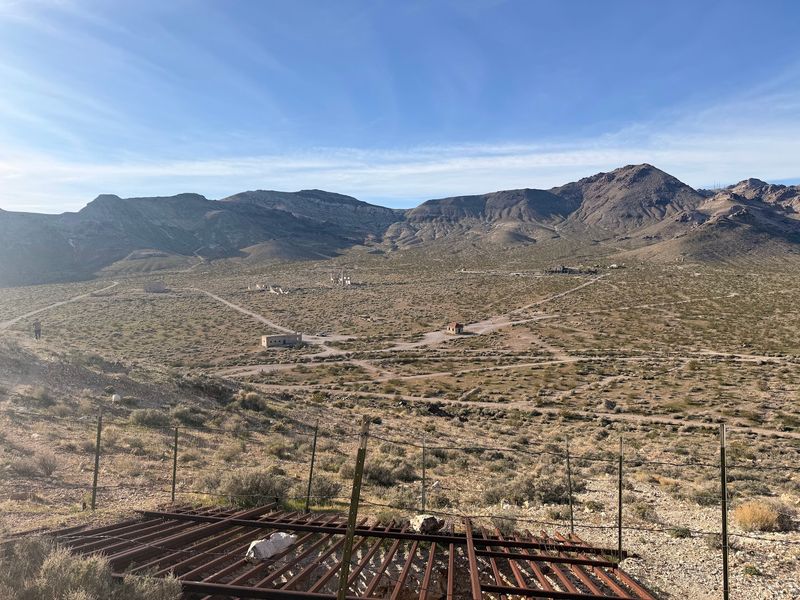
A surprise for many visitors is how much more there is beyond the Bottle House. Travelers often say they found far more to see than they expected.
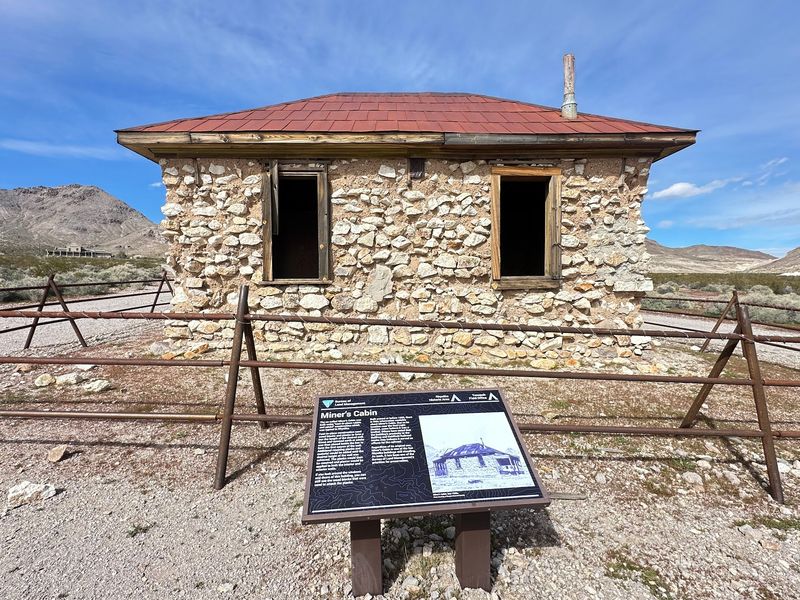
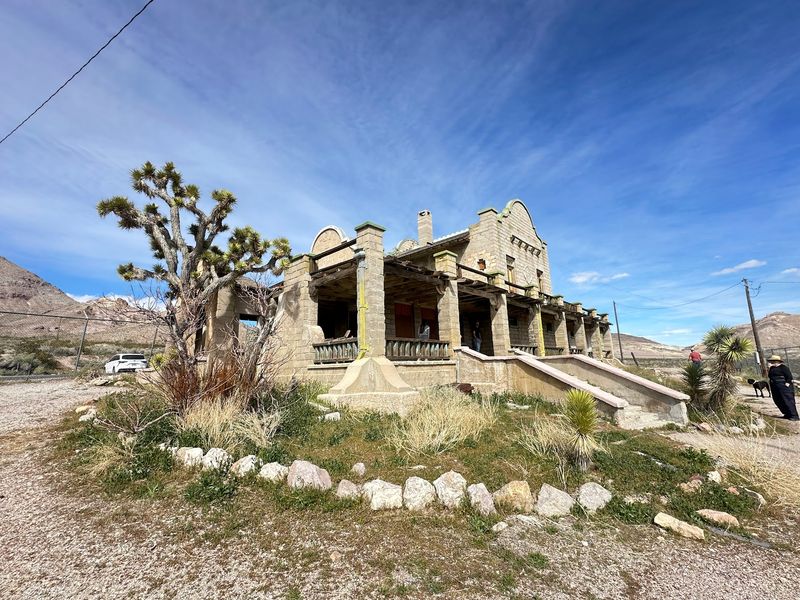
Remaining buildings line the main road, and more sites sit down slopes off to the side. The old train station is one of the best-kept structures in town.
It does have a chain link fence around it, which is open during the day, and plywood over the windows for safety, but its outline still tells a strong story about the town’s busy past.
Here is a smart tip from folks who have been there. The town is fairly spread out, so it can be easier to pull onto the shoulder at each spot of interest instead of parking once and walking everywhere.
That can help older visitors and little ones save energy in the heat.
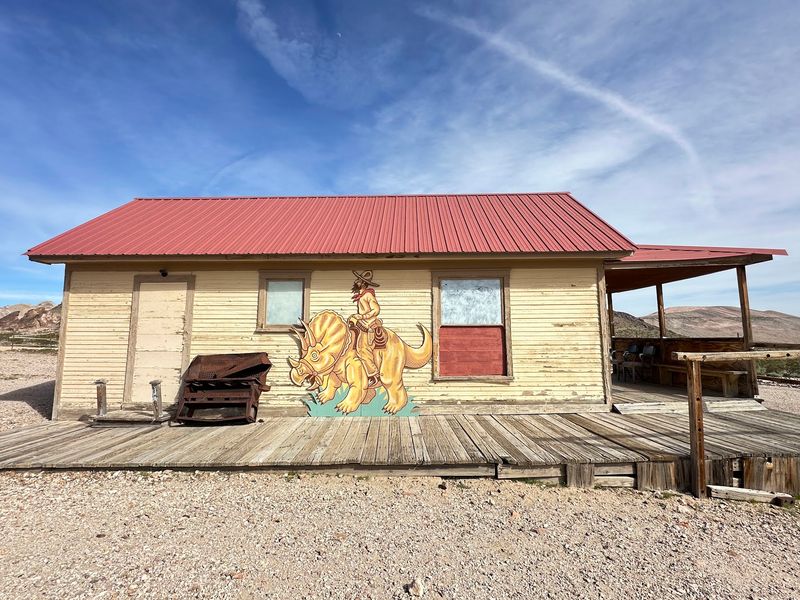
Each ruin shows a different piece of daily life. Some were shops, some were offices, and some were grand buildings meant to impress investors.
Wandering from one to the next, you start to piece together what the streets looked like in 1907. It is a bit like a treasure hunt, with history as the prize.
Helpful Signs, a Small Museum, and Restrooms
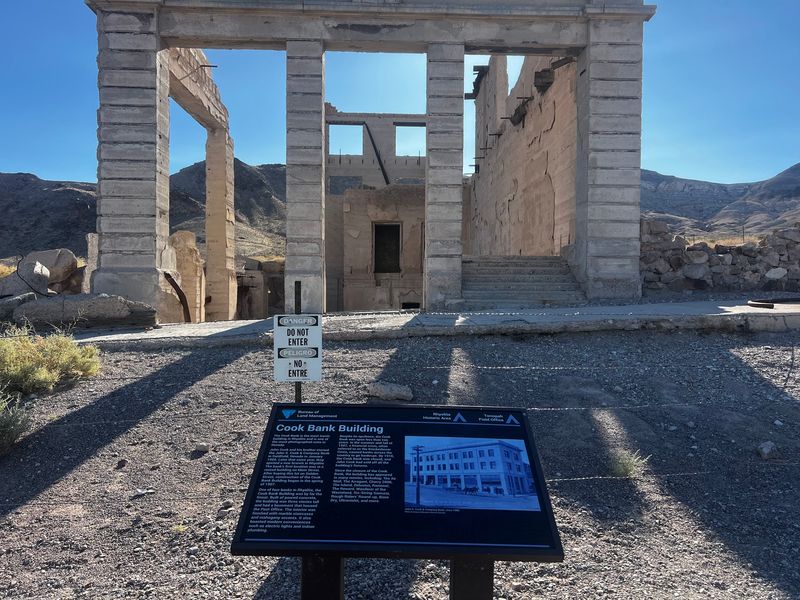
Nobody hands you a tour script at Rhyolite, yet you rarely feel lost. Information kiosks stand near the building remains, and visitors often praise how clear and attractive they are.
The signs explain what each structure was and how it worked in the life of the town. That makes the stop great for self-guided learning.
Grandparents can read aloud while kids match the old photos to the walls standing in front of them.
There is also a small museum on site. Admission is free, and donations are welcome if you would like to support the place.
Even a few dollars can help keep things going for the next group of curious travelers.
Restrooms are available too, which matters a lot on a long desert drive. Many people treat Rhyolite as a rest stop between Las Vegas and the national park, and the facilities make that easy.
Do not expect much else, though. There are no snack bars in the ghost town, and cell service can be spotty.
Pack water, snacks, and maybe a printed map so a weak signal will not slow you down.
Who Gets the Most Out of a Visit
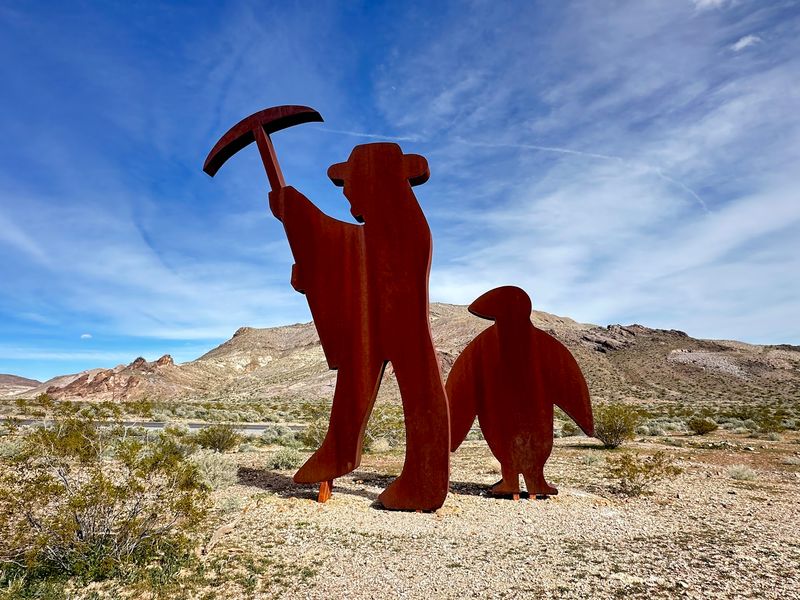
History buffs will be thrilled, but they are far from the only ones. The wide-open setting and quick stops suit a lot of different travelers.
Retirees on a fixed income may love that the whole experience costs nothing. You can spend an afternoon reading signs, snapping photos, and soaking in the quiet without spending a cent on admission.
Visitors who appreciate America’s many heritages often find the stop especially moving.
Families with school-age kids get a living history lesson. The Bottle House is fun to look at, and the story of an entire town rising and emptying in under two decades sticks in young minds.
Kids who normally yawn at museums may perk up when the lesson is made of glowing glass.
Photographers and road trippers also do well here. The desert light, the ruins, and the sparkling walls make for memorable pictures.
Travelers with mobility concerns have a good option, too. An accessible parking area and a level sidewalk lead to the Bottle House, so the main attraction is easy to reach.
Rougher paths near some ruins may take more care, so plan accordingly and wear sturdy shoes.
Getting There, Hours, and What It Costs
From Las Vegas, plan on a little over two hours of driving to reach Rhyolite. Head to Beatty, then continue about four miles west on Highway 374 to the town site.
The road is paved, so a regular passenger car works fine. No four-wheel drive or special gear is needed.
Beatty is the closest town, and visitors note it has what you need for an easy round trip, such as fuel and a place to grab a meal.
Rhyolite is a day-use site, and the Bureau of Land Management lists it as open from sunrise to sunset all year. Some online listings show it as open around the clock, so it is smart to confirm current hours before you go.
Small-town details can change.
Now for the best news on cost. Admission is free, including the small museum, where donations are optional.
A family of four could realistically spend nothing more than the price of gas, water, and a packed lunch.
Summer heat in this part of Nevada can be intense. Cooler months may be more comfortable for walking, and early or late visits in summer can help you avoid the hottest hours.
A Free Afternoon That Lingers in Memory
Some road trip stops fade from memory by the next week. The Bottle House tends to stick around much longer.
Maybe it is the image of a 76-year-old mason turning piles of empty bottles into a sturdy home. Maybe it is the idea of a family winning a house for five dollars.
Or maybe it is simply the way the glass lights up against the brown desert hills, looking just like an old picture postcard.
For Nevada travelers who want a full afternoon without a big bill, the math is hard to beat. Free entry, a paved road, restrooms, helpful signs, and a small museum make it easy to plan.
Add the surrounding ruins, and you have enough to explore for a couple of hours or more.
Come prepared with water, snacks, sunscreen, and a charged camera. Check hours and road conditions before you leave, since desert weather can surprise you.
Then take it slow. Walk the fence line, read every sign, and let the kids count bottle colors.
When you finally drive back toward Beatty, there is a good chance you will already be planning a return trip with someone new.