
This Kansas Folk Art Garden Is Packed With Strange Concrete Sculptures, And Its Creator Poured In Decades Of Bold Ideas
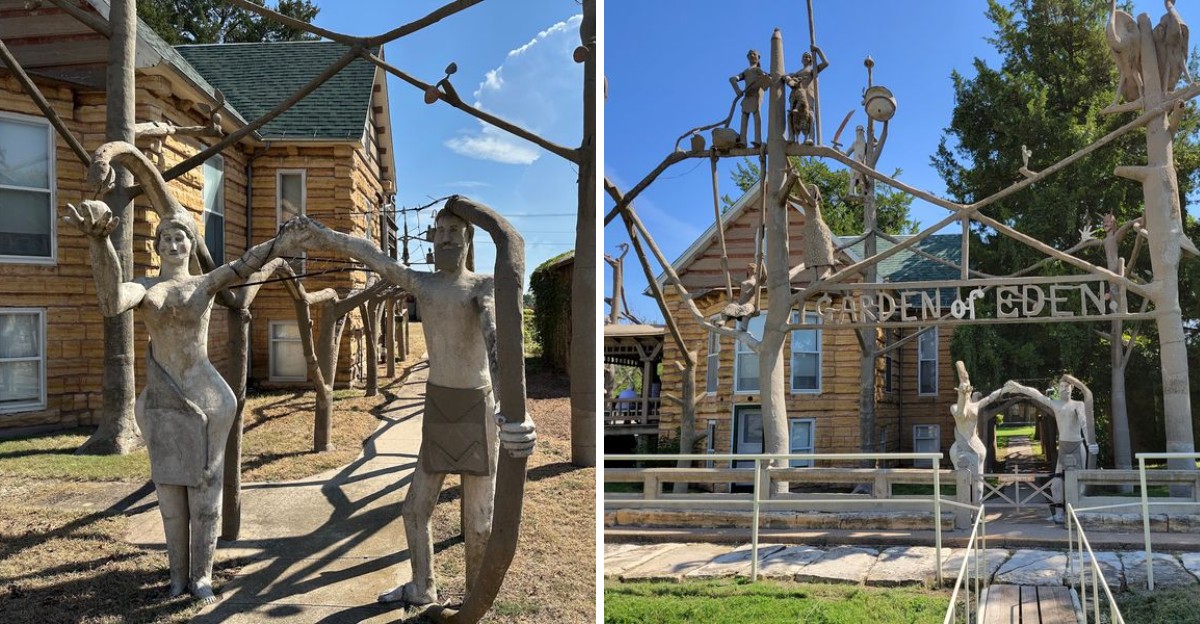
Limestone logs, towering concrete trees, and a sculpted octopus wrapping its arms around the world. Kansas just got a whole lot stranger.
A retired farmer built all of it after turning 64, then kept going for more than twenty years. His tools stayed simple, just cement, stone, and a head packed with bold ideas.
Adam and Eve stand tall in this folk art garden. So does a winking eye that once flirted with passing trains.
Strange concrete sculptures? Absolutely.
Random ones? Not a chance.
Each figure argues a point, and figuring them out becomes half the fun. Faith, money, and power all get their turn in stone.
Bring curiosity and comfy shoes. Quirky art lovers crossing Kansas will want a slow afternoon reserved for this one.
A Stone Cabin That Pretends To Be Logs
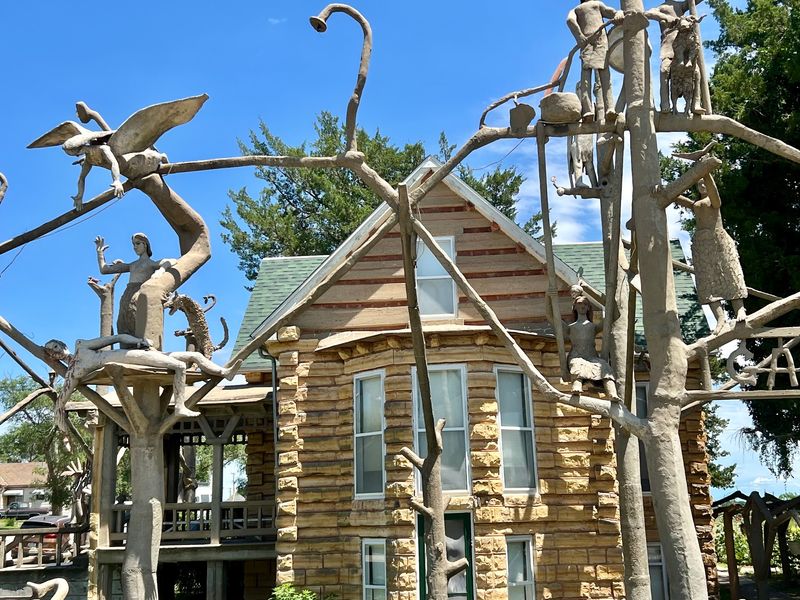
Logs made of rock? That sounds like a riddle, yet here it stands.
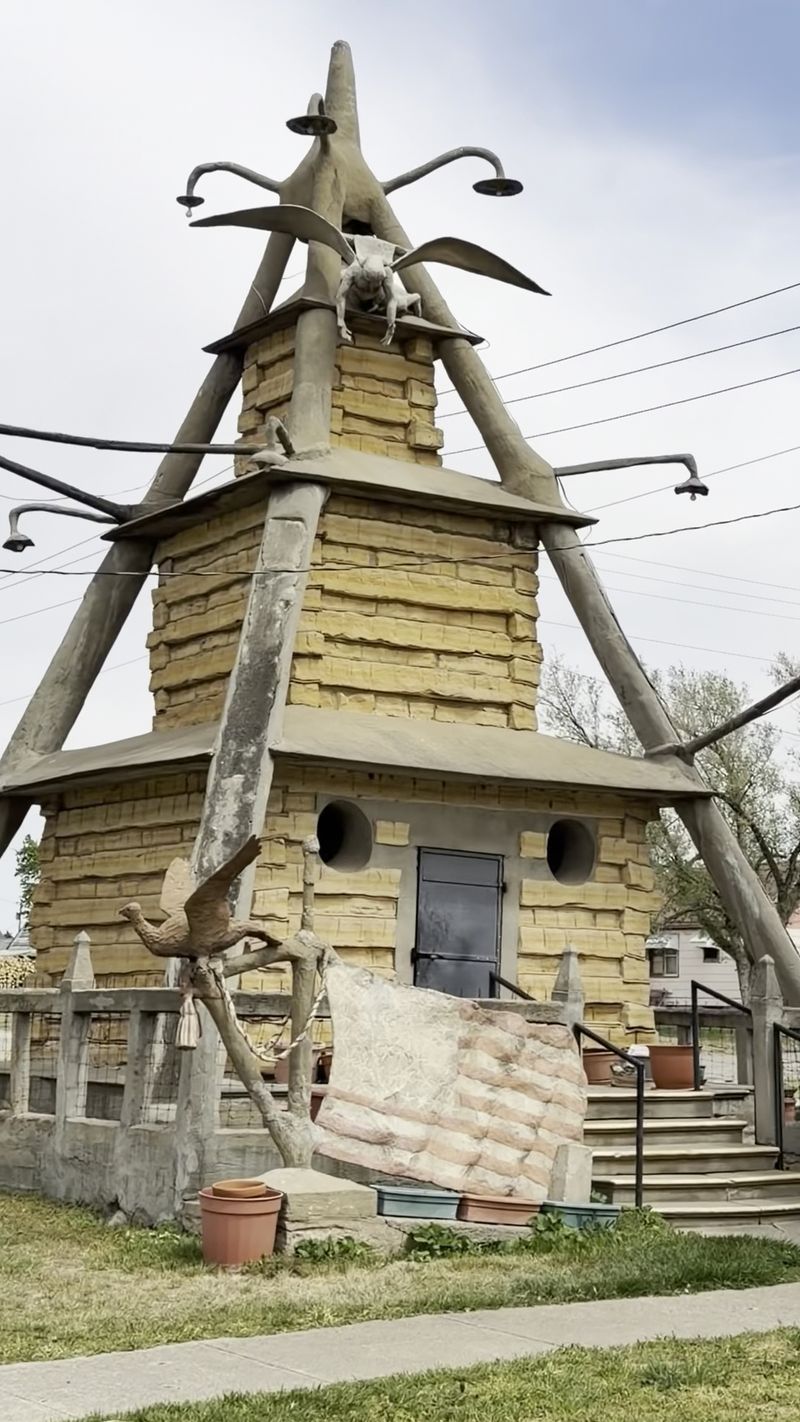
The home at the center of S.P. Dinsmoor’s Garden of Eden looks like a classic cabin from a distance.
Step closer, and the trick reveals itself. Every long log is actually cut limestone from the local area.
The builder shaped these stone slabs to copy rough timber. He even fitted the corners together with dovetail joints, just like a real pioneer cabin.
Construction began in the early 1900s. He was already well past his working years when he started, which makes the effort even more impressive.
The house holds many rooms, and the quirks continue indoors. Windows and doors come in different sizes, so each one needed its own custom fit.
Visitors who love woodwork should look closely. Hand-crafted door frames, banisters, and furniture show the same stubborn creativity found outside.
One fun fact gets plenty of smiles. Sources say this cabin became the first home in Lucas to have electricity.
Bring a camera and take shots from several angles. The fake logs look different in morning and afternoon light, and every corner tells part of the story.
The Man Who Started Big At Sixty-Four
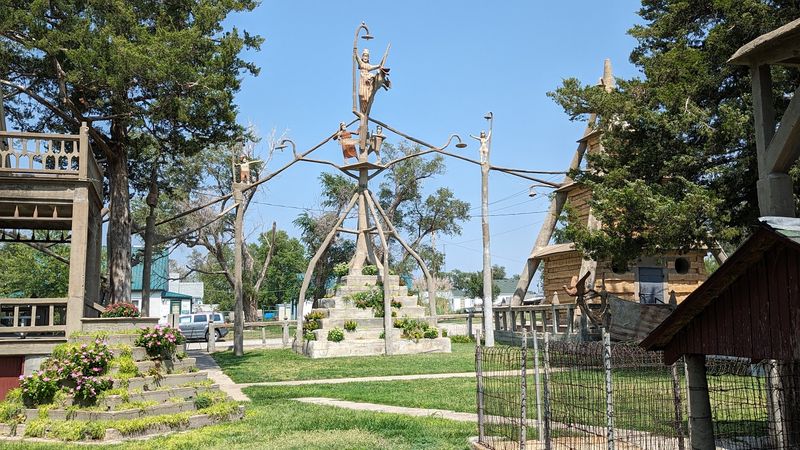
Retirement plans usually involve a rocking chair. This builder picked up bags of cement instead.
The creator of S.P. Dinsmoor’s Garden of Eden had already lived several lives.
He served in the Civil War, worked as a schoolteacher, and later farmed the land in Kansas.
Then, in his sixties, he began the project that would make him famous. He kept going for more than twenty years.
Only failing eyesight finally stopped his hands near the end of the 1920s. By then, the yard overflowed with figures and scenes.
He did not build just for fun. The garden served as both his home and a roadside attraction meant to earn money.
That mix of house and show still shapes the experience today. It feels personal and public all at once.
Families with kids can turn this story into a lesson. Big dreams do not come with an age limit.
Spend a moment picturing one older man hauling heavy materials, year after year. The scale of his patience may impress you more than any single statue in the yard.
Adam, Eve, And Some Very Modest Loincloths
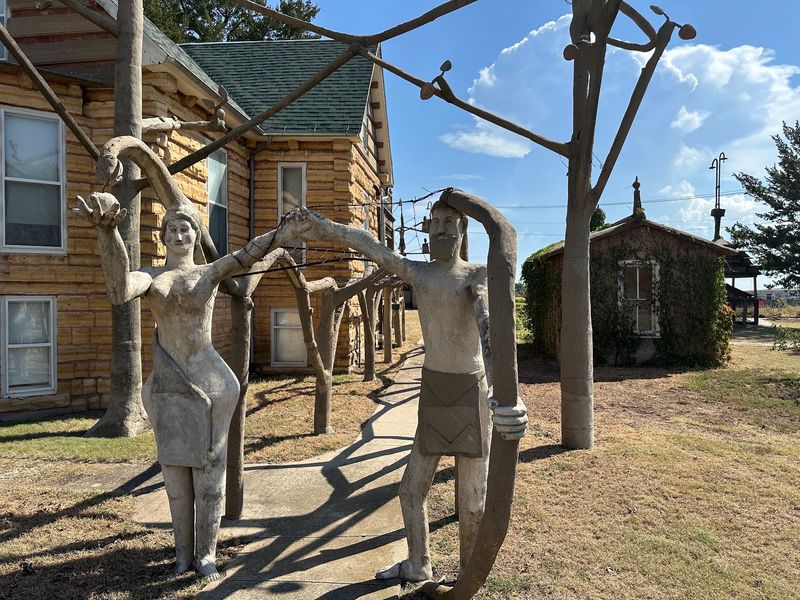
Scandal arrived early in this garden. The first Adam and Eve figures showed up without clothing, and the neighbors noticed fast.
Local pressure pushed the creator to add concrete loincloths. Those small cover-ups remain part of the history visitors hear about today.
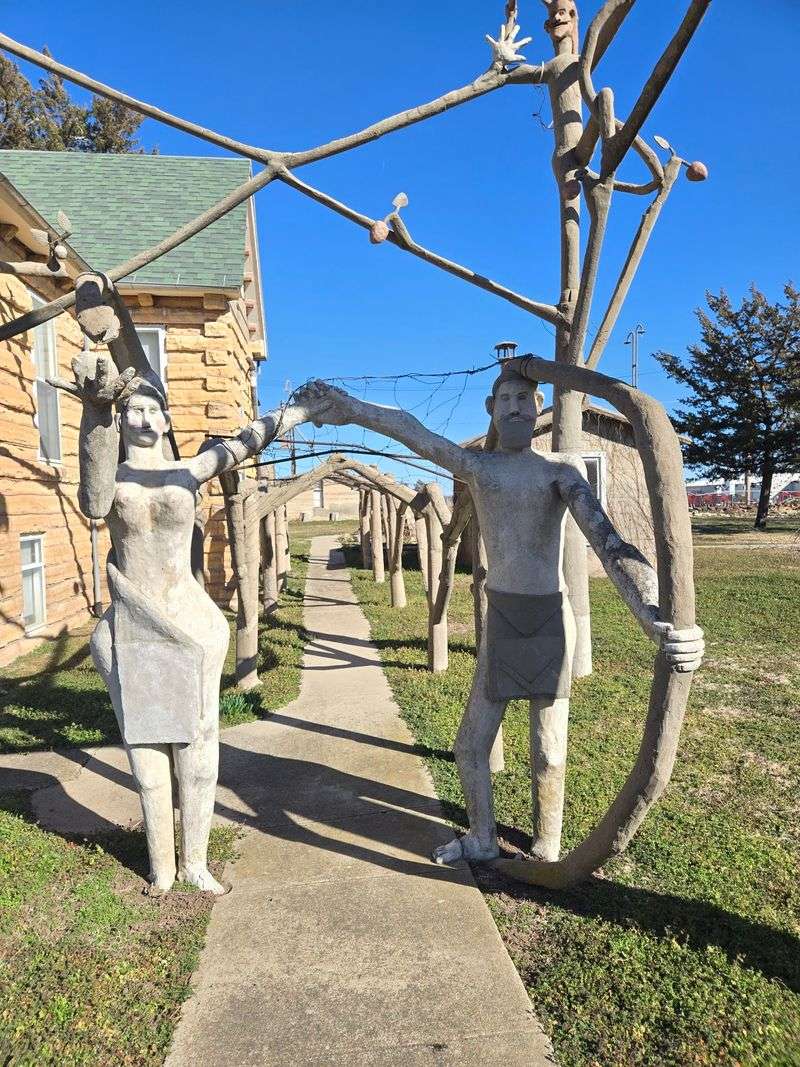
The biblical scenes at S.P. Dinsmoor’s Garden of Eden rise high above the yard.
Adam and Eve stand near the Tree of Life, with a serpent close by.
Look for Cain and Abel too. Their story plays out in dramatic concrete form.
Here is a quirky detail worth sharing. The builder reportedly modeled Adam’s face after his own.
Many of these religious images gather on the west side of the house. Starting there helps the story unfold in order.
Take your time with each figure. Small details, like poses and faces, reveal how much thought went into every scene.
Kids often enjoy spotting animals and characters hidden among the branches. Turn it into a quick scavenger hunt, and the biblical section becomes a game as well as a history lesson.
Politics Poured Into Concrete
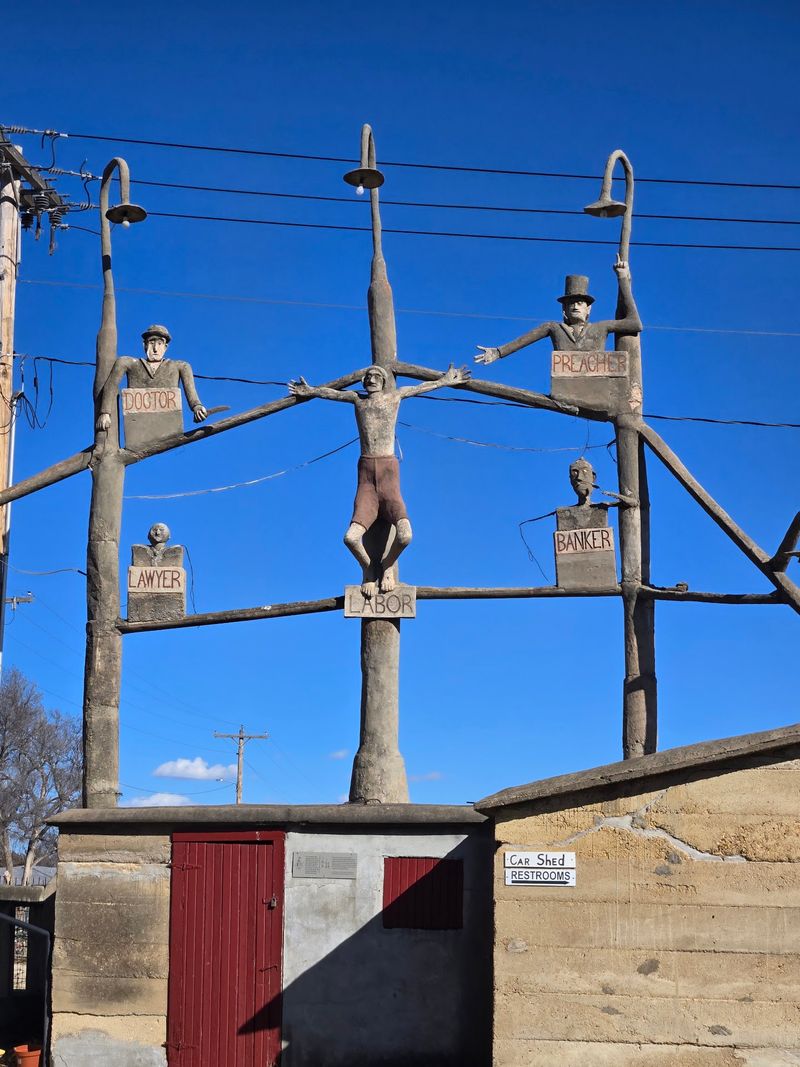
Opinions? The builder had plenty, and he sculpted every one of them.
Not all the art at S.P. Dinsmoor’s Garden of Eden comes from scripture.
A big portion shares strong views from the Populist movement of his era.
The most famous scene is often called the Crucifixion of Labor. It shows a worker under attack by figures standing for a lawyer, a doctor, a preacher, and a banker.
The message is clear. He believed powerful groups took advantage of ordinary working people.
Watch for a giant octopus as well. Its long arms stand for big business trusts reaching across the world.
A Goddess of Liberty appears in the yard too. These pieces mostly sit on the north and east sides of the house.
History students will find a real treat here. Few places let you see early twentieth-century politics in such bold, physical form.
Read the guide flyer before wandering. Knowing the symbols ahead of time turns odd shapes into sharp arguments, and the whole yard starts to talk back.
Lights, Wires, And A Winking Eye
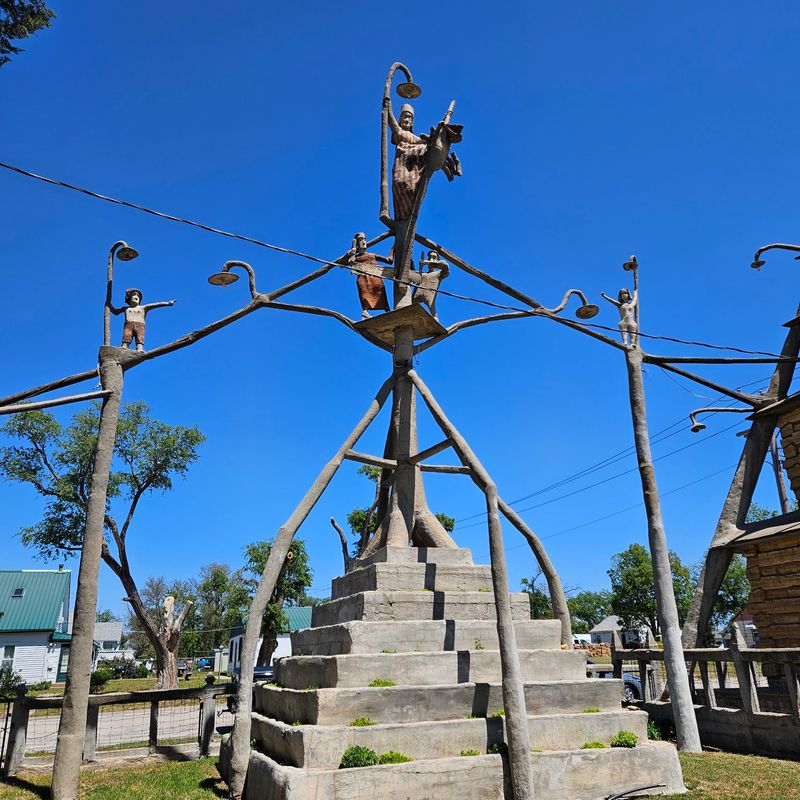
Statues that glow after sunset? That was the plan from the start.
The builder of S.P. Dinsmoor’s Garden of Eden loved new technology.
He wired many of his sculptures so they could light up at night.
He even set up his own small power plant at the house. In a tiny prairie town of that time, the effect must have stunned onlookers.
Stories also mention an All-Seeing Eye sculpture. It reportedly winked at passing trains, tempting riders to come and take a look.
That trick shows how much he thought like a showman. Light turned his yard into an advertisement.
Keep your eyes open for small bulbs and fixtures on the figures. Spotting them adds a fun layer to the visit.
Electric details might seem minor at first. Yet they reveal a man who mixed art, faith, politics, and invention in one backyard.
Ask a guide about the lighting system during the tour. The explanation helps you imagine the scene glowing against a dark Kansas sky, long before neon signs dotted the highways.
The Builder Who Never Left The Building
Most artists leave behind paintings. This one left behind himself.
The headline feature of S.P. Dinsmoor’s Garden of Eden waits inside a mausoleum he built on the property.
There, he rests in a coffin topped with glass.
Yes, visitors on the guided tour can actually see him. It sounds spooky, and many people find it a little eerie.
Still, the choice fits his larger plan. He wanted his attraction to keep drawing crowds long after his time.
His first wife is also kept in the mausoleum. The structure itself shows the same concrete style found across the yard.
Plan ahead for one rule. Photography is not allowed inside this space.
Families with younger children may want to talk about it first. A quick heads-up keeps surprises friendly instead of frightening.
Many guests say this part sticks with them most. It turns the whole garden into a deeply personal statement, and it leaves people talking on the drive home.
Respect the quiet mood here. A calm visit lets the strange history speak for itself.
Saved, Restored, And Standing Proud
Concrete looks tough, but time wins eventually. After the builder was gone, parts of the garden slipped into poor shape.
Thankfully, people stepped in. A major restoration project took place in the early 2010s, led by a foundation that preserves art sites.
Workers cleaned, repaired, and strengthened the sculptures with careful attention. Their goal was to save the original vision, not replace it.
Today, a local nonprofit group cares for S.P. Dinsmoor’s Garden of Eden.
Volunteers and staff keep it open and share its story.
The site also appears on the National Register of Historic Places. Experts often call it one of the oldest surviving folk art environments in the country.
Paying admission helps keep the gates open. Ticket money supports upkeep and future care.
The gift shop near the entrance offers postcards, pins, and a small guidebook. Picking one up makes a sweet souvenir and supports the cause.
Before leaving, glance back at the yard. Knowing how close it came to crumbling makes each standing figure feel like a small victory.
Good Versus Evil In The Backyard
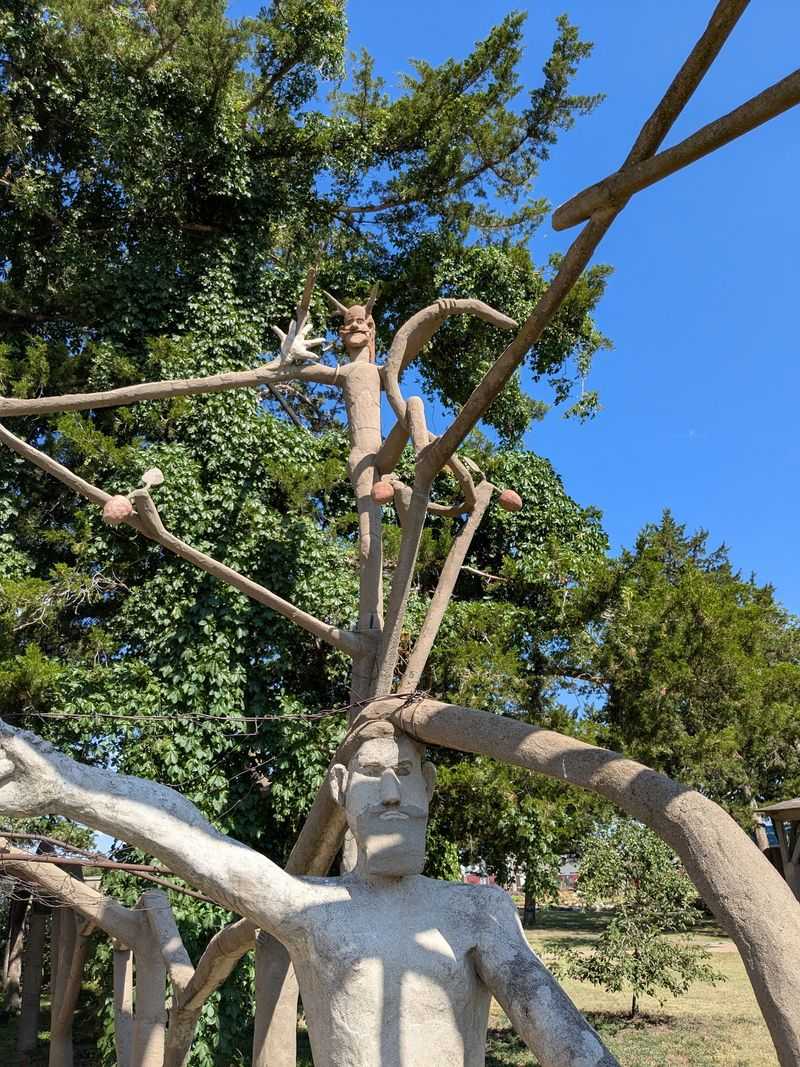
Big ideas fill this small yard. The builder used his sculptures to argue about life’s largest questions.
Themes at S.P. Dinsmoor’s Garden of Eden often come in pairs.
Good battles evil, workers face bosses, and old beliefs meet new science.
Each group of figures works like a chapter in a book. Walk around the house in order, and the story starts making sense.
Speaking of books, he wrote one too. His pictorial history of the cabin home explains many of his ideas in his own words.
Reading a bit before the trip can help a lot. Some symbols feel puzzling without context.
Many visitors find the tour video helpful. It offers background on the thought behind each piece.
Here is a tip for curious minds. Pick one scene and try to guess its meaning before the guide explains it.
The game makes the visit more active and memorable. Even if your guess misses, you will notice details you might have skipped.
Leave room for discussion afterward. These sculptures spark debates that can last the whole ride home.
A Tiny Town With A Big Art Habit
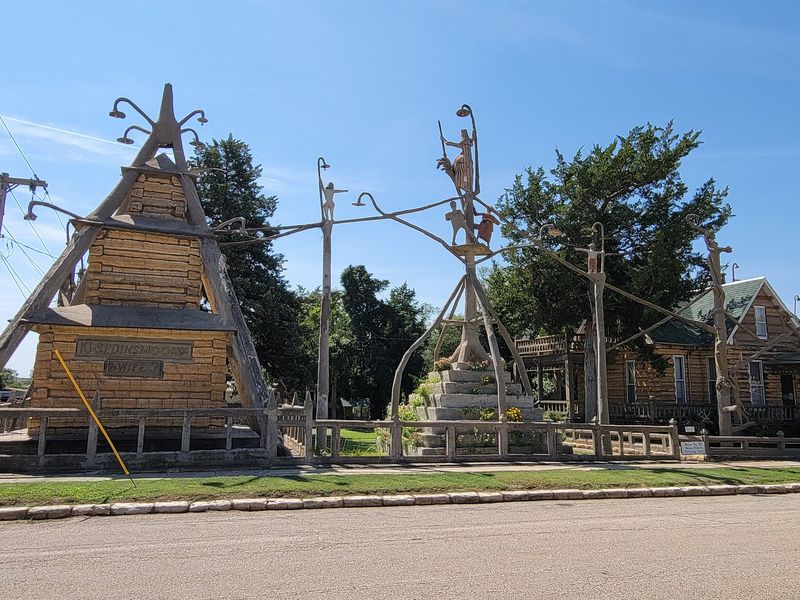
One odd garden sparked an entire town’s personality. That is the real magic of Lucas.
S.P. Dinsmoor’s Garden of Eden sits at 305 E 2nd St, Lucas, KS 67648, in north central Kansas.
The town is small, with only a few hundred residents.
Even so, it attracts a steady stream of art lovers. Lucas carries the title of Grassroots Art Capital of Kansas.
Right next door, Miller’s Park shows off charming miniature buildings. Visitors often call it a lovely bonus stop.
Florence Deeble’s Rock Garden adds more homemade creativity nearby. The Grassroots Art Center displays work from self-taught artists too.
Parking near the garden is usually easy on residential streets. Many people also park downtown and stroll between sites.
Wear comfortable shoes for that walk. Art pops up in unexpected spots all over town.
Give yourself a few extra hours if possible. A quick stop at the garden can easily grow into a full day of discovery.
Small towns reward slow travelers. Lucas proves that point with every painted corner and stacked stone.
Smart Tips Before Stepping Through The Gate
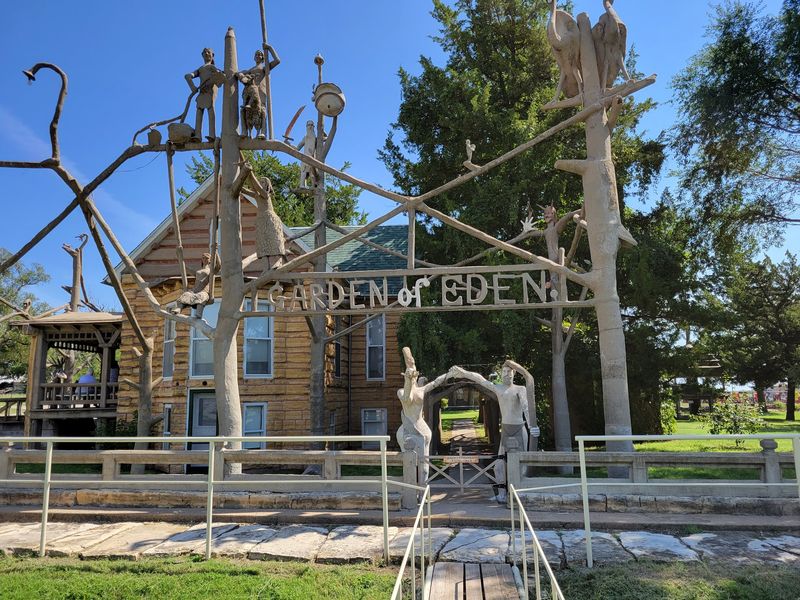
Planning pays off at this quirky stop. A little prep turns a quick look into a rich visit.
Book the guided tour at S.P. Dinsmoor’s Garden of Eden if you can.
Guides explain the symbols and share fun local stories.
The tour also unlocks the house interior and the mausoleum. Without it, you only see the outdoor sculptures.
Tour schedules can change by season. Check details ahead so you do not arrive to locked doors.
Arrived late anyway? The outdoor art still remains visible, and self-guide sheets have been offered for after-hours guests.
Many visitors spend around an hour exploring. History fans may want even longer.
Restrooms sit behind the house. Paths in some spots can feel a bit rough, so wheelchair users should plan accordingly.
Bring water and sun protection on warm days. Kansas sunshine can feel strong in an open yard.
Most importantly, keep an open mind. This place rewards curiosity, and it leaves almost everyone with a story to tell.
Odd, bold, and unforgettable, this garden shows what one stubborn dreamer can pour into the prairie.