
Fall Brings Bald Eagles To This Peaceful Minnesota Marsh For Memorable Viewing
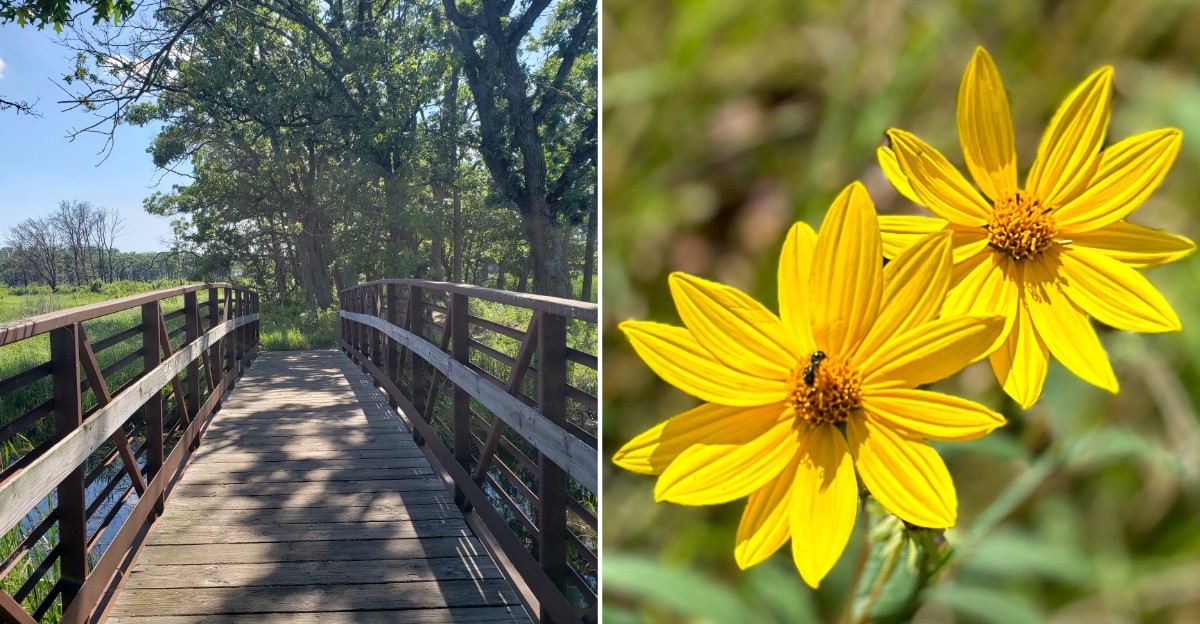
Bald eagles rarely announce themselves, they simply appear on a bare branch when the air turns cold. Minnesota has a peaceful marsh where that moment repeats every fall.
Mist lifts off the water in the early hours while the reeds stand perfectly still. Eagles settle into the leafless trees along the edge, scanning the shallows below.
Cooler weather pulls more birds through each week, so the viewing improves as autumn deepens. Binoculars bring the details into focus, from the white head to the hooked yellow beak.
Photographers set up long lenses and wait with real patience. Families arrive with thermoses and blankets, speaking in whispers so nothing startles the birds.
Geese and herons add motion across the water, though the eagles hold every eye. A quiet morning here shows why some of the best wildlife moments belong to those who stay still.
A Wild Patchwork Where Prairie Meets Forest
Picture three very different landscapes deciding to share one backyard. That is basically the deal at Sherburne National Wildlife Refuge, where western prairie bumps right into the northern woods.
The refuge covers about 30,700 acres in east-central Minnesota. It was set up in 1965, and it mixes oak savanna, open prairie, thick Big Woods forest, and wide wetlands into one big quilt.
Running through the middle is the St. Francis River. It feeds the marshes and pools that make the place so good for wildlife, especially birds that need water to rest and eat.
Here is a fun bit of trivia. The National Audubon Society named the refuge an Important Bird Area.
That is a fancy way of saying birds treat this place like a favorite rest stop on a long road trip.
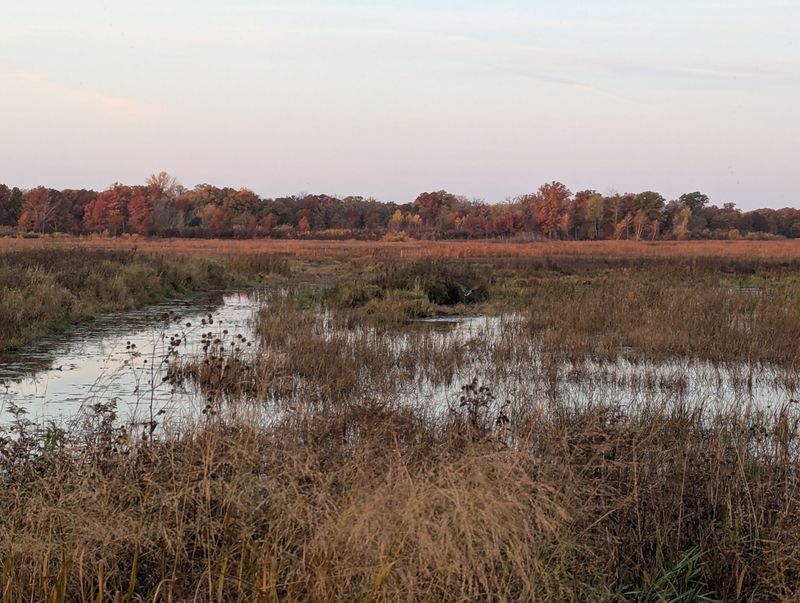
In fall, the mix of habitats really pays off. Oaks turn rusty red, the prairie grasses fade to gold, and the marsh water reflects all of it like a mirror.
For anyone planning a trip, start at the welcome area and grab a map. Knowing where the prairie ends and the woods begin helps you guess which animals might show up next.
The refuge is about fifty miles northwest of Minneapolis and St. Paul, so it makes an easy day trip. You will find it at 17076 293rd Ave NW, Zimmerman, MN 55398.
Bald Eagles Rule The Autumn Sky
Not too long ago, spotting a bald eagle in Minnesota felt like winning a small lottery. Today, these big birds show up at Sherburne on a regular basis, and that comeback is one of the best wildlife stories around.
Fall is an especially good time to look up. The refuge turns into a busy migration hotspot, and eagles move through along with ducks, geese, and songbirds.
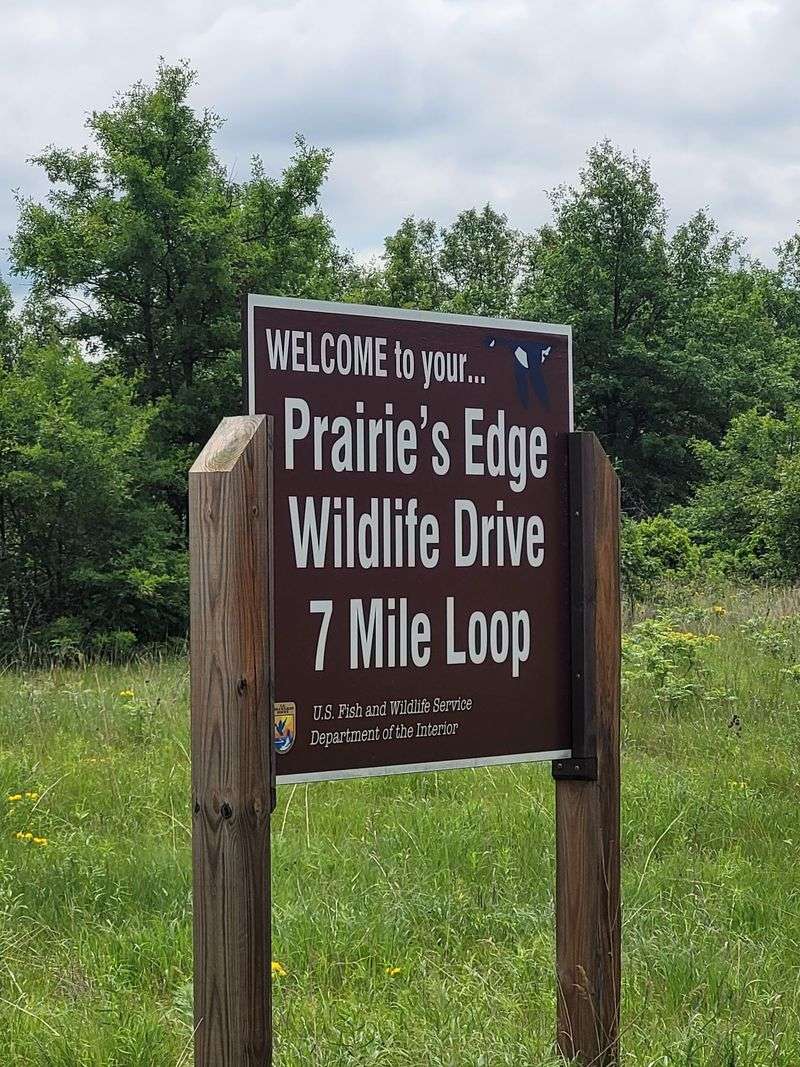
Want a pro tip? Head to mile marker 6 on the Prairie’s Edge Wildlife Drive.
A bald eagle nest there has been active for more than 25 years, which makes it one of the longest-running homes in the neighborhood.
Eagle nests are huge. Pairs add sticks year after year, so an old nest can weigh as much as a small car.
Talk about a home improvement habit.
Bring binoculars or a zoom lens and give the birds plenty of space. Eagles stay calmer when people keep their distance and their voices low.
Watch the tall trees near open water, since eagles like a good lookout spot for fishing. Look for a white head that seems almost too bright against the fall colors.
Young eagles can be tricky. They are mostly brown with messy white patches, and they do not get that famous white head until they are about five years old.
So that big brown bird might be an eagle in its awkward teen phase.
Cruising The Prairie’s Edge Wildlife Drive
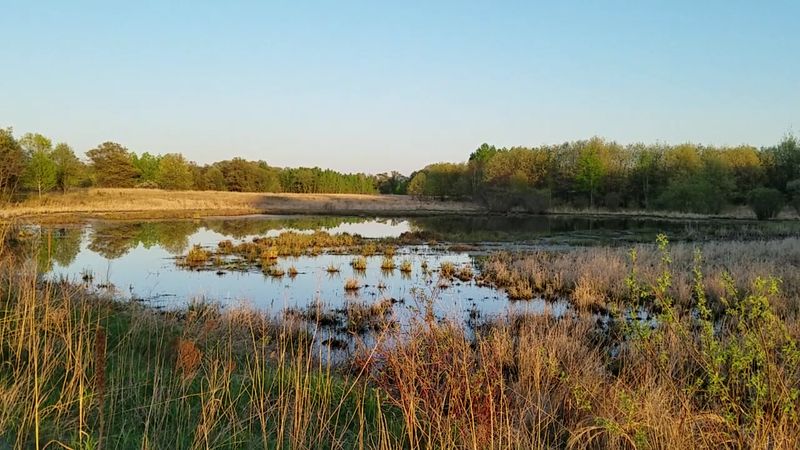
Some of the best wildlife watching here happens without leaving your seat. The Prairie’s Edge Wildlife Drive is a winding seven-mile gravel road that loops through wetlands, prairie, and oak savanna.
It is usually open from late April through October. That means early fall is prime time to catch eagles, cranes, and swans before the road closes for the season.
Along the route, there are three observation decks and several short hiking loops. Each one gives you a reason to park, stretch your legs, and take a closer look.
Here is a sneaky trick. Your car works like a bird blind.
Animals often ignore a slow, quiet vehicle, but they might bolt the second a person hops out and starts waving.
So drive slowly. Really slowly.
Think turtle pace, not racetrack pace, since the slower you roll, the more you will notice.
Signs along the way explain the habitats and the animals that live there. Kids tend to love reading them out loud, and adults secretly learn a lot too.
The drive is also a great choice for people who cannot hike long distances. You can see marsh birds, turtles, and wildflowers right from the window.
Morning and evening bring the most action. Pack a thermos of hot cocoa, crack the window, and listen for honks and splashes.
Marshland Neighbors Beyond The Eagles
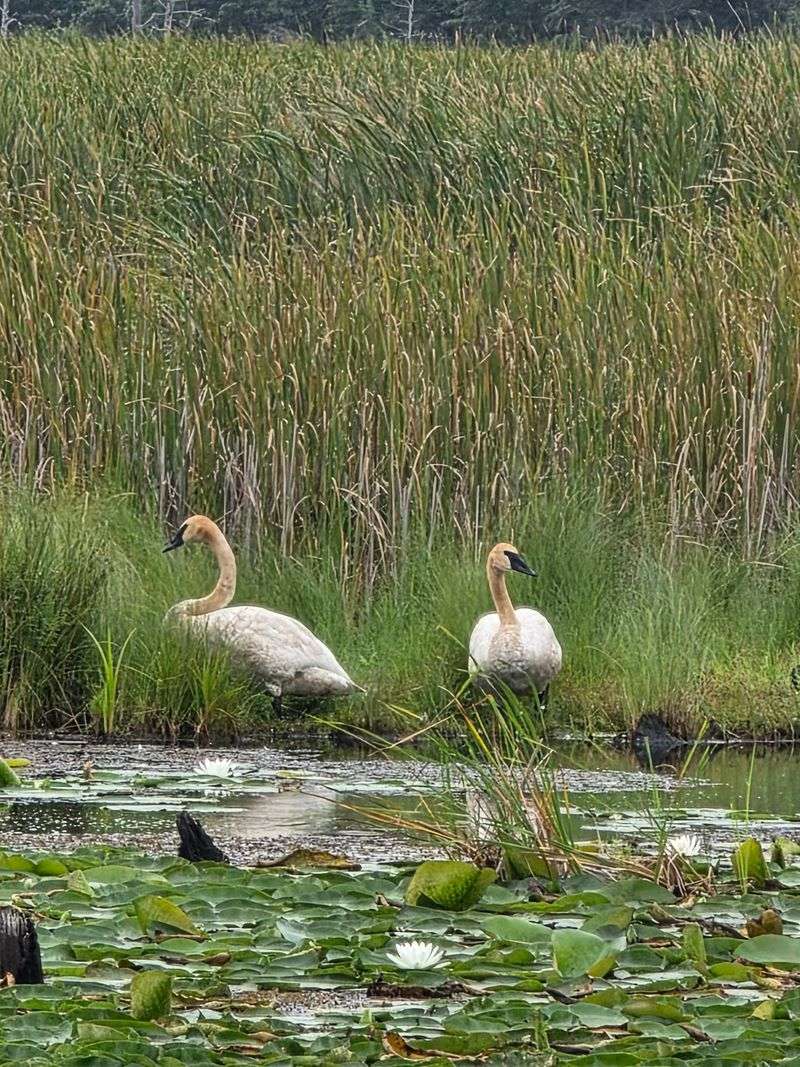
Eagles may get the headlines, but they have a lot of company. More than 230 bird species have been recorded at the refuge, along with 58 kinds of mammals and 25 types of reptiles and amphibians.
That is a pretty crowded neighborhood for a place that feels so calm.
The wetlands are a key stop on the Mississippi Flyway. Think of it as a giant bird highway in the sky, with Sherburne serving as a rest area where travelers grab a snack.
Trumpeter swans are a crowd favorite. They are bright white, very large, and they make a honking sound that resembles a toy horn.
Keep your eyes on the water for great blue herons standing perfectly still. They look like statues until they suddenly stab at a fish.
River otters sometimes slide through the channels, and coyotes may trot along the edge of a field. Painted turtles like to sunbathe on logs during warm fall afternoons.
The refuge also protects Blanding’s turtles, which are threatened in Minnesota. You can spot them by their bright yellow chins, which make them look like they just ate a lemon.
A simple field guide or bird app can help you put names to all those feathers and fins. Write down what you see.
By the end of the day, your list might be longer than you ever expected.
Quiet Moments Away From The Daily Rush
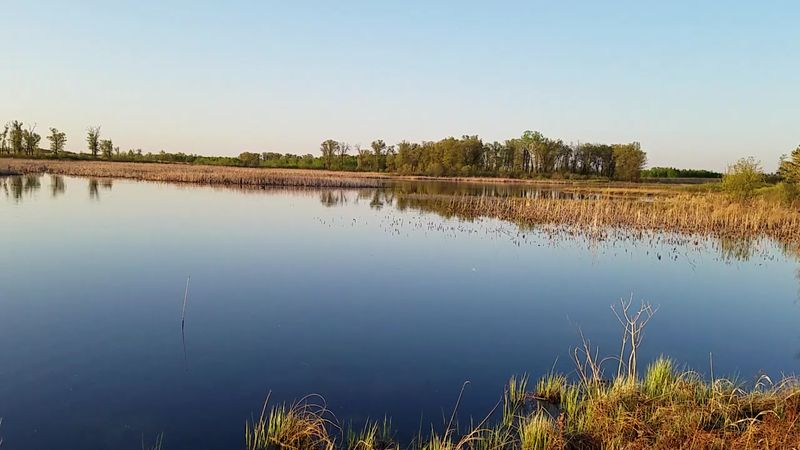
Ever notice how your brain feels like a browser with forty tabs open? A few hours at Sherburne can close most of them.
Out here, the background noise is wind in the grass, ducks chatting, and maybe a woodpecker tapping away. No traffic, no buzzing screens, no one asking what is for dinner.
The mix of marsh, prairie, and forest creates a naturally soothing setting. Locals come to slow down, and plenty of folks from the Twin Cities drive up just to breathe deeper for a day.
A good plan is to find an observation deck and simply sit. Give it ten quiet minutes, since animals that were hiding often wander back once things settle down.
Bring a small notebook if you like to journal. Jot down sounds, colors, or a funny moment, such as a goose that cannot decide which way to fly.
On clear nights, the low light pollution helps the stars pop. Sometimes the northern lights even make a surprise appearance over the area.
The red and white pines on the sandy uplands add a north woods feel without the long drive north. Grouse may drum in the woods, which sounds a bit like a lawn mower struggling to start.
Leave the speakers at home and keep voices soft. Peace is the main attraction here, and everyone gets to share it.
How Duck Stamps Helped Rebuild A River Basin
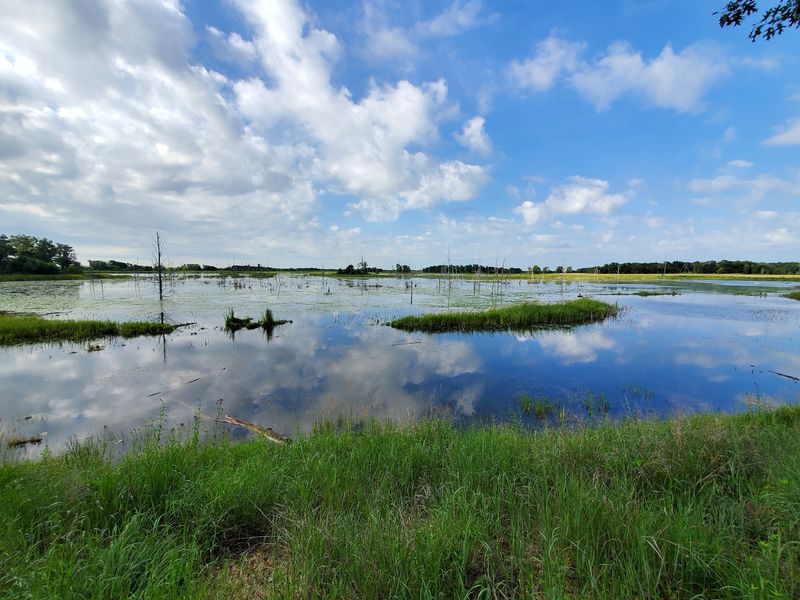
Long before the refuge had a name, this land was full of life. Native American villages stood here at least as far back as 1300 CE, drawn by the rich wetlands and plentiful game.
Later, things changed a lot. Farmers dug drainage ditches and plowed the land, and much of the St. Francis River Basin dried out.
Fewer marshes meant fewer ducks, fewer fish, and fewer homes for wildlife. Local hunters and conservationists noticed the loss and decided to do something about it.
Their push helped create the refuge in 1965. Much of the land was bought with money from Federal Duck Stamps, which hunters must purchase each year.
Here is the cool part. Stamp collectors and bird lovers can buy them too, and that money still helps protect wetlands across the country.
A tiny piece of paper ends up saving entire marshes.
Since then, workers have plugged old ditches, restored water levels, and brought back native prairie plants. Controlled burns help oak savanna stay healthy, the same way natural fires once did.
The results are easy to see. Eagles, cranes, and swans now thrive where the land once struggled.
Knowing this backstory, visits feel more meaningful. Every eagle overhead is a reminder of what people can fix when they decide to care.
Trails And Paddle Routes For Curious Explorers
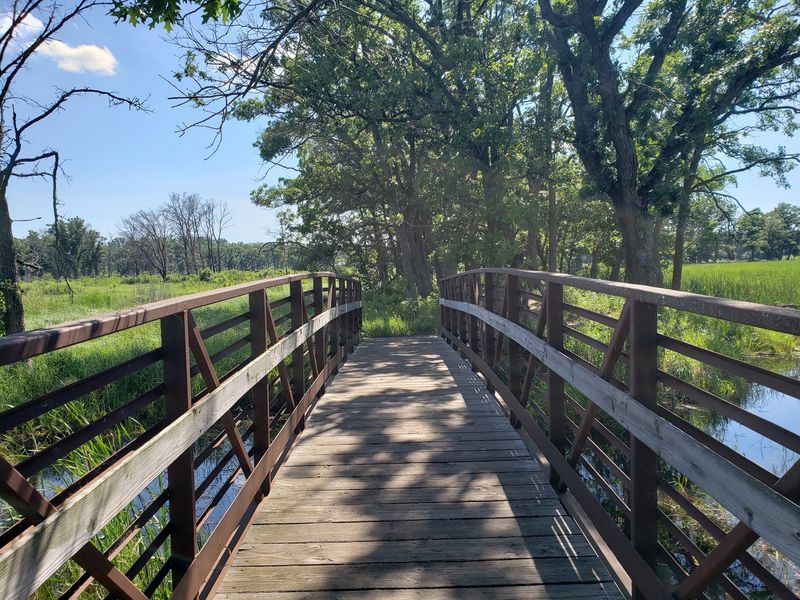
Cars are handy, but sneakers and canoes open up a whole new side of the refuge. Several trails let you get closer to the action at your own pace.
The Blue Hill Trail has three loops and climbs to the top of Blue Hill. At about 90 feet, it is the highest point in the refuge.
Okay, 90 feet will not impress a mountain goat. Still, the view across fall treetops and marshes is worth every step.
Bird fans enjoy Blue Hill for warblers in spring and colorful woods in autumn. Bring water and a light layer, since the shade can feel chilly on cool days.
The Mahnomen Trail offers three connected loops through wooded uplands. It stays open all year, so it works well after the wildlife drive closes for the season.
Near the Oak Savanna Learning Center, nearly two miles of crushed granite paths make walking easier for strollers and wheelchairs. Trumpeter swans often hang out nearby.
For a water view, there is a canoe route along part of the St. Francis River and Battle Brook. Paddling quietly lets you slip past turtles and ducks without spooking them.
Check trail rules before heading out, since some areas are closed to protect nesting wildlife. And bring bug spray in early fall, because mosquitoes clearly never got the memo about summer ending.
Sandhill Cranes Steal The October Show
Imagine thousands of tall gray birds filling the sky while making a sound like a squeaky trumpet section warming up. That is October at Sherburne.
Sandhill cranes gather in the refuge marshes by the thousands each fall. It ranks among the most exciting wildlife scenes in all of Minnesota.
Timing matters. Dawn and dusk are best, when huge flocks fly out to feed in nearby fields or return to roost in the shallow water.
Their calls are wild and hard to forget. Some sound like gurgles, others like purrs, and a few sound like bugles echoing across the marsh.
Fun fact time. Sandhill cranes are among the oldest bird species still around, with fossils dating back millions of years.
These birds have been rehearsing this show for a very long time.
Bring a warm hat and gloves, since fall mornings can bite. A camp chair and a thermos make the wait much more comfortable.
Sit quietly and let the sky do the work. Even if the cranes are late, the autumn grasses and wildflowers change color with the light and keep things interesting.
And while you scan for cranes, keep an eye out for a white head gliding past. With eagles, swans, and cranes all sharing the same sky, a single fall evening here can feel like a nature documentary come to life.