
This New York State Park Turns Into A Sea Of Fall Colors Around Three Massive Waterfalls
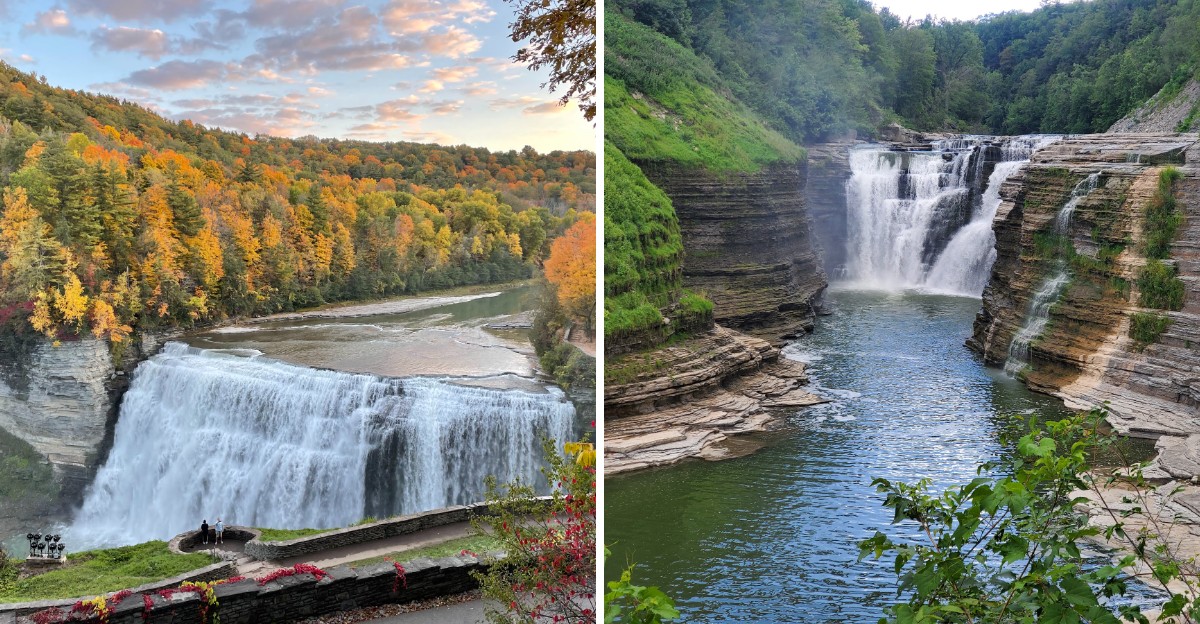
Three massive waterfalls, towering cliffs, and miles of trees bursting with autumn colors. It almost sounds too beautiful to be real, but there’s a place in New York where all of this comes together every fall.
The sound of rushing water fills the air as bright red, golden yellow, and fiery orange leaves transform the surrounding landscape into something unforgettable.
New York has plenty of beautiful places to enjoy the changing seasons, but few offer scenery quite like this. Here, three powerful waterfalls tumble through a dramatic gorge, with scenic overlooks giving visitors incredible views of the colorful hillsides and water below.
And the best part? Each waterfall offers a completely different view, making it hard to decide which one deserves the most photos.
If you’ve ever wanted to experience the kind of autumn scenery that makes you forget about everything else for a little while, this state park might be exactly what you’re looking for.
Welcome To The Grand Canyon Of The East
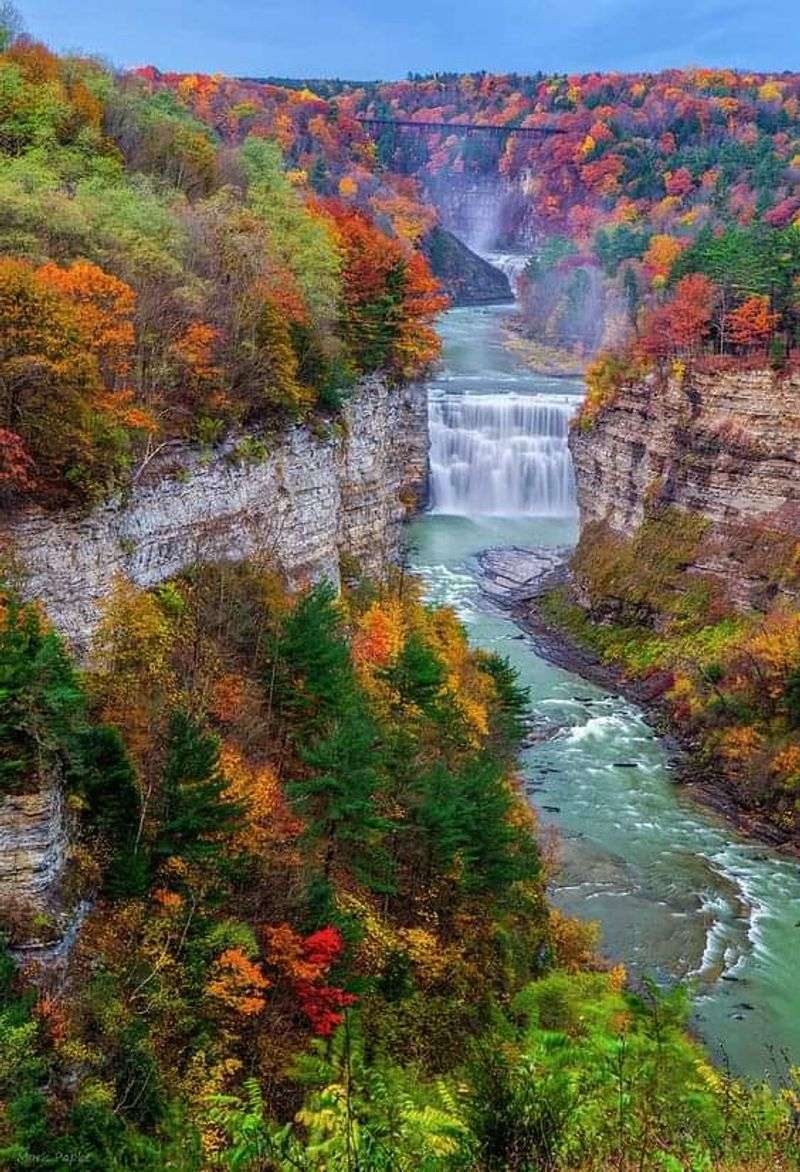
Nobody gives a park a nickname like the Grand Canyon of the East by accident. Letchworth State Park earns it with cliffs that rise as high as 550 feet in some spots.
The Genesee River did the hard work here over thousands of years. Its water sliced through layers of shale and sandstone, leaving a gorge about 17 miles long.
You will find the park in western New York, roughly an hour south of Rochester. It stretches across Livingston and Wyoming counties, with main gates near Castile, Mount Morris, Perry, and Portageville.
Size matters here, and the park has plenty of it. It covers more than 14,000 acres of forest, cliffs, meadows, and river valley.
The land once belonged to William Pryor Letchworth, a businessman who loved this valley. He gave his estate to the state in 1906 so everyone could enjoy it.
That gift turned into one of the most admired parks in the country. In fact, USA Today readers voted it the best state park in the nation more than once.
So when someone calls it a canyon, they are not exaggerating one bit. They are simply describing what the river built.
Upper Falls And The Famous Bridge Above It
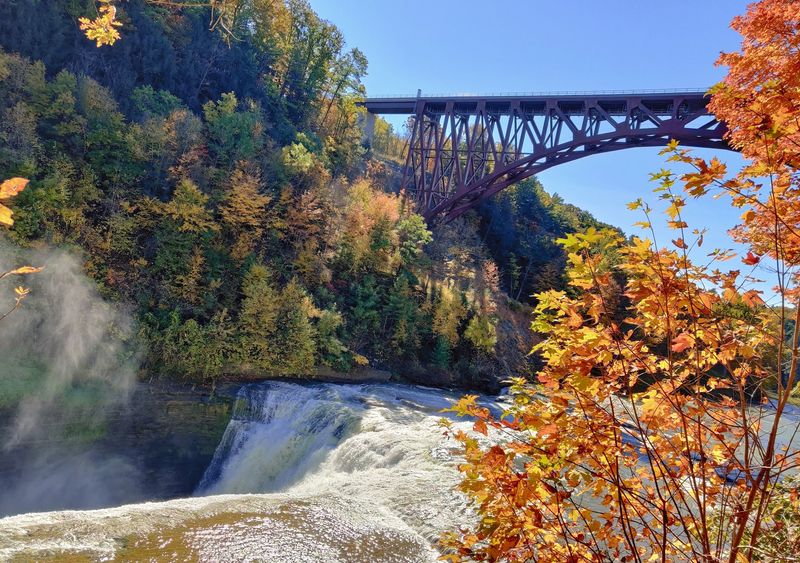
Few waterfalls come with their own steel crown, but Upper Falls has one. A tall railroad bridge spans the gorge right above the cascade.
The original wooden Portage Bridge stood here in 1852 and was a marvel of its day. Later iron versions followed, and in 2017 the new Genesee Arch Bridge took over.
Trains still rumble across it, which makes for a fun surprise. Hearing a freight train above a waterfall feels like a scene from an old movie.
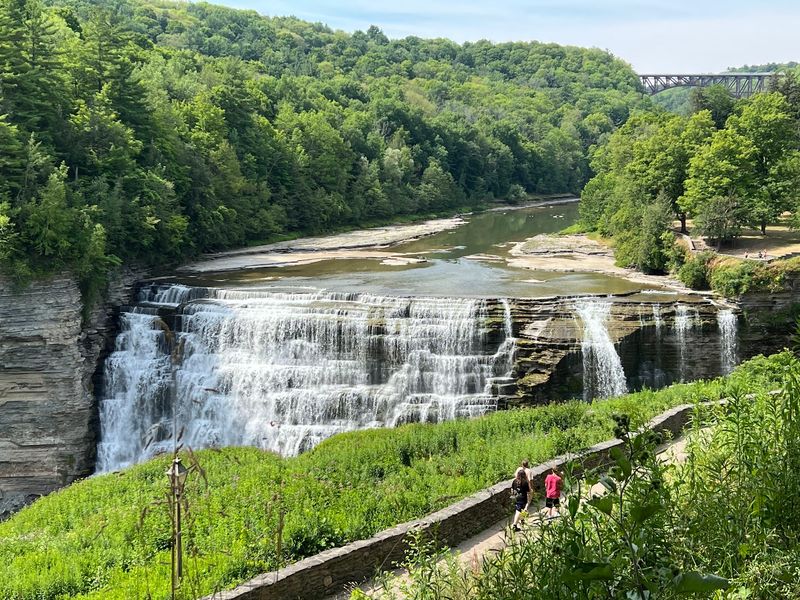
Upper Falls drops about 70 feet in a wide, foamy curtain. In autumn, the trees on both banks glow orange and yellow around the white water.
Parking near this spot is simple, so it works well for quick stops. Families with small kids or grandparents can reach good views without a long walk.
Photographers love this angle for a reason. The bridge, the falls, and the colorful cliffs all fit neatly into one frame.
Try catching it in the morning when the sun lights the spray. On clear days, a rainbow often hovers right over the plunge pool.
Middle Falls Steals The Spotlight
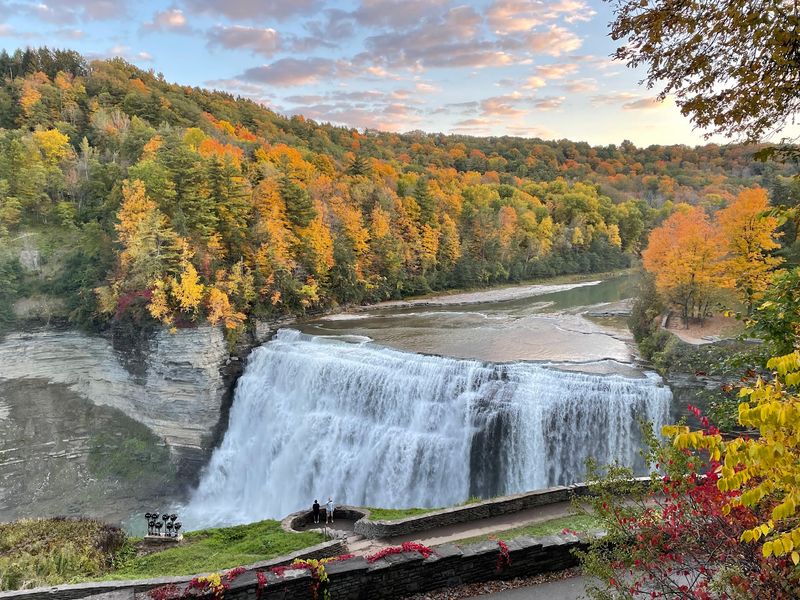
Ask a crowd to pick a favorite waterfall here, and many will point to Middle Falls. It is the tallest of the three, plunging around 107 feet.
The sound alone tells you how much water moves through this spot. On a calm day, you can feel the cool spray drifting up toward the railing.
Native Seneca people had a special name for this area. They called it the place where the sun lingers at midday, a fitting title for such a bright scene.
The overlook sits close to the Glen Iris Inn, the former Letchworth family home. Its porch faces the falls, which might be the best front yard in the state.
Fall paints the cliffs here in layers of red, rust, and gold. Combined with the white water, the view looks almost too tidy to be real.
After dark on select weekends in season, the falls are lit up with colored lights. Check the park calendar before you go, since schedules can change.
Bring a light jacket even on sunny days. The mist near the edge can be surprisingly chilly in October.
Lower Falls Rewards The Curious Hiker
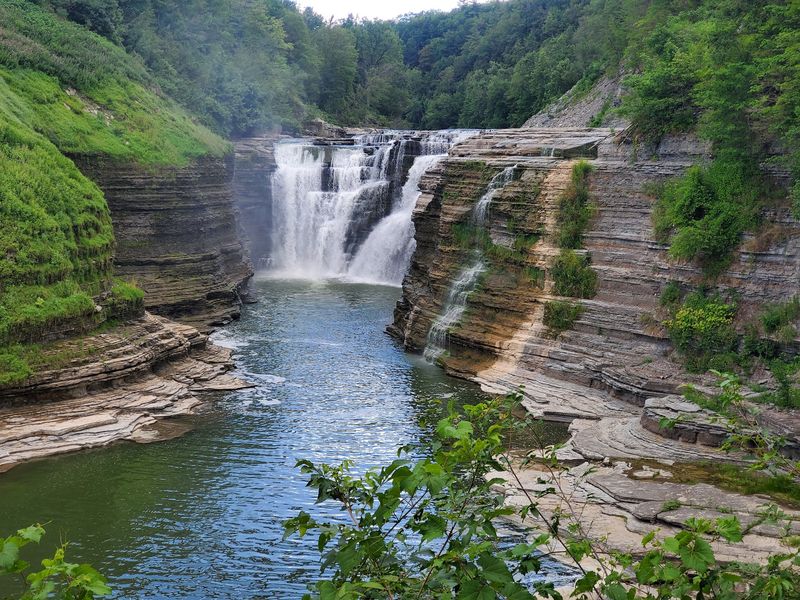
Good things come to those who take the stairs, and Lower Falls proves it. Reaching it means a walk of about half a mile, plus a long stone staircase.
Roughly 127 steps lead down into the gorge. Your legs will notice on the way back up, so pace yourself.
The falls drop about 70 feet into a narrow, twisting channel. Here the river feels wilder and more hidden than at the other two cascades.
A stone footbridge crosses the river just below the falls. Standing on it gives you a close look at the churning water and the walls rising on both sides.
The stonework you see came largely from the Civilian Conservation Corps in the 1930s. Those workers built many of the park’s walls, stairs, and shelters by hand.
Fall colors look extra dramatic from down here. You are looking up at the trees, so leaves seem to frame the whole sky.
Wear shoes with good grip, since steps can be damp from spray. Take your time and stop often, because the views improve with every turn.
Gorge Trail Ties The Waterfalls Together
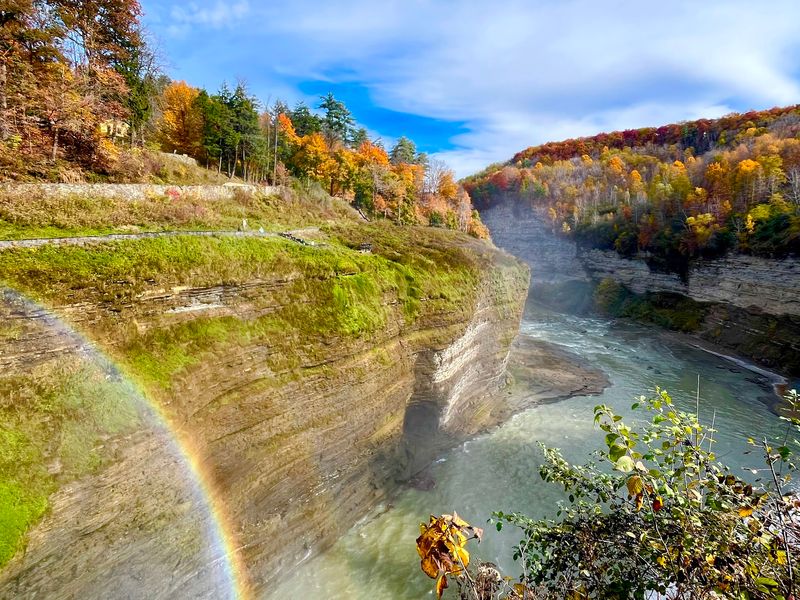
Want all three waterfalls in one outing? The Gorge Trail, also called Trail 1, is your best friend.
It runs about seven miles along the western rim of the canyon. The path links Upper, Middle, and Lower Falls with dozens of overlooks along the way.
Most of the trail is fairly flat, with some short climbs and stairs. Hikers of many skill levels can handle at least a section of it.
One thing to plan for is the return trip. The route is not a loop, so you will walk back the same way or arrange a car at each end.
Trail markers are clear and easy to follow. Restrooms also appear at several parking areas close to the path.
Park rangers lead guided waterfall hikes during warmer months. These walks share geology and history you might miss on your own.
In autumn, the trail feels like a moving gallery of color. Every bend reveals a new mix of yellow birch, orange maple, and deep green hemlock.
Start early to enjoy quieter paths and softer light. Mornings also tend to bring fresh mist rising off the river.
Scenic Overlooks You Can Reach By Car
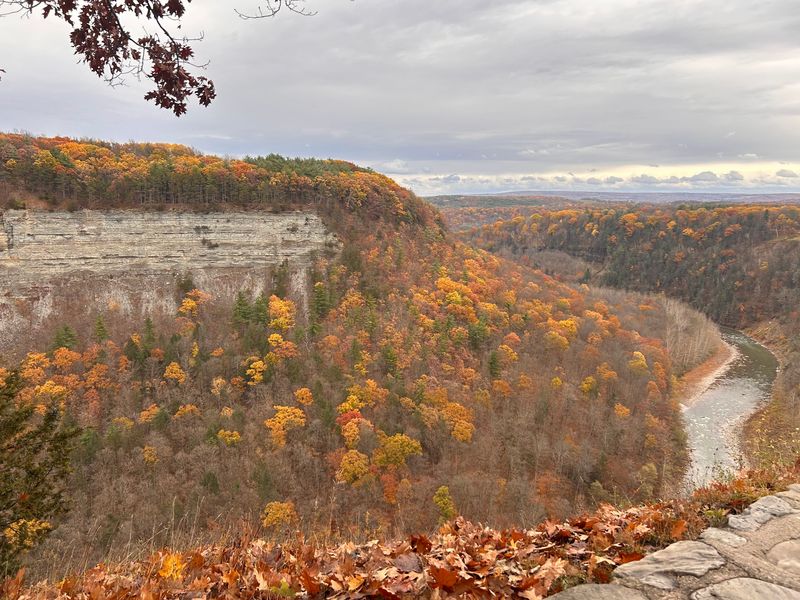
Hiking boots are optional when the views come right to the parking lot. The main park road runs along the rim, with pull-offs at many famous lookouts.
Inspiration Point is a favorite for good reason. From one spot, you can see both Upper and Middle Falls with the canyon stretching between them.
Tea Table offers another wide view down the gorge. It earned its name from old stone tables once used for picnics there.
Great Bend Overlook sits farther north and shows off a deep curve in the river. The cliffs there are among the tallest in the park.
Driving the full road takes a while, so give yourself time. The park is long and narrow, and slow travel lets you stop wherever color catches your eye.
Cell service is weak in many areas. Download maps before you arrive so you never feel lost.
Many people enter at Portageville on the south end and drive north. That way, the waterfalls come first while the morning light is still fresh.
Peak Leaf Timing Made Simple
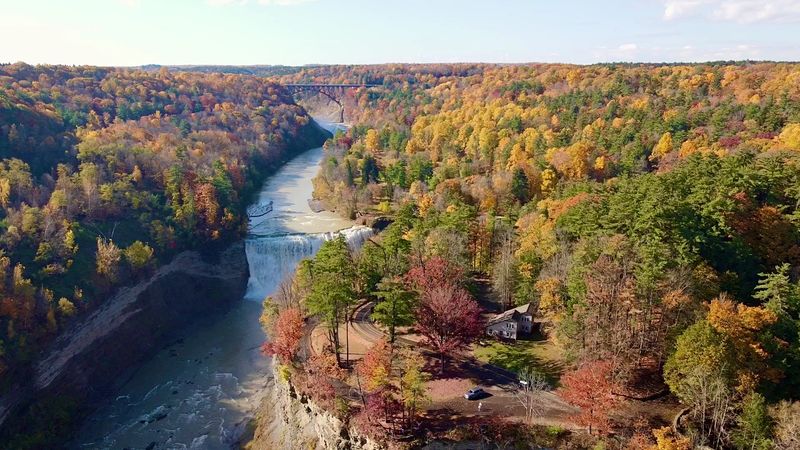
Timing is everything when chasing leaves. Arrive too early and the trees are still green, too late and the branches look bare.
In this part of the state, colors usually peak from early to mid October. Exact dates shift each year based on rain, temperature, and wind.
The state tourism office publishes a weekly fall foliage report. Checking it before your trip can save you from guessing.
Different trees change at different speeds, which works in your favor. Sugar maples flash bright orange, while oaks hold deep reds a little longer.
Weekends in peak season get crowded, especially around the falls. A weekday trip often means easier parking and quieter overlooks.
Morning fog in the gorge is common on cool fall days. As it lifts, the colors seem to appear one layer at a time.
Bring layers, since mornings can feel cold and afternoons warm up fast. A thermos of hot cocoa makes the overlooks feel even cozier.
Keep an eye on the river too. Water levels after rain make the waterfalls louder and more powerful.
History Lives At The Humphrey Nature Center And Museum
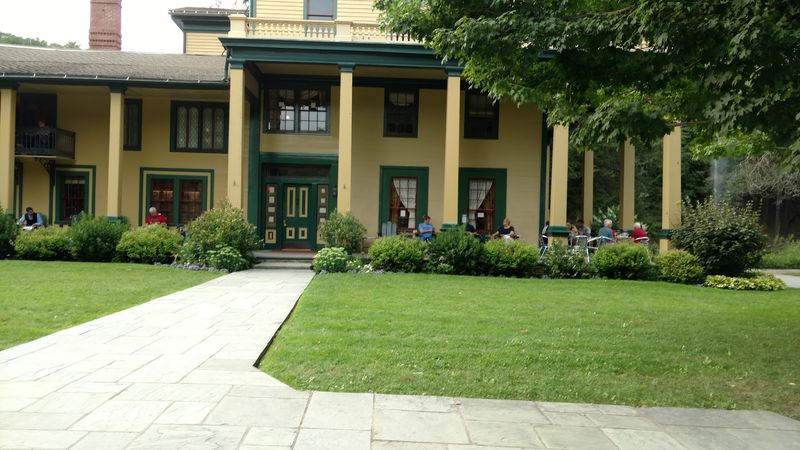
Every great view hides a story, and the park keeps several worth hearing. The Humphrey Nature Center opened in 2021 and makes learning feel easy.
Inside, displays explain how glaciers and the river shaped the gorge. Kids enjoy hands-on exhibits about the plants and animals living here.
Short trails leave right from the center, including gentle paths through meadow and forest. They are perfect for little legs that are tired of big hikes.
Near the Glen Iris Inn sits the William Pryor Letchworth Museum. It holds artifacts about the family, the Seneca people, and early settlers of the valley.
Close by is the grave of Mary Jemison, a woman whose life story fascinated readers for generations. Her statue stands near a historic Seneca council house.
These spots add depth to the colorful scenery. Knowing the history makes each overlook feel richer.
Hours can vary by season, so confirm before planning your day. Pairing a museum stop with a short hike makes a well-rounded afternoon.
Adventures Beyond The Waterfalls
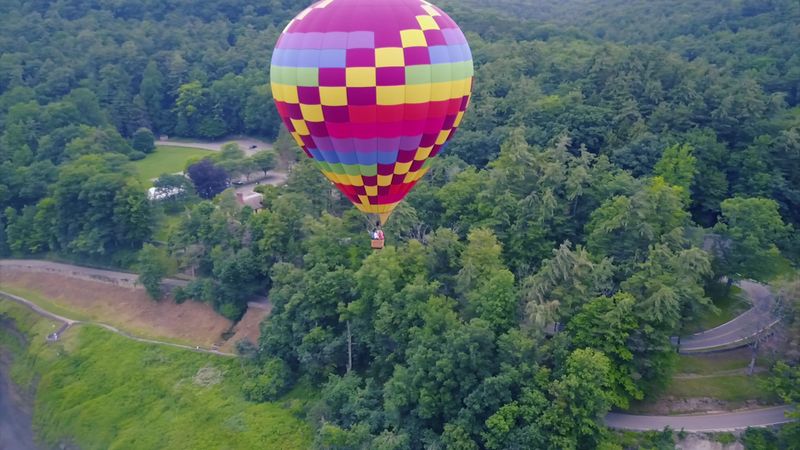
Hot air balloons over a canyon sound like a dream, yet they happen here. Licensed operators offer balloon rides in good weather from spring through fall.
Seeing the gorge from above shows just how twisty the river really is. In autumn, the treetops look like a giant patchwork quilt.
Prefer to stay closer to the ground? Guided whitewater rafting trips run through the northern part of the gorge during the season.
The park also offers about 66 miles of trails for hiking. Some routes welcome horseback riding and mountain biking too.
Families love the swimming pools during summer months. Picnic areas and reservable pavilions make group outings simple.
When snow arrives, the fun keeps going. Cross-country skiing, snowshoeing, and snowmobiling all have their place here in winter.
Check with outfitters before booking any guided activity. Seasons and schedules depend on weather and river conditions.
With this many options, a single day can feel short. Many people plan return trips just to try something new.
Smart Tips For Planning Your Trip
A little planning turns a good day into a great one. Start by knowing the park is open daily from 6 a.m. to 11 p.m.
A vehicle entrance fee applies during much of the day. Bring a card or cash, and check the official state parks website for current rates.
Staying overnight lets you enjoy sunrise over the gorge. The park has a large campground with tent sites, RV spots, and cozy cabins.
The Glen Iris Inn offers rooms with a classic, historic feel. Its location near Middle Falls is hard to beat.
Plan for at least a full day, and two is even better. The park is long, and rushing means missing great views.
Pack snacks, water, and sturdy shoes before you leave home. Gift shops and a snack bar operate seasonally, but options are limited.
Remember to stay behind railings and on marked trails. The cliffs are steep, and safety keeps the fun going.
With a plan in hand, you are ready. Letchworth State Park in fall is a memory you will want to make again and again.