
The Old-School Indiana German Deli That Locals Keep Secret For Authentic Finds
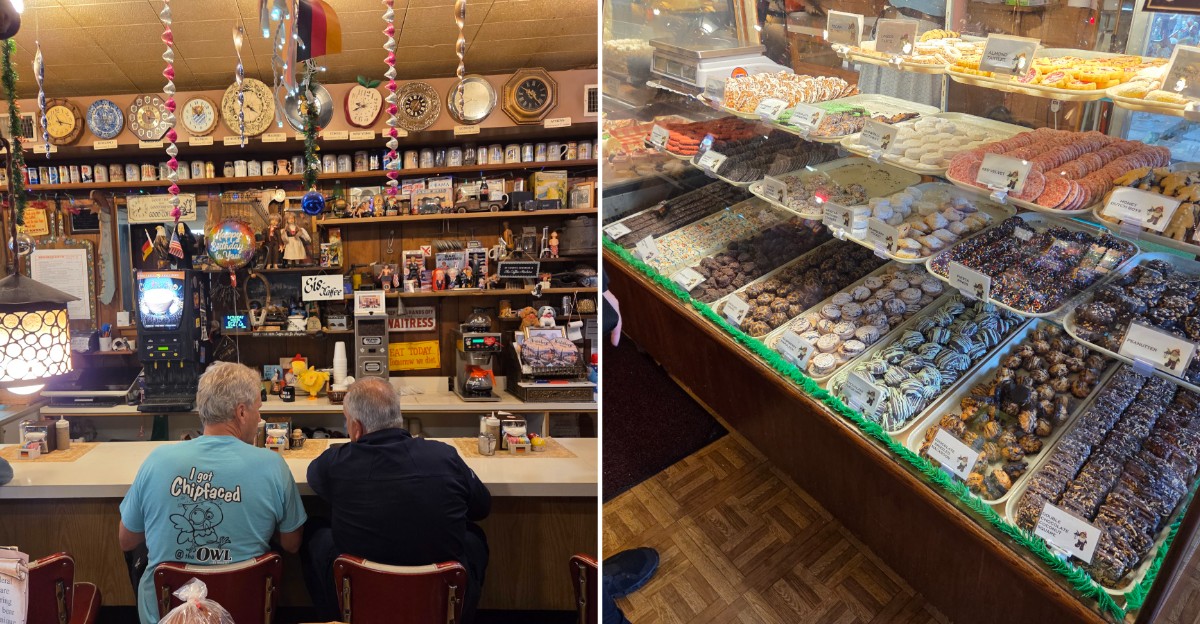
Ask anyone in a German household what a real deli smells like, and the answer comes fast: smoked meat, rye bread, and sharp mustard. An Indiana deli keeps that scent alive every single day.
Cases hold bratwurst, knockwurst, and liverwurst made the way grandparents once insisted on. Sliced ham and smoked sausage get cut to order, wrapped in white paper.
Rye and pumpernickel loaves sit on the shelves beside jars of sauerkraut and pickled beets. Spicy brown mustard and horseradish line the counter in glass jars.
Imported chocolates and cookies crowd the corner near the register. Locals stop in on Saturday mornings and leave with a week’s worth of lunches.
Older customers swap stories in German with the folks behind the counter. Younger shoppers come for the sausage and stay for the stories.
Word about this deli travels quietly between neighbors, never loud and never advertised. An old-school deli like this proves that real flavor lives in the small shops that never changed.
A Pastry Chef With A Big Dream
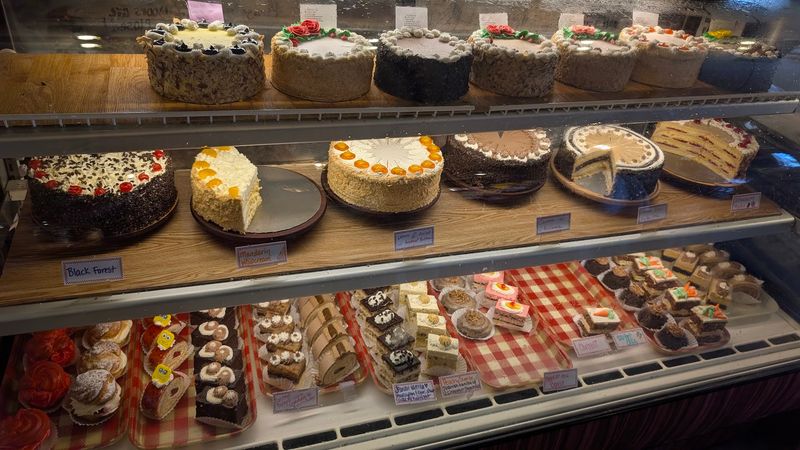
Back in 1968, a pastry chef from Karlsruhe, Germany, made a bold move. Jurgen Jungbauer, who had also served in the U.S.
Army, bought a little spot called Paul’s Drive-in Bakery.
He did not just want to sell rolls and cakes. His goal was bigger and a lot more heartfelt.
He wanted a place where German and American cultures could meet over good food.
And it worked. More than five decades later, Heidelberg Haus is still going strong on the east side of Indianapolis.
That is a long run for any small business, let alone one stuffed with gnomes.
The city noticed, too. Indianapolis proclaimed June 30, 2018, as Heidelberg Haus Day.
Imagine having a whole day named after your bakery. Most of us are lucky to get a cake with our name on it.
In 2021, Jungbauer received the German American Friendship Award from the Federal Republic of Germany. That honor recognized years of building friendship between the two countries, one pastry at a time.
Here is a fun bonus. Jungbauer once said he wanted the Lawrence area to be known for gnomes.
Judging by the collection inside, he is well on his way.
If you love places with real roots and a founder who actually shows up, this one checks every box. You can find it at 7625 Pendleton Pike, Indianapolis, IN 46226.
Six Hundred Gnomes And Counting
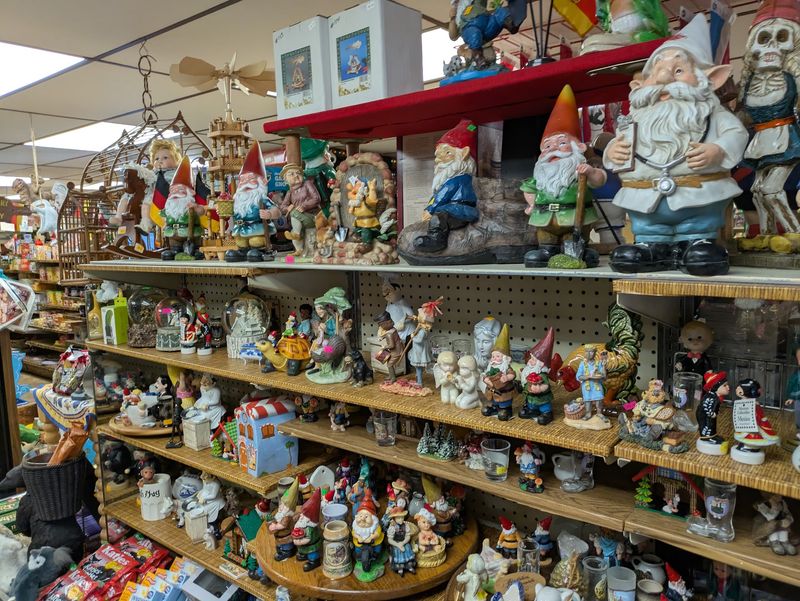
Most shops have a mascot. Heidelberg Haus has an army.
Around 600 gnomes live here, and they seem perfectly happy about it.
They peek out from shelves, corners, and tabletops. Some are tiny enough to fit in your palm.
Others look like they could guard a full-size garden with a stern little frown.
Gnomes have deep roots in German folklore. Long ago, people believed these small creatures protected homes and gardens, especially at night.
So in a way, this place may be the best-guarded bakery in Indiana.
Kids usually go wild trying to spot the funniest one. Adults pretend they are not doing the same thing, but they totally are.
A simple tip is to turn it into a game and count how many fishing gnomes you can find.
Plenty of these little guys are for sale. That means you can take one home to watch over your tomato plants or your front porch.
Fair warning, though, because one gnome often leads to three.
The collection also says something about the owner’s sense of humor. He wanted Lawrence to be famous for gnomes, and he did not wait for anyone’s permission.
Bring your phone for photos. You will want proof that a gnome crowd this size really exists in the middle of Indianapolis.
Decor Straight Out Of A Bavarian Attic
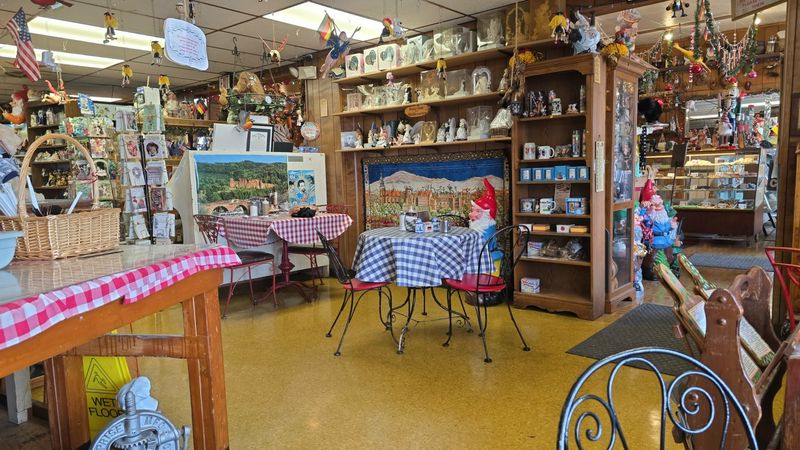
Some restaurants hire designers. Heidelberg Haus seems to have hired a very enthusiastic German grandmother with an attic full of treasures.
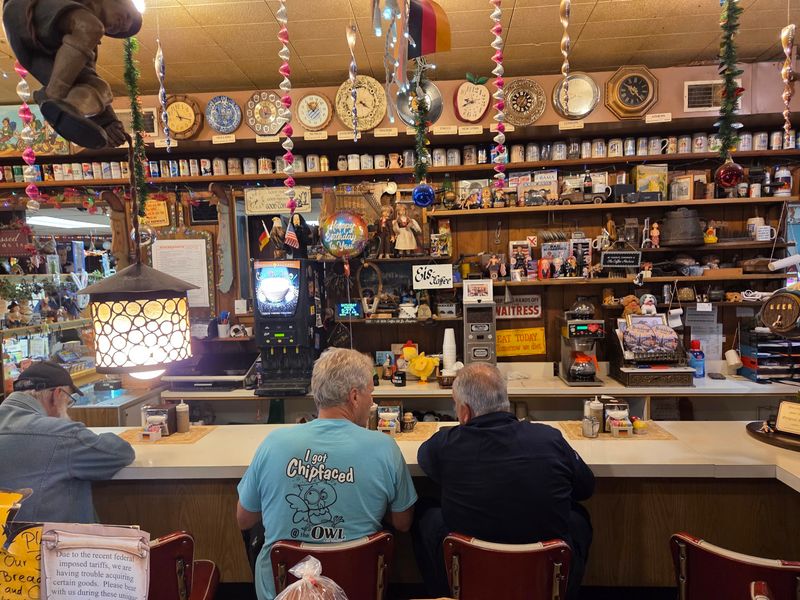
Every wall is covered from floor to ceiling. Antique baking tools hang near decorative steins, wood carvings, and German gifts.
The owner calls the look kitsch or mish-mash, and honestly, that is the charm.
The space ends up feeling like a cross between an old bakery and a small museum. You could look around for an hour and still miss half of it.
The next visit will reveal something brand new, guaranteed.
Old baking equipment is a highlight here. Those tools tell the story of how bread and pastries were made long before electric mixers took over kitchens.
It is a little history lesson hiding behind the cake case.
If you are someone who likes clean and simple spaces, take a deep breath first. This is the opposite of minimal.
It is cheerful, crowded, and full of personality.
A smart idea is to arrive with a little extra time. Rushing through would be like skimming a great book just to reach the last page.
The atmosphere is half the reason people make the trip. The food brings them in, but the decor gives them stories to tell on the drive home.
Sausages That Never Needed A Makeover
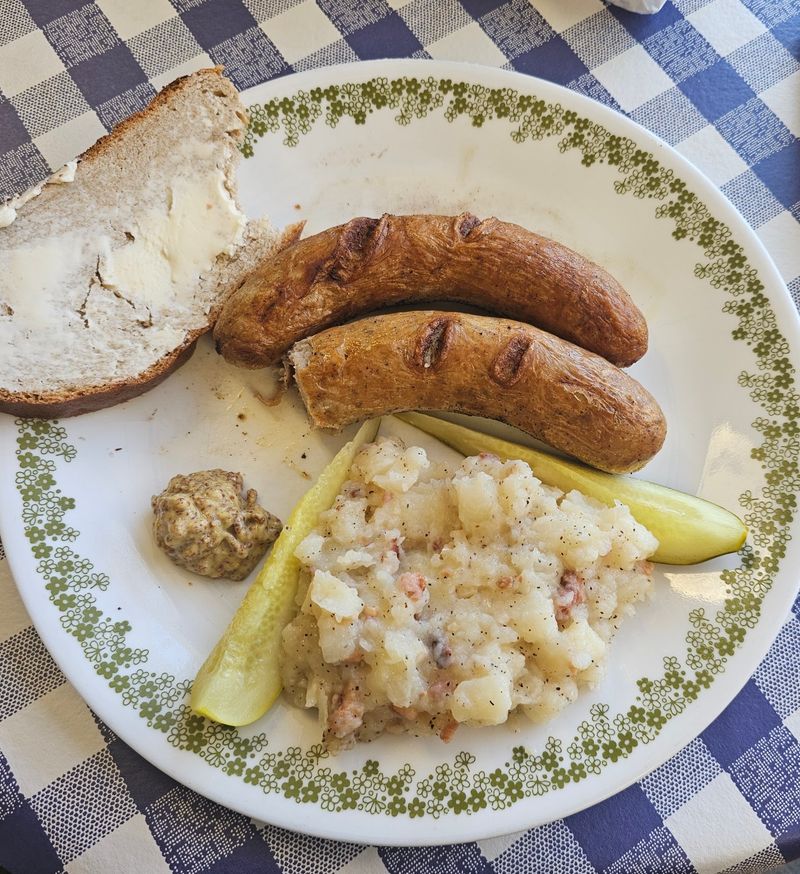
Here is a menu that has barely changed since 1968. In a world where restaurants reinvent themselves every year, that is almost rebellious.
The sausage lineup is classic German comfort. Bratwurst, knockwurst, frankfurters, and kielbasa all make an appearance.
Each one brings its own flavor and texture to the plate.
Bratwurst is the crowd favorite for good reason. It is juicy and mildly seasoned.
Knockwurst is shorter and plumper, with a garlicky kick that wakes up your taste buds.
Then there is the potato salad. It is homemade and served warm, German style, with a tangy flavor instead of a heavy mayo coating.
Many people end up wishing they had ordered a bigger scoop.
Rye bread usually comes along for the ride. It is hearty and perfect for wiping up every last bit on your plate. Nobody is judging here.
Currywurst is another tasty option worth knowing about. It is sliced sausage covered in a curry-spiced sauce, and it is a famous street food all over Germany.
The best advice is to go hungry. These are honest, filling meals made the way they have been made for decades.
Sometimes the old recipe really is the best, and this kitchen proves it daily.
Black Forest Cake Worth The Drive
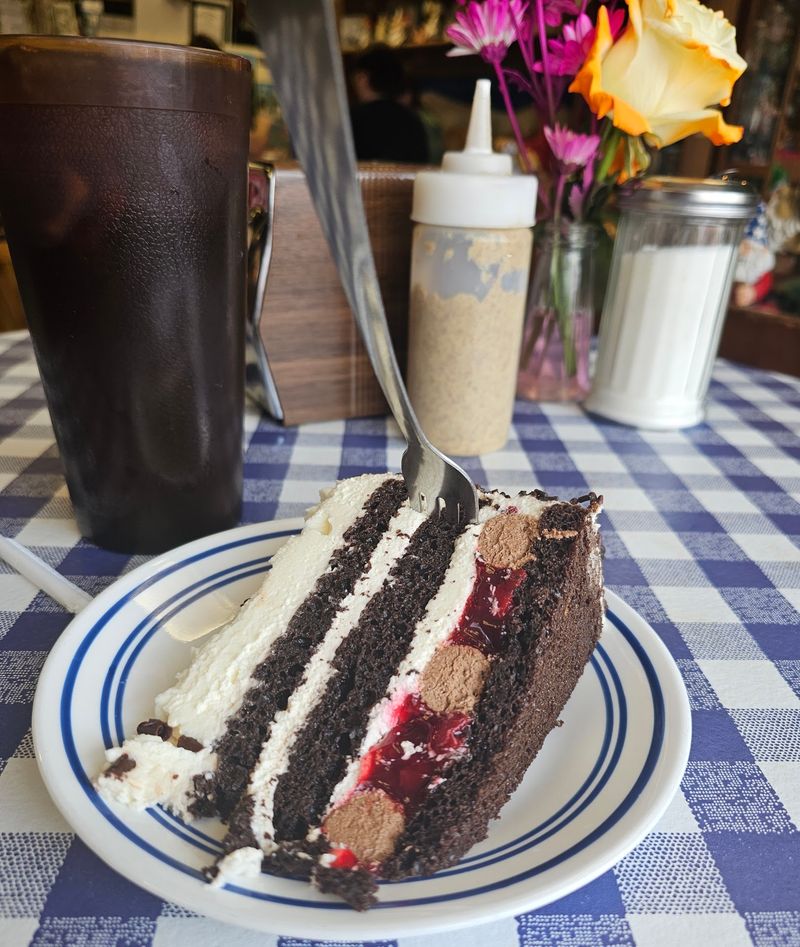
Picture a glass case so full of cakes that choosing one feels like a math test. Welcome to the bakery counter, the true heart of Heidelberg Haus.
Black Forest cake is a superstar here. Layers of chocolate cake, cherries, and whipped cream stack up into something truly special.
German chocolate cake is right behind it, loaded with coconut and pecan frosting.
Fun fact time. German chocolate cake is not actually from Germany.
It is named after an American baker named Samuel German, who created a type of baking chocolate in the 1850s.
The buttercream tortes deserve their own fan club. Buttercream lovers will be very happy.
The frosting is rich and smooth without tasting like pure sugar.
Beyond the cakes, the case holds danishes, rolls, strudels, and kuchen. Kuchen simply means cake in German, and it often comes topped with fruit or crumbly streusel.
Saturday visitors should look for Bee Sting Cake. It has a crunchy honey-almond topping and a creamy filling inside.
The name sounds scary, but the only thing that stings is finishing your last bite.
Planning a birthday or party? Whole cakes make a great choice and travel well.
Just try not to eat a slice in the car before you get home.
Springerle Cookies Pressed From Century Old Molds
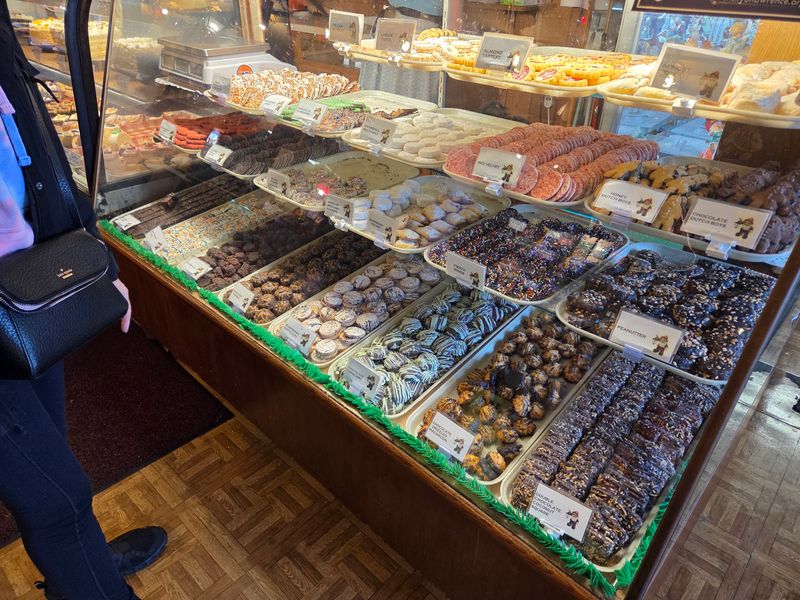
Christmas brings out a very old tradition at this bakery. Springerle cookies show up each holiday season, and they are pretty enough to frame.
These cookies are white, firm, and flavored with anise, which tastes a bit like licorice. What makes them special is the picture pressed onto the top of each one.
Here is the cool part. The bakery uses hand-carved molds that are over a hundred years old.
Every cookie carries a design that someone carved by hand long before your grandparents were born.
Springerle date back hundreds of years in southern Germany and Switzerland. Families once used them to share Bible scenes, animals, or flowers during the holidays.
They were like edible greeting cards.
The process takes patience. The dough gets pressed into the mold, then the cookies dry for many hours before baking.
That drying step helps the design stay sharp instead of melting into a blob.
If you have never tried one, know that they are crunchy at first. Many people let them soften a bit or dunk them in coffee or hot cocoa.
They also make a thoughtful gift. Giving someone a cookie shaped by a century-old mold feels a lot more meaningful than another gift card.
Grab them early, since holiday treats rarely last long.
A Grocery Aisle Packed With European Treats
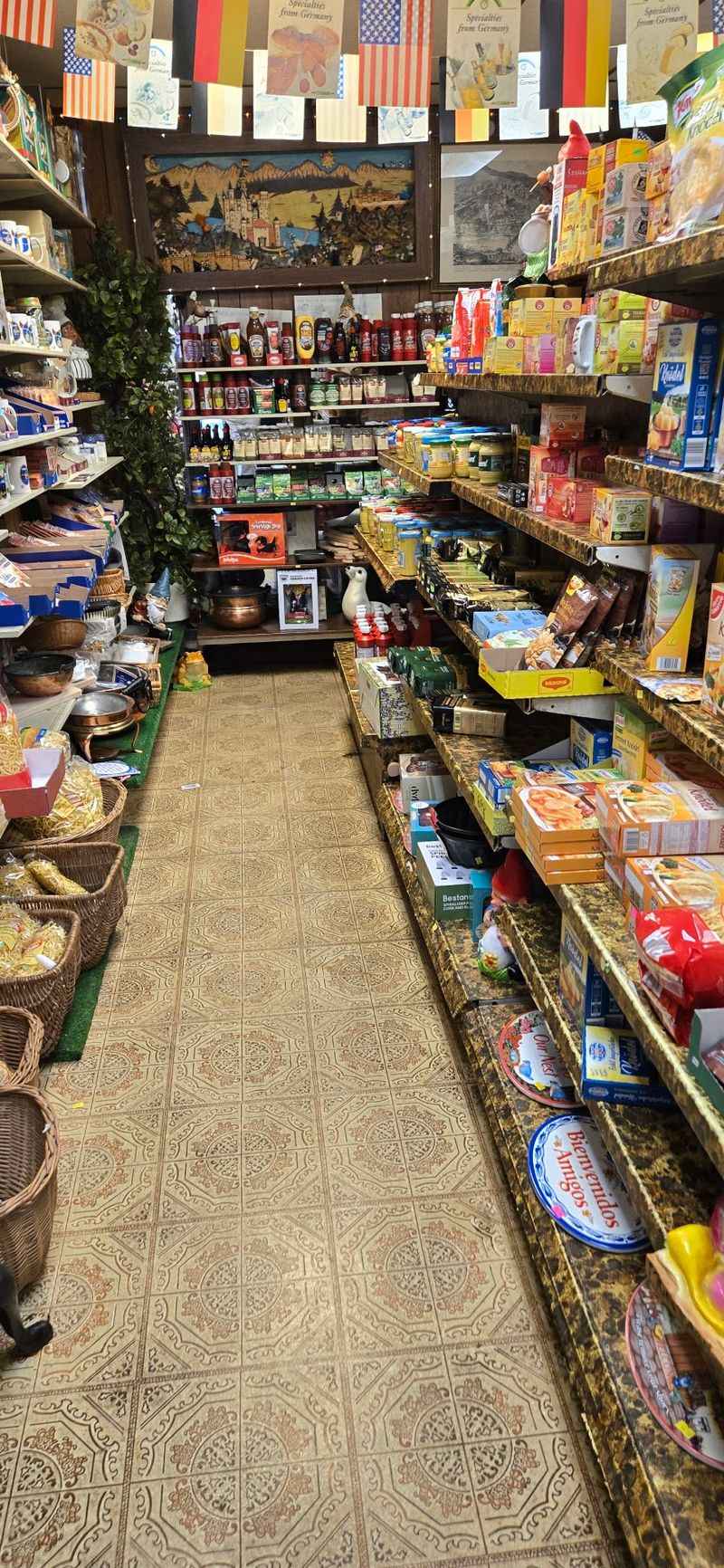
Ever craved a candy bar you tried on vacation and could not find again? That hunt might end right here.
The grocery and gift section stocks imported treats from Germany, Switzerland, and Austria. Milka chocolate, with its famous purple wrapper, sits alongside colorful squares of Ritter Sport.
Haribo gummies are here too. Haribo started in Germany back in 1920, and those little gold bears are now loved around the world.
Seeing the full selection can make any kid, or grown-up, a little giddy.
The shelves go beyond candy. You will find mustards, pickles, spreads, cookies, and other packaged goods that rarely show up at big chain stores.
There are even frozen German meat products for cooking at home.
This section is a lifesaver for anyone with German roots. Missing a taste from childhood?
The answer might be sitting on a shelf in the back.
Gift shopping gets easier too. A basket filled with European chocolates and snacks makes a fun present for teachers, neighbors, or coworkers who seem to have everything.
A helpful tip is to read labels slowly and try one new item each visit. Treat it like a tasty adventure.
Before long, you will have a list of favorites nobody else in your friend group has heard of.
A German Movie Corner Nobody Expects
Bakery, cafe, grocery, gift shop, and movie center. Most businesses pick one job.
Heidelberg Haus apparently picked all of them and said Why not.
The German Language Video Center is one of the quirkiest corners in the building. It offers classic German films for purchase.
That is rare to find anywhere in the Midwest, let alone next to a cake case.
Watching movies in German is a great way to practice the language. Students can pick up everyday phrases, and families with German heritage can share old favorites with younger relatives.
Now here is the really handy part. The center also transfers VHS tapes to digital formats. It can even repair damaged tapes.
Think about those dusty boxes in your closet. Old birthday parties, school plays, and family holidays might be sitting on tapes that are slowly wearing out.
Getting them converted keeps those memories safe for years to come.
Bringing tapes along on a bakery run is a smart move. Drop them off, grab a pretzel, and head home feeling very productive.
This little service shows the real spirit of the place. It is not just about selling things.
It is about keeping culture and memories alive, whether they come from Germany or from your own living room.