
This Tennessee Mountain Drive Takes You Through 11 Miles Of Storybook Scenery
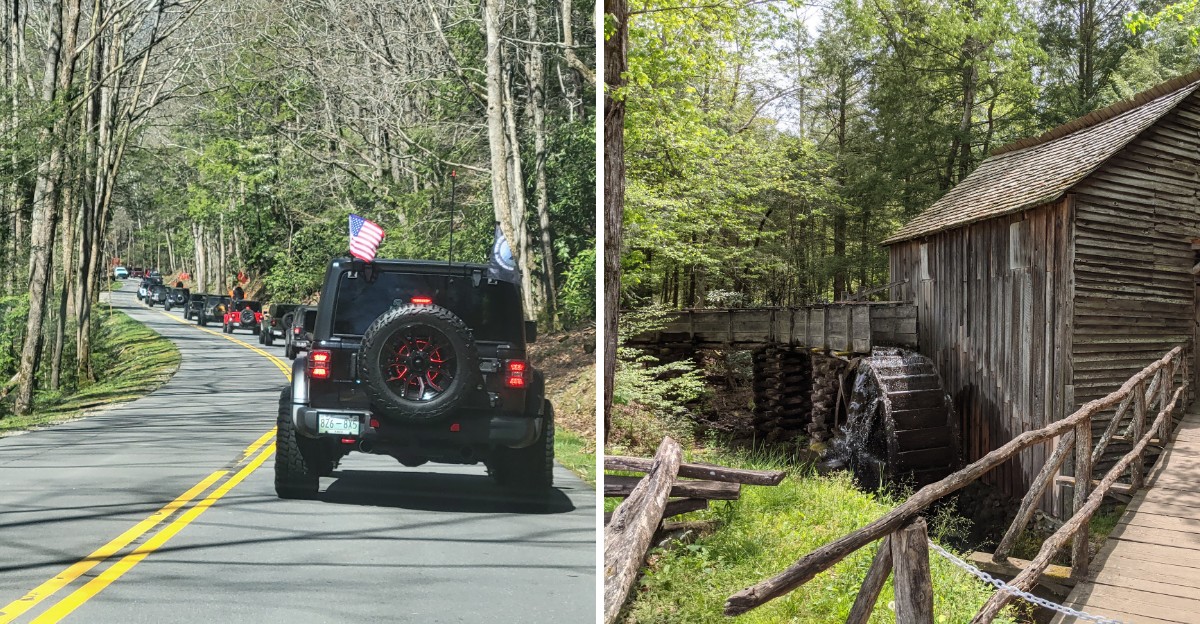
What if an ordinary drive could make you feel like you had somehow landed inside the pages of a storybook? No fancy attractions or expensive tickets needed.
Just a winding road, beautiful scenery, and plenty of reasons to slow down.
Tennessee has an incredible mountain drive that stretches for 11 miles through some of the prettiest landscapes you could hope to see.
Picture wide green meadows, old wooden cabins, and mountain peaks rising in the distance. Deer might be grazing beside the road, and if you are lucky, you could even spot a black bear enjoying its day.
Every curve brings another view worth pulling over for, especially when autumn colors cover the surrounding hills.
The drive itself is only part of the experience. Historic buildings, peaceful surroundings, and unexpected wildlife sightings make those 11 miles feel like a little adventure.
You might even wish the road were twice as long.
An 11-Mile Loop Where Slow Is The Whole Point
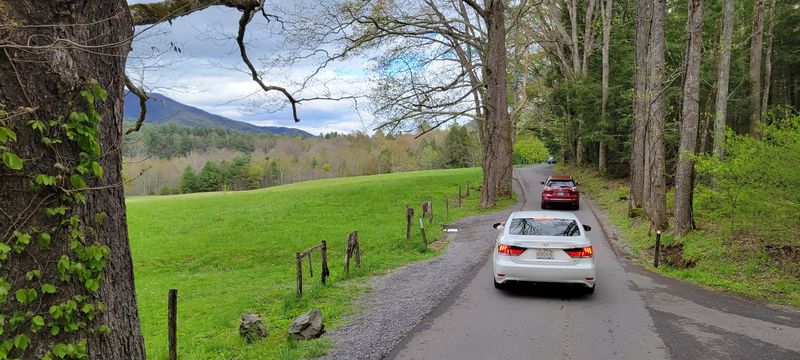
Speed demons, please take a breather. Cades Cove Loop Rd is an 11-mile, one-way paved road with a posted limit of just 20 mph. Most cars move even slower, and that is exactly the charm.
The drive circles a wide valley inside Great Smoky Mountains National Park. Rolling fields stretch out on both sides.
Mountain ridges stand guard all around, like a giant green bowl.
Plan on two to four hours for the trip. On busy fall weekends, it can stretch to four to six hours. That sounds long, but nobody comes here to rush.
Pull-offs line the route, so you can stop and soak up the views safely. Use them often.
Stopping in the middle of the road may be tempting when a deer appears, but your fellow drivers will thank you for pulling aside. Bring water, snacks, and a full tank of gas. There are no stores along the loop itself.
A charged phone or camera is a smart move too, since the photo chances seem endless.
Think of the loop as a moving museum with a view. Each mile reveals something new, from old homesteads to grazing wildlife. Patience turns this short drive into a full adventure worth every minute.
Finding The Way To The Valley Entrance
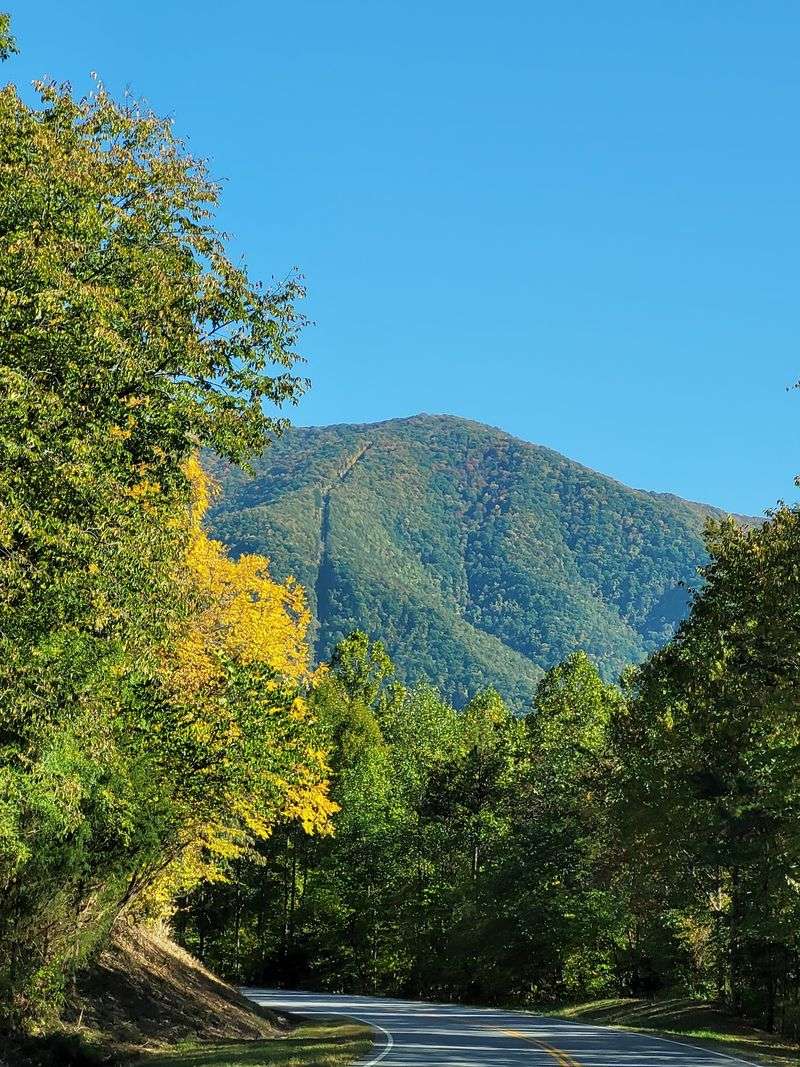
Good news for map lovers: getting here is half the fun. The road to Cades Cove follows rivers and forest that feel like a warm-up act for the main show.
For GPS, many people use Laurel Creek Rd, Townsend, TN 37882. That points you toward the loop entrance near the town of Townsend, Tennessee.
Laurel Creek Road leads straight to the start of the drive.
Coming from Gatlinburg takes a little longer. Follow the Parkway past the Sugarlands Visitor Center. Then turn right onto Little River Road.
Stay on that road for about 25 miles. Little River Road then becomes Laurel Creek Road, which ends at the Cades Cove entrance. The ride hugs a lively mountain stream for much of the way.
Cell service can be spotty in the park. Download your directions or grab a paper map before you leave town. It saves a lot of guessing later.
Arriving early has a big payoff. Traffic is lighter, and the valley is calmer in the first hours of daylight. Weekdays tend to be quieter than weekends, too.
A parking tag is required for vehicles parked in the national park longer than 15 minutes. Buy one online or at a visitor center before your trip. It keeps the day stress free.
From Place Of The River Otter To Mountain Farm Town
Long before cars rolled through, this valley had a lovely name. The Cherokee called it Tsiyahi, which means place of the river otter. They used the land as a hunting ground.
European settlers arrived in 1818. John Oliver and his wife, Lucretia Frazier, were the first to make a home here. Life was hard, but the soil was rich and the views were hard to beat.
More families followed over the years. By 1900, more than 700 people lived in Cades Cove. They farmed, worshipped, and built a close community far from big cities.
Things changed when the area became part of Great Smoky Mountains National Park. The park plans began in the late 1920s. Today, the old buildings stand as a window into mountain life.
Driving the loop feels like reading a history book with the pages spread across a valley. Each cabin and church tells part of the story. Kids often love guessing how families lived without electricity.
A self-guiding tour booklet is often sold near the start of the loop. It explains each numbered stop in simple terms. For a small price, it adds rich detail to every pull-off.
Log Cabins Built Without A Single Nail
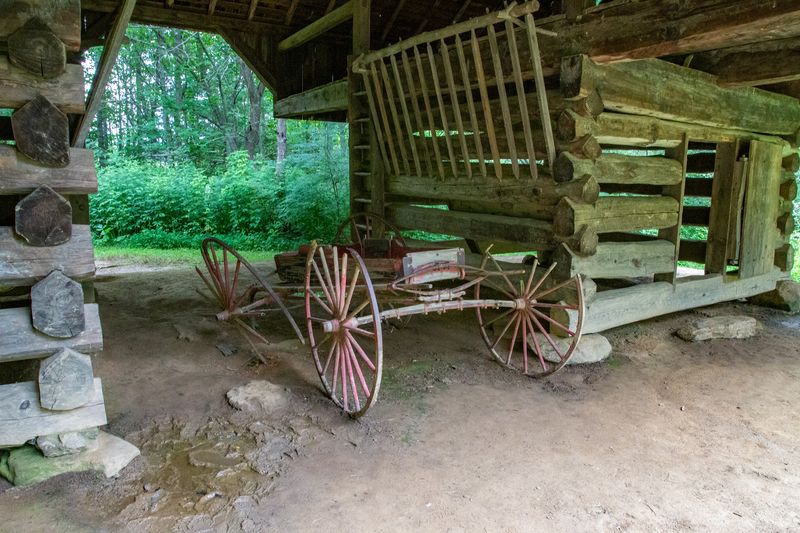
Here is a fun puzzle for the car ride. How do you build a house with no nails at all? The John Oliver Cabin holds the answer.
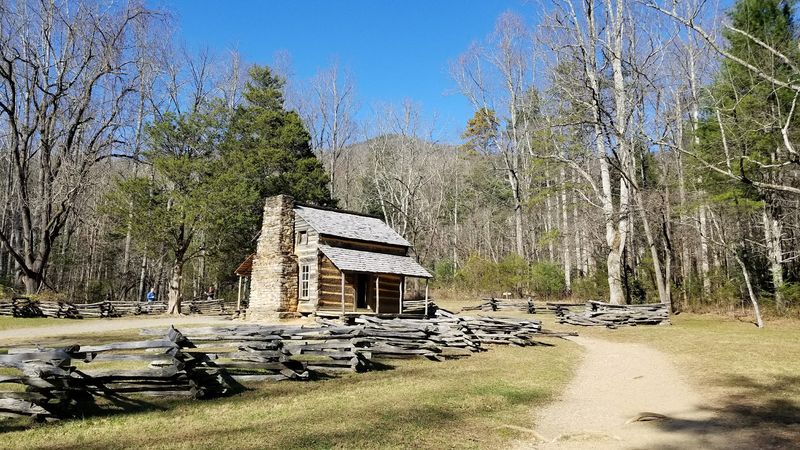
This simple log home is considered the oldest structure built by people in the national park. The logs fit together with careful notches. Neither nails nor pegs hold it in place.
A short walk from the road leads to the cabin. A path makes it easier to reach. Step inside and imagine a family cooking by the fireplace on a cold mountain night.
Farther along, the loop shows off more pioneer craftsmanship. The Becky Cable House is a two-story home near the mill area.
Cantilever barns, with their wide overhanging tops, stand out as true mountain designs.
Smokehouses and blacksmith shops dot the landscape, too. Each one shows how families stored food and made tools by hand. Nothing went to waste in these hills.
Take your time at these stops. Run your eyes over the rough wood and tight corners. The skill on display is amazing, especially without modern tools.
Please treat the buildings gently. Avoid carving, climbing, or writing on any surface. They have lasted this long, and careful guests help them last much longer.
Quiet Churches Standing Among The Hills
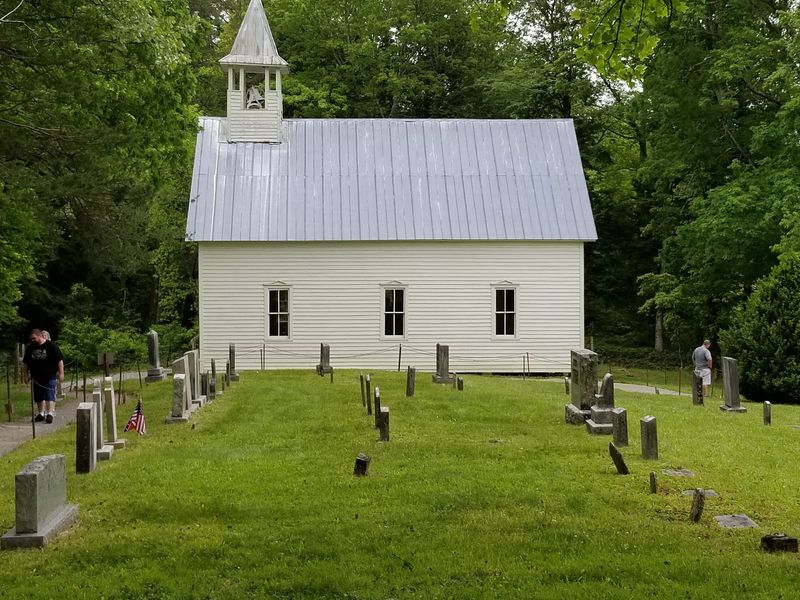
Some places invite you to whisper without being asked. The three historic churches of Cades Cove are just like that. Their white walls glow against the green hillsides.
The Primitive Baptist Church is one of the most famous. Its congregation dates back to 1827. The churchyard holds the oldest cemetery in the cove, with simple stones marking early families.
The Methodist Church and the Missionary Baptist Church complete the trio. Each one sits in its own peaceful setting. Together, they show how faith held this mountain town together.
Step inside and notice the plain wooden pews. There are no fancy decorations here. The beauty comes from the simple design and the quiet feeling in the air.
Families would travel by foot or wagon to reach Sunday services. Church was also a place to catch up on news and see friends. It was the heart of the community.
Photographers love these buildings in early light. Morning sun paints the walls with a warm glow. Fog lifting off the fields can add a dreamy touch.
Keep voices low and walk respectfully through the grounds. These spaces still mean a lot to descendants of the families who lived here. A gentle step honors their memory.
A Gristmill That Still Gets To Work
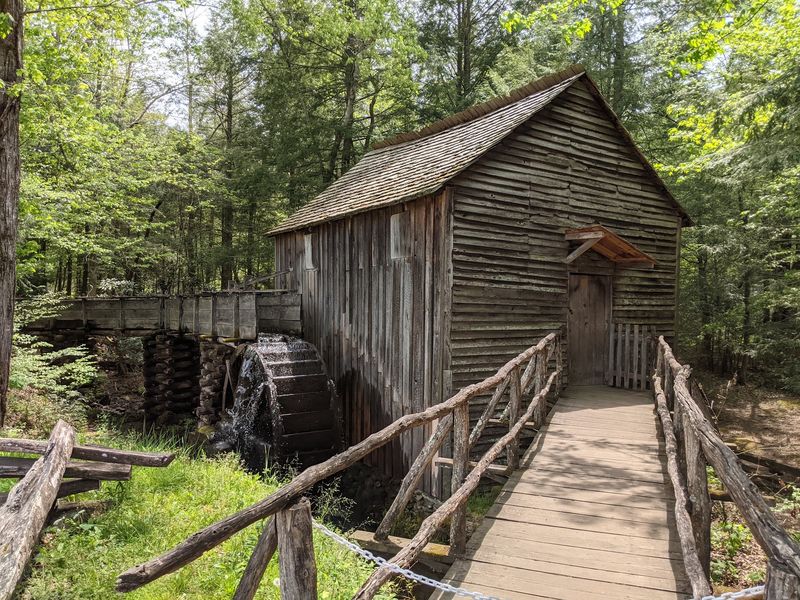
Want to see history actually move? Head to the Cable Mill, about halfway around the loop. Its water wheel still turns, just like it did long ago.
The mill was built in 1867. It grinds corn using power from flowing water. From spring through fall, it often runs so guests can watch the process up close.
Nearby, the Cades Cove Visitor Center adds even more to explore. Inside, exhibits share stories about mountain farming. Park staff can answer questions and give helpful tips.
Restrooms are available here, which is great news on a long drive. Accessible parking and restrooms are also offered. It is the perfect spot to stretch your legs.
The area around the mill is like a small village. You can see a barn, a smokehouse, and other old buildings in one stroll. It gives a full picture of daily farm work.
Children often get excited watching the big wheel spin. Explain how water pushes the wheel to turn heavy stones inside. It turns a stop into a science lesson.
Plan to spend at least 30 minutes here. There is a lot to take in. The mill area may be the most hands-on history stop on the whole loop.
Bears, Deer, And Turkeys Steal The Show
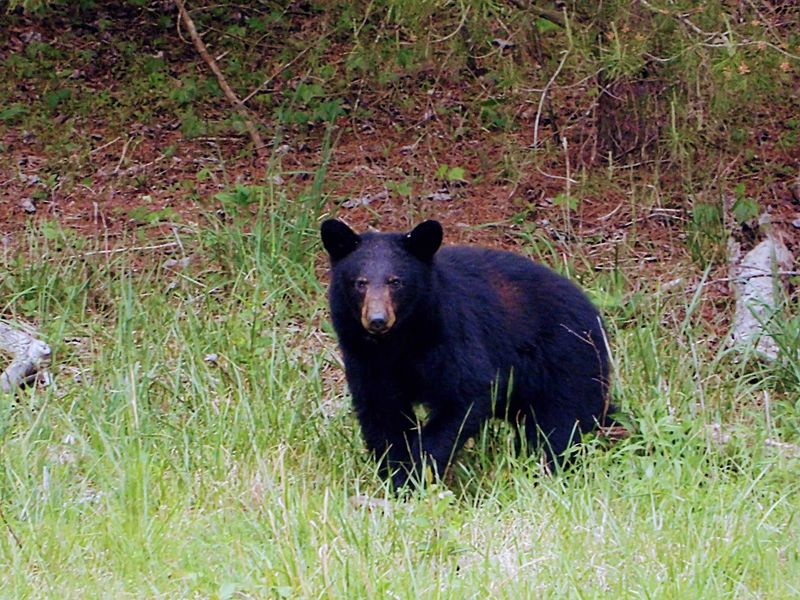
Forget the cabins for a moment. For many people, the real stars of Cades Cove have fur and feathers. Wildlife sightings here are some of the best in the Smokies.
White-tailed deer often graze in the open fields. They look calm and graceful in the morning light. Wild turkeys strut along the grass like they own the place.
Black bears are a big highlight. They are often spotted in the early morning or late afternoon. Watch the tree lines, where bears like to search for food.
Keep an eye out for smaller animals, too. Groundhogs, raccoons, chipmunks, coyotes, and skunks live in the valley. A sharp eye can turn up surprises around every bend.
For the best chances, arrive between sunrise and 9 AM. Another good window runs from about 5 PM to 7 PM. Animals tend to be more active during cooler hours.
Safety comes first with wild neighbors. Stay at least 50 yards away from bears and elk. Never feed any animal, since it harms their health and habits.
Binoculars or a camera with zoom make a huge difference. You can enjoy close views while giving animals plenty of space. Everyone stays happy that way.
Trails, Bike Days, And A Waterfall Worth The Walk
Ready to swap the steering wheel for hiking boots? Cades Cove offers trails for nearly every energy level. Some are short and easy, while others lead to a roaring reward.
Abrams Falls is the crowd favorite. The roundtrip hike is about five miles. At the end, water pours into a wide pool framed by trees.
Want something lighter? The Cades Cove Nature Trail is an easy loop of about two miles. It works well for kids and casual walkers.
Cyclists, take note of this treat. On Wednesdays from May through September, the loop road closes to cars. Bikes and walkers get the whole valley to themselves.
Bike rentals are often available near the campground store in season. Ride early to enjoy cool air and quiet fields. Bring a helmet and plenty of water.
Camping and picnic areas let you stretch the fun into a longer stay. A picnic lunch with mountain views is hard to top. Pack your trash out to keep the area clean.
Cades Cove proves that a great day in Tennessee does not need fancy plans. A road, a trail, and an open meadow are plenty.
Come back in another season, and the valley will feel brand new again.