
This Michigan Cider Mill Piles Hot Donuts On The Table And Keeps Locals Coming Back
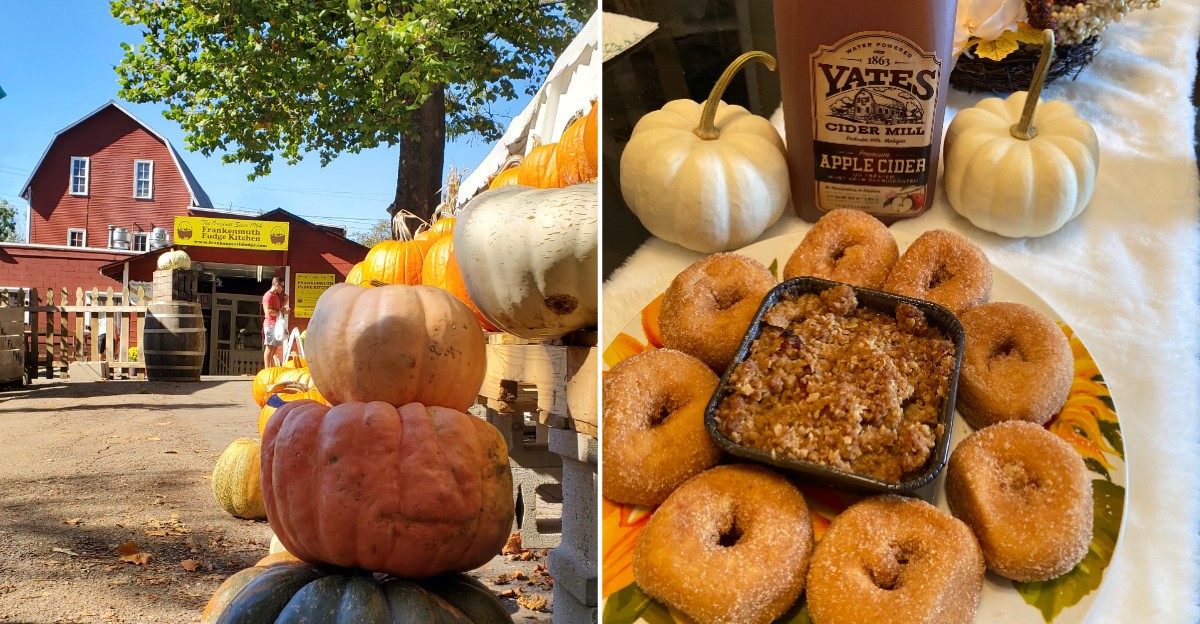
Steam rises off a paper bag the moment it opens, and the smell of cinnamon sugar fills the whole car. A Michigan cider mill has been handing out that bag every fall for years, and locals show up for it weekend after weekend.
Donuts come straight from the fryer, still hot enough to fog the paper. Sugar and cinnamon coat the outside, while the inside stays soft and tender.
Fresh cider pours cold from the press, tart and cloudy and sweet all at once. Apples pile in wooden crates near the door, ready to carry home.
Kids press their faces to the glass to watch the dough drop into the oil. Families stand at picnic tables with sticky fingers and plans to come back next week.
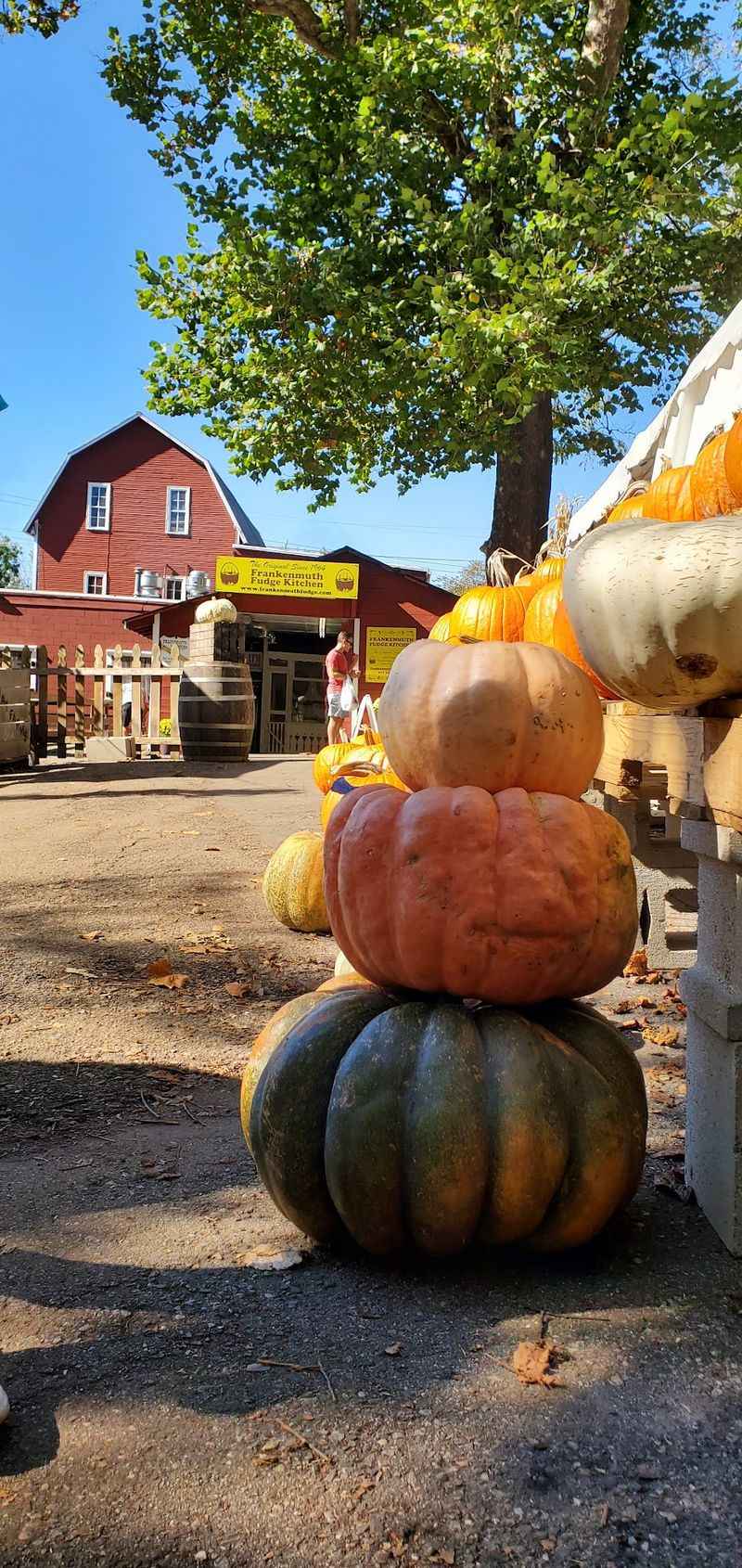
Pumpkins and mums line the porch, and the hills nearby glow orange and red. Lines stretch out the door on sunny Saturdays, and the wait feels shorter with the smell drifting past.
A cider mill like this proves that a simple fall treat, made fresh, never loses its pull.
A Mill Older Than Most Michigan Towns
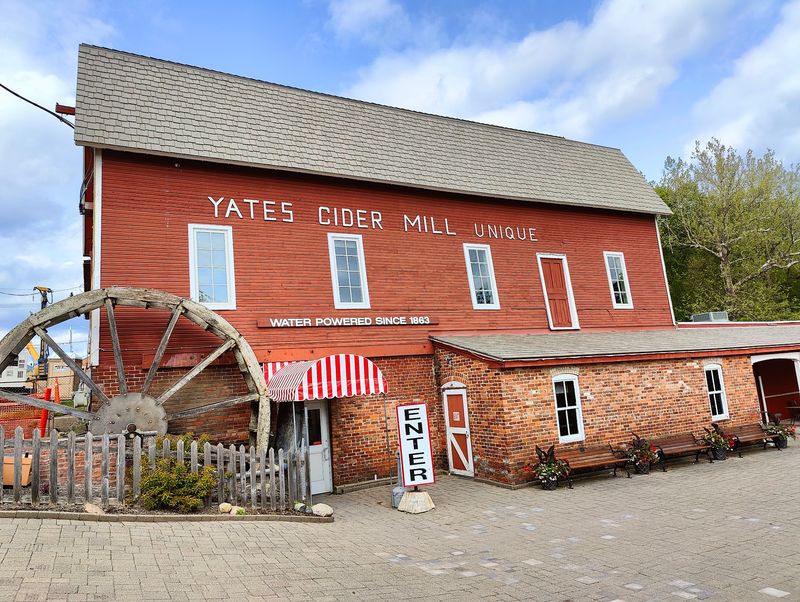
Back in 1863, Abraham Lincoln was president and a sawmill started spinning on the banks of the Clinton River. That little mill ground grain for farmers and cut wood for the neighbors.
Fast forward to 1876. Folks around Rochester wanted apple cider, and they wanted lots of it.
The Yates family listened and added apple pressing to the mix.
By the early 1900s, the grain and lumber work faded out. Apples won the battle, and the place became a full-time cider mill. Honestly, good choice.
The building standing today went up in 1894. Inside sits a 26-inch water turbine installed that same year.
Here is the wild part. That turbine still makes the power that presses the cider.
Think about that for a second. Your phone needs an update every month, but this machine has been doing its job for over 130 years without complaint.
Because of that turbine, the mill is known as the oldest working water-powered mill in Michigan. It is a real piece of history you can walk right up to.
Kids who love machines will have plenty of questions.
A quick tip for history fans is to look at how the river and the mill work together. The water is not just pretty scenery here.
It is the engine behind every gallon. You can find all of it at 1950 E Avon Rd, Rochester Hills, MI 48307.
Warm Donuts With A Nutmeg Secret
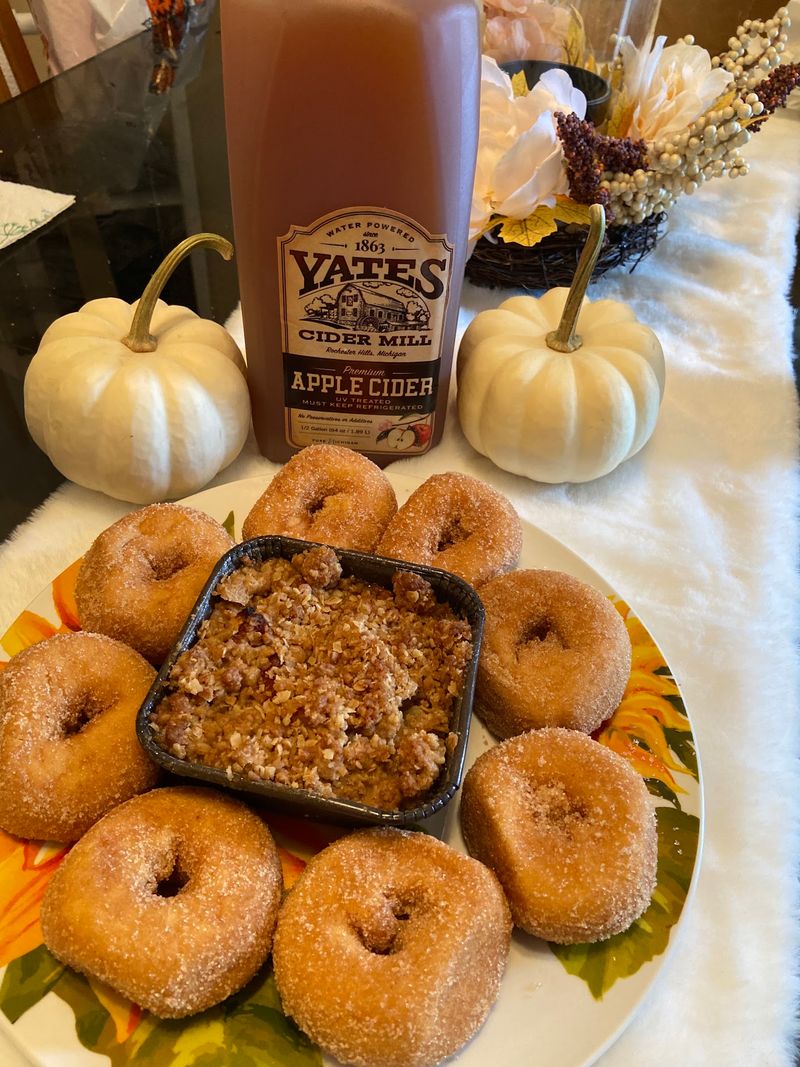
Blame Harry Yates. In the 1930s, this grandson of the founders decided cider needed a sidekick, and he started serving donuts.
Nearly a century later, nobody has asked him to stop. The donuts are made right on site, so they often land in your bag still warm.
They are on the small side, which is great news. Small means you can eat three and still call it a snack. That is just math.
There is a little hint of nutmeg in the dough. It is subtle, but it gives each bite a cozy flavor that tastes like a sweater feels.
You can pick plain or cinnamon sugar. The plain ones let the soft, airy texture shine.
The cinnamon sugar ones leave a sweet dusting on your fingers and probably your jacket.
For anyone avoiding gluten or dairy, the mill also offers allergy-friendly donuts. Those are made off-site to keep them safe, which is a thoughtful touch.
Planning a party or even a wedding dessert table? Donuts can be ordered ahead for pickup by the dozen.
Here is a pro move. Grab a bag, find a picnic table, and eat at least one immediately.
Waiting until you get home is technically allowed. It is just a lot less fun.
How Thirty Apples Become One Gallon
Ever wondered how many apples fit in a jug of cider? The answer is about 30 to 40 apples per gallon. That is a whole orchard snack in one bottle.
The process has barely changed since 1876. Fresh Michigan apples get washed, scrubbed, and checked before anything else happens.
Next, the apples are ground into a pulp that looks like chunky applesauce. That mush is called pomace, which sounds like a fancy dessert but is really just smashed fruit.
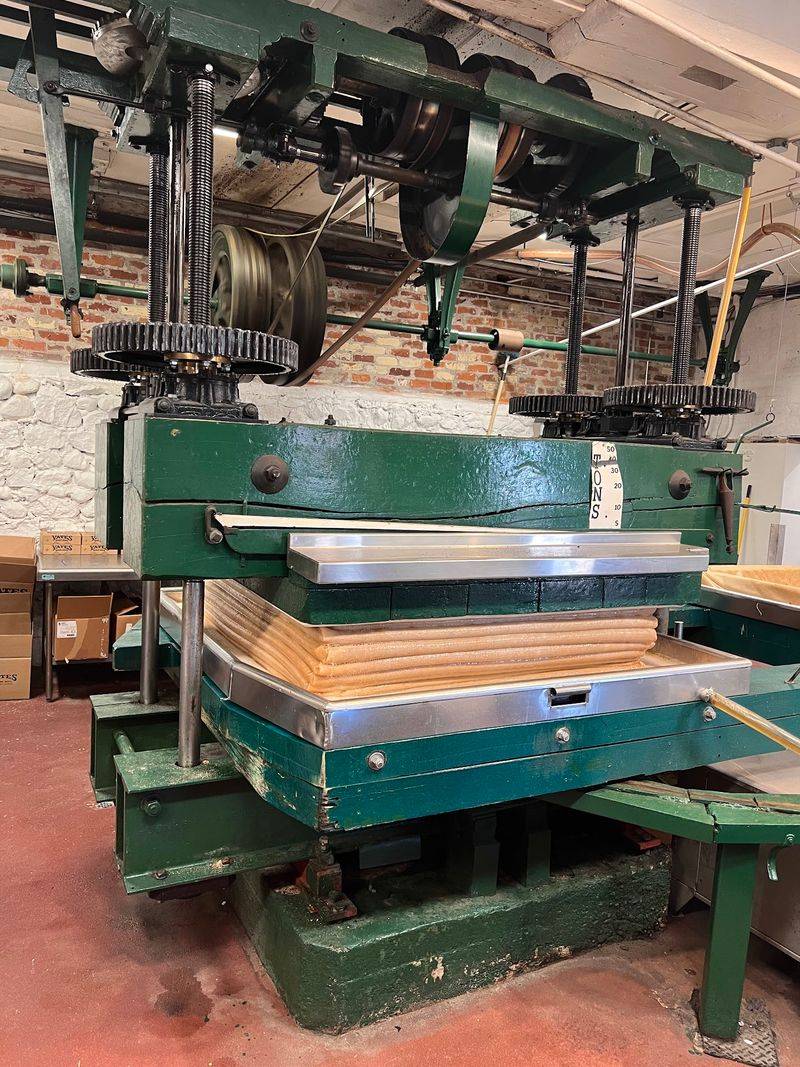
Workers spread the pomace onto nylon blankets and stack them up to eight layers high. The stack sits on a big turntable, ready for the squeeze.
Then comes the screw press. It pushes down with up to 50 tons of pressure for around 15 minutes. Seeds, peels, and pulp stay behind while juice pours out.
And yes, the 1894 water turbine powers the whole thing. The river is basically doing the heavy lifting.
After pressing, the cider is filtered and treated with UV light for safety. It is bottled on site with no preservatives added.
Fun fact for repeat visitors. The flavor changes through the fall.
Early batches use tart apples like Ginger Gold and Paula Red, while mid-October cider can blend up to ten varieties. Try it more than once and taste the difference.
Fudge Corn And A Donut Sundae
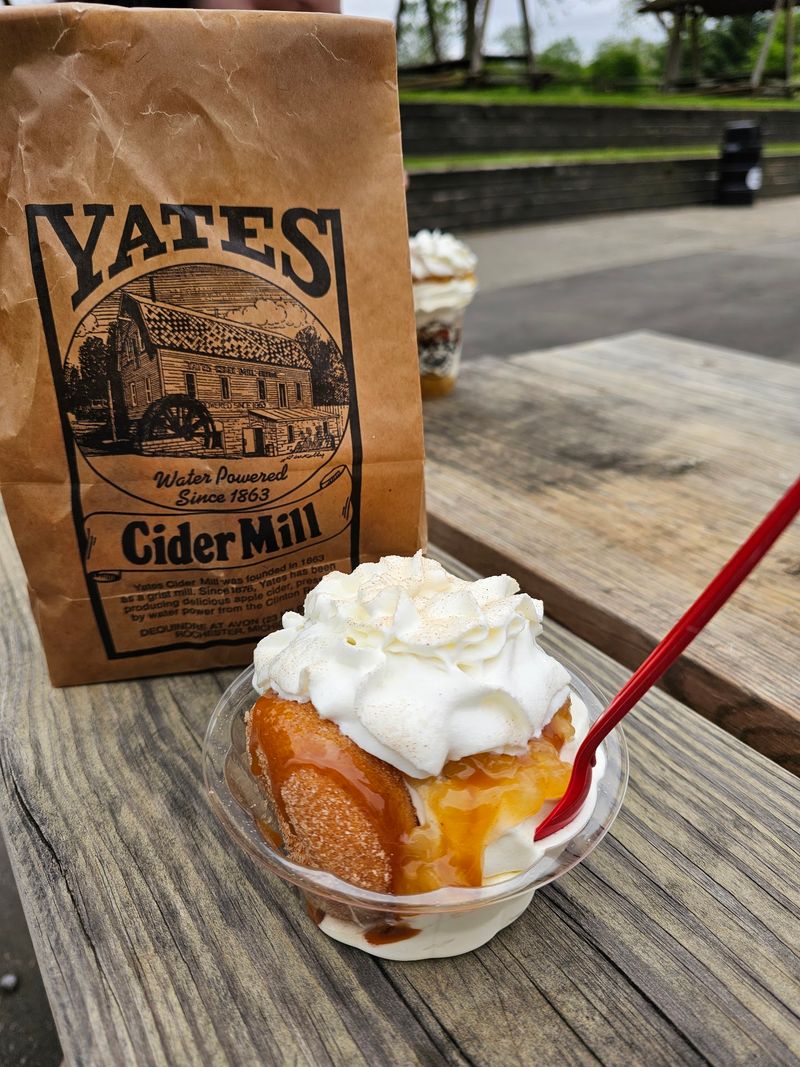
Plenty of people show up for donuts and leave holding a bag of fudge. Nobody plans it. It just happens.
The fudge kitchen draws a crowd all season. Next to it, there is a stand roasting corn on the cob that smells so good it should be illegal. The corn is sweet, hot, and messy in the best way.
Hungry for something saltier? A hot dog and chili dog stand keeps the sugar from taking over completely.
Then there is the ice cream shoppe. This is where things get creative.
The Yates Donut Sundae puts a donut and ice cream together, which feels like breaking a rule your mom made.
There is also Donut Bread Pudding à la mode. Classic hand-dipped scoops and soft-serve round out the menu, along with fun flavors like Michigan Pothole.
Inside the gift store, shelves hold jams, jellies, honey, and maple syrup. You will also find molasses cookies, apple crisp, pocket pies, and mill-themed apparel.
The cider slush deserves its own mention. On a warm September day, it hits like an icy apple hug.
A quick tip is to pick one savory snack and one sweet one. Splitting with a friend helps you try more.
It also gives you an excuse to come back for the stuff you missed.
Goats Ponies And A Llama Named Who Knows
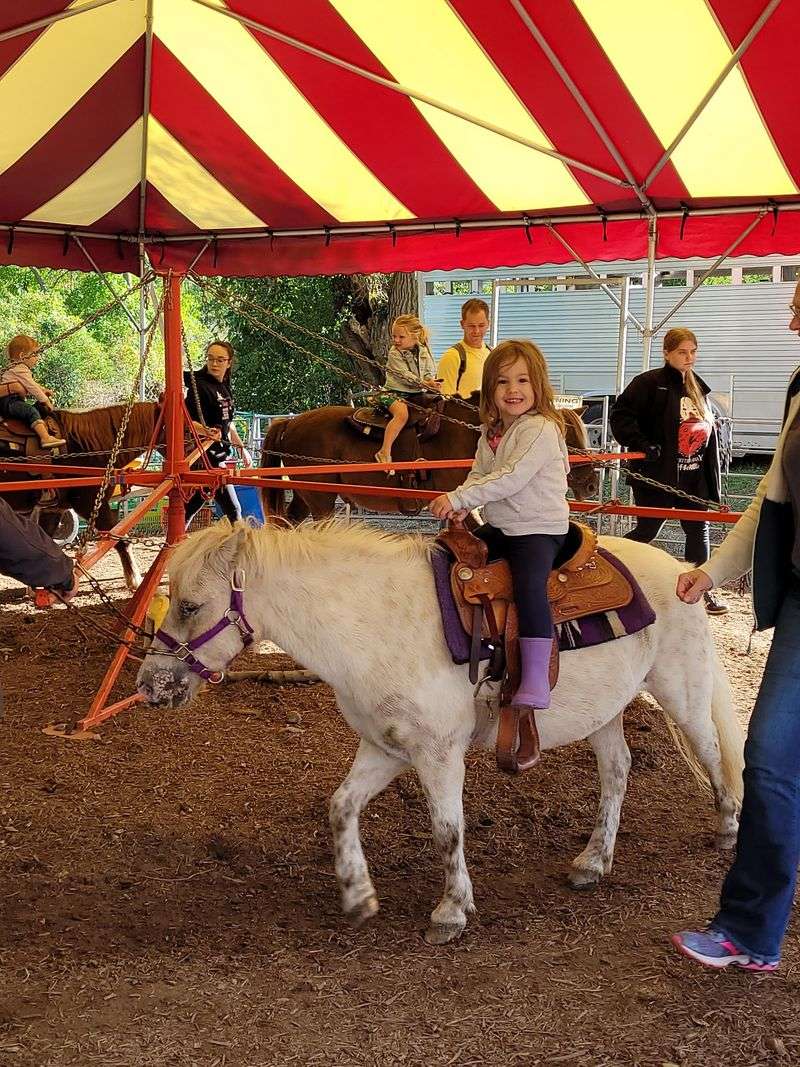
Goats are excellent salespeople. One look from those odd sideways eyes and suddenly you are buying a cup of feed pellets.
The petting farm has goats all summer long. When fall shows up, the cast grows bigger with sheep, miniature cows, horses, and even a llama.
Nobody can promise the llama will be in a chatty mood. Llamas do what llamas want. That is part of their charm.
Feeding the animals is a hit with little kids. A small tip, though.
By late afternoon on busy days, the animals are often stuffed and lounging. Visit earlier if you want eager eaters.
Pony rides start on weekends around Labor Day. For lots of kids, it is their very first time in a saddle, and the grins prove it.
Parents, keep some wipes handy. Goat slobber is harmless, but it is still goat slobber.
Face painting sometimes pops up on fall weekends too. So your kid might go home with tiger whiskers and cinnamon sugar on their face at the same time.
The animal area sits close to the picnic spots and trails. That makes it easy to bounce between snacks and critters.
One minute you are feeding a sheep, and the next you are eating a donut, hopefully not the one the sheep wanted.
Riverside Trails And Quiet Picnic Spots
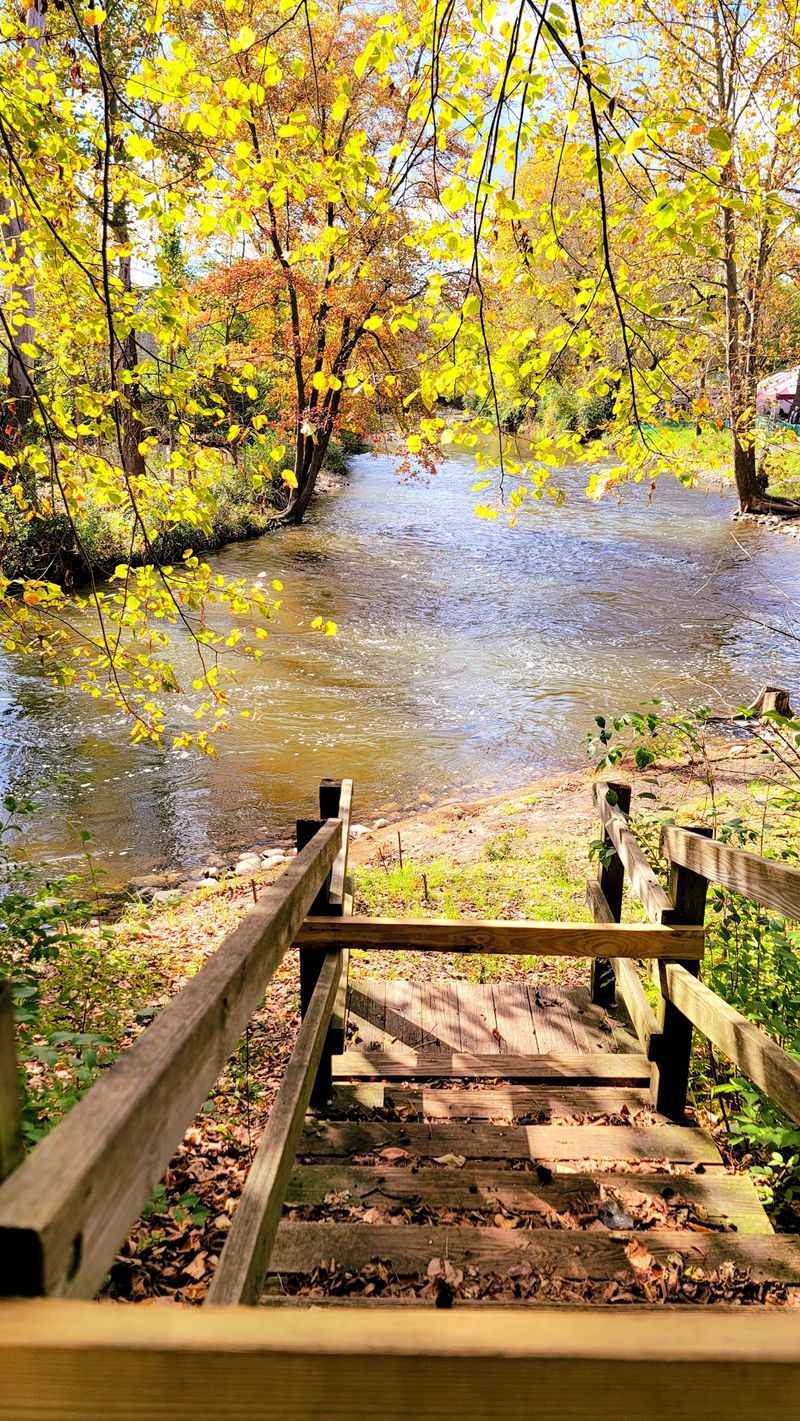
Sugar needs somewhere to go. Luckily, the Clinton River offers a beautiful place to walk it off.
Picnic tables dot the property, and some sit right by the water. Eating a warm donut while the river rolls past is about as relaxing as life gets.
The Yates River Walk follows the river along a scenic path. A little bridge crosses the water, and small footpaths lead down to the bank for a closer look.
Other routes include the Railroad Trail and the Cider Mill Loop. These trails are flat and wide, which makes them easy for strollers, wagons, wheelchairs, and slow walkers who stop for every leaf.
Dogs on leashes are welcome outside, though they cannot come into the store. Bring a buddy to hold the leash while you shop.
Keep an eye out for ducks. They hang around the ponds and river, and they clearly know what donuts are.
Resist sharing, since bread and sweets are not great for them.
Across the street, Yates Park has more picnic areas and fishing spots. Feeling ambitious?
Trails there connect toward Bloomer State Park for a much longer walk.
On windy, freezing days the river trail can be chilly. Layer up, grab hot cider, and you will be fine.
Autumn Crowds And Apple Tent Days
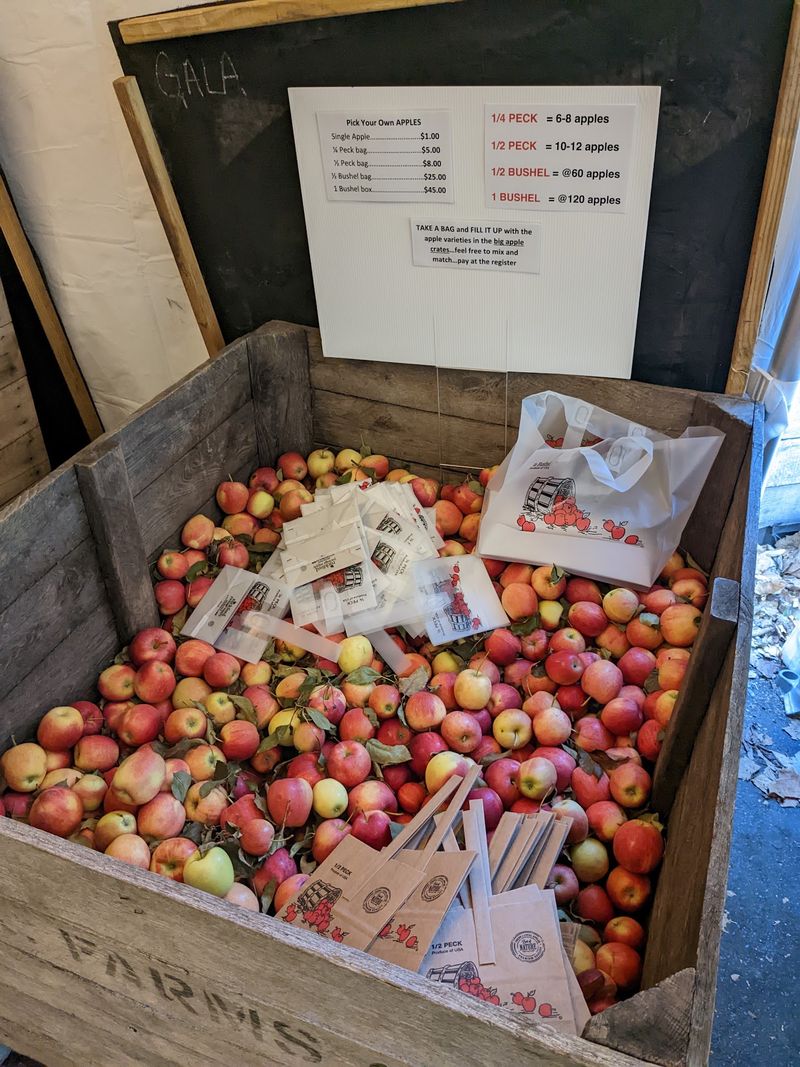
October weekends here feel like a small-town festival that nobody officially planned. Families flood in, the trees glow orange, and the smell of fried dough floats over everything.
An apple tent opens during harvest season. It is stocked with orchard-fresh picks like Honeycrisp, Gala, and Ginger Gold.
Grab a bag for pies, lunches, or crunching in the car.
The petting farm reaches full strength, and pony rides keep weekend lines buzzing. Even the river seems busier with walkers and leaf peepers.
Now for the honest part. Popularity brings traffic.
On a sunny Sunday afternoon, finding a parking spot can take a while.
Some visitors park a short walk away and stroll in. Others arrive early in the morning to beat the noon rush.
Both plans work better than circling the lot in a grumpy mood.
Lines inside the mill can look long, but they usually move along quickly. Staff tends to keep things rolling with friendly faces.
One more practical tip. Restrooms are portable toilets near the parking area, so plan, especially in cold weather.
Weekday visits are calmer if your schedule allows. You get the same donuts and fall colors with far fewer elbows.
Then again, some people love the crowds because the buzz is half the fun.
Generations Keep Finding Their Way Back
Picture a grandmother who came here as a kid, now holding a donut bag for her grandson. That scene plays out all the time at this mill.
Part of the pull is simple. The place has refused to get fancy.
The same river powers the same press, just like it did more than 160 years ago.
In a world where favorite stores close and recipes change, that steadiness means a lot. People know what they will get, and they like it that way.
Some couples treat a visit as a yearly tradition. Others bring out-of-town relatives to show off a true Michigan classic.
Plenty of locals just pop in on a random Tuesday for cider.
The mill is not only a fall thing, either. It stays open through summer, so ice cream by the river is a solid warm-weather plan.
There is also comfort in the routine. Get cider, grab donuts, feed a goat, walk the trail. It is a checklist that never gets old.
For a first-timer, the best advice is to slow down. Read the history, watch the press, and sit by the water a while.
Odds are good you will start your own tradition. Just do not be surprised when your kids insist on it every single year.