
Inside A Lake Tahoe Mansion Built In 1936, Families Tour Rooms Kept Exactly As Left
A San Francisco millionaire once kept a pet elephant named Mingo at his Lake Tahoe summer home. Yes, a real elephant.
The building that housed him still stands on the property today.
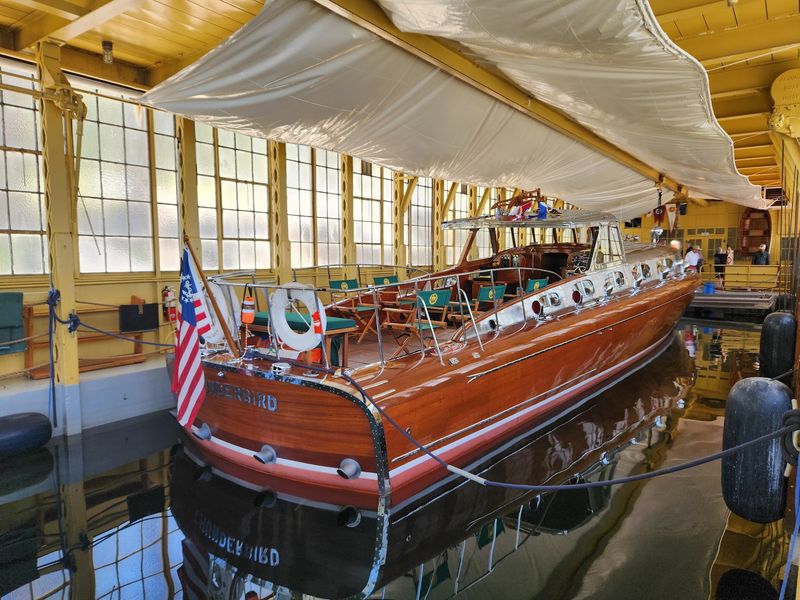
That same owner had a 600-foot stone tunnel run from his house to his boathouse. At the far end waits a 55-foot mahogany speedboat that first arrived in July 1939.
I can’t imagine a better reward for walking through a tunnel.
The whole estate sits on the Nevada side of the lake. Guided tours lead small groups through rooms kept much the way the owner knew them, with stone walls, an original kitchen, and huge lake windows.
I like how it feels less like a museum and more like a home where someone just stepped out. So what else was he hiding back there?
A Stone Castle Quietly Guarding Nevada’s Wild East Shore
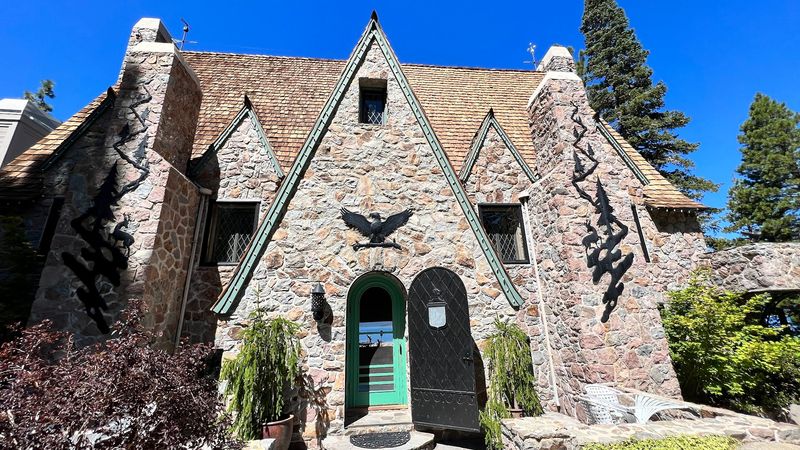
Granite boulders, tall pines, and a stone mansion that almost blends into the rocks. That’s the first impression of Thunderbird Lodge Lake Tahoe, officially the Thunderbird Lodge National Historic Site.
The estate sits along the rugged eastern shoreline of Lake Tahoe, firmly on the Nevada side. It isn’t a hotel or a resort you can wander into for lunch.
Instead, it works as a historic house museum with docent-led tours. Small groups move through the main lodge, the outbuildings, and the grounds with a guide sharing stories the whole way.
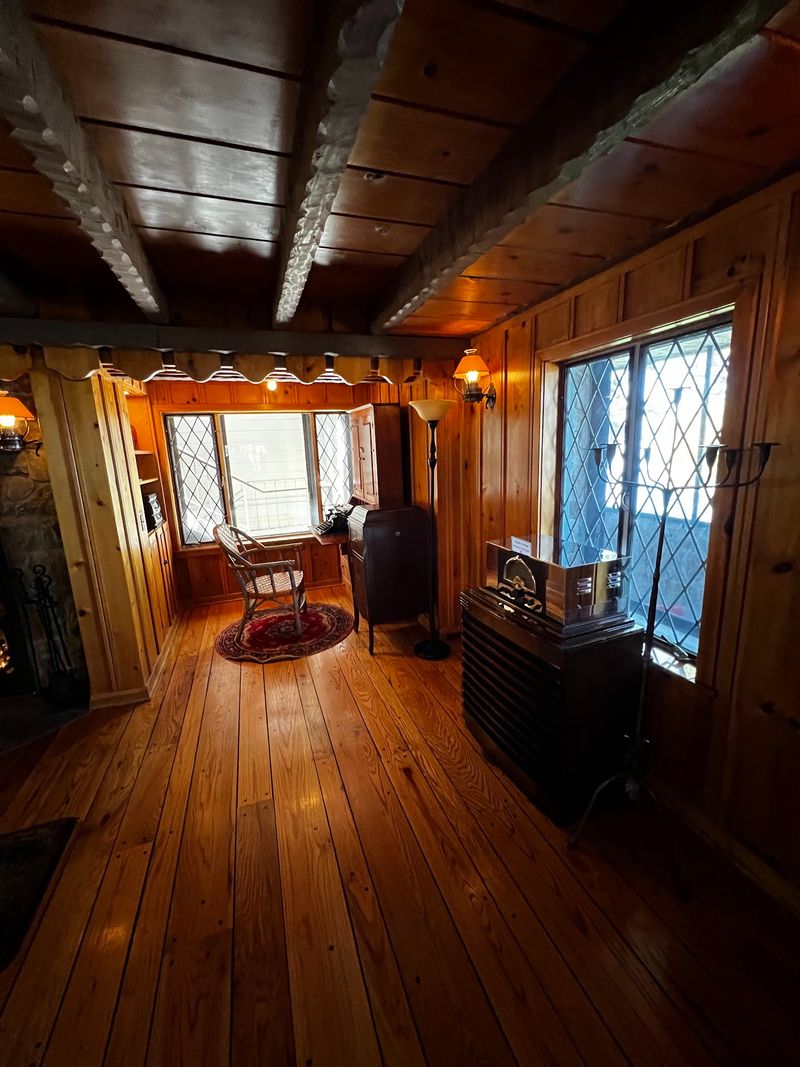
The big draw is how much of the original 1930s world survives. Rooms, stonework, and the kitchen still carry the look of the era their owner lived in.
For Nevada families who love history, this place packs a lot into one outing. You get architecture, lake scenery, and a wildly unusual life story all in one stop.
A nonprofit group, the Thunderbird Lodge Preservation Society, manages the property today. Tour proceeds help keep the buildings standing and cared for, so every ticket pulls a little weight.
Just know this isn’t a drop-in kind of stop. Reservations are part of the deal, and that detail matters for planning.
The Reclusive Millionaire Who Started Building In 1936
George Whittell Jr. had money, privacy, and very big ideas. The San Francisco millionaire began building his Tudor Revival stone mansion here in 1936.
By 1939, the main lodge was complete. It became his summer home, a retreat far from city crowds and curious eyes.
Whittell was known for being reclusive and for living large at the same time. That combination shows up everywhere on the property, from secret passages to an animal-sized garage.
Tour guides spend time unpacking his story before the walking even starts. You hear about his fortune, his habits, and the menagerie of animals he kept around him.
Honestly, it’s the kind of biography that sounds made up. A man who wanted solitude ended up building one of the most talked-about homes at Lake Tahoe.
His timing adds flavor too. The late 1930s design gives the lodge a look that feels both rustic and surprisingly polished for a mountain shoreline.
Knowing the backstory makes every room hit harder. Once you understand Whittell, the tunnel, the boat, and the elephant suddenly make a strange kind of sense.
Great Room Windows That Frame The Whole Lake
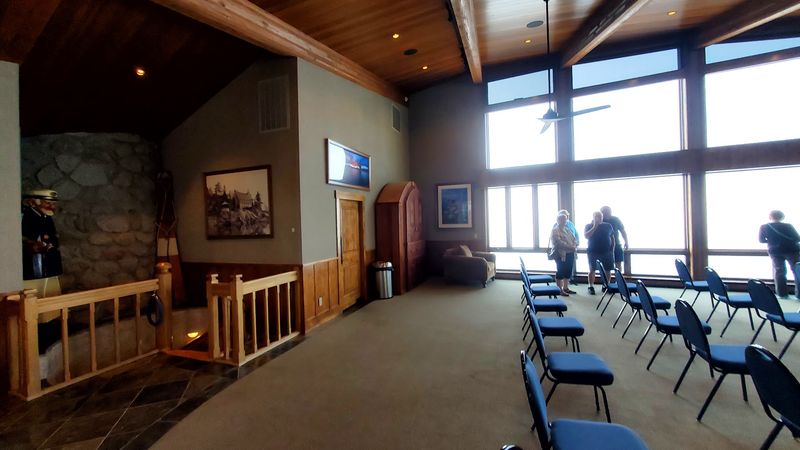
Soaring ceilings come first, then the windows grab all your attention. The great room inside the main mansion opens straight onto Lake Tahoe through wide lakeview glass.
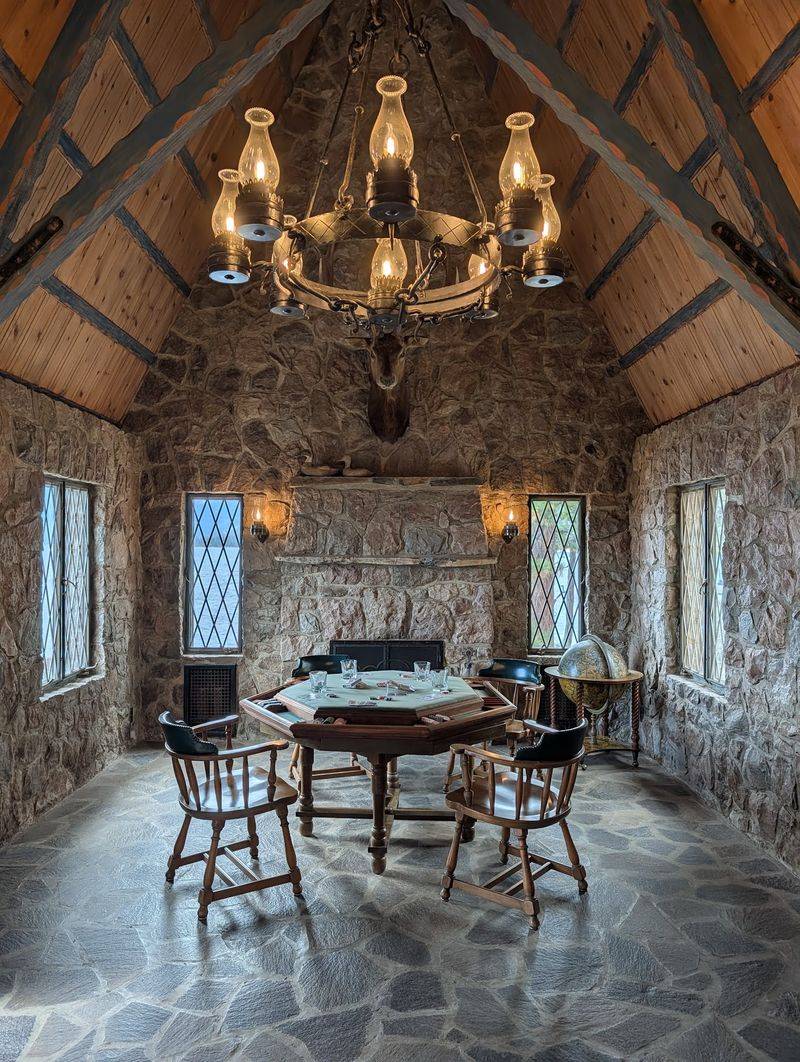
A magnificent stone fireplace anchors the space. It feels built to warm a crowd, even though its owner preferred very few guests.
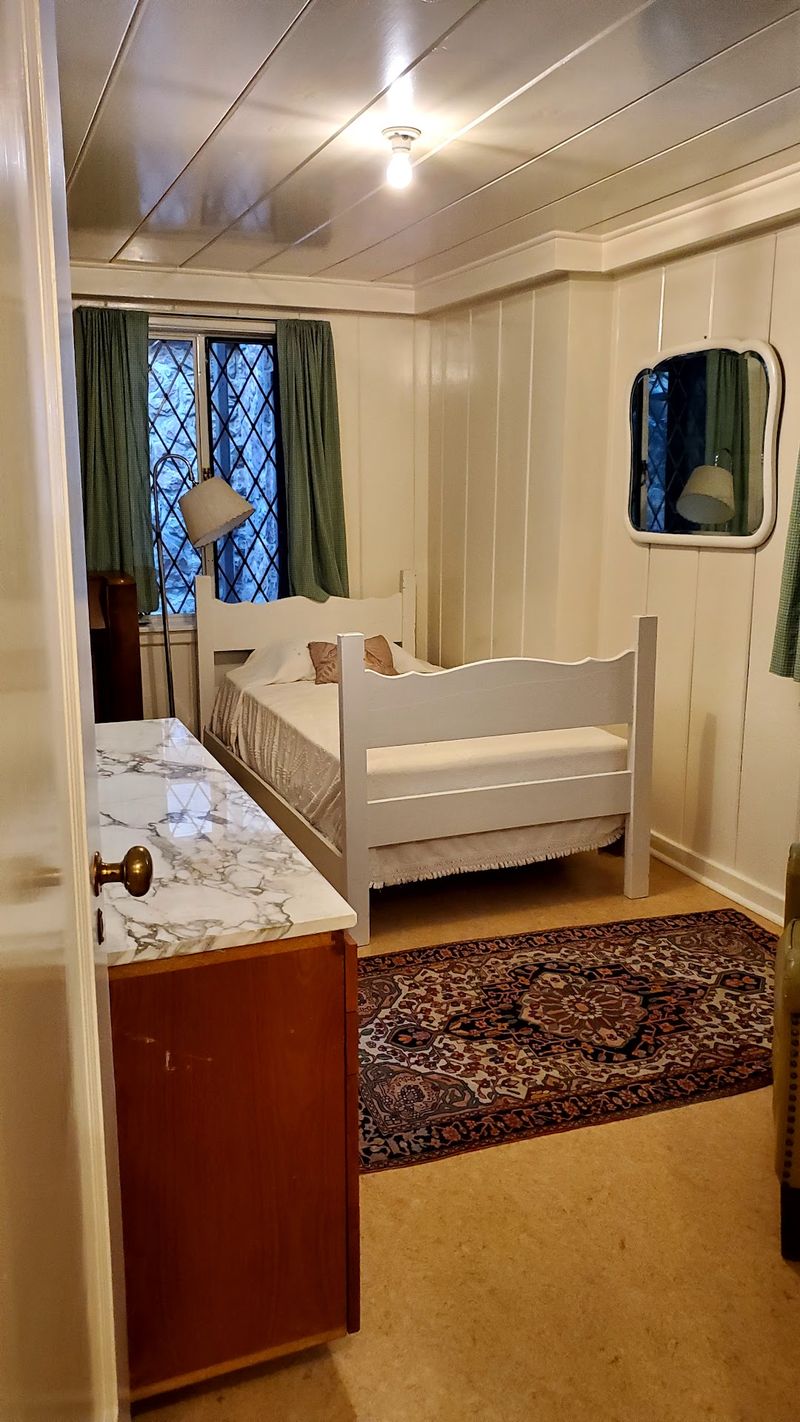
Tours also pass through two master bedrooms. Each one gives you a peek at how Whittell actually lived, not just how he wanted to look.
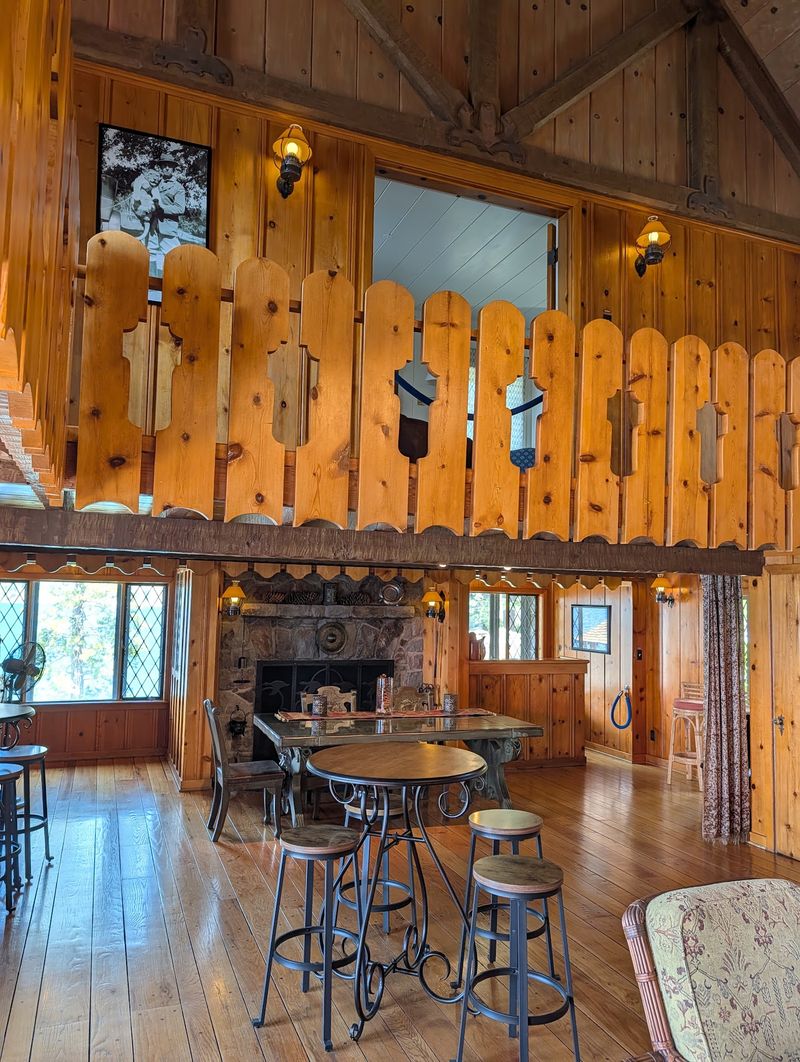
The original kitchen might be the sleeper hit. Its appliances remain in place, showing how a 1930s household cooked and ran day to day.
Grandparents on the tour may spot gadgets that look oddly familiar. Kids, meanwhile, will probably wonder how anyone made dinner without a microwave.
Everything here follows a look-but-don’t-touch rule to protect the historic pieces. That keeps the rooms intact for the next group and the one after that.
It’s a rare chance to see a home frozen in its era instead of remodeled beyond recognition. The furniture, the stone, and the views tell the story better than any plaque could.
Six Hundred Feet Of Tunnel Beneath Your Shoes
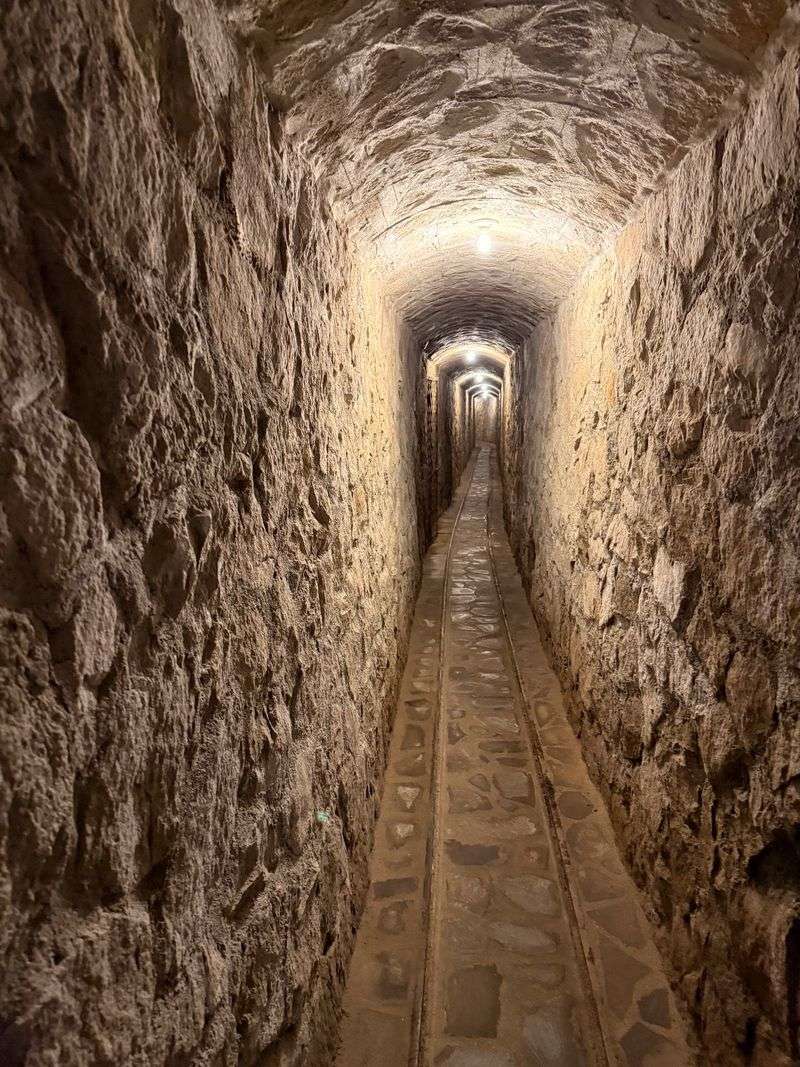
Who builds a tunnel just to reach their boat? Whittell did, and it runs about 600 feet through stone from the main house to the boathouse.
This passage is a favorite part of the tour for plenty of families. It turns a history lesson into something closer to an adventure.
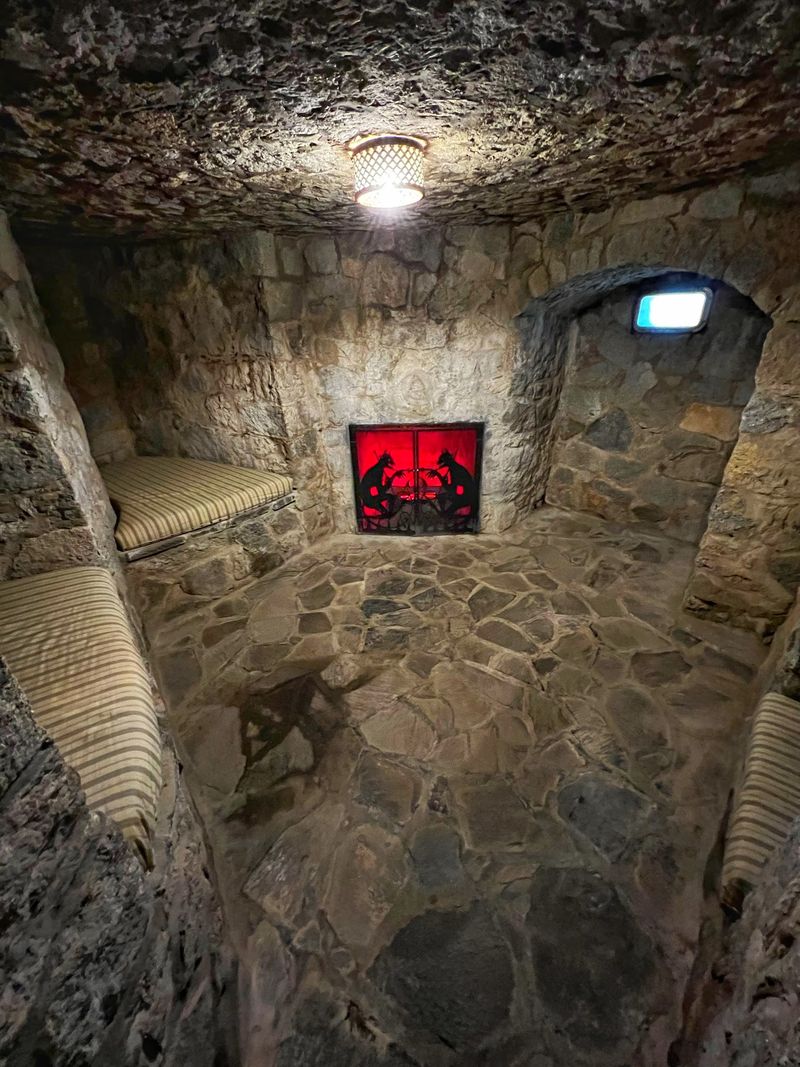
The walls are carved from rock, and the route stays underground the whole way. You feel the estate’s secretive personality with every step forward.
Fair warning for some visitors, though. Parts of the tunnel and certain hallways are narrow, which may feel tight for anyone uneasy in close spaces.
Kids who love a good mystery will probably eat this up. Nothing says real life treasure hunt like a hidden stone corridor under a millionaire’s mansion.
The tunnel also explains a lot about Whittell himself. He could slip down to the water without anyone watching him go.
When the passage finally opens up, the payoff waits right there. The famous yacht sits at the end, which makes the walk feel like a drumroll.
Polished Mahogany And A Boat With Serious Swagger
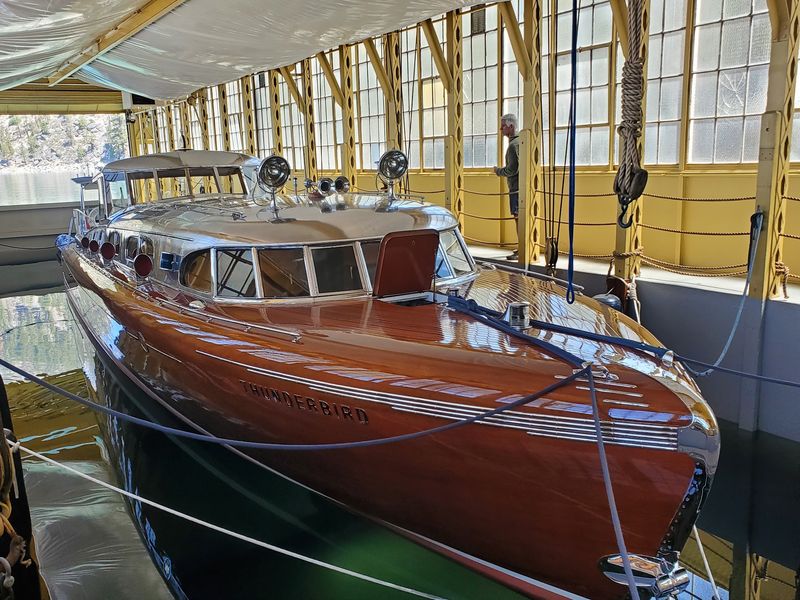
Double-planked mahogany. Brushed stainless steel.
The Thunderbird yacht looks like it rolled straight out of a vintage movie set.
The 55-foot wooden speedboat arrived at the estate in July 1939. It gave the whole property its name, and it still steals the show.
Families get to see it up close inside the historic boathouse. The craftsmanship is the kind you rarely find anymore, especially on something built to race across water.
Wood shines, metal gleams, and the lines are sleek from bow to stern. Even folks who never cared about boats tend to stop and stare.
It’s also a fun way to talk with kids about how things used to be made. Every board and fitting reflects careful handwork from the late 1930s.
The boathouse setting adds to the drama. Stone walls, lake water, and that gleaming hull make a picture worth taking before you move on.
Bring a camera and leave time for a few angles. You’ll probably want proof that a boat this pretty actually exists on Lake Tahoe.
An Elephant Garage And Other Curious Outbuildings
Mingo the elephant once had his own garage here. That single fact tells you just how far Whittell’s imagination stretched.
The elephant garage remains part of the estate today. It’s easily one of the most talked-about stops for younger visitors and grown-ups alike.
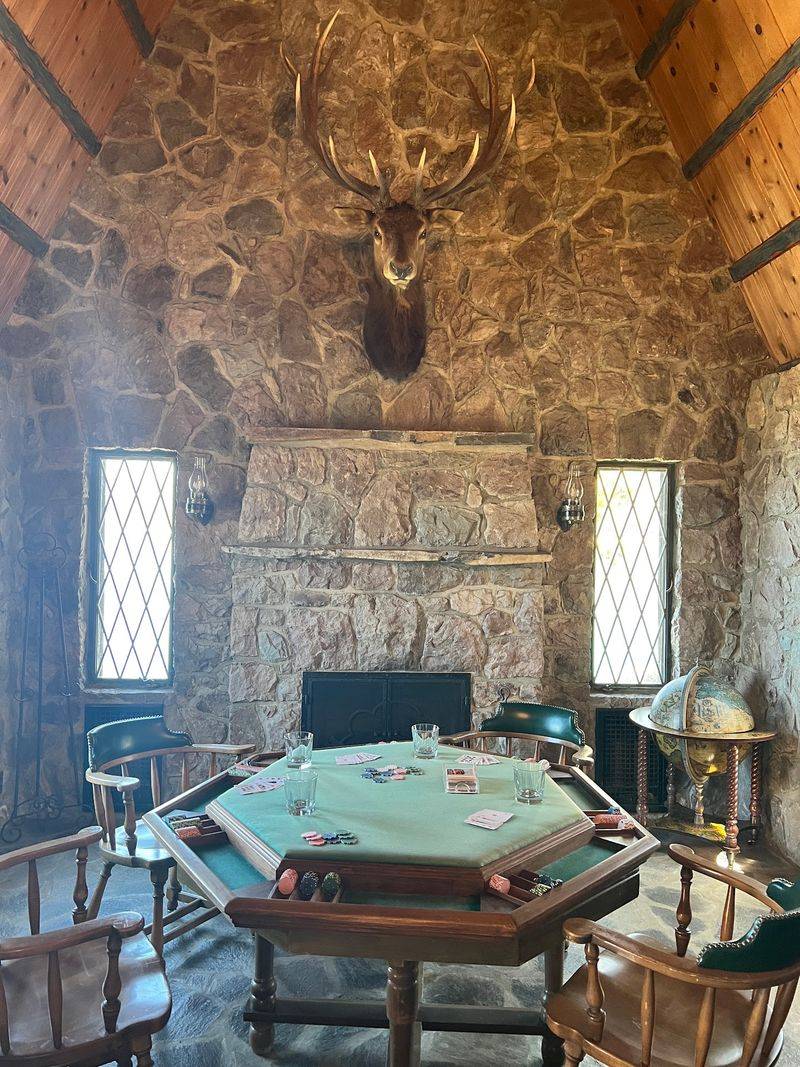
Several other buildings round out the complex. There’s a Card House, a Caretaker’s Cottage, and a Cook and Butler’s House, each with its own role in estate life.
Together they show the full machinery behind a 1930s mansion. Someone had to cook, someone had to maintain the grounds, and someone apparently had to look after an elephant.
Whittell’s love of animals went beyond Mingo, too. Guides share stories of the menagerie he kept, which adds a wild twist to the history.
Walking between these buildings gives the tour a village feel. You’re not stuck in one house, and the variety keeps restless legs moving.
For families, this part offers great conversation starters on the ride home. Good luck getting anyone to stop talking about the elephant.
How One Recluse Ended Up Saving Miles Of Shoreline
Roughly 20 miles of Lake Tahoe’s east shore once belonged to Whittell. His holdings reached about 40,000 acres in all.
He didn’t develop most of it, and that choice changed everything. Historians often call him an accidental conservationist for exactly that reason.
Because he left the land alone, much of this rugged stretch stayed wild. Today it remains one of the lake’s most pristine areas in Nevada.
The grounds around the lodge show off that natural setting beautifully. Large rocks, clear water, and forested slopes surround the buildings on every side.
Part of the tour includes walking outside with the lake right there. It’s a nice breather between the indoor rooms and that long tunnel.
I believe this is the most underrated part of the story. A man known for extravagance ended up protecting scenery that families can still enjoy today.
It’s a good lesson for kids, too. Sometimes leaving something untouched is the biggest gift you can give.
Best For Curious Kids, History Fans, And Grandparents
Enthusiastic volunteer docents lead every tour, and they clearly love this story. Their knack for insider details keeps the history lively rather than dusty.
Families with older kids tend to get the most out of the visit. Children under six aren’t allowed on the Classic Tour, so plan around the little ones.
The tour runs on stories and observation. Kids who like mysteries, animals, or old boats will find plenty to latch onto.
Grandparents often connect with the 1930s details in a special way. The kitchen and furnishings can spark memories worth sharing across generations.
Mobility is worth considering before you book. The property relies on stairs to reach upper and lower levels, and some passages are snug.
It’s also a calm, look-but-don’t-touch setting. That suits patient explorers more than kids who need to run off energy.
If your crew enjoys learning while walking, this one fits nicely. Pair it with a lakeside picnic elsewhere afterward, and you’ve got a full Nevada day.
Shuttles, Tour Days, And Booking Before You Go
No parking waits at the lodge itself, which surprises some first-timers. Instead, guests ride a shuttle from the Incline Village/Crystal Bay Visitor’s Center at 969 Tahoe Boulevard in Incline Village, Nevada.
The estate sits off Geo Whittell Rd, New Washoe City, NV 89704. The shuttle handles that last stretch, so you can relax and enjoy the lake views.
Tours run by reservation only, generally from Memorial Day weekend through mid-October. Classic Tours usually happen on Tuesdays and Fridays, with extra days added during busy summer months.
Posted hours list Tuesday, Friday, and Saturday from 9:30 a.m. to 4:30 p.m. Schedules can shift, so confirm times before driving up from Reno or Carson City.
A Classic Tour lasts about one hour and 15 minutes. That leaves room in your day for a lakeside stroll or lunch in Incline Village.
Tickets sit on the pricier side for a budget outing. Booking early is smart, since summer tours can fill quickly, and proceeds support the estate’s upkeep.
Why This Lakeside Time Capsule Earns A Spot On Your Summer List
Tunnels, an elephant garage, and a gleaming mahogany yacht. Few Nevada outings squeeze that much personality into a little over an hour.
Thunderbird Lodge Lake Tahoe works best as a planned treat rather than a spontaneous stop. Reservations, age limits, and the shuttle all reward a little homework.
For families on a budget, it can make sense as a once-a-summer splurge. Build the rest of the day around free shoreline time, and the cost may feel easier to justify.
What you get is rare, though. Rooms kept close to their 1930s look, a story that sounds invented, and scenery that stayed wild thanks to one stubborn landowner.
History lovers will likely leave wanting more. Kids old enough for the tour may come away with a new favorite tale to retell.
The lake views alone are a strong bonus. Add the boathouse and that tunnel, and it becomes a memory more than a museum visit.
Check the season, grab tickets early, and bring curious minds. Whittell kept this place private for years, and now you finally get a look.