
The Towns Around Reno, Nevada Where Retirees Are Stretching Their Budgets
A siren once sounded at 6 p.m. in one small Nevada town for about a century. It was finally silenced in 2023.
That one detail tells you these communities carry real stories, not just cheap rent. Around Reno, retirees are finding towns with railroads, old ranches, historic main streets, and wide desert skies.
Some sit near rivers, some near mountains, and some near jets screaming overhead. Who knew a quiet main street could hold so many surprises?
Each stop has its own history to chew on, from gold strikes to old farm canals. Could a slower pace and a stretched budget finally feel like home?
I honestly can’t help wondering which one would win me over first. So which Nevada town fits your retirement dreams best?
Let’s take a tour of eight of them, one easy stop at a time.
1. Fernley
Fernley has a train story and a farm story, and both still shape the place. The town was established in 1904 as an agricultural and ranching community.
The Truckee Canal followed in 1905 and brought irrigation water to the fields.
Railroad fans will like the 1914 Fernley and Lassen Railway, which the Southern Pacific completed. Its depot was built between 1913 and 1914, closed in 1985, and was later moved and renovated.
That is a lot of life for one building.
Fernley sits about 30 miles east of Reno, near Interstate 80 and U.S. Route 95A.
That puts big-city errands within reach while the town keeps its own pace. The city incorporated on July 1, 2001, and had 22,895 residents in the 2020 census.
Retirees can find a few helpful programs close by. The Fernley Senior Center serves lunch Monday through Friday from 11:30 a.m. to 12:30 p.m.
It also offers home-delivered meals for eligible seniors and hosts health and wellness activities.
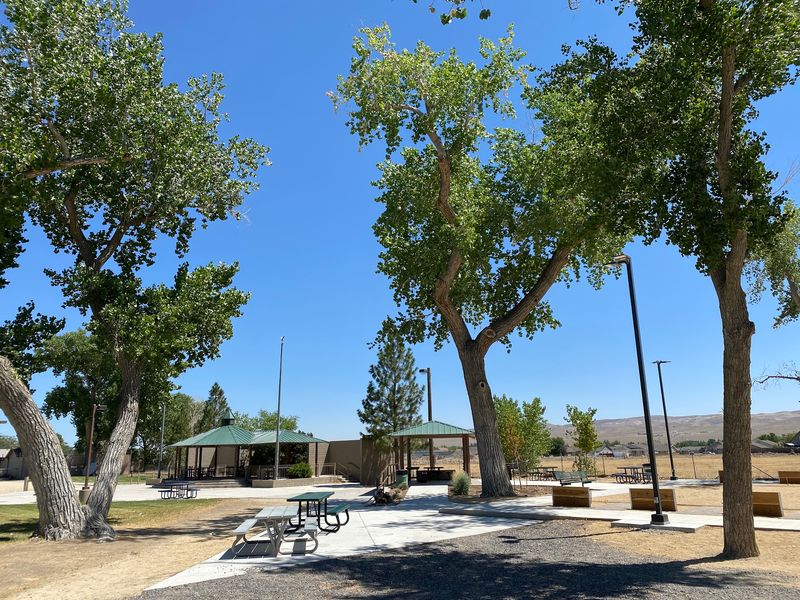
Outdoor time is easy to plan. Fernley City Park has playgrounds and picnic areas, and nearby Lahontan Reservoir is popular for fishing and boating.
Some newer subdivisions even include an 18-hole golf course.
Want a bit of noise? The Reno-Fernley Raceway is in town.
Fernley also sits near the Tahoe Reno Industrial Center, so the area keeps changing, which is worth knowing before you settle in.
Address: Fernley, Lyon County, Nevada
2. Dayton
Gold fever may have started right next door. In 1849, Abner Blackburn made what is believed to be the first gold discovery in Nevada, in nearby Gold Creek.
That makes Dayton one of the state’s earliest settlements.
Old Town Dayton still preserves its historic character, even with modern shopping complexes nearby. Roughly 15,000 people live here, about 10 miles east of Carson City.
It feels like a small town with a long memory.
The Carson River runs through the valley and once gave travelers a place to rest. That earned the area the nickname Ponderers Rest.
Dayton sits at the end of the Twenty-Six Mile Desert, so you can guess how welcome that water looked.
Chinese laborers were brought here in 1856 to build the Reese Ditch, which connects to the Carson River. A Pony Express stop was also established in town.
John Day laid out the town in 1861 and gave it his name.
Dayton became the first county seat of Lyon County on November 29, 1861. It also served as a major milling center for the Comstock Lode silver mines.
Then the Dayton Court House burned in 1909, and the county seat moved to Yerington in 1911.
For retirees who enjoy history walks, that is a lot of material. Old Town gives you a front-row look at Nevada’s earliest chapters.
Address: Dayton, Lyon County, Nevada
3. Silver Springs
Two highways cross here, and that is the whole reason the town makes sense. Silver Springs sits at the junction of U.S. 50 and U.S. 95A in Lyon County.
It is a crossroads town in the plainest, most useful way.
Los Angeles businessmen Merle Stanley Peek and Ben Klassen started the modern town in 1949. They bought 1,800 acres and sold lots through newspaper ads.
The town received official recognition in 1954.
Long before that, the area was a meeting place. Northern Paiute people, emigrants on the Carson Route to California, and messengers all passed through.
In 1865, a station first called Stockstore Station, and later Stockton Well, was established near a convergence of five trails.
History fans can head to Fort Churchill State Historic Park nearby. The U.S.
Army fort was established in 1860. The park has a visitor center, trails, a campground, a picnic area, and access to the Carson River.
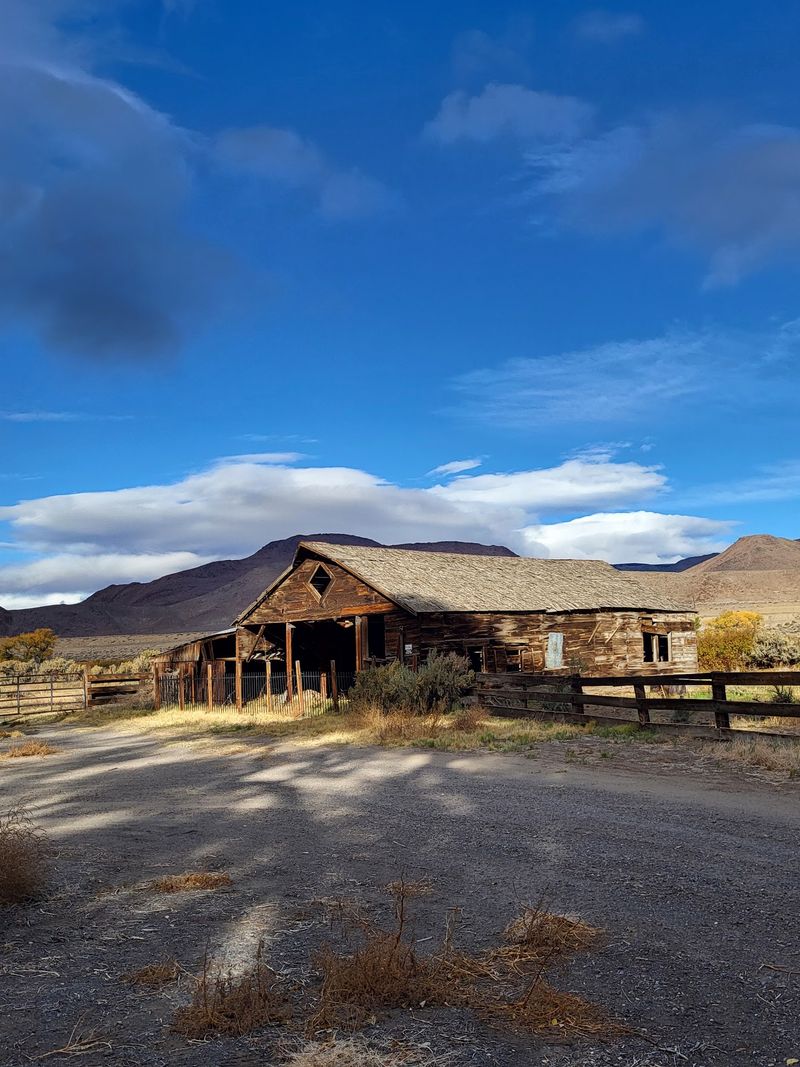
Buckland Station sits close to the fort. It served as a Pony Express remount station, a stage stop, and a hotel.
The current building, built in 1870, now houses a small museum.
So the pitch is simple. You get a crossroads home base with real Nevada history within driving distance, and room to breathe.
Address: Silver Springs, Lyon County, Nevada
4. Fallon
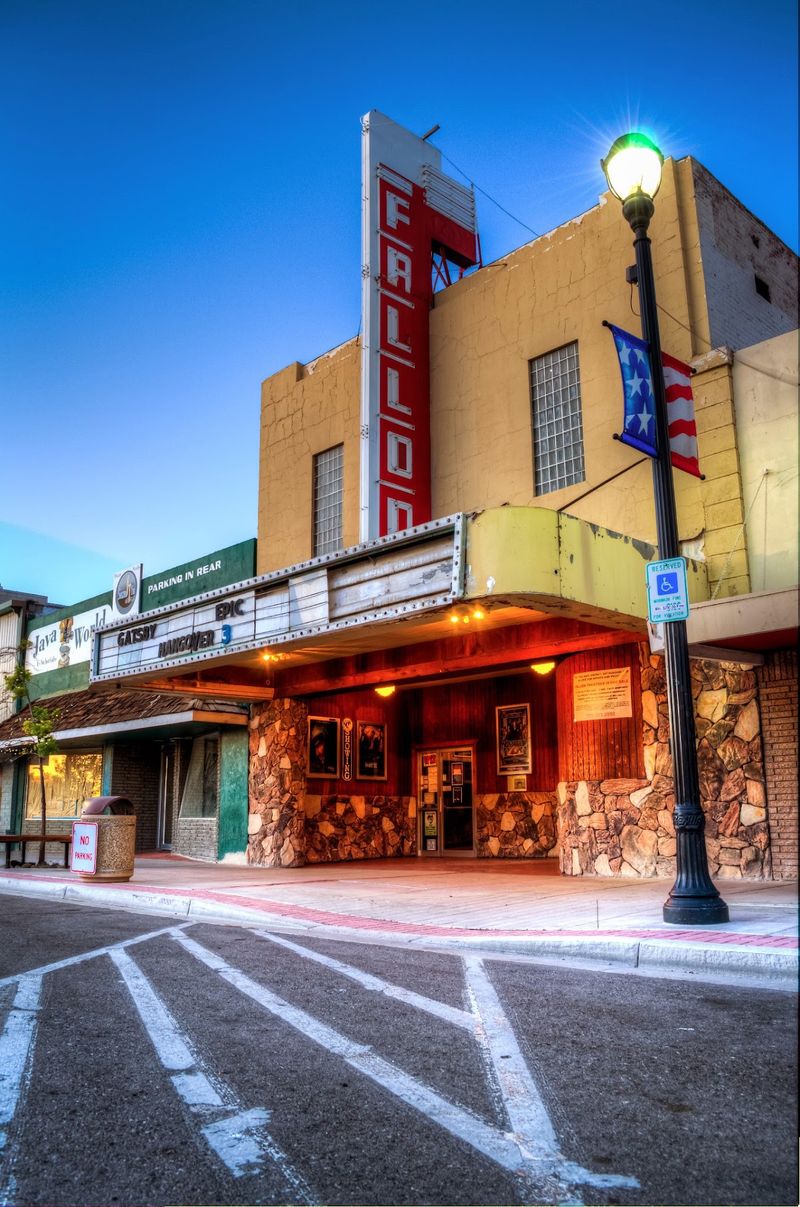
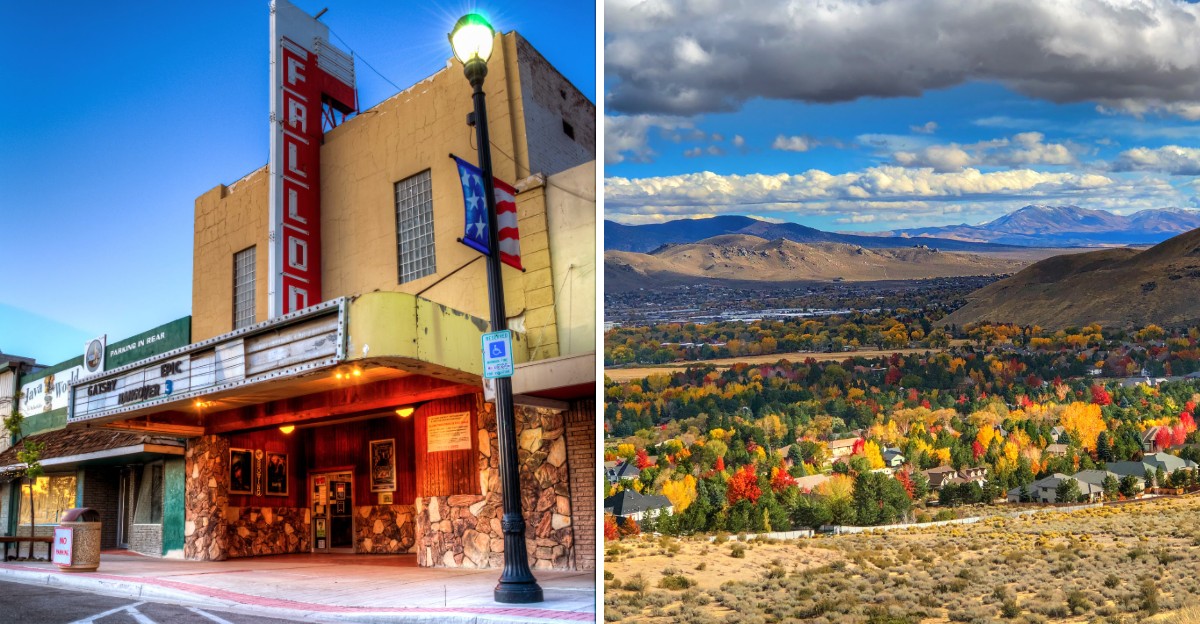
Jets roar over a farm town here, and somehow it works. Fallon is home to Naval Air Station Fallon, which has housed the Navy Fighter Weapons School, better known as TOPGUN, since 1996.
Even the movie crowd has noticed, since various films, including Top Gun, were shot in and around the area.
Fallon calls itself the Oasis of Nevada, a phrase its Chamber of Commerce coined in 1948. The nickname fits a farm region known for high-quality alfalfa and Hearts of Gold melons.
Not many deserts brag about melons.
Downtown has real age on display. Maine Street was listed on the National Register of Historic Places on June 16, 2019, with many early twentieth century buildings.
The historic Fallon Theater on Maine Street was still operating as of 2025.
The story goes back a long way. Travelers stopped along the Carson River during the California Gold Rush, and the town and post office were established on July 24, 1896, at the ranch of Michael and Eliza Fallon.
Fallon was incorporated in 1908 and became the Churchill County seat in 1903.
Water changed everything here. Construction of the Truckee Canal began in 1903, and Lahontan Dam was finished in 1915, turning dry land into farms.
The Lincoln Highway, the first transcontinental road, also passes through and traces the old Pony Express trail.
Curious about the past? Hidden Cave is nearby, so history lovers get plenty of room to roam.
Address: Fallon, Churchill County, Nevada
5. Yerington
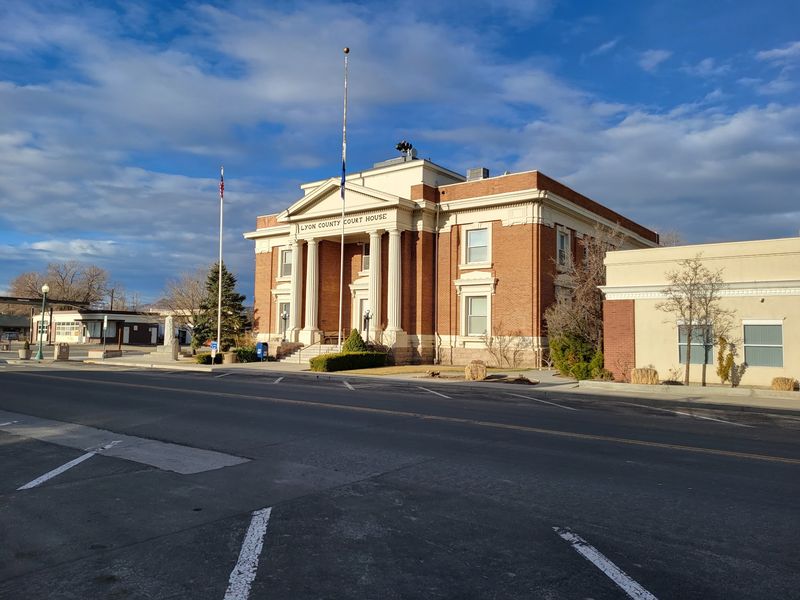
Yerington once went by Pizen Switch, and the name came from the quality of the local whiskey. The town was founded in 1871 and also carried the names Mason Valley and Greenfield.
In 1894 it became Yerington, honoring Henry M. Yerington of the Virginia and Truckee Railroad.
Today it is the Lyon County seat, a role it took on in 1911 after the Dayton Court House fire. The city incorporated on March 17, 1907.
The 2020 census counted 3,121 residents.
Farming runs deep here. Yerington was historically called the Onion Capital of the West.
Its current nickname is the Harvest Capital of the Copper Hills.
The fertile Mason Valley, irrigated by the Walker River, is a key farm area. Mining matters too.
The Empire-Nevada Mine opened in 1918, Anaconda Copper Company acquired the site in 1941, and a massive open-pit operation began in 1952.
The community is diverse, with a significant Native American and Hispanic presence. The Yerington Paiute Tribe of the Yerington Colony and Campbell Ranch has its headquarters in town.
One odd World War II fact stands out. A Japanese Fu-Go balloon bomb landed near Yerington.
Small town, big stories.
Address: Yerington, Lyon County, Nevada
6. Carson City
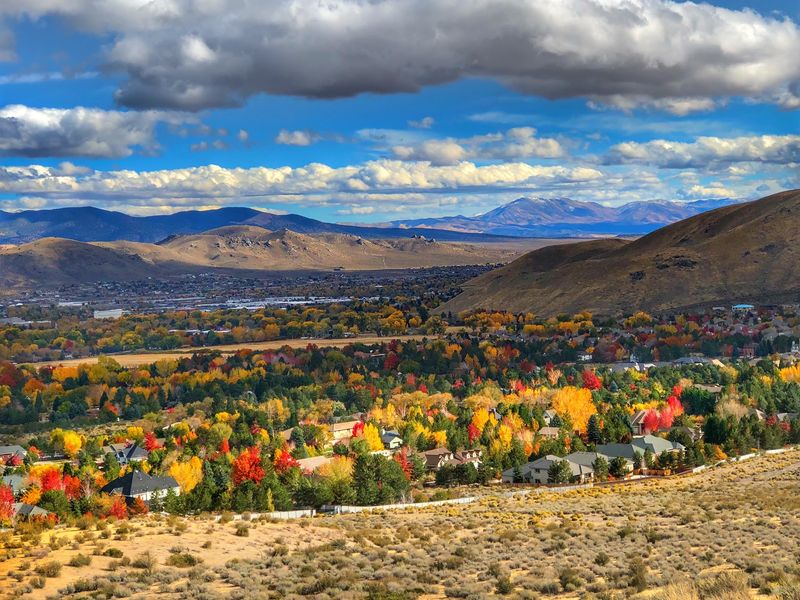
The state capital is also an independent city, and its limits stretch all the way to the California line in the middle of Lake Tahoe. Carson City sits about 30 to 32 miles south of Reno, on the eastern edge of the Carson Range.
Its population was 55,274 at the 2010 census.
It is named for frontiersman Christopher Kit Carson. Pioneer Abraham Curry helped it become a community in 1858, seven years after the Eagle Station trading post appeared.
The Comstock Lode silver strike in 1859 sped up its growth.
Carson City became capital of the Nevada Territory in 1861 and stayed capital at statehood in 1864. The Nevada State Capitol, built in 1871 in Neoclassical Italianate style, is on the National Register of Historic Places.
The St. Charles Hotel, built in 1862, is too.
Museums give retirees easy rainy-day plans. The Nevada State Museum, founded in 1941, has a walk-through replica mine and the historic Carson City Mint.
The Nevada State Railroad Museum, opened in 1980, shows off historic trains.
The Nevada Governor’s Mansion was built in 1909 on Mountain Street. Western Nevada College also has a campus here.
Until 1969 the city was the seat of Ormsby County, which was then merged into Carson City.
Many movie scenes were filmed here too. Not bad for a capital.
Address: Carson City, Nevada
7. Minden
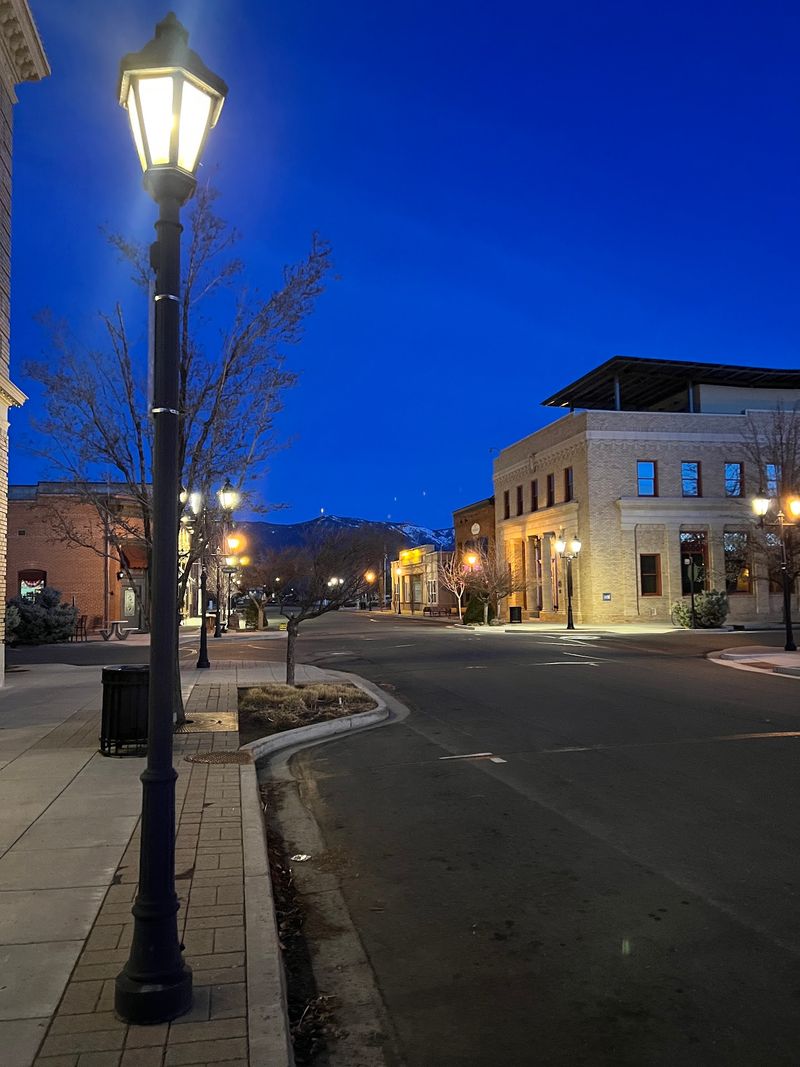
Minden is an early master-planned community, and its Historic District is built around Minden Park.
Historic homes and businesses line the area. Heinrich Friedrich Dangberg Jr. founded it in 1906.
He named it after Minden, Germany, near his father’s birthplace. Douglas County Commissioners approved the plat on July 2, 1906.
The first train rolled in on July 4, 1906, when the Virginia and Truckee Railway reached town.
Hollywood once stopped by. The Minden Inn was a notable destination for stars like Clark Gable and Jean Harlow during the town’s earlier growth.
That is a nice bit of trivia for a quiet park stroll.
Minden has been the Douglas County seat since 1916. The 2020 census counted 3,442 people, and the ZIP code is 89423.
It sits right beside Gardnerville.
Learning stays close to home, since the Douglas campus of Western Nevada College is in Minden. That can be handy for retirees who like a class or two.
The town also has a harder chapter. A sundown siren sounded at 6 p.m. almost daily until 2021, when it was moved to 5 p.m., and it once signaled that Washoe people had to leave town.
A 2023 Nevada law led to it being silenced that year, and it is good to know that history.
Address: Minden, Douglas County, Nevada 89423
8. Gardnerville,
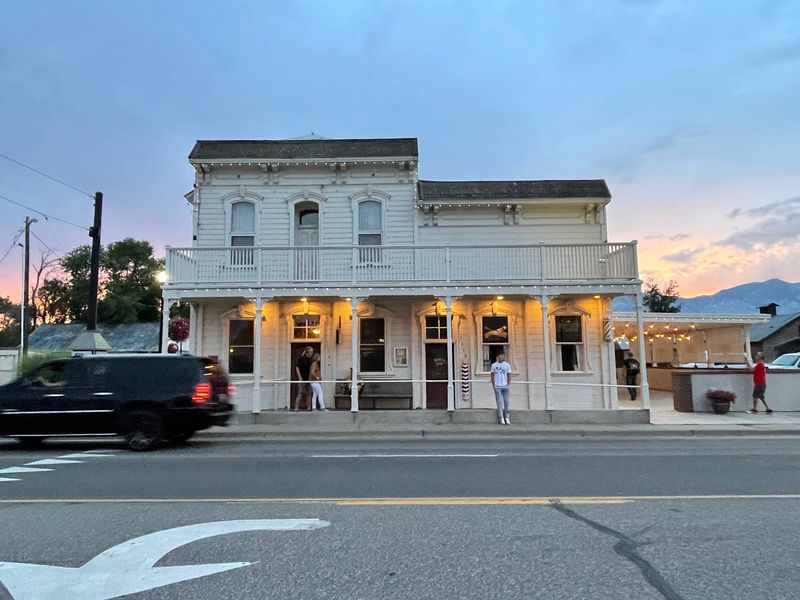
Danish immigrants helped shape Gardnerville after 1879, and they founded the Valhalla Society in 1885. Basque shepherds later tended sheep in Carson Valley.
Several Basque inns opened in town after 1918.
The town was founded in 1879 by Lawrence Gilman. John Gardner, a local cattleman, sold him the land, so the name came from him.
Gilman moved his hotel, the Kent House, from Genoa and opened it as the Gardnerville Hotel on April 26, 1881.
A post office followed in June 1881. Gardnerville began as a feed stop for miners.
It grew into a major agricultural and commercial hub for Carson Valley.
The Carson River feeds that rich farm district. Gardnerville remains the valley’s farm and shopping center, right next to Minden.
Historically it was known for Basque food, bars, and hospitality, which reflects strong Basque roots.
Like its neighbor, Gardnerville has a difficult chapter. A sundown siren was blown at 6 p.m. daily, signaling that Native Americans had to leave by sundown.
Nevada state law officially ended the practice in 2023.
That mix of immigrant stories, farm life, and honest history gives Gardnerville real depth. For retirees, it offers a close-knit valley setting.
Address: Gardnerville, Douglas County, Nevada