
This Connecticut Church Is Beautiful On The Outside But The Interior Is Absolutely Breathtaking
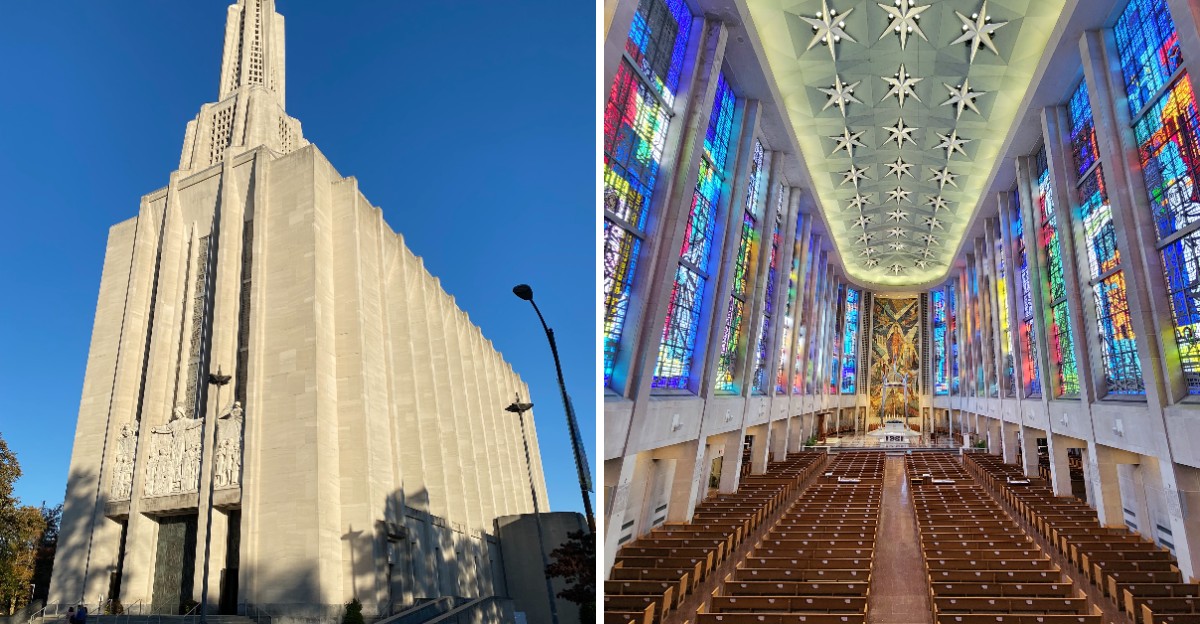
The stained glass windows here stand 67 feet tall. That’s taller than a six-story building, and every piece of colored glass sits in concrete instead of lead.
The outside is sleek, pale, and modern. It’s lovely, but it keeps its biggest secrets to itself until you open those heavy bronze doors.
Inside, color pours across the walls from every direction. Behind the altar waits a ceramic tile mural so big it holds a world record. I can’t imagine anyone seeing it for the first time without stopping in their tracks.
I like how this Connecticut landmark mixes old traditions with bold mid-century ideas. It feels both ancient and surprisingly fresh at the same time.
A Quiet Limestone Giant That Hints At Bigger Things
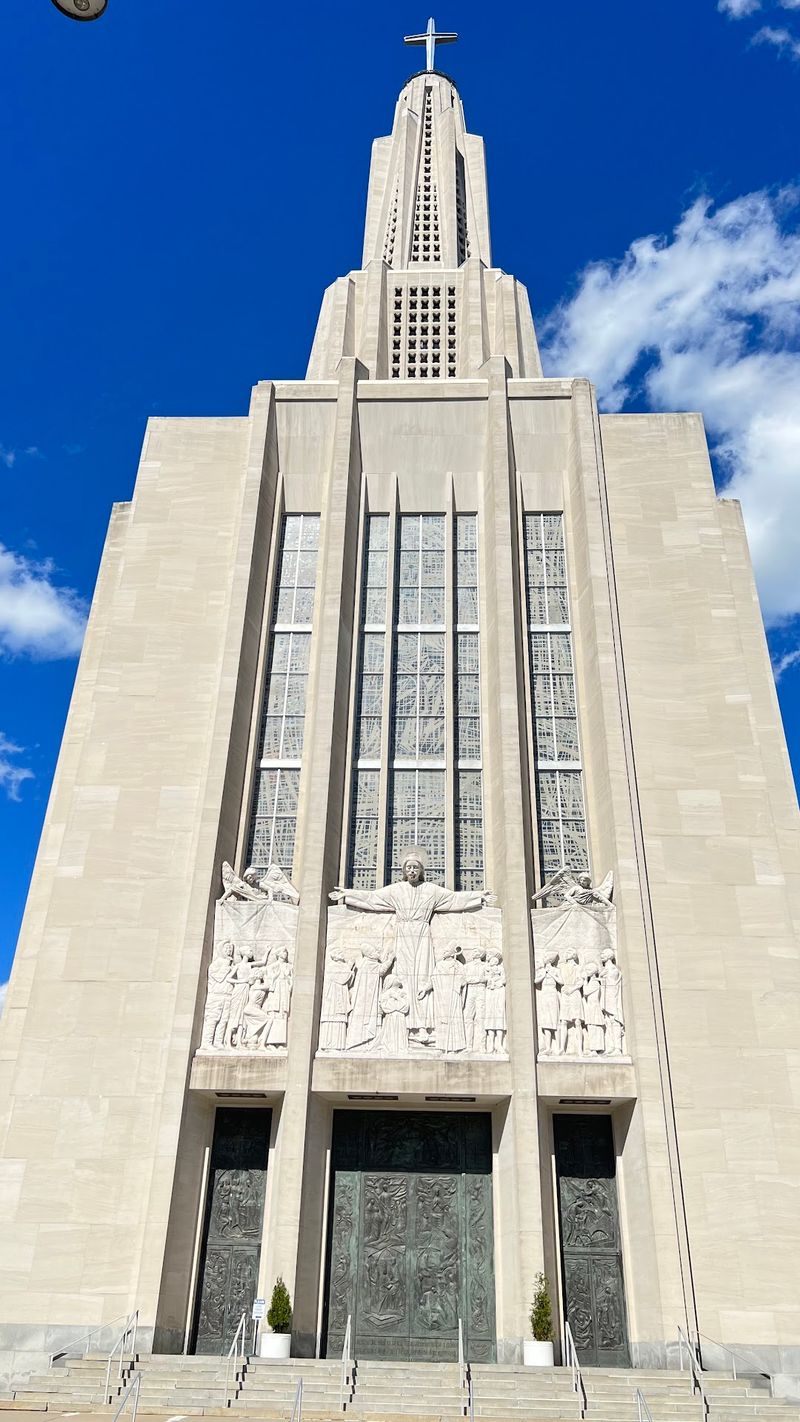
Clean lines and pale stone greet you first at the Cathedral of Saint Joseph. The building looks calm and serious, almost like a museum dressed for Sunday.
The New York firm Eggers & Higgins designed it. That same firm worked on monumental projects like the Thomas Jefferson Memorial in Washington, D.C.
Its style is often described as a mid-century Modern take on Gothic tradition. You still get the soaring height of an old cathedral, just with sharper edges and less fuss.
The structure uses reinforced concrete covered in Alabama limestone. That smooth surface gives the whole exterior a bright, tidy look.
A massive frieze of Saint Joseph decorates the front. It’s big enough that you’ll notice it long before you reach the steps.
Many people describe the outside as cool or even plain compared to the inside. That’s not really a flaw, though. It works like the plain wrapping on a very good gift.
Take a few minutes to admire the facade before heading in. Once you see the interior, the outside starts to make a lot more sense.
Those Five-Ton Bronze Doors Deserve More Than A Quick Push
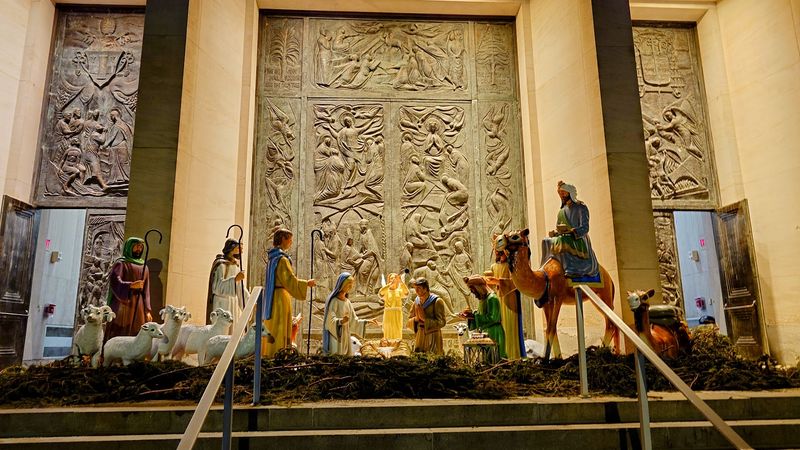
Five tons. That’s what the bronze doors on the front of this cathedral weigh, which is roughly the heft of a large elephant.
Thankfully, nobody expects you to lift them. Your job is simply to look closely, because they’re covered with biblical scenes.
These panels turn an ordinary entrance into an art lesson. Each section tells a story, so the doors almost act like a storybook made of metal.
Kids especially might enjoy hunting for familiar scenes. It’s a fun way to slow down before stepping inside.
Bronze also changes with light and weather. Morning sun and cloudy afternoons can make the details look a little different each time.
Plenty of visitors rush through doors without a glance. Here, that would mean missing one of the best pieces of craftsmanship on the whole property.
Give yourself a moment at the threshold. Trace the figures, notice the textures, and let the weight of the doors sink in.
By the time you walk through, you’ll already feel like you’re somewhere special. And honestly, the real show hasn’t even started yet.
Prepare To Crane Your Neck At Windows Taller Than A House
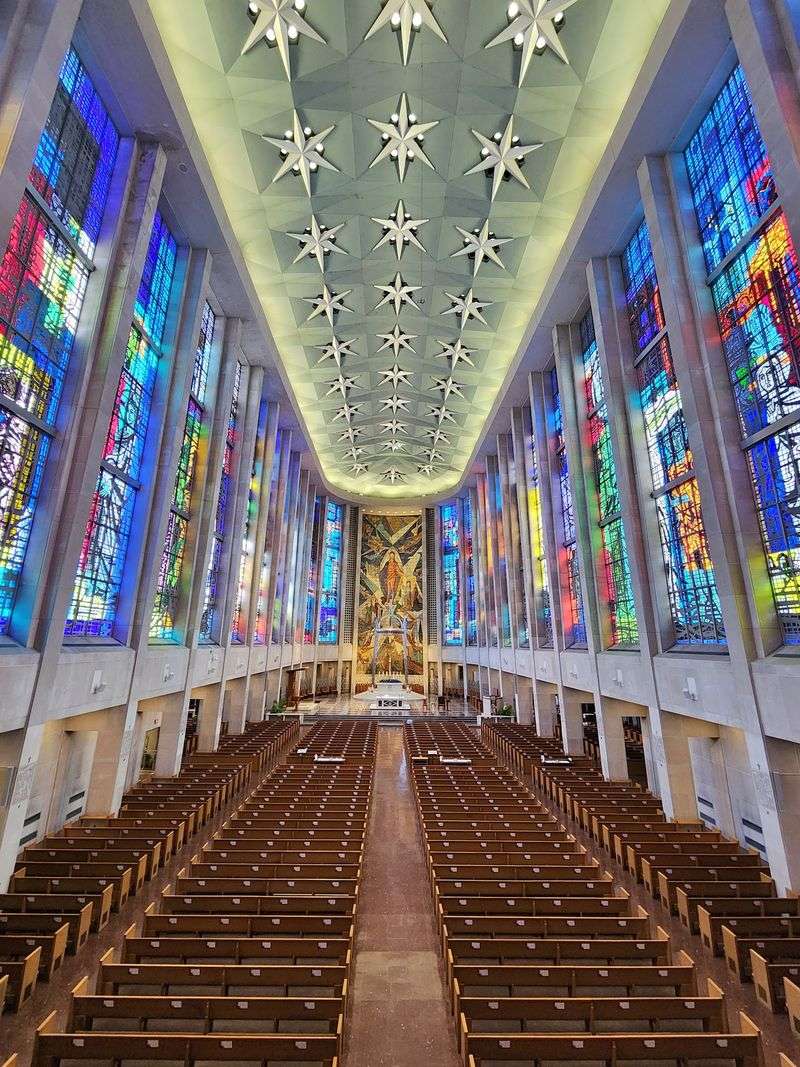
Color is the first thing that hits you inside. Giant stained glass friezes wrap the space, and they’re designed by Jean Barillet of Paris.
Each window measures 67 feet high and 13.5 feet wide. Standing beneath one feels a bit like looking up at a glowing waterfall.
Here’s a fun twist. Instead of thin lead strips, the colored glass is set into concrete, which gives the designs a bold, chunky look.
The main nave windows follow a theme called Christ the Savior. They show scenes from the Gospel, so the walls tell a story as you move along.
Two large windows behind the altar take a different path. Those symbolize the Sacraments.
Light changes everything in a room like this. A bright day can splash color across the floor and pews in a way photos never fully capture.
If you visit, walk slowly down one side and back up the other. Pick out one window to study up close.
You might find yourself staying longer than planned. Nobody would blame you.
The World Record Hiding Behind The Altar
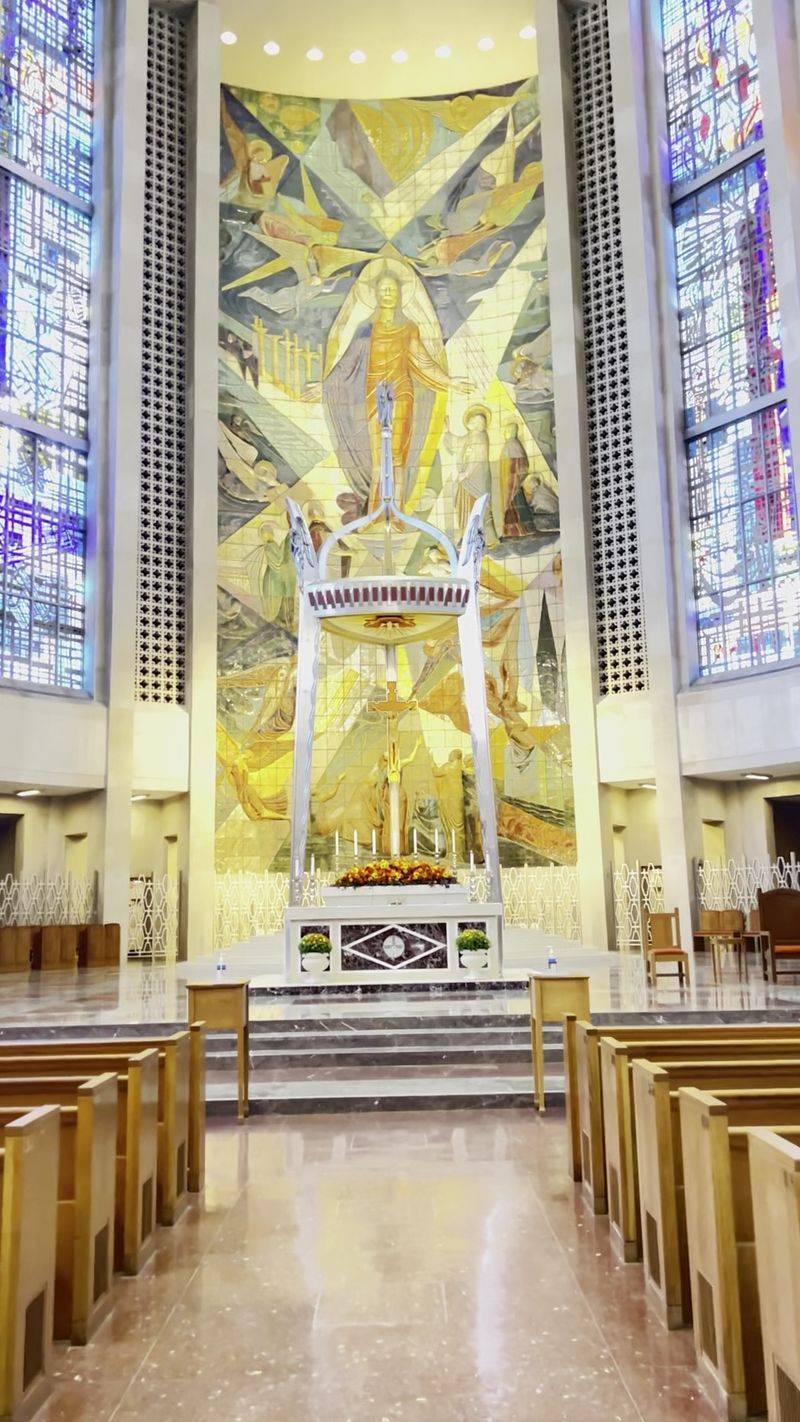
Not every church can claim a world record. This one can, thanks to the ceramic tile mural behind the altar.
It’s called Christ in Glory, and it’s known as the largest ceramic tile mural in the world. The size alone makes people stop mid-step.
From the back of the nave, the mural pulls your eyes forward like a magnet. It anchors the whole room and gives the stained glass a worthy partner.
Up closer, you can appreciate how many tiles it took to build something so massive. Every small piece plays a part in the giant picture.
I believe this is the moment many first-time visitors realize the inside truly outshines the outside. It’s hard to argue once you see it.
Bring a camera if photos are allowed during your visit, but be respectful of anyone praying. Quiet moments matter here.
Try viewing the mural from a few spots. Look from the entrance, then halfway down, then near the front.
Each distance reveals something new. It’s a little like reading a book and catching fresh details on every page.
Look Up, Because The Ceiling Has Stars
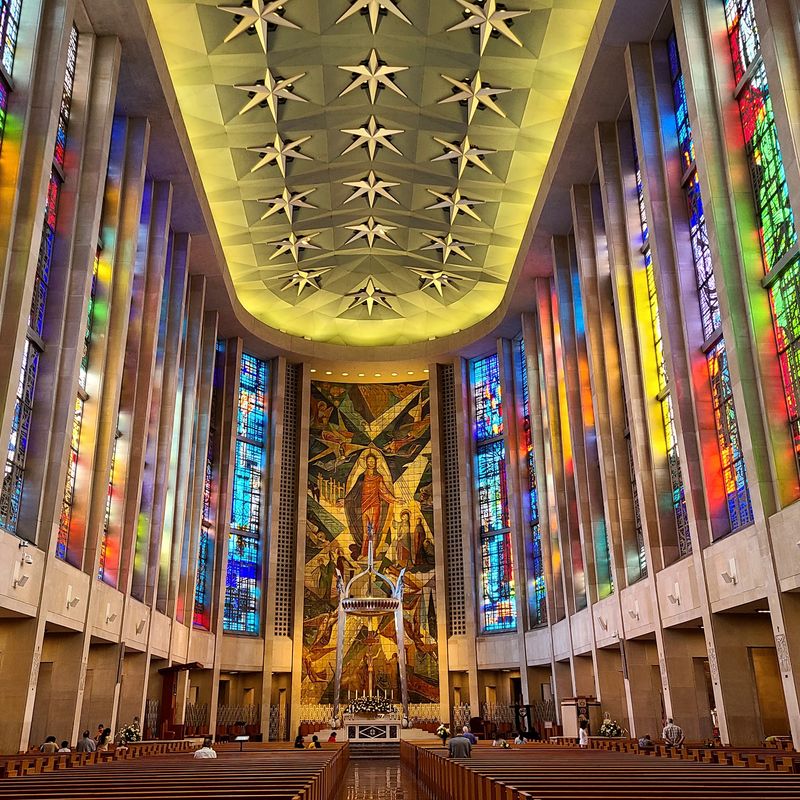
Most people stare at the windows and forget to look up. That would be a mistake, because the ceiling sparkles with star-shaped lights.
These fixtures are arranged so they appear three-dimensional. It gives the ceiling a floating, almost night-sky feeling.
The effect pairs nicely with the soaring height of the nave. Your eyes climb from colored glass to glowing stars without much effort.
Other materials quietly add to the polish. The interior uses Indiana limestone, with a lower wall of Cliffdale marble and a terrazzo floor.
Those surfaces keep things bright and clean. They also let the bolder art pieces take center stage without competing.
Think of the ceiling as the finishing touch on a carefully planned outfit. It’s not shouting for attention, but you’d miss it if it were gone.
Need a peaceful moment? Sit in a pew and simply tilt your head back for a minute.
The quiet combined with those starry lights can feel surprisingly calming. It’s a small detail that makes a big room feel personal.
An Etched Glass Wall Makes A Grand First Impression
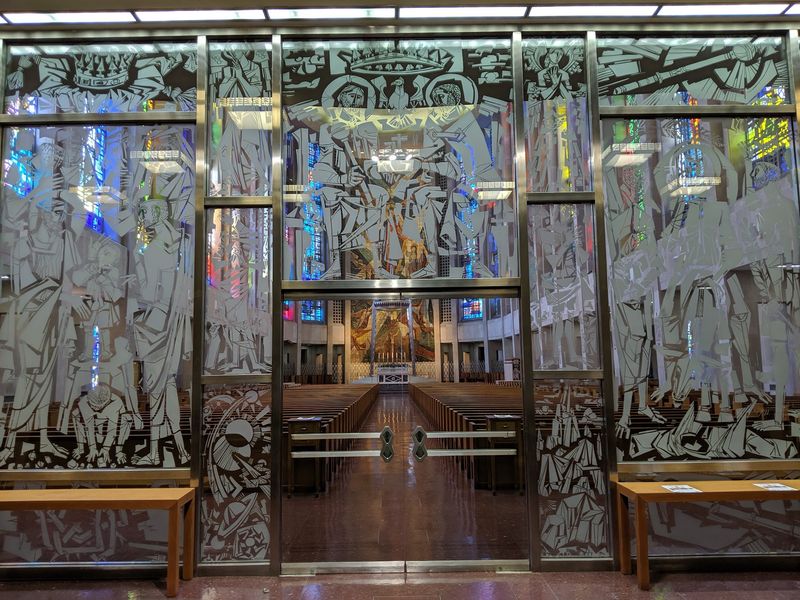
Before you reach the pews, a wall of glass stands between you and the nave. It isn’t plain glass, either.
Hungarian artist Janos Hajnal designed this etched glass wall. It separates the narthex, or entrance area, from the main worship space.
The design symbolizes the Kingdom of Christ on earth and in heaven. That’s a big idea to capture on a see-through surface.
Because it’s glass, you can glimpse the colorful nave beyond it. The view feels like a preview, teasing what’s waiting just a few steps ahead.
Etched designs reward patience. The lines can be subtle, so give your eyes a moment to adjust and pick out the details.
This wall also shows how carefully the cathedral was planned. Even the space between rooms got its own artwork.
Families might turn it into a little game. Ask everyone to find one shape or figure before moving on.
It’s an easy way to slow down and notice more. And noticing more is exactly the point in a place like this.
A Shiny Canopy With A Clever Hidden Meaning
Aluminum might sound like something from a kitchen drawer. At the Cathedral of Saint Joseph, it becomes part of the most sacred space in the building.
Above the altar hangs a baldachin, which is a type of canopy. It’s made of cast and sheet aluminum and shaped like a tripod.
That three-legged shape isn’t random. It symbolizes the Holy Trinity, a central idea in Catholic faith.
The altar itself is built from several kinds of marble. An aluminum screen surrounds the area, adding a sleek modern frame.
Together, these pieces blend old materials with new ones. Marble feels timeless, while aluminum feels very 1960s in the best way.
It’s a smart example of how the designers honored tradition without copying it. The message stays classic, even if the look is fresh.
Side altars also feature large mosaics of saints. They’re worth a slow look as you walk around.
Spend a minute near the front if the space is open to visitors. Seeing the canopy against that giant mural is a memorable pairing.
A Story Of Rebuilding That Makes Every Visit Mean More

New Year’s Eve in 1956 changed everything for this congregation. A fire destroyed the original cathedral on December 31 that year.
Instead of giving up, the community rebuilt. The current Cathedral of Saint Joseph was dedicated on May 15, 1962.
That fresh start explains the modern design. Planners chose to look forward rather than copy the past.
The results are impressive by any measure. The spire rises 281 feet, and the building stretches 284 feet long.
On top sits a stainless steel cross about 25 feet tall. The bell tower also holds 12 bells crafted in the Netherlands.
In 1979, the cathedral became a contributing property in the Asylum Avenue Historic District. That district is listed on the National Register of Historic Places.
Knowing this backstory adds depth to every window and tile. You’re not just seeing art, you’re seeing a community’s determination.
It’s a hopeful story, and Connecticut has a real treasure because of it. Keep it in mind as you explore, and the whole building feels even more meaningful.
Plan Your Visit And Pair It With A Famous Neighbor
Getting here is easy. You’ll find the cathedral at 140 Farmington Ave, Hartford, CT 06105, just outside downtown.
Everyone is welcome, Catholic or not. You can attend Mass, take a tour, or simply sit quietly for a while.
Weekday Masses happen Monday through Friday at 7:30 am and 12:10 pm. Saturday Mass is at 9:00 am, and Sunday Masses are at 8:30 am and 11:00 am.
Hours can shift for services and events. Check ahead so you can explore when things are calm.
Parking includes street spots and a lot behind the cathedral. Big events can fill things up, so arriving early is a smart move.
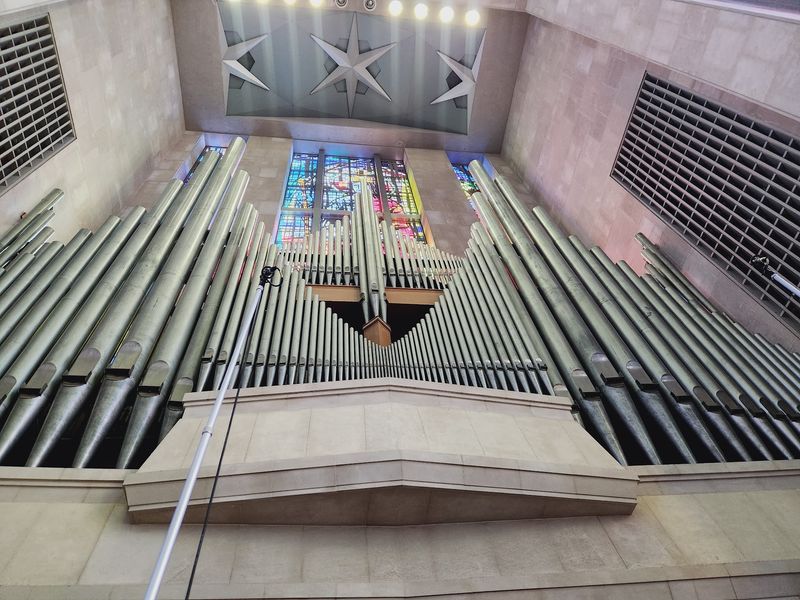
The music is another reason to come. Choirs and organ music add a lovely layer to worship here.
Here’s a bonus. The famous Mark Twain House sits nearby, so you can easily build a half-day outing around Farmington Avenue.
Few spots in Connecticut pack this much art into one stop. Come for the windows, stay for the mural, and leave a little amazed.