
The Nevada Valley Of Fire Hike Through Glowing Sandstone Formations Every Nature Lover Should Experience
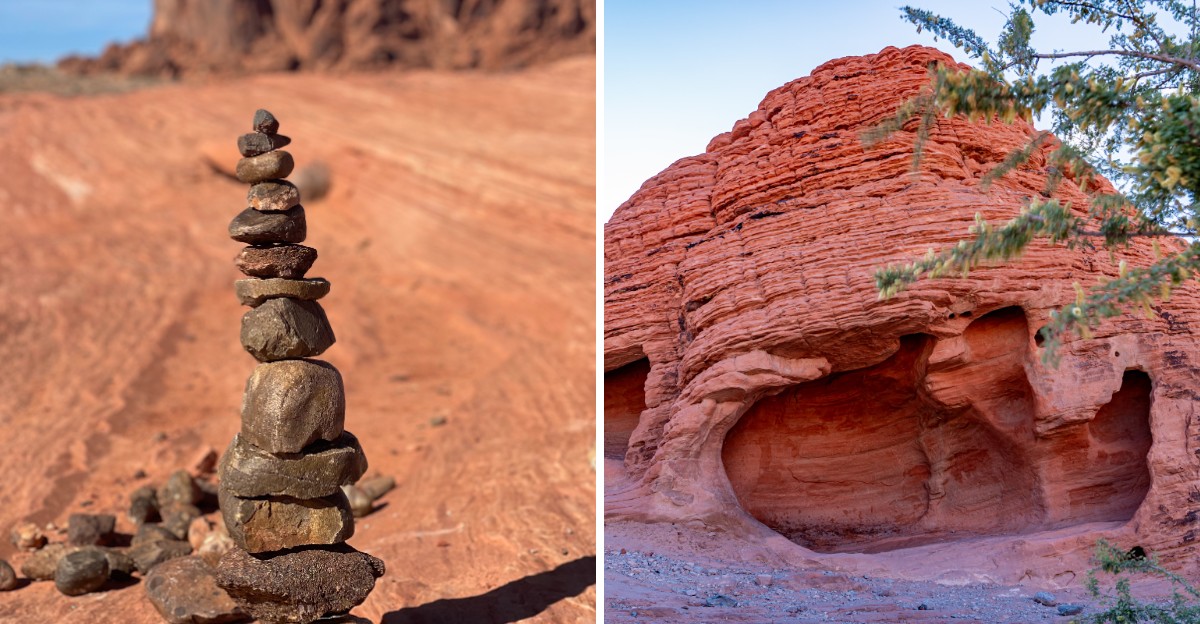
Some of the rock in this Nevada park is about 150 million years old. Long ago, it was a field of shifting sand dunes.
Today it glows in bands of red, pink, orange, and white. How did loose sand turn into something this vivid?
A short trail leads to a formation shaped like a frozen wave. It needs no permit, and the walk is only about 1.5 miles round trip.
Why spend all day chasing a view when this one comes so easily? I love how quickly that bold scene appears.
Few places in Nevada pay off this well for under two hours of walking. Could any desert hike offer a better reward?
Bring your camera and plenty of water. The rocks seem to catch fire whenever the sun hits them.
Meet The Wave That Never Moves
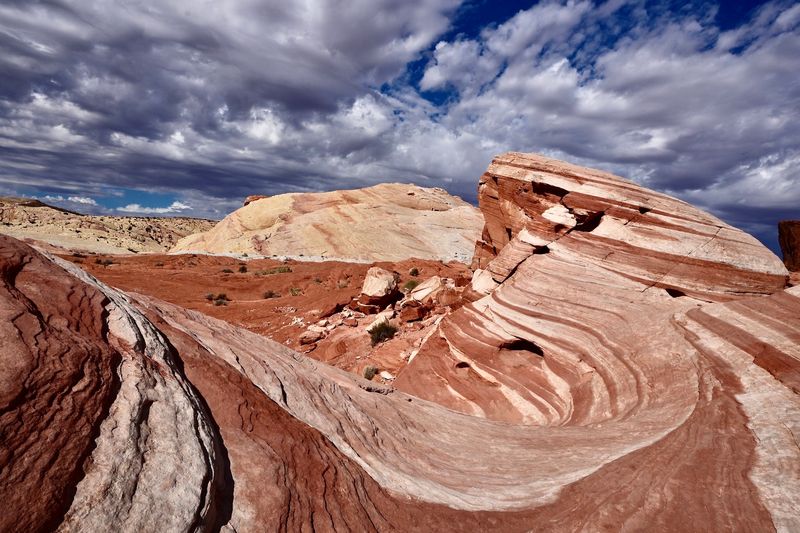
Fire Wave Trail in Valley of Fire State Park leads to a sandstone formation with swirling stripes of red, pink, orange, and white. The pattern looks like an ocean wave frozen in place.
Few desert sights are this bold.
The colors come from minerals and iron oxides in the ancient rock. Together they paint bands that seem to ripple across the surface.
Some folks compare the spot to the famous Wave in Arizona, though this one needs no permit.
One tip from visitors is that the formation looks most like a wave from the right angle. Walk around a bit and test different views before you settle on a photo.
The rock has two wavy shapes that rise from a broad, flat slab of stone.
Take your time here. The rock rewards slow looking, and every few steps shift the stripes into a new design.
It is a showstopper for anyone who loves bright natural color.
A Short Walk With Big Payoff
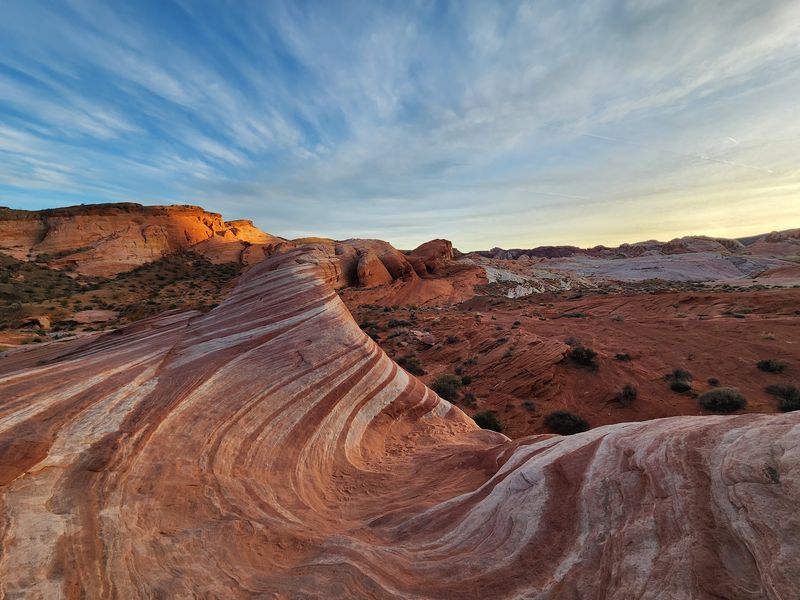
About 1.5 miles round trip. That is the whole commitment for this trail, and most hikers finish in 45 minutes to 1.5 hours.
Photo stops can stretch that time, so plan for a little extra.
The path starts with a sandy descent, moves onto rocky ground, and ends on smooth slickrock at the formation. Most people rate it easy to moderate.
Families often handle it well, though the route is not stroller friendly or wheelchair accessible.
The return trip finishes with a slight uphill climb back to the parking area. Your legs will notice it, but it is not a punishing hill.
Wear sturdy shoes, since a few spots have loose gravel and sandy patches.
Since the walk is short, it fits easily into a day of sightseeing. If you only have time for one hike in the park, many fans pick this one.
It delivers a lot of scenery for a small amount of effort.
Follow The Posts And Stacked Stones
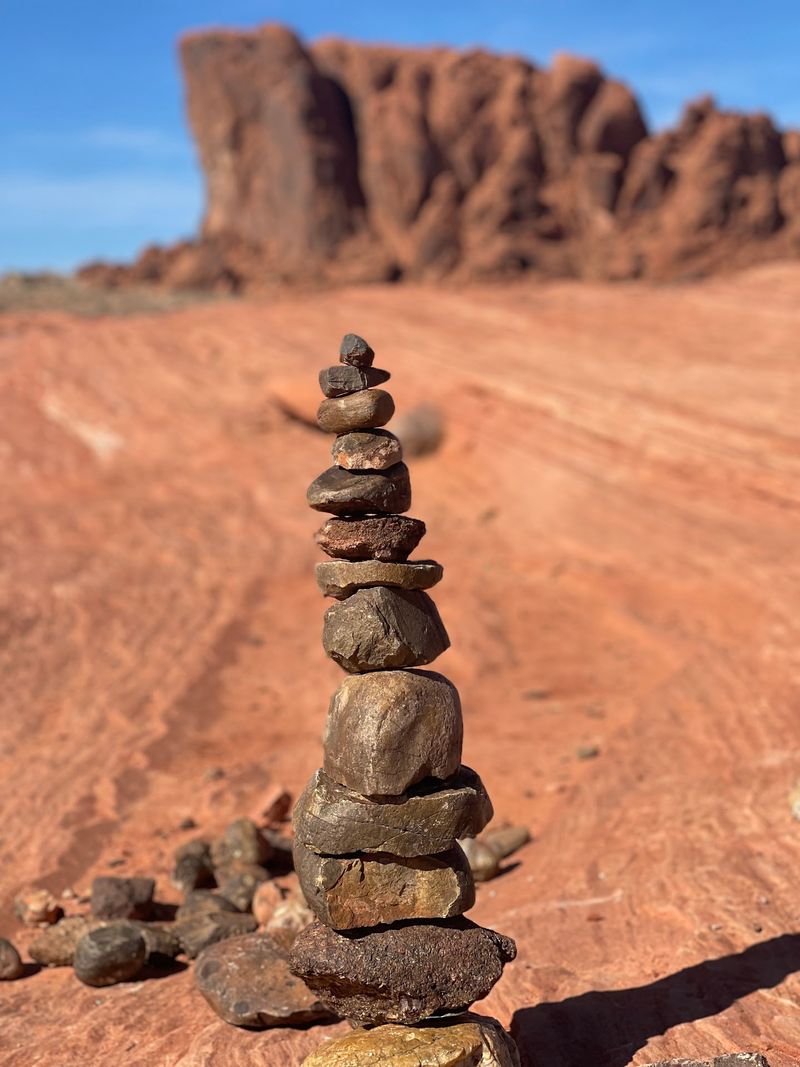
Trail markers do the heavy lifting here. Rock cairns and dark posts show the way to the main attraction, and they appear about every 50 yards.
Spot one, then look ahead for the next.
It is tempting to trail behind the crowd. That can backfire, because extra footpaths branch off and may lead you astray.
Stick with the marked route and you will reach the formation without any wandering.
The terrain changes as you go. Sand gives way to rock, and then you step onto solid sandstone near the end.
Keep your eyes up now and then, because the cliffs around you glow in deep orange and red.
Remember that this is a desert, so wandering off carries real risk. Staying on the path also protects the fragile rock and desert ground.
A little attention to the markers keeps the day simple and fun.
Chasing The Golden Hour Glow
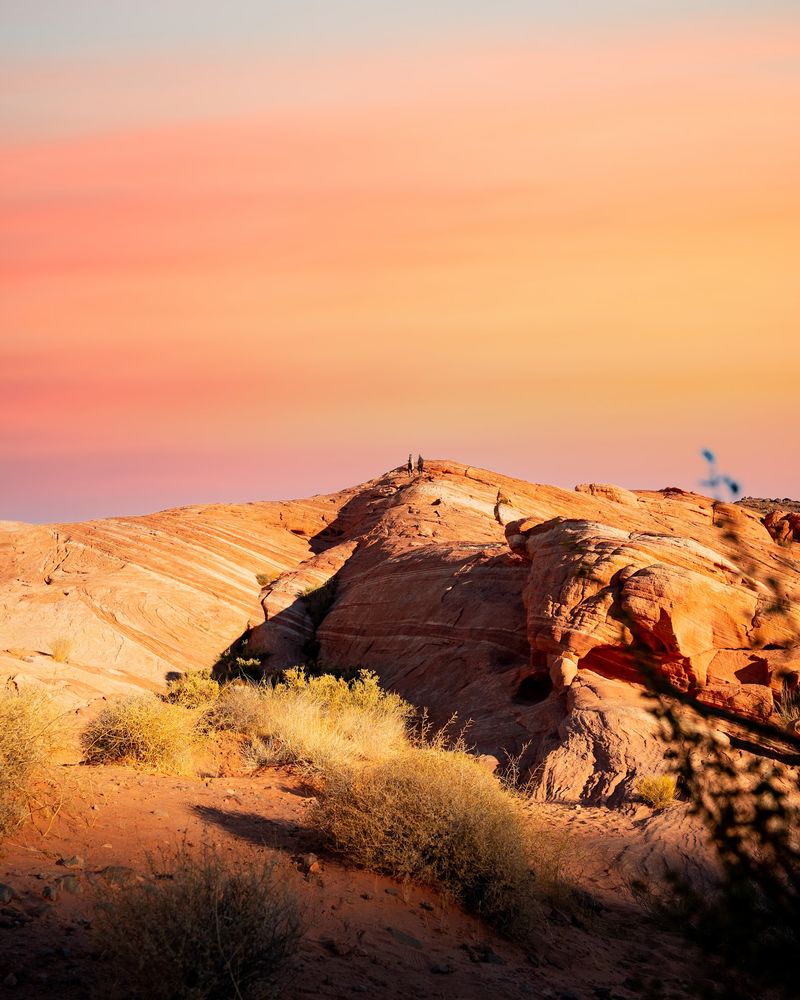
Low sun changes everything. Early morning and the hour before sunset bring out the richest color in the stripes.
Midday light is bright, but it can wash the pattern out.
Photographers love this place for good reason. Soft, angled light highlights the texture of the rock and deepens the reds.
Wide-angle shots and creative framing work well against the swirling backdrop.
Sunset is a popular choice, so expect company on the formation. Some visitors sit right on the stone, which can block your shot.
Arrive a little early to claim a good spot and wait for the light.
Bring a headlamp or phone light in case your walk back runs close to sunset, since the park is open only from sunrise to sunset. The park is open from sunrise to sunset.
Plan your timing so you are not rushing out as the colors peak.
Know When The Trail Is Open
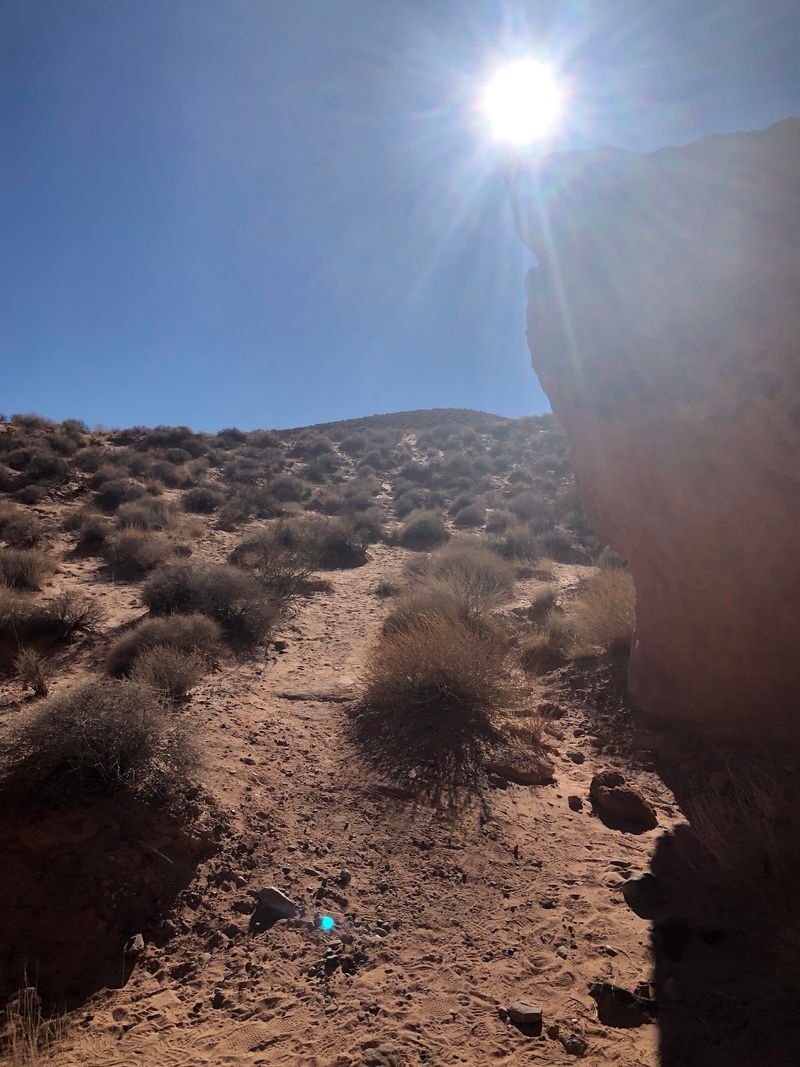
Season matters a lot here. The cooler months, from October through April, are the best time to hike in Valley of Fire State Park.
Spring brings pleasant temperatures for a walk with no shade.
Summer is a different story. Fire Wave Trail and some other popular routes close seasonally from May 15 through September 30 because of extreme heat.
Desert temperatures can climb to between 100 and 120 degrees Fahrenheit.
Even outside the closure, heat can sneak up on you. One hiker visited in mid-October around noon and turned back because the sun felt too strong.
There is almost no shade along the way.
Pack more water than you think you need. Sunscreen and a hat help too.
Check the park for current conditions before you go, since closures and rules can change.
Nevada’s Oldest State Park
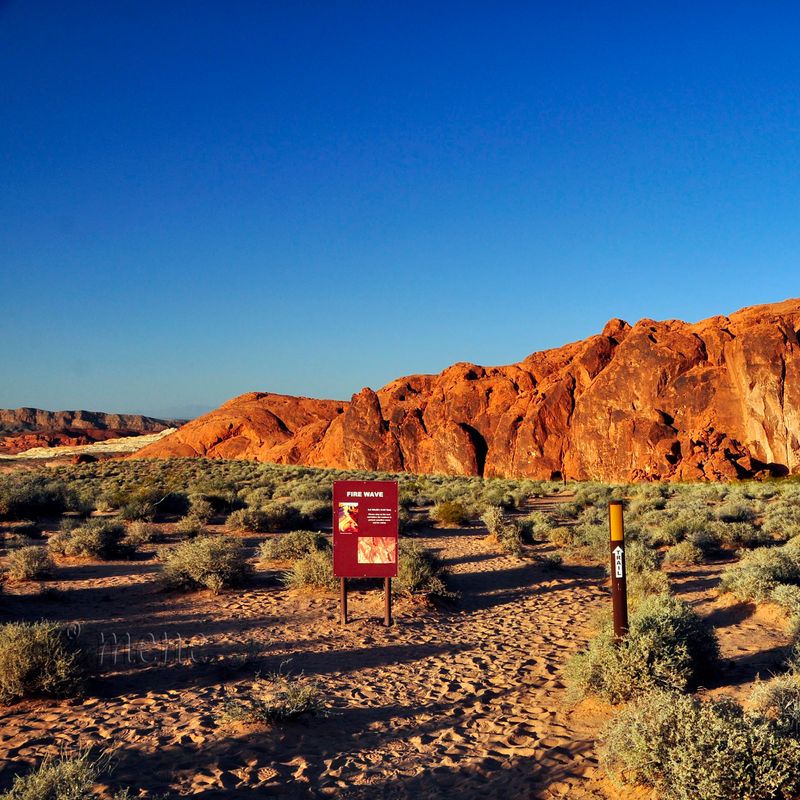
Valley of Fire State Park is Nevada’s oldest state park, established in 1935. It covers about 40,000 acres of red Aztec sandstone.
The stone began as shifting sand dunes about 150 million years ago.
Wind and water then sculpted it over millions of years. The result is the arches, domes, and waves you see today.
In 1968, the area earned a National Natural Landmark designation.
The name fits the scenery. When sunlight hits the rock, the formations can look like they are ablaze.
That glow gave the park its fiery title.
Knowing the story adds weight to the hike. You are not just walking a trail.
You are crossing what was once a sea of sand, now frozen into stone.
Add The Seven Wonders Loop
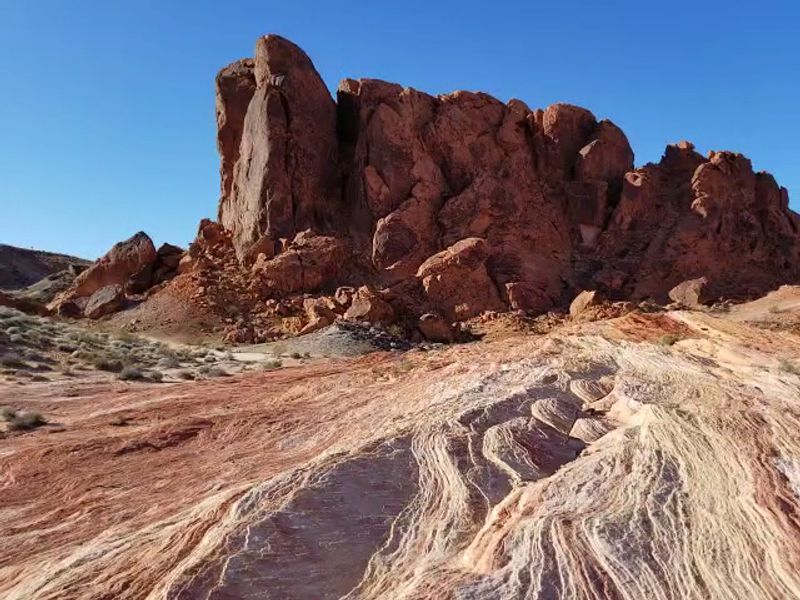
Want more miles? Some hikers link the Fire Wave with the Seven Wonders loop.
One group described the combined route as very pretty, with amazing rocks along the way.
Start early if you try it. Crowds build by late morning, and one visitor noted the area was packed by noon.
A morning start also keeps the temperatures friendlier.
Watch the signs closely. One older account tells of hikers who thought they were heading to Rainbow Vista and ended up at Fire Canyon Overlook.
Check your map before choosing a branch.
The extra distance adds more views of striped cliffs and open desert. Bring extra water and snacks for the longer outing.
It is a fun upgrade for anyone who wants more than a quick wave.
More Wonders Around The Park
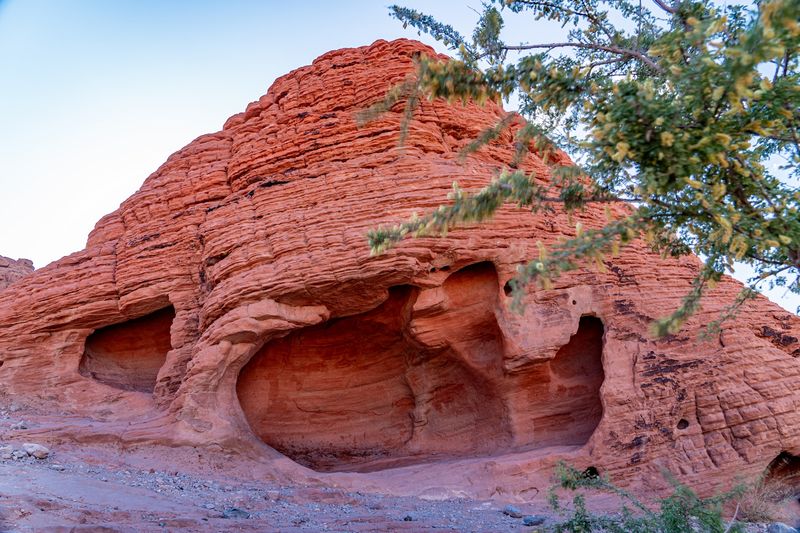
The Fire Wave is a highlight, but the park holds plenty more. Ancient petroglyphs are carved into the red sandstone, and some date back over 2,000 years.
They offer a peek into the lives of early people in the region.
Elephant Rock, Arch Rock, and the Beehives are other favorites. The Beehives show off cross-bedding, the layered lines left by ancient dunes.
You can also find petrified trees in the park.
The visitor center runs from 9 AM to 4 PM daily. It has exhibits, information, and restrooms.
One visitor suggested stopping there first to see the rock formations explained.
Scenic drives and side trails offer a new view at nearly every turn. Plan extra time if you can.
A couple of hours barely scratches the surface.
Plan Your Trip Before You Go
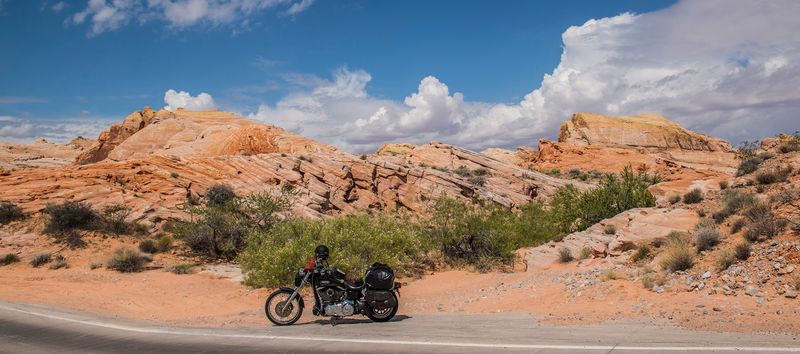
Fire Wave Trail sits at 29450 Valley of Fire Hwy, Overton, NV 89040. The park is about 50 to 58 miles northeast of Las Vegas in the Mojave Desert.
It is open daily from sunrise to sunset.
The trailhead lot is small and can fill up fast. Visitors report waiting for a spot after late morning.
There are no restrooms or water at the trailhead, but vault toilets sit across the road.
Cell service is spotty, though the Fire Wave lot may get some coverage. Download directions ahead of time.
After 4:00 PM, bring exact cash for the self-pay envelopes at the entrance.
Check for park updates before leaving home. The park has an annual closure from December 1 through December 14.
Through the end of 2026, the West Entrance is closed Monday through Thursday for construction, so use the East Entrance.