
Over A Million Bats Pour Out From Under One Texas Bridge In Austin, Every Evening Before They Leave For Winter
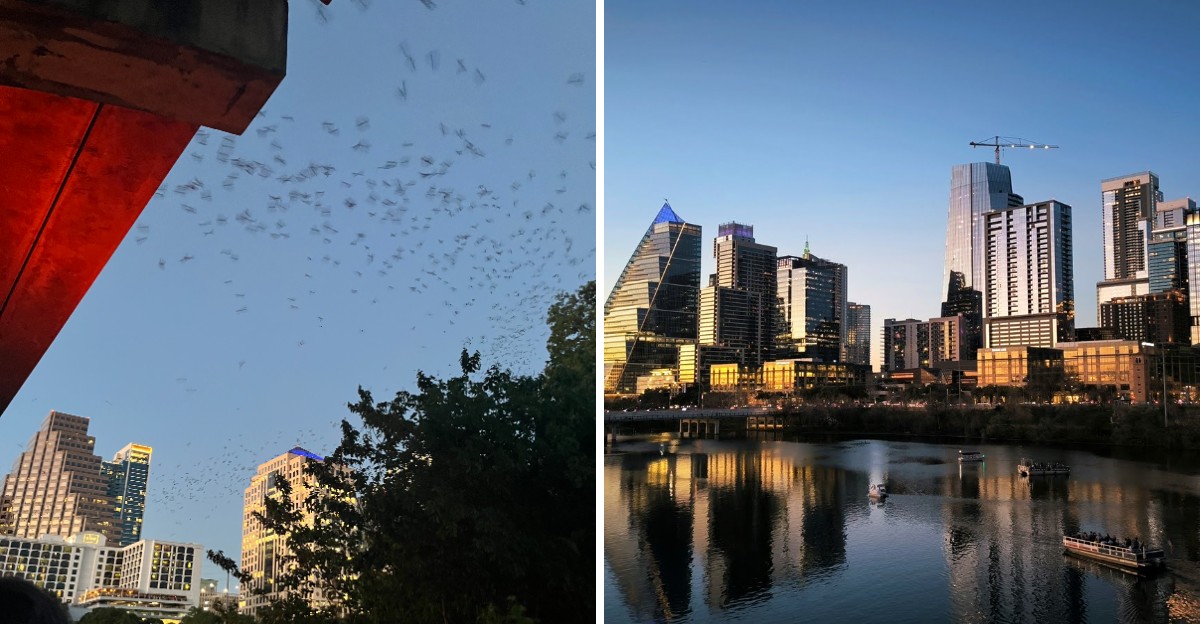
Almost every warm evening, a dark ribbon unspools from under a busy city bridge in Texas. It can keep going for up to 45 minutes.
That ribbon is bats, up to 1.5 million of them.
Who expects a wildlife spectacle above rush-hour traffic?
A bridge renovation in 1980 left narrow gaps under the deck. Mexican free-tailed bats found them perfect.
Locals once wanted them gone, but fear slowly turned into pride. Today they form the largest urban bat colony in North America.
The show costs nothing to watch, which might be the best part.
Why do so many travelers plan a whole Texas evening around one sunset?
The bats head south before winter, so timing matters. So where should you stand, and when should you show up?
The Bridge Where The Show Begins
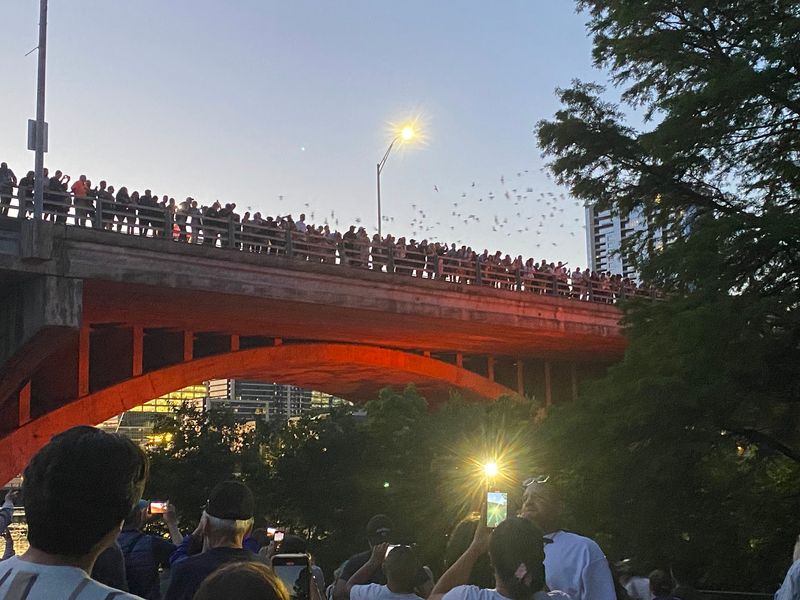
Here is a fun starting fact: the Ann W. Richards Congress Avenue Bridge connects downtown Austin to South Congress Avenue.
It spans Lady Bird Lake. By day, it looks like a normal bridge that carries traffic and walkers.
The bridge was renamed in 2006 to honor Ann W. Richards, a former Texas governor.
Today people also call it the Congress Avenue Bat Bridge. That nickname tells you what really draws the crowds.
The address to plug into your phone is 100 S. Congress Ave., Austin, TX 78704.
The bridge sits right in the center of the city, so getting there is easy. You can walk over from downtown or arrive from the South Congress side.
Viewing the bats costs nothing. You only need patience and a decent spot.
Many people arrive well before sunset to claim some sidewalk space.
The bridge itself is not fancy. Still, the views of the lake and the skyline are lovely.
That makes the wait pleasant even before any bat appears.
Think of the bridge as the stage. The real stars show up a little later.
A Happy Accident Made For Bats
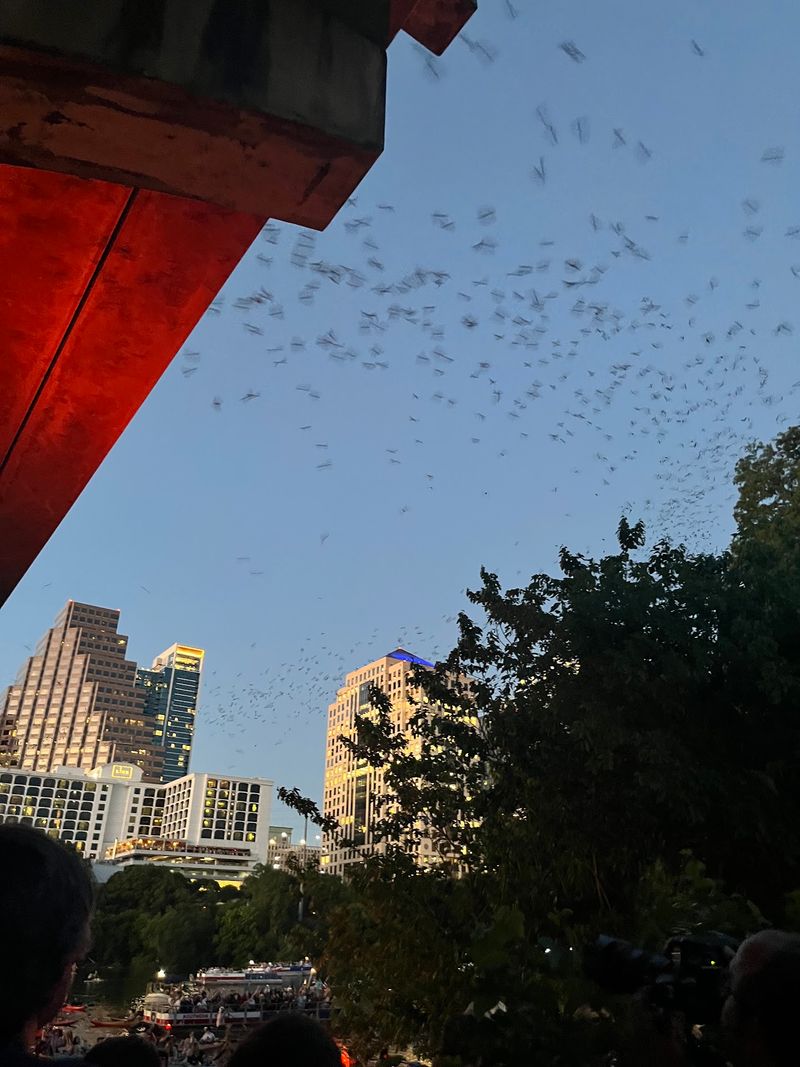
Nobody planned to build a bat home. The bridge was rebuilt and widened in the early 1980s.
The new concrete box beams left deep, narrow gaps underneath.
Those gaps are about three-quarters of an inch to one and a half inches wide. For Mexican free-tailed bats, that size is just right.
The slots stay warm and protected, so the bats moved in soon after the 1980 work.
The new neighbors scared a lot of people at first. Some Austin residents wanted the colony removed.
The city faced a real debate over what to do.
Bat Conservation International, founded by Merlin Tuttle, moved to Austin in the 1980s. The group launched a big education campaign.
Slowly, people learned that the bats were not a danger.
That change of heart is a great story. Fear turned into pride, and the bats became part of Austin’s identity.
Now thousands of visitors come just to see them.
It all started with a few inches of space under a road.
Meet The Mexican Free-Tailed Bats
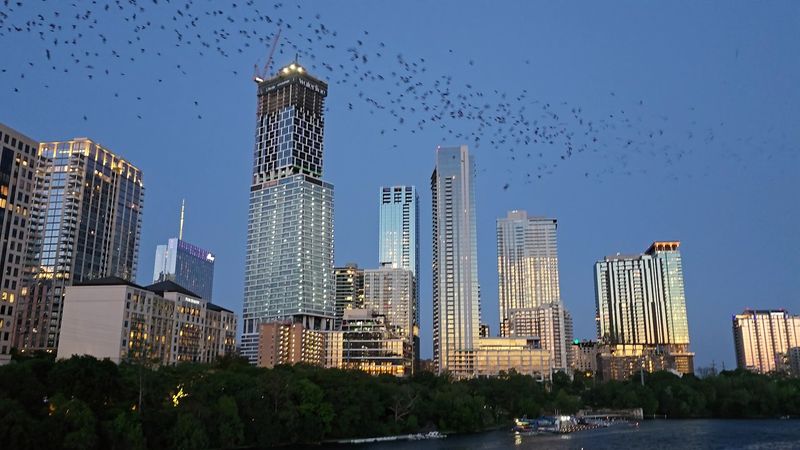
The stars of this show are Mexican free-tailed bats. Scientists call them Tadarida brasiliensis.
Some people also call them Brazilian free-tailed bats.
The colony is thought to hold between 750,000 and 1.5 million bats. That makes it the largest urban bat colony in North America.
Most of the bats that arrive in spring are pregnant females.
Each mother usually has one pup in early June. That adds up to an estimated 750,000 pups raised at the bridge each year.
It is basically one giant nursery under the road.
These bats are speedy fliers. They can reach up to 100 miles per hour and climb as high as 10,000 feet.
Not bad for a creature that sleeps in a crack.
Their menu is simple: insects. They eat mosquitoes and crop pests.
A bat is a flying pest controller with excellent hours.
Knowing this makes the evening flight feel less spooky. It is more like a crew heading out to work.
Sunset Is When The Sky Comes Alive
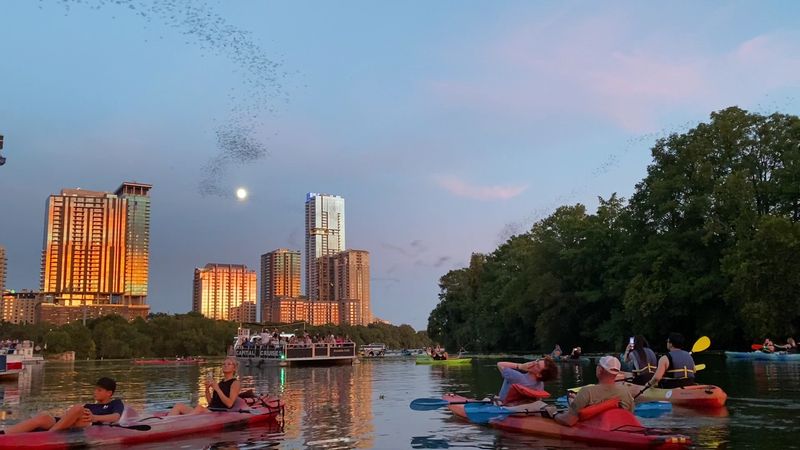
Just before dark, the bats begin their grand exit. The timing is around sunset, but it changes from night to night.
Cloud cover, temperature, and hunger all play a part.
Cloudy evenings may bring them out earlier. Clear skies can make them wait a bit longer.
So the schedule is more of a suggestion than a promise.
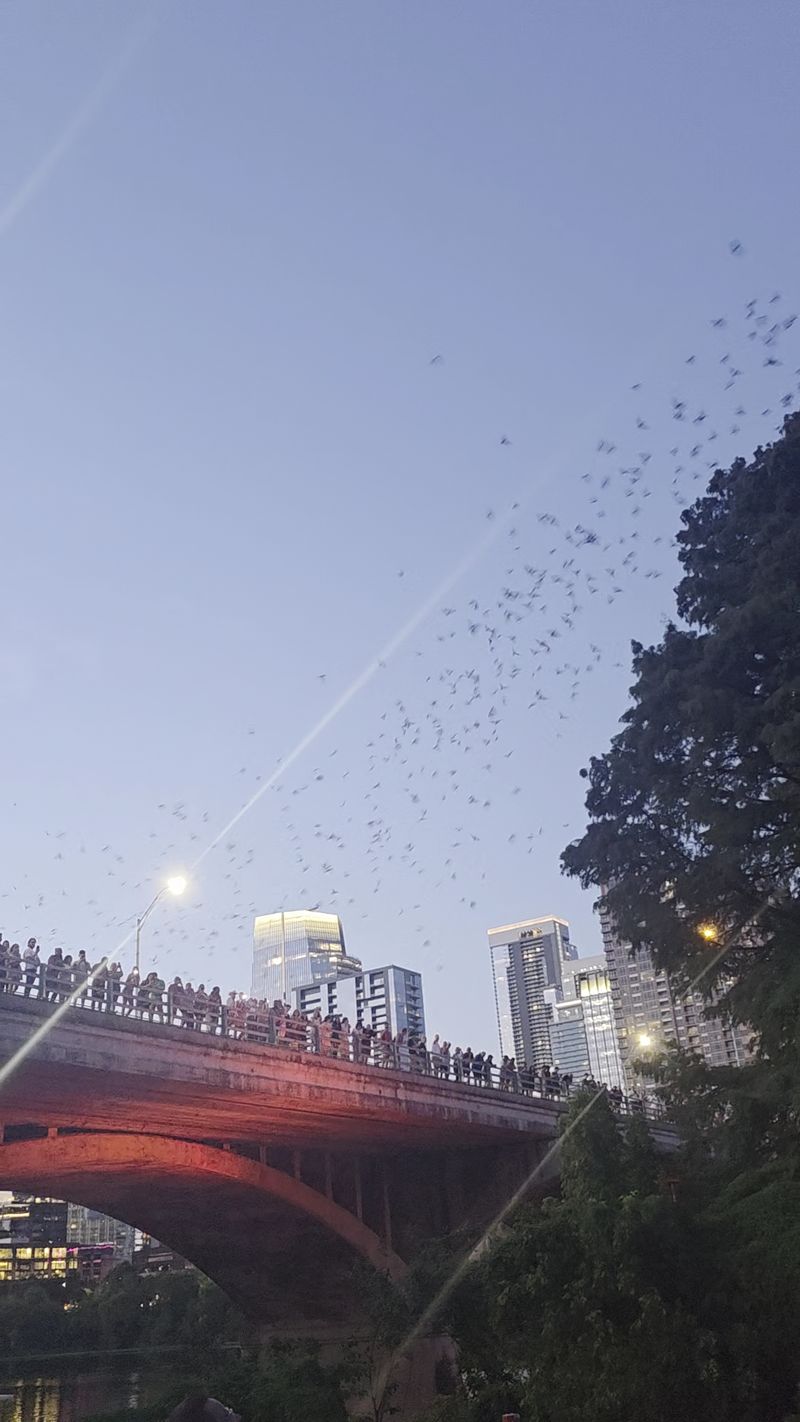
The flight can last up to 45 minutes. The bats head east from the bridge.
They often form a swirling, ribbon-like stream that curls across the sky.
Each night they gather an enormous meal. The colony eats an estimated 10,000 to 30,000 pounds of insects.
That includes mosquitoes and farm pests.
That pest control helps Texas farmers too. It helps them cut back on pesticide costs.
Not a bad job for creatures that work only at night.
Look up and give it a moment. Once the first group lifts off, others follow in waves.
Timing Your Visit By The Seasons
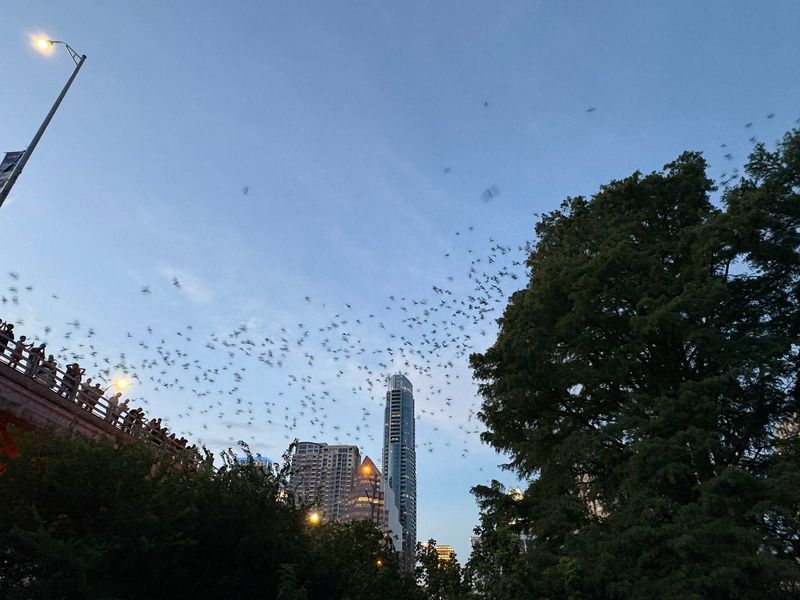
Bat season has a clear calendar. The bats start arriving around mid-March.
They travel up from their winter homes in central Mexico.
They stay through early fall. Most leave in October or November.
By the first week of November, the trip south is already underway.
The best viewing comes from late July through August. That is when the pups begin joining their mothers on the nightly flights.
The show then stays strong into September.
A smaller part of the colony, possibly up to 100,000 bats, may stay all year. On unusually warm, dry winter nights, small emergences can happen.
Still, winter is not the time to count on a big show.
Wind and weather can change things too. Some nights the bats simply take their time.
Checking recent emergence reports before you go is smart.
Plan for the warm months and you will have the best odds. Pick a clear summer evening and settle in early.
Claim A Spot On The Bat Observation Area
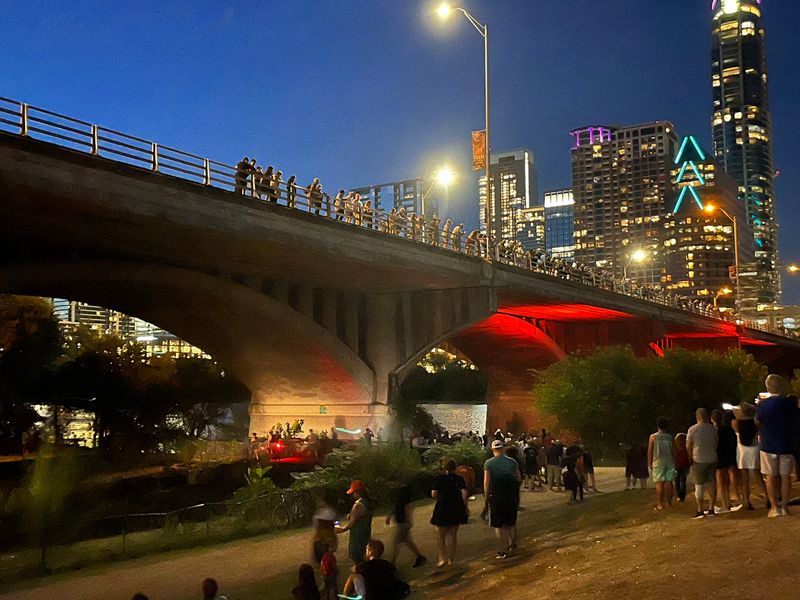
Plenty of spots work for watching the bats. The Austin American-Statesman Bat Observation Area sits on the southeast side of Congress Avenue.
It is open year-round and has educational kiosks.
From May through September, volunteer bat educators from Bat Conservation International are often there on weekend evenings. They can answer questions about the colony.
That adds a bit of science to your sunset.
The sidewalk on the bridge can get very crowded. Arriving early helps you find a good place.
A little patience goes a long way here.
The hike-and-bike trail along Lady Bird Lake is another option. It offers views of the bridge and the Austin skyline.
Walking the trail before the show makes the wait feel shorter.
Parking takes some planning. Paid parking is available near the viewing areas.
Some free spots may turn up on Cesar Chavez Street after 6 p.m. or on South Congress Avenue, but check the meters first.
Bring a comfortable plan and enough time. Good seats fill up fast.
See It Better From The Water
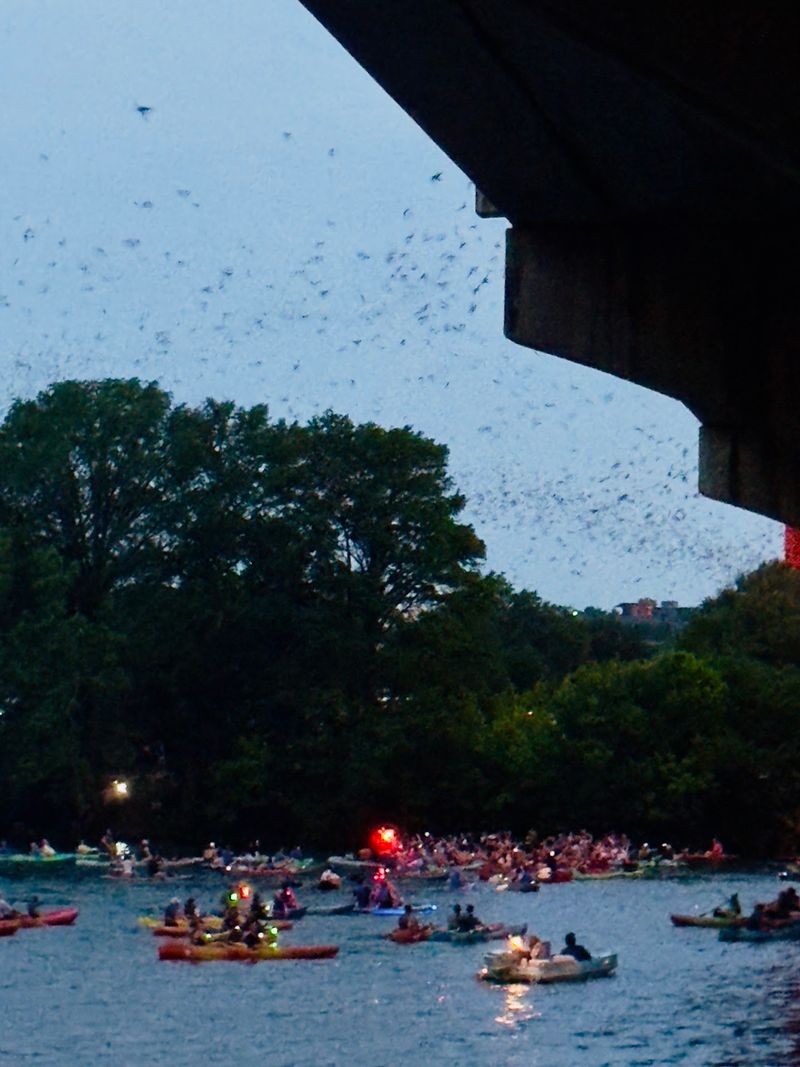
Want a different angle? Get on the lake.
Boat tours run seven nights a week from March through October.
Kayaks, canoes, and stand-up paddleboards can also be rented. From the water, you can look up at the bats as they pour out of the crevices.
The view feels closer and quieter.
Rowing under the bridge is a memorable way to spend a summer evening. The skyline glows across the water.
The sunset adds a pink backdrop to the whole scene.
Boats and paddlers gather near the bridge as dusk falls. Everyone shares the same goal.
All eyes point up and wait.
Plan for the unexpected. Wind or cooler weather can change when the bats leave.
Even so, a night on Lady Bird Lake is pretty on its own.
If you like being on the water, this is a fine way to see the show. Just book early for peak season.
Snacks, Views, And Dining Nearby
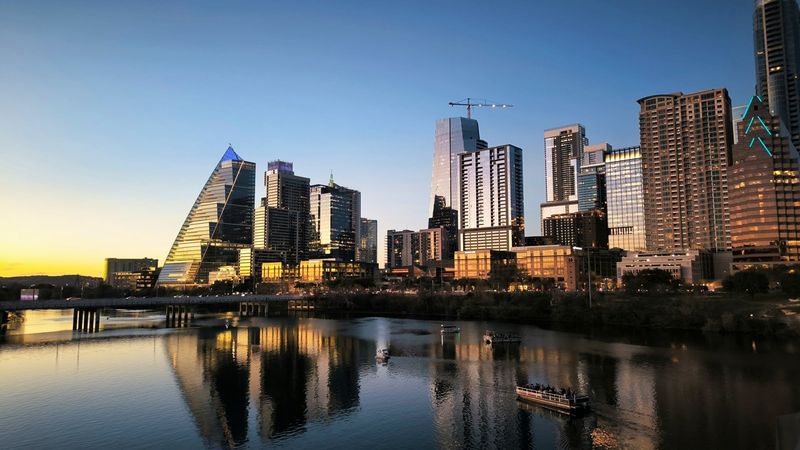
Dinner and a bat show pair well together. Plenty of spots nearby offer views of the bridge.
Ciclo at the Four Seasons and Arlo Grey at The LINE Austin are both on the list.
The Fareground food hall is also close to the bridge. It is a handy stop before or after the bats.
You can grab a bite without wandering far.
The YETI Flagship store has its own patio nearby too. It adds another place to relax while you wait.
Browsing is a fun way to pass time before dusk.
Several hotels sit close to the bridge. That makes the bat flight an easy evening walk.
Staying close means no long drive afterward.
Mix in a stroll on the trail for a full night out. The skyline looks great as the light fades.
Austin makes the waiting part easy.
Give yourself time to enjoy it all. The bats will not mind if you arrive a little early.
Say Hello To Nightwing
Before the real bats appear, there is a metal one to meet. The Nightwing bat statue stands on the south end of the Congress Avenue Bridge.
It makes a fun photo stop.
Its location makes it a good meeting point. Friends can gather here, then head out to find a viewing spot.
It is a simple way to start the evening.
The statue also hints at how much Austin loves its bats. The city turned a once-feared colony into a symbol.
Now the bats bring millions of dollars to the local economy through eco-tourism.
That is quite a turnaround. The same animals that worried people in the 1980s now draw visitors from everywhere.
Education made the difference.
Spend a minute here and take a picture. Then wait for sunset and the real show.
A little patience pays off.
When the sky finally fills with wings, the whole bridge goes quiet. Then the crowd cheers, and the night belongs to Austin’s bats.