
The 8 Small New York Lake Towns With Main Streets That Still Feel Like The 1950s
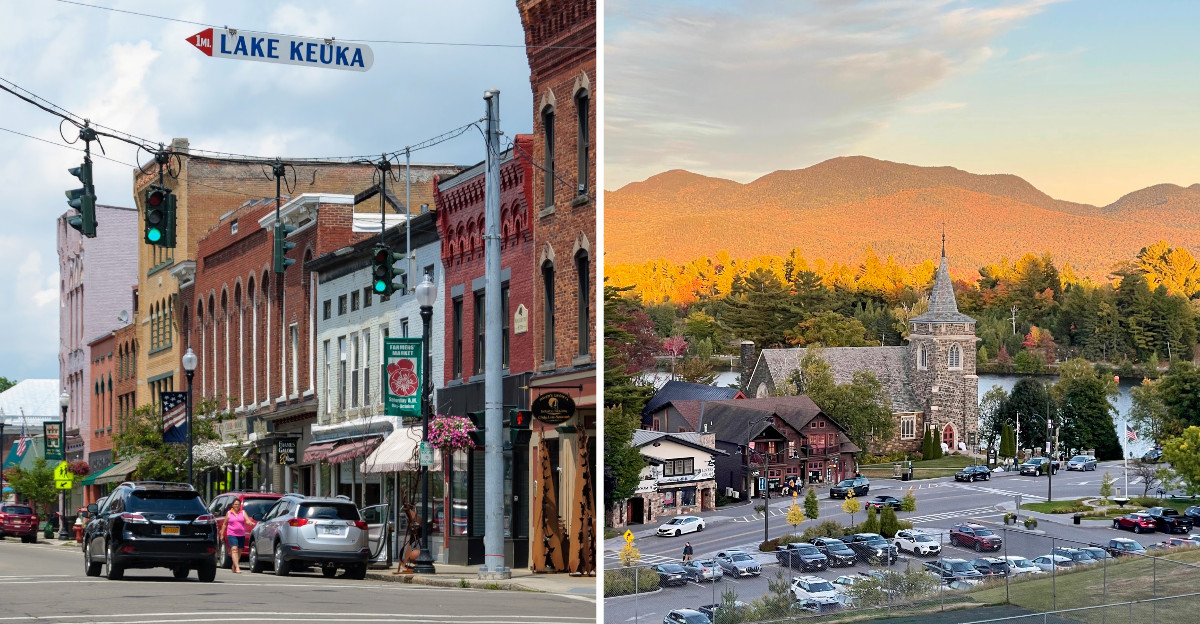
Most newlyweds get a toaster. One lucky couple got a whole movie theater in 1961, and their family still runs it today.
The doors first opened in 1926, and the original pipe organ from the silent film days still sits inside. I adore that. Lake towns in New York tend to hold on to what they love and keep the lights on for decades.
Old habits run deep in every town on the list. A beloved diner began as a simple lunch counter back in 1921. One village even let race cars roar right down Main Street.
Historic storefronts and old-fashioned Main Streets give these lakeside communities the charm of a postcard your grandparents might have mailed home. Let me ask you this: which one gets your next weekend drive?
Skaneateles
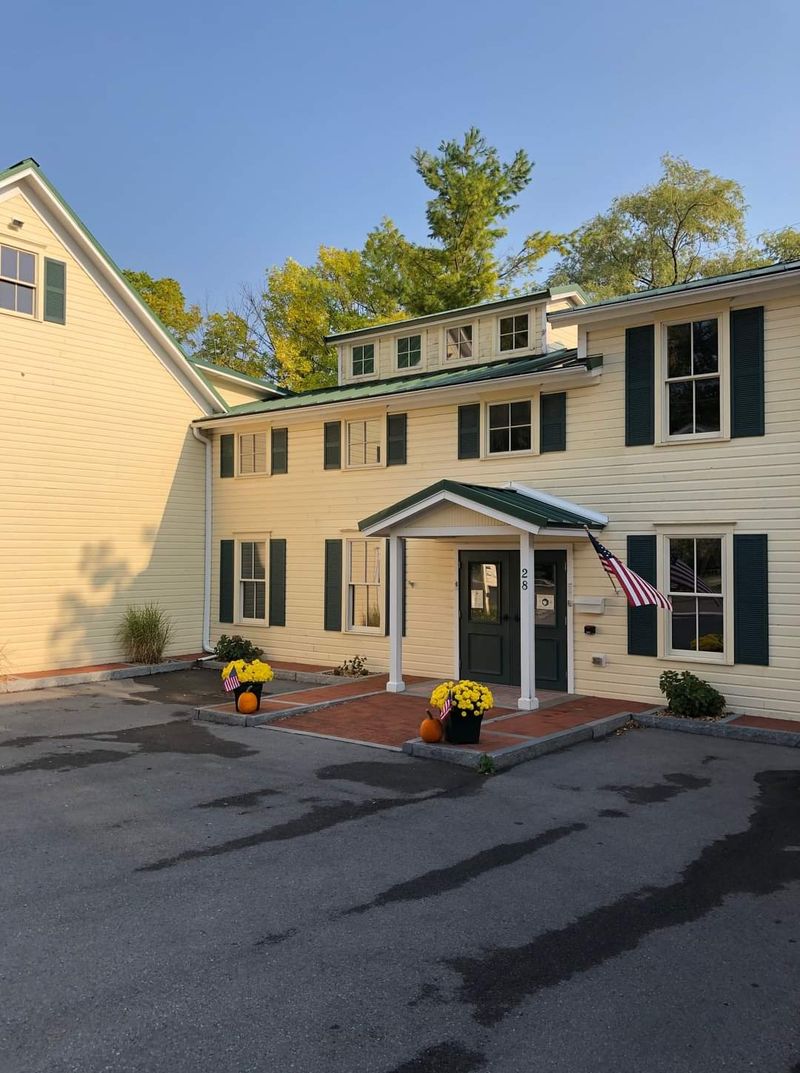
Back in 1807, travelers rolled into this village by stagecoach and needed a bed for the night. The inn that welcomed them is still open on West Genesee Street.
Skaneateles sits right on the northern shore of Skaneateles Lake, with roughly 2,500 residents. Its main commercial strip on East Genesee Street is part of the Skaneateles Historic District.
That label matters more than you might guess. It helps keep the old brick facades and the vintage street layout looking much like they did generations ago.
Stroll the sidewalks and you’ll spot boutique storefronts tucked inside those 19th-century and mid-century buildings. The lake glitters at the end of the street, so your phone camera will stay busy.
Now, about that inn. The Sherwood Inn was built as a stagecoach stop, and it went back to its original name in 1945.
Inside, you’ll find pegged wood floors, antique furniture, and four fireplaces. The dining room serves Yankee pot roast with whipped potatoes and house gravy, plus a dish called Scrod Christopher.
Save room for a stop at The Patisserie, the on-property bakery. It’s known for its stretch bread, which sounds like a yoga class but tastes much better.
Want to stay over? The inn has 25 guest rooms, and many look out over the lake.
Plan a slow afternoon here rather than a quick drive-through. A village this pretty deserves a little time, and maybe a second loaf of bread.
Cooperstown
Baseball fans make the pilgrimage, but the real time machine here is Main Street itself. Red-brick storefronts and traditional lampposts line the road like a scene from an old movie reel.
Cooperstown sits at the southern tip of Otsego Lake, which many folks call Glimmerglass. Its permanent population is under 1,800, so the village feels small even on busy summer days.
The street has been carefully kept to preserve classic Americana. Independent shops fill those brick buildings instead of the usual chain stores you see along highways.
Of course, the National Baseball Hall of Fame anchors the scene. You can wander from the plaques to lunch in just a few steps.
Speaking of lunch, The Cooperstown Diner has been a Main Street fixture since 1921. It began as a small lunch counter and has served breakfast and lunch for over a century.
Hungry yet? The menu includes a jumbo burger platter, cinnamon roll French toast, and homemade sausage gravy and biscuits with home fries.
Coffee is bottomless, which helps if you plan to tour the whole Hall of Fame. Just note that the diner closes on Mondays, so time your visit wisely.
After eating, take a walk down toward the lake. The water view gives you a quiet break from all the bat-and-ball excitement.
Cooperstown proves a town can be famous and still feel homegrown. That’s a rare double play in New York.
Hammondsport
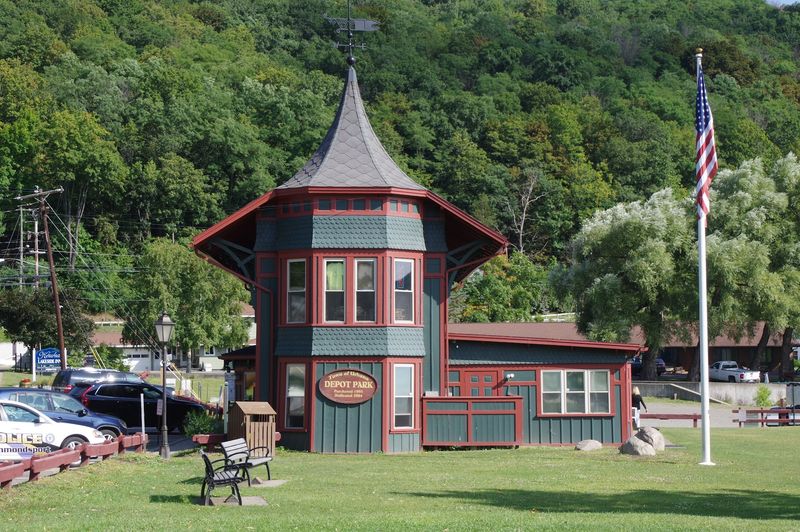
In 2012, this village of about 600 people was named The Coolest Small Town in America. Not bad for a place you can cross on foot in minutes.
Hammondsport sits at the south end of Keuka Lake in the Finger Lakes. Its heart is Pulteney Square, a village green ringed by old brick blocks and historic storefronts.
Shethar Street runs along the square, and it’s where you’ll want to park and wander. Legacy storefronts here give the center a strong 1950s feel.
One standout is Patina, an antique and vintage shop. It fills a historic hardware store with goods from 17 different vendors.
That means you might find home decor, garden pieces, and vintage treasures in one stop. Bring a little extra trunk space, just in case.
Patina is open daily from spring through December. During January, February, and March, it opens only on weekends, so plan around that.
Fun fact for history buffs: Hammondsport is the hometown of aviation pioneer Glenn Curtiss. The village honors him with the Glenn H. Curtiss Museum just outside downtown.
After shopping, take a stroll toward the lakefront. Keuka Lake’s long blue shape stretches north, and it’s a lovely place to sit for a while.
Small towns don’t come much smaller or friendlier looking than this one. Honestly, the coolest title still fits.
Cazenovia
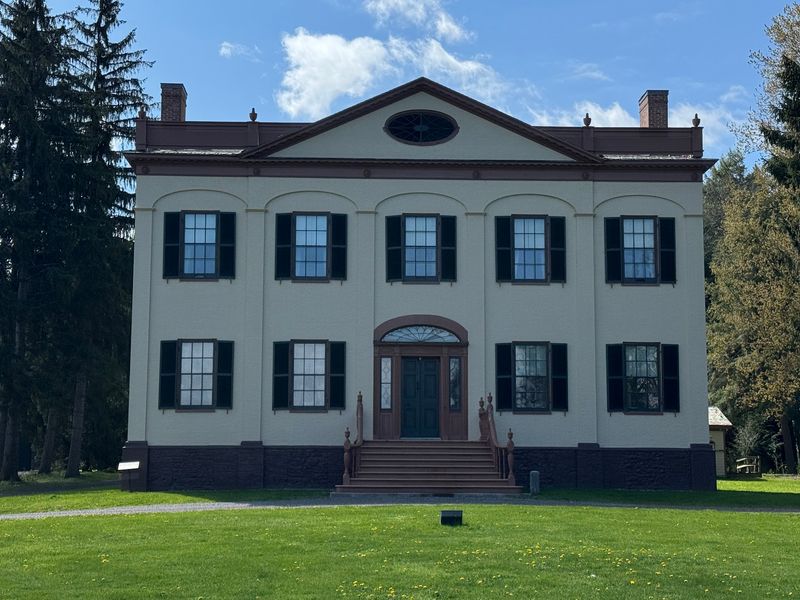
Grover Cleveland and John D. Rockefeller both slept on this Main Street. Okay, not on the sidewalk, but at the grand old hotel that still stands there.
Cazenovia is a historic village of about 2,700 people in Madison County. It hugs the southern tip and eastern shore of Cazenovia Lake.
Albany Street works as the village’s Main Street. Tree-lined sidewalks and period brick buildings create a downtown skyline that feels wonderfully old-school.
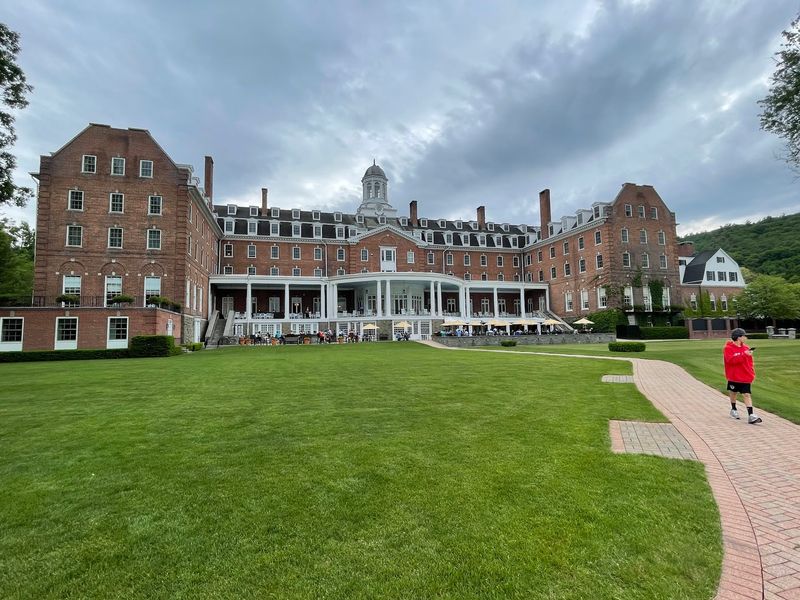
The star building is The Lincklaen House, which opened in 1836. It’s known as the Oldest Grand Hotel in Central New York.
A fire hit in 1916, but the remodel kept the fine woodwork and moldings. The main floor shows off high ceilings, carved moldings, painted wood panels, and three large fireplaces.
Look for the white signpost out front. It once served as a hitching post for stagecoach teams, so you’re basically parking where the horses did.
The hotel has 23 guest rooms, and many overlook downtown. There’s also an on-site restaurant called Seven Stone Steps, plus continental breakfast for guests.
Bringing your dog along? The Lincklaen House is pet-friendly, which makes a lakeside weekend even easier.
Spend your morning on Albany Street and your afternoon by the water. That combo feels like a page from a 1950s travel brochure, minus the faded colors.
Lake Placid
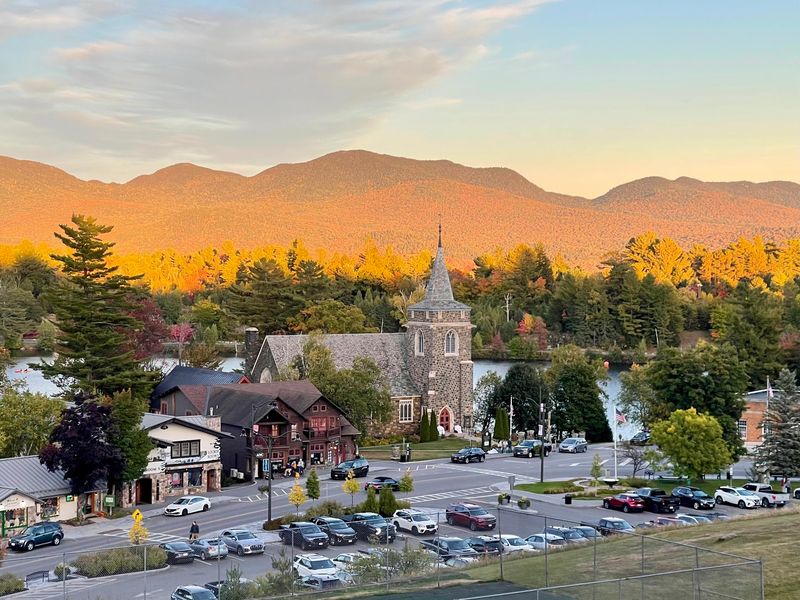
Two Winter Olympics came through this mountain village, yet a 1926 movie theater might be its sweetest secret. The Palace Theatre marquee still glows on Main Street.
Lake Placid has around 2,200 year-round residents in the Adirondack Mountains. Despite its name, Main Street actually runs along Mirror Lake, with Lake Placid itself right next door.
The street keeps a retro resort look. Alpine-style facades line both sides, and the mountain air makes window shopping feel extra refreshing.
Now, back to that theater. The Palace was bought in 1961 as a wedding present, and the same family has owned it ever since.
Talk about a gift that keeps on giving. Today it shows first-run movies on four screens, so you aren’t stuck watching black-and-white reruns.
Inside sits the original Robert Morton organ, rebuilt in 1998. It’s one of the few original theater organs still left in the country.
The concession stand covers the basics with popcorn, soda, and sweets. Just remember the theater closes on Mondays.
The Palace also hosts events like the Lake Placid Film Festival and the Holiday Village Stroll. Those are great excuses to plan a return trip.
After the credits roll, walk down to Mirror Lake. Seeing the mountains reflected in the water is the kind of ending Hollywood can’t top.
Saranac Lake
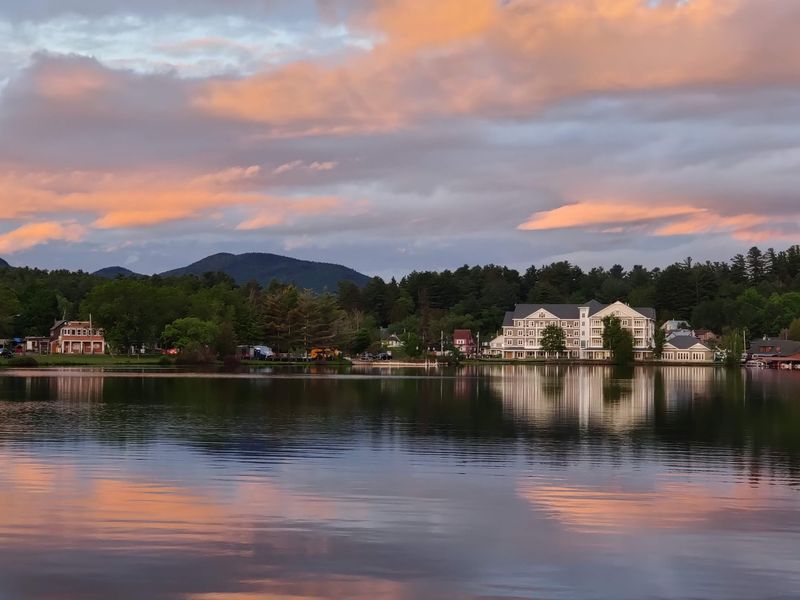
Lakes don’t just sit beside this village. The Saranac River runs through the village center, while nearby Lake Flower connects to the larger Saranac Lake chain.
Saranac Lake is an Adirondack community of about 4,800 people. It spans parts of Franklin and Essex Counties in upstate New York.
Downtown, Main Street and historic Berkeley Square hold a mid-century streetscape that’s mostly intact. Brick commercial storefronts and older business facades have stuck around for decades.
That gives the village a lived-in, unfussy charm. It feels like a real working town rather than a stage set built for tourists.
Berkeley Square makes a handy starting point for a walk. From there, you can wander the side streets and see how the brick blocks curve along the water.
Bring layers if you visit in winter. The village is famous for its Winter Carnival, a tradition that dates back to the late 1800s.
In warmer months, Lake Flower becomes the backdrop for an easy shoreline stroll. Paddlers love the connected waterways, too.
Compared to its flashier neighbor down the road, Saranac Lake moves at a slower pace. Some travelers consider that its best feature.
Grab a map, pick a sunny afternoon, and let the old storefronts set the mood. You may find yourself checking real estate listings on the drive home.
Penn Yan
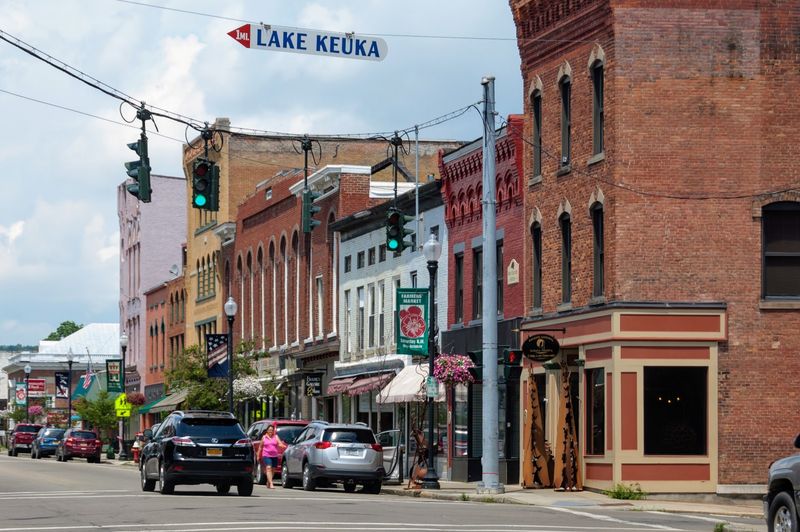
Wide streets were a big deal back when horses and wagons needed room to turn. Penn Yan still has one of the widest Main Streets you’ll find in a small upstate town.
This community of around 5,000 people sits at the northern point of Keuka Lake’s east branch. Farms surround it, so the countryside views start the moment you leave downtown.
Main Street runs through the Penn Yan Historic District, known for its well-preserved nineteenth- and early-twentieth-century architecture. Early-to-mid-20th-century commercial buildings line both sides with their vintage facades still in place.
Take your time walking it end to end. The brick buildings and historic anchors give the street a steady, solid look that newer towns can’t fake.
Keep an eye out for a giant iron griddle hanging on a brick wall along Main Street. It belongs to The Birkett Mills, a buckwheat mill with roots going back to 1797. In 1987, a record pancake was cooked on that griddle, and it measured about 28 feet across.
Breakfast fans, that’s a lot of syrup. The mill still grinds buckwheat today, so the old griddle doubles as a hometown trophy. Snap a photo before you move on.
Fun fact: the town’s name blends two groups of early settlers. Pennsylvanians and Yankees both helped found it, so they mashed their names together.
That kind of compromise feels right for a quiet farm town. Neighbors here have been sharing the road for a long time.
Penn Yan also makes a great base for exploring Keuka Lake. Its unusual Y shape gives you plenty of shoreline to drive and admire.
Pack a picnic and look for a spot near the water. Afternoons here move slowly, and that’s the whole point.
Small, wide, and proudly old-fashioned, Penn Yan rewards anyone who likes their history without a velvet rope.
Watkins Glen
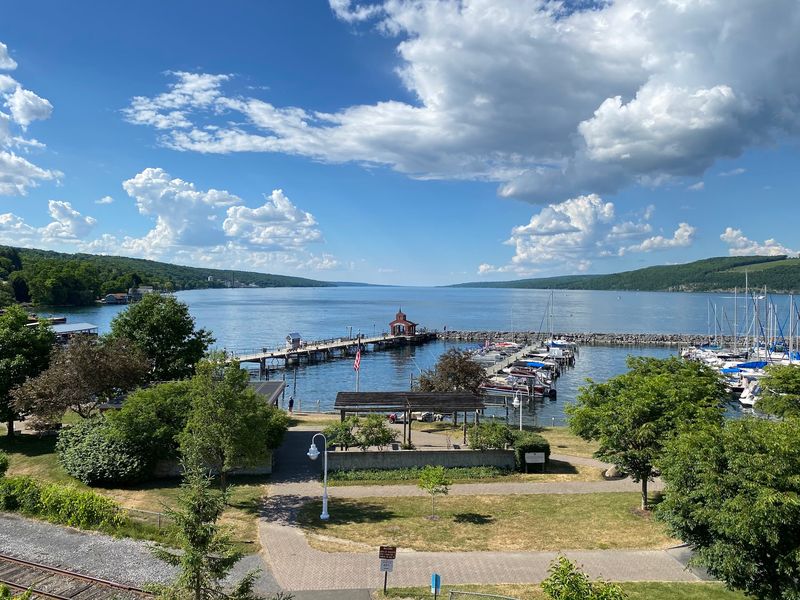
Race cars once zoomed straight down this Main Street. In the late 1940s and early 1950s, Watkins Glen hosted Grand Prix races right on the village roads.
Can you blame them? Franklin Street is long and lined with low-rise brick storefronts, and it still keeps that mid-century scale today.
The village has around 1,800 residents and sits on the southern shore of Seneca Lake. That lake is one of the deepest in New York, so the water looks especially blue on clear days.
Look around as you stroll and you’ll spot vintage neon diner signs. They add a retro glow, especially as the sun starts to set.
Racing history still shapes the town’s identity. The famous track moved out of the village long ago, but the street-race story remains a point of pride.
Besides the storefronts, the village is the gateway to Watkins Glen State Park. Its gorge trail passes waterfalls, and it’s a short drive from downtown.
That pairing makes for an easy day trip. Spend the morning on the trail, then cool off with a lakeside walk in the afternoon.
Bring comfortable shoes for the gorge steps. Your legs will feel it, but the views make the climb worthwhile.
Fast cars came and went, yet Franklin Street kept its old rhythm. Turns out the slow lane has the best scenery.