
This Flat And Easy Massachusetts Rail Trail Crosses The Connecticut River On A Stunning Old Railroad Bridge
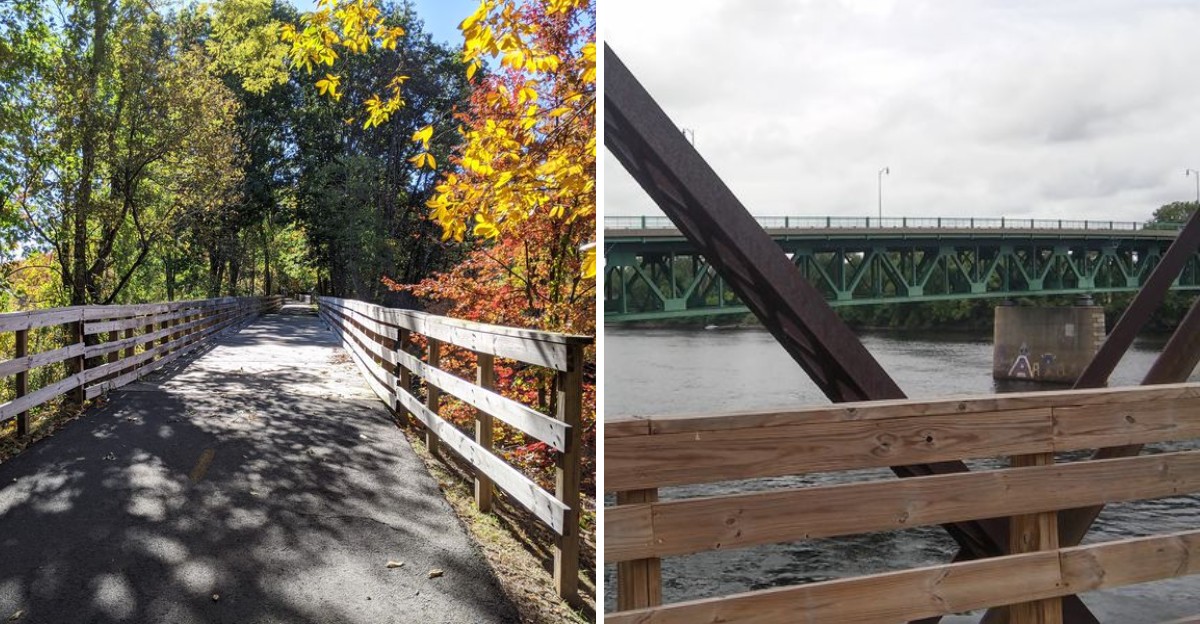
A railroad bridge built in 1887 still stretches nearly 1,500 feet across the Connecticut River, but trains haven’t used it in decades. These days, people cross it on bicycles or on foot, with open water below and the hills of western Massachusetts in the distance.
The bridge is only part of the experience.
An old railway corridor has become a paved recreation trail with gentle grades, wooded stretches, wetlands, and views of farmland. It’s an appealing option for people who want beautiful scenery without a demanding mountain hike.
I especially like that you don’t have to cover the entire route to enjoy the best parts. A shorter trip can include the historic bridge and some lovely riverside views.
There is one detail worth checking before visiting. Part of the trail is currently closed for repairs, so the starting point matters.
With a little planning, this is a memorable outing that combines outdoor time with a fascinating piece of local history.
A Railroad Line That Traded Locomotives For Bicycles
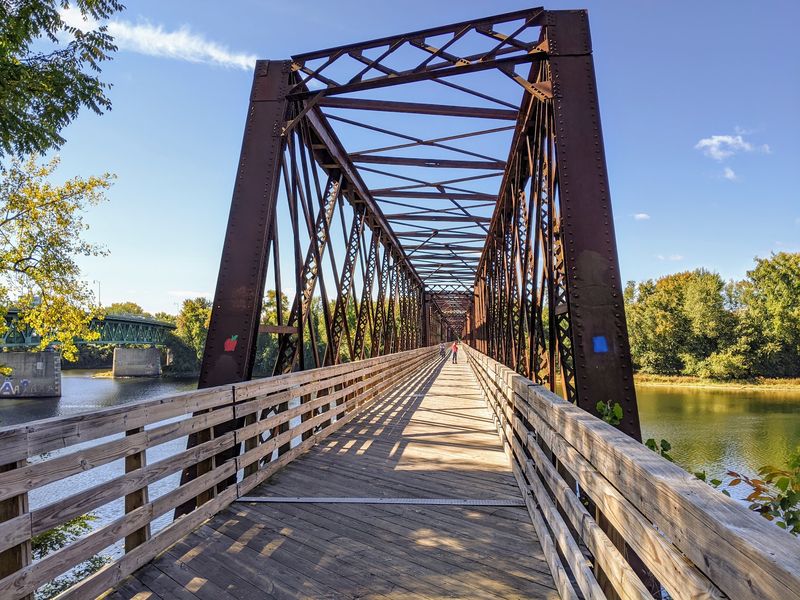
Trains once rumbled here, hauling passengers and freight through the Pioneer Valley. The corridor belonged to the Central Massachusetts Railroad, and passenger service ran until 1932.
Freight kept the rails busy until 1974.
After the trains stopped, the land sat quiet. Massachusetts bought the corridor in 1980, which turned out to be a smart move.
In 1993, the Norwottuck Rail Trail opened to the public as a paved recreation path.
That history explains why the route feels so unusually straight. Railroads hated hills and sharp curves, so engineers graded everything as level as possible.
Walkers and cyclists now inherit that careful work, more than a century later.
You can still spot clues from the old days. Stone abutments, cuts through hillsides, and gentle embankments all point back to the rail era.
Underpasses carry the path beneath roads, sparing you traffic lights.
Think of it as recycling on a grand scale. Instead of a forgotten strip of gravel, the region gained an eleven-mile ribbon of pavement.
Few conversions in New England have aged this gracefully.
Knowing the backstory changes the mood of the outing. Every flat mile is a small souvenir of nineteenth-century engineering.
Bring that thought along and the ride feels richer.
The 1887 Bridge Over The Connecticut River Steals The Show
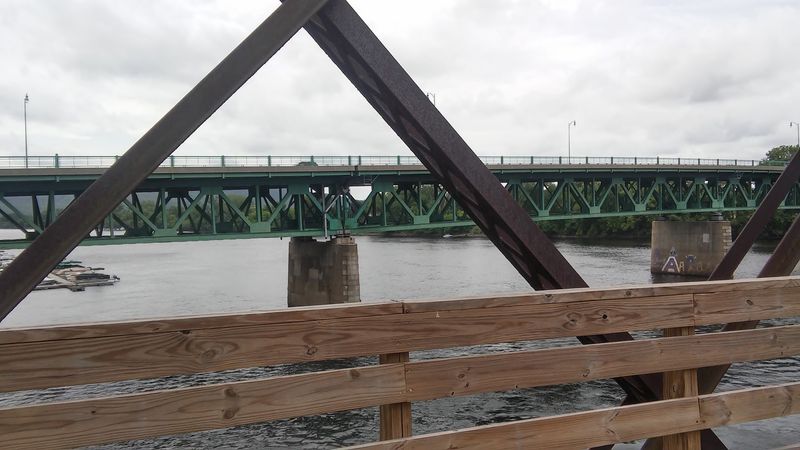
Everyone remembers the bridge. Built in 1887 by the Central Massachusetts Railroad, the steel lattice truss span crosses the Connecticut River between Northampton and Hadley.
It stretches roughly 1,492 feet.
Trains crossed it for decades. When the rails came out, the structure was reworked and reopened in 1992 for people on foot and on two wheels.
Walking across it feels like borrowing something rare.
The views deserve a full stop, not a quick glance. Water spreads wide below, farmland stretches away on both banks, and hills frame the horizon.
Morning light and late afternoon light both flatter the scene.
Cyclists should note one practical detail. The bridge deck runs a little rougher than the surrounding pavement, so road bikes with skinny tires will feel every seam.
Slow down and enjoy it instead of racing across.
Photographers get lucky here. The lattice ironwork makes a natural frame, and the river reflects sky color beautifully after a rain shower.
Even a phone camera comes away with something worth keeping.
Standing above moving water on a railroad bridge dating back to 1887 is a memorable experience. It anchors the whole trip.
Nothing else on the route competes with it.
Eleven Paved Miles With Almost No Hills
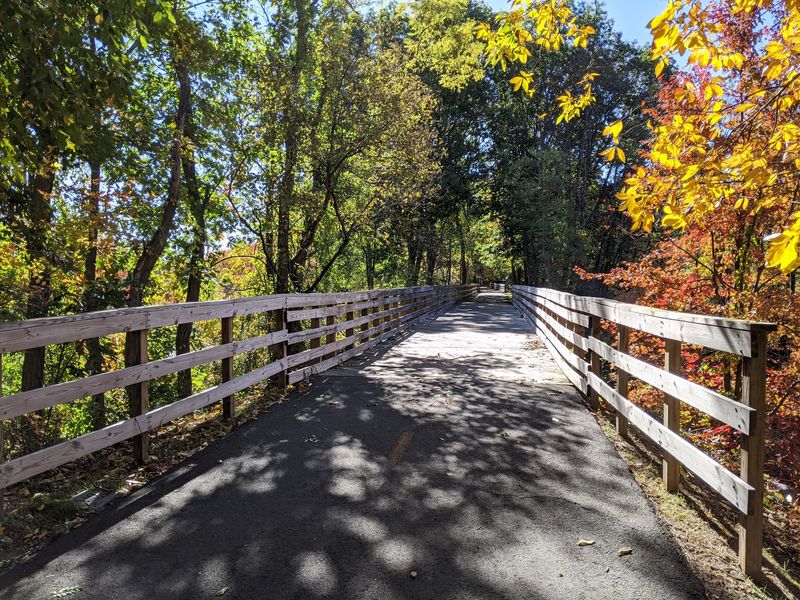
The trail follows a mostly level former railroad corridor, with gentle grades that make it suitable for casual cyclists and walkers. That is the whole climb, spread over eleven miles, which means almost nothing to your legs.
Hills simply are not part of the deal here.
Pavement covers the full distance. Rollerblades work, strollers roll fine, and road bikes glide along most sections without complaint.
Beginners gain confidence quickly on a surface this forgiving.
The complete trail measures approximately 11 miles each way, but a 500-foot section in Amherst remains closed, preventing an uninterrupted 22-mile round trip. Plenty of families finish that in two to three hours with a couple of short breaks.
Younger riders around ten years old manage it regularly.
You are not obligated to do the whole thing. Three miles out and three miles back still delivers scenery, shade, and fresh air.
The trail rewards short outings just as generously.
One honest note about the surface. Tree roots have pushed up a few bumpy patches over the years, so keep your eyes forward.
Crews maintain the path steadily, and recent work has smoothed things considerably.
The eastern half runs especially clean, with only a single road crossing to interrupt your rhythm. That stretch feels almost meditative.
Turn the pedals and let the miles disappear.
Where To Start For The Best Views Of The Historic Railroad Bridge
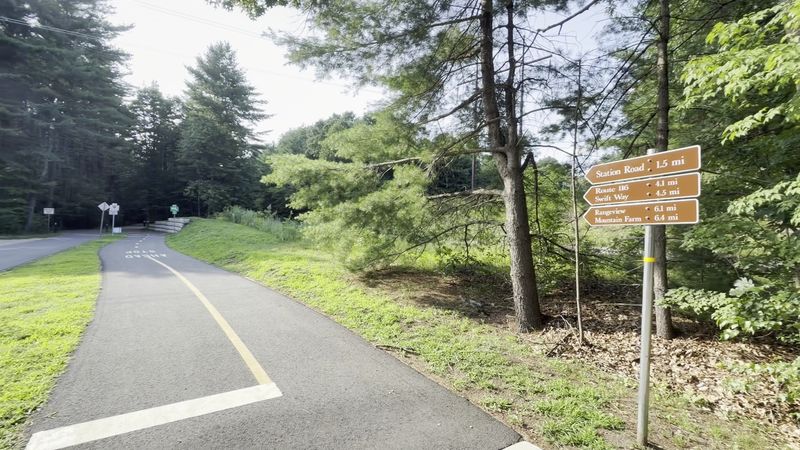
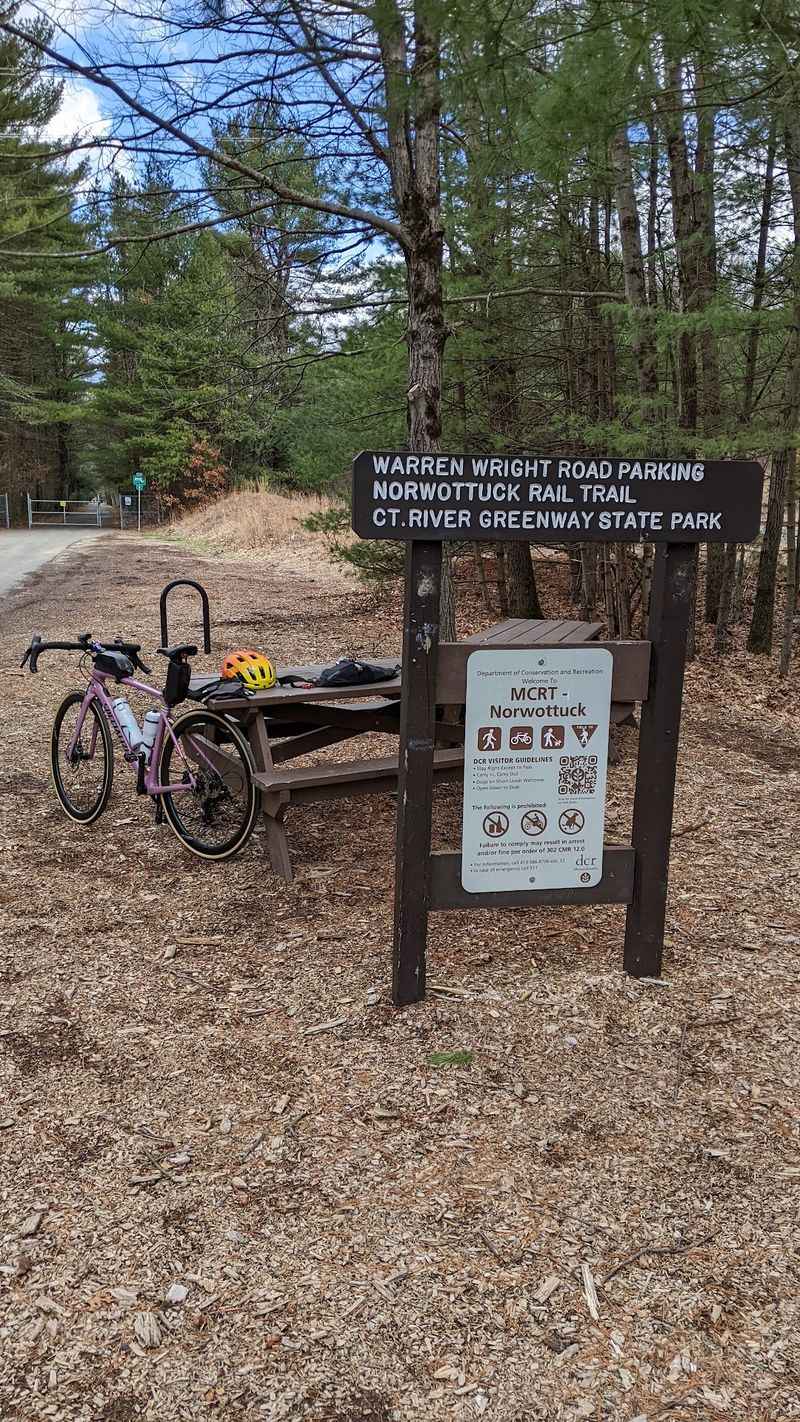
Parking often decides whether an outing starts smoothly or badly. Good news here: the Norwottuck Rail Trail – Trail Head sits on Warren Wright Road in Belchertown, MA 01007, and the lot is straightforward to reach and easy to pull into.
Riders starting in Belchertown can enjoy the eastern stretch, but the current Amherst closure prevents them from reaching the historic Connecticut River bridge entirely along the trail.
Fewer road crossings, more woods, and a calmer atmosphere than the busier western sections near Northampton.
Hours run generously. The Norwottuck Rail Trail is generally open from sunrise to sunset every day, so visitors should plan their outings around daylight hours.
Other access points spread along the corridor. Station Road in South Amherst, Railroad Street in Hadley, and the Elwell Recreation Area in Northampton all work well depending on your plan.
Splitting the trip is a clever trick. Leave one car at each end, ride one direction, and skip the return leg entirely.
Groups with mixed fitness levels appreciate that flexibility.
Arrive early on bright weekends. The Belchertown lot fills up when the weather cooperates, especially during peak foliage season in Massachusetts.
Scenery That Refuses To Stay The Same
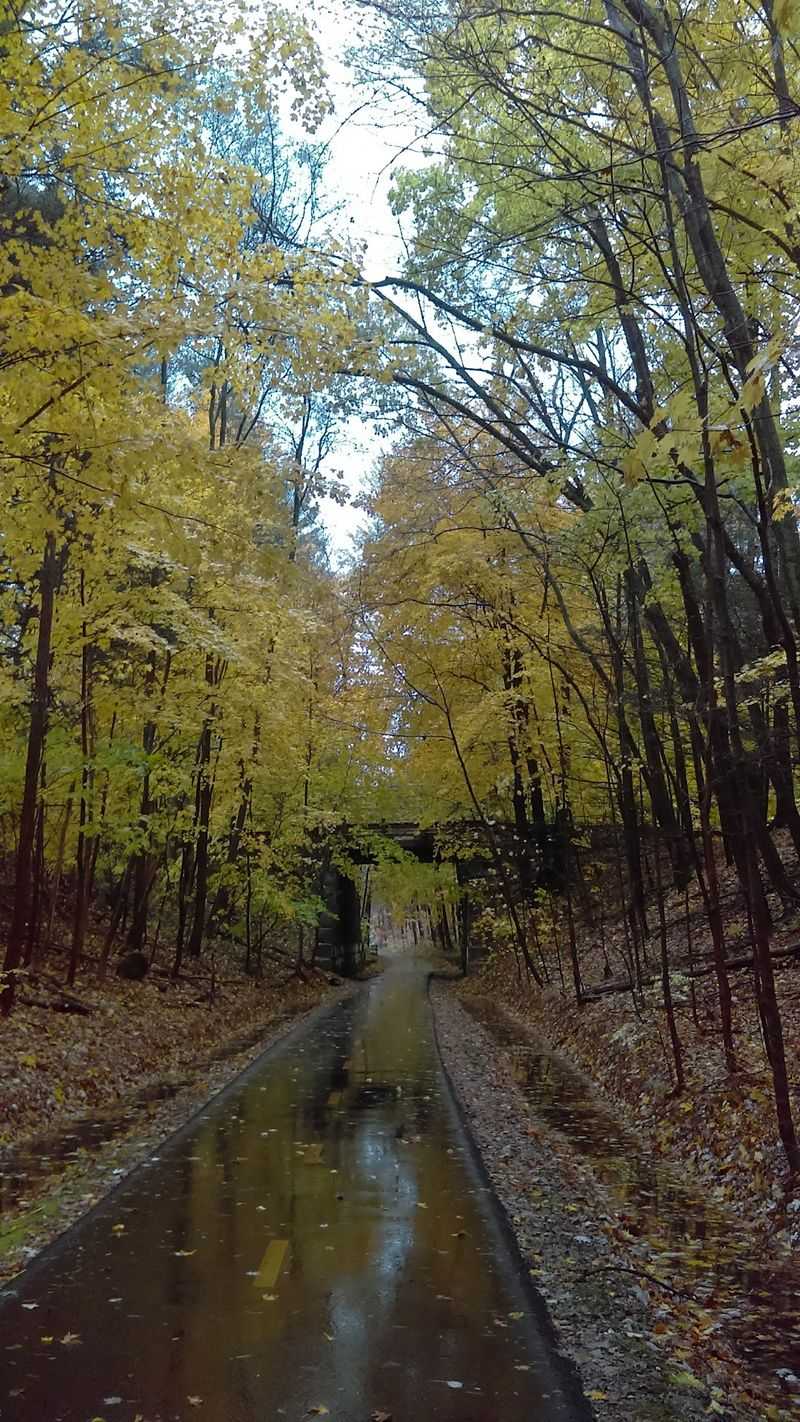
Boredom is not really an option on this route. Within a few miles the surroundings shift from shady hardwood forest to open wetland, then out into classic valley farmland.
Each change arrives without warning.
Marshes along the way attract birds in impressive numbers. Herons stalk the shallows, red-winged blackbirds call from cattails, and turtles sun themselves on logs.
A beaver pond near Amherst ranks among the most watched spots on the trail.
Farm fields open the sky wide. Corn, squash, and hay stretch toward the Holyoke Range, and the Seven Sisters peaks rise in the distance on clear days.
Sunset light across those fields is genuinely striking.
Seasons rewrite everything. Spring floods the wetlands with green, summer builds thick leafy tunnels, autumn sets the maples on fire, and winter opens long views through bare branches.
Cross-country skiers claim the corridor once snow settles in. The flat grade that helps cyclists all summer works just as well on skis.
Bring binoculars if wildlife interests you. Small side paths branch off the main pavement in a few places, offering short detours for anyone curious about what lies just beyond the trees.
Four Towns Strung Together Like Beads
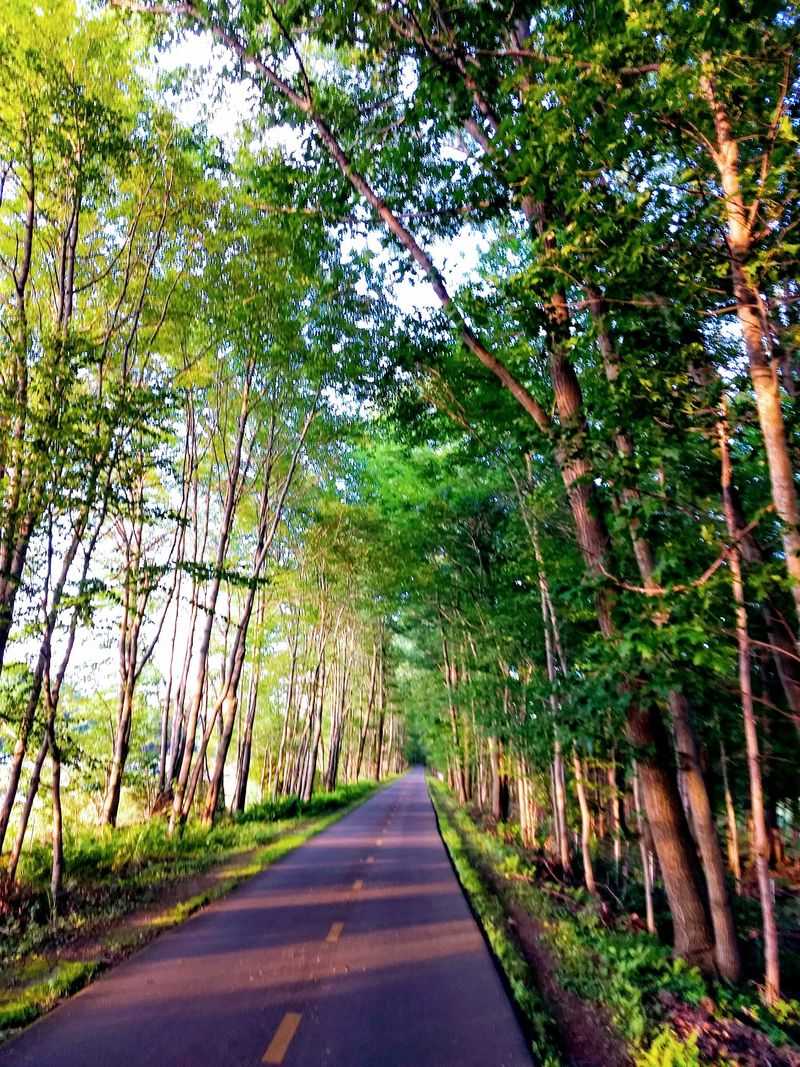
Geography works in your favor here. The corridor links Belchertown in the east to Northampton in the west, passing through Amherst and Hadley along the way.
The paved route links four communities, although a temporary closure in Amherst currently interrupts travel along the full trail.
Amherst brings college-town energy. The path skirts campuses, playing fields, and residential neighborhoods, and students use it for commuting as much as recreation.
Hadley offers the most practical mid-route stop. Shops, restaurants, and a shopping area sit within easy reach of the trail, so refueling takes only a short detour off the pavement.
Northampton anchors the western end with a lively downtown. Connections continue from there toward the Manhan Trail and Look Park, which turns an afternoon outing into a full-day expedition if you want one.
Belchertown, at the eastern end, keeps things peaceful. Woods and farmland dominate, and traffic noise stays remote.
Once the closed section reopens, traveling the entire route will reveal the variety of western Massachusetts in one trip. Quiet forest gives way to campus bustle, then farmland, then a walkable downtown.
That progression is why the Norwottuck Rail Trail feels less like a loop around a park and more like an actual journey between places.
Sharing The Path Like A Pro
Etiquette matters more on a busy trail than most people expect. The basic rule is simple.
Stay to the right and pass on the left.
A bell earns its keep here. Ring it early, or call out a friendly “on your left” before you pass, especially near families with small children.
Sudden silent passes startle people.
Groups should ride single file when the path gets crowded. Blocking the full width forces others to swerve, and nobody enjoys that dance.
Dog owners, keep leashes short around blind curves. Long leads stretched across pavement create a genuine hazard for cyclists moving at speed.
Speed itself deserves a thought. The Massachusetts DCR lists the trail as closed to motorized vehicles, so check current rules before bringing anything with a motor.
Whatever you ride, moderate pace keeps everyone comfortable.
Commuters use this corridor daily, not just weekend explorers. A little courtesy goes a long way toward keeping the mood friendly.
Benches and rest areas appear at intervals, along with restrooms and trail maps at key points. Pull fully off the pavement when you stop, and the person behind you will silently thank you.
Planning A Trip That Actually Works
A little planning turns a decent outing into a great one. Start with timing.
Early mornings bring cool air, softer light, and far fewer people on the pavement.
Water deserves attention. A few spots along the route have water available, but carrying your own bottle removes all guesswork on warm days.
Tire choice matters for cyclists. Wider tires handle the bumpier bridge decks and root-lifted sections far more comfortably than racing-slim ones.
Hybrid bikes are a sensible match for this surface.
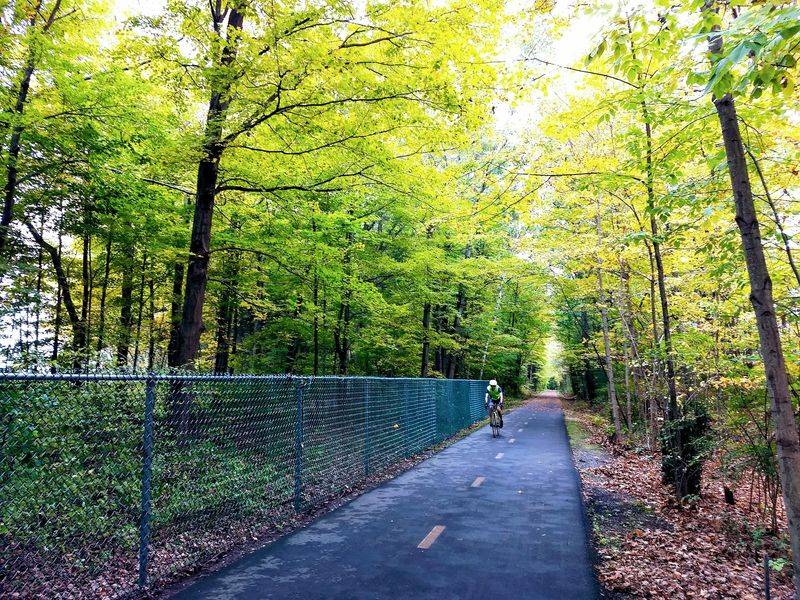
Autumn is the headline season in this part of Massachusetts. Maples along the corridor turn brilliant, and the flat grade lets you look around instead of staring at your front wheel.
Families should plan around snack stops. Breaking an eleven-mile stretch into shorter segments keeps younger riders cheerful and the mood light.
Official details live on the state website for the Norwottuck Rail Trail, which is worth checking for maintenance notices before you drive out.
For an outing focused on the historic Connecticut River bridge, start at Elwell Recreation Area on Damon Road in Northampton and check current trail advisories before visiting. Few outdoor outings in New England ask so little and give back so much.