
One Of The World’s Greatest Space Museums Is Hiding In Kansas And It Is Worth The Trip
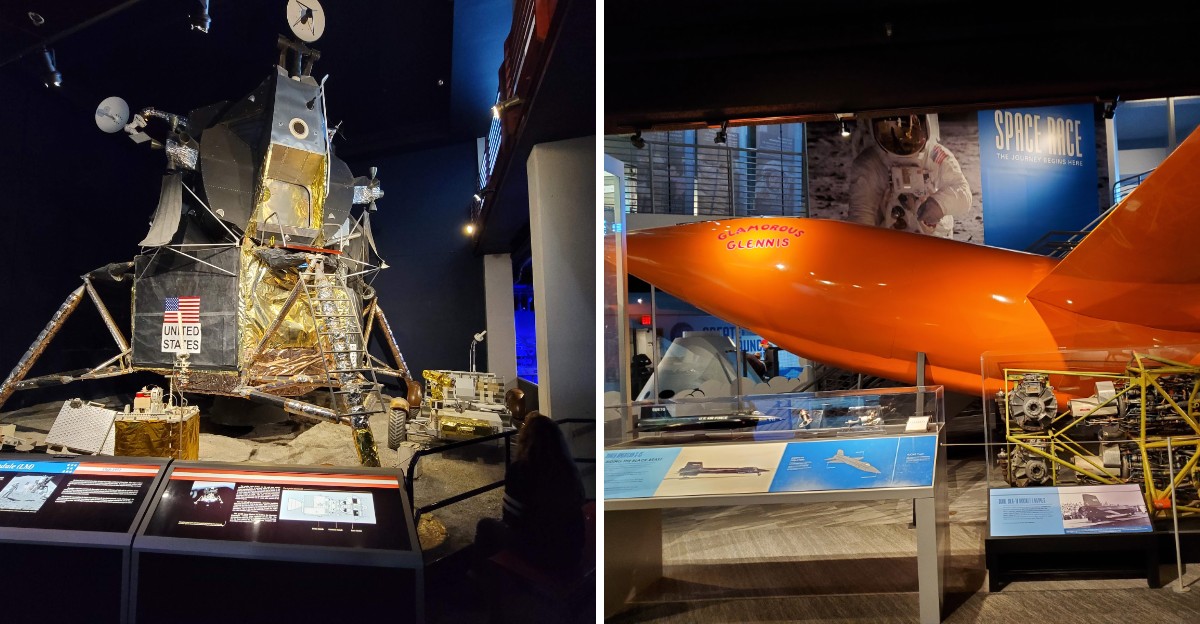
The actual Apollo 13 command module, the one that carried three astronauts home after their mission went wrong, sits in a museum in Kansas. Not Florida. Not Texas. Kansas.
That same building also holds a flown Mercury capsule pulled from the ocean floor and a flown Gemini capsule. Seeing all three early American crewed programs together is rare anywhere.
Then comes the twist. The museum also holds one of the largest collections of Soviet space artifacts outside Moscow. Cold War rivals now share the same roof in the middle of the prairie.
I appreciate a place that makes you rethink where big history lives. A spy plane hangs in the lobby, a real moon rock waits inside, and rockets stand tall outside.
A Spacecraft That Survived A Lunar Close Call Waits Inside
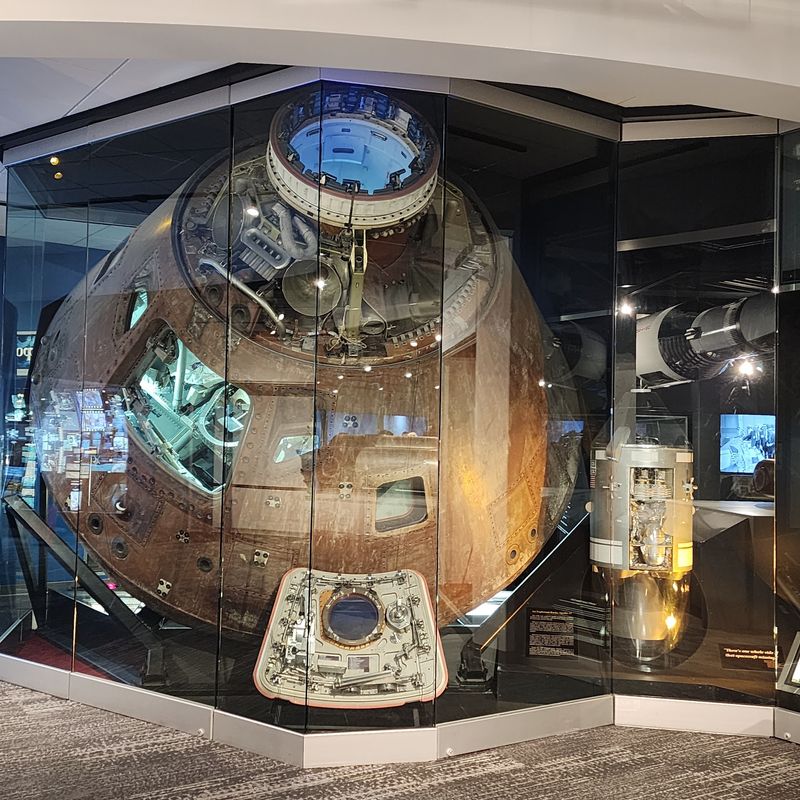
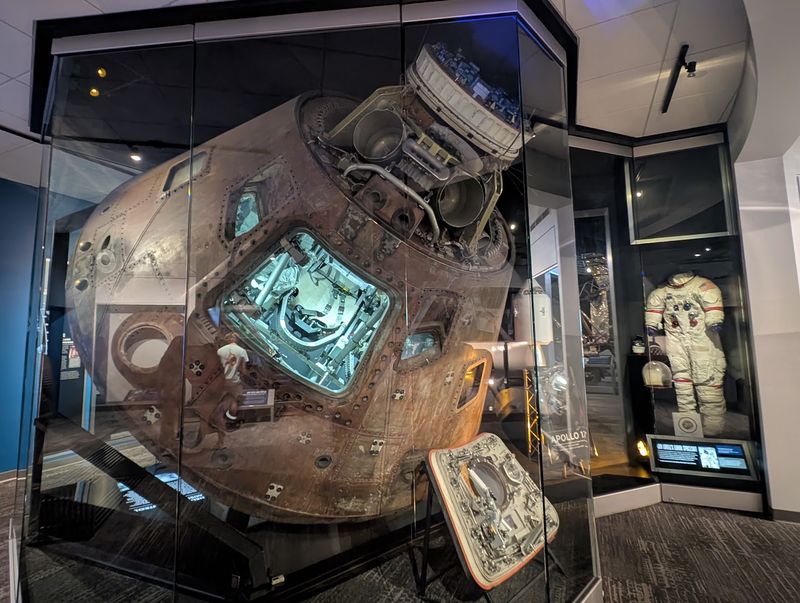
Three astronauts rode Odyssey home after their 1970 moon mission turned into a rescue. At the Cosmosphere, that very command module sits on display, scorched from its fiery return.
You can stand close enough to study the marks left by re-entry. It’s hard to look at it without thinking about the people who worked nonstop to bring that crew back.
Odyssey has company, too. The Liberty Bell 7 Mercury capsule, flown by Gus Grissom, sank in the Atlantic and spent decades on the ocean floor before recovery.
Then there’s the flown Gemini 10 capsule. Together, these three make the museum the only place in the Midwest showing flown spacecraft from Mercury, Gemini, and Apollo.
That’s a big deal for a museum in Kansas. Its collection of American space artifacts ranks second only to the Smithsonian National Air and Space Museum.
The Hall of Space Museum holds more than 13,000 spaceflight artifacts in total. It traces the story from early rocket experiments all the way to the space station era.
My advice? Slow down here. These capsules are small, but every dent and burn mark tells a story worth reading.
Good Luck Walking Past The Spy Plane Hanging Overhead
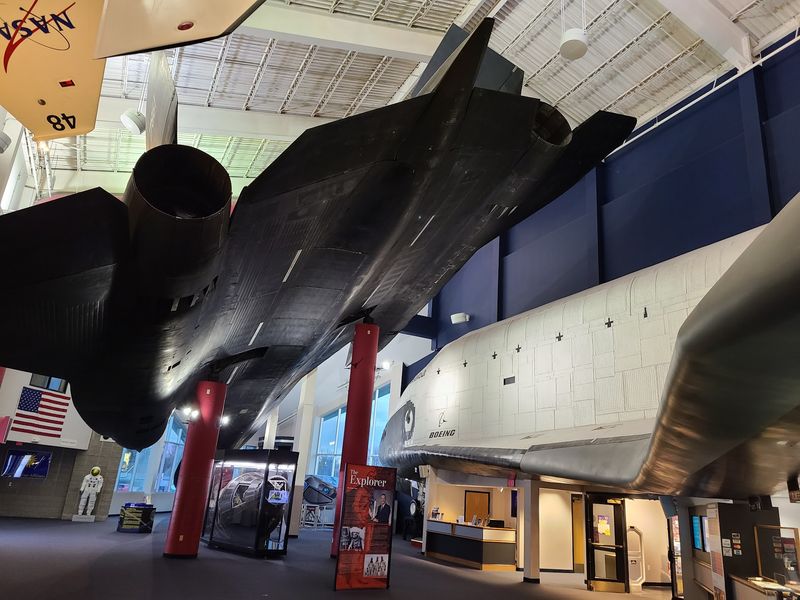
Most museums greet you with a ticket counter. The Cosmosphere greets you with a Lockheed SR-71 Blackbird suspended in the lobby.
This sleek black spy plane stretches across the grand entrance, and it’s hard to look anywhere else. Your neck may need a moment to recover.
The numbers behind it sound almost made up. The Blackbird could top Mach 3 and cruise above 80,000 feet, near the edge of space.
Its dark paint helped handle the intense heat built up by air friction at those speeds. The plane flew so fast that its own skin got seriously hot.
Here’s a fun quirk. Its fuel tanks famously leaked on the ground, then sealed up once heat expanded the metal in flight.
That detail always makes me grin. Imagine engineers basically saying, yes, it drips, but trust us, it works up there.
Photos are a must here, so plan a few extra minutes in the lobby. Try stepping back toward the doors for a shot that captures the whole wingspan.
It’s a strong opening act. And honestly, it sets the tone for everything waiting deeper inside the building.
The Space Race Gets Both Sides Of The Story Here
Soviet space hardware in central Kansas sounds like the setup for a spy novel. Yet the Cosmosphere holds the largest collection of Russian space artifacts outside Moscow.
Much of it arrived in the 1990s. Russia faced money troubles and sold pieces from its space program, and the museum was ready.
That timing pays off for every visitor today. You can compare how two rival nations tackled the same huge goal in very different ways.
Look for a Vostok capsule that flew on an uncrewed mission. There’s also a half-scale model of Luna 16, the first robotic probe to bring back lunar samples.
A prototype Sokol pressure suit, used for cosmonaut training, rounds out the Soviet side nicely. The collection also includes a flight-worthy backup of Sputnik 1.
Side by side, the American and Soviet pieces turn a history lesson into a real rivalry. It feels like a tense chess match played with rockets.
Kids especially tend to get it fast when they see both teams together. Ask them which side they would have cheered for, then watch the debate start.
Bring Something Home From The Moon, At Least With Your Eyes
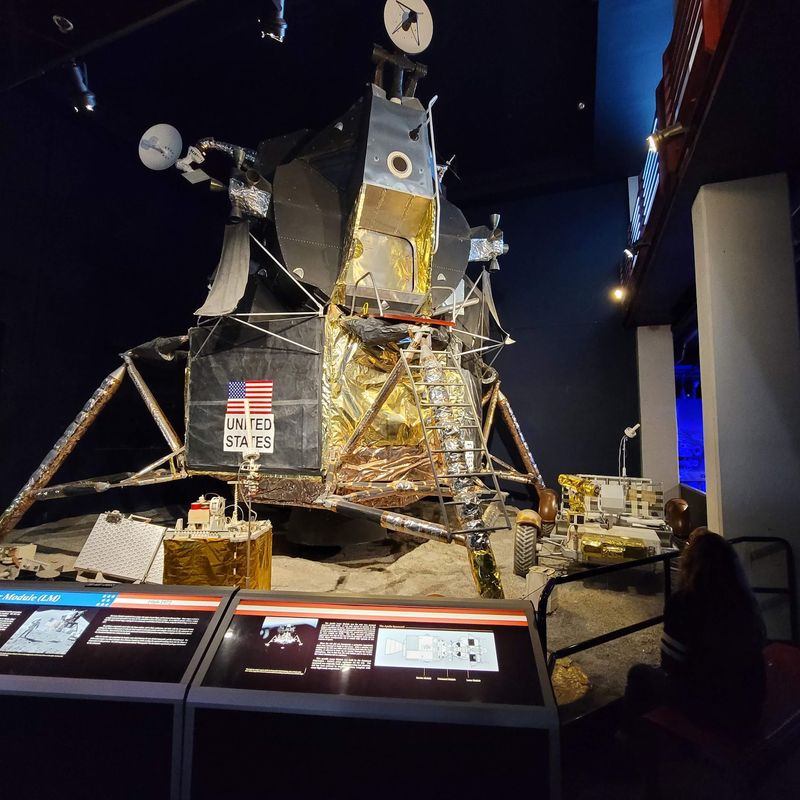
Tiny objects can pack the biggest punch. A real moon rock from Apollo 11, gathered at the Sea of Tranquility, is on public display here.
Neil Armstrong and Buzz Aldrin only spent a short time walking on the lunar surface. Every sample from that trip is rare and precious.
Seeing one in person feels different from any textbook photo. It came from another world and somehow ended up in Kansas.
The moon rock isn’t the only star of this part of your visit. The original Apollo-Soyuz command module is here too, a symbol of teamwork between former rivals.
In 1975, American and Soviet crews linked up in orbit. After years of racing, the two nations shook hands in space.
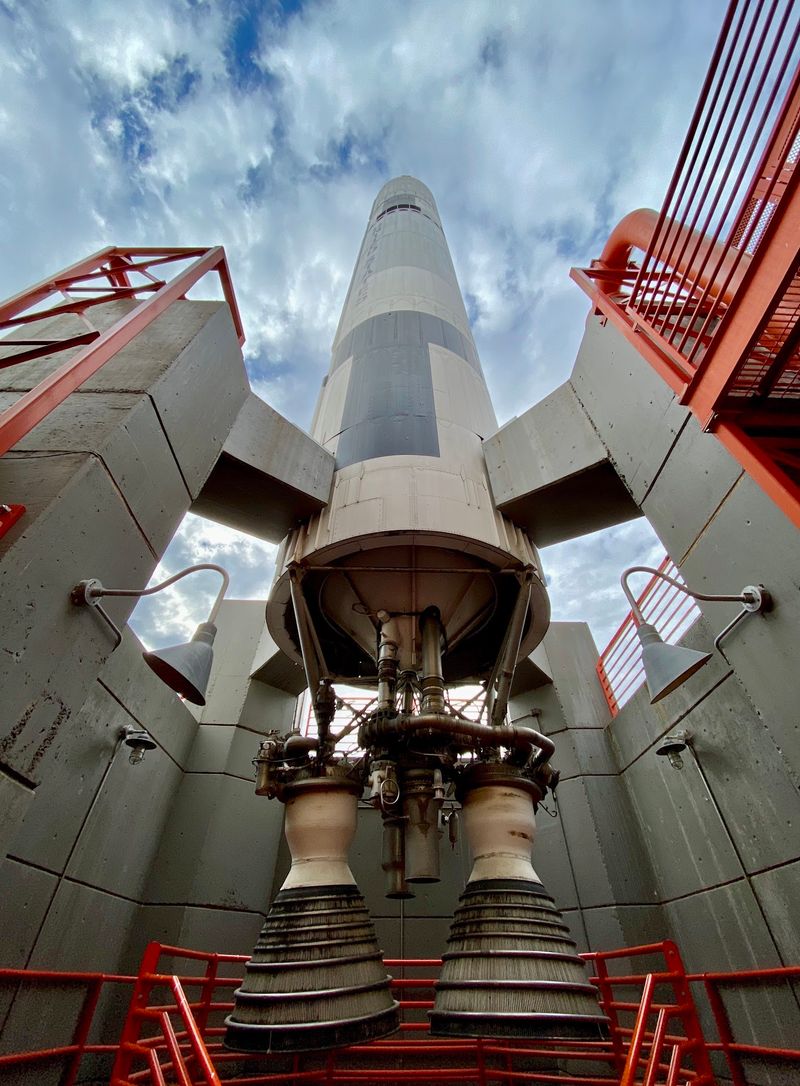
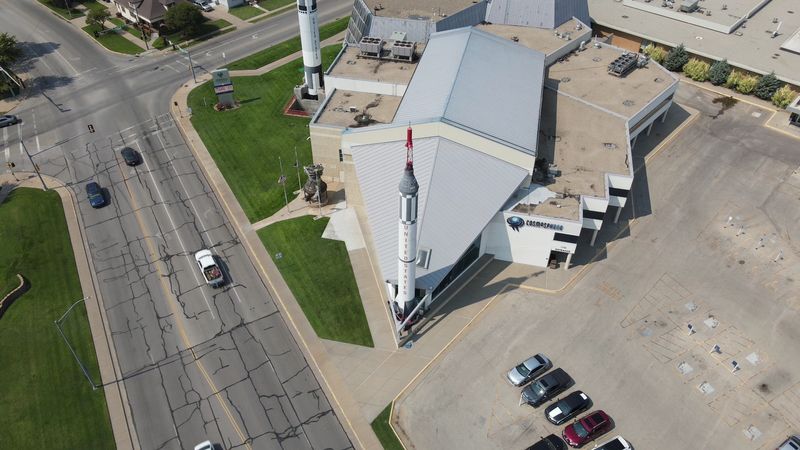
Outside, real Redstone and Titan II rockets stand tall against the Kansas sky. These rockets were key to the Mercury and Gemini programs.
Give yourself time for a walk around them before or after your museum visit. Their size really sinks in once you stand at the base and look straight up.
Push Buttons, Dock Spacecraft, And Dance On The Moon
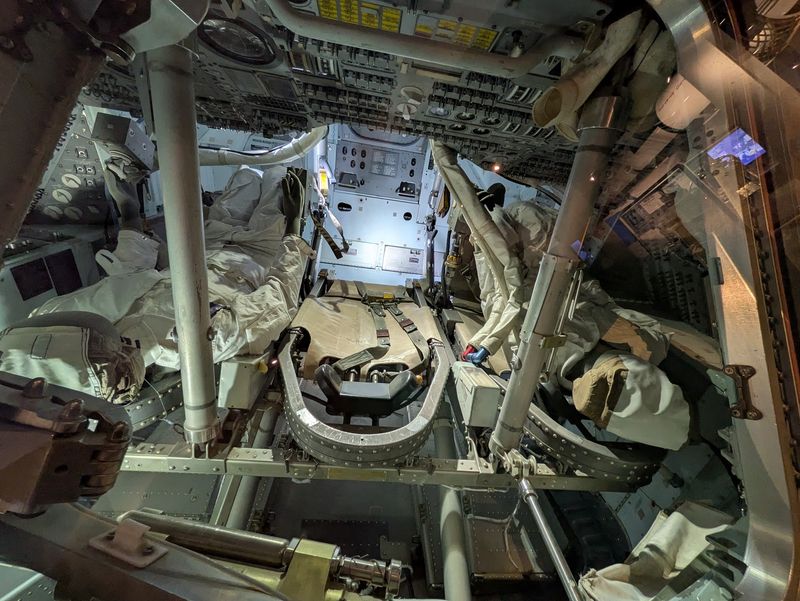
Hands off the artifacts, sure. Hands on everything else? Pretty much.
The Cosmosphere packs in interactive stops that let you test your own space skills. One simulation challenges you to dock a virtual Gemini spacecraft, which takes steady hands and patience.
You can also squeeze into an Apollo capsule mockup. It’s a quick lesson in just how cozy those trips to the moon really were.
The Rocket Launch Simulator adds a bit of chemistry. You mix the right balance of hydrogen and oxygen to get a mock rocket off the pad.
Recent upgrades brought even more to try. There’s a virtual wind tunnel and a haptic plate that mimics the rumble of a rocket engine igniting.
My favorite sounds like pure silliness, in the best way. An on-screen AI astronaut copies your moves, so you can basically dance on the lunar surface.
Younger explorers get their own zone called CosmoKids. It focuses on hands-on STEAM learning, which is a fancy way of saying kids get to build and play.
Plan extra time here if you have curious kids. They may not want to leave.
Things Go Boom In Dr. Goddard’s Lab, On Purpose
Explosions, bright flashes, and a 1930s workshop. That’s the recipe for Dr. Goddard’s Lab, one of the liveliest shows at the Cosmosphere.
The show honors Dr. Robert Goddard, widely called the father of modern rocketry. Long before moon landings, he was testing liquid-fueled rockets and dreaming big.
Live demonstrations bring his ideas to life. You’ll learn about force, propulsion, and how rockets actually push themselves forward.
Presenters pull audiences in, especially kids. It’s science class, but with surprises that make everyone jump a little in their seats.
Of course, there’s a classic warning attached. Please don’t try these experiments at home, no matter how tempting the kitchen sink looks.
Seating is limited, so buying tickets ahead is a smart move during busy times. The show is a separate add-on, so plan your budget too.
I’d schedule it in the middle of your visit. It breaks up the gallery time and gives everyone a fun energy boost.
Bonus tip: after the show, the rocket artifacts make more sense. Suddenly, all that hardware feels a lot less mysterious.
Tilt Your Head Back For The Dome Theater And Planetarium
Your feet stay on the ground, but your eyes get a full trip through space. The Cosmosphere offers two big venues for sky lovers.
First up is the Carey Digital Dome Theater. This two-story dome uses 4K digital projection, so the picture wraps around you.
Science documentaries rotate through the schedule. Some days feature popular films too, so check what’s playing before you go.
Then there’s the Justice Planetarium, which has deep roots. The Cosmosphere grew out of Kansas’s first public planetarium, so stargazing is part of its DNA.
A digital upgrade in 2015 keeps the shows sharp. You can learn about planets, constellations, and what to spot over Kansas that very night.
Show titles have included Apollo 11 and Night Sky Live. One celebrates the moon landing, while the other explores how the sky shifts by season.
Here’s a practical tip. Pair one dome show with one planetarium show for a nice balance of big-screen action and starry calm.
Afterward, step outside and look up. You might recognize a few new constellations.
Hollywood Has Been Borrowing Talent From This Kansas Workshop
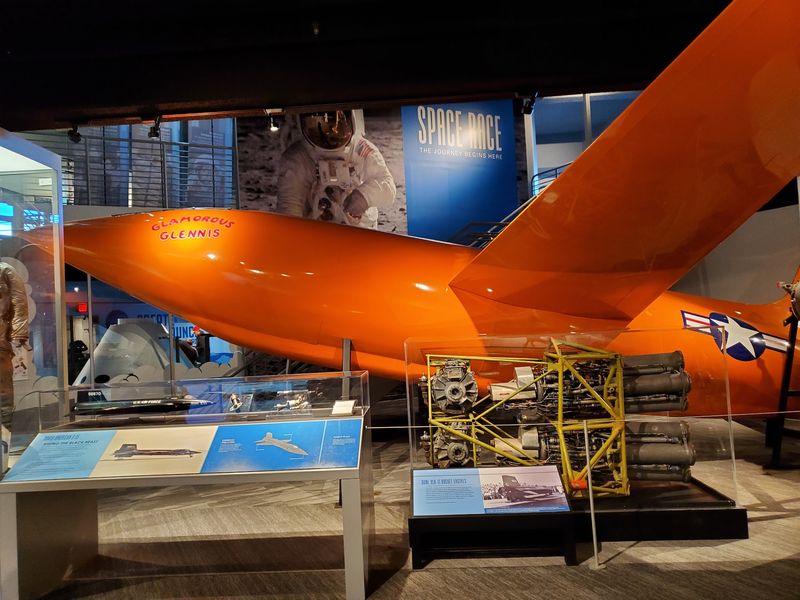
Ever watched Apollo 13, the Tom Hanks movie? You’ve already seen work from a team based at the Cosmosphere.
SpaceWorks started in 1979. It specializes in preserving, restoring, and replicating space history artifacts for museums around the world.
For the film Apollo 13, the team built most of the artifacts and props. They also made replica hardware for the series From the Earth to the Moon.
Their skills aren’t just for show business. SpaceWorks restored the real Odyssey capsule and recovered and restored Liberty Bell 7.
That’s a pretty wild connection when you think about it. The movie version and the real capsule both trace back to the same Kansas crew.
The team has also worked on historic consoles for NASA’s Mission Operations Control Room. Their reach stretches far beyond Hutchinson, Kansas.
Knowing this changes how you view the galleries. The careful condition of these artifacts comes from serious skill and patience.
So when you admire a spotless capsule, give a quiet nod to the folks behind it. They’re the backstage heroes of this whole operation.
From A Poultry Building To A World-Class Spot On Plum Street
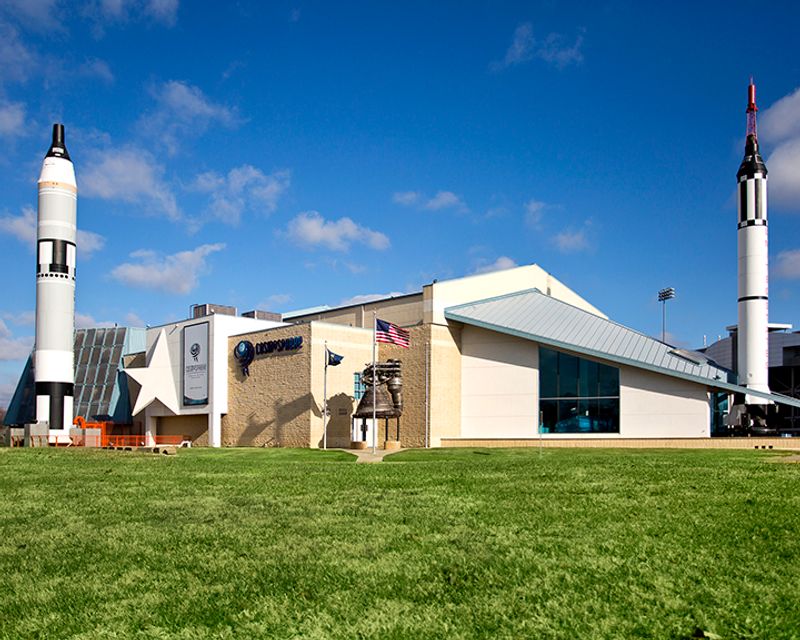
Big dreams sometimes start in odd places. In 1962, Patty Carey opened a planetarium in a poultry building at the Kansas State Fairgrounds.
She used a secondhand star projector and rented folding chairs. It became the first public planetarium in Kansas.
Years later, it moved to the Hutchinson Junior College campus. By 1997, the museum had grown into a 105,000-square-foot facility.
Today, you’ll find the Cosmosphere at 1100 N Plum St, Hutchinson, KS 67501. It’s about an hour from Wichita, making a day trip very doable.
The museum is open Wednesday through Sunday, with longer hours on Friday and Saturday. It closes Mondays and Tuesdays, so plan around that.
A few practical pointers help too. Buy add-on tickets for shows ahead on busy days, and bring a light jacket for cooler indoor spaces.
There’s also a cafe and a large gift shop. Both make handy stops when your crew needs a snack or a souvenir.
From chicken coop roots to a Smithsonian Affiliate, this story keeps surprising. Honestly, that’s half the fun of the trip.