
This Abandoned New York Hospital Stands Out For Its Haunting Architecture And Creepy Atmosphere
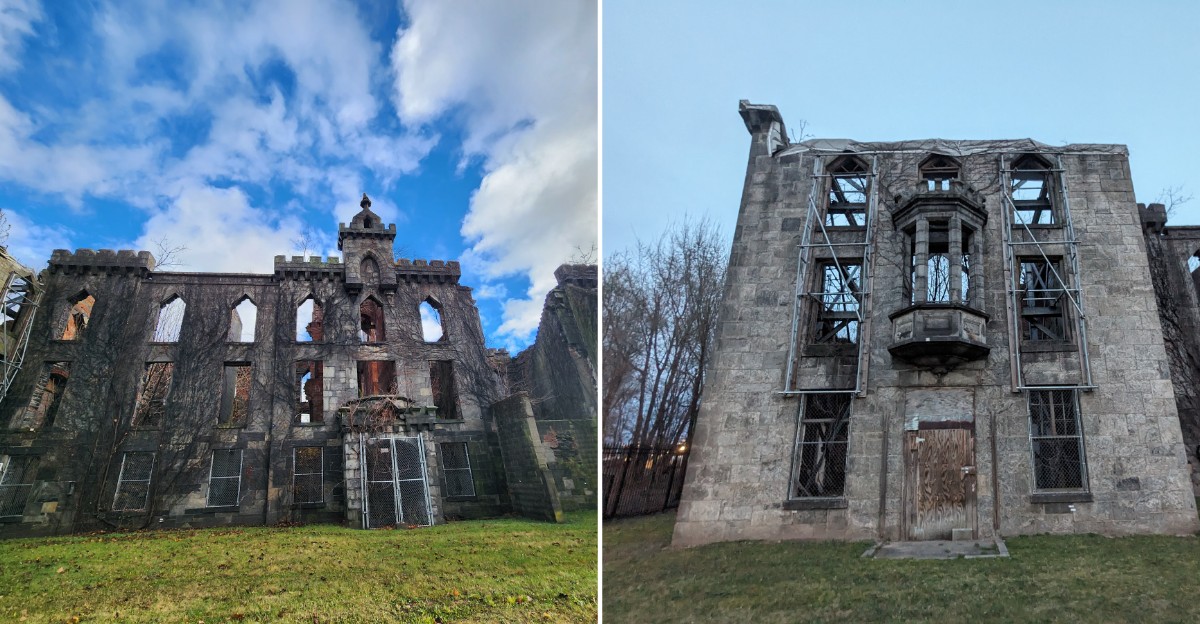
New York City has exactly one officially landmarked ruin, and it glows every single night. Yes, the city lights up a roofless old hospital on purpose.
The stone shell sits at the quiet tip of a narrow island. Its walls were cut from gray rock quarried right on that same island.
Ivy now climbs where patients once rested.
The funny thing is, the man who designed it also drew up one of the most famous churches in New York. Same talent, very different ending.
One building fills with crowds, while the other stands empty behind a fence.
I’ve come to realize that ruins say more than polished buildings ever could. This one sits across the water from glittering skyscrapers.
The contrast feels almost unreal, like two centuries staring at each other.
You can’t step inside, and honestly, that only adds to the mystery. What makes a crumbling old hospital worth a trip across the river?
The City Lights It Up Like A Ghost Every Night
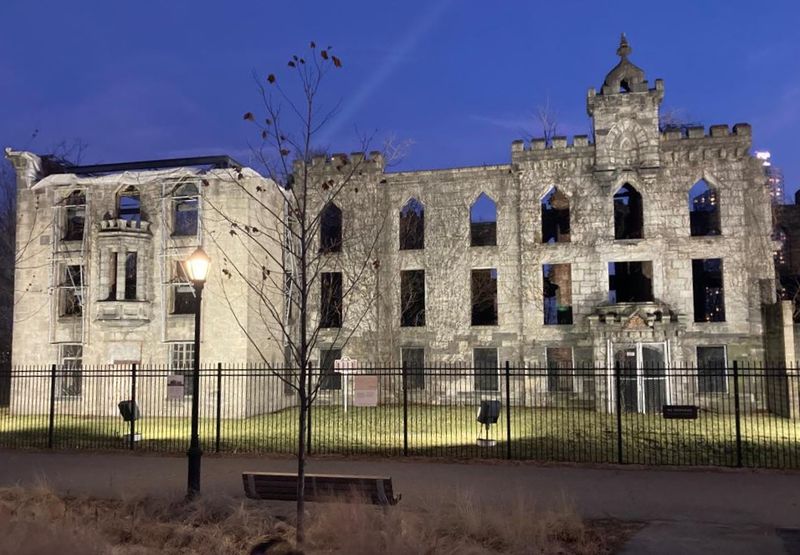
Most abandoned buildings fade into the dark. The Smallpox Memorial Hospital, often called the Renwick Ruin, does the exact opposite.
Since 1995, lights have bathed its stone walls every night. The glow makes the old shell visible from Manhattan, across the East River.
That nightly glow turns a crumbling building into a kind of floating outline. Empty windows and pointed arches seem to hover in the dark.
It’s eerie in the best possible way.
The ruin sits at the southern tip of Roosevelt Island in New York City. That spot puts it right in the middle of the water between Manhattan and Queens.
The location helps the lights stand out even more.
Here’s a practical tip for night owls. You can catch the glowing ruin from parts of the Manhattan waterfront without crossing the river.
Bring a camera that handles low light well.
Photographers love the shot for good reason. Few cities light up a ruin like a museum piece.
Even fewer place it beside one of the busiest skylines on Earth.
So yes, the city keeps a ghost lit up on purpose. Somehow, that feels perfectly New York.
A Famous Cathedral Architect Drew These Spooky Walls
James Renwick Jr. had a big résumé. He designed St. Patrick’s Cathedral, one of the most recognizable churches in New York.
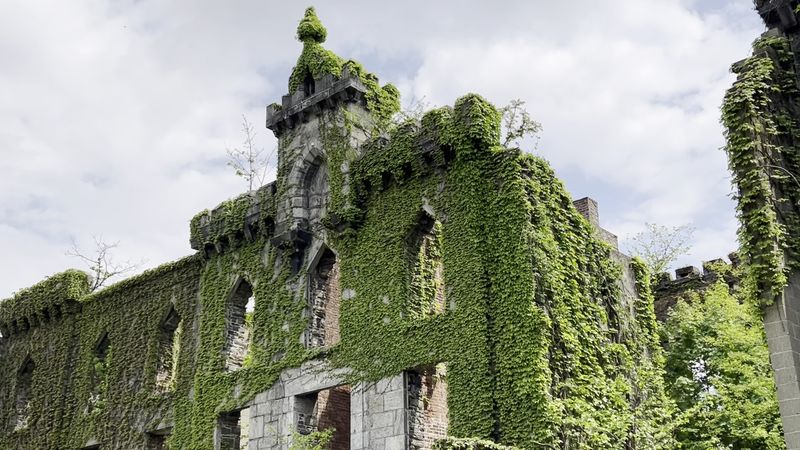
He also designed this hospital, built between 1854 and 1856. The Gothic Revival style shows up everywhere you look.
Pointed arches frame the empty window openings. Crenelated parapets line the top edges, giving the walls a castle-like look.
Polygonal chimneys rise above it all like little stone towers.
The front features a heavy stone porch and a crenelated bay. A massive tower-like section holds a deep, recessed pointed arch.
Together, these details make the building look more like a fortress than a clinic.
Gothic Revival borrowed ideas from medieval European churches and castles. Builders in the 1800s loved its drama and grandeur.
Renwick clearly knew how to deliver both.
Here’s a fun way to appreciate it. Look at photos of St. Patrick’s Cathedral, then study this ruin.
You’ll spot that same love of pointed shapes and soaring lines.
One building holds services for thousands. The other hosts ivy and wind.
Same designer, wildly different second acts.
The Stone Came From Right Under Its Feet
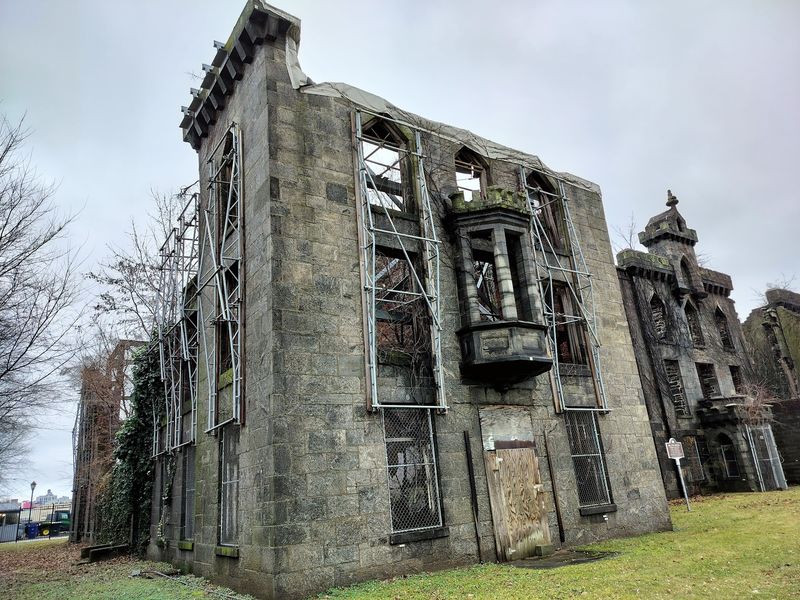
Builders didn’t ship in fancy marble for this project. They used gray gneiss, a tough rock quarried locally on the island itself.
That choice gives the ruin its moody, weathered color. On cloudy days, the walls almost blend into the sky.
Gneiss is a hard metamorphic rock with a streaky, layered look. It forms deep underground under heat and pressure.
Plenty of New York City sits on this kind of bedrock.
Back then, the island was called Blackwell’s Island. It later became Welfare Island in 1921.
The name Roosevelt Island arrived in 1973. Using local stone made sense for a public building. It was available, durable, and close at hand.
Those same walls still stand after the roof and floors gave way.
Next time you visit, look closely at the blocks through the fence. Notice how each one has its own texture and shade.
Rough edges and uneven surfaces add to the haunted vibe.
Honestly, it’s a neat bit of geology hiding in plain sight. The island literally built this hospital out of itself.
That’s about as homegrown as architecture gets.
Its Medical Story Is Bigger Than You’d Guess
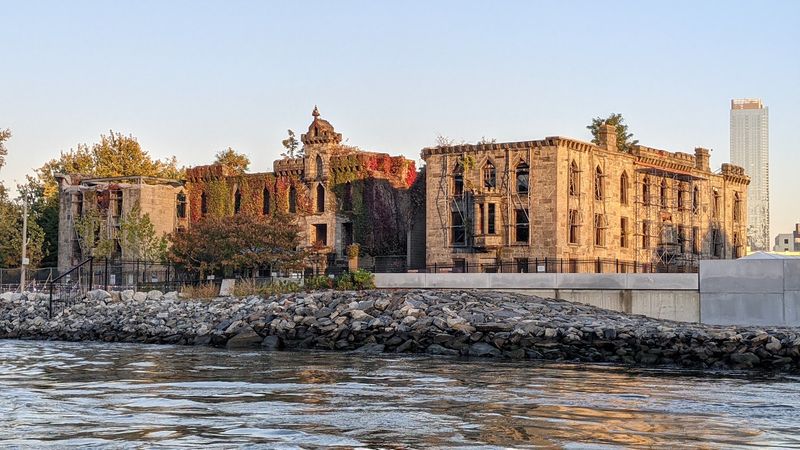
Here’s a fact worth sharing at dinner. This was the first major hospital in the United States dedicated to treating smallpox.
When it opened, it could hold about 100 patients. Charity wards filled the lower floors, while paying patients stayed in private rooms upstairs.
That setup tells you a lot about the era. Wealth decided where you slept, even in a hospital.
The building’s layout quietly reflected the social rules of the 1850s.
Smallpox was a serious, contagious illness back then. Placing the hospital on an island helped keep patients apart from the crowded city.
Distance was one of the few tools doctors had.
Today, smallpox has been eradicated worldwide thanks to vaccines. That makes this ruin a striking reminder of how far medicine has come.
Health workers especially tend to find the site moving.
Historical signs near the ruin help explain this story. Take a few minutes to read them before snapping photos.
The building feels completely different once you know what happened there.
History class rarely looks this dramatic. Here, the lesson comes with Gothic arches and river breezes.
Nurses Took Over For The Second Chapter
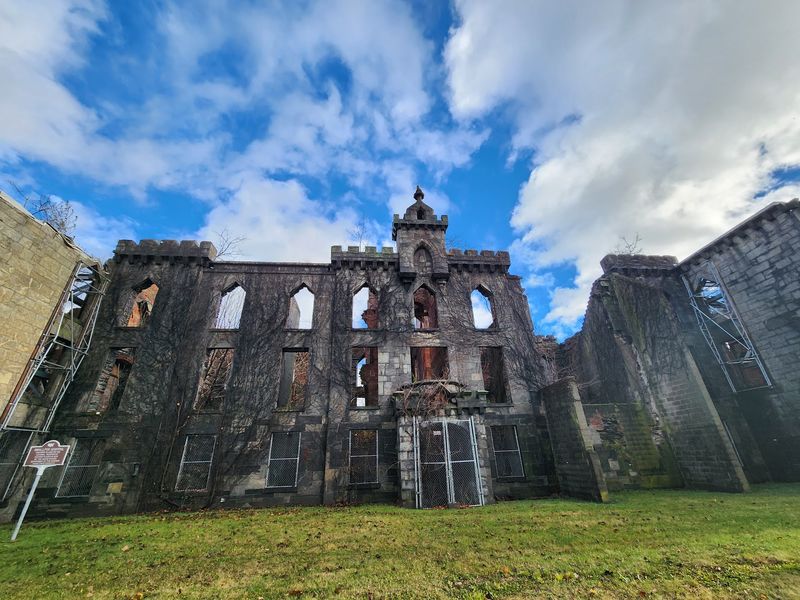
Plot twist time. In 1875, the building stopped serving as a smallpox hospital.
It became a training center for nurses, linked to City Hospital. The program was known as the Maternity and Charity Hospital Training School.
That shift gave the walls a whole new purpose. Instead of isolating the sick, the building now prepared caregivers.
Generations of students learned their skills inside.
The school needed more room as time passed. Between 1903 and 1905, north and south wings were added to the structure.
Builders kept the same Gothic Revival style, so everything still matched.
Look at the ruin today and you can still spot that long, stretched shape. The wings make it feel wider and grander than a single block.
It almost looks like a stone castle spreading its arms.
Nursing school fans and history buffs should appreciate this part most. The building trained people to help others for decades.
That’s a far gentler legacy than its spooky reputation suggests.
Not bad for a place now known mainly for giving people chills. Turns out the haunted hospital had a heart all along.
Officially Protected, Even While Falling Apart
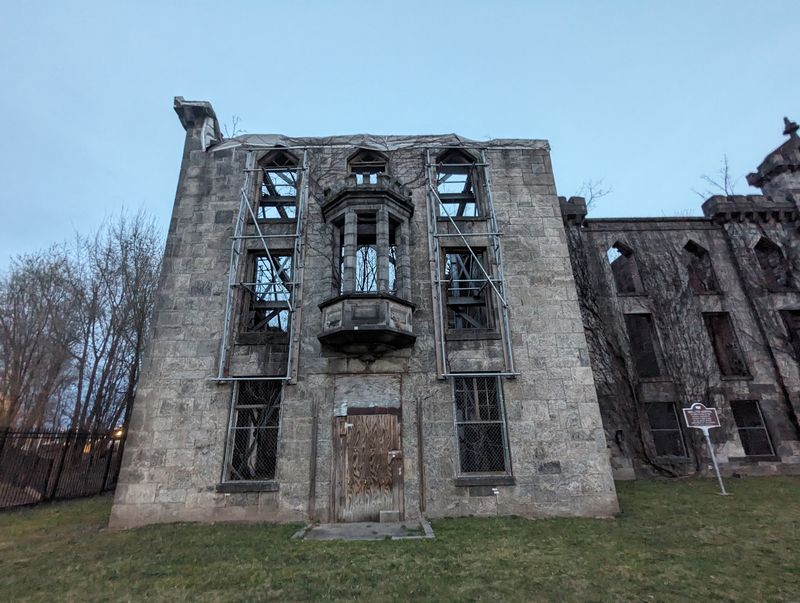
New York City has many landmarks. Only one of them is officially a ruin, and you’re looking at it.
The building was abandoned in the 1950s as island services moved elsewhere. Over the years, its roof, floors, and most interior pieces collapsed.
Still, people recognized its value. It joined the National Register of Historic Places in 1972.
The city named it a New York City Landmark in 1976.
Nature kept pushing back, of course. On December 26, 2007, a section of the north wing collapsed, adding new urgency to preservation plans.
Today, metal supports help hold parts of the walls in place. The bracing looks almost like a skeleton helping a skeleton.
It’s oddly fitting for such a moody spot.
Here’s a useful mindset for visiting. Treat the ruin like a museum piece you admire from a distance.
The fence exists for real safety reasons, so stay outside it.
Preserving a ruin sounds like a strange idea at first. Yet keeping it broken, but standing, tells its story better than any restoration could.
Getting There Is Half The Adventure

Few landmark trips start with a ride through the sky. The Roosevelt Island Tramway glides over the East River from Manhattan, offering big skyline views.
The subway also reaches Roosevelt Island if you prefer staying underground. Either way, the island feels calmer than most of New York.
From the tram, plan on roughly a 10-minute walk south. The path follows the water toward the island’s southern tip.
Grassy areas and trees open up as you get closer.
The Smallpox Memorial Hospital sits at E Rd, New York, NY 10044, inside Southpoint Park. Look for the gray stone walls peeking through the greenery.
You really can’t miss them.
Entry to see the ruin is free, since you view it from the park. Google lists park access from 9 AM to 7 PM, closed Tuesdays.
Double-check hours before heading out.
Comfortable shoes are a smart move for this outing. You’ll likely walk more than you expect, simply because the views keep pulling you along.
Biking the island loop is another fun option. It turns a quick history stop into a whole afternoon.
Skyscrapers And Spooky Stone, Side By Side
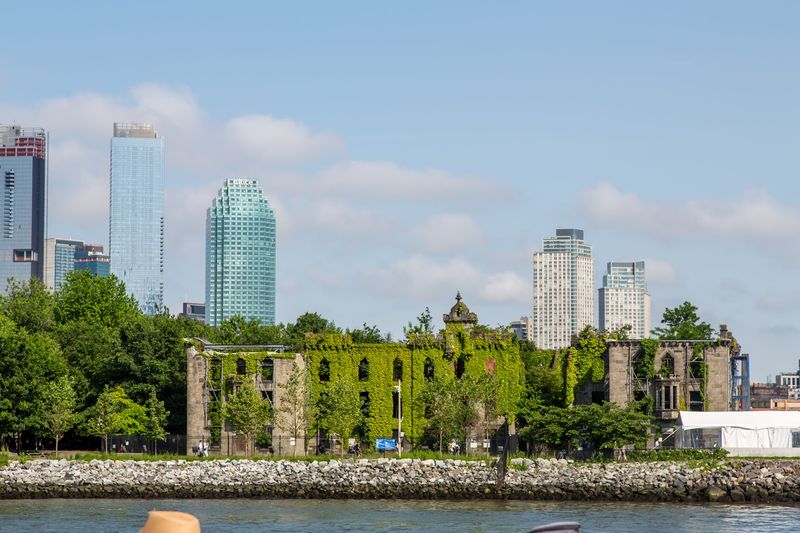
Turn one way and you see a crumbling Gothic shell. Turn the other and Midtown Manhattan towers over the river.
That contrast is the real magic here. The old and the ultra-modern share the same view in New York like nowhere else.
Southpoint Park gives you plenty of space to soak it in. Open lawns surround the ruin, so you can find your own angle.
Benches and grassy spots invite you to slow down.
Across the water, the United Nations headquarters stands tall and sleek. Its clean lines make the ivy-covered hospital look even older.
The two feel centuries apart because they basically are.
For photos, try framing the ruin with the skyline behind it. Soft morning light works nicely and the area tends to be quieter early.
Golden hour adds warm color to the gray stone.
Don’t rush this part of the visit. Sitting and watching boats pass the ruin can feel surprisingly peaceful.
The city’s noise seems to fade on this side of the river.
It’s a rare moment of calm in a famously loud place. The ghosts, apparently, prefer it quiet.
Save Time For The Park Next Door And What’s Coming
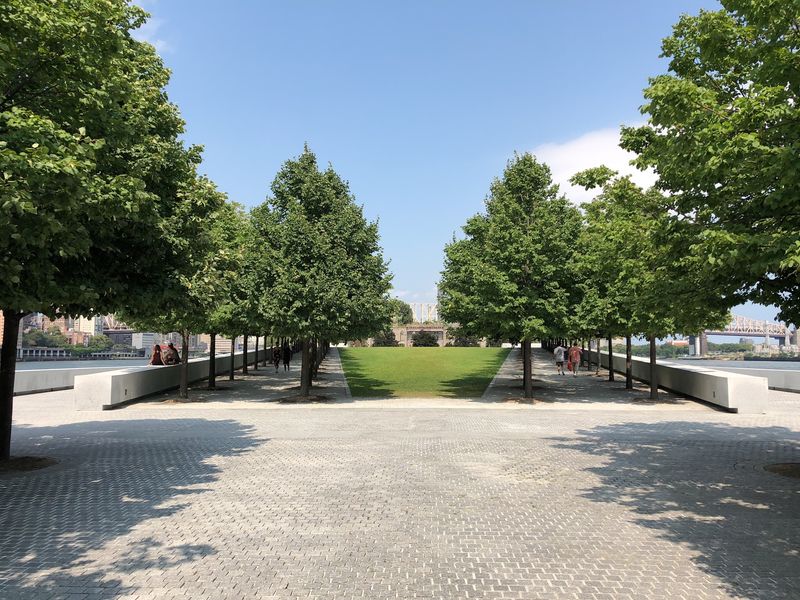
Right next to the ruin sits Franklin D. Roosevelt Four Freedoms State Park.
Its clean, minimal design feels like the total opposite of the crumbling hospital.
Visiting both makes for a perfect pairing. One space is rough and wild, while the other feels calm and polished.
The future of the old hospital may look brighter too. A long-running stabilization effort aims to protect the structure, though cost estimates have climbed well beyond the original $4.5 million plan.
A nonprofit called Friends of the Ruin, founded in 2018, supports the site. The group has shared a vision for a permanent memorial there honoring frontline medical workers, including those who fought COVID-19.
Animal lovers have one more stop to consider. A small cat sanctuary sits along the path toward the ruin.
It’s a sweet detour for anyone who enjoys furry company.
So plan for more than a quick look. Between the park, the views, and the ruin, the southern tip easily fills a relaxed afternoon.
New York keeps finding new ways to surprise people. This spooky stone survivor might just be its most charming oddball.