
Rare Ancient Ichthyosaur Fossils Rest Where They Were Found At This Remote Nevada Park
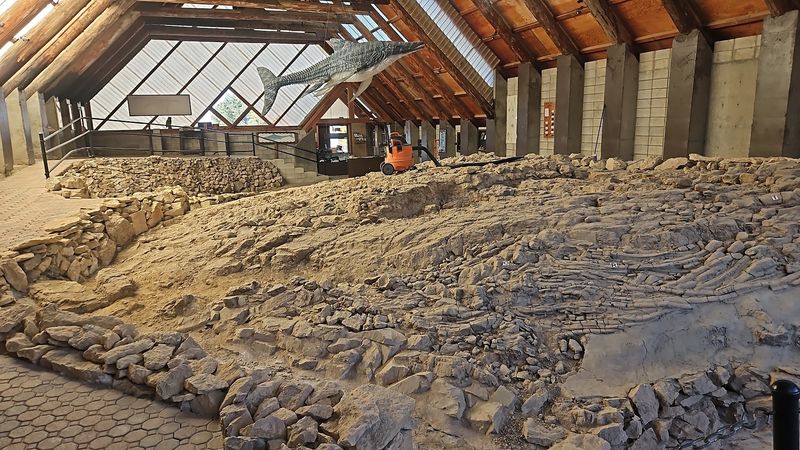
Skeletons of sea reptiles longer than a school bus are resting on a Nevada mountainside, right where they settled about 225 million years ago. Nobody hauled them off to a big city museum.
A building was simply raised over the bones.
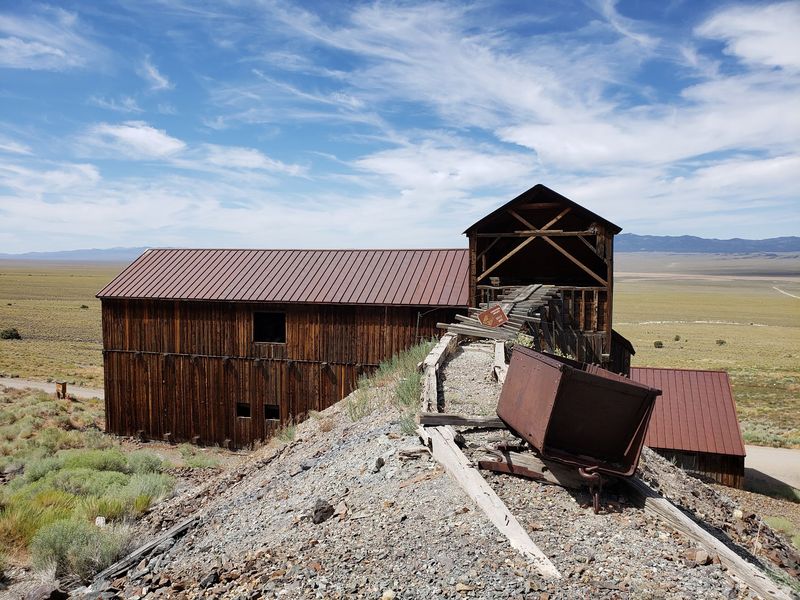
That alone would earn the drive. Yet the same park also protects a mining town from the 1890s, with a stamp mill still standing on the hill.
Two wildly different eras share one dusty patch of high desert.
I like how unhurried the whole place feels. The last stretch is a slow backroad, and the reward is an ancient ocean floor surrounded by pinyon pines.
The entry fee is only a few dollars per vehicle, so a family can stretch it into a full day. So how did giant sea creatures end up at 7,000 feet?
An Ancient Ocean Floor High In The Shoshone Mountains
Fossils and a ghost town in one stop sounds like a bargain, and Berlin-Ichthyosaur State Park delivers both. The park covers more than 1,500 acres in far northwestern Nye County, Nevada.
It sits on the western slope of the Shoshone Mountains at roughly 7,000 feet. That elevation brings forested hillsides and cooler air than the low desert below.
The headline act is the largest known concentration of ichthyosaur fossils in North America. These were marine reptiles, not dinosaurs, though plenty of kids will happily call them dinosaurs anyway.
The supporting act is Berlin, a turn-of-the-century mining town kept in a state of arrested decay. Roughly 130-year-old buildings stand a short walk from 225-million-year-old bones.
That pairing makes the park unusually easy to sell to a family. One child wants giant sea monsters, while another wants old cabins and rusty machinery.
Grandparents tend to appreciate the slower pace and the open views. Nobody has to compromise much, which is rare on any road trip.
Plan on a few hours to see the main sights at a comfortable pace. Add camping, and the park can easily fill a whole weekend.
The nearest town of any size is Gabbs, about 23 miles west. Everything else feels pleasantly far away.
How A Mountain Ended Up Full Of Sea Reptiles
About 225 million years ago, central Nevada lay under a warm ocean. Sagebrush country was once open water, which still sounds a little unbelievable.
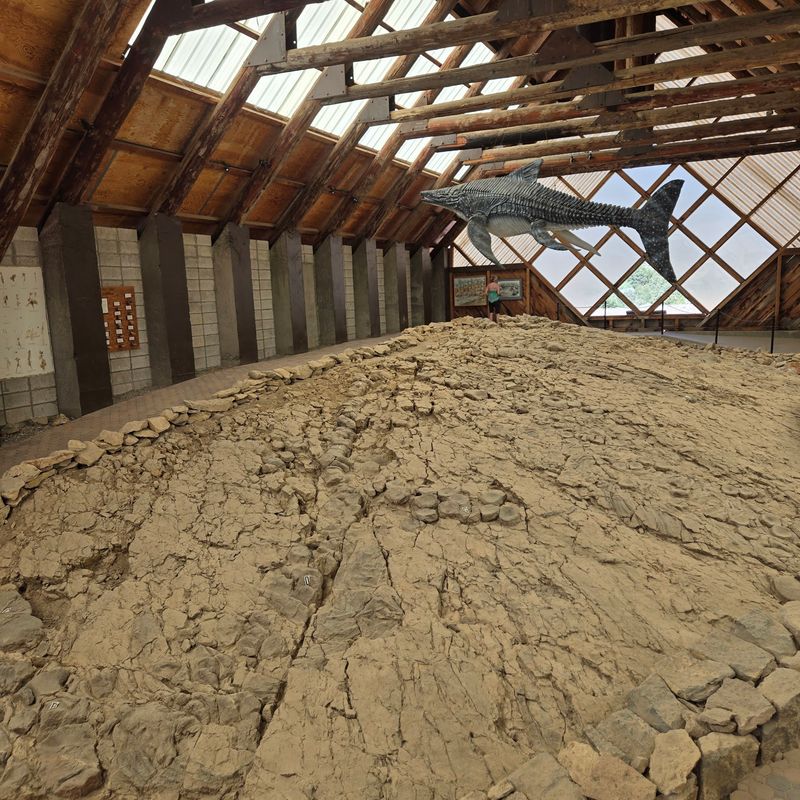
Swimming in that sea was Shonisaurus popularis, a whale-sized ichthyosaur that could reach around 50 feet long. Think of a dolphin’s general shape, scaled up and given a long snout.
Nevada liked the creature so much that it named Shonisaurus the official state fossil. Not many states can point to a fossil that big inside their own borders.
The bones here were first uncovered in 1928. The state park followed in 1957, created specifically to protect and display them.
Research has also offered a fascinating theory about why so many ended up in one spot. Scientists have suggested the area may have served as a birthing ground, much like the lagoons modern whales visit.
Remains of tiny embryos and young animals support that idea. Generations of giants may have returned to the same waters again and again.
For kids, that turns a pile of old bones into a story about families. It can also spark questions that last the entire drive home.
Bring curiosity. The rocks supply the rest.
Giant Skeletons Still Locked In Stone At The Fossil House
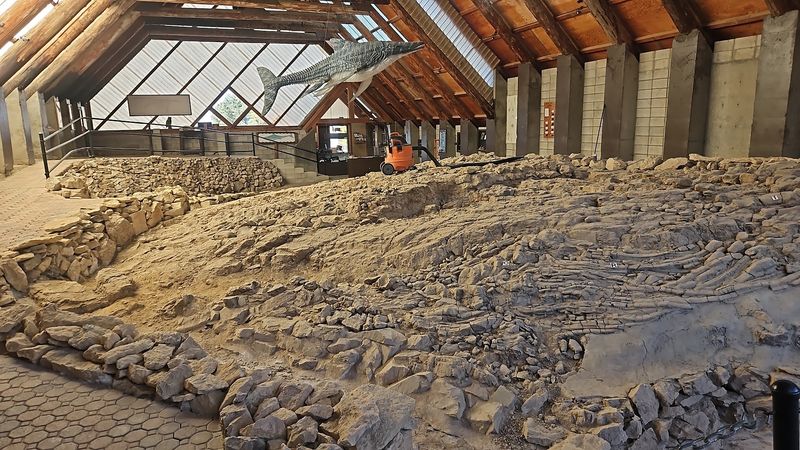
Most museums move fossils to a display hall. At the Fossil House, the building came to the fossils instead.
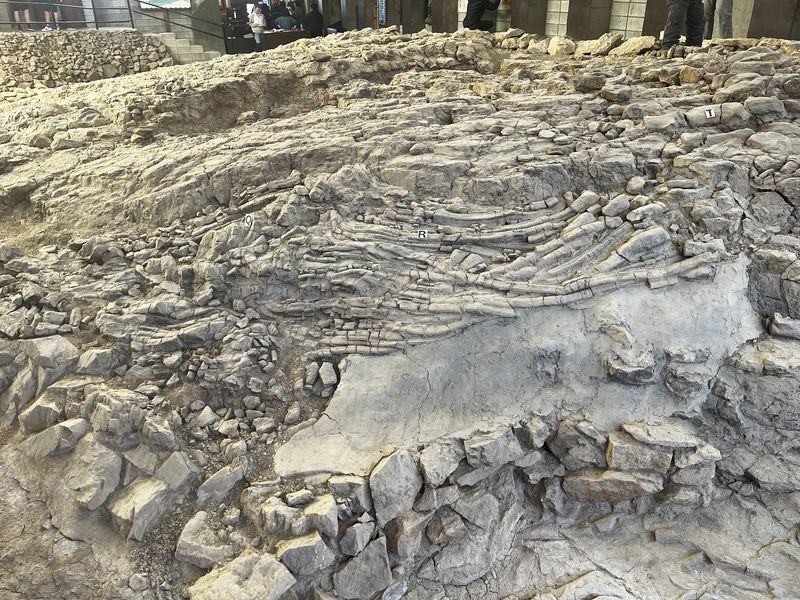
Inside, ichthyosaur skeletons remain partly encased in rock across the original quarry floor. You’re looking at the bones exactly where they were found.
That changes the experience. Instead of a tidy mounted skeleton, you see the jumble and scale of a real dig site.
Vertebrae, ribs, and long skull sections stretch across the ground in a way that makes the size easier to grasp. A 50-foot animal is hard to imagine until its bones fill a room.
The Fossil House also has a small gift shop stocked with books and souvenirs. It’s a handy place to grab something that keeps the learning going at home.
The building sits uphill from the Berlin townsite. A nature trail also connects it with the campground, so you can walk over if you’re staying the night.
Access inside is limited to guided tour times, and the doors stay locked otherwise. That detail matters for planning, which the next section covers.
For now, simply know this is the heart of Berlin-Ichthyosaur State Park. Everything else orbits around these stony giants.
Ranger-Led Tours That Bring The Bones To Life
Timing your arrival around a tour pays off here. Rangers lead guided walks through the Fossil House, and the explanations make the scattered bones suddenly make sense.
Tours have historically run at 10 a.m. and 2 p.m. They operate daily from Memorial Day through Labor Day, then on weekends during other parts of the year.
Tour fees are modest, typically a few dollars per adult. Schedules and costs can change, so confirm before you leave Reno or Las Vegas.
Missed the tour? You’re not out of luck.
Large viewing windows at each end of the building let you peek inside anytime. Interpretive signs help you understand what you’re seeing.
Morning sun can glare on the glass, though, and the bones sit at a distance. The tour remains the best way to appreciate the details.
Rangers here are known for being friendly and patient with questions. That’s great news for kids who ask about forty of them in a row.
If your family enjoys a bit of structure, build the day around one of the tour times. Explore the ghost town before or after, and the schedule practically arranges itself.
A Mining Town Frozen In Arrested Decay
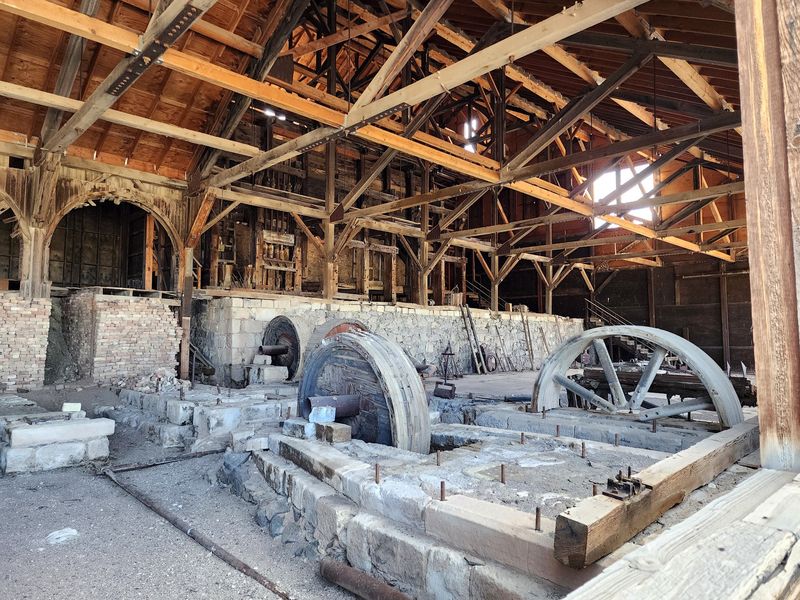
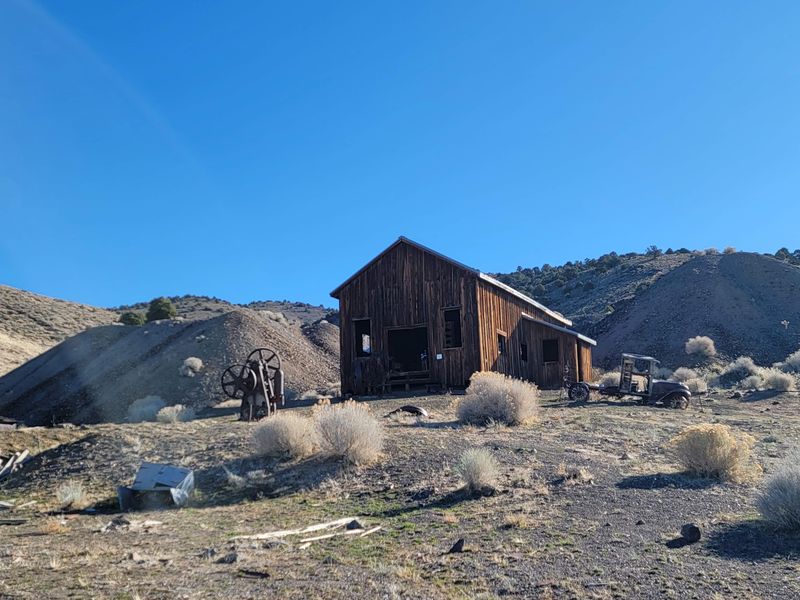
Gold brought Berlin to life around 1896. At its busiest, between roughly 1898 and 1908, the town held about 200 to 250 residents.
The boom faded quickly, as booms often do. By 1911, the town had emptied out.
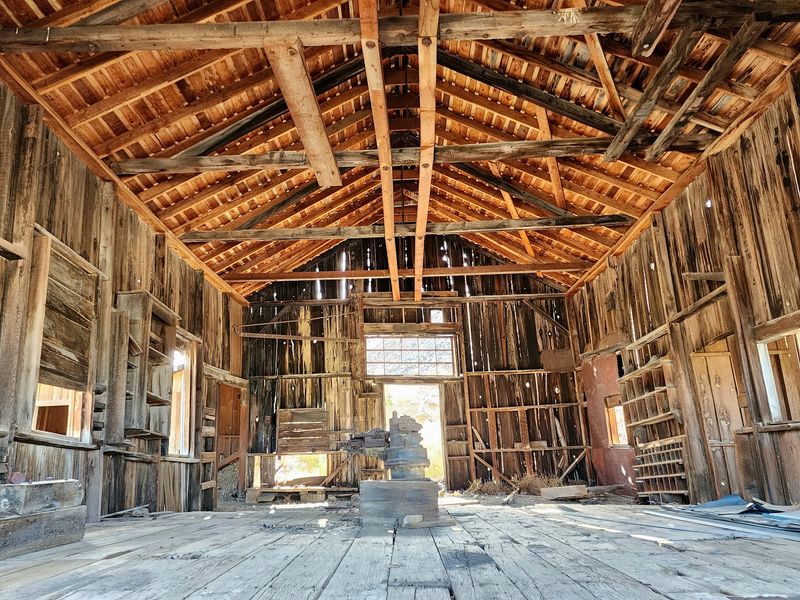
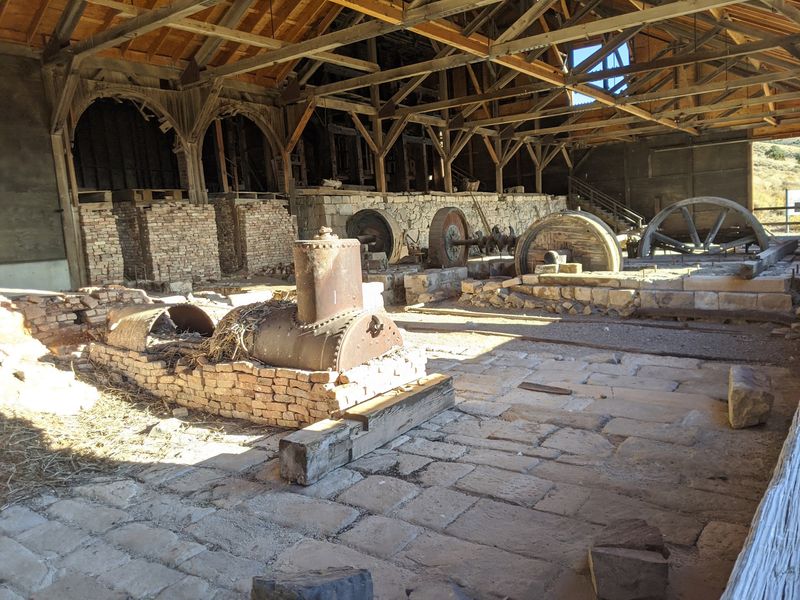
Today, Berlin stands in arrested decay. Nevada State Parks keeps the structures standing without restoring them to look brand new.
The result feels honest. You can wander past homes, a blacksmith shop, an assay office, and the impressive 30-stamp mill.
Interpretive signs along the self-guided route explain who lived here and how the work got done. Kids can match the signs to the machinery, which turns the stroll into a scavenger hunt.
Visitors can even step inside some buildings, unlike many ghost towns. Watch little feet, though, since rusty nails and old debris remain part of the scenery.
Sturdy shoes are a smart call for everyone. Flip-flops and century-old mining sites rarely get along.
The town is on the smaller side, so it won’t swallow your entire day. It does pair beautifully with the fossils, giving families two eras of Nevada history for one entry fee.
Trails Through Pinyon Pines And A Second Ghost Town
Hikers get a bonus round at this park. A nature trail links the campground with the Fossil House, winding through pinyon pine and Utah juniper.
There’s also a trail circling the Berlin townsite. It’s an easy way to see the buildings from different angles.
Look for the remains of Union too, another former mining settlement inside the park. Only one building still stands, and a walking path with signs marks where other structures once sat.
That Union trail can be trickier to follow. Keep a close eye on markers, especially with young hikers in tow.
The park even sits along the American Discovery Trail, a coast-to-coast route. Your family probably won’t hike to the Atlantic, but it’s a fun fact to share on the trail.
Shady picnic spots with tables and grills make a natural lunch break. Pack a cooler, since food options nearby are basically nonexistent.
Trails here are generally well kept and cleared. Still, the area is home to rattlesnakes and other wild residents, so stick to paths and watch where you step.
A morning hike, a picnic, and a tour can fill a day without costing much at all.
Mule Deer, Bluebirds, And Other Modern Neighbors
Long after the ichthyosaurs swam away, a new cast of animals moved into the neighborhood. The high-desert woodland supports a surprising mix of wildlife.
Mule deer roam the area, along with black-tailed jackrabbits and cottontails. Early mornings and evenings may offer the best odds of a sighting.
Bird lovers can watch for western bluebirds and pinyon jays. Chukar partridge also live among the rocky slopes.
Closer to the ground, western fence lizards and whiptails dart across sunny rocks. Kids tend to treat lizard spotting like a competitive sport.
Coyotes, mountain lions, and rattlesnakes also share this landscape. Sightings aren’t guaranteed, but it’s wise to keep children close and pets leashed.
Binoculars can make a big difference on a trip like this. A simple bird guide may help, too.
The quiet helps as well. Without highway noise, you can often hear the natural sounds of the hillside around you.
Wildlife adds a living layer to a park built around ancient remains. It’s a gentle reminder that this mountain still has plenty going on.
Remember the golden rule out here. Watch from a respectful distance, and never feed the animals.
Fourteen Campsites With Shade And Starry Nights
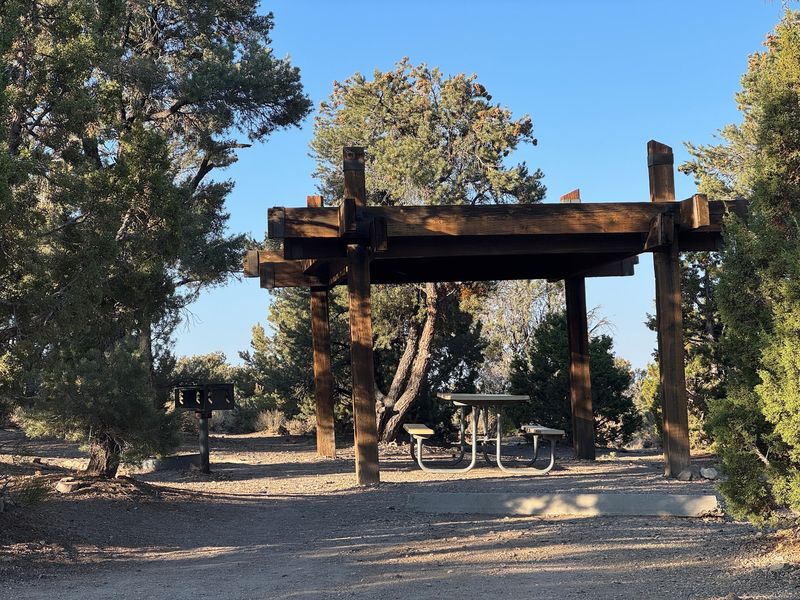
Staying overnight turns a day trip into a mini adventure. The campground offers 14 well-spaced sites open year-round, nestled among the trees.
Each site includes a covered picnic table, fire ring, and grill. The shade structures are a welcome perk on bright Nevada afternoons.
Tents and RVs up to about 25 feet can fit. Some sites may be tricky with trailers, and the campground road is a bit narrow.
There are no electric or water hookups at individual sites. Water spigots are spread through the campground, usually available from mid-April through October.
Vault toilets are scattered around, and an RV dump station is on hand. Showers aren’t available, so plan accordingly.
A group campsite also exists, handy for reunions or several families traveling together. Reservations can be made online through Nevada State Parks.
Then comes the free entertainment. Far from city lights, the park offers excellent dark skies for stargazing.
Point out constellations, spot satellites, and let the kids stay up a little late. Nights at 7,000 feet can get chilly, so pack extra layers even in summer.
What A Family Day Here Really Costs
Good news for budget-minded travelers. Berlin-Ichthyosaur State Park ranks among the more affordable outings in the state.
Day use is charged per vehicle, with a lower rate for Nevada residents than for out-of-state cars. Either way, the fee stays in the few-dollars range.
Camping costs a bit more per night but includes your entry. Fossil House tours add a small per-person charge.
Bring cash. Credit cards haven’t been accepted for payments, and there’s no ATM around the corner.
Fees can change, so double-check before you drive. That quick step can save an awkward moment at the entrance.
The park stays open 24 hours a day, seven days a week. Tour schedules are the only real timing constraint.
Fill your tank before heading out, since gas stations are scarce. Stock up on snacks, water, and supplies, too.
Cell coverage can be spotty, with signal coming and going. Downloading maps ahead of time is wise.
Add it all up, and a family of four can enjoy fossils, history, and hiking for less than many movie tickets. That’s a solid trade for a full day of exploring.
The Long, Quiet Road To NV-844
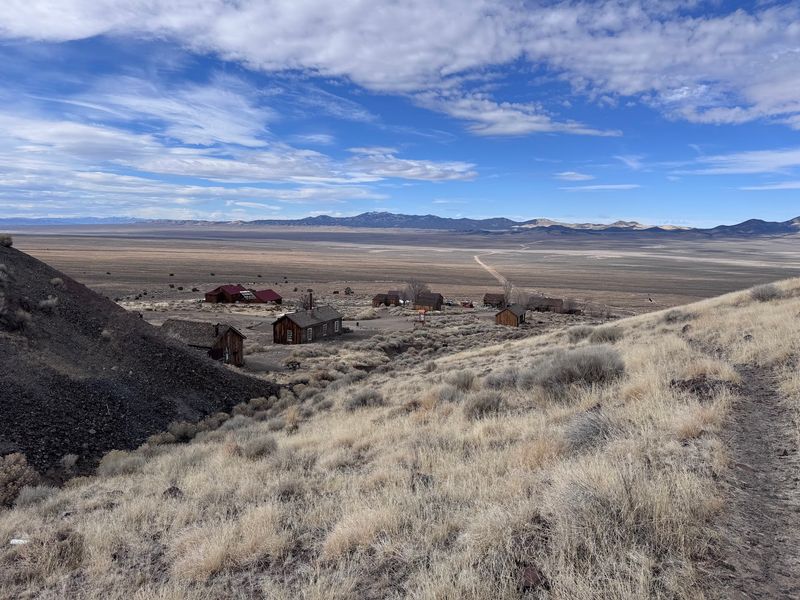
Remote is the right word here. The official address is NV-844, Austin, NV 89310, though the park sits well outside Austin itself.
Most travelers reach it from Gabbs, about 23 miles to the west. From the Reno side, many drive through Fallon and past Middlegate before turning toward the mountains.
The approach feels like a country backroad. Expect a few potholes and some rough patches, so slow down and enjoy the scenery.
Dirt sections lead into the park. Most vehicles should manage fine in dry weather, though larger RVs may find stretches bumpy.
Conditions can change after storms. A quick call to the park or a check of Nevada State Parks updates is smart before setting out.
Fuel is the big planning point. Top off before you leave the last town with a station.
Families often find the journey part of the fun. Wide Nevada valleys and empty highways give kids plenty to look at.
Plan for a long drive from Reno and an even longer one from Las Vegas. That makes an overnight stay especially appealing for southern Nevada families.
A Rewarding Detour For Curious Families
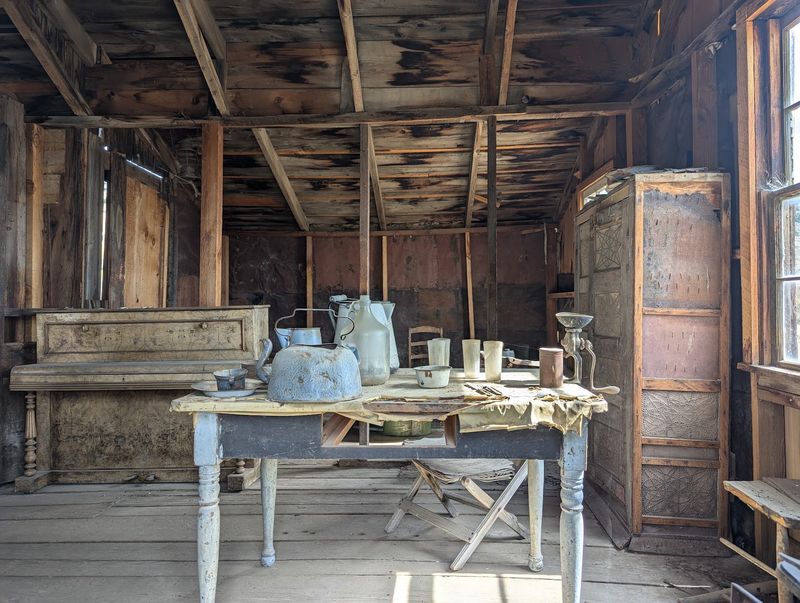
Few places let kids see sea monsters and gold rush history in the same afternoon. Berlin-Ichthyosaur State Park manages it without flashy exhibits or crowds of attractions.
Instead, it offers real bones in real rock, plus a real mining town standing quietly on the hillside. That authenticity is the whole charm.
The park suits families who like learning disguised as adventure. It also fits retirees who appreciate history, wide views, and a peaceful pace.
Travelers craving restaurants, shops, or nonstop activity may want to look elsewhere. The nearest services are far away.
For everyone else, the value is hard to argue with. A small vehicle fee opens up fossils, trails, picnic areas, and a ghost town.
Time a visit around a ranger tour for the best experience. Spring and fall often bring comfortable temperatures for hiking and camping.
Pack cash, water, snacks, layers, and a full tank of gas. Confirm hours and road conditions before leaving home.
After that, let Nevada do the talking. Somewhere between the stamp mill and the Shonisaurus bones, the drive starts to feel very much worth it.