
12 Nevada Petroglyph Sites Where Kids See Rock Art Older Than Any History Book
A kid in Nevada can climb a short metal staircase and stand face to face with carvings around 4,000 years old. No glass case.
No velvet rope. Just stone, sunshine, and a whole lot of questions.
I love that the oldest art in the state isn’t locked inside a building. It’s pecked into basalt boulders, canyon walls, and red sandstone, often a short stroll from the car.
Several of these spots charge nothing at all, which feels like a small miracle for a family budget.
Bighorn sheep show up again and again. So do spirals, zigzags, and stick figures that almost look like they’re waving hello.
Nobody knows exactly what many of them mean, so kids get to make their own guesses, and theirs might be as good as anyone’s.
So which stop will turn your backseat crew into rock art detectives first?
1. Petroglyph Wall
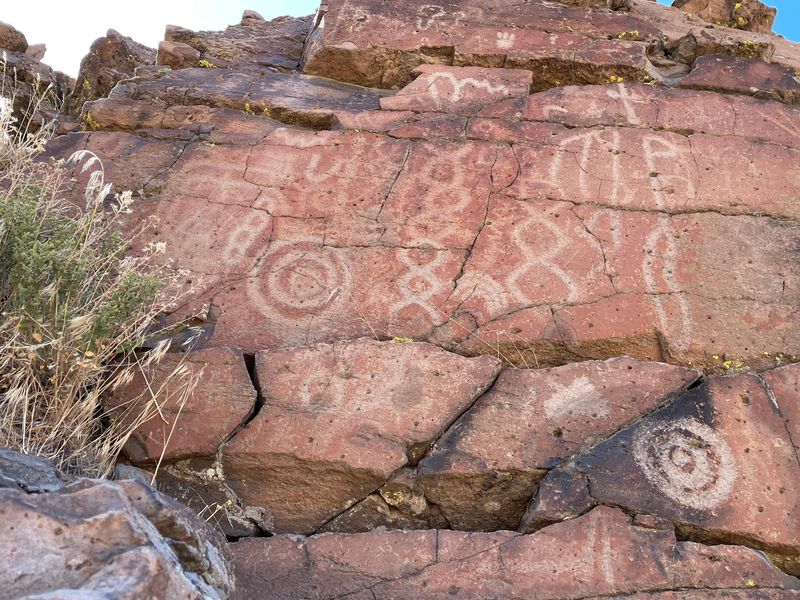
Five minutes of walking is all it takes to go from a parking lot to art made centuries before Las Vegas existed. That’s a trade any tired parent will happily make.
The Petroglyph Wall Trail runs about a quarter mile with roughly 16 feet of elevation gain. Little legs barely notice the climb, and nobody needs a snack break halfway.
At the end, a wooden fence keeps everyone at a respectful distance from the rock face. Behind it, you’ll spot both petroglyphs, which were carved or pecked, and pictographs, which were painted.
Ask the kids to figure out which is which. It turns a quick look into a real game of spot the difference.
The rock art is estimated to be at least 800 years old. It’s generally linked to the Southern Paiute people or their ancestors, who have deep roots in this part of Nevada.
The trail sits near the Willow Spring Picnic Area inside Red Rock Canyon National Conservation Area. Packing lunch here can stretch a short hike into a relaxed half day.
Red Rock charges an entry fee, and timed entry reservations are typically required for the scenic drive from October through May. Check the current rules before you head out.
Address: Petroglyph Wall Trl, Las Vegas, NV 89161
2. Hickison Petroglyphs Recreation Area & Interpretive Site
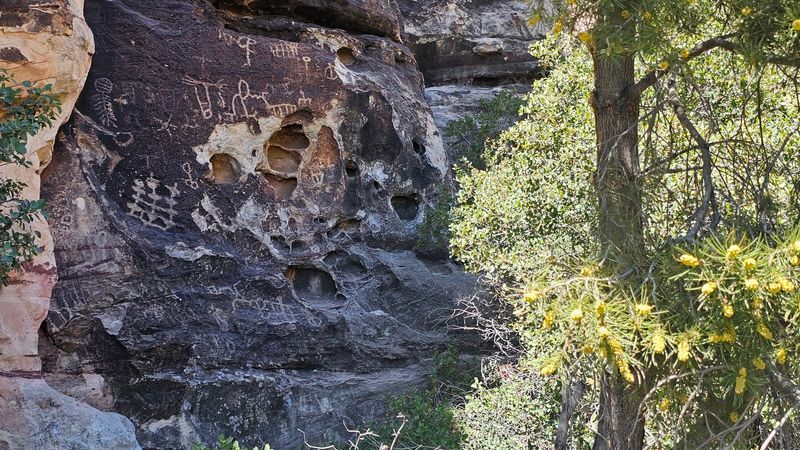
US-50 earned its nickname as the Loneliest Road in America for good reason. Out between Austin and Eureka, though, the stone has plenty to say.
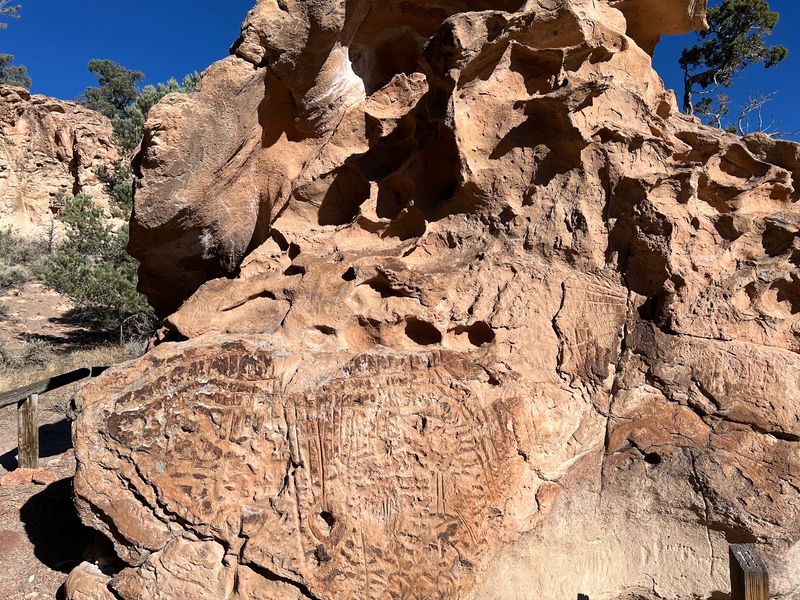
Hickison Petroglyphs Recreation Area is a BLM site built for a road-trip pit stop that turns into something bigger. A short half-mile loop trail winds past rock outcroppings covered in carvings.
The first stretch of trail is wide and hard-packed. That makes it friendlier for strollers than most rock art sites in the region.
Want more of a workout? A longer interpretive trail climbs to broad views over the Big Smoky Valley, a nice payoff for older kids with energy to burn.
Indigenous people created these petroglyphs thousands of years ago. Prehistoric living sites in the surrounding area may date back as far as 10,000 B.C.
Picnic tables make this a natural lunch break between towns. There’s also a small campground, so families can turn a quick stop into a starry overnight stay.
Campsites have historically been free and first-come, first-served. Small-town Nevada details can change, so confirm before you count on a spot.
Address: Hickison Petroglyphs Interpretive Trl, Austin, NV 89310
3. Atlatl Rock
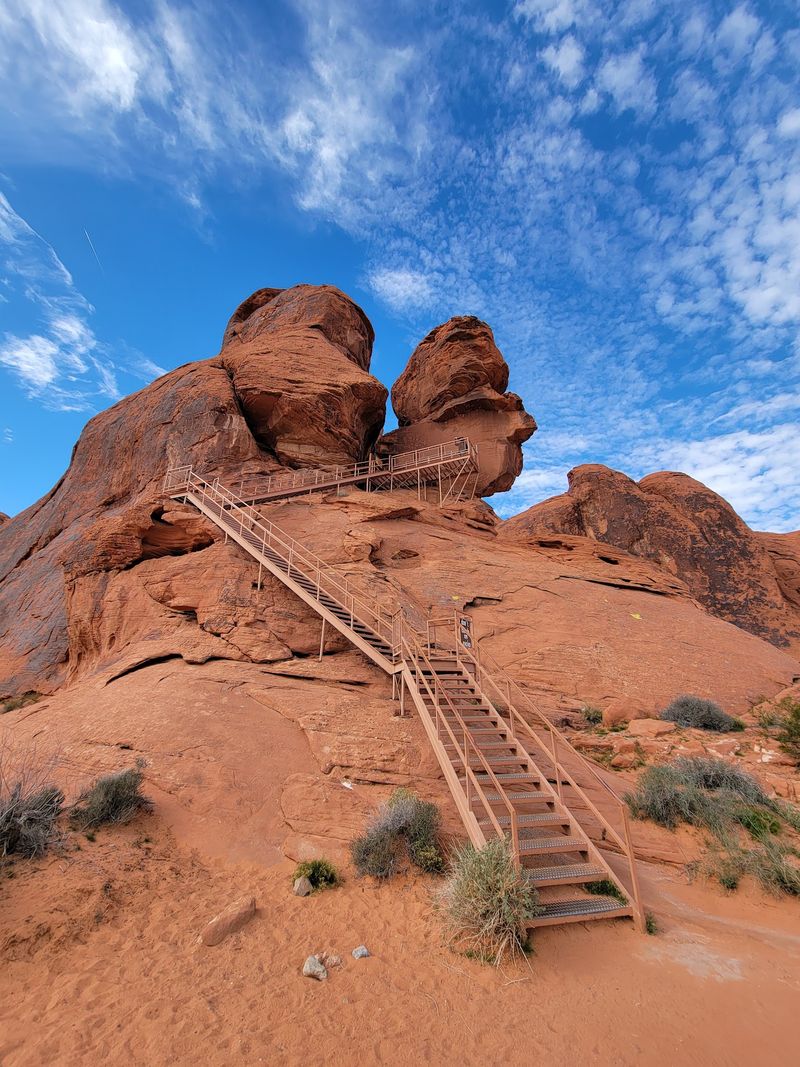
Most art galleries don’t make you climb stairs to reach the good stuff. Atlatl Rock does, and kids tend to think that’s the best part.
A metal staircase hugs the side of a massive red sandstone formation. At the top, you’ll stand close to petroglyphs believed to be around 4,000 years old.
The rock gets its name from one carving in particular. An atlatl is an ancient tool that helped hunters throw spears farther and faster.
Challenge your crew to find it on the panel. Then see who can spot the bighorn sheep, because there’s usually a winner and a sore loser.
Atlatl Rock sits inside Valley of Fire, Nevada’s oldest state park. The views from the stairs stretch across the red rock valley, so bring a camera.
Picnic tables are nearby, which makes this an easy lunch stop. The parking lot is close too, so the walk from car to carvings is short.
Hours run from 7 a.m. to 7 p.m. daily. The park charges an entry fee, and construction schedules have affected access lately, so check before driving out from Las Vegas.
Address: Valley of Fire Hwy, Overton, NV 89040
4. Petroglyph Canyon Trailhead
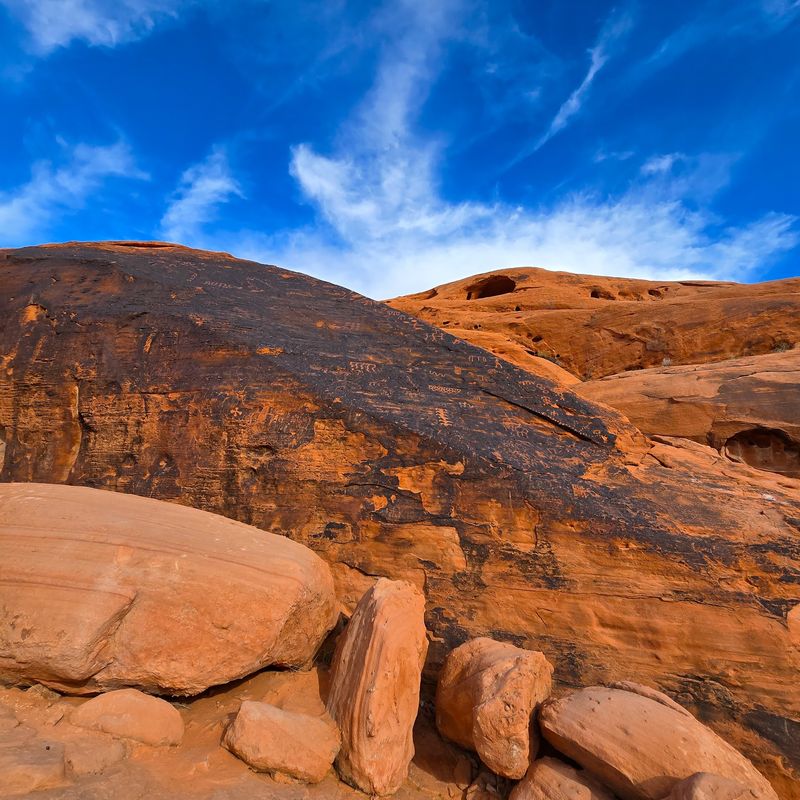
A carving that looks like a family holding hands is a pretty fitting find for a family hike. You’ll want to keep your eyes on the canyon walls.
The Petroglyph Canyon Trail, also called the Mouse’s Tank Trail, follows a sandy wash through tall red rock. The round trip runs about three-quarters of a mile.
Petroglyphs appear along the walls as you walk, some of them high up on the rock. Turn it into a contest and see who spots the most before the turnaround.
The destination is Mouse’s Tank, a natural basin in the rock that can hold rainwater. In a desert this dry, a spot like that mattered a lot to people living here long ago.
Ancestral Puebloan farmers occupied the area between roughly 800 and 2,000 years ago. Their neighbors left marks here too, layering the story over time.
Kids usually love scrambling on the low red rocks along the way. Just remind them that the carved surfaces are strictly for looking, not touching.
The trail sits in Valley of Fire, so park entry fees and hours apply. Summer heat here is serious, so morning visits make the most sense.
Address: Petroglyph Canyon Trail, Overton, NV 89040
5. Grimes Point/Hidden Cave Archaeological Site
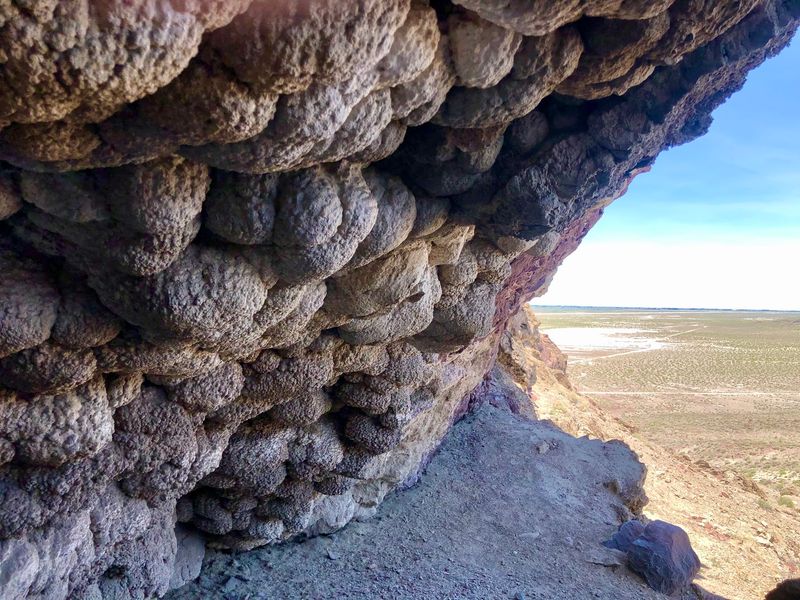
More than 1,000 petroglyphs on about 150 basalt boulders, and the place never closes. That’s a pretty generous gallery schedule.
Grimes Point, east of Fallon along US-50, is one of the largest and most accessible petroglyph sites in Northern Nevada. It’s open 24 hours, so early birds and sunset chasers both win.
The trail closest to the highway is the easiest one. It offers paved parking, shade shelters, and informative plaques that explain what you’re seeing.
Many carvings here are abstract, with circles, lines, and squiggles. Kids can treat the boulder field like a giant puzzle and invent their own explanations.
The rock art is believed to be roughly 6,000 years old. Nearby Hidden Cave adds another layer, since early people used it to store tools and supplies.
Free guided Hidden Cave tours have typically run on the second and fourth Saturdays of the month. The tour includes a climb and takes a while, so it suits older kids best.
Restrooms and picnic spots make it easy to linger. Tour schedules can shift, so confirm dates before planning your trip around one.
Address: Fallon, NV 89406
6. Sloan Canyon National Conservation Area
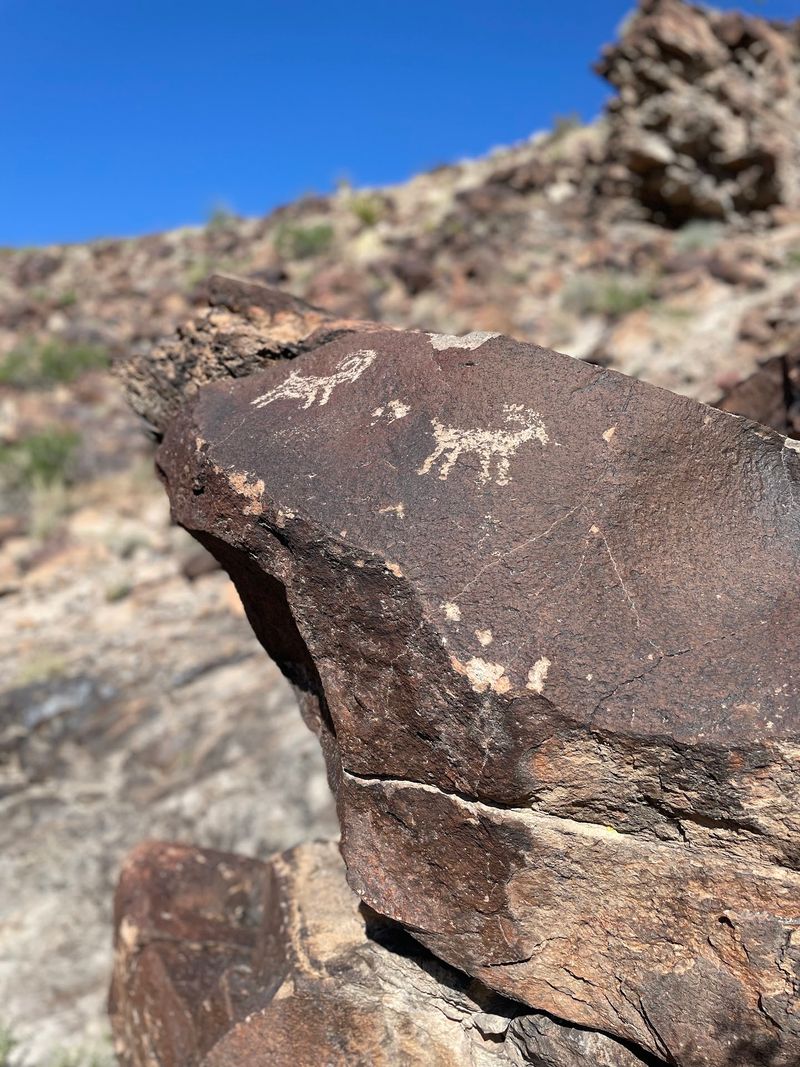
Picture books usually show a few cave drawings. Sloan Canyon counts more than 1,700 individual design elements across over 300 rock art panels.
That makes the Sloan Petroglyph Site one of the most important cultural resources in southern Nevada. The carvings are pecked into dark basalt boulders inside the canyon.
Archaeologists believe native cultures made them over a very long stretch of time. The images span from the Archaic era into historic times.
The whole conservation area covers 48,438 acres just south of Henderson. Along with rock art, you might spot lizards, birds, and big views of the Las Vegas valley.
Here’s the honest part: reaching the main petroglyphs takes a real hike with rocky sections. Families with older, sure-footed kids will have the best time.
Pets aren’t allowed in the Petroglyph Management Area, even though dogs are welcome elsewhere. Pack plenty of water, since shade is limited.
Day-use hours generally run from 8 a.m. to 4:30 p.m. Construction has rerouted access in recent times, so check current directions before you go.
Address: Nawghaw, Poa Road, Henderson, NV 89052
7. Grapevine Canyon
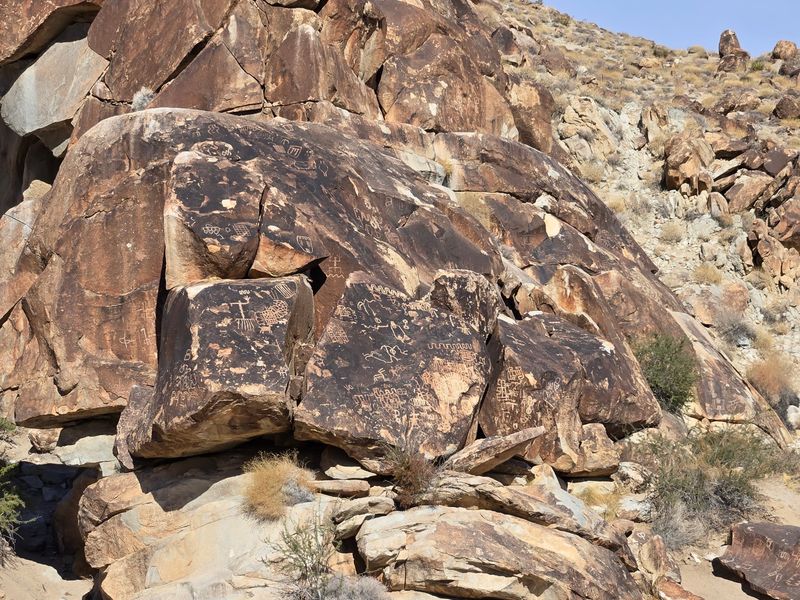
Short attention spans, meet your match. A quarter-mile walk up a sandy wash leads to boulders absolutely covered in carvings.
Grapevine Canyon sits off Christmas Tree Pass Road, west of Laughlin via Highway 163. It lies within Avi Kwa Ame National Monument, near Spirit Mountain.
The trailhead area has restrooms and signboards that explain where to find the petroglyphs. That’s a big help when you’re herding a group of excited kids.
Many carvings sit right at eye level on the canyon rocks. You’ll see bighorn sheep, spirals, and geometric patterns crowded together.
The site is often described as a spiritual gateway to Spirit Mountain, a sacred place for tribes of the region. Encourage kids to look closely and treat it with care.
Experts still aren’t sure about the exact meanings or creators. The area was inhabited by the Mojave people, and the carvings are generally placed within the last couple thousand years.
Some spots involve light rock scrambling if you want a closer look. Bring sturdy shoes and water, and plan a morning visit when the sun is gentler.
Address: Nevada 89046
8. Mount Irish Petroglyph Site
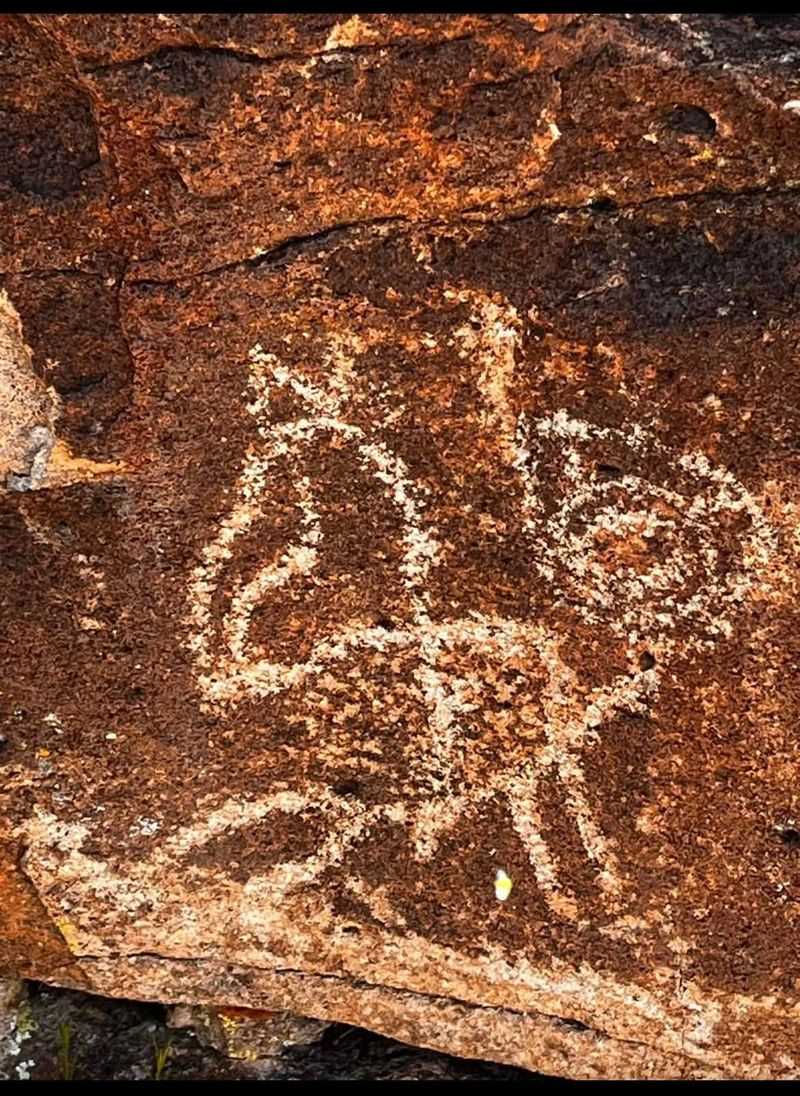
Road trips with a real sense of adventure tend to stick in kids’ memories. Mount Irish delivers that feeling without requiring a fancy vehicle.
The site covers about 640 acres inside Basin and Range National Monument. It holds one of the largest concentrations of petroglyphs in Nevada.
Native people in this region created the art around 4,000 years ago. Look for bighorn sheep, human figures, and abstract symbols like spirals.
Getting there takes some planning. From Alamo, head about 12 miles north to the US-93 and US-318 junction, go 3 miles north, then turn west onto Logan Road for 7.5 miles.
A regular car can usually manage the rocky dirt road at slow speeds. Around 20 mph is the recommended pace, so build extra time into your day.
Interpretive trails at the three largest rock art areas help you know where to look. There’s more than one site to explore, which can easily fill a whole afternoon.
You won’t find restrooms or food out here. Pack water, snacks, and a full tank, and let someone know your plans before heading out.
Address: Irish Mountain Rd, Alamo, NV 89001
9. Griffith Canyon Petroglyphs Trail Head
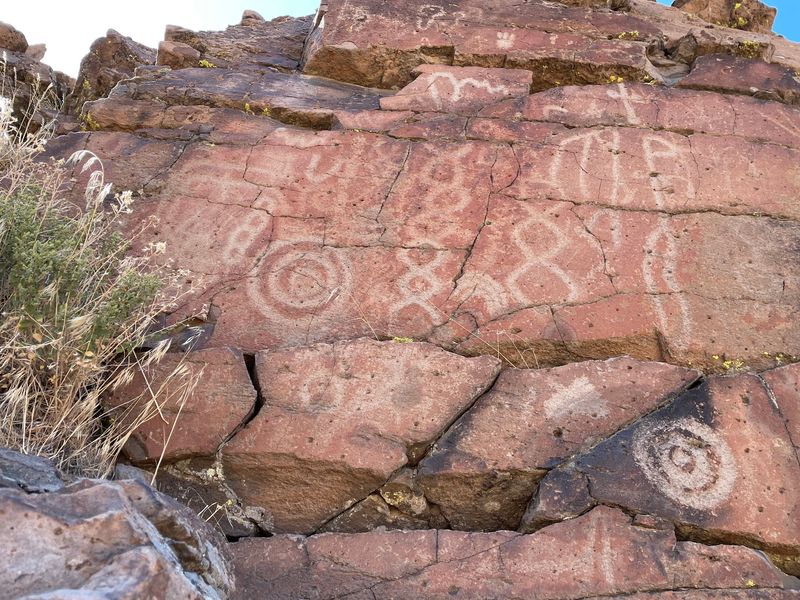
Reno and Sparks families don’t have to drive across the state for ancient art. Griffith Canyon sits right in Spanish Springs.
The trailhead can be a little tricky to find, so map it ahead of time. Parking is on the south side of the dirt road, and the trail starts across from it.
From there, follow the path northwest into the center of the canyon. Beautiful petroglyphs appear partway in, which keeps kids hunting as they walk.
Here’s a fact worth sharing with young explorers. Even tiny amounts of oil from human hands can darken petroglyphs until they’re impossible to see.
So the rule is simple: look with your eyes, not your fingers. Altering or damaging the carvings is also against the law.
The canyon is open around the clock, and dogs are allowed. Snakes can be out in warm weather, so keep an eye on the trail and on curious pups.
Bring water and skip the hike on scorching days. A cool morning here costs nothing and can make a great quick outing close to home.
Address: Pyrenees Dr, Spanish Springs, NV 89441
10. Lagomarsino Petroglyphs
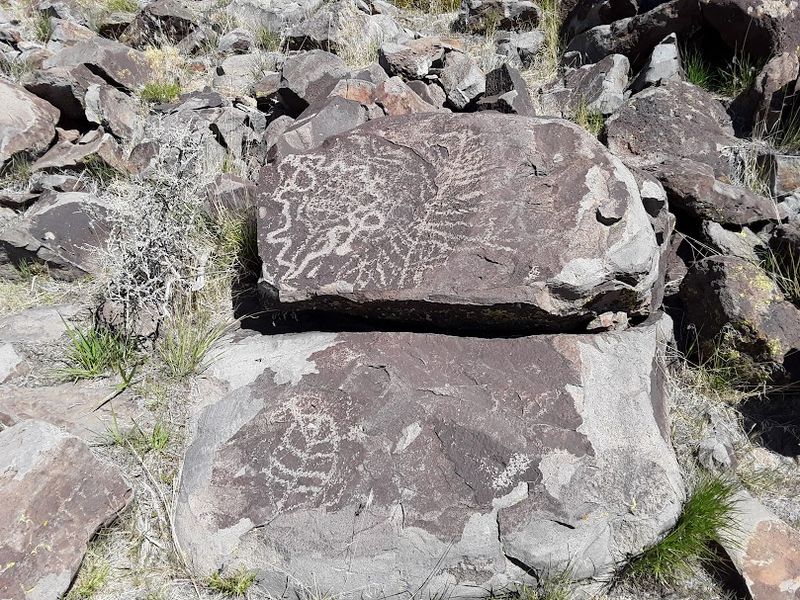
Bragging rights alert: this is the largest identified rock art site in Nevada. It holds an estimated 2,229 rock art panels.
Lagomarsino Canyon stretches about a quarter mile along basalt cliffs and talus. It’s one of just eight rock art sites in Nevada on the National Register of Historic Places.
Some panels may date back as far as 10,000 years. The site captures different eras of life in the Great Basin, layered right on the stone.
You’ll find mountain sheep and plenty of symbolic designs. With so many panels, kids can spend ages comparing shapes and styles.
Now the reality check. Access usually means rough dirt roads that call for a 4-wheel-drive vehicle, plus a demanding hike through sand, brush, and boulders.
That makes this one best for older kids and experienced outdoor families. Treat it as a true all-day adventure, not a quick stop.
There are no amenities, and cell service is spotty. Pack plenty of water and food, check road conditions, and turn around if the route looks unsafe.
Address: CCVJ+78, Reno, NV 89521
11. Ash Springs Rock Art Site
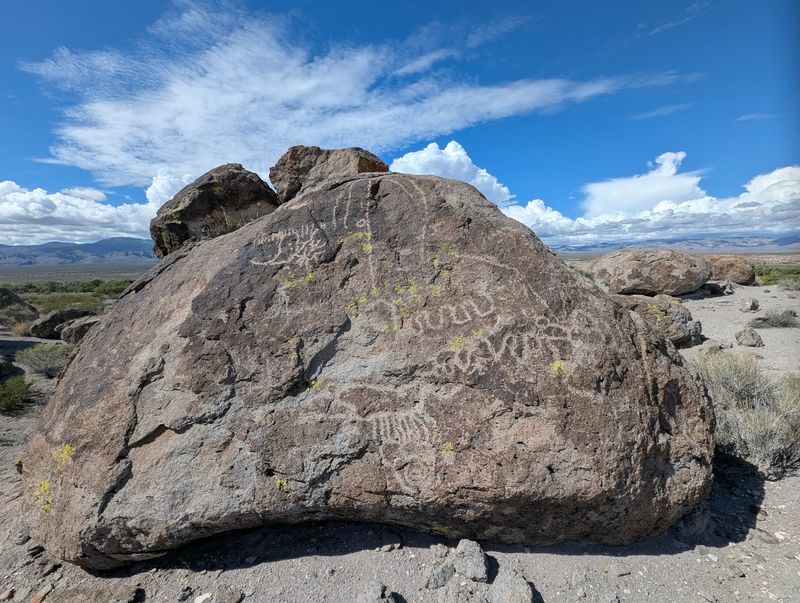
Long before road trips and gas stations, Ash Springs was already a popular place to stop. Natural springs made the Pahranagat Valley an oasis for travelers.
Hunter-gatherers used this area as far back as 6,000 years ago. It saw especially heavy use as a camp during the last 1,000 years.
The rock art site features petroglyphs on boulders scattered across the landscape. Look for curvy lines, boxy designs, stick-figure people, and animal images.
A short trail has several marked petroglyphs, which helps young eyes know where to focus. You may even start spotting carvings and markers from the road in.
Near the trailhead, a box holds a trail register and pamphlets. Bring your own pen if your kids want to sign their names.
Archaeologists have also found signs of daily life here, like grinding surfaces and stone flakes. It helps kids picture whole families camping in this valley.
The site isn’t heavily signed, so plot your route before leaving cell range. If you pass through cattle gates on the dirt road, close them behind you.
Address: FR56+47, Alamo, NV 89001
12. Keyhole Canyon
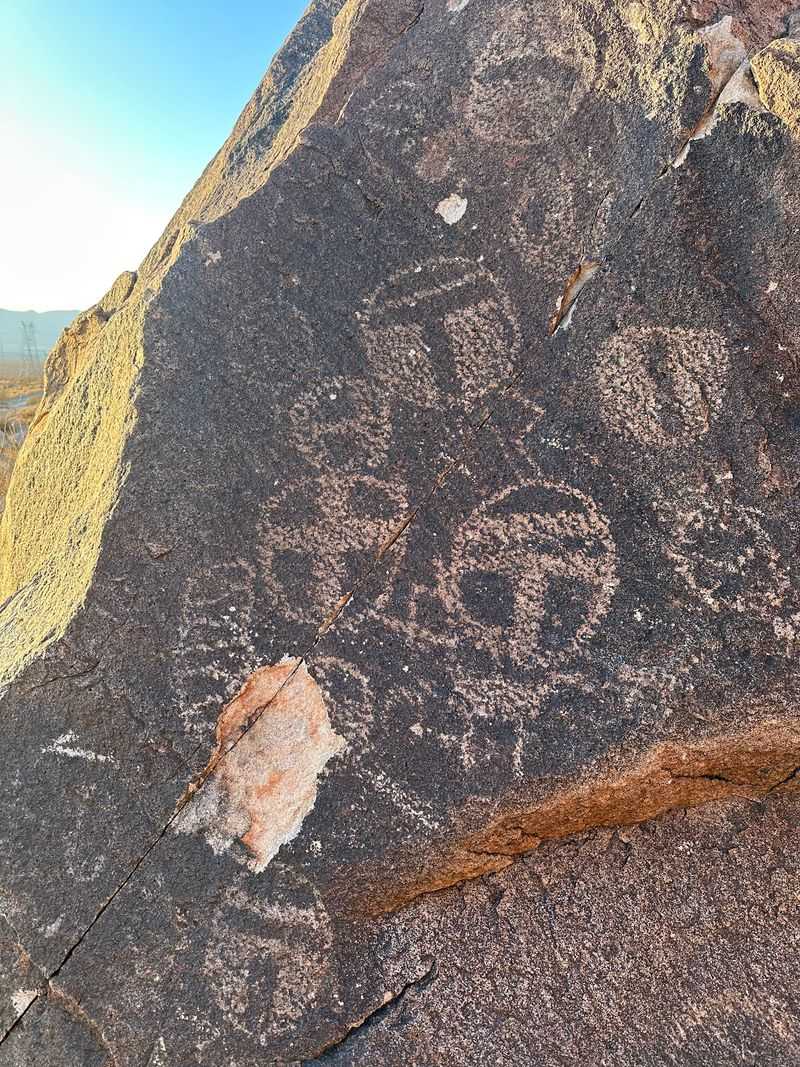
Most rock art asks you to look straight ahead. Keyhole Canyon makes you crane your neck, because many images sit unusually high on the walls.
This granite slot canyon is tucked in the Eldorado Mountains south of Boulder City. The hike into the keyhole is very short, which keeps grumbling to a minimum.
Geometric symbols are common here. You’ll also find bighorn sheep, lizards, and human figures, along with a few painted pictographs.
Plenty of carvings sit at or near ground level too. Seeing the best ones up high may take a little careful scrambling.
At the end, there’s a waterfall that’s usually dry. Kids still get a kick out of standing where water pours through after rare desert storms.
Scholars believe Mohave, Paiute, and Ancestral Puebloan peoples were in this region thousands of years ago. Some think the images may connect to creation stories.
A camping area with vault toilets sits near the mouth of the canyon. The gravel access road off US-95 can be rough, so higher clearance helps.
Address: Eldorado valley, COTTONWOOD CV, NV 89046