
Scientists Once Sealed Eight People Inside A Giant Glass World In The Arizona Desert, And Families Can Walk Through It Today
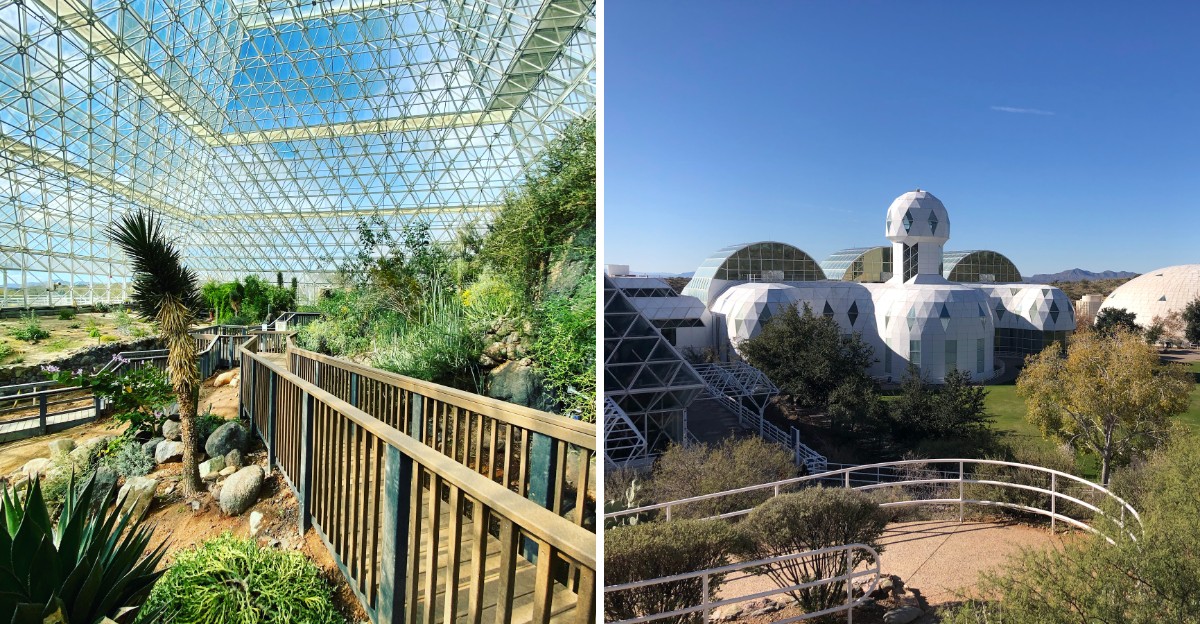
Eight volunteers once sealed themselves inside a glass building for two years. They grew their own food and recycled their own air.
Could your family survive that long without a grocery run? This crew tried it in the Arizona desert, starting in the early 1990s.
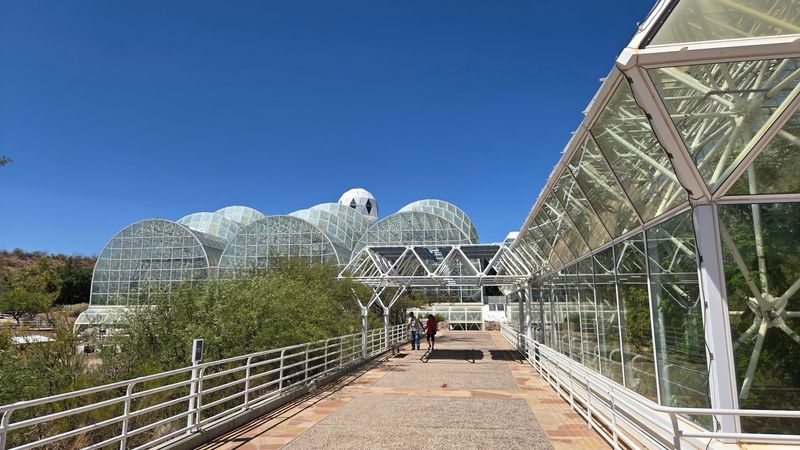
The structure still stands, its windows catching the desert sun. Inside, a rainforest, a coral reef ocean, and a fog desert share one roof.
Who expects a jungle in cactus country? That surprise is half the fun.
Scientists still run experiments here, some aimed at future homes on the Moon and Mars. A phone app guides you through it all at your own pace.
Kids can peek at giant breathing domes. Is there a stranger science field trip anywhere in Arizona?
A Glass World That Eight People Called Home
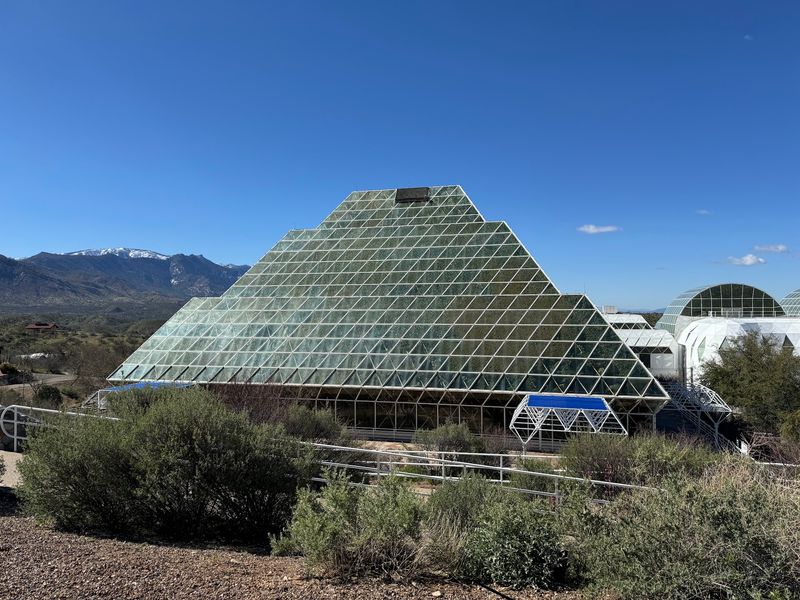
Biosphere 2 is the name of this glass wonder, which the University of Arizona now owns.
Eight people, four men and four women, were sealed inside on September 26, 1991. They stayed until September 26, 1993.
The goal was bold. The crew wanted to grow their own food and recycle their own air, water, and waste.
Nobody had tried a project like it on this scale before.
The building covers 3.14 acres. It holds about 7,200,000 cubic feet under sealed glass and reaches 91 feet at its highest point.
Those numbers make it the largest closed ecological system ever created.
Construction ran from 1987 to 1991. Engineer John P.
Allen designed it, and Edward Bass funded it.
That is a lot of vision for a patch of desert near Oracle.
The name makes sense once you hear the logic. Earth is Biosphere 1, and this was the small copy built to test how living systems could work together.
Think of it as a giant science fair project with real stakes. The crew lived it for two years, and the building still stands as proof that people were willing to try something huge.
That alone makes the story worth hearing before you ever step through the doors.
Six Thousand Five Hundred Windows And One Very Sealed Idea
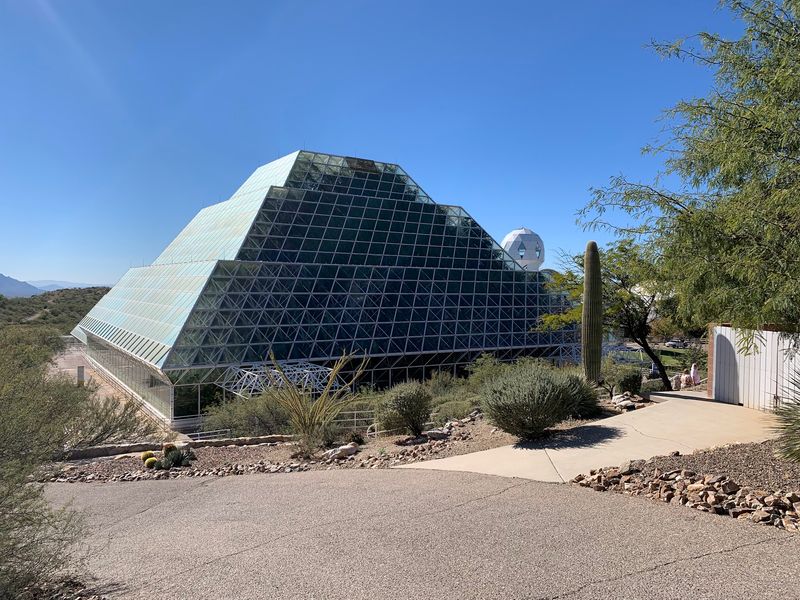
Count the windows and you will lose track fast. The structure has 6,500 of them.
Together they make a glass shell unlike anything else in the Arizona desert.
Under the building sits a 500-ton welded stainless steel liner. It seals the space from the earth below.
That seal was key to the idea of a truly closed system.
Why does that matter? A closed system keeps its air and water inside.
Scientists could then measure how everything moved around, from plants to oceans to people.
Engineering like this makes the place feel part laboratory and part castle. The pyramids and domes catch the desert light in a way that is hard to ignore.
Photographers tend to love the angles.
The facility opened a new chapter later on. It stopped hosting crews and became a research site.
Visitors can now see the engineering from outside and inside.
If you like buildings with big personalities, this one delivers. It looks like a science fiction set, yet it is a real working campus with real goals.
Bring a camera. The shell alone deserves a few photos.
Five Biomes Under One Roof
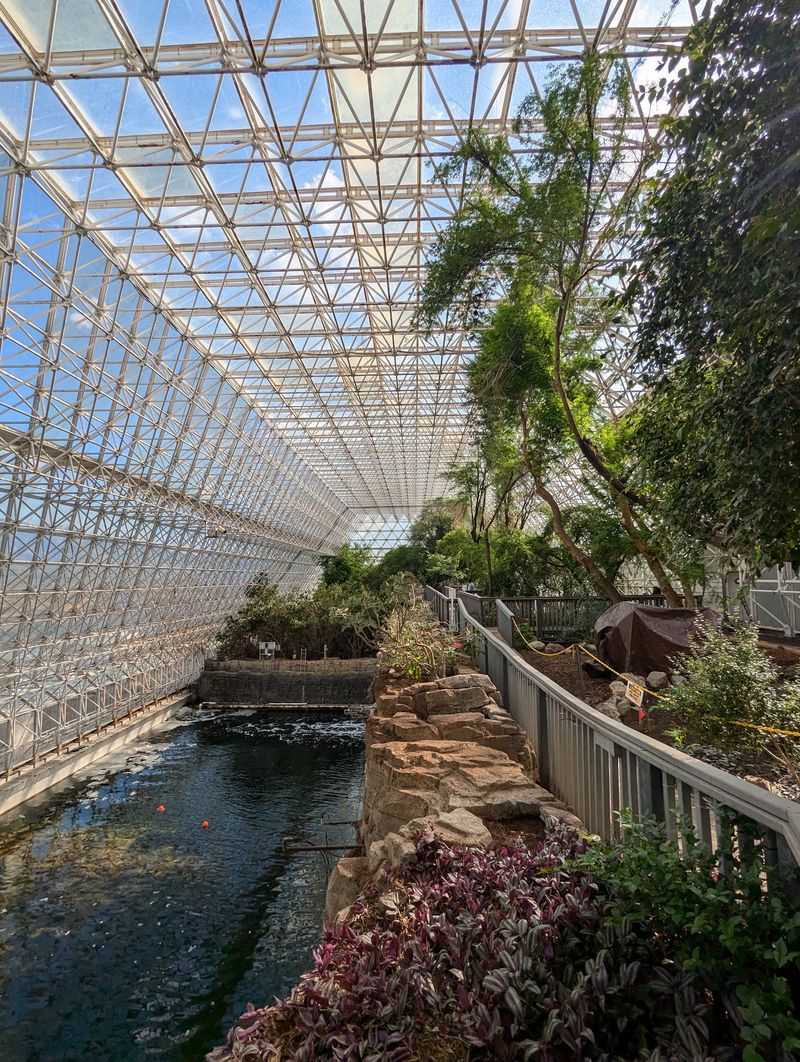
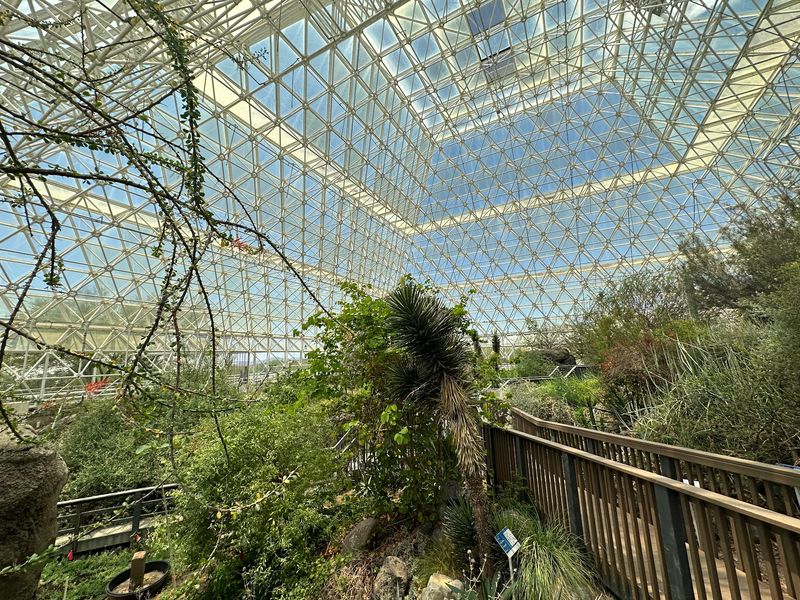
Rainforest, ocean, mangrove wetland, savanna, and fog desert all share this one building. An agricultural area sits alongside them.
That is a lot of climate zones for one address.
The ocean holds a coral reef and 1 million gallons of water. Seeing that in the Arizona desert is a surprise.
It is the sort of fact that makes you look twice.
The rainforest is warm and humid. Plan for sweat, and dress in layers.
The cooler and drier areas feel quite different from the tropical rooms.
Each biome was built to test how living systems behave together. Plants, water, and air all depend on each other.
That connection was the whole point of the original design.
Walking from one zone to the next feels like a quick world trip. No passport is needed.
Just comfortable shoes.
Staff members are stationed around the campus to answer questions. That helps when a plant or a display sparks your curiosity.
Many visitors compare the experience to a botanical garden with a science twist. That is a fair way to picture it, with a much bigger backstory attached.
Your Phone Becomes The Tour Guide
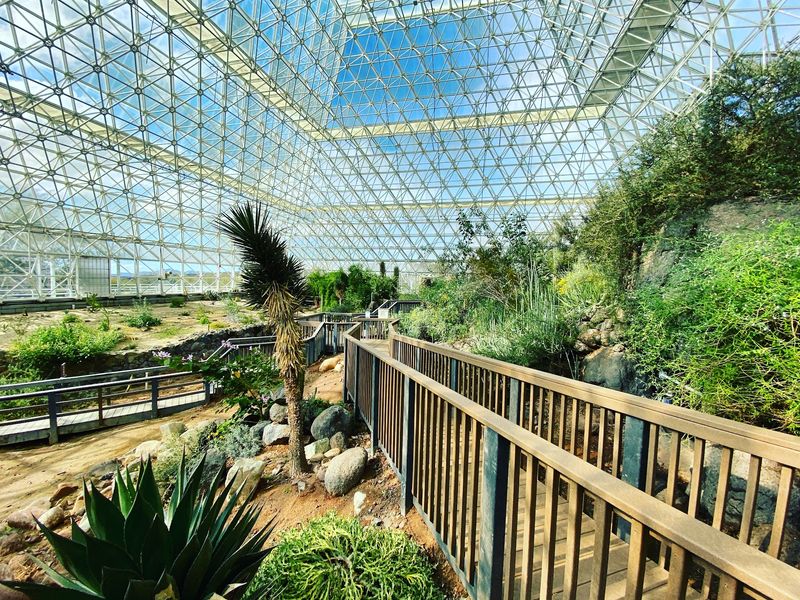
The main visit is a self-guided audio walking tour called The Biosphere 2 Experience. You use a smartphone app.
Download it before you arrive for the smoothest start.
Free Wi-Fi is available on site. That helps if your signal is weak out in the desert.
Headphones are a smart thing to pack.
The walk takes about 75 minutes and covers roughly one mile. It runs through both indoor and outdoor areas.
Expect about 100 stairs, both up and down.
The app shares the history and the current research. Short videos play at certain stops.
Bright sun can make screens hard to read outside, so a little shade helps.
Going at your own pace is a real perk. Linger in a spot you love, or move on when the kids get restless.
Nobody is rushing you.
Arrows on the ground help you stay on route. Staff are nearby when you have a question.
That mix of tech and people works well.
Keep your phone charged. A fully powered battery makes the whole tour easier.
Meet The Lungs That Help The Building Breathe
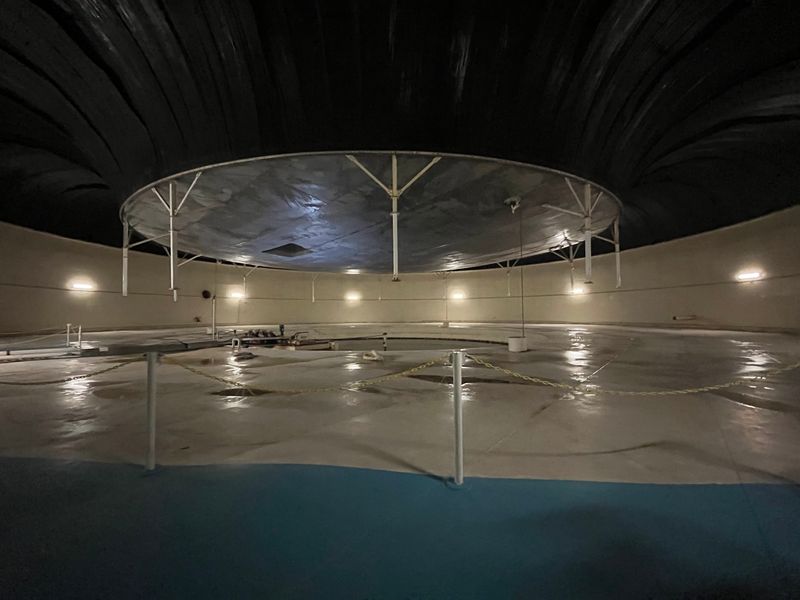
Here is a fun twist. The building has lungs.
They are large geodesic domes made to manage air pressure inside the sealed space.
Heat makes air expand. Cool air shrinks again.
The lungs handle those changes so the glass is not stressed.
The optional Guided Lung Tour lasts about 30 minutes. It offers a behind-the-scenes look at one of these domes.
Plan on stairs, since the tour is not elevator accessible.
Visitors who have taken the tour often point to it as a highlight. Seeing how the system moves makes the whole idea click.
It feels like the building is breathing.
Engineering fans will enjoy this stop most. It turns an abstract science concept into something you can see.
Kids who like machines may be fascinated too.
Book the extra tour if you want more depth than the app provides. It adds a human guide to the day.
Questions are welcome.
Wear comfortable shoes and bring water. The areas around the lungs can feel cooler than the rest of the campus.
The Hungry Years Inside The Glass
Two years of closed living was not easy. The crew faced constant hunger because food was limited.
Oxygen levels dropped, and carbon dioxide rose.
Some plants and animals did not survive the changes. Even so, the crew kept going until September 26, 1993.
That took real determination.
A second mission began on March 6, 1994. Seven people entered, planning to stay ten months.
It ended after six months in September 1994 because of management and internal issues.
That second crew reportedly reached complete food sufficiency. It was a bright spot in a short chapter.
Since then, no crews have lived inside.
No future human habitation experiments are planned. The building now focuses on research and public tours.
The story of the crews is part of the tour.
Columbia University managed the site from 1995 to 2003. The University of Arizona took over research management in 2007.
Full ownership followed in 2011.
Learning the history makes each room more meaningful. You see where people once planted, cooked, and counted calories.
Research That Looks Toward Earth And Space
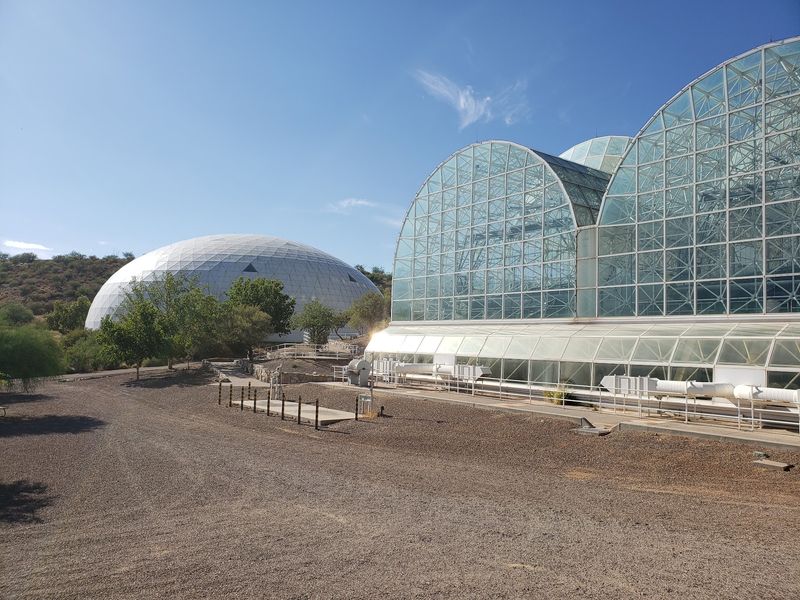
Biosphere 2 still works as a real research center. Scientists study how Earth’s systems connect.
They also test ideas for sustaining life here and beyond.
The Landscape Evolution Observatory is the world’s largest indoor Earth science experiment. Other studies look at how tropical plants handle high heat and drought.
Farming under solar panels is also being tested.
Then there is SAM, the Space Analog for the Moon and Mars. It is a sealed habitat used to test next-generation space habitats.
It also checks astronaut life-support systems.
That means the site is more than a history lesson. Work continues today.
Some of it points toward future trips to other worlds.
The app shares details on this research as you walk. Not every visitor wants a deep science lecture.
Still, the big picture is easy to follow.
Older kids and teens who enjoy science may get the most from this part. Younger children might prefer the plants and the ocean view.
It is rewarding to know your ticket supports a living laboratory.
Planning Your Day Near Oracle, Arizona
The address is 32540 S Biosphere Rd, Oracle, AZ 85623. Tucson is about 30 miles south.
Phoenix is roughly 110 miles north.
Doors are open daily from 9 a.m. to 4 p.m. The only closures are Thanksgiving and Christmas.
Parking is free, and the lot is large.
The visitor center has exhibits, multimedia displays, and a gift shop with snacks. There is no full restaurant on site.
Picnic tables sit in the parking lot for packed meals.
Bring a water bottle. Refill spots are available during the visit.
Arizona sun is strong, so a hat and sunscreen help.
Set aside about two hours if you want to take your time. The audio tour alone runs about 75 minutes.
Add extra time for the gift shop and the visitor center.
Groups can look into on-site overnight options. Casitas with full kitchens and meeting spaces are available.
That suits school trips and larger gatherings.
Check the official site for current details before you go.
Tips For Families, Strollers, And Wheelchairs
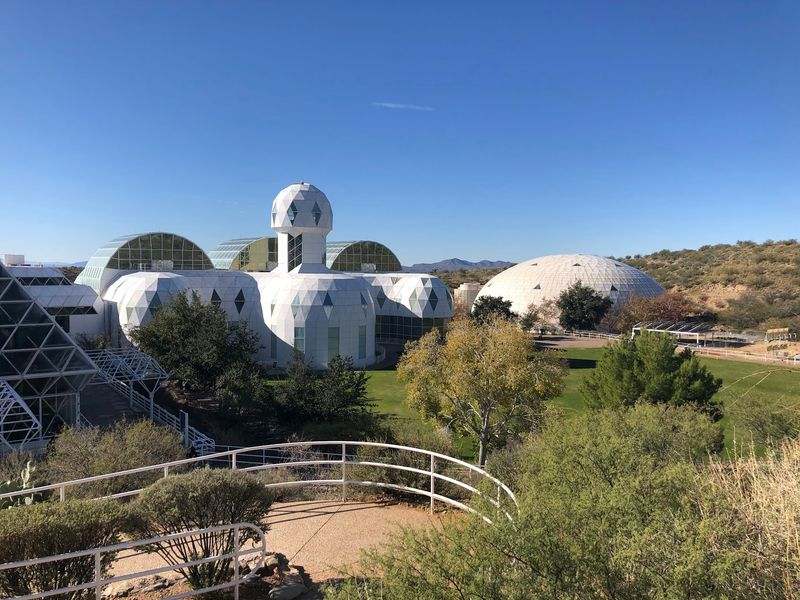
Most biomes are wheelchair accessible. A new one-way, ADA-accessible path is also available.
The Lung Tour is the exception because it involves stairs.
Visitors who use wheelchairs have reported getting around most areas with ease. Staff members have also helped guests find shortcuts that limit stair use.
Ask if you need a hand.
Plan for heat and humidity in the tropical biomes. Dress in layers so you can adjust.
A light jacket helps in cooler areas.
Kids who enjoy plants, water, and big buildings often have fun. Older children and teens may connect most with the science.
Little ones may need snacks and breaks.
Wear sturdy sneakers because the route includes about 100 stairs. Keep water handy.
Take your time and rest when needed.
The gift shop makes a nice finish. It offers snacks and unique souvenirs.
Kids may want a keepsake from the glass world.
Go home with a story. Few places let families walk through a giant experiment.