
So Many Dinosaur Bones Fill This Nevada Museum That Kids Lose Track Of Time
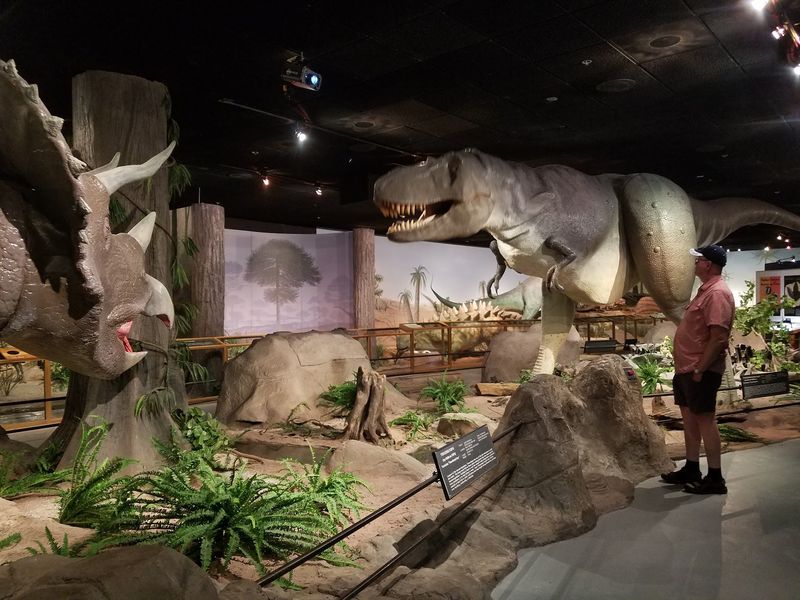
A 35-foot Tyrannosaurus rex swings its head and roars at visitors, and it keeps doing it all day long. Its jaws open wide enough to make grown adults take a polite step back.
That giant is only the welcome committee. Nearby, a Triceratops parent stands guard beside its baby, and a fossil dig waits for small hands with brushes.
I like how this Nevada museum mixes old bones with new tricks. Kids can stretch their arms to feed digital dinosaurs a snack of ferns.
They can also study a duck-billed dinosaur preserved so well that scientists call it a mummy.
Then come sharks, Egyptian treasures, and desert wildlife, all under one roof. I can’t imagine a better rainy-day plan, except it rarely rains here.
So how long will your kids last before anyone checks a clock?
A Science Museum Built For Curious Kids
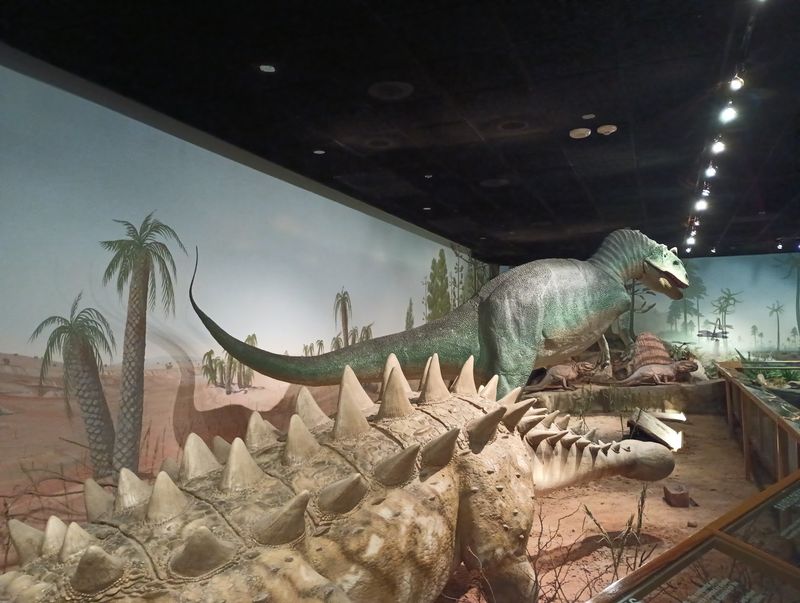
Downtown Las Vegas has a quieter side, and the Las Vegas Science & Natural History Museum sits right in the middle of it. You’ll find it in the city’s Cultural Corridor, a stretch of museums and arts.
The museum explores the natural world through interactive exhibits, dioramas, and classes. That means fossils, live sea creatures, wildlife displays, and ancient history share one building.
Families in Nevada often hunt for an outing that fills a whole afternoon without draining the budget. Here, dinosaurs do most of the heavy lifting, and they never seem to get tired.
The museum also carries a Smithsonian affiliation, which tells you it plays in a serious science league. Still, the mood leans playful, with buttons to push, sand to dig, and screens to wave at.
A realistic visit runs a few hours, which suits short attention spans and older legs alike. You can see everything without feeling rushed or worn out.
That size works in your favor with little ones. Nobody needs a map strategy meeting before lunch, and grandparents can keep pace comfortably.
Best of all, the dinosaurs are waiting just inside. Let’s go say hello to the loudest one first.
The 35-Foot T. Rex That Roars Back
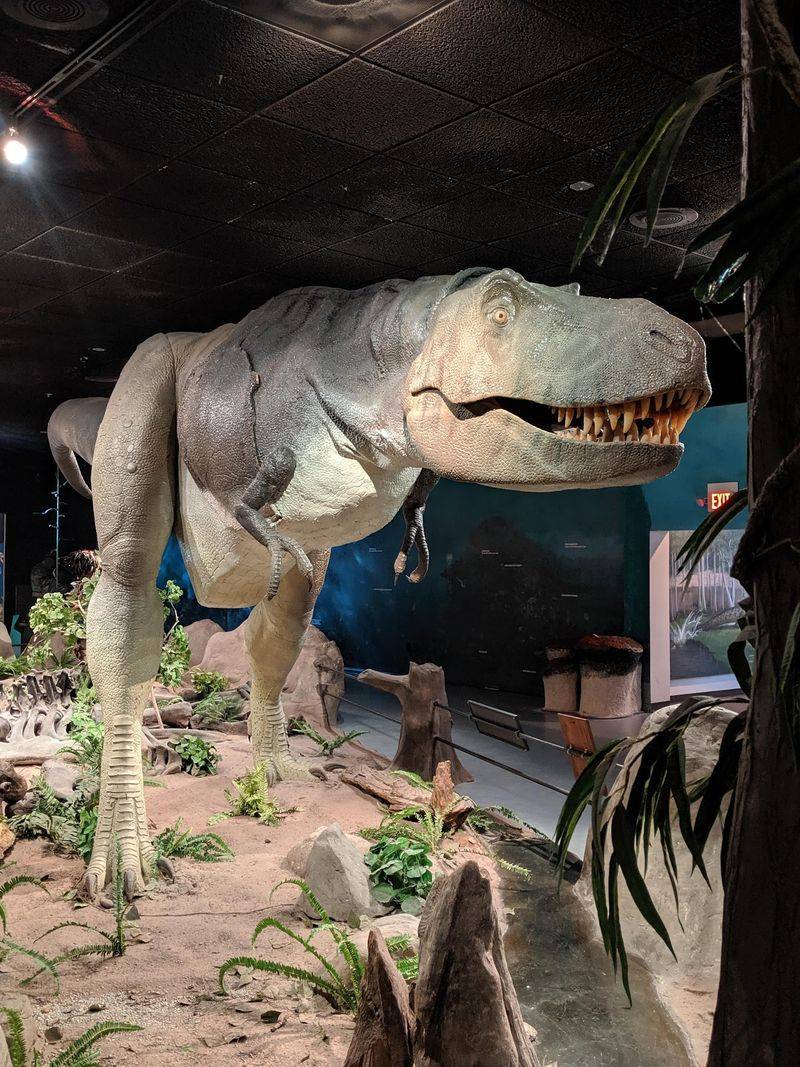
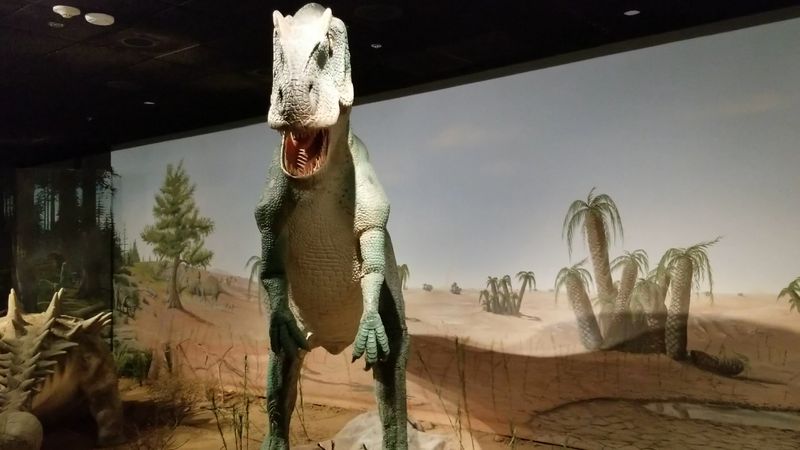
Thirty-five feet of Tyrannosaurus rex is a lot of dinosaur to meet before snack time. The animatronic giant inside the Engelstad Family Prehistoric Life Gallery moves its head and lets out a booming roar.
Those jaws open wide enough to show off a full set of serious teeth. Brave kids lean in for a closer look, while cautious ones keep a parent between themselves and the beast.
Either reaction is perfectly fine. The whole point is that this dinosaur feels alive rather than frozen behind a rope.
Kids who have only seen T. rex in picture books suddenly understand the scale. A creature longer than a school bus does a lot to explain why paleontologists get so excited.
The roar also works as a handy reset button for restless children. One rumble, and wandering attention snaps right back to the prehistoric world.
Plan to return more than once during your visit. Younger dinosaur fans tend to treat this spot like a home base between other galleries.
Good luck pulling them away on the first try. Honestly, you may want a second look yourself.
A Triceratops Family That Steals The Spotlight
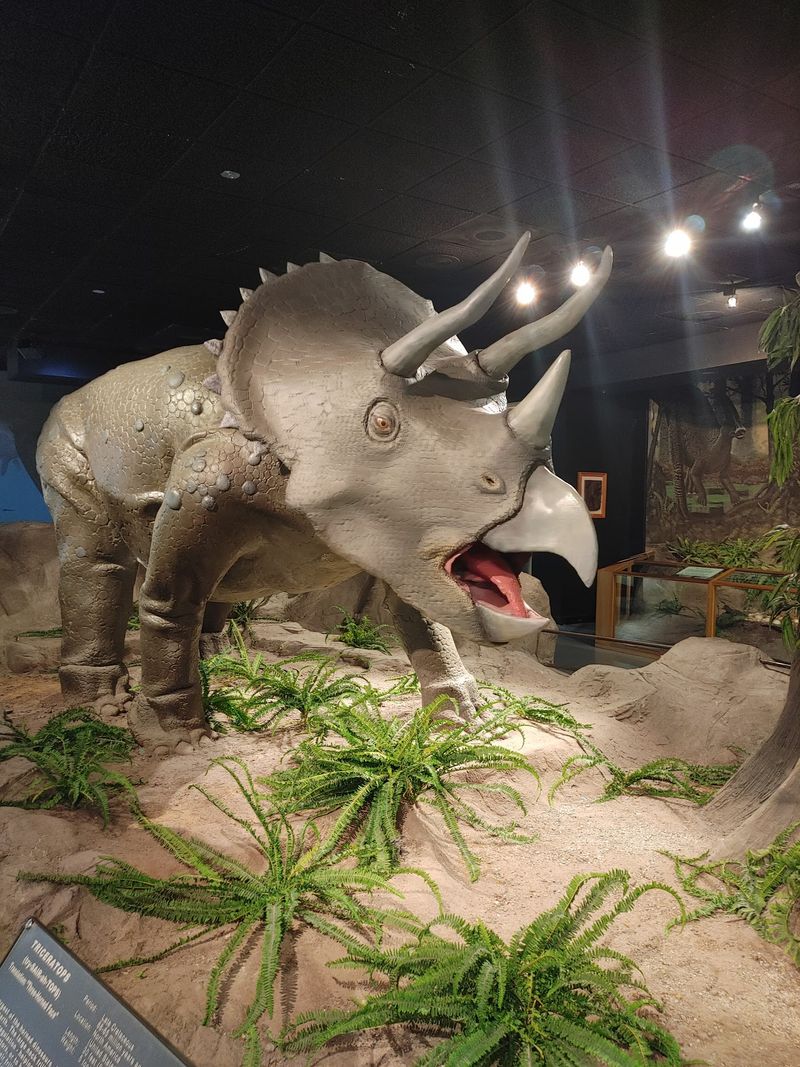
Not every dinosaur here wants to scare you. In the same prehistoric gallery, an adult Triceratops stands beside a baby, showing a gentler side of the Cretaceous world.
The pairing highlights how these plant eaters may have protected their young. It’s a sweet scene, and it gives kids a natural way to talk about animal families.
Parents might appreciate the shift in tone after the T. rex roar. Toddlers who flinched at the big predator often find the horned grown-up and its little one much easier to love.
Triceratops is also a favorite for kids who count horns and frills. Three horns, one giant shield, and a stocky build make it instantly recognizable.
The gallery surrounds these figures with genuine fossils and interactive exhibits. That mix keeps the room from feeling like a statue garden.
Reading the signs together turns a quick glance into a mini lesson. Older kids can explain what they learn to younger siblings, which tends to make the facts stick.
Bring your phone for a family photo here. Matching a real family with a dinosaur family is too cute to skip.
Brushes Out For A Junior Paleontologist Dig
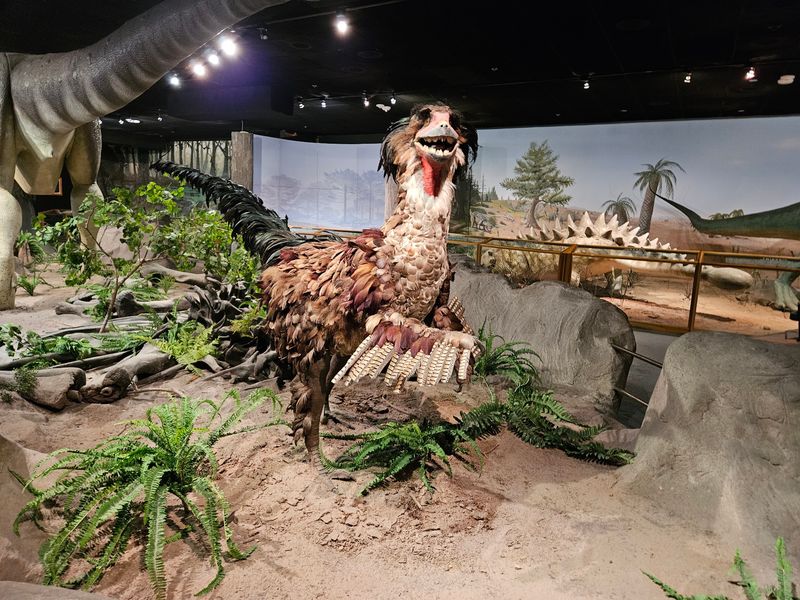
Every dinosaur in a museum started as a buried bone someone had to find. The interactive fossil dig lets kids try that job for themselves, uncovering replica fossils hidden in the pit.
Along the way, they learn real excavation techniques that paleontologists use in the field. Patience matters, careful brushing matters, and the payoff feels huge when a bone shape appears.
Kids who live for getting messy will love this corner. Parents may love that the mess stays put instead of riding home in the car.
The museum also lets visitors touch real dinosaur bones. Feeling actual fossil texture is a different experience from looking through glass, and it tends to make history feel concrete.
Another favorite activity measures your height against various dinosaurs. Even tall parents end up looking tiny next to the giants of the past.
That comparison sparks plenty of giggles and quick math. How many kids stacked up would it take to match one long neck?
Expect this stop to eat more time than you planned. Junior scientists rarely want to set down their brushes once a discovery feels close.
Leonardo, The Dinosaur Mummy With A Science Mystery
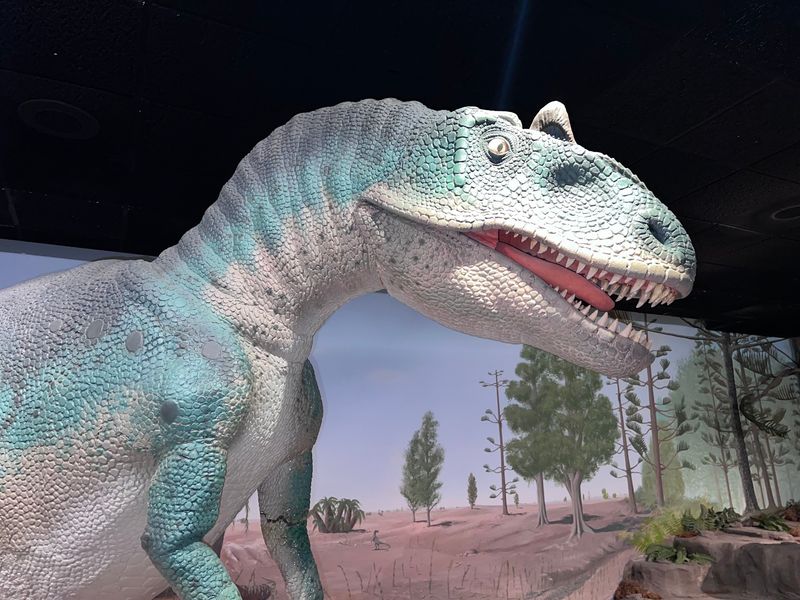
Mummies usually mean Egypt, but one famous mummy here is a dinosaur. The exhibit called Dinosaur Mummy CSI: Cretaceous Science Investigation introduces Leonardo.
Leonardo is known as one of the best-preserved dinosaurs ever found. Scientists consider it so well kept that it’s often described as a dinosaur in the flesh.
The exhibit treats the fossil like a detective case. Visitors follow how researchers studied clues and confirmed surprising details about this remarkable specimen.
Kids who enjoy puzzles tend to love the investigation angle. It shows that science is less about memorizing names and more about asking sharp questions.
Older children may connect with this section most. The detective framing gives them something to solve, rather than simply something to look at.
Parents can turn it into a game on the spot. Ask your kids what clues they would look for if they found a dinosaur this well preserved.
Some screens in busy museums need occasional repairs, so a quick check with staff can help. Either way, Leonardo’s story is a fascinating reminder that fossils can still reveal fresh secrets.
Mammoths And Saber-Toothed Cats Once Called Nevada Home
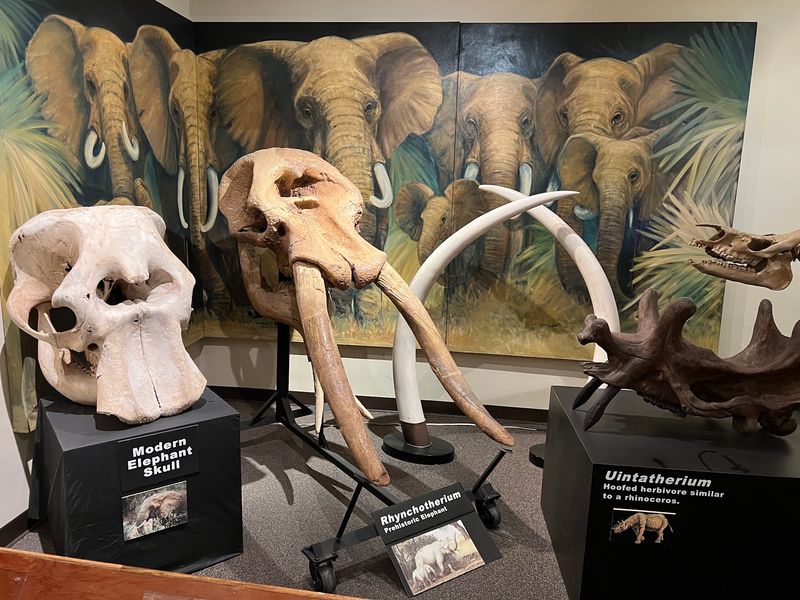
Dinosaurs get top billing, yet Nevada’s own ancient story is just as wild. The museum also explores the Ice Age, when very different giants walked across this region.
Mammoths, giant ground sloths, and saber-toothed cats all once roamed the land around today’s desert. That’s a fun fact to share on the drive home past cactus and creosote.
This section helps kids see time in layers. Dinosaurs came first, then millions of years later, these shaggy mammals took over the landscape.
A giant sloth is a crowd-pleaser for younger kids. Something about an enormous, slow cousin of a tree sloth makes everyone smile.
Saber-toothed cats bring the drama instead. Those long fangs draw plenty of comparisons to the family housecat.
For Nevada families, the regional focus adds real meaning. Kids learn that history happened right where they live, not only in faraway places.
Point out how the climate must have changed over time. It’s a simple way to introduce bigger science ideas without a lecture.
That local connection makes this gallery a favorite with curious grandparents too.
Wave Your Arms And Digital Dinosaurs Respond
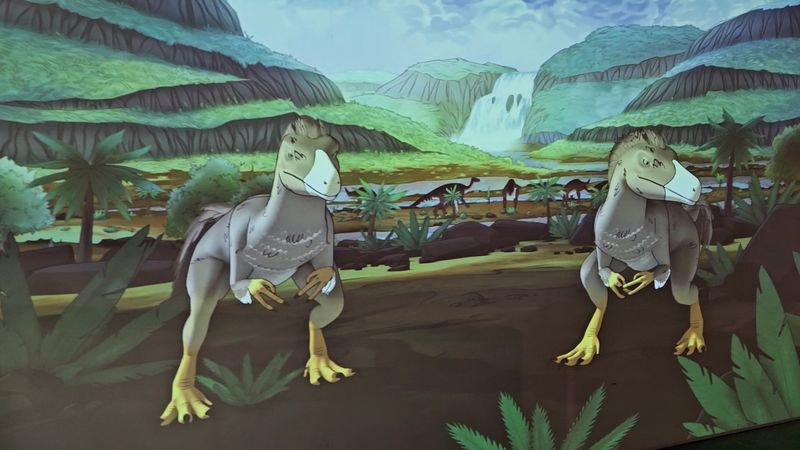
Stretch out your arms, and a dinosaur mother might get lunch. That’s the magic of Digital Dinos, a touchless, projection-based exhibit with scientifically accurate animals.
Visitors can feed ferns to an Eolambia mother and her baby using simple movements. Meanwhile, an Eotyrannus tracks your motions, which feels a little like being studied by a curious predator.
Massive plant-eating Titanosaurs also appear in the scenes. A pack of Deinonychus hides from guests, so sharp-eyed kids get a search mission too.
These dinosaurs connect to the ancient Southwest, which adds a regional twist. Your kids aren’t just watching cartoon monsters, they’re meeting creatures tied to this part of the world.
The no-touch design works nicely for very young visitors. There’s nothing to break and no wrong way to play.
Active kids especially benefit from this room. After a while of reading signs, a chance to wave, jump, and move feels like recess.
Expect giggles when the Eotyrannus follows someone across the floor. Parents often end up joining in, because nobody wants to miss feeding a baby dinosaur.
Shark Feeding Time Is Worth Planning Around
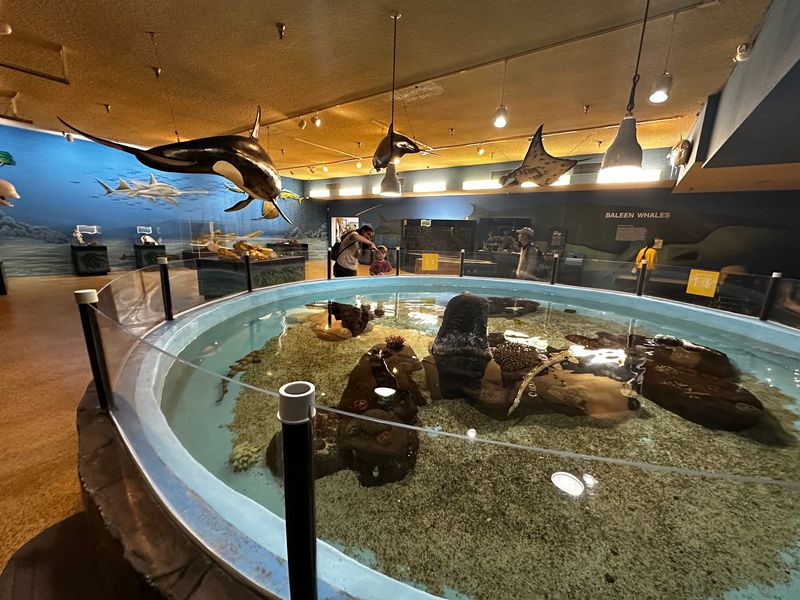
Sharks in the desert sounds like a riddle. The Marine Life Gallery answers it with a 3,000-gallon tank where live sharks and stingrays glide past visitors.
Life-size models of sharks and fish fill the space too. Together, they make the room feel like a trip under the ocean without leaving Nevada.
The real showstopper is feeding time. Shark feedings have been scheduled on Tuesdays and Thursdays at 2:30 PM, plus Saturdays at 2:00 PM.
Schedules can shift, so confirm times before your visit. Building your afternoon around a feeding can give kids a fun countdown.
Stingrays are fascinating in their own way. Their smooth, wing-like swimming tends to hypnotize toddlers better than any tablet.
This gallery also gives tired legs a break. Standing by the tank and watching the fish is calming after the noisy dinosaur rooms.
Ask kids to count sharks or track one favorite stingray. Small games like that stretch attention spans and keep everyone engaged.
For desert kids who rarely see the ocean, this room can spark a whole new obsession.
Bears, Big Cats, And The Wild Side Of The Mojave
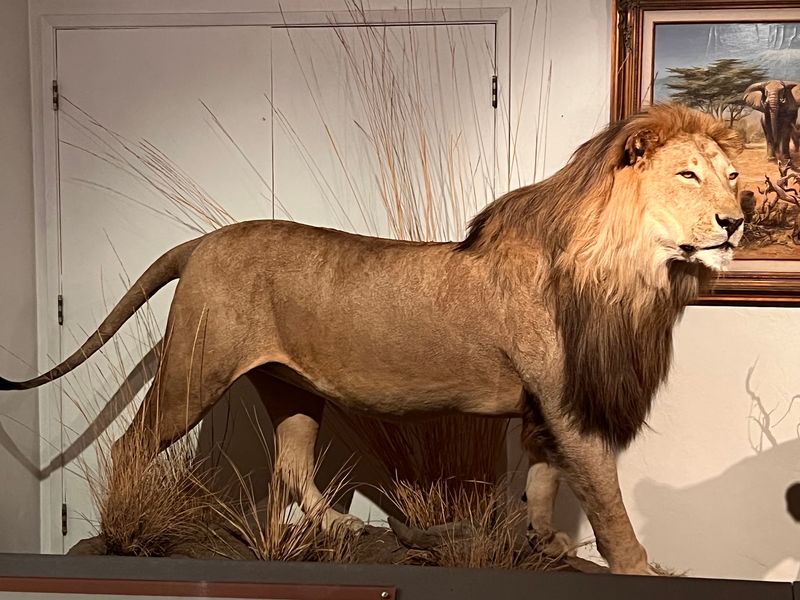
Big cats, bears, and many more mammals wait in the International Wildlife Gallery. The collection of taxidermy shows off various mammal families from around the world.
Up close, kids can study fur patterns, paw sizes, and body shapes. That’s hard to do at a zoo, where animals tend to nap far from the glass.
Dioramas give each animal a setting. It helps children imagine where these creatures live and how they survive.
Closer to home, the E. L.
Wiegand Foundation Wild Nevada Gallery focuses on the Mojave Desert. Plants, animals, and rugged landscapes all get their moment.
This gallery offers a multi-sensory experience that connects visitors to their own backyard. Nevada kids may recognize creatures they’ve spotted on hikes or along desert roads.
It’s a great setup for a follow-up adventure. After learning about the desert indoors, families can look for those same plants on a weekend walk.
Grandparents who grew up in Nevada often have stories to add here. Shared memories can turn a museum stop into a family history chat.
Bring patience, because curious kids ask a lot of questions in this room.
Ancient Egypt Waits Right Down The Hall
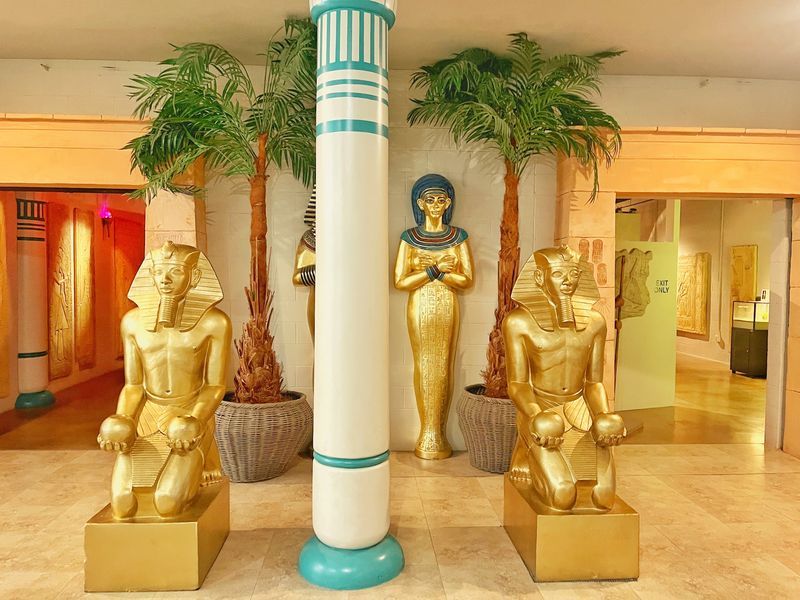
Dinosaurs might be the headliners, yet Egypt brings serious sparkle. The Treasures of Egypt exhibit invites visitors to step into the role of an archaeologist.
The display features one of only two sets of ancient Egyptian artifact replicas authorized by the Egyptian Ministry of Antiquities. That’s a rare collection for any museum, especially one so family-friendly.
Technology adds another layer. Visitors can use modern tools to explore an ancient Egyptian mummy replica in detail.
Kids who just learned about Leonardo, the dinosaur mummy, will enjoy the connection. Two very different mummies in one visit makes for great dinner table conversation.
This section also suits kids who’ve grown past dinosaurs. Tweens often perk up around golden treasures and pharaoh stories.
Teachers and homeschool families can find plenty of lesson material here. Ancient writing, burial traditions, and royal history all make strong starting points.
Give this area more time than you expect. Between the replicas and the interactive pieces, it can easily become a favorite.
Don’t be surprised if someone requests a pyramid-themed bedtime story afterward.
Free Parking, Easy Hours, And A Budget-Friendly Day Out
Here’s the practical stuff that makes planning painless. The Las Vegas Science & Natural History Museum sits at 900 Las Vegas Blvd N, Las Vegas, NV 89101.
Doors open daily from 9 AM to 4 PM, with last entry at 3 PM. Arriving in the morning gives families the most breathing room.
Parking is free, which is a happy surprise in Las Vegas. That alone can save a family a nice chunk compared with other city outings.
Admission is affordable, with discounted rates for seniors, military, students, and children. Kids two and under get in free, so toddlers are an easy add.
Prices and programs can change, so confirm before you drive. The museum also hosts special programs like Dino Day activities, paleontology workshops, and prehistoric storytelling.
Plan on a few hours to see it all comfortably. It’s an ideal fit for Nevada families looking to escape summer heat indoors.
So, is it worth the trip? For dinosaur-loving kids and the adults who love them, this museum delivers roars, sharks, and pharaohs in one affordable afternoon.
Just don’t promise anyone a short visit.