
This Nevada University Earned Recognition For Its Value In Money’s 2026 Best Colleges List
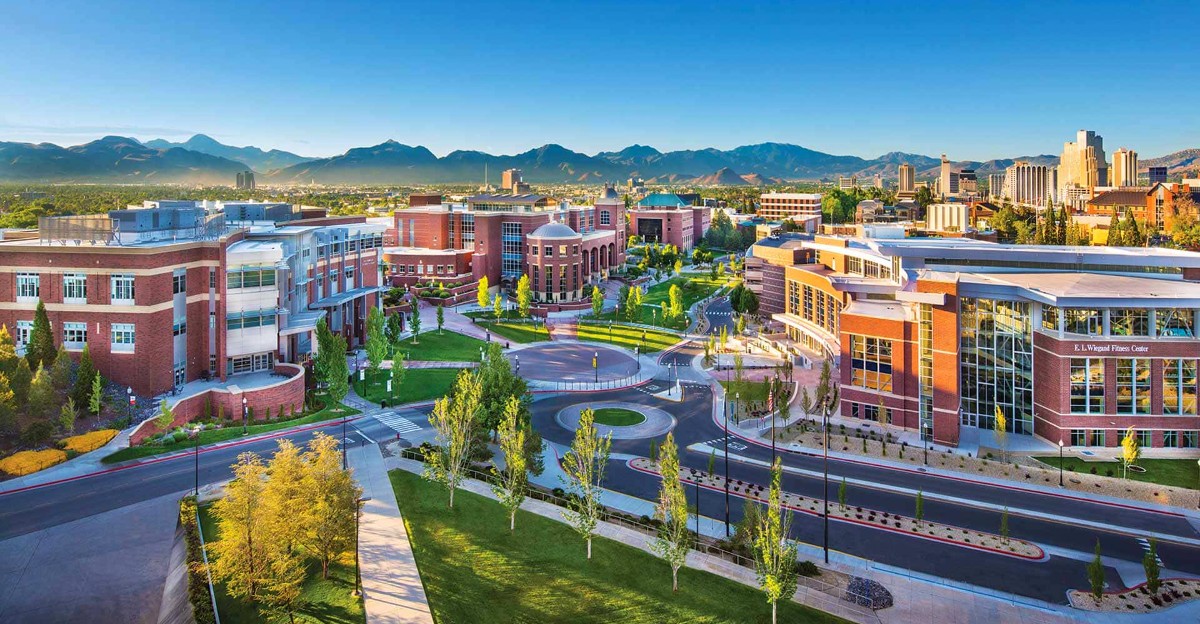
An entire college campus counts as an official state arboretum, with roughly 200 species of trees growing between classrooms. Add swans on a campus lake and a planetarium that opened in 1963, and my curiosity is fully awake.
This school is also the oldest institution of higher learning in Nevada. It started in 1874 in a different town before moving to its current home in 1885. I appreciate a place that packed up, relocated, and kept growing for well over a century.
Money’s 2026 college list puts a strong focus on affordability, which counts for 40 percent of the score. I think that focus makes college comparisons feel more personal for families watching their budgets.
A college with swans, a planetarium, and its own arboretum already has my attention. Add a strong showing for affordability, and there’s even more reason to look closer. What else might surprise you here?
Value Is The Headline, And The Numbers Back It Up
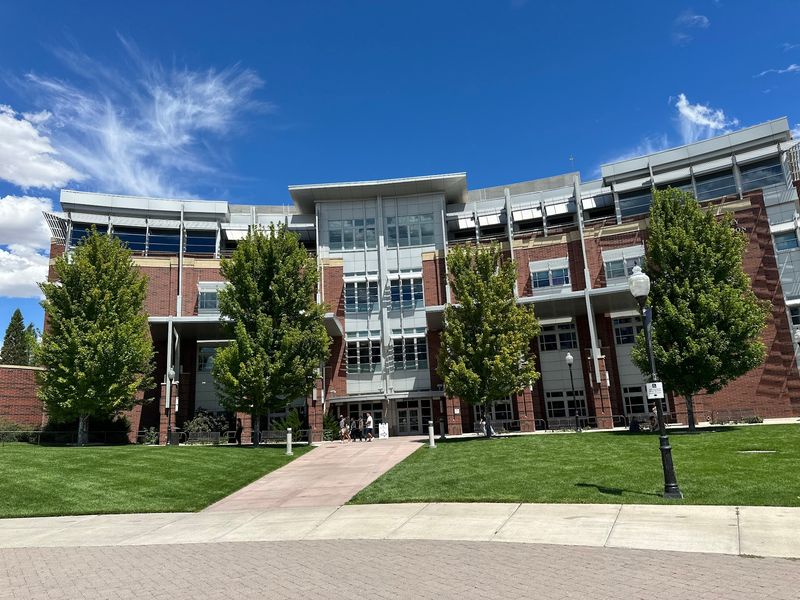
Money doesn’t hand out praise for pretty brochures. Its Best Colleges 2026 list scores schools on education quality, affordability, and student outcomes, with affordability carrying 40 percent of the weight.
That formula makes affordability an important part of comparing universities like the University of Nevada, Reno. Other 2026 rankings offer additional ways to evaluate the school’s value.
Vaia ranked the best public colleges in Nevada using graduate earnings, cost, and graduation rate. UNR led that list, with the highest reported graduate pay among the schools it analyzed.
Niche gives the university an overall grade of A-minus. It also places UNR among the best colleges with no application fee, which is a small but welcome win for your wallet.
Here’s the bigger picture. The school holds Carnegie R1 status, the label for universities with very high research activity.
So students gain access to major research opportunities at a public university, with costs that depend on residency and financial aid. My practical advice is simple: compare total costs and outcomes, not just the sticker price.
Rankings like Money’s exist because families want that exact math, and comparing costs, graduation rates, and earnings can help them make informed decisions.
It Started In Elko And Took A Detour Worth Celebrating
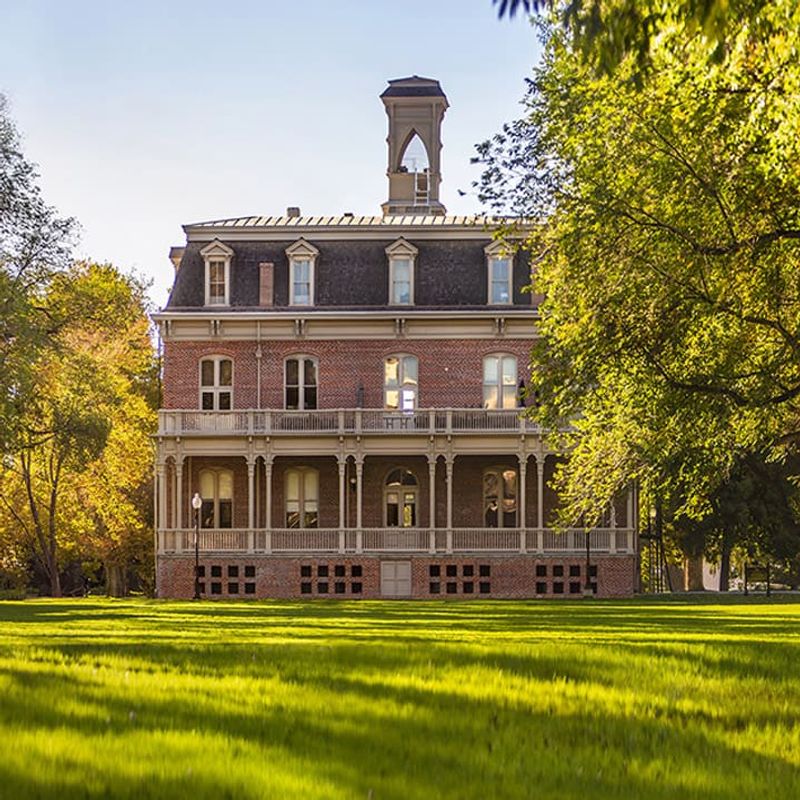
October 12, 1874 is the birthday that kicked everything off. The school opened in Elko, a long way from where its students study today. Then came the big move. The University of Nevada relocated to Reno in 1885, and Morrill Hall was dedicated as its first building in 1886.
Students began classes on the Reno campus in 1886, while college-level instruction started in 1887. That makes this the oldest higher education institution in Nevada, a title nobody else in the state can claim.
The name took a while to settle, too. In 1969, the school officially became the University of Nevada, Reno, partly to tell it apart from UNLV down south.
As a land-grant school, it has focused on agriculture, mining, and mechanic arts since the beginning. That practical streak still shows in programs tied to the land and the region.
Morrill Hall still stands as a reminder of those early days. I like that the first building isn’t hidden away in a history book.
It’s right there on campus, holding down the south end. For anyone who loves old stories, that kind of continuity feels genuinely rare and pretty wonderful to see in person.
The Old Parade Ground Now Belongs To The Elm Trees
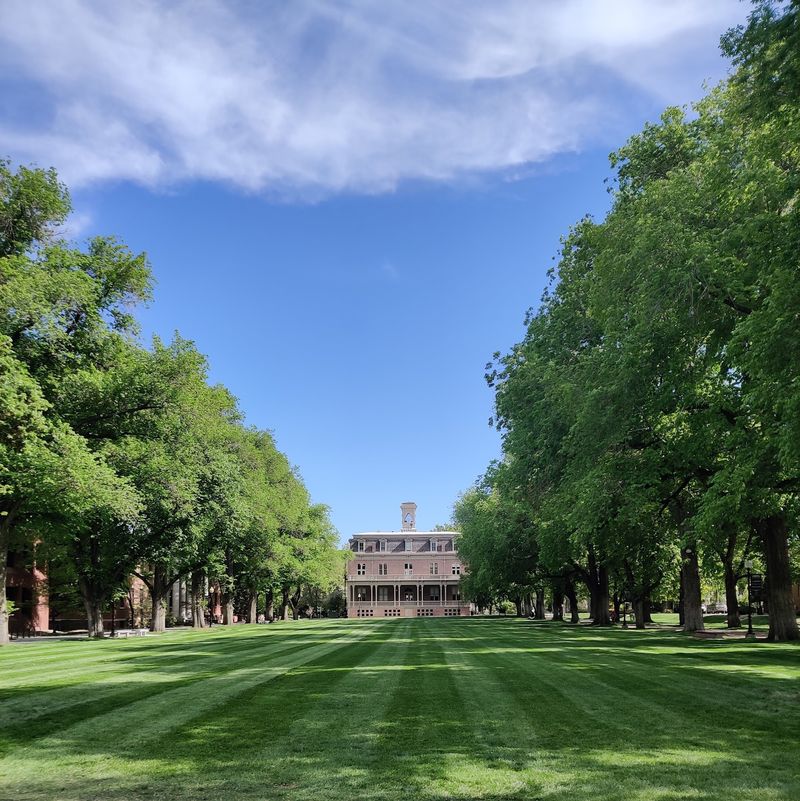
Student cadets once marched across this lawn. Today, the Quad is a calm stretch of grass framed by tall elms and some of the campus’s most important buildings.
The space sits at the southern end of campus. Morrill Hall and the Mackay School of Mines building both line its edges, adding plenty of brick-and-history character.
Back in 1908, the Quad was replanted. Many of the stately elm trees you see now give the area its shaded, classic college look.
Honestly, it looks like the kind of spot movie directors dream about. Old brick, leafy canopies, and wide walkways do a lot of heavy lifting for the mood.
For visitors, this is a natural starting point for a campus stroll. It connects easily to the historic buildings and gives a clear sense of where the university began.
Bring a camera and some patience for the perfect angle. Fall color and spring green both change the scene in fun ways, so a return visit is never a bad idea. Few places pack this much backstory into one leafy, walkable rectangle of lawn.
Every Walk To Class Doubles As A Botany Field Trip
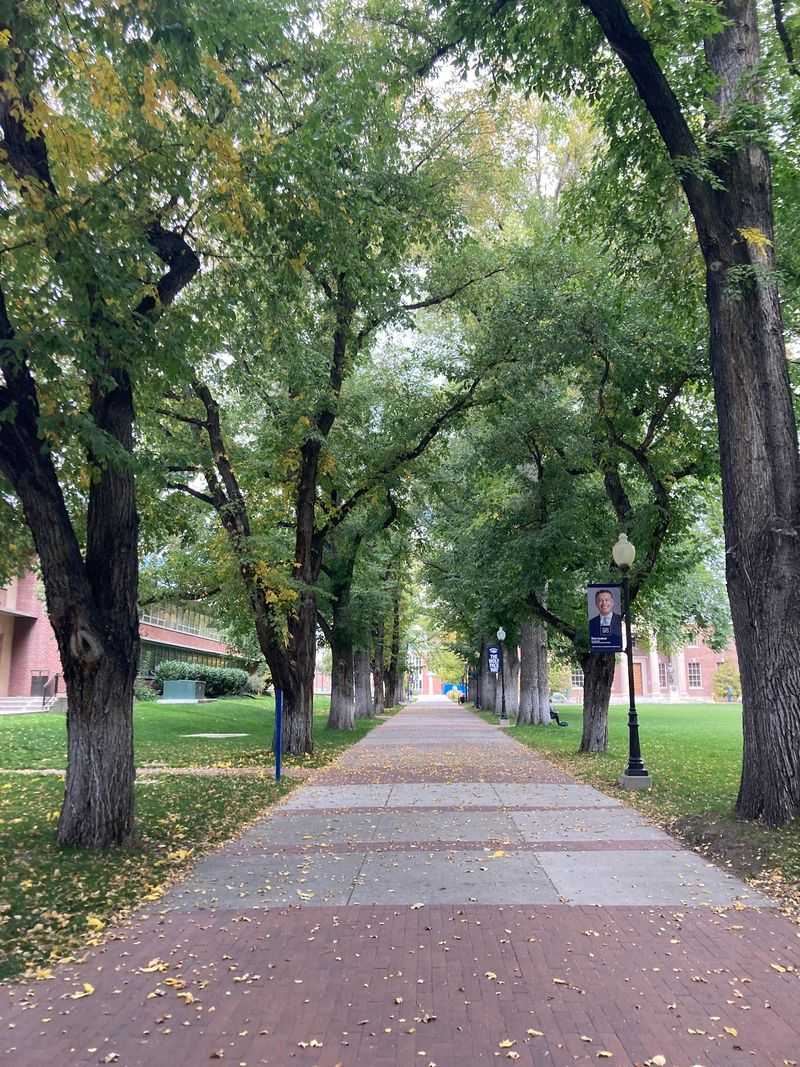
Most campuses have trees. This one has a legal title for them, because the Nevada Legislature named the whole campus a state arboretum in 1985.
That means the grounds work as a living collection. Trees, shrubs, flowers, and native plants all share the stage across the University of Nevada, Reno. The variety is impressive. The arboretum includes more than 60 genera and roughly 200 species of trees, which is a lot of leaves to learn.
Several named gardens add extra color. Look for the Cherry Blossom Garden, Benson Gardens, the Merriam A. Brown Rose Garden, and the Joe Robertson Native Garden.
The native garden deserves special attention. It shows off plants that belong in this high desert region, which is a smart lesson in what thrives naturally here.
My tip? Plan a slow loop and treat it like a free outdoor museum. Spring blooms steal the show, but each season brings its own look.
Plant fans will be happy for hours. Everyone else might accidentally learn the difference between an elm and a maple, which counts as personal growth in my book.
Swans Run The Show At This Lakeside Study Spot
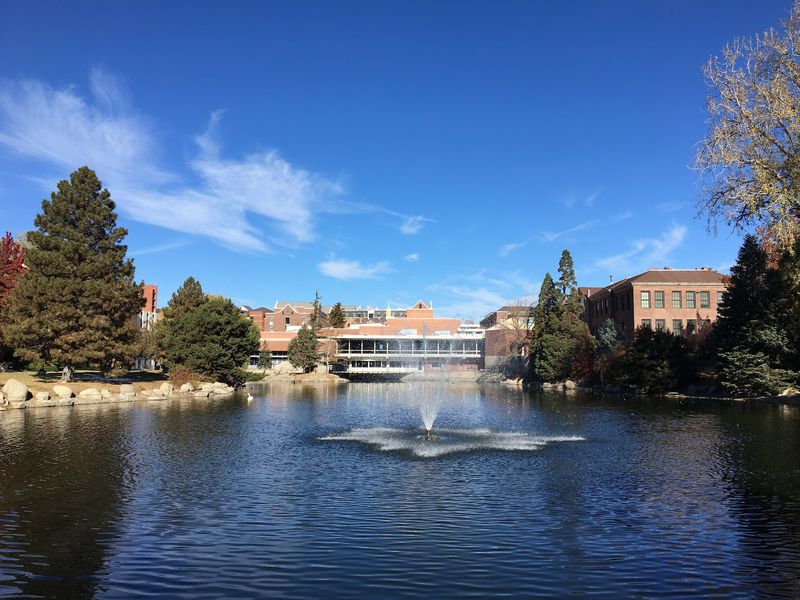
Swans, ducks, and turtles all call Manzanita Lake home. Not bad for neighbors when you’re cramming for a chemistry exam. This man-made lake is one of the most recognizable landmarks on campus. Walking trails circle the water, making it an easy place for a peaceful lap.
Just don’t plan a swim or a paddle. Recreational use of the lake itself isn’t allowed, so the wildlife keeps the water to themselves. The real hangout is nearby. Manzanita Bowl, the grassy area next to the lake, is a popular spot to picnic, relax, and study.
A blanket, a snack, and a textbook make a strong combination here. Add a few curious ducks, and homework suddenly feels a little less like homework. Visitors can enjoy the same easygoing scene. A short walk around the trails offers a breather from the busier parts of campus.
Please give the animals their space, though. The swans have clearly earned their spot as the unofficial campus celebrities. Snap a photo, enjoy the calm, and let them keep running the lake like they own it, because frankly, they do.
Twelve Museums Means You Can Skip The Boring Afternoon
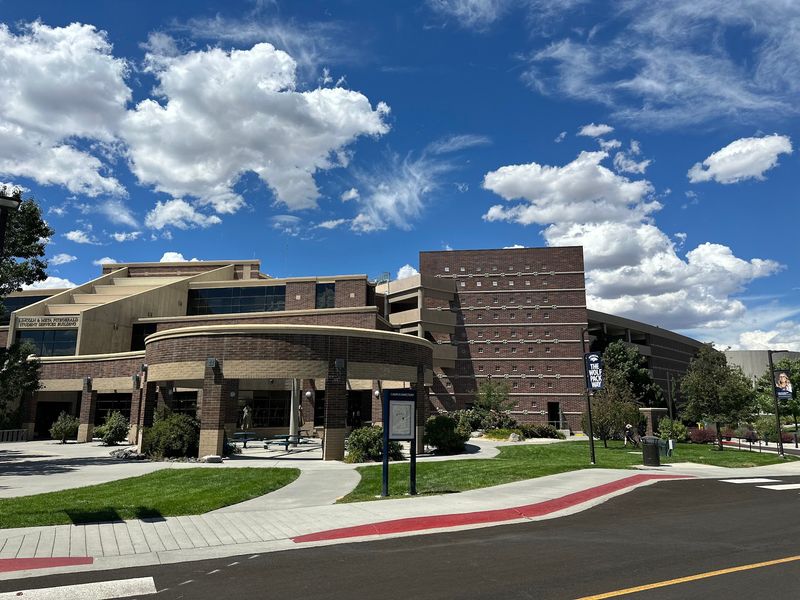
Free admission since 1908? The W.M. Keck Earth Science and Mineral Engineering Museum has been sharing rocks with the public for over a century. It sits inside the Mackay School of Mines building. It’s Nevada’s oldest geology museum and the state’s second oldest museum overall.
Inside, you’ll find minerals, ores, fossils, historical photos, and mining equipment from Nevada mines. Shiny rocks fans, this is your moment.
Then look up. The Fleischmann Planetarium opened in 1963 and features a digital star theater plus a hands-on exhibit hall about space and earth science.
Art lovers have a spot too. The Lilley Museum of Art opened in 2019 inside the renovated Church Fine Arts building, with a permanent collection of over 5,000 pieces.
That’s only part of the lineup. The campus museum district includes 12 museums, galleries, and attractions, among them the Museum of Natural History and the Museum of People, Place, and Time.
Families should pick two or three stops and pace themselves. Rocks, stars, and art in one afternoon is a seriously solid day out without leaving campus.
The Library Is Big Enough To Need Its Own Map
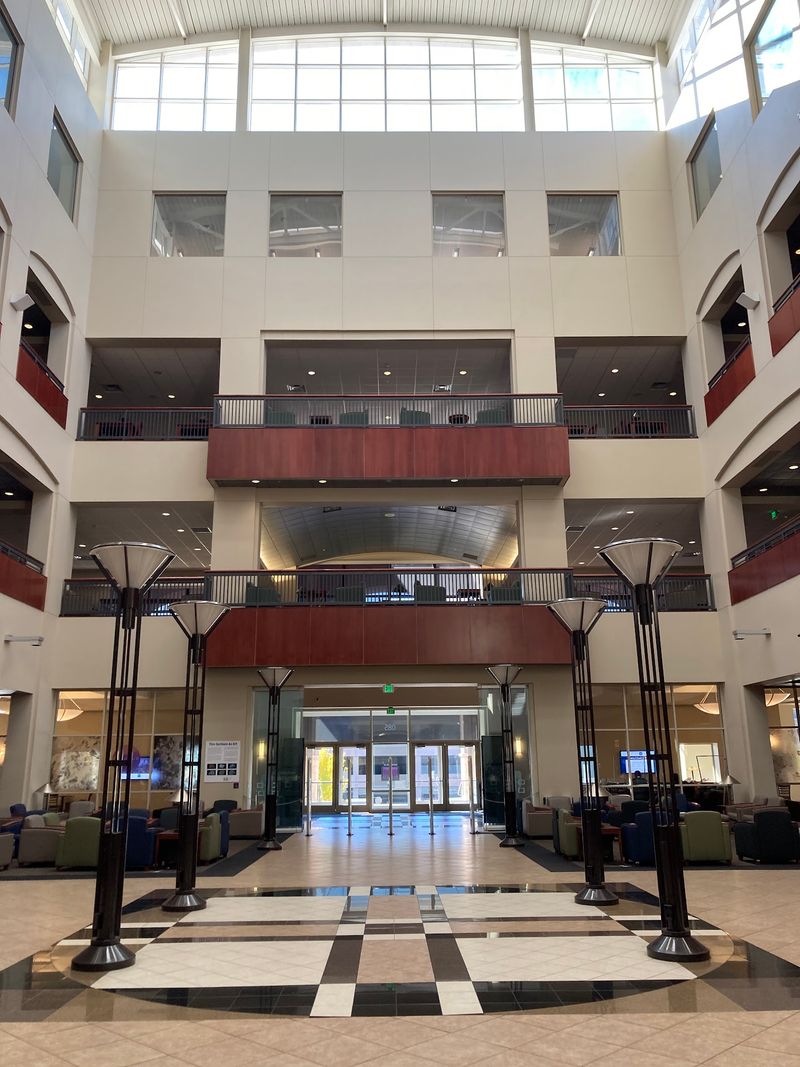
Picture shelves? Sure, but the Mathewson-IGT Knowledge Center goes much further than books and quiet corners. Opened in 2008, it serves as the main library at the University of Nevada, Reno. The building rises five stories and covers about 295,000 square feet.
That’s a lot of room for studying. It’s also a lot of room to forget which floor your friend said to meet on.
The space blends library resources with technology resources and academic support. Students can find help with research, tools for projects, and areas built for group work.
Collaborative learning spaces are a big part of the design. That makes sense, since a surprising amount of college happens around a shared table with laptops open.
My advice for new students is to explore it early in the semester. Find a favorite spot before midterms, when every good seat seems to vanish.
Group projects go smoother here, too. With tech and support under one roof, there are fewer excuses and more chances to finish strong. It’s the kind of building that quietly makes the whole college experience easier for everyone.
Stadium Stairs And A Diving Tank? Your Workout Just Got Fancy
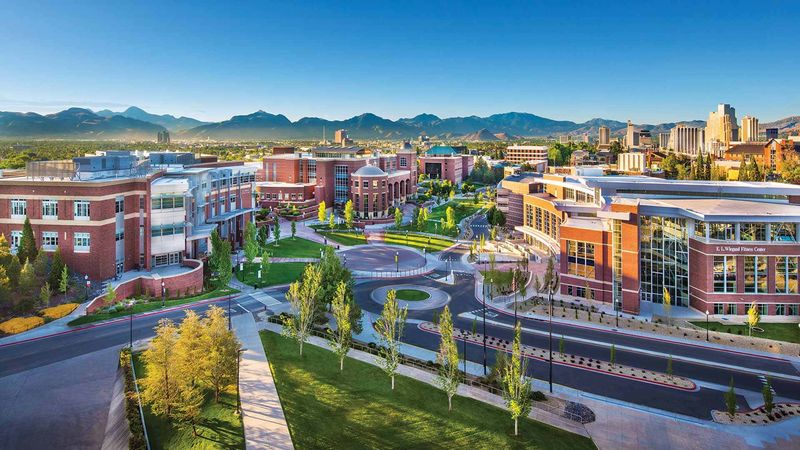
Three basketball courts under one roof is a strong opening move. The E.L. Wiegand Fitness Center opened in February 2017 and stretches across four stories.
It covers about 108,600 square feet. Inside, students find weightlifting areas, cardio zones, an indoor running track, and stadium stairs for anyone who enjoys a challenge.
Fitness classes round out the menu. That’s handy for people who need an instructor yelling encouragement to finish that last set.
Swimmers have their own headquarters. The Lombardi Recreation Center houses a swimming complex with a lap pool and a competitive diving tank.
Outdoor fans aren’t left out either. The John Sala Fields offer fully lighted artificial turf for recreational activities, even after the sun goes down.
For a student budget, having this much gear on campus is a real perk. It’s one more campus benefit that students can consider when comparing universities.
My tip is to try a class early in the term. Building a routine before exams hit makes stress a lot easier to handle, and the stairs will build character anyway.
Earthquake Labs, Giant Lasers, And A Famous Address
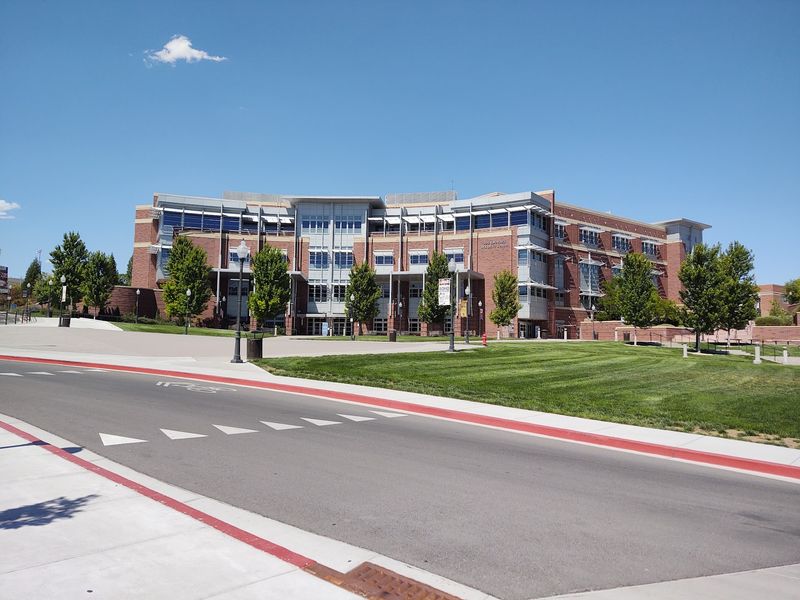
Some engineering labs test bridges. The large-scale structures laboratory here helps lead research in civil engineering and earthquake testing.
That’s just one example of why the University of Nevada, Reno earned Carnegie R1 status. Very high research activity is the official way of saying things get serious here.
At a research facility in Stead, the Zebra Pulsed Power Lab, formerly known as the Nevada Terawatt Facility, houses powerful equipment for plasma research. Yes, it’s exactly as cool as it sounds.
The academic range is wide, too. The Donald W. Reynolds School of Journalism is known for producing Pulitzer Prize winners, and the Center for Basque Studies adds a unique focus.
Medicine has deep roots on campus as well. The university is home to the first medical school in the state of Nevada. Ready to see it for yourself? The main campus sits at 1664 N Virginia St, Reno, NV 89557, close to downtown.
Plan your parking ahead of time and grab a campus map. Then wander from historic brick to modern labs, and you’ll understand why this school keeps landing on best-value lists across Nevada and beyond.