
This Iowa Lakeside Trail Turns Every Morning Walk Into A Fall Foliage Tour
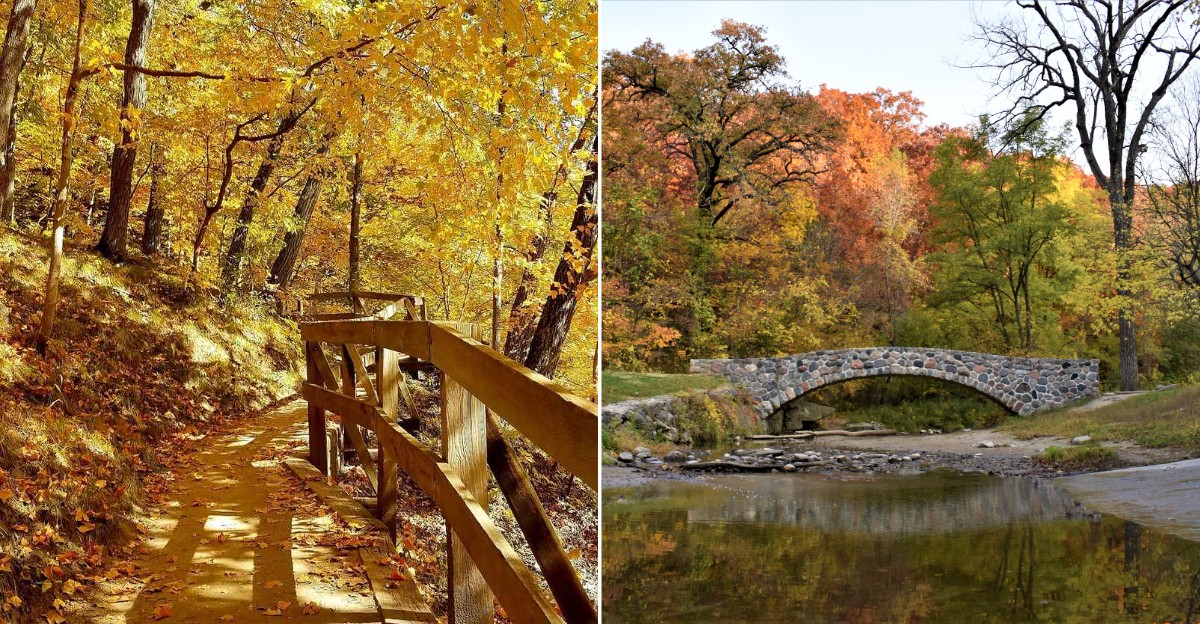
A creek runs straight across the road here, and you’re allowed to drive right through it. Or kick off your shoes and wade it instead.
I love a park that treats getting your feet wet as part of the plan.
Those waters carved sandstone cliffs that rise up to 100 feet. The rock formed about 300 million years ago, back when ancient seas covered Iowa.
That’s a seriously old backdrop for a morning stroll.
October paints the whole canyon, and November keeps the show going with copper oaks and golden prairie grass. Reds, oranges, and yellows spill over stone steps built by hand in the 1930s.
Your Morning Walk Starts At A Lake Called Lost
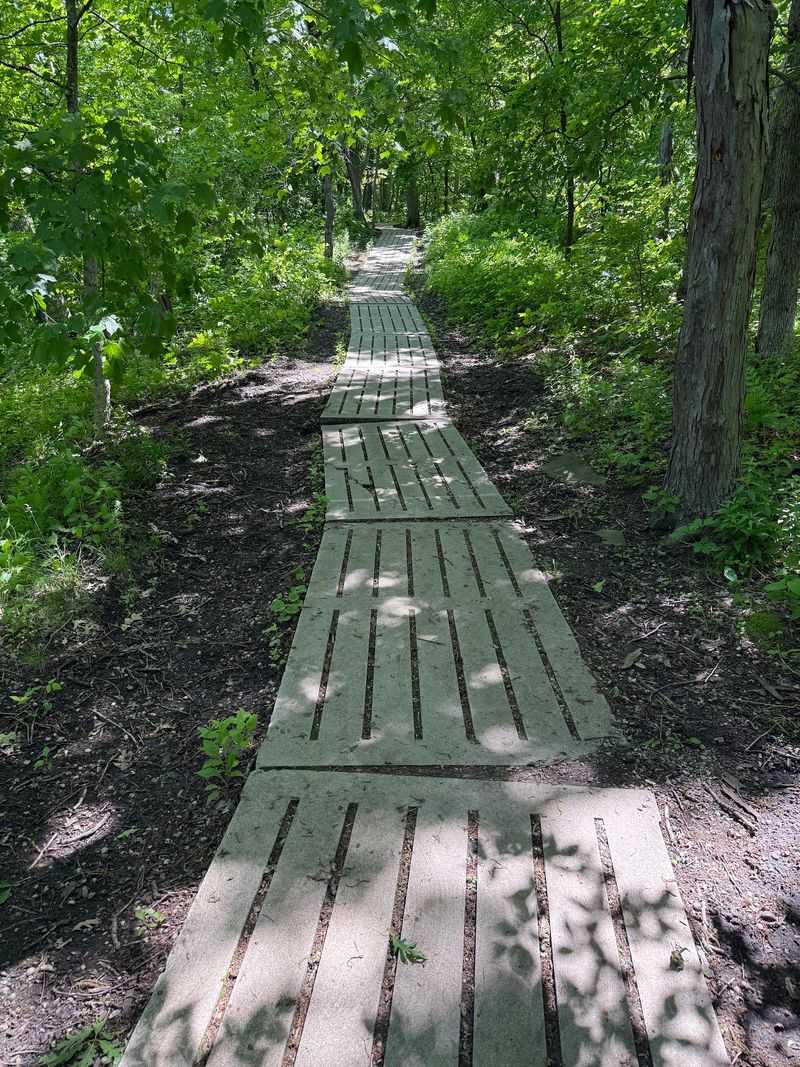
Fall mornings get a whole lot better at Ledges State Park, and the Lost Lake Interpretive Trail makes the best first stop. It’s a crushed limestone path in the southern part of the park, about 1.1 miles long.
The trail ends at a small lake, which gives your walk a real destination. Nobody likes wandering around without a payoff, right?
Here’s a nice bonus for families and anyone using a wheelchair or stroller. The first 0.4 miles are fully accessible, which gives you nearly a mile for an easy out-and-back.
Once you reach the water, an accessible picnic table waits by the shore. Pack a thermos of cocoa and a muffin, and you’ve got breakfast with a view.
The path is also a strong pick for wildlife viewing. Birds flit through the trees, and quiet walkers tend to spot more of the action.
In early October, the trees along this route start showing off their fall colors. Yellow leaves drift across the pale limestone, which looks great in photos.
Walking here at a slow pace makes sense. The lake rewards people who pause, breathe, and actually look around.
Bring a light jacket, since Iowa mornings can be crisp in autumn. Layers let you peel off as the sun climbs over the treetops.
Honestly, this is the gentlest way to meet the park. Save the stairs for later and let the lake set the mood first.
Sandstone Walls This Old Deserve Your Full Attention
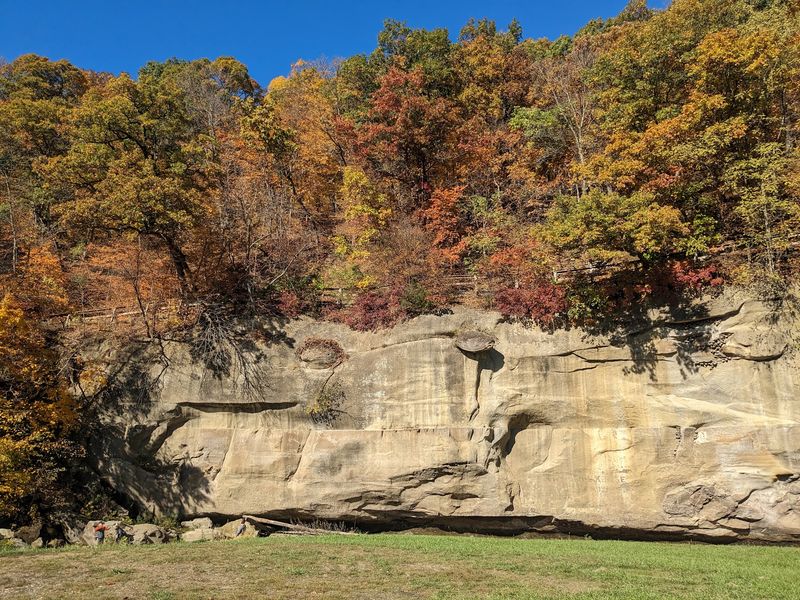
Three hundred million years. That’s roughly how long the sandstone at this park has been around.
Back then, ancient seas covered Iowa, and layers of sand slowly built up into rock. Today those layers form the ledges that gave the park its name.
Pea’s Creek did the carving work over a very long time. The stream feeds into the Des Moines River and cut a canyon right through the stone.
The result is cliffs that rise up to 100 feet. That’s taller than most people expect to find in the middle of Iowa farm country.
Fall makes these walls even more striking. Trees on top of the ledges turn red, orange, and yellow against the tan and rusty rock.
Take a moment to look at the layers up close. Each stripe in the stone tells a small piece of a very long story.
Kids usually love this part, because it feels like a real canyon adventure. Ask them to guess how old the rocks are, then watch their faces at the answer.
Please admire the rock without climbing or carving on it. Those ledges have lasted this long, and they deserve to stay that way.
Good hiking boots help when you explore near the cliffs. The ground can get uneven and muddy, especially after rain.
Simply put, the scenery here feels bigger than the map suggests. Your camera will stay busy.
Go Ahead And Let The Creek Soak Your Sneakers
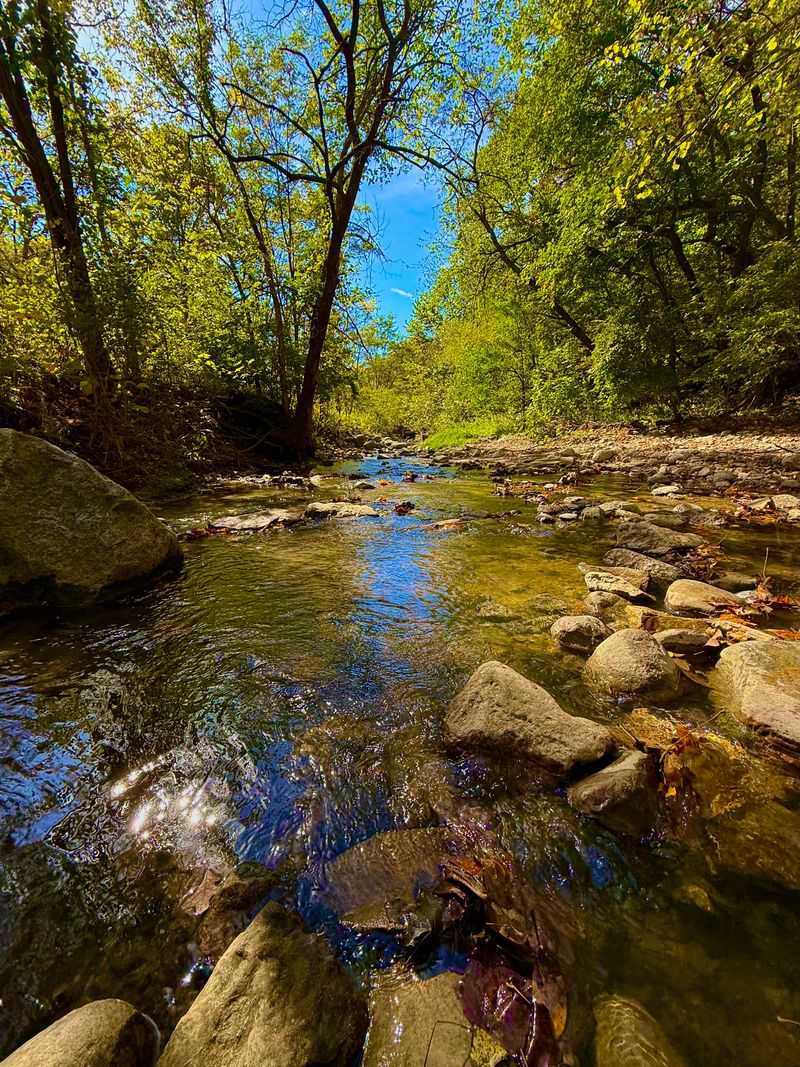
Most roads try hard to keep water off them. Canyon Road at Ledges State Park lets Pea’s Creek flow right over the pavement in several spots.
These water crossings are one of the most fun quirks in the whole park. You can drive through the shallow water or hop out and wade across on foot.
Most of the time, the creek runs about ankle-deep. That makes streamwalking a favorite activity for families on mild days.
The one-way road runs through the heart of the canyon. Scenic pull-offs let you stop and soak up the views, along with a little creek water.
Bring old shoes you don’t mind getting wet. A towel, dry socks, and a bag for soggy gear will make the ride home much more pleasant.
The pavement can get slick from moss and algae, so step carefully. Slow and steady keeps the adventure fun for everyone.
Weather does change the plan sometimes. Canyon Road may close to vehicles in winter or after heavy rain, but it stays open for walking.
That walking option is a quiet treat in autumn. Strolling the road lets you hear the creek and see leaves floating by on the current.
Small kids tend to treat these crossings like a splash park. Grown-ups may act exactly the same way, and that’s completely allowed.
Wet feet, big smiles, and colorful leaves overhead. That’s a pretty solid trade for one pair of sneakers.
Climb To Crow’s Nest For A River View Worth Every Step
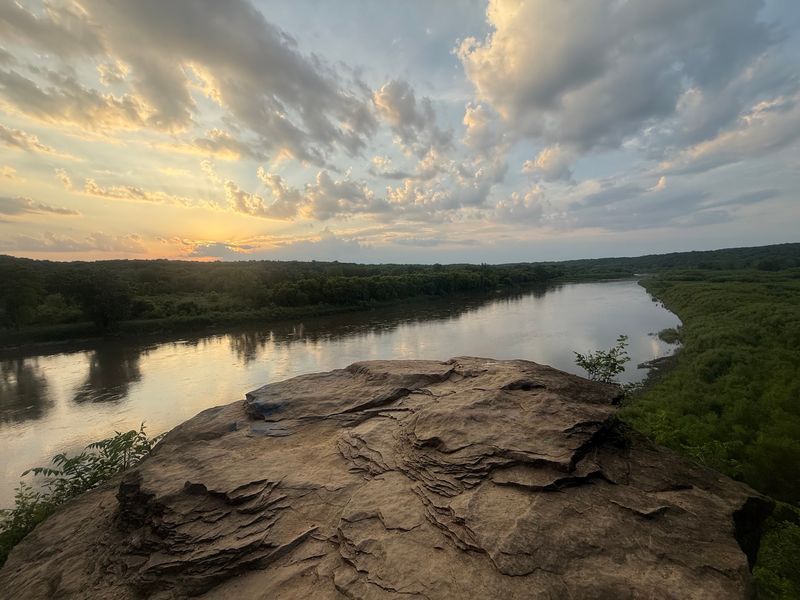
Want the photo everyone back home will ask about? Head for the Crow’s Nest Loop, a 1.4-mile route with some climbing involved.
The loop usually takes around 39 minutes to finish. Plan for longer, because you’ll likely stop to stare a lot.
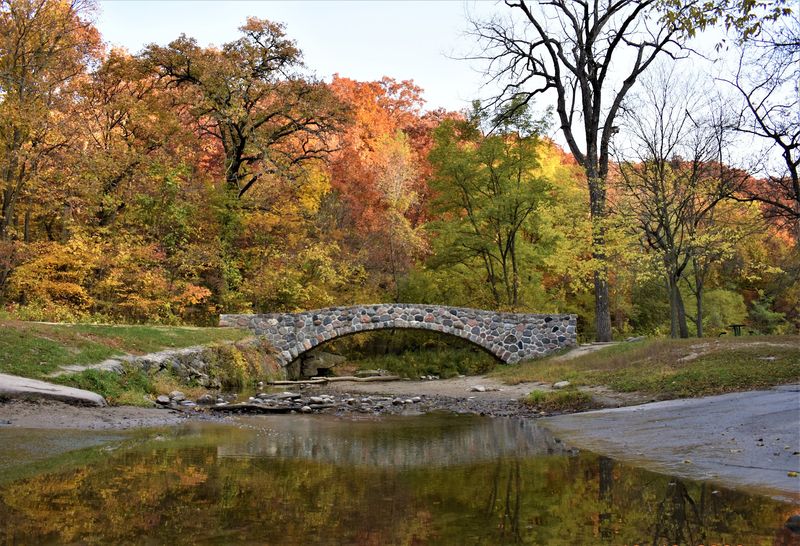
Along the way, you’ll cross a historic stone bridge. It adds a storybook feel before the big reveal at the top.
That reveal is the Crow’s Nest Viewpoint. It offers wide views of the Des Moines River and the valley around it.
Fall is when this overlook really shines. During peak color, the treetops below look like a giant quilt in red, orange, and gold.
Peak foliage at Ledges State Park typically lands in the first two weeks of October. Mark your calendar, because those weeks go by fast.
Weekday visits during peak season tend to feel calmer and more relaxed. A Tuesday morning hike might become your new favorite habit.
Expect elevation changes and stone steps along the route. A hiking pole can help your knees on the way down.
Bring water and a snack for the overlook. Sitting up high with a trail snack feels oddly fancy when the view is this good.
Early light makes the river glow softly. Get there before the sun climbs too high, and your photos will thank you.
Fair warning, though. One visit here usually leads to planning the next one.
More Big Views Wait At Table Rock And Inspiration Point
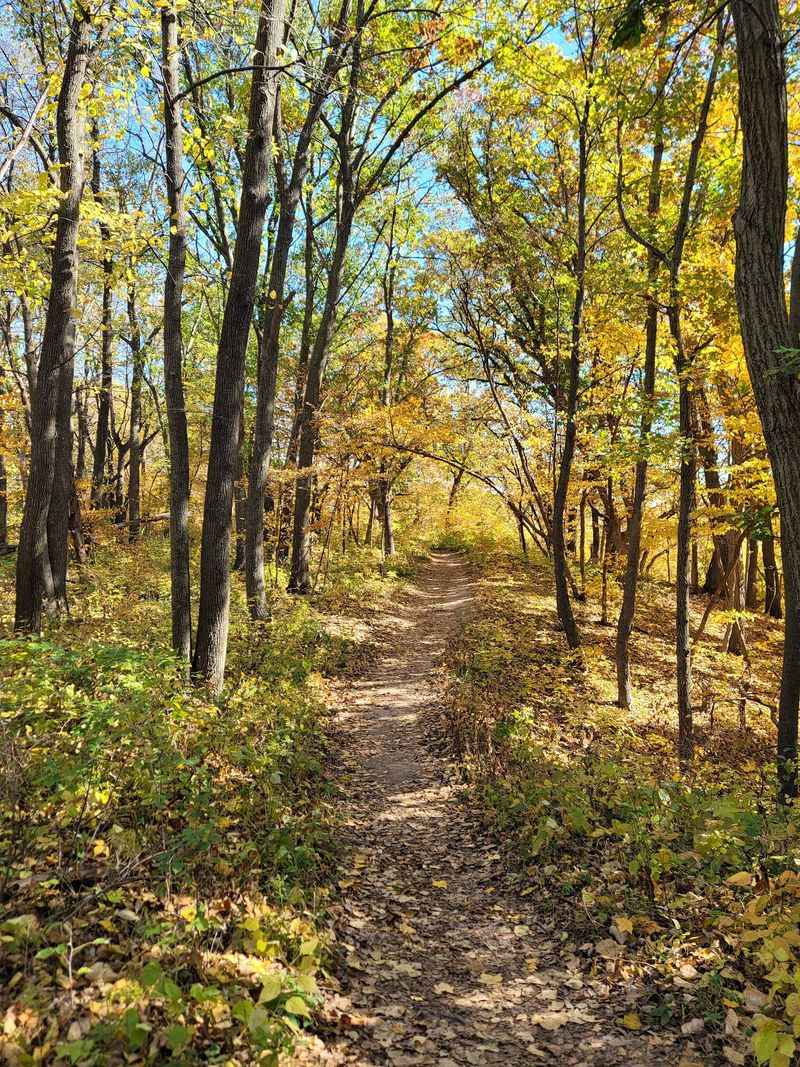
One overlook is great, but two more is greedy in the best way. Table Rock and Inspiration Point both deliver sweeping views of the canyon.
From these spots, the Des Moines River valley stretches out below you. In autumn, the color seems to keep going forever.
Table Rock is one of the top recommended places for fall photos. Bring a fully charged phone, since you’ll probably fill it up.
Inspiration Point lives up to its name pretty well. It’s the kind of view that makes you want to stay quiet for a minute.
Need an easier ridge walk afterward? The Hog’s Back Trail is a simple 1.0-mile path that follows a ridge line.
That trail shows off views of the wooded areas around it. It’s a nice cool-down after the climbing at the overlooks.
The park’s whole trail network covers over four miles. Paths range from easy to moderate, with plenty of stone steps in between.
That variety makes it simple to build your own route. Mix one steep climb with one flat stroll, and everyone in the group stays happy.
The trails can be uneven and muddy in spots. Sturdy boots with good grip are your best friend here.
A park map helps too, since cell signal can drop out in certain areas. Download what you need before you lose signal.
Then just wander. Iowa rarely looks this dramatic from above.
Stone Bridges From The 1930s Still Steal The Show
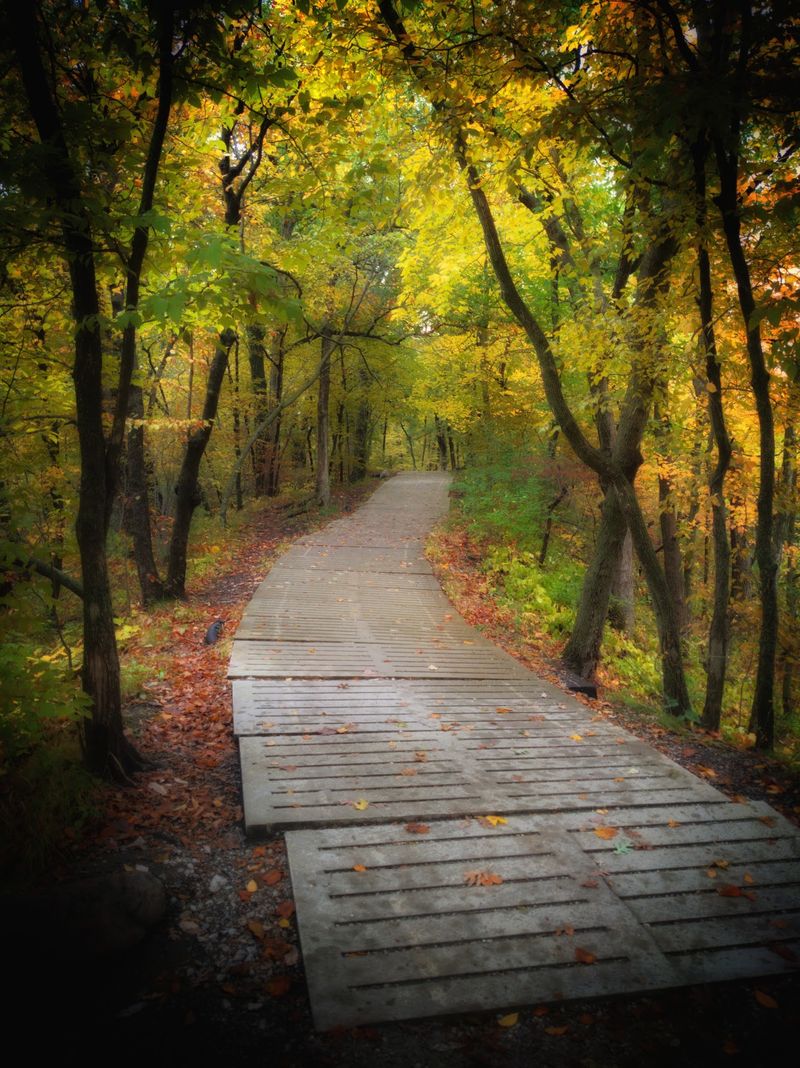
Hard work from almost a century ago still holds up beautifully here. The Civilian Conservation Corps built many of the park’s stone and timber structures in the 1930s.
The star is an iconic arched stone bridge over Pea’s Creek. It looks like something from an old postcard, especially with fall leaves around it.
The CCC also built shelters and stone trail steps you can still use today. Every time you climb those steps, you’re walking on real history.
The park itself goes back even further. Ledges State Park was dedicated on November 9, 1924, making it one of Iowa’s earliest state parks.
Local residents helped make it happen. People proposed the area as a park as early as 1914 and chipped in funds to buy the land.
The first park custodian, Carl Fritz Henning, started in 1921. A shelter in the park still carries his name.
On the north side of the canyon, look for the Hutton Memorial. It honors Murray Lee Hutton, the first director of the Iowa State Conservation Commission.
History here reaches back much further than the 1900s, too. Evidence shows people used this land for at least 4,000 years.
The Sauk, Fox, or Meskwaki, and Sioux tribes all lived in the area. That gives the canyon a deep human story alongside its rocky one.
So slow down at the bridge. It’s earned the attention.
Pack A Picnic And Find Iowa’s Oldest Restored Prairie
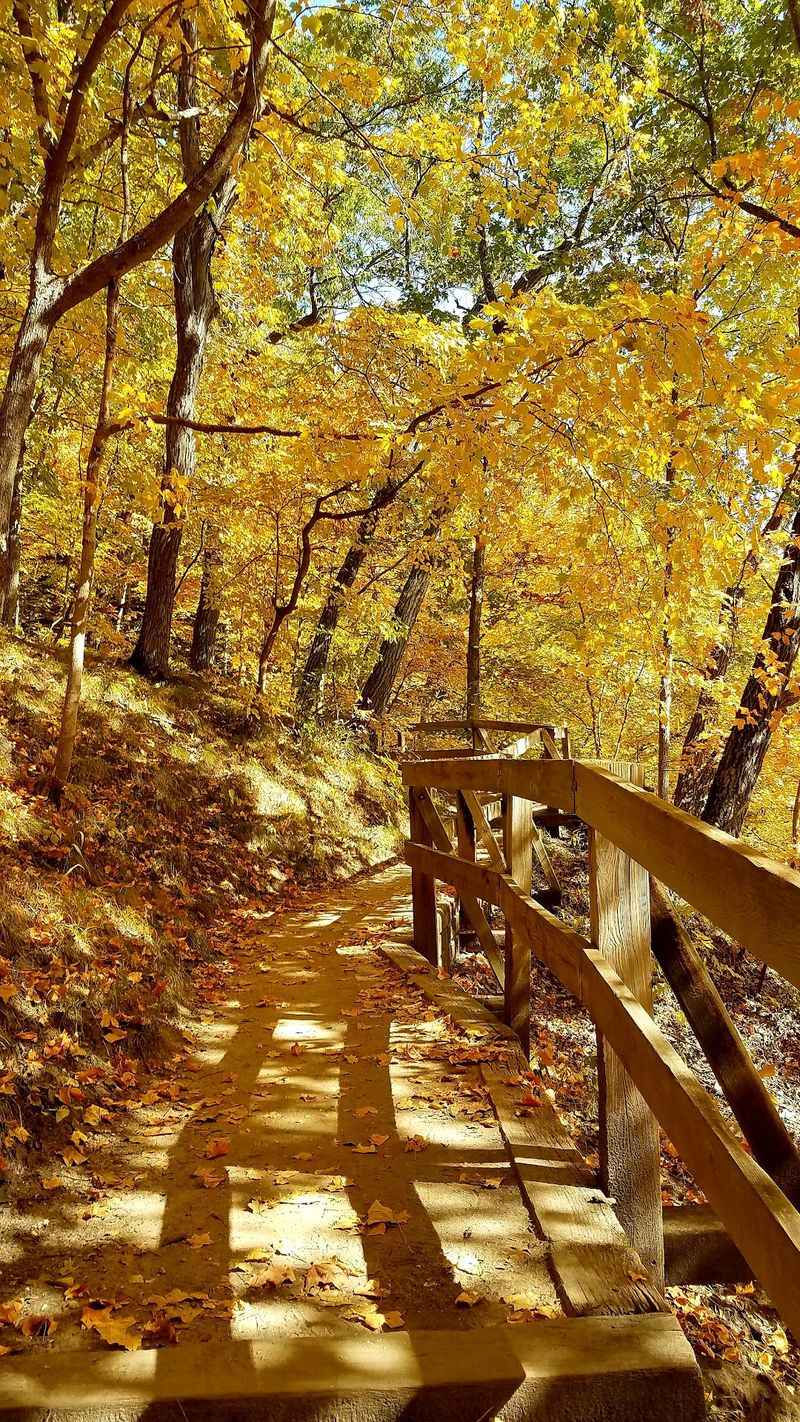
Picnic tables with a view are everywhere in this park. Numerous scenic picnic areas and shelters sit throughout the grounds.
Two shelters stand out for group gatherings. The Oak Woods shelter and the Carl Fritz Henning shelter can both be reserved.
Both shelters received recent improvements, so they’re ready for birthday parties and family reunions. A fall cookout here sounds hard to beat.
Near the Oak Woods shelter, a small interpretive trail focuses on lichens. Those crusty little growths on rocks and trees are more fascinating than they sound.
Now for a fun fact worth sharing at your picnic. The large prairie in upper Ledges, south of the Oak Woods area, is believed to be Iowa’s oldest restored prairie.
It was reseeded in 1949 with help from Ada Hayden. She was a botanist known for her work protecting Iowa prairies.
Prairie grasses turn shades of gold, copper, and rust in autumn. Paired with the colorful trees nearby, it’s a double dose of fall scenery.
Grills are available in several picnic spots around the park. Bring your own charcoal and supplies so the meal comes together easily.
Pack out what you bring in, especially from the lower areas. Leaving the park clean keeps it lovely for the next family.
A sandwich tastes better outdoors anyway. Add golden grass and red leaves, and lunch becomes the highlight of the day.
Stay The Night And Catch Sunrise Color On The Trails
Waking up steps from the trails makes every morning walk easier. The campground at Ledges State Park offers 94 campsites to choose from.
You’ll find electric sites, non-electric sites, and 12 primitive hike-in sites. Those hike-in spots offer a more secluded night under the trees.
Each campsite comes with a picnic table and a fire ring. Modern restrooms, showers, a trailer dump station, and a playground round out the setup.
Reservations are required and open up to three months ahead. Book through the Iowa State Parks reservation system to lock in your fall dates.
The campground runs seasonally from March through November. That means peak October color fits perfectly inside the camping season.
The park gates open early and stay open late each day. Early risers can hit the trails right as soft morning light reaches the canyon.
Pack snacks, water, and a few essentials before you arrive. Having everything on hand keeps the focus on the trails and the colorful canyon views.
Fishing along Pea’s Creek and the Des Moines River adds another way to spend the day. Canoeing is possible nearby, too.
The park sits in Boone County, about four miles south of Boone. Ames is a short drive away for restocking supplies.
Plan your trip to 1515 P Ave, Madrid, IA 50156. Your best Iowa fall morning is waiting right there.