
Virginia Says The First Thanksgiving Happened Here In 1619, Two Years Before Plymouth
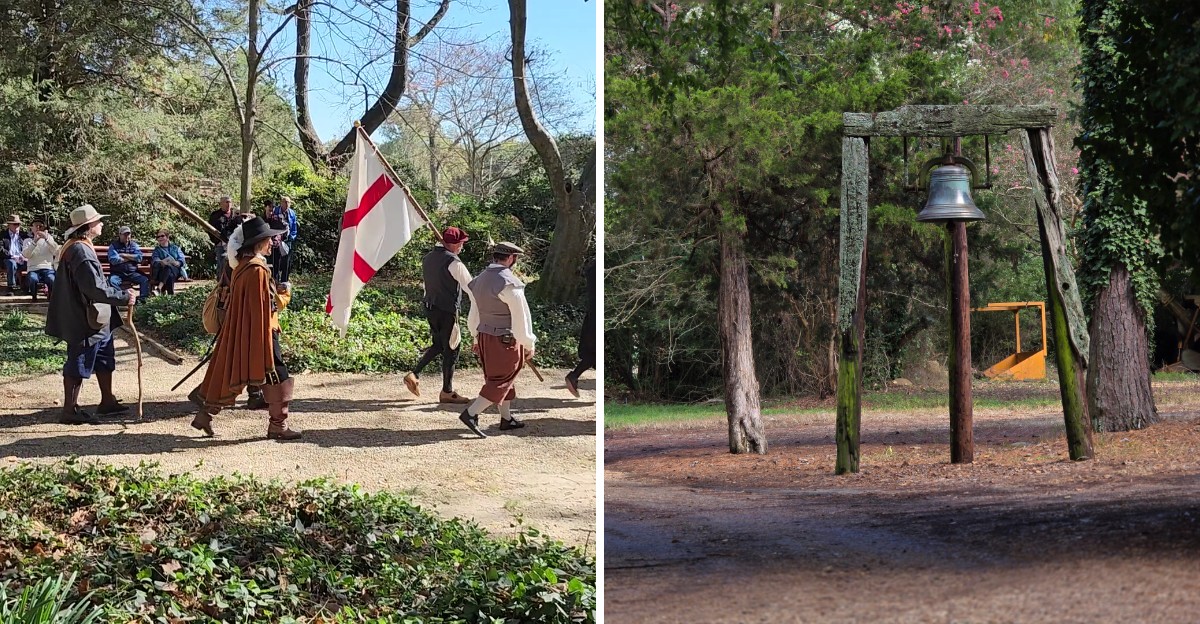
Most of us learned that the first Thanksgiving happened at Plymouth in 1621. Virginia tells a different story, and it starts two years earlier.
On December 4, 1619, thirty-eight English settlers stepped off a ship onto a quiet riverbank. Their charter told them to mark that day with thanks to God.
Was that the real first Thanksgiving? A monument on the grounds makes a strong case.
The same property holds far more than one famous date. A brick mansion from 1726 still stands above terraced gardens.
Did you know a famous bugle call was first played here? Two presidents also trace their family roots to this land.
I love how much history fits along one stretch of shoreline in Virginia. Where exactly did all of this happen?
A Ship, 38 Settlers, And A Landing Date You Can Remember
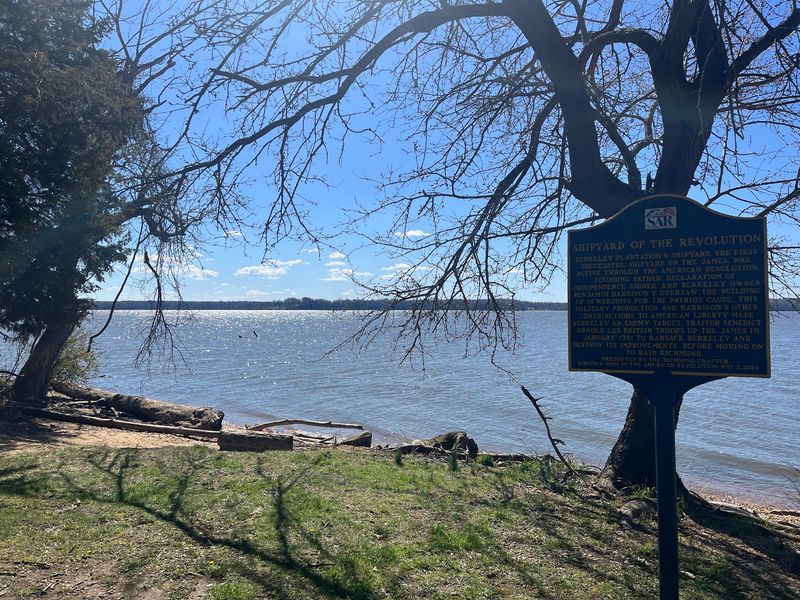
Berkeley Plantation sits along the James River in Charles City County, Virginia. On December 4, 1619, the Good Ship Margaret arrived at this spot with 38 English settlers aboard.
Captain John Woodlief led the group. The land was then called Berkeley Hundred, after a grant issued by the Virginia Company of London in 1618.
The settlers carried a charter with a special rule. It said the day of their arrival should be kept as a day of thanksgiving to God.
That’s the heart of the claim. Virginia calls it the first official English Thanksgiving in America.
Today the story is easy to follow on site. A Thanksgiving monument stands on the grounds, and exhibits and a film explain what happened.
It’s a short but powerful tale. Thirty-eight people stepped ashore in a new land, and they paused to give thanks first.
Think of how different that day looked from a modern holiday table. There was no parade, no football game, and no pie debate.
The 1619 observance was a prayer of gratitude after a long ocean trip. The river served as the colony’s main road, and ships carried people and supplies along it.
Plymouth Gets The Fame, But The Calendar Tells Another Story
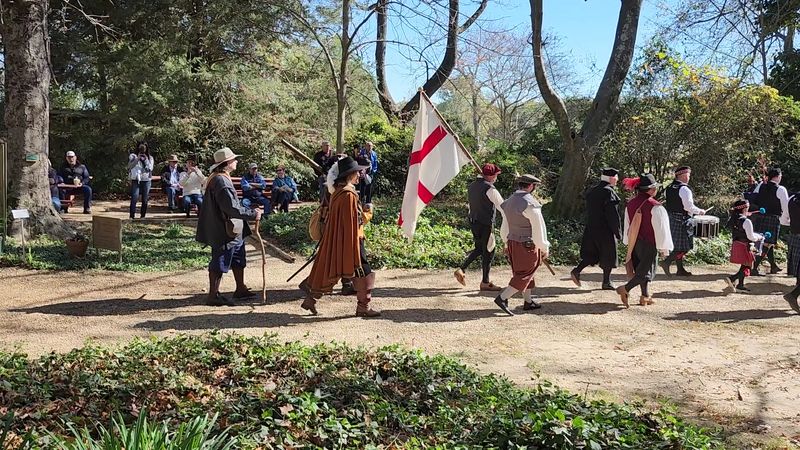
Do the math and the claim gets interesting. The Plymouth feast most Americans learn about happened in 1621, and Virginia’s date is 1619.
That’s a two-year head start. Virginia’s version, though, was a day of prayer rather than a big shared meal.
The difference matters to the story. The 1619 settlers followed instructions in their charter to give thanks on arrival.
Plymouth’s feast became the one that grew into the national tradition. Berkeley Plantation reminds us that more than one early chapter belongs in the story.
Virginia leaders have long pointed to the 1619 landing as the first. The plantation keeps that case front and center with its monument and film.
You don’t have to pick a side to enjoy the visit. Knowing both dates makes the dinner table conversation a lot livelier.
Try it next November. Ask your family which Thanksgiving came first and watch the debate begin.
The plantation’s Virginia Thanksgiving Festival leans into the topic every year. It’s held on the first Sunday in November.
Living history programs, tribal dancers, and a re-enactment of the 1619 landing are part of it. Food vendors are on hand too.
A 1726 Brick Mansion With Walls 36 Inches Thick
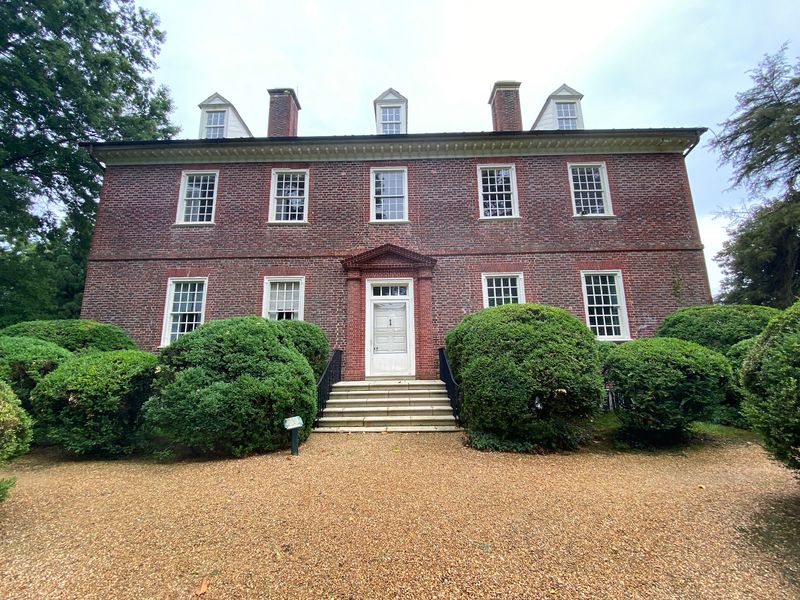
Thirty-six inches. That’s how thick the exterior walls of the main house are.
Benjamin Harrison IV completed the Georgian mansion in 1726. It’s one of the oldest three-story brick houses in Virginia.
The bricks were fired right on the plantation. That’s local building at its most literal.
Inside, the Adam woodwork and double arches stand out. Costumed guides lead tours through the main floor.
The rooms are furnished with 18th-century antiques, Chinese porcelain, and English silver. Each piece helps tell how the Harrison family lived.
Guided house tours begin hourly, generally from 10 a.m. to 4 p.m. Hours can shift during certain periods, so check ahead.
2026 is a big year for the house. Berkeley Plantation is celebrating the 300th anniversary of the 1726 mansion.
Three centuries is a long time for any building. Brick and careful restoration got it here.
Malcolm Jamieson and his wife Grace completed extensive restoration, and the plantation opened for public tours. The family’s work gave visitors the house they see now.
Listen closely to the guide. Small details about the rooms are where the best stories hide.
Arrive a few minutes early. That gives you time to look over the front of the house before your tour begins.
Ten Acres Of Terraces Roll Down To The River
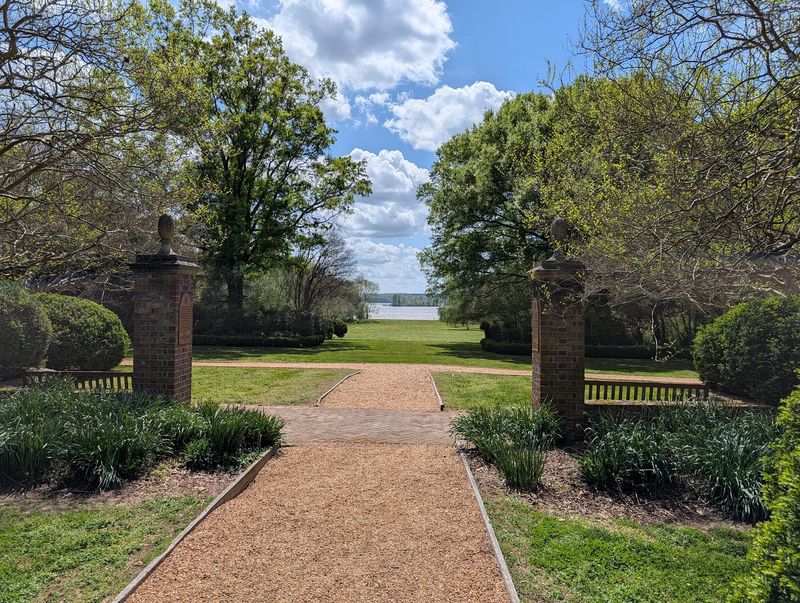
Ten acres of formal terraced gardens roll a quarter-mile from the mansion down to the James River. That’s a lot of scenic strolling.
Boxwood gardens, a Ladies Winter Garden, and a rose garden are all part of the grounds. Self-guided paths let you set your own pace.
Benches are available for resting. Good news for anyone who plans to walk the full distance.
Designated stone paths on the estate grounds are handicap accessible. The basement museum is not, so plan accordingly.
Picnic tables are on the grounds too. You’re also welcome to bring a blanket and have a riverside picnic.
There’s no regular restaurant at the site. That makes packing lunch a smart move.
Wear comfortable shoes. The walk down to the water and back is a quarter-mile each way, and that adds up.
The slope gives the grounds their shape. Each terrace steps the view down to the James.
Ticketed admission covers the gardens and grounds. They stay open until 5 p.m., or 4 p.m. during certain periods.
Take the walk after your house tour. It’s a gentler way to finish the visit.
Gardens and history go together here. The ground where settlers landed is the ground you’re strolling.
A Famous Bugle Call Was Born In This Camp
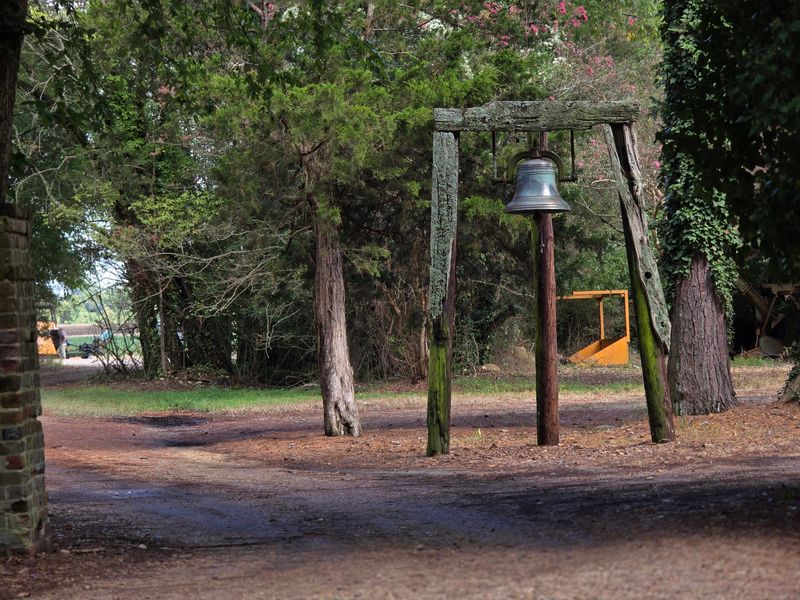
Somewhere on these grounds, a bugle call took shape that people still hear today. In 1862, Union troops under General George B.
McClellan occupied the property, then called Harrison’s Landing.
General Daniel Butterfield worked with his bugler, O.W. Norton, here.
Together they composed and first played Taps.
If you’ve heard Taps at a ceremony, you know the tune. Now you can see where it began.
A Taps monument marks the connection on the grounds. It gives the story a place to stand.
The camp’s history goes beyond the bugle. President Abraham Lincoln visited the plantation twice in 1862.
Both events happened in the same year. History really stacked up fast here.
The Union Army’s time here also shaped later ownership. In 1907, John Jamieson, a former drummer boy during the occupation, bought the property.
Think about that circle. A boy who’d been in the camp returned as the owner.
His son Malcolm and Malcolm’s wife Grace later restored the house. Their work opened Berkeley to the public.
Next time you hear Taps, you’ll know a Virginia riverbank played a part. It’s a small fact with a big echo.
Ask your guide about the 1862 camp. The story has plenty of layers.
Two Presidents And A Signer Share One Family Tree
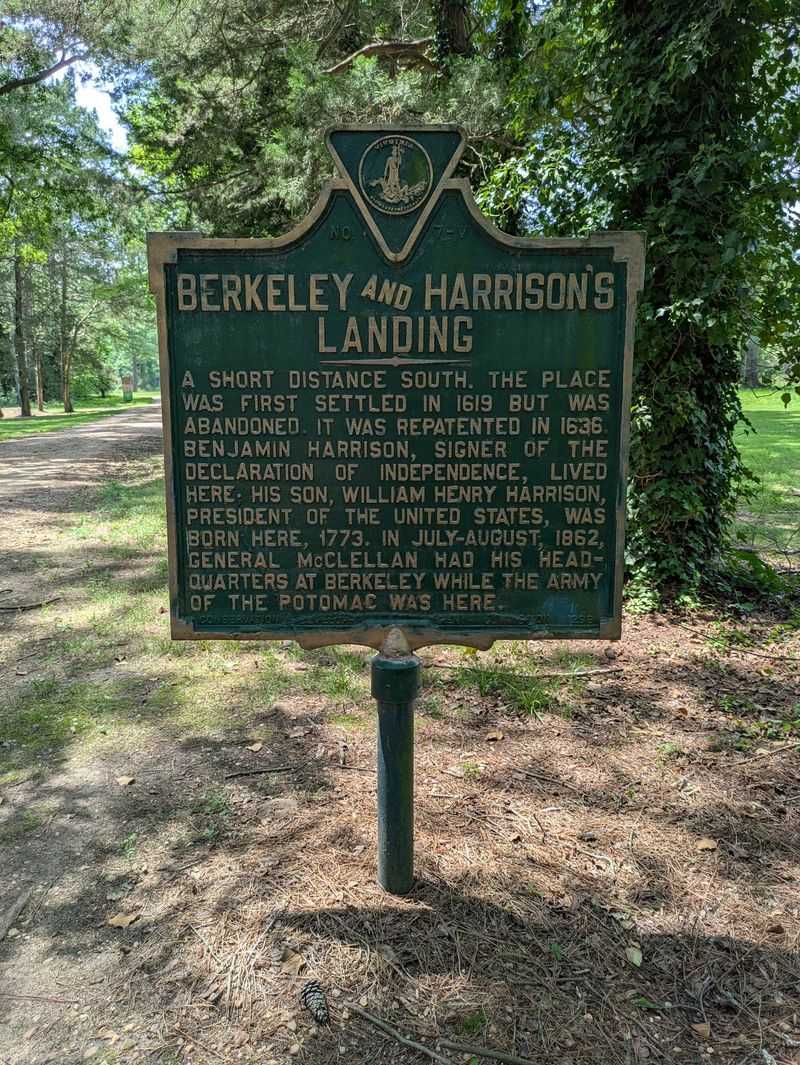
Two presidents and one Declaration signer have ties to one Virginia address. That’s a pretty strong guest list.
Benjamin Harrison V was born at Berkeley Plantation. He signed the Declaration of Independence and served three terms as governor of Virginia.
His son, William Henry Harrison, was born here too. He became the 9th President of the United States.
Benjamin Harrison, the 23rd President, counts the plantation as his ancestral home. He was William Henry’s grandson, which makes this a true family story.
Add Abraham Lincoln’s two visits in 1862, and the list gets longer. Few single properties can say that much.
Benjamin Harrison IV finished the mansion in 1726. The family name runs through the house’s story from start to finish.
Costumed guides connect these names to the rooms you walk through. That keeps the dates from feeling like a textbook list.
Try sketching the family tree on the drive over. It makes the names easier to follow.
The signer is the father of the 9th president. The 23rd president is that president’s grandson.
That’s three generations of famous Harrisons tied to one riverside property. Not bad for a place that also has a Thanksgiving claim.
Ask your guide to help sort the family branches. It’s a fun puzzle.
The Basement Museum And The Quarters Fill In The Rest
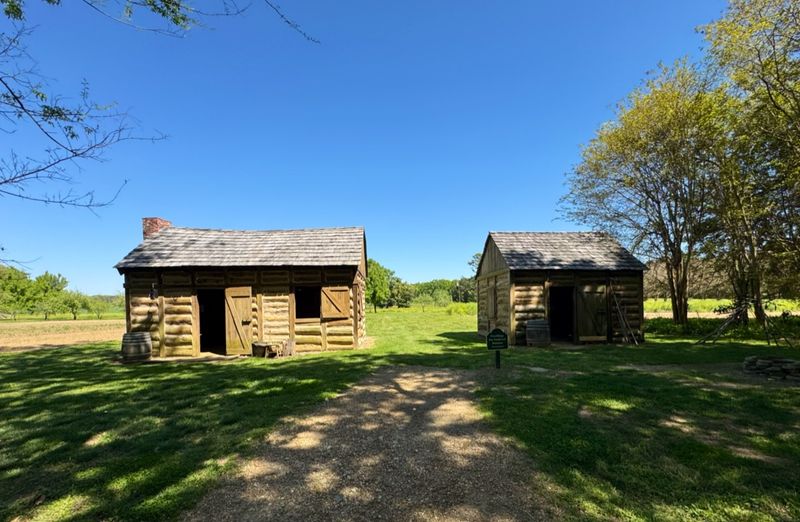
Not every important story lives in the big house. At Berkeley Plantation, the basement museum and the outbuildings help fill in the rest.
The 18th-century basement museum shows Native American, Colonial, and Union camp-era artifacts. Historical paintings and exhibits fill out the displays.
An introductory film is also available. It’s a smart place to begin if you like context before details.
Reconstructed slave quarters stand on the grounds, along with an original kitchen dependency. They show the lives and contributions of the enslaved workers who lived and labored at Berkeley.
Buildings like these matter because the mansion didn’t run itself. The work behind the house is part of the full story.
Take your time at these stops. They add weight to the story of the house and the land.
Remember the accessibility note. The museum is in the basement and isn’t handicap accessible.
The stone paths across the grounds are accessible, so other stops stay open to more guests. Plan your route with that in mind.
Ticketed guests can explore the museum and exhibits until 5 p.m., or 4 p.m. during certain periods. Tour times come first, so build your day around them.
Museum rooms deserve patience. Give yourself time to look closely at each display.
Corn Mazes, Ghost Tours, And Holiday Wreaths
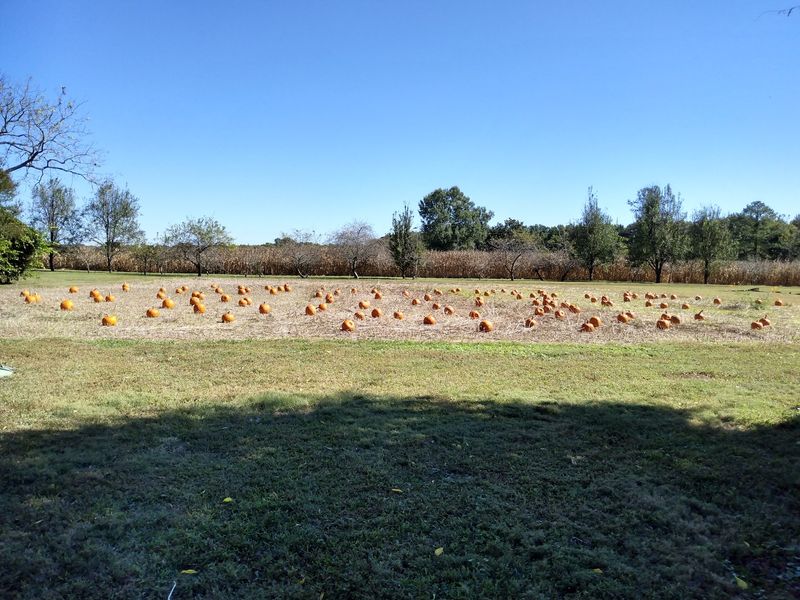
Corn maze, pumpkin patch, wreath-making, and ghost hunting. The calendar here is busier than you’d expect from a 1726 house.
In autumn, Berkeley Plantation adds a seasonal corn maze and pumpkin patch. It turns a history stop into a fall outing.
Christmas tours bring traditional decorations to the house. Wreath-making workshops are also part of the holiday schedule.
Specialty tours add variety. Plantation Echoes is a ghost-hunting experience, and another tour explores camp life during the Union occupation.
Dates and offerings can change from year to year. Checking the plantation’s event calendar before you go is a good habit.
Here’s a funny one for planning. The place that claims America’s first Thanksgiving is closed on Thanksgiving Day.
It’s also closed on Christmas Eve and Christmas Day. Each year, it closes from January 2 through March 12.
Groups of 20 or more can still make reservations during that stretch. That’s handy for school trips and clubs.
Because 2026 marks the mansion’s 300th anniversary, it’s a special year to visit. Check for anniversary news before you go.
Where To Find It And How To Plan Your Day
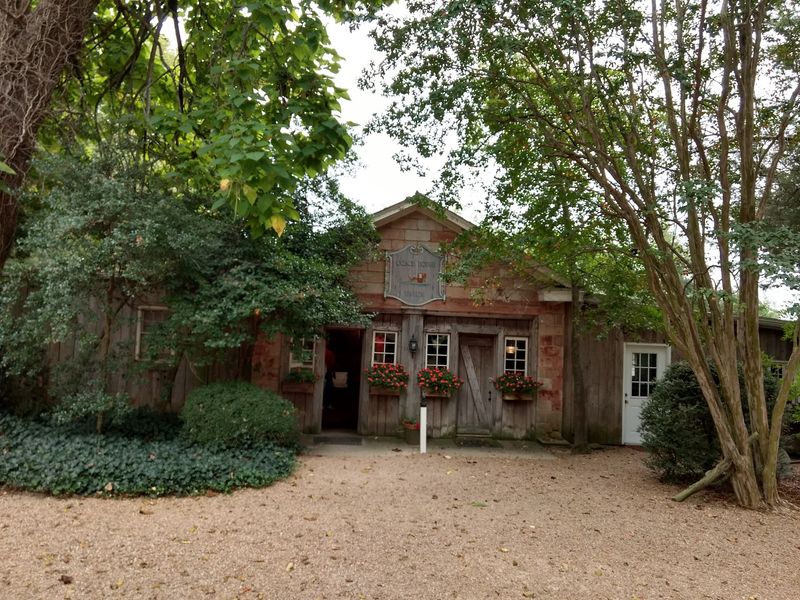
Finding the place is straightforward. Berkeley Plantation is at 12602 Harrison Landing Rd, Charles City, VA 23030.
The site is on the James River, in a part of Virginia packed with early American history. Charles City County is a fitting setting.
The gift shop and ticket sales are generally open from 9:30 a.m. to 4:30 p.m. Hours can change during certain periods.
Guided house tours begin hourly. Grounds and exhibits stay open later for ticketed guests.
The gift shop is in an original outbuilding. It carries historical mementos, Virginia-made products, books on history and local art, and colonial-period toys.
Pick up a book if the tour leaves you curious. Virginia-made items make good souvenirs.
Comfortable shoes are a smart choice. Between the house tour, the museum, and the quarter-mile garden walk, you’ll cover real ground.
Picnic tables on the grounds make lunch easy. There’s no regular restaurant, so bring your own food.
Mark your calendar around the closures. Remember the January 2 through March 12 break and the holiday days.
Berkeley Plantation packs a lot into one property. A 1619 landing, a 1726 mansion, and a bugle call all share the same riverfront.
Go for the Thanksgiving claim and stay for the gardens. Not a bad way to spend an afternoon in Virginia.