
This Nevada Desert Viewing Area Is A Hidden Gem For Nature Lovers
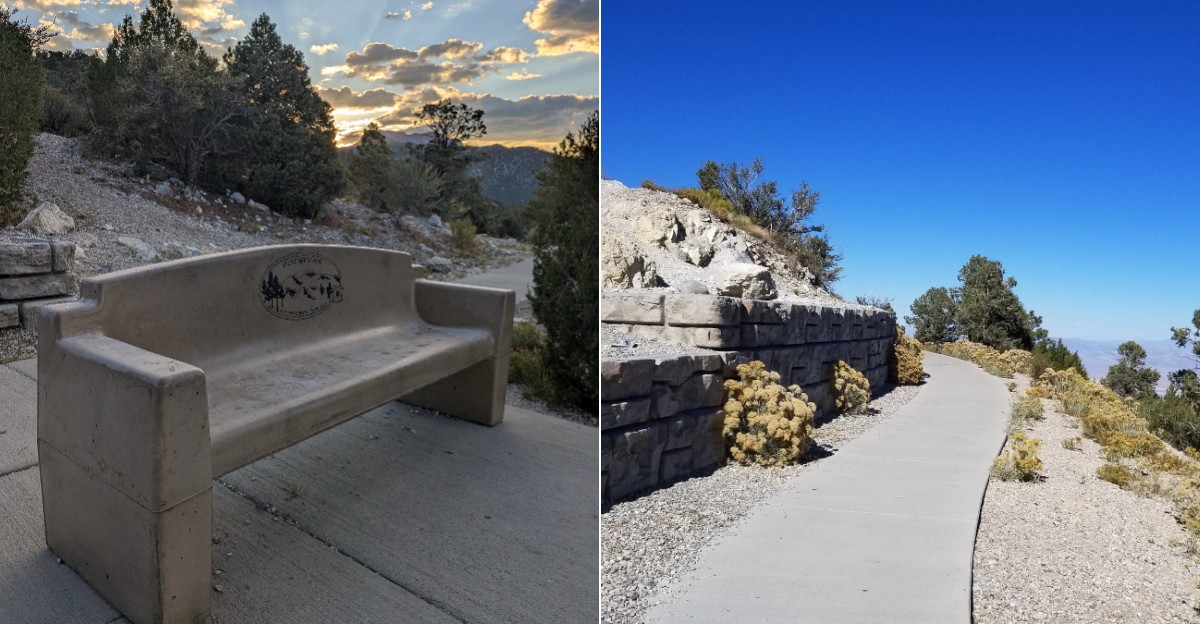
Back in the 1950s, people drove up a mountain road to watch atomic test flashes light up the desert from this exact spot. Today, the same overlook offers something much calmer: a wide, quiet view and fresh mountain air.
The paved path sits around 8,000 feet up. That height makes it noticeably cooler than the valley floor, which feels like a small miracle in a Nevada summer.
I appreciate that the walk is short and gentle enough for grandparents and little kids. I also love that the view shifts with the light, so sunrise and sunset each paint a different picture.
This is exactly the kind of roadside stop that makes a mountain drive more exciting. A few minutes outside the car could easily become the highlight of the entire outing.
A Short Paved Path Leads To One Very Big View
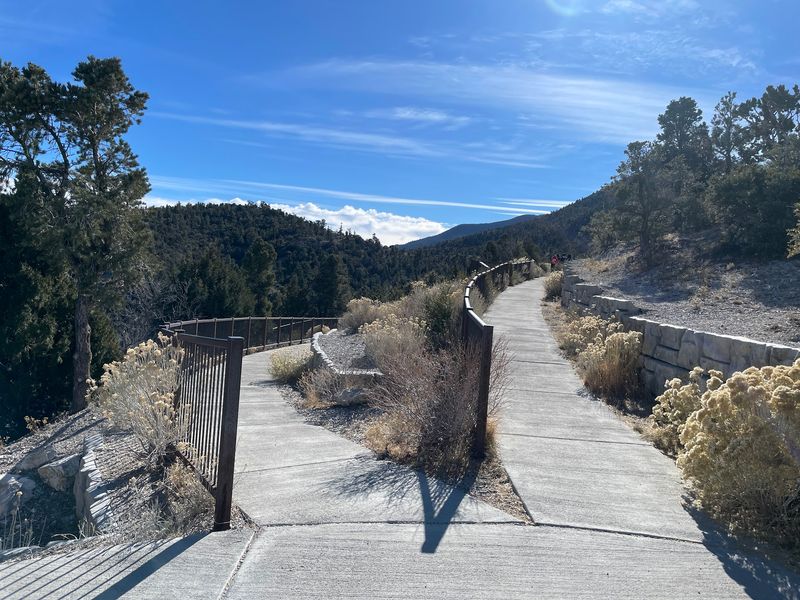
Desert View Overlook proves that big rewards don’t always need big effort. The paved trail is roughly 0.4 miles round trip, with railings along the way.
The path zig-zags gently down the slope toward the viewing area. Each turn opens up a slightly different angle on the desert spread out far below.
Managed by the U.S. Forest Service, the spot sits inside the Spring Mountains National Recreation Area. That means the trees, rocks, and plants around you are part of protected public land.
The zig-zag shape might tempt you to cut straight across. Please don’t, because shortcuts wear down fragile plants and soil on the hillside.
Wear comfortable shoes, even though the walk is easy. The return trip climbs back uphill, and the thinner air at this height can make you breathe a little harder.
Bring a camera or phone with plenty of storage space. You’ll probably want more photos than you expect, and the railings make a steady spot for resting your elbows. The overlook is listed as open around the clock. Still, daylight hours make the path safest and the view easiest to enjoy.
Atomic History Once Drew Crowds To This Ridge
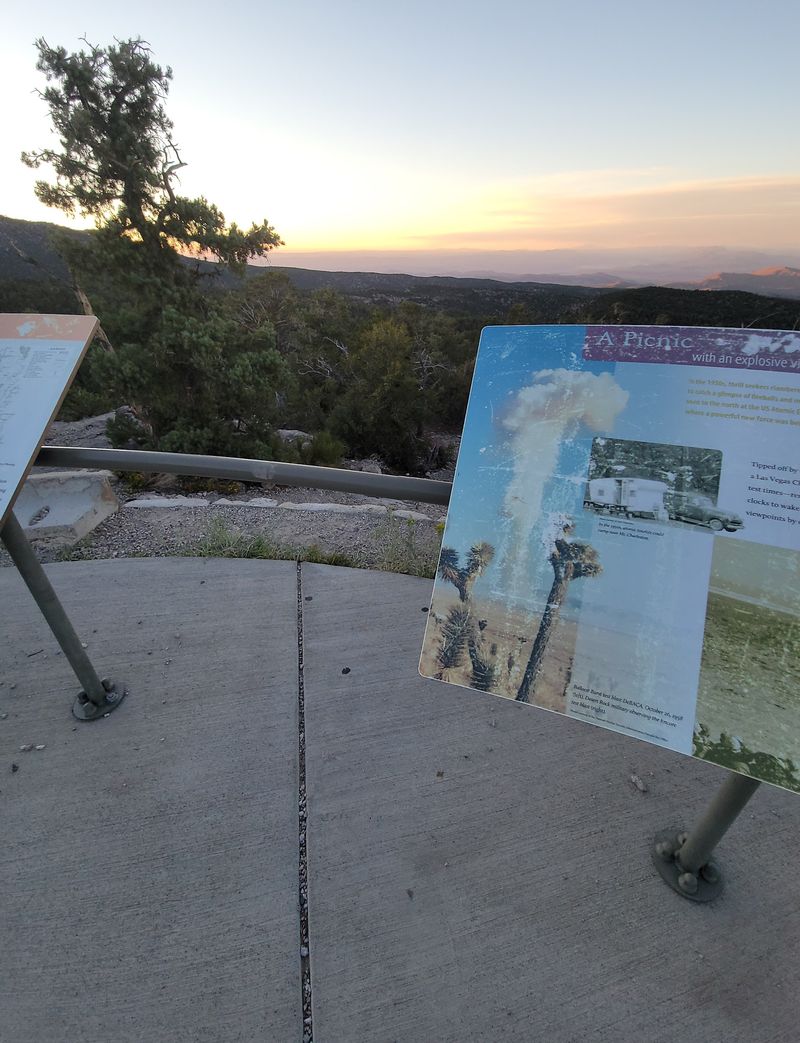
Few scenic pullouts have a backstory quite like this one. During the 1950s, people came here to watch nuclear tests at the Nevada Test Site far to the northwest.
Spectators treated those early-morning flashes almost like a public event. It’s a strange slice of history, and it makes standing here feel a bit surreal.
The overlook also connects to much older history. The Southern Paiute people used these mountain forests for food, materials, and seasonal living long before any roads arrived.
Interpretive signs once explained these stories along the path. Many of the panels have faded or gone missing in recent years, leaving some stands empty.
That’s a good reason to do a little reading before you go. Knowing the history ahead of time turns a pretty view into a far richer experience. Kids often love a good real-life story, especially one this unusual. Sharing it at the railing can spark questions the whole drive home.
Think of it as a free outdoor history lesson with a world-class backdrop. Not many classrooms come with a mountain breeze and a view stretching for miles.
Two Deserts Meet Right Below Your Feet
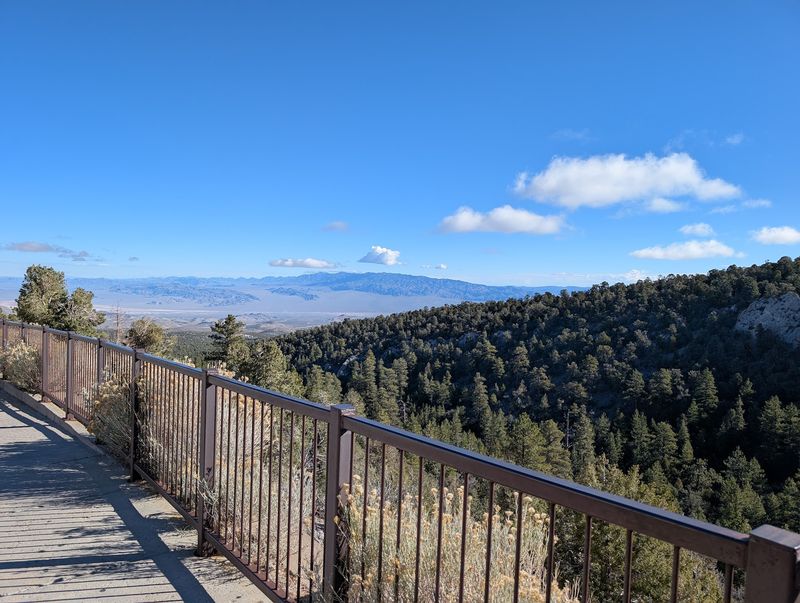
Geography nerds, this part is for you. From the railing, you can enjoy sweeping views of the Mojave Desert and the mountain ranges stretching across the horizon.
Those are two very different places. The Mojave tends to be lower and hotter, while the Great Basin runs higher and cooler with more sagebrush.
Seeing them blend from above helps the whole region make sense. Mountain ranges fold into wide basins, and the colors shift from tan to gray to soft purple.
The view stretches for miles on clear days. Haze can soften the edges sometimes, so a crisp morning usually gives you the sharpest look. Bring a small pair of binoculars if you have them. They help you pick out ridgelines, valleys, and faraway details your eyes might miss.
Big birds sometimes soar over the open space too. Watching one glide across that huge landscape makes it easier to grasp just how vast it really is.
It’s honestly a better geography lesson than most maps. You get the full picture, in three dimensions, with fresh air included at no extra charge.
Pack A Jacket Even If The City Is Baking
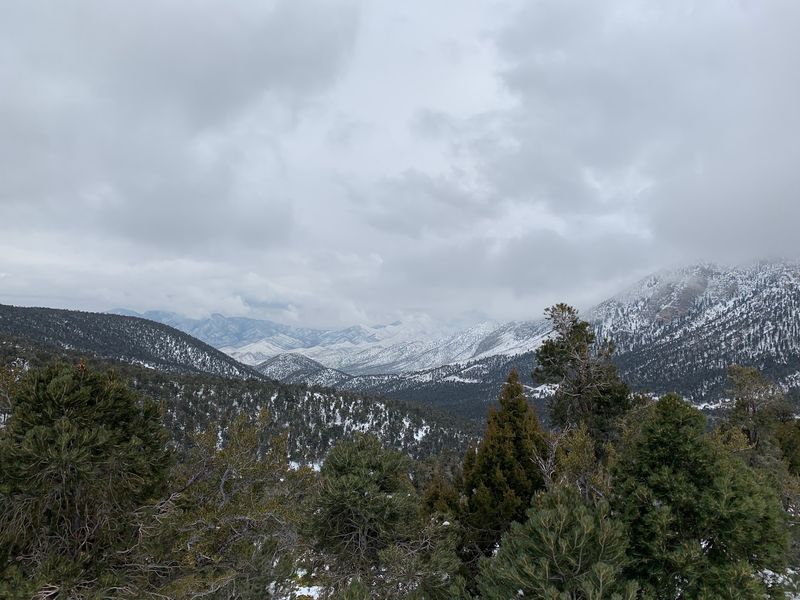
Here’s a weather trick worth remembering on hot days. The overlook often runs 20 to 30 degrees cooler than the Las Vegas Valley. That difference comes from elevation. You’ll climb roughly a mile and a half higher than the city floor in under an hour of driving.
A summer evening that feels brutal in town can turn breezy and mild up here. Many people bring a light jacket or sweater, even in August. Winter is a whole different story. Snow regularly covers this part of Nevada, and the paved path isn’t always cleared of ice.
Shoes with good grip are smart during colder months. Traction devices can help too, especially near shady corners where ice tends to linger. Check road and weather conditions before heading up the mountain. Winter storms can change driving conditions quickly on mountain highways.
Drink plenty of water no matter the season. Higher elevations dry you out faster than you might expect, even when the air feels cool and pleasant. Basically, dress in layers and you’ll be comfortable any time of year.
Sunrise And Sunset Put On Totally Different Shows
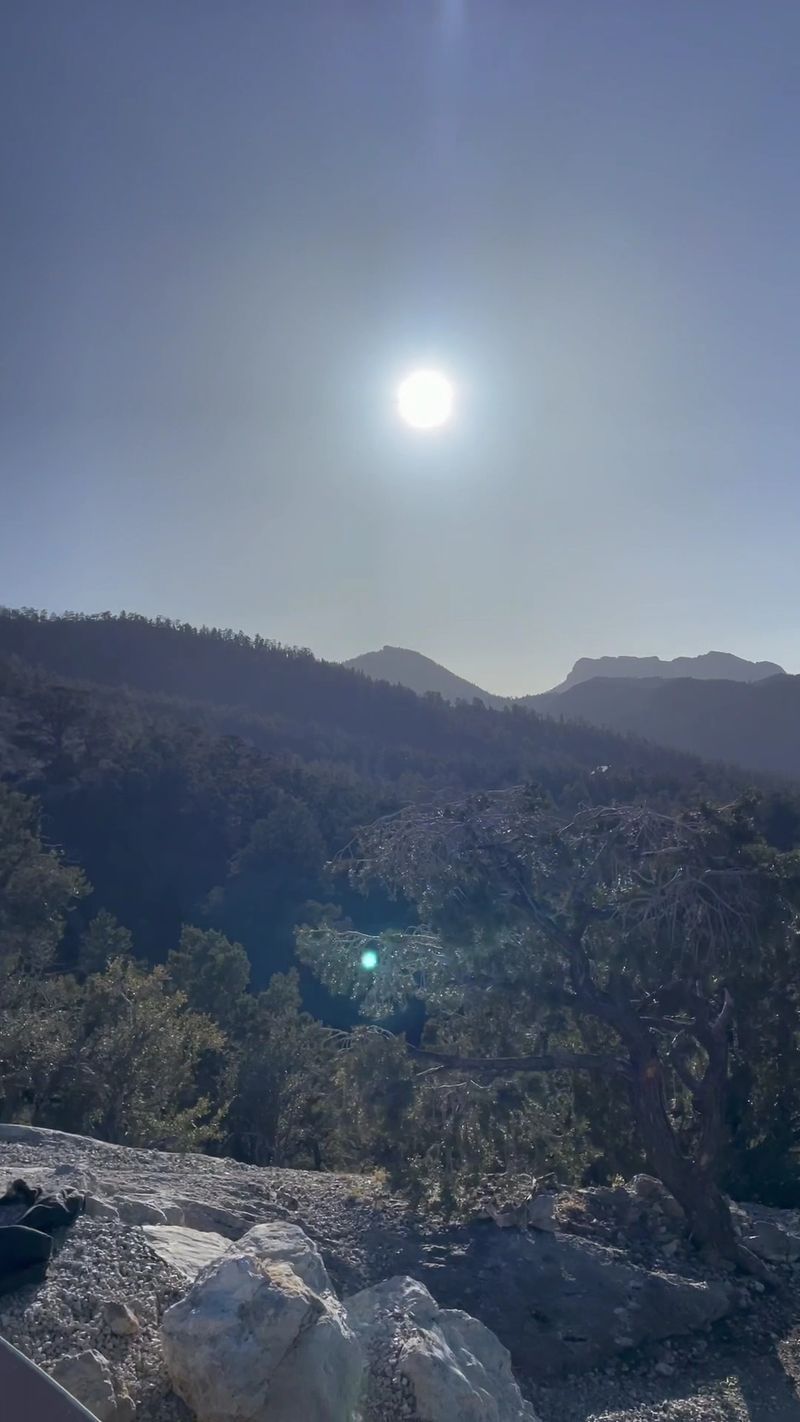
Timing matters more than you’d think at this overlook. Morning and evening light can make the same view feel like two completely different places.
Sunrise tends to bring soft pinks and golds across the desert. Shadows stretch long over the ranges, adding depth and texture to the landscape. Early mornings are also usually quieter and cooler. That calm makes it a peaceful way to start a day in the mountains.
Sunset flips the color palette. Warm oranges glow across the basins, and the mountains slowly turn darker shades of blue and purple. Arrive at least 20 to 30 minutes before either event. Light changes quickly, and the best colors often show up just before or right after the sun moves.
A folding chair can make an evening visit extra comfortable. Some families bring snacks and simply settle onto the scene as the sky changes.
Photographers should bring a tripod for low-light shots. The railings help, but a steady setup makes those glowing skies look sharper later. No two sunsets look exactly alike here. That’s a pretty good excuse to come back again.
After Dark, The Sky Steals The Spotlight
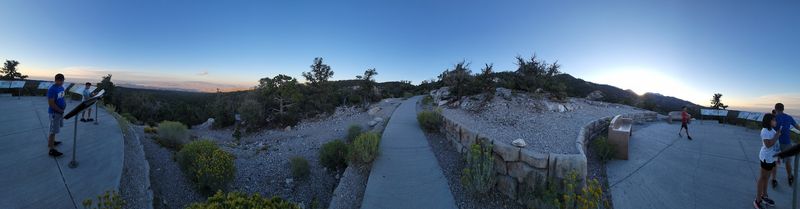
Stars feel a lot closer at 8,000 feet. Since the overlook is listed as open 24 hours, late-evening stargazing becomes a real option. Getting away from the bright city lights makes a big difference. On clear nights, far more stars show up than you’ll ever spot from a backyard in town.
Moon phases change everything, though. A new moon brings the darkest skies, while a full moon washes out fainter stars.
A free stargazing app can help you name what you’re seeing. Point your phone upward, and suddenly random dots become constellations and planets. Bring a red flashlight or turn your phone to a dim setting. Bright white light makes it harder for your eyes to adjust to the dark.
Nights get cold up here, even in summer. A warm coat and a blanket can turn a chilly visit into a cozy one. Watch your step on the path in the dark. Going slowly keeps everyone safe and lets you enjoy the quiet a little longer. It’s a simple, free night out under one giant ceiling.
Grandparents, Strollers, And Little Legs Are Welcome
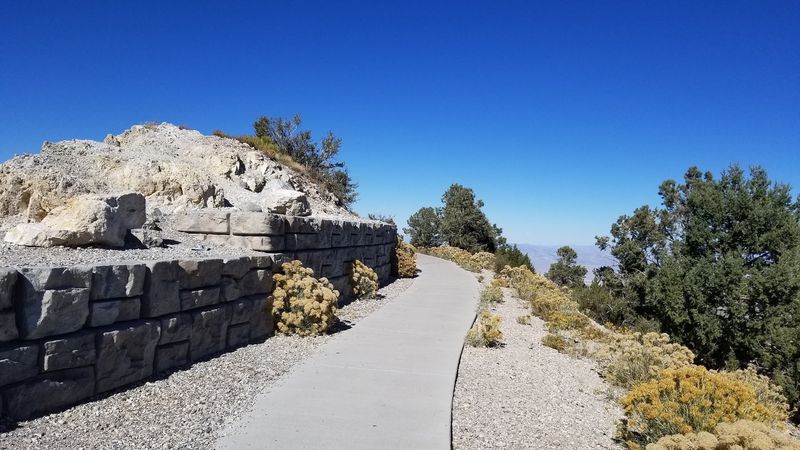
Accessibility is one of the best surprises at this overlook. The paved path and railings make it easier for many visitors to enjoy the view comfortably.
That’s rare for such a dramatic mountain lookout. Lots of great views require rocky climbs, but this one stays smooth and manageable. Older family members can take their time along the route. Small children usually handle the short distance without too many complaints.
Keep in mind that the path slopes and zig-zags. Going down feels easy, while coming back up asks for a bit more effort. There aren’t restrooms at the overlook. Plan a stop before you arrive, especially if little ones are along for the ride.
Pets should stay leashed and close on the path. That protects plants, wildlife, and other visitors enjoying the space.
Parking is available near the trailhead, but it can fill up at busy times. Weekdays or early mornings often feel more relaxed. The quick format makes it easy to fit into a bigger mountain day. It’s short enough for wiggly kids and lovely enough for everyone else.
Wild Neighbors Might Wander Into View
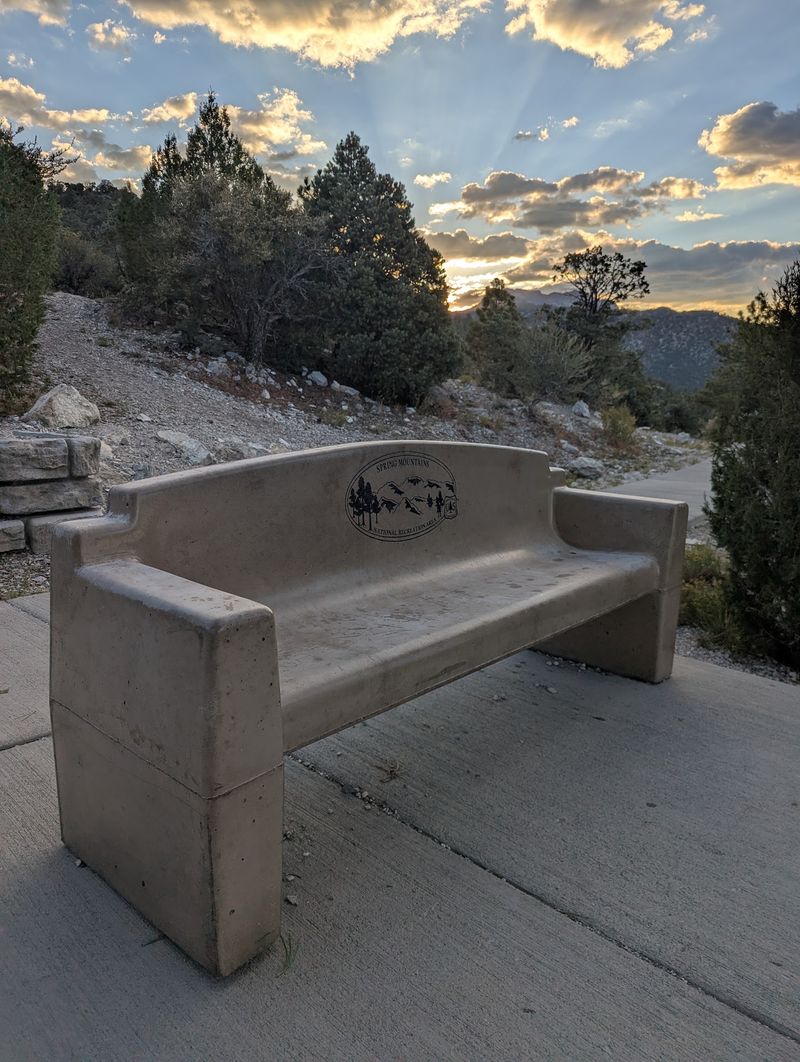
Keep your eyes open on the drive in, because the locals have hooves. Wild horses and burros are sometimes spotted in the Spring Mountains area. Seeing them is never guaranteed, which makes it more exciting when it happens. Slow down on curves and watch the roadsides carefully.
Always admire them from a safe distance. Feeding wild animals is harmful to them and can create risky situations on busy roads. Birds are another treat around the overlook. Large ones sometimes ride the air currents above the open slopes and valleys below.
The plant life shifts noticeably as you drive higher. Desert shrubs give way to pine forests, which makes the climb feel like traveling between seasons.
Stay on the paved path to protect this mountain habitat. Small plants along the slope grow slowly and recover from damage at a snail’s pace.
Binoculars come in handy again here. They let you enjoy wildlife up close without disturbing anyone’s day. Spotting one wild burro can make a whole trip memorable. Just maybe don’t promise the kids one before you leave home.
Pair The Stop With A Full Mountain Day
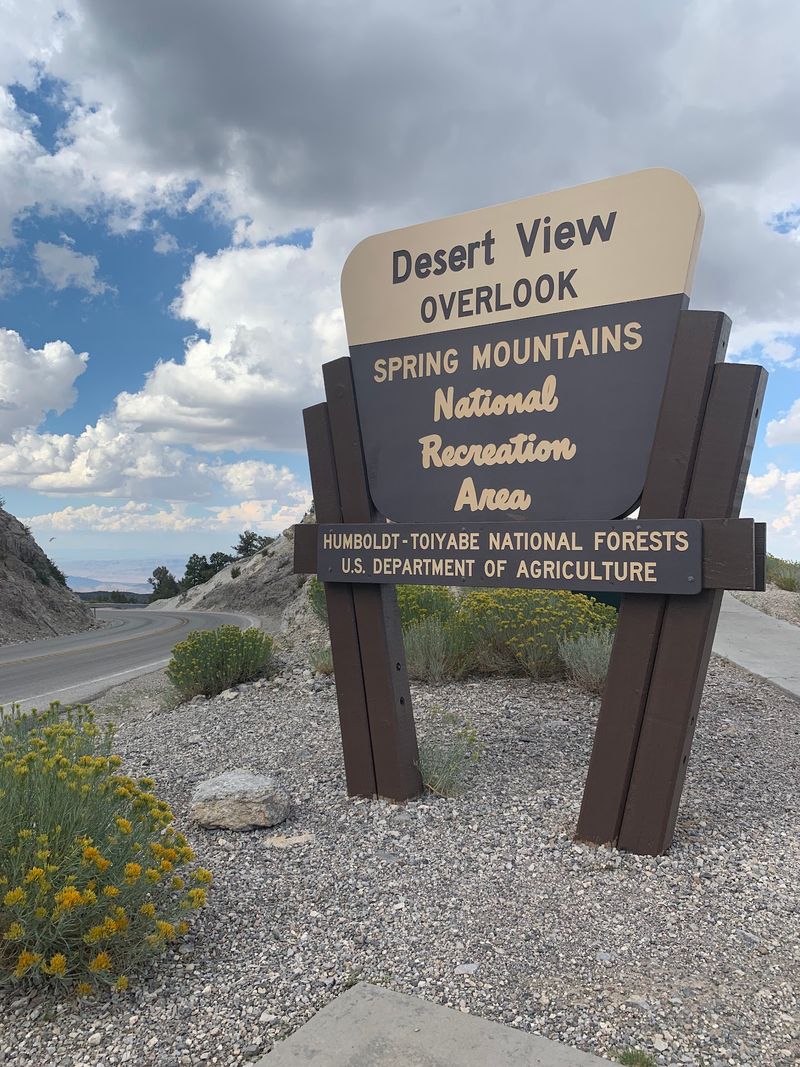
Officially, the location is listed as Las Vegas, NV 89166, along Highway 158. That road links Kyle Canyon and Lee Canyon in the Spring Mountains.
The location makes Desert View Overlook an easy add-on to a bigger outing. Many people combine it with a drive around the Mt. Charleston area.
The Spring Mountains National Recreation Area offers plenty more to explore. Hiking trails, picnic spots, and campgrounds spread across the region. Lee Canyon also has winter recreation when the snow arrives. Seasonal activities change the feel of the mountains throughout the year.
Some Forest Service sites nearby may require reservations or entry passes during busy seasons. Checking ahead helps avoid surprises at popular trailheads. Fill up your gas tank before leaving town. Services are limited in the mountains, and the drive involves steady climbs.
A cooler with water and snacks makes the day smoother. Just pack out every bit of trash to keep the forest clean. Nevada surprises a lot of first-time visitors with how much green it hides up high. This overlook offers one of the easiest windows into that cooler, quieter side.