
The Secluded North Carolina Retreat That Tourists Never Find
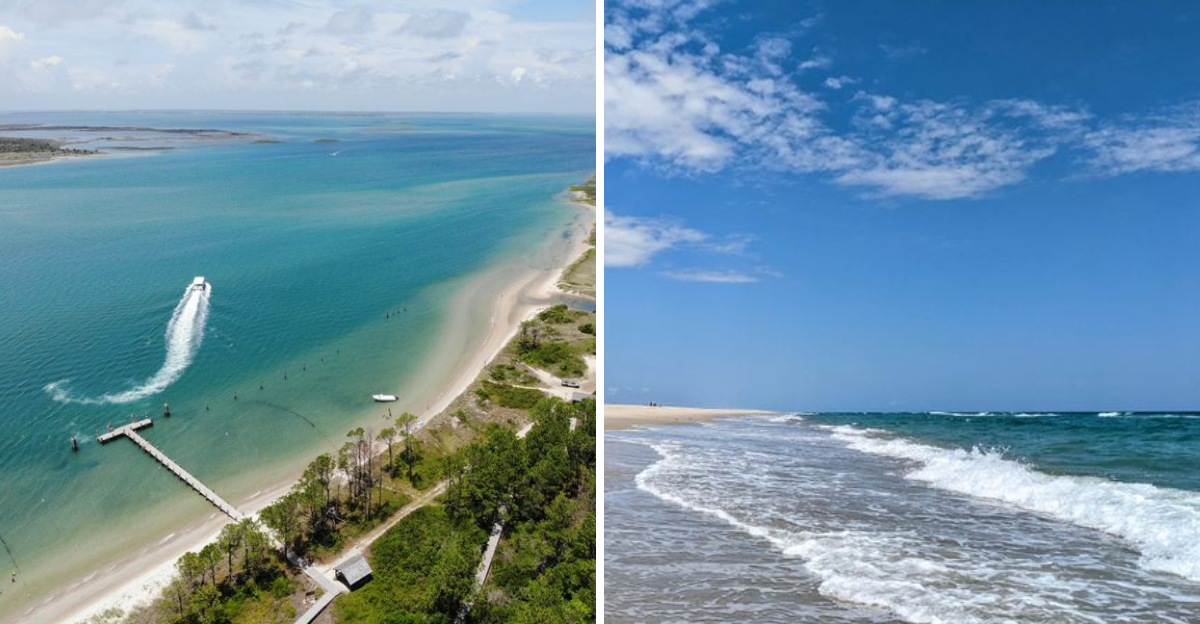
Cape Lookout National Seashore feels like North Carolina’s best-kept coastal secret, an off-the-map stretch of Outer Banks magic where the only “welcome sign” is the surf.
There are no boardwalks, no souvenir shops, no line of cars hunting for parking, just 56 miles of wild barrier islands, open sky, and the Atlantic doing its thing.
Most travelers speed past on the way to louder, flashier beaches, never realizing this place even exists.
If you’re willing to hop a boat and go a little farther, Cape Lookout rewards you with something rare: shoreline that feels untouched, quiet you can actually hear, and space to breathe like the world finally hit pause.
No Bridges, No Shortcuts: The Retreat You Can Only Reach By Boat
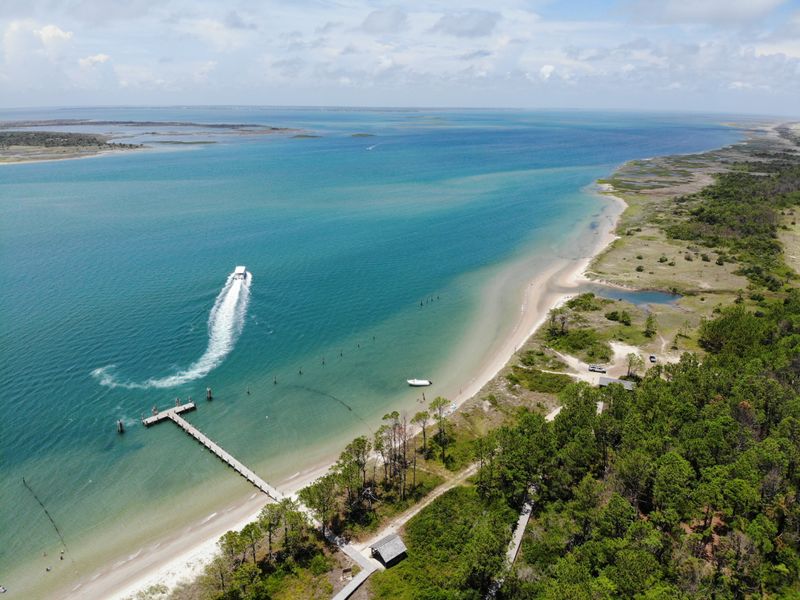
Getting to Cape Lookout requires committing to a ferry ride, which immediately filters out the casual beach crowd.
Authorized passenger vessels depart from Harkers Island, Davis, and Atlantic, carrying visitors across the sound to a land where roads end and wilderness begins.
The crossing takes about twenty minutes, long enough to watch pelicans skim the water and short enough that your cooler stays cold.
Once you step off the boat, the modern world fades behind you.
Cell service becomes patchy at best, and the only sounds are gulls and surf.
That ferry ticket becomes your passport to solitude, and the ride back is always harder to board than the one that brought you.
Open Day And Night All Year: The Coast That Never Closes
Unlike state parks with gate hours and seasonal schedules, Cape Lookout National Seashore operates on nature’s clock.
The islands welcome visitors around the clock, every day of the year, which means you can watch sunrise from your tent or stargaze at two in the morning without a ranger tapping your shoulder.
Winter brings its own rewards: fewer bugs, cooler temperatures, and a stark beauty that summer crowds never witness.
Located at Cape Lookout Rd, Harkers Island, NC 28531, the seashore remains perpetually accessible to those willing to arrange transport.
This continuous access creates a rare freedom, letting you shape your visit around tides and weather rather than posted hours.
Fifty-Six Miles Of Leave-Me-Alone Shoreline Across Core Banks And Shackleford
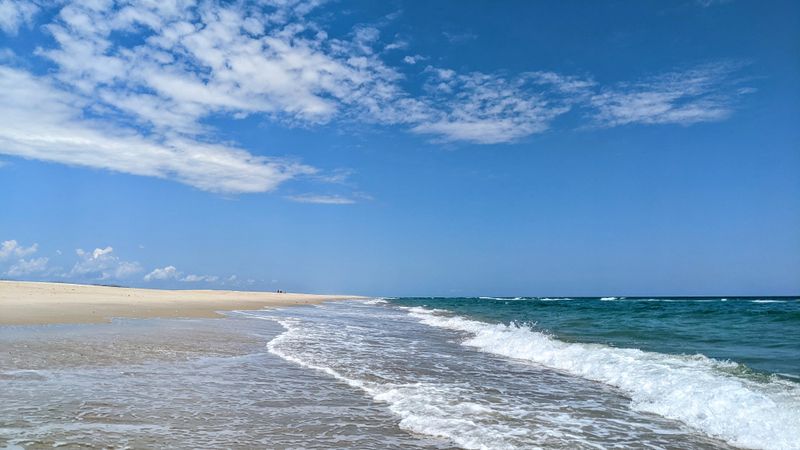
Core Banks and Shackleford Banks stretch across fifty-six uninterrupted miles of sand, shell, and sea oats, forming a barrier island system that feels more like the nineteenth century than the twenty-first.
No hotels line these beaches, no umbrellas dot the sand in organized rows, and no lifeguard stands interrupt the horizon.
What you find instead is space—actual, measurable distance between you and the next human.
The two island chains offer different personalities: Core Banks runs longer and wilder, while Shackleford brings its famous horses.
Both deliver the same essential promise: room to breathe, walk, and think without bumping into civilization every hundred yards.
Meet The Diamond Lady: Cape Lookout Lighthouse And Its Striped Legend
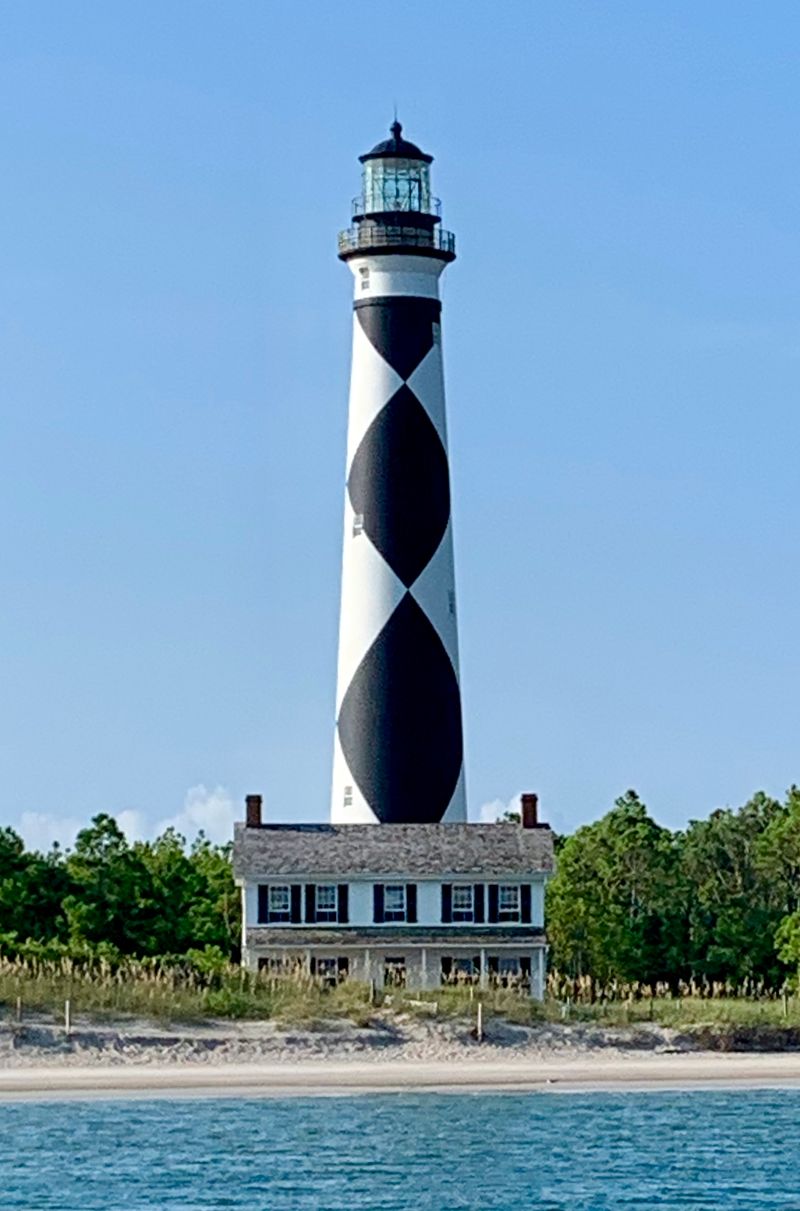
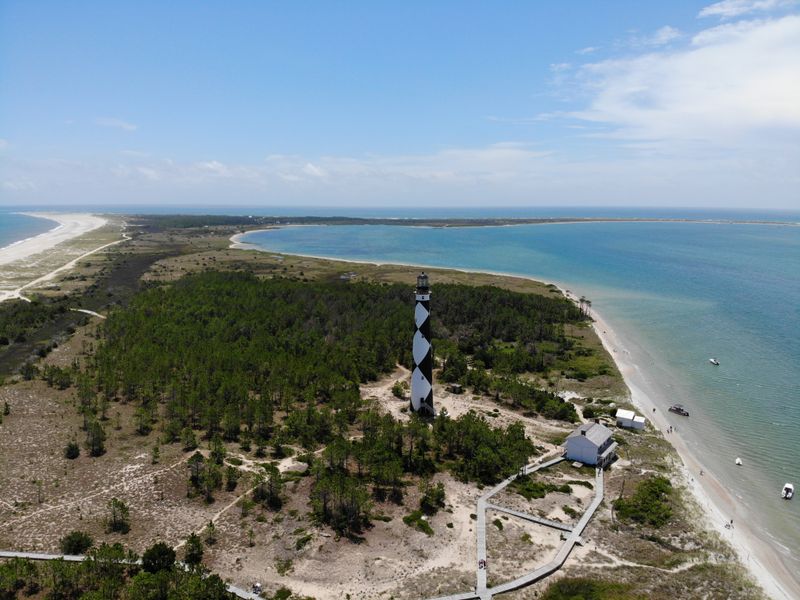
Built in 1859, Cape Lookout Lighthouse wears its black-and-white diamond pattern like a well-earned uniform.
Standing 163 feet tall, it has guided ships past the treacherous Outer Banks shoals for over a century and a half, earning its nickname through both design and endurance.
The distinctive daymark makes it instantly recognizable from sea or shore, a geographic anchor in an otherwise featureless landscape.
Visitors can climb the 207 steps during seasonal tower openings, though the view from ground level already impresses.
The lighthouse grounds include a keeper’s quarters museum, where you learn that tending this beacon was equal parts dedication and isolation, much like visiting the seashore itself.
Sleep Where The Waves Are The Playlist: Primitive Beach Camping, The Default Here
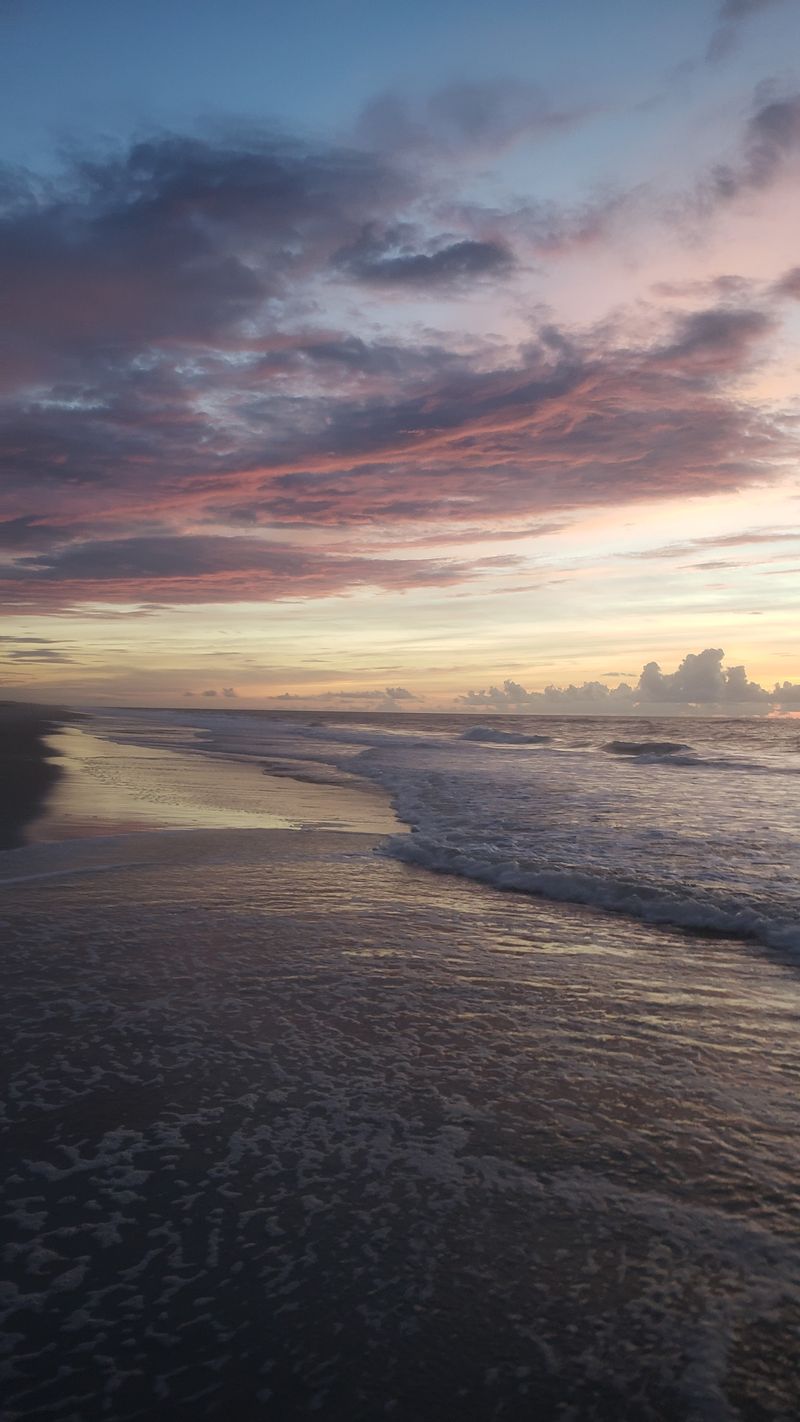
Camping at Cape Lookout means pitching your tent directly on the beach, where the Atlantic provides your soundtrack and the stars handle the lighting.
No designated campsites exist, no fire rings mark approved spots, and no bathhouses offer hot showers.
You simply choose your stretch of sand, stake your tent against the wind, and settle into the kind of camping that requires actual skill rather than reservations.
Pack everything in, pack everything out—that rule governs all stays.
Freshwater remains scarce, shade is nonexistent, and the nearest convenience store sits across the sound.
But waking to sunrise over the ocean, unfiltered by trees or buildings, makes every ounce you carried worth the effort.
Two Rules Of Shackleford: Tents Only, And Wild Horses Everywhere
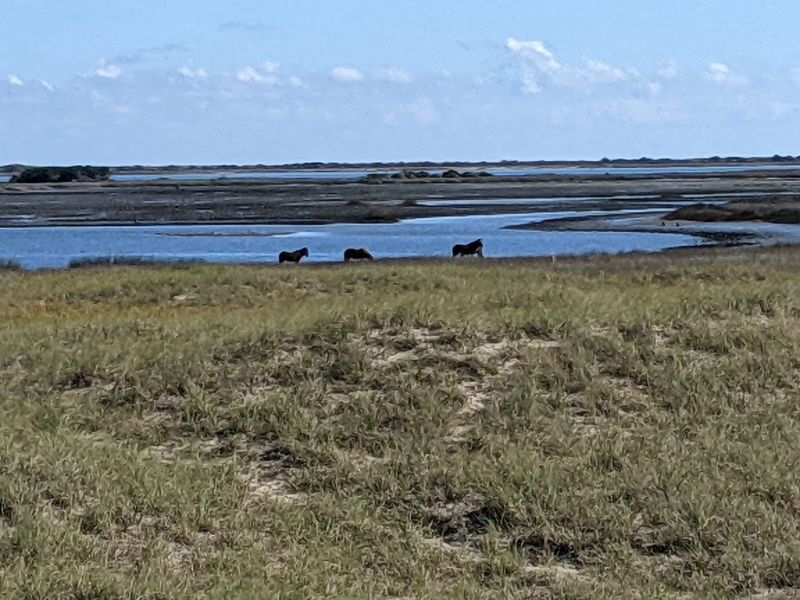
Shackleford Banks enforces a strict tents-only policy, meaning your RV stays on the mainland while you rough it properly.
The regulation preserves the island’s wild character and prevents the kind of vehicle-based camping that can damage fragile dune systems.
What the island lacks in amenities, it compensates for with its resident herd of feral horses, descendants of Spanish mustangs that have roamed these banks for centuries.
Spotting the horses requires patience and respect for distance—they are genuinely wild, not petting-zoo tame.
Watch them graze among the dunes or gallop along the surf line, and you understand why some regulations exist to protect rather than restrict.
Core Banks For The Bold: Drive On The Sand, Camp Under The Stars
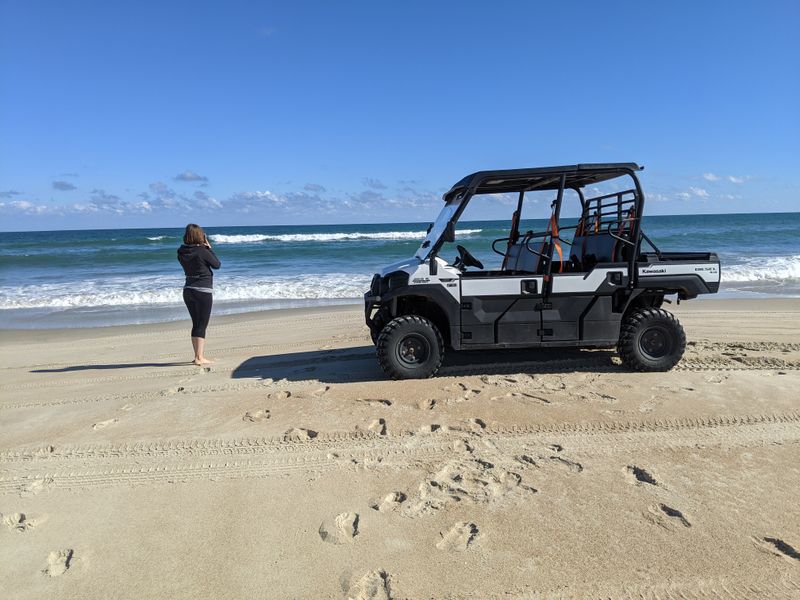
Core Banks permits four-wheel-drive vehicles on its beaches, turning the sand into a highway for those equipped and prepared.
Lowering your tire pressure becomes essential, not optional, and understanding tide schedules separates successful trips from expensive tow-outs.
The ability to drive your gear directly to your campsite eliminates the backpack-hauling struggle, though it introduces new challenges like soft sand and saltwater corrosion.
Many visitors combine vehicle access with primitive camping, creating base camps stocked with coolers, fishing rods, and beach chairs.
The experience splits the difference between hardcore backpacking and comfortable car camping, offering independence without total isolation from your supplies.
Just remember: getting stuck means waiting for help that travels by boat.
Portsmouth Village: A Boat-Only Time Capsule With Ghost-Town Quiet
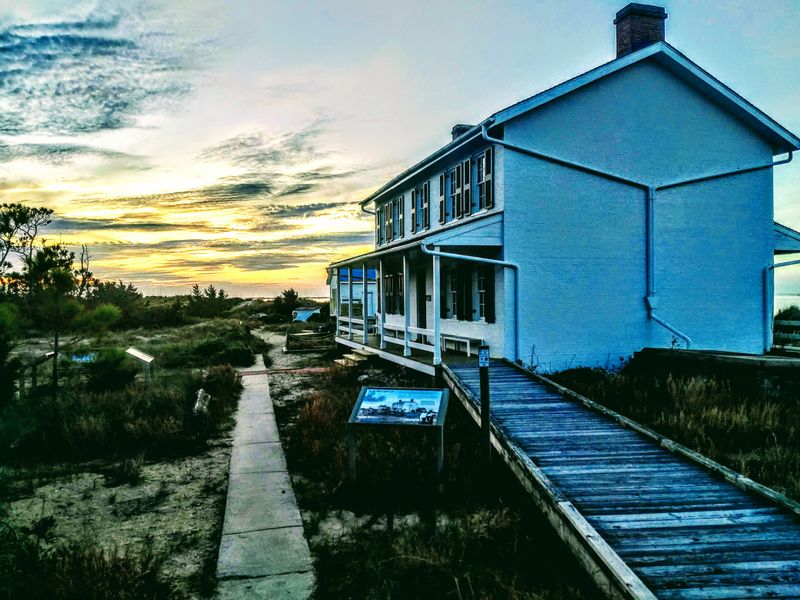
Portsmouth Village occupies the northern tip of Core Banks as a preserved ghost town, accessible only by boat and maintained by the National Park Service.
Once a thriving port community in the 1800s, it now stands empty except for restored buildings that whisper stories of maritime commerce and isolated coastal life.
Walking its sandy lanes feels like trespassing on memory itself, with the church, post office, and homes waiting for residents who left decades ago.
No overnight stays are permitted in the village structures, but camping nearby lets you explore at dawn when the light turns everything golden.
The silence here runs deeper than mere quiet—it carries the weight of abandonment and preservation combined.
Cabin Life, But Make It Remote: Great Island Cabin Camp By Reservation Only
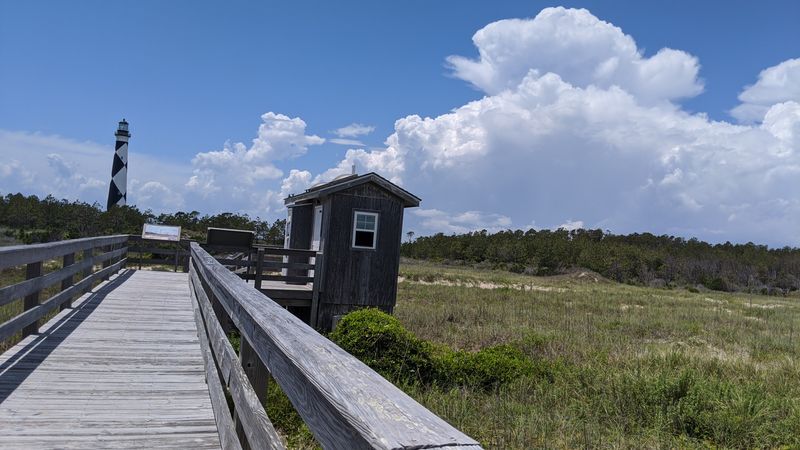
Great Island Cabin Camp offers the seashore’s only roofed accommodations, with rustic cabins available through advance reservation.
These structures provide basic shelter—walls, beds, screened windows—without electricity, running water, or climate control.
Think of them as upgraded tents that keep sand out of your sleeping bag while maintaining the essential remoteness that defines Cape Lookout.
Reservations fill quickly during peak season, so planning ahead becomes necessary rather than optional.
The cabins sit near the lighthouse, offering easier access to that landmark while keeping you overnight on the islands.
You still pack in your food, water, and supplies, but sleeping off the ground appeals to those whose backs protest beach camping after a certain age.
Your Basecamp On The Mainland: Harkers Island Visitor Center For Maps And Updates
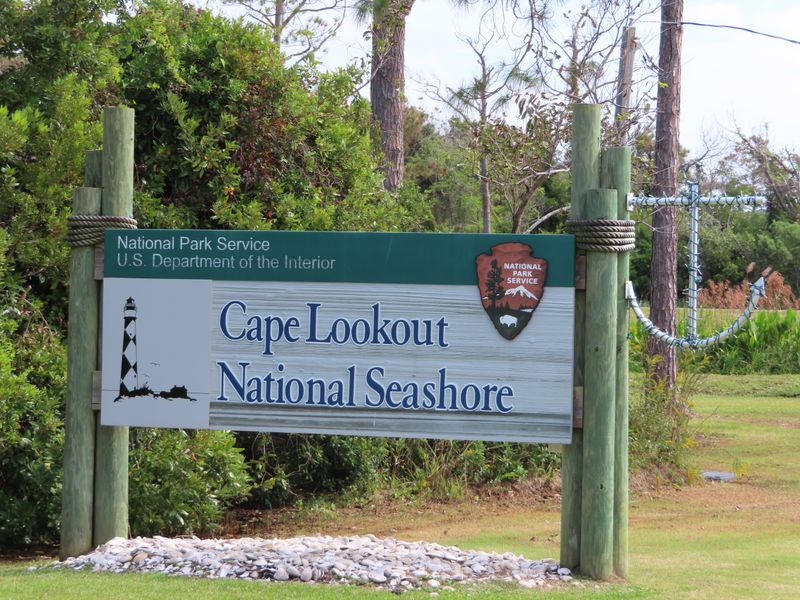
Before boarding any ferry, stop at the Harkers Island Visitor Center to gather intelligence, maps, and current conditions.
Rangers here answer questions about weather, ferry schedules, and camping regulations with the practical knowledge of people who understand the difference between planning and hoping.
The center stocks brochures, sells books, and displays exhibits that contextualize what you are about to experience across the sound.
Located conveniently near ferry departure points, the visitor center serves as your last connection to reliable information and climate control.
Bathrooms, water fountains, and cell service all become luxuries once you leave, so use this stop wisely.