
Why This Ohio Town Is So Quiet That Tourists Haven’t Found It Yet
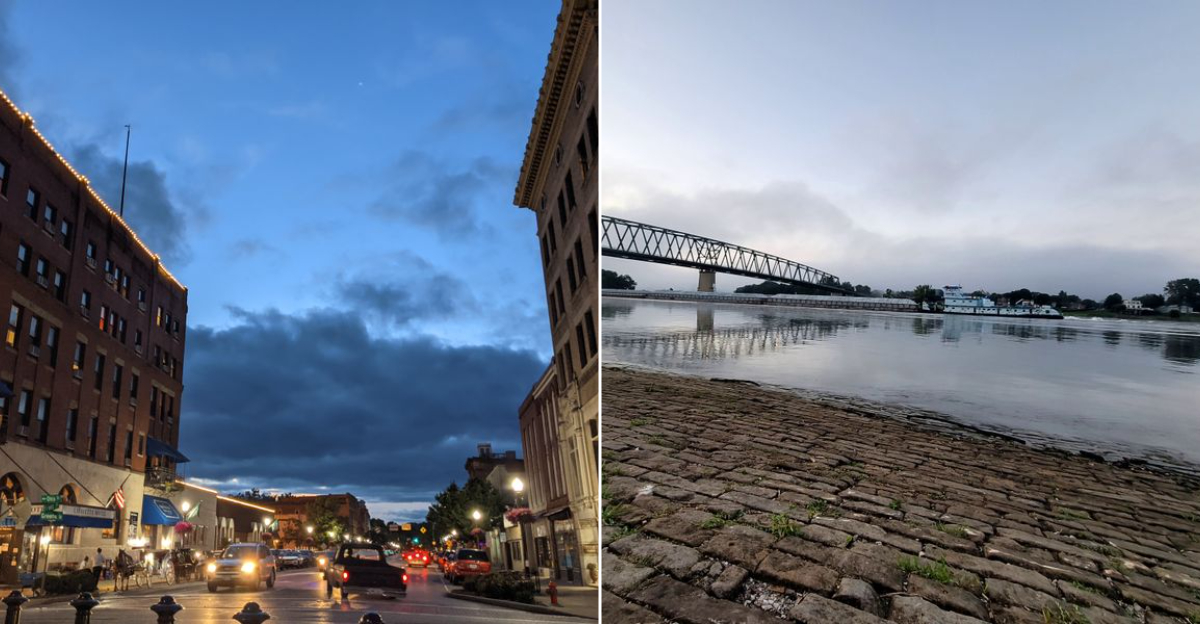
There is a hush along the riverbanks in Marietta that does not ask for attention, it simply holds it.
You notice it first by the measured pace of the streets, where the Muskingum meets the Ohio and the water carries conversation like a patient confidant.
You keep walking because the town keeps revealing itself in steady increments, never rushing, always inviting.
You stay because quiet can be persuasive when a place is this sure of who it is, offering brick paths, historic homes, shaded benches, and long views that encourage listening, lingering, and a gentle trust in time unfolding at its own pace.
Rivers That Think In Complete Sentences
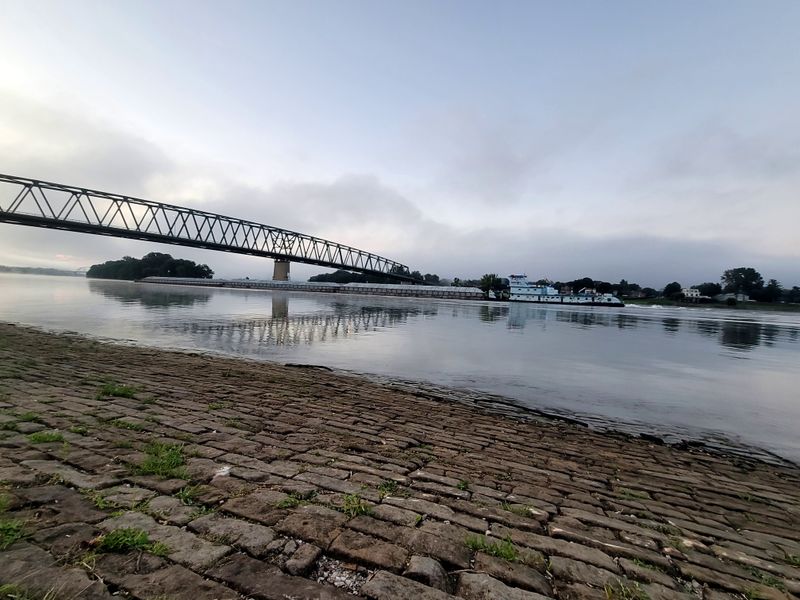
The meeting of the Muskingum and Ohio Rivers shapes Marietta the way a careful editor shapes a line, at once subtle and decisive.
You feel it on the River Trail, where bicycles whisper past sycamores and the water keeps its own counsel.
You look across at the slow tug traffic and remember that this is a working confluence, not a staged panorama for hurried visitors.
The rhythm here encourages unhurried observation, so benches become front row seats for currents and clouds.
You can trace the town’s outline from the water, catching the brick glint of Front Street and the quiet geometry of bridges.
You notice that conversation softens near the railing, as though the river sets the volume.
There is history under the calm, documented by markers that do not shout and by boat wakes that fold gently into the bank.
You might follow the path to where the Muskingum locks begin, practical and unromantic in the best way.
You leave with a sense that the confluence edits your thoughts, trimming anything unnecessary, leaving the clear parts.
Past late afternoon, light lands on the surface like pages turning, even if that sounds indulgent at first.
You watch for a while and understand why people here speak of water as an address.
You will not find spectacle, and that feels like the point.
The rivers work, they listen, and they keep the town honest.
Front Street’s Measured Conversation
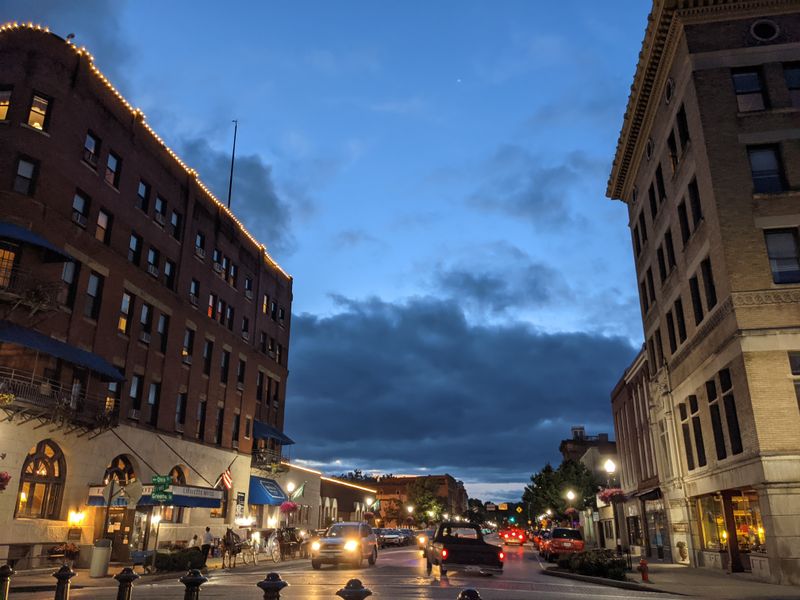
Front Street does not perform for cameras, though it understands how to stand up straight.
You walk from storefront to storefront and catch the old brick breathing out a cool, settled air.
The hanging signs creak a little, which somehow feels like proof.
Shops here lean toward useful goods and well-chosen indulgences, not the loud variety.
You might linger over regional books, smell coffee that does not try too hard, and find a bakery that moves pastries without fanfare.
You notice how people greet one another with a nod that remembers names even when spoken softly.
The architecture carries its age without wobble, particularly the upper windows that promise deeper rooms and measured routines.
You will not be chased by novelty, which gives you space to read small details: a worn threshold, an original door latch, the quiet pride of a polished brass number.
You feel welcomed and lightly supervised by those details, in the kindest way.
Evenings bring a warm glow that politely refuses drama.
Light settles in shop windows, the river air slips down the cross streets, and footsteps reset to a slower metronome.
This is a street that understands patience and expects it in return.
By the time you reach the end, you are surprised by how much you noticed without even trying.
Campus On The Hill, Town In The Pocket
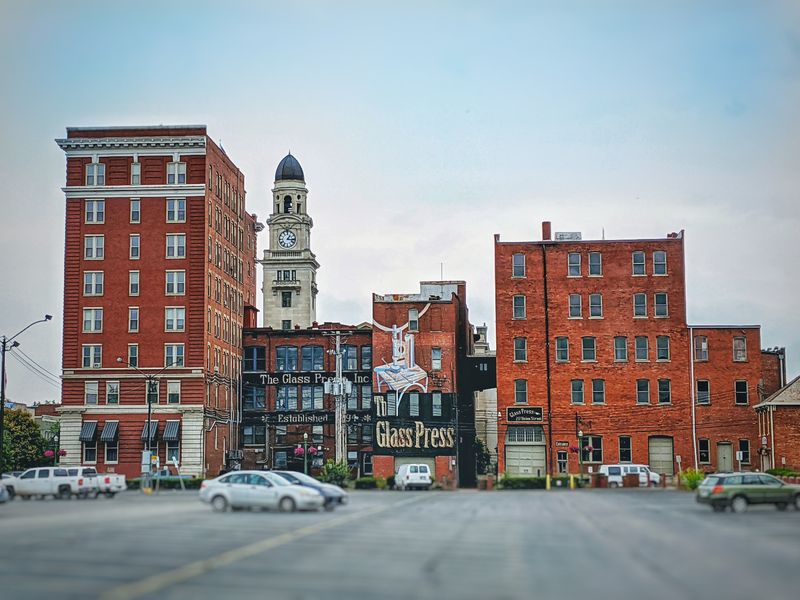
Marietta College sits just above the streets like a calm supervisor, keeping an eye on the river towns below.
You walk past the lawn and feel the clipped steadiness of a campus that knows its work.
The cupola and brick facades do not beg for reverence, they simply request it.
The college and town share a clear handshake, practical rather than ceremonial.
Students drift toward coffee on Greene Street, then back up the gentle rise, passing houses that have heard many seasons.
The slope makes the connection visible, a gradient from study to shop to river.
You will find small museums and labs that open their doors without fuss, which suits the place.
A few plaques mark early scholarship and engineering, and you realize the area has been solving problems since the locks were new.
Learning here keeps a reasonable voice, even when the subject invites applause.
From the green, rooftops run like tidy lines toward Ohio 45750, the address that anchors the whole picture.
Bells keep time that the rest of town seems happy to follow.
Standing there, you sense how an education can be a neighbor rather than a billboard.
The campus breathes with the town and lets visitors keep step without losing their own pace.
Mound Cemetery’s Quiet Arithmetic
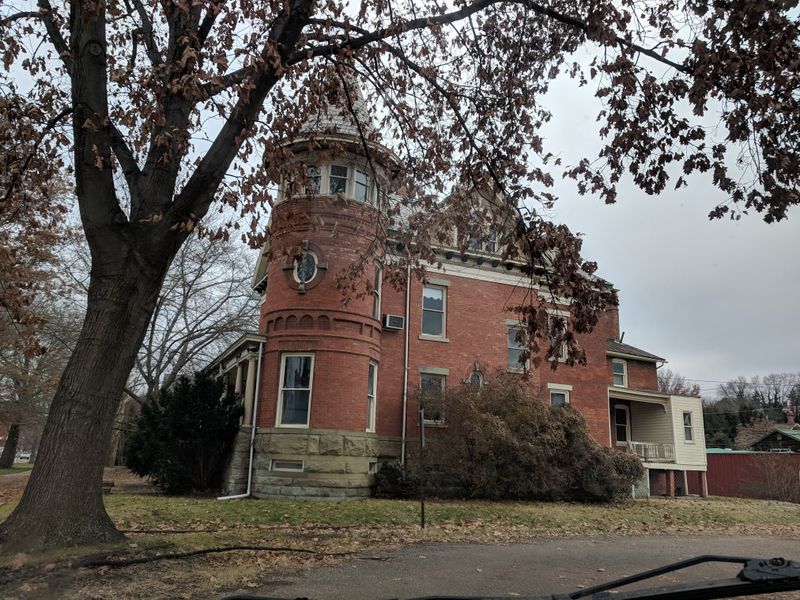
Mound Cemetery folds deep time into a single rise of earth, and the effect is steadying rather than solemn.
You step into the dappled shade and realize the hill predates the names etched around it.
The Adena builders left a clean geometry that still commands a hush.
The Revolutionary War graves bring another layer, neat and factual, with dates that anchor rather than dramatize.
You read a few inscriptions in a measured voice, as if the trees are grading your tone.
The combination of indigenous mound and early republic markers asks you to hold more than one timeline without confusion.
Paths curve with a careful hand, guiding you up and around, never pushing.
You see how the town protects the site without walling it off, an approach that feels mature.
The place teaches patience just by existing in the middle of ordinary life.
Later, when you pass the coordinates noted in a guidebook, 39.415352 by 81.454844 becomes more than numbers.
It becomes evidence that someone thought to keep this quiet high point exactly where it belongs.
You leave with your voice lowered but your attention sharpened.
Marietta’s past does not press down here, it simply occupies its rightful space.
The Working Locks And Their Honest Pace
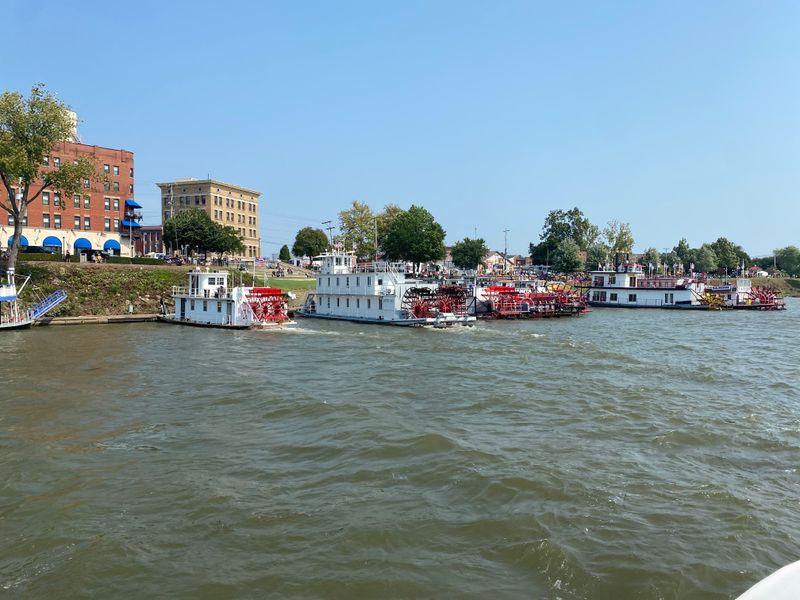
The Muskingum locks move with a reliability that does not require applause, which suits Marietta perfectly.
You stand by the wall and watch water rise with the patience of a good ledger.
The lock tender’s routine looks like choreography written by an engineer.
Boats arrive with weekend plans or local errands, and everyone follows the same measured rules.
You hear the scrape of rope, the clink of hardware, and a quiet greeting that acknowledges both duty and neighborliness.
The scene is peaceful because it is purposeful, not staged.
Information boards cover enough history to satisfy a curious morning.
You learn how the system linked communities long before highways made promises they could not keep.
The locks still work because people kept them working, a plain statement with an admirable spine.
Standing there, you can trace a line from this mechanism to the town’s calm confidence.
It is all connected to water, to moving at the speed of usefulness.
You walk away carrying the cadence of gates opening and closing.
It is a sound that makes a case for staying a little longer than planned.
Green Streets And Side-Porch Diplomacy
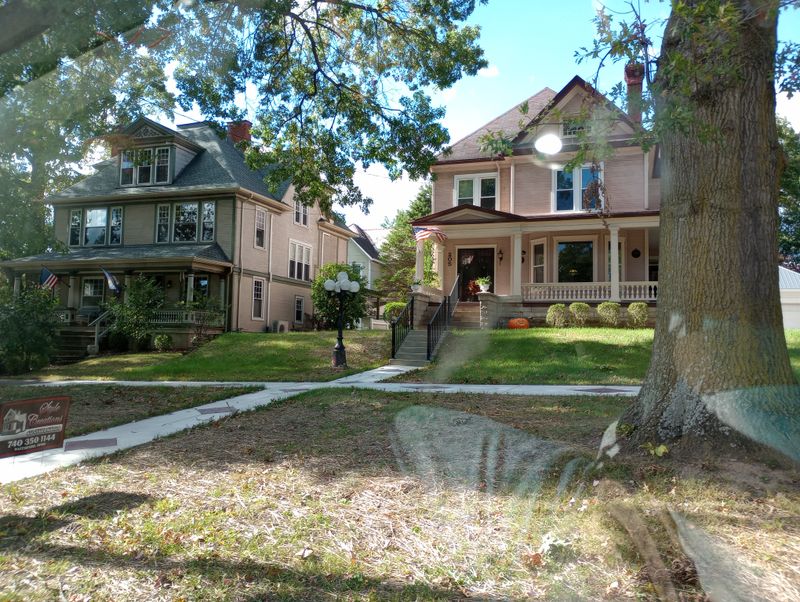
Residential streets in Marietta hold their hush with admirable discipline.
You wander down a block lined with porches that know how to listen, each one furnished with two chairs and a practical table.
The air carries laundry notes, cut grass, and the slow tap of a screen door.
Houses keep their details in good order without turning fussy.
Painted trim frames tall windows, steps are swept, and small gardens do steady work along the walks.
A neighbor waves at a sensible angle, acknowledging your presence without starting a committee.
There is light traffic, mostly local, and the occasional dog that appears to understand municipal codes.
Side-porch diplomacy thrives here, a style of conversation that runs on civility and the exchange of neighborhood intelligence.
You sense how easily guests are folded into the flow when they bother to match the town’s pace.
It becomes clear that the quiet is not accidental, it is maintained by ordinary routines done well.
Somewhere a flag shifts in wind that smells faintly of the river, reminding you the water is only a few blocks away.
You leave the street feeling rested, as if someone smoothed a page you did not know was crumpled.
That seems like an achievement worth noting in a place this modest.
Where Evening Finds Its Balance

Dusk in Marietta settles evenly, giving both river and town their share of the last light.
You watch the bridges put on a sensible outline while the water answers with a modest reflection.
The effect is pleasing without leaning on spectacle.
People drift to the River Trail and the small overlooks, holding conversations that leave room for the view.
A jogger yields to a couple walking a dog, and everyone agrees without paperwork.
The downtown windows begin to glow, steady rather than theatrical.
Restaurants along the core open their doors to the street and let the evening walk in.
Menus read like invitations to stay a while, not competitions.
You notice how service runs on eye contact and the quiet humor that good towns cultivate without thinking much about it.
By the time the sky turns definitive, you have tracked a dozen small proofs that calm can be lively.
The address Ohio 45750 shows up on a receipt and feels oddly precise, like a signature that matches perfectly.
You turn back toward the river and hear the water doing its continuous work.
It is an ending that feels like a well-placed period rather than a flourish.