
The Under-The-Radar North Carolina Beach That Avoids The Crowds
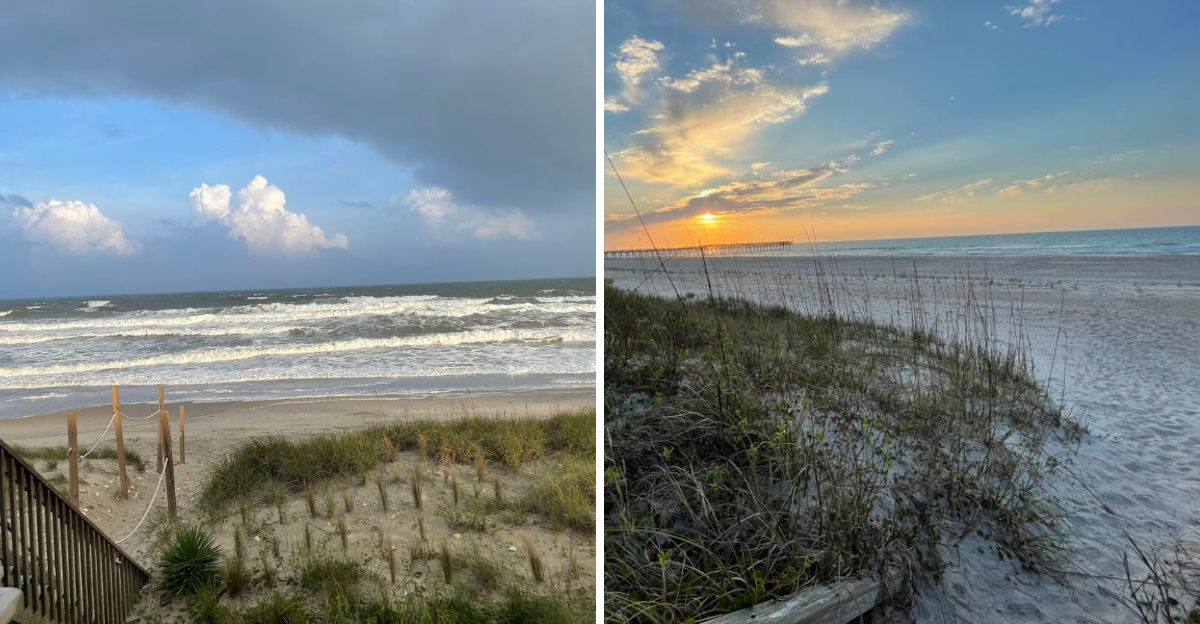
Topsail Island sits quietly along North Carolina’s southern coast, a 26-mile stretch of sand that never caught the resort fever that transformed so many other coastal towns.
While neighboring beaches built high-rises and boardwalks, this barrier island kept its small-town character and unhurried pace.
Families return here year after year not for flashy attractions, but for the simple pleasure of walking an uncrowded beach where sea turtles still come ashore to nest each summer.
A 26-Mile Barrier Island That Still Feels Quiet
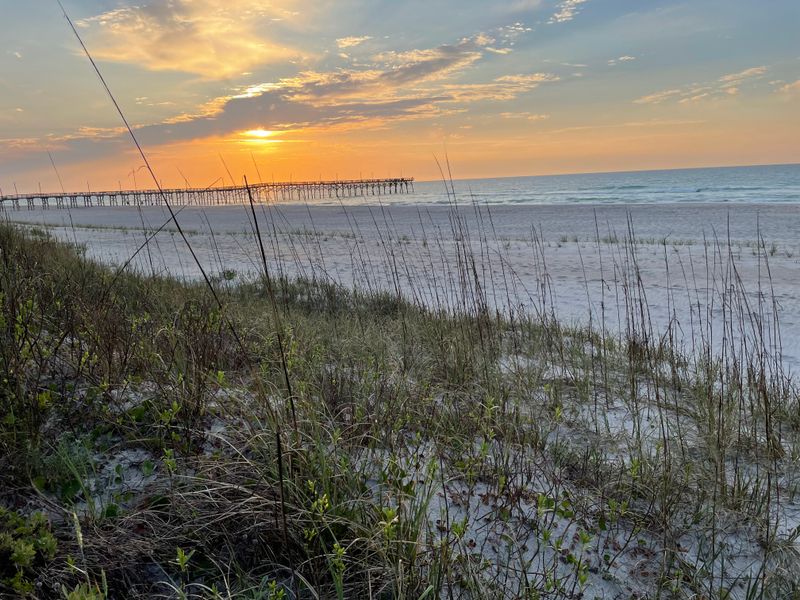
Topsail Island stretches along the Carolina coast with a geography that naturally resists overcrowding.
The island runs narrow and long, which means beachfront property never became dense enough to support the kind of commercial sprawl you find elsewhere.
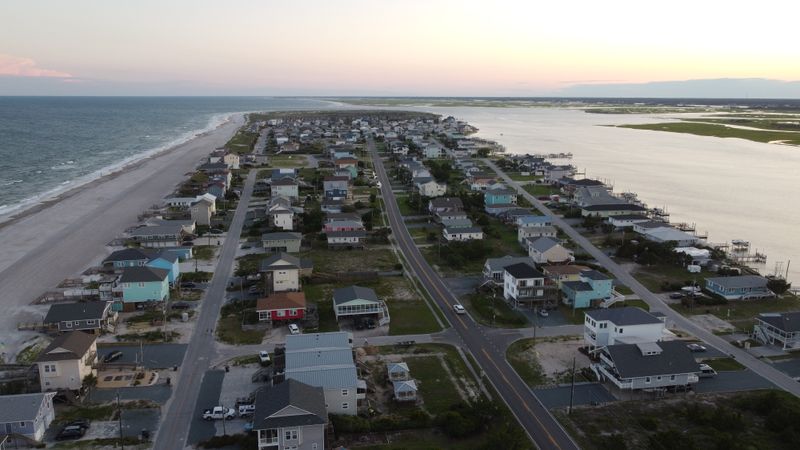
Most of the development here consists of modest beach houses rather than towering condominiums.
Driving the length of the island takes about forty minutes at a relaxed pace, passing through three distinct municipalities that each maintain their own character.
The roads stay two lanes, the traffic moves slowly, and you never lose sight of the fact that you’re on an island.
Even during peak summer weeks, the beaches here maintain a spaciousness that disappeared decades ago from places like Myrtle Beach or Virginia Beach.
What keeps Topsail feeling quiet is partly intentional and partly fortunate.
Local building codes have long restricted height and density, preserving sight lines and preventing the wall of concrete that defines so many beach towns.
No Boardwalk, No High-Rises, No Amusement Piers
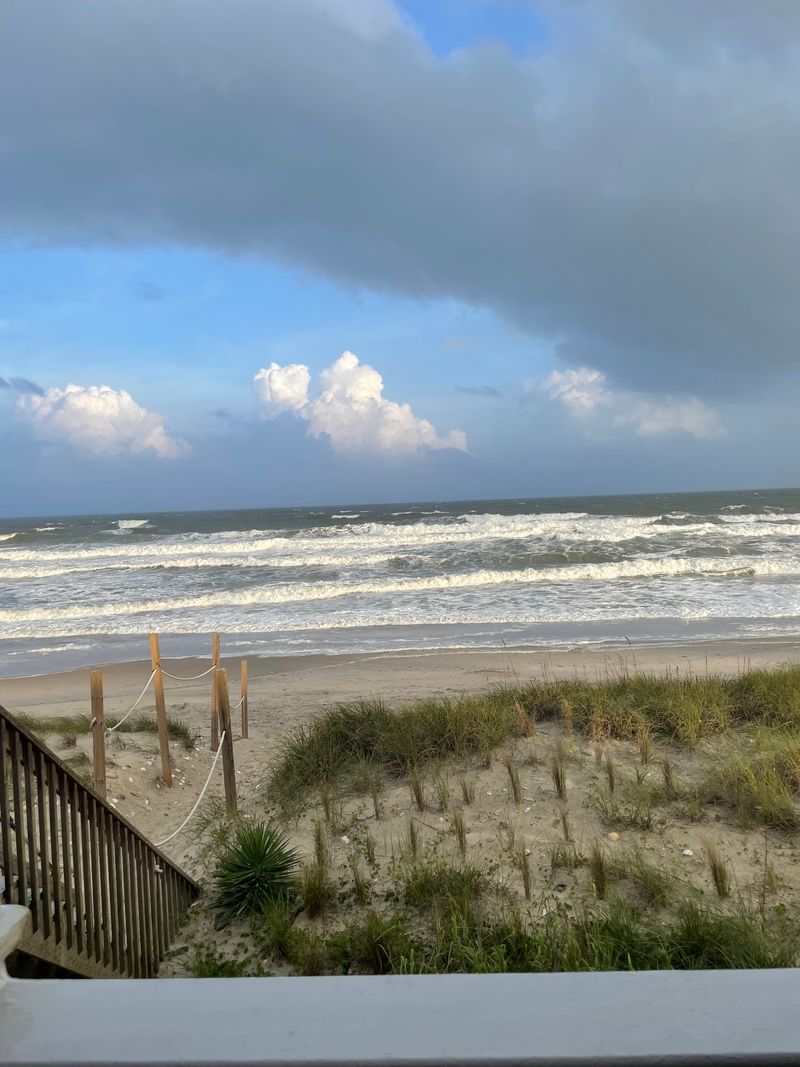
Topsail Island never built the infrastructure that typically defines a beach resort, and the absence shapes the entire experience here.
There’s no wooden boardwalk lined with t-shirt shops and ice cream stands, no towering hotels blocking ocean views, and no amusement pier with rides and arcades.
What exists instead is a remarkably plain stretch of sand backed by houses and maritime vegetation.
Some visitors find this lack of amenities disappointing at first, especially families accustomed to the constant stimulation of more developed beaches.
Children expecting mini-golf courses and go-kart tracks will need to adjust their expectations.
But most people discover that the absence of commercial distractions actually improves the beach experience rather than diminishing it.
Without a boardwalk funneling crowds to specific locations, beachgoers spread out naturally along the entire coastline.
The tallest structures rarely exceed three stories, which means ocean breezes reach inland neighborhoods and sunrise views remain unobstructed.
Topsail Island chose a different path decades ago, and that decision preserved something increasingly rare along developed coastlines.
Three Small Beach Towns Instead Of One Overbuilt Resort
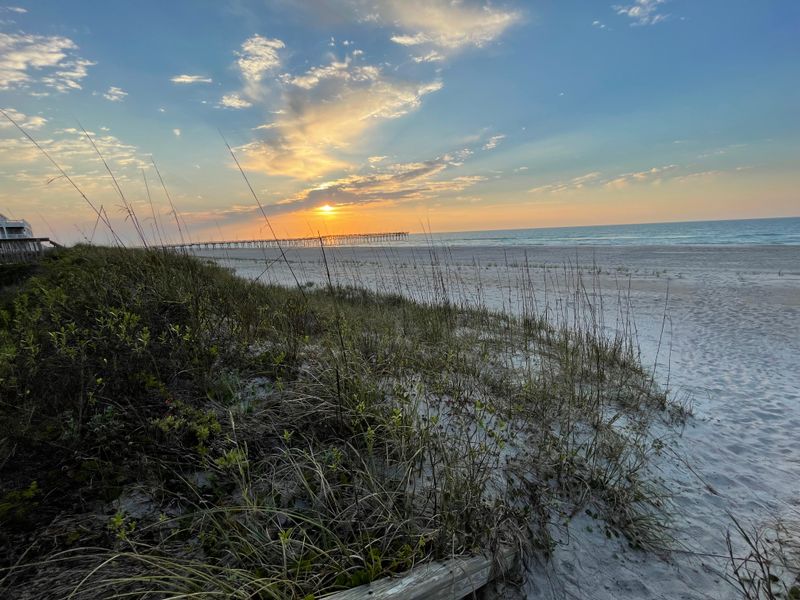
North Topsail Beach, Surf City, and Topsail Beach divide the island into three separate communities, each with its own mayor and town council.
This fragmented governance actually works in the visitor’s favor, preventing any single developer or vision from dominating the entire coastline.
Each town developed at its own pace and according to its own priorities.
Surf City sits in the middle and serves as the island’s commercial center, though calling it commercial overstates the case considerably.
You’ll find grocery stores, tackle shops, and a handful of restaurants, but nothing resembling a shopping district or entertainment complex.
North Topsail Beach occupies the northern stretch and leans residential, with vacation rentals outnumbering businesses by a wide margin.
Topsail Beach anchors the southern end with an even quieter atmosphere and the smallest year-round population.
The three-town structure means no single municipality ever accumulated enough tax base or political will to pursue large-scale tourism development.
What might seem inefficient from a planning perspective becomes a blessing for anyone seeking a low-key beach experience.
Dozens Of Public Beach Access Points Keep The Sand Uncrowded
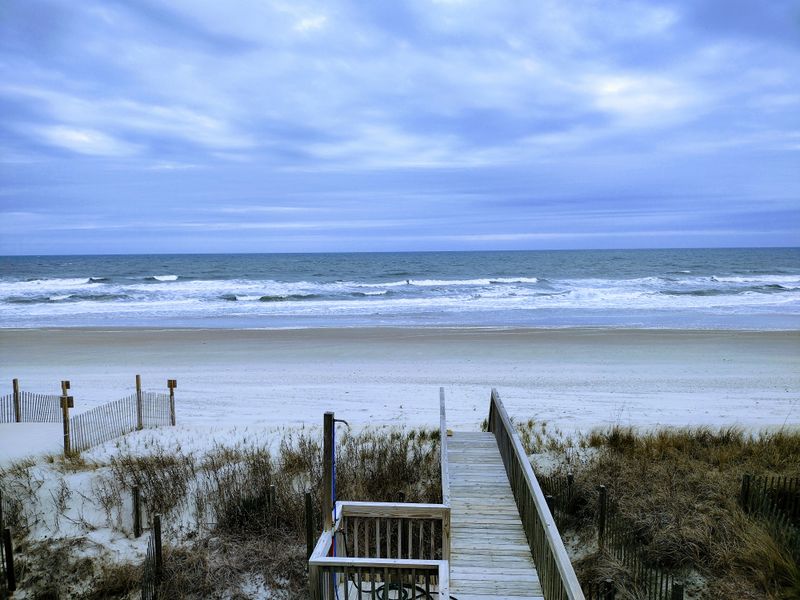
Public access points appear every few blocks along the island’s ocean side, marked by small parking areas and wooden walkways over the dunes.
This distribution of entry points prevents the clustering that creates crowded beach scenes elsewhere.
Rather than everyone converging on a single main beach, visitors naturally disperse to whichever access point sits nearest their rental house or hotel.
Most access points offer just a handful of parking spaces, which naturally limits how many people use each one.
The walks over the dunes take only a minute or two, but they create enough separation from the road that the beach feels genuinely removed from civilization.
Some access points include outdoor showers and trash receptacles, while others offer nothing but the path itself.
Local regulations require these public passages, preventing beachfront property owners from monopolizing ocean access.
The system works remarkably well, ensuring that even visitors staying several blocks inland can reach the beach easily.
On a typical summer afternoon, you can walk in either direction and see plenty of open sand between family groups.
A Pier Town Without The Pier Crowds
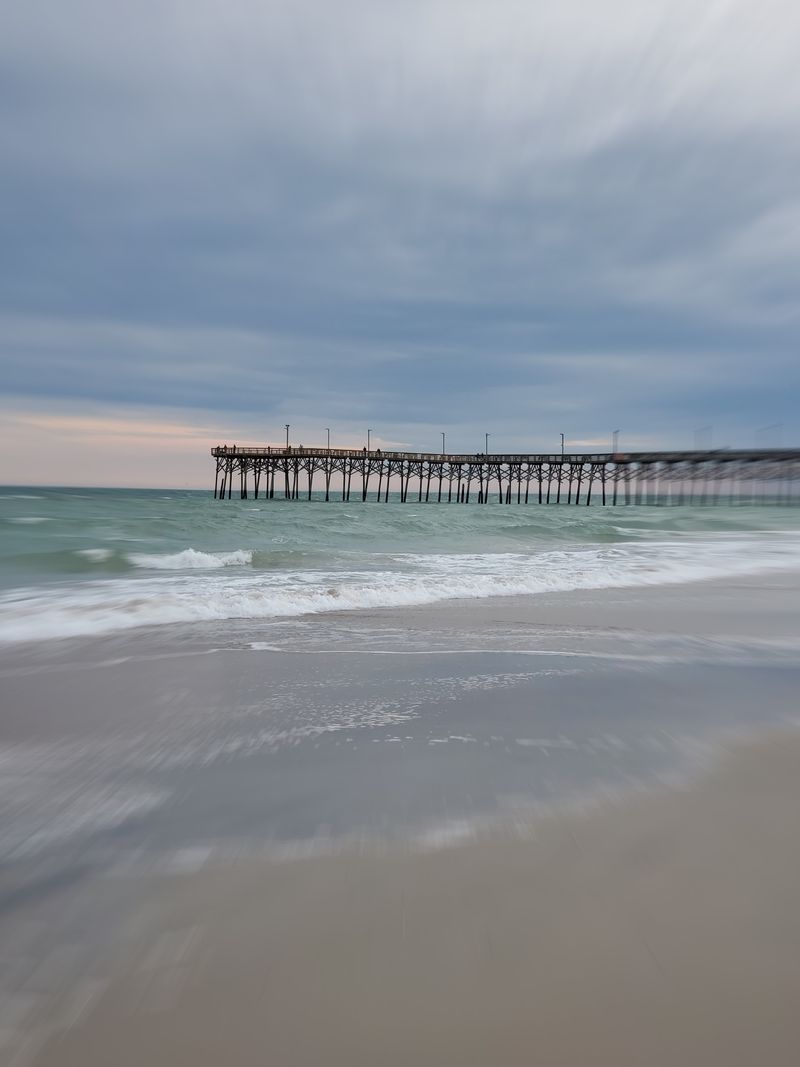
Surf City maintains a fishing pier that extends several hundred feet into the Atlantic, providing anglers access to deeper water and stronger currents.
Unlike the entertainment piers at Ocean City or Atlantic City, this structure serves a purely functional purpose.
People come here to catch fish, not to ride roller coasters or play carnival games.
The pier opens early each morning and charges a modest daily fee for fishing privileges.
You’ll find a small shop at the pier house selling bait, tackle, and basic supplies, along with a snack bar that operates during peak season.
The atmosphere leans heavily toward serious fishing rather than casual sightseeing, though non-anglers can pay a smaller fee just to walk out and enjoy the view.
Even during summer weekends, the pier never feels packed.
Fishermen space themselves along the rails with enough room to cast lines without tangling with neighbors.
The absence of arcade games and fried dough vendors means the pier attracts people genuinely interested in fishing rather than crowds seeking entertainment.
It’s a working structure in a working beach town.
A Soundside That’s Just As Peaceful As The Oceanfront
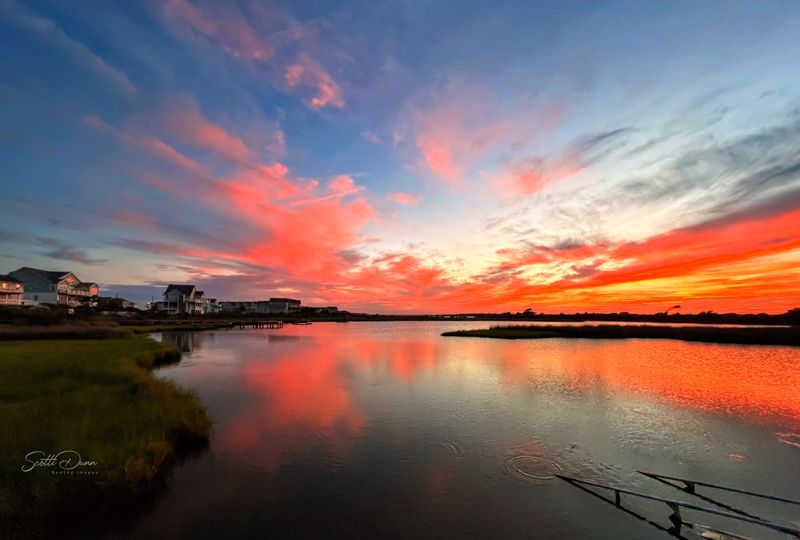
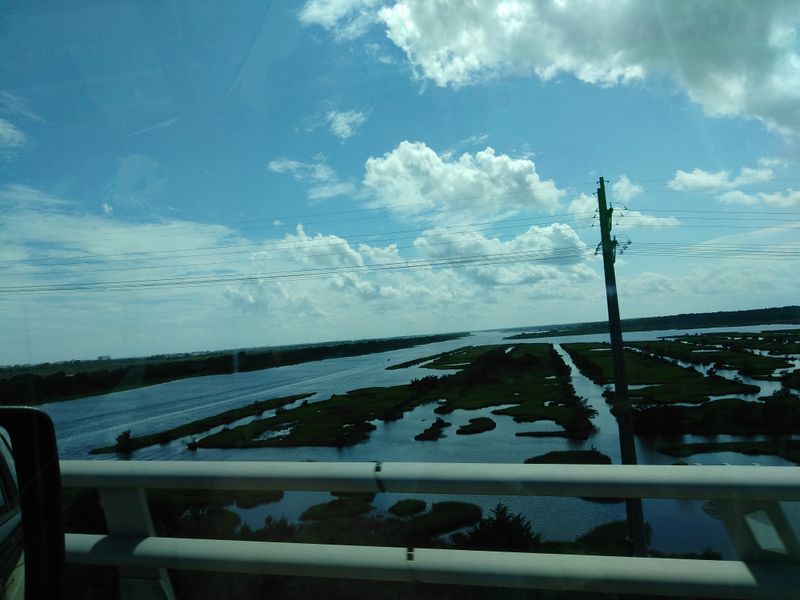
The western side of Topsail Island faces the Intracoastal Waterway and the salt marshes beyond, creating a completely different coastal experience from the ocean beach.
Sound-side properties tend to be quieter and less expensive than oceanfront rentals, yet they offer their own considerable advantages.
The water here stays calmer, making it ideal for kayaking, paddleboarding, and small boat exploration.
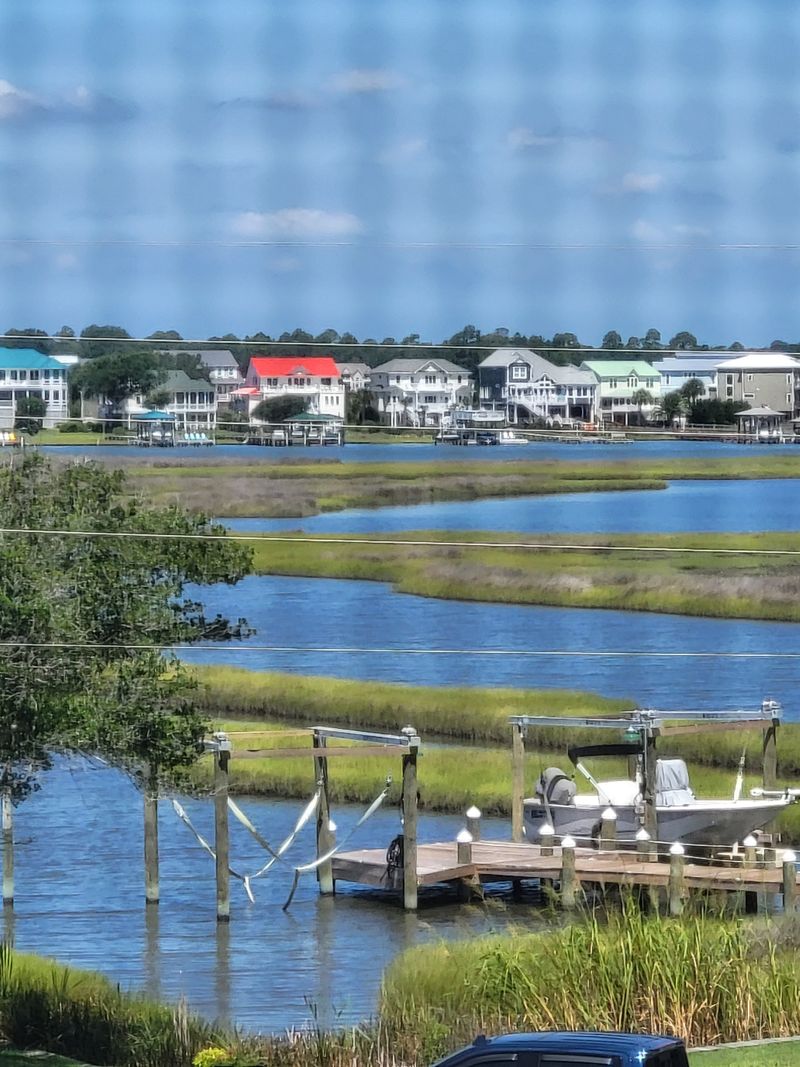
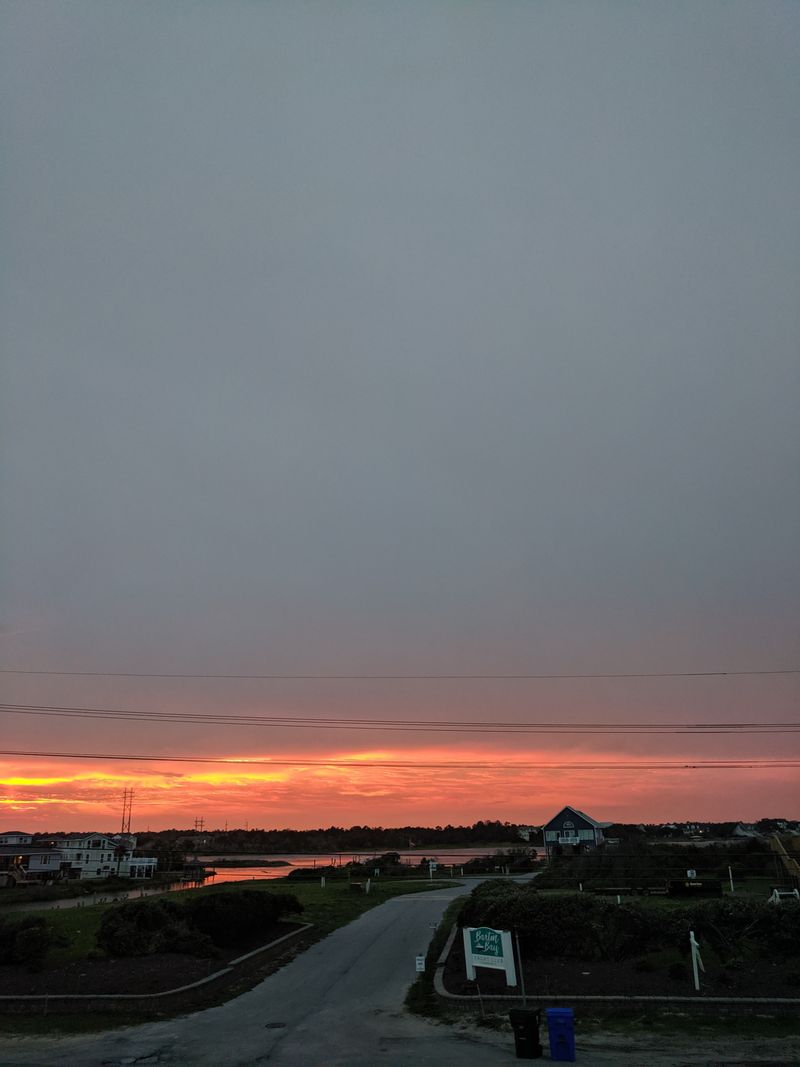
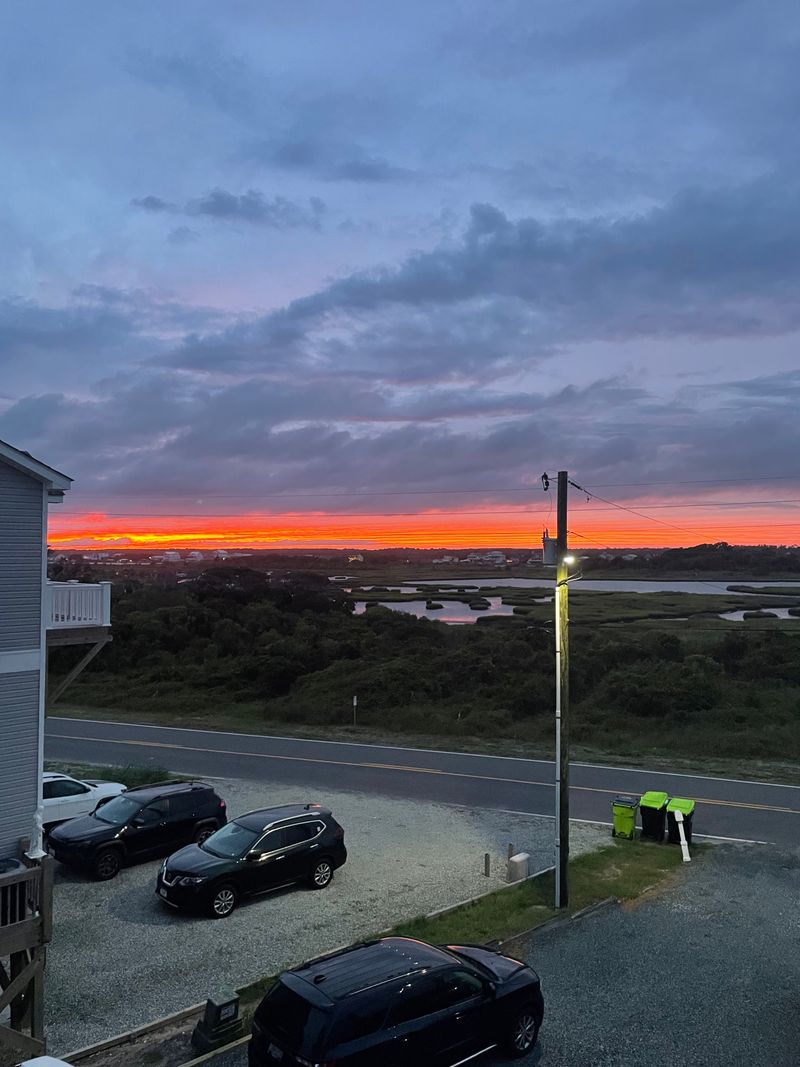
Sunsets over the sound often outshine the ocean sunrises, painting the marsh grasses and shallow waters in shades of orange and pink.
Many sound-side homes include private docks where families can tie up boats or simply sit and watch herons hunting in the shallows.
The western shore remains largely undeveloped compared to the ocean side, with stretches of maritime forest and wetland breaking up the residential areas.
Fishing from sound-side docks produces flounder, spot, and the occasional red drum, while crabbing with
chicken necks and wire traps remains a reliable summer activity for children.
The sound never gets the attention that the ocean demands, which means it stays even quieter and more overlooked by the majority of visitors.
A Beach Where Sea Turtles Still Nest Every Summer
Loggerhead sea turtles return to Topsail Island each year between May and August, crawling ashore at night to dig nests and deposit eggs in the sand.
The island hosts the Karen Beasley Sea Turtle Rescue and Rehabilitation Center, which monitors nesting activity and protects vulnerable nests from predators and human interference.
Volunteers patrol the beaches each morning during nesting season, marking new nests and installing protective cages around them.
The continued presence of nesting sea turtles indicates something important about this beach’s character and cleanliness.
These ancient reptiles require dark, undisturbed beaches for successful nesting, which means Topsail has avoided the kind of nighttime lighting and heavy foot traffic that drives turtles away from more developed shores.
Local ordinances restrict beachfront lighting during nesting season, and property owners generally comply without complaint.
Visitors who time their trip right might witness a nest hatching, when dozens of tiny turtles emerge and scramble toward the ocean.
The turtle hospital in Surf City welcomes visitors and offers educational programs about sea turtle conservation.
Finding a marked turtle nest while walking the beach serves as a reminder that this coastline still functions as wildlife habitat.
A History Tied To Missiles, Not Mass Tourism
During the late 1940s, the United States Navy used Topsail Island as a top-secret testing ground for ramjet missile technology under a program called Operation Bumblebee.
Engineers constructed a launch facility and observation towers along the beach, firing experimental missiles over the Atlantic to gather data on supersonic flight.
The military presence kept the island largely uninhabited and undeveloped during years when other beaches were beginning their transformation into resort destinations.
Several concrete observation towers still stand along the beach, now weathered and graffitied but protected as historical structures.
These stark cylindrical towers serve as reminders of the island’s unusual past and its late entry into the tourism economy.
By the time the Navy departed and developers arrived, the aggressive resort-building boom of the 1950s and 1960s had largely passed.
The Missiles and More Museum in Topsail Beach preserves this Cold War history with photographs, artifacts, and detailed explanations of the rocket program.
Topsail’s development trajectory was fundamentally altered by those military years, which delayed commercial exploitation long enough that building codes and environmental awareness caught up.
The island entered the modern era with more restrictions and less ambition than its neighbors.
Seafood Restaurants That Cater To Locals First
Topsail Island’s dining scene lacks the chain restaurants and themed eateries that dominate most beach resort towns.
What you find instead are family-owned seafood houses that have been serving the same fried flounder and steamed shrimp for decades, with menus that change based on what’s currently running offshore.
These establishments close during the off-season because they don’t need tourist money to survive year-round.
The best restaurants here don’t advertise heavily or maintain elaborate websites with online reservations.
You discover them by asking locals where they eat or by noticing which parking lots fill up with pickup trucks at dinnertime.
Prices remain reasonable because these places aren’t trying to maximize profit from a captive tourist audience.
Several restaurants buy directly from local fishing boats, which means the seafood actually tastes fresh rather than previously frozen.
The ambiance tends toward casual bordering on plain, with plastic tablecloths and paper napkins rather than fine dining pretensions.
You come for the food, not the atmosphere, and the food delivers consistently without trying to be innovative or trendy.
These are working restaurants in a working beach town.
A Place Where Even Summer Nights Stay Quiet
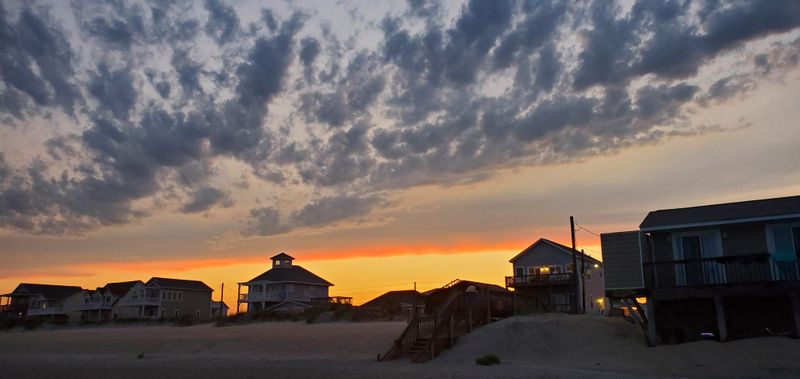
After sunset, Topsail Island doesn’t transform into a party destination or nightlife hub.
The lack of bars, nightclubs, and late-night entertainment venues means evenings here unfold quietly, with families gathering on rental house decks or taking walks along the beach.
By ten o’clock, most of the island has settled into sleep.
This absence of nighttime activity disappoints some younger visitors expecting the social scene of a typical beach resort.
College students seeking spring break energy or bachelor party excitement should look elsewhere.
But for families with young children, couples seeking peace, or anyone simply exhausted by the constant stimulation of modern life, the quiet nights represent one of Topsail’s greatest assets.
A handful of restaurants stay open past dark, and you might find live music at one or two venues on weekend nights, but nothing approaching the bar-hopping scene of more developed beaches.
The darkness along the shore remains genuine, with stars visible overhead and waves audible from blocks away.
Topsail Island offers the increasingly rare experience of a beach vacation that actually feels restful rather than exhausting.
Easy Access Without Feeling Overrun
Two bridges connect Topsail Island to the mainland, providing straightforward access without the traffic nightmares that plague more popular beach destinations.
The high-rise bridge at Surf City and the swing bridge at the southern end both handle traffic efficiently, though the swing bridge occasionally opens for boat passage.
You can reach the island from Wilmington in about thirty minutes, from Raleigh in under three hours.
This accessibility makes Topsail practical for weekend trips and long weekends, not just week-long vacations.
Yet somehow the easy access hasn’t translated into overwhelming crowds, perhaps because the island’s limited commercial development discourages day-trippers looking for amusement park entertainment.
People who make the drive here generally intend to stay awhile and enjoy the beach itself rather than attractions.
Parking remains manageable even during peak season, with the numerous public access points distributing vehicles along the island’s length.
You won’t circle for thirty minutes searching for a space the way you might at more famous beaches.
Topsail found a balance between isolation and convenience, remaining accessible enough to visit easily but quiet enough to feel like an escape.
Vacation Rentals Instead Of Mega Resorts
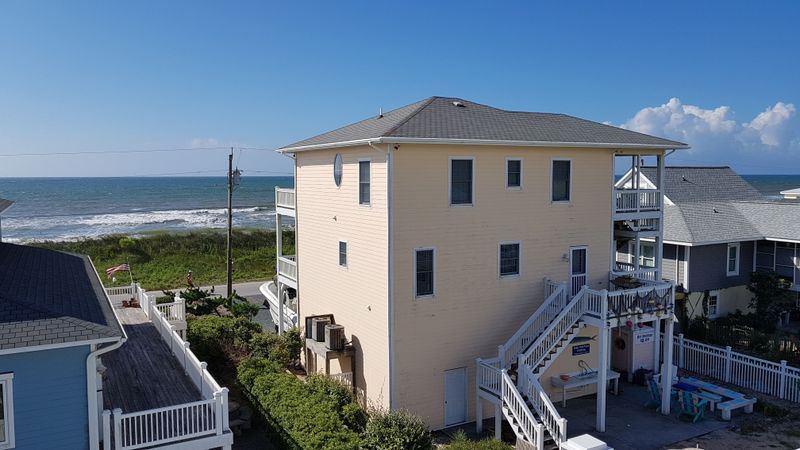
Accommodation on Topsail Island consists almost entirely of vacation rental houses rather than hotels or resort complexes.
These range from modest bungalows sleeping four people to large oceanfront homes accommodating extended families or multiple couples traveling together.
Most feature multiple bedrooms, full kitchens, outdoor decks, and direct beach access or short walks to public access points.
Renting a house changes the vacation dynamic considerably compared to staying in a hotel room.
Families can prepare meals rather than eating every dinner at restaurants, which significantly reduces vacation costs.
The extra space means children have room to play and adults have areas to retreat when they need quiet.
Property management companies handle most rentals, with check-in procedures that feel refreshingly simple compared to hotel bureaucracy.
Weekly rentals remain standard during summer months, while long weekends become available during shoulder seasons.
The rental house model means Topsail never developed the convention center hotels or chain resorts that bring large groups and corporate events to other beaches.
The island remains oriented toward families and small groups seeking private, self-sufficient beach experiences rather than organized resort activities.
A Beach That Still Feels Like A Local Secret
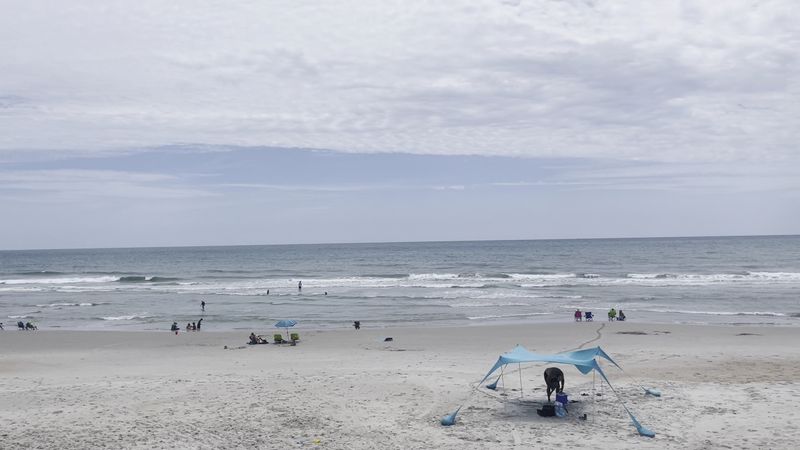
Despite being fully accessible and well-maintained, Topsail Island maintains a low profile that keeps it off most tourists’ radar.
You won’t find it featured in glossy travel magazines or promoted heavily by North Carolina’s tourism board.
The island generates little buzz on social media compared to photogenic destinations like the Outer Banks or Charleston.
This relative obscurity works entirely in favor of visitors who discover the place through word-of-mouth recommendations or careful research.
Families who vacation here tend to return year after year, renting the same houses and establishing traditions, but they don’t broadcast their discovery widely.
There’s an unspoken understanding among regular visitors that Topsail’s greatest asset is its continued anonymity.
The island’s location contributes to this under-the-radar status, positioned between more famous destinations that draw attention away.
Wilmington lies to the south with its historic downtown and riverfront attractions, while the Outer Banks stretch to the north with their dramatic lighthouses and wild horses.
Topsail sits quietly between these marquee destinations, attracting people specifically seeking the unhurried pace and uncrowded beaches that disappeared elsewhere decades ago.
Long may it remain overlooked.
Maritime Forests That Survived Development
Patches of maritime forest still exist on Topsail Island, particularly in the northern sections where development arrived more recently and regulations had tightened.
These forests consist of wind-sculpted live oaks, loblolly pines, and dense understory vegetation adapted to salt spray and sandy soil.
They provide habitat for migrating songbirds and resident wildlife while offering shade and natural beauty that pure beachfront development never achieves.
Walking trails wind through some of these forested areas, maintained by local conservation groups and town governments.
The trails offer relief from sun exposure and a chance to experience the barrier island ecosystem beyond just sand and surf.
You might spot painted buntings during spring migration or hear the distinctive call of painted buntings among the branches.
These forest fragments represent what all barrier islands once looked like before development stripped away native vegetation and replaced it with lawn grass and ornamental plantings.
Their survival on Topsail Island reflects both stricter modern environmental regulations and the island’s slower development pace.
Property owners who build near these maritime forests generally appreciate the natural screening and wildlife viewing opportunities they provide, creating incentive for preservation rather than clearing.
A Sanctuary Where Rehabilitation Meets Education
The Karen Beasley Sea Turtle Rescue and Rehabilitation Center operates year-round in Surf City, treating injured and sick sea turtles before releasing them back into the ocean.
The facility houses rehabilitation tanks where turtles recover from boat strikes, fishing line entanglement, and various illnesses that would otherwise prove fatal.
Volunteers staff the center, which survives on donations and operates with remarkable efficiency despite limited resources.
Public visiting hours allow tourists to see the turtles undergoing treatment and learn about the threats these ancient reptiles face in modern oceans.
Educational displays explain sea turtle biology, migration patterns, and conservation efforts along the North Carolina coast.
The center’s staff answers questions with genuine enthusiasm, clearly passionate about their work rather than simply going through tourist-season motions.
Many families make the turtle hospital a required stop during their Topsail vacations, teaching children about marine conservation in a hands-on way that makes more impact than any textbook.
The center’s location at Topsail Island, rather than at a major tourist destination, reflects the island’s authentic commitment to environmental stewardship.
This is a working conservation facility that welcomes visitors, not a theme park attraction designed to entertain crowds.