
The Peaceful South Carolina Town Retirees Say Is Ideal For Retirement
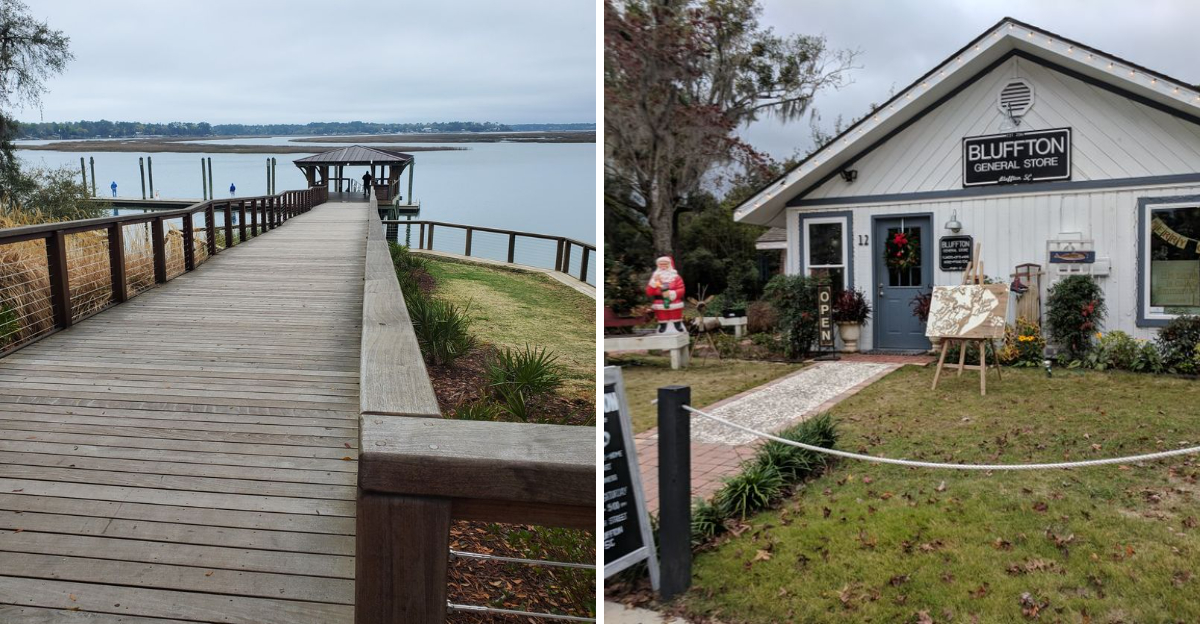
Bluffton sits tucked along South Carolina’s Lowcountry coast, where Spanish moss hangs heavy and the May River curves through marshland that seems to stretch forever.
Retirees have been arriving here in steady numbers, drawn not by flashy attractions but by something quieter—a town that refuses to rush, a place where neighbors still wave and evenings end with long views over tidal creeks.
It’s not the kind of retirement spot that shouts for attention, and that’s precisely why so many people looking for a peaceful next chapter have decided to call it home.
A Coastal Town That Moves At A Slower Pace
Bluffton operates on a different clock than most places along the southern coast.
Traffic here doesn’t snarl, and you won’t find yourself trapped behind tour buses or jockeying for parking near crowded beachfront lots.
The rhythm is deliberate, shaped more by tides than by tourist seasons.
People walk slower here, not out of age but out of choice.
Mornings unfold with coffee on screened porches, afternoons with errands that rarely feel hurried.
Even the town’s layout seems designed to discourage rushing—narrow roads wind through old neighborhoods, and storefronts still face the water instead of the highway.
Retirees who settle here often mention the absence of urgency as one of the first things they notice.
Life doesn’t demand constant motion, and that shift in tempo becomes part of the appeal, a steady reminder that not every day needs to be scheduled down to the minute.
Bluffton Feels Like A Community, Not A Resort
Walk through Bluffton on any given morning and you’ll notice something uncommon for a coastal town—people know each other.
This isn’t a place where residents are outnumbered by vacationers, and it shows in the way conversations happen easily at the post office or outside the hardware store.
The town has managed to grow without losing the feel of a place where faces become familiar.
Local organizations thrive here, from garden clubs to volunteer groups, and participation runs high among retirees who want more than just amenities.
Neighborhoods host regular gatherings, and it’s not unusual to find yourself invited to a porch party within weeks of moving in.
The social fabric feels genuine rather than manufactured.
That sense of belonging matters deeply to people who’ve spent careers in transient cities or suburban sprawl.
Bluffton offers something harder to find these days—a town that still functions like a town, where community isn’t just a marketing term but an actual daily experience.
Life Here Centers On The May River
The May River runs through Bluffton like a central artery, shaping not just the geography but the entire character of daily life.
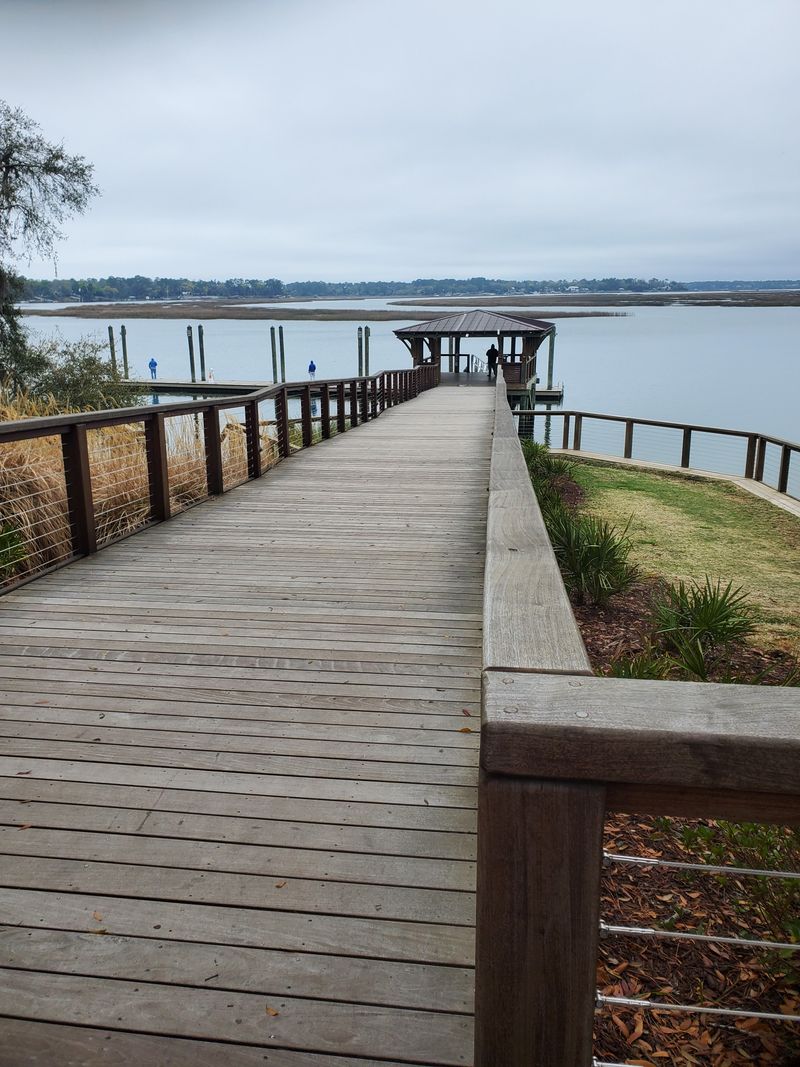
This tidal waterway winds through salt marshes and past old docks, offering views that change with every shift in light and tide.
Retirees here quickly learn to read the water, planning kayak trips or fishing outings around the rhythms of high and low tide.
Homes with river access command attention, but even those set back from the water benefit from the proximity.
The river provides a natural gathering point—people meet at boat ramps, walk along waterfront paths, or simply sit and watch herons stalk through the shallows.
It’s a living, breathing part of the town rather than just scenery.
For those who’ve spent years inland or in landlocked suburbs, the presence of the May River becomes a defining feature of retirement here.
The water offers both recreation and contemplation, a place to paddle or simply to sit and let the day slow down around you.
Historic Old Town Keeps Growth In Check
Old Town Bluffton stands as a deliberate counterweight to the sprawl that’s consumed so many southern coastal communities.
The historic district here isn’t just preserved for tourists—it’s the functional heart of the town, with working businesses, galleries, and restaurants occupying buildings that date back more than a century.
Strict preservation ordinances keep development scaled to match the existing character.
Walking through Old Town means encountering actual history rather than themed recreations.
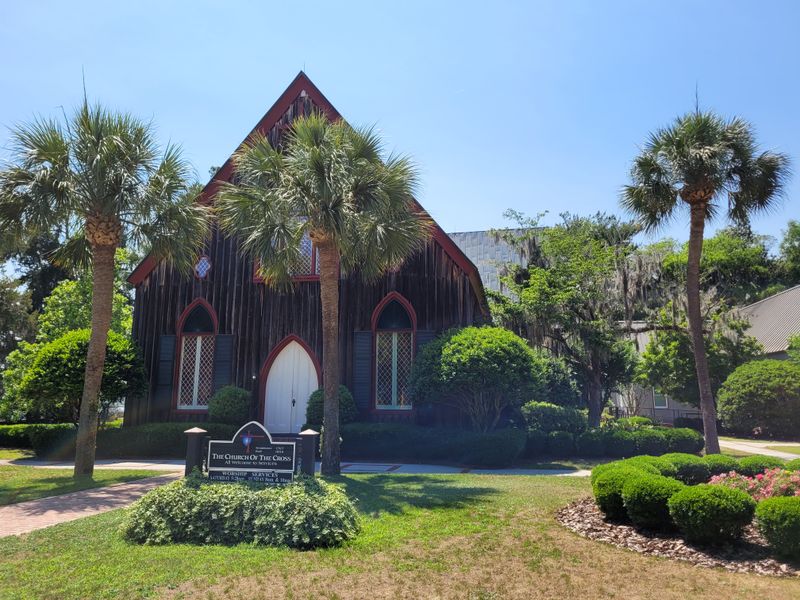
Churches built before the Civil War still hold services, and the Calhoun Street corridor retains the proportions of an era when people traveled by horse rather than SUV.
The result is a downtown that feels authentic, where growth happens slowly and with considerable oversight.
Retirees appreciate this commitment to preservation because it protects the very qualities that drew them here.
Old Town serves as an anchor, a reminder that not everything needs to be redeveloped or modernized, and that some places are worth keeping exactly as they are.
Daily Life Favors Walking And Water Views
Bluffton wasn’t designed around the automobile, and that older logic still shapes how people move through town.
Sidewalks connect neighborhoods to shops and parks, and many residents find they can handle daily errands on foot or by bicycle.
The scale remains human rather than highway-oriented, which makes walking feel natural rather than forced.
Water views appear frequently along these routes—glimpses of marsh grass, sudden openings onto creek channels, or long vistas where the river widens.
These aren’t views reserved for expensive homes but part of the common experience of moving through town.
Even a trip to the grocery store can include a detour along a waterfront path.
For retirees concerned about maintaining activity levels without resorting to gym memberships, this walkable infrastructure offers daily opportunities for movement.
The combination of pedestrian-friendly streets and frequent water views turns routine tasks into pleasant outings, making it easier to stay active without feeling like exercise is a separate chore requiring special effort or equipment.
Close To Hilton Head, Far From The Crowds
Hilton Head Island draws millions of visitors annually, but Bluffton sits just far enough away to avoid the overflow while remaining close enough to enjoy the benefits.
The drive takes fifteen minutes on a clear day, which means access to beaches, golf courses, and cultural events without living amid the summer crush.
It’s a geographic sweet spot that retirees recognize immediately.
When Hilton Head’s traffic thickens and parking lots fill, Bluffton remains remarkably calm.
The town doesn’t depend on tourism the way the island does, so it doesn’t experience the same seasonal surges.
You can visit Hilton Head for dinner or a concert, then return to streets that stay quiet even in peak season.
This proximity without immersion appeals strongly to people who want coastal amenities but not the constant presence of vacationers.
Bluffton offers a kind of buffer zone, close enough for convenience but far enough to maintain a residential character that doesn’t shift dramatically between summer and winter months.
Coastal Living Without Tourist Noise
Many coastal towns trade their character for tourism revenue, but Bluffton has managed to resist that exchange.
You won’t find T-shirt shops lining the main streets or themed restaurants with names designed to attract bus tours.
The businesses here serve residents first, which gives the town a functional rather than performative atmosphere.
Restaurants fill with locals rather than tourists, and conversations at coffee shops reflect ongoing community concerns rather than vacation schedules.
The absence of tourist infrastructure means the town doesn’t feel like a stage set, and daily life proceeds without the background noise of constant arrivals and departures.
Seasons change based on weather rather than rental calendars.
Retirees who’ve lived in tourist-heavy areas before often mention this quality first—the relief of settling somewhere that doesn’t revolve around visitors.
Bluffton’s coastal location provides all the environmental benefits of waterfront living without the commercial overlay that can make other beach towns feel exhausting rather than restful, especially for people seeking permanent residence rather than vacation vibes.
Easy Errands And Short Drives Define The Town
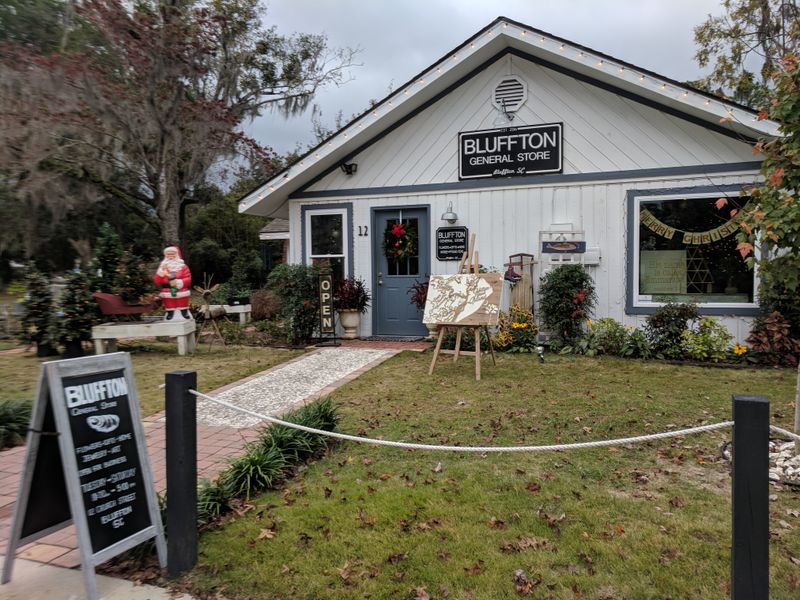
Running errands in Bluffton rarely turns into an expedition.
The town’s compact layout means grocery stores, pharmacies, and banks sit within a few miles of most residential areas.
Traffic lights are sparse, and you’re more likely to wait for a crossing pedestrian than a backed-up intersection.
The logistics of daily life simply work without requiring elaborate planning.
For retirees who’ve spent years navigating urban traffic or sprawling suburban commercial strips, this efficiency registers immediately.
You can accomplish a week’s worth of errands in an hour, and parking is rarely an issue.
The town has grown enough to include national chains alongside local businesses, so you’re not forced to drive to larger cities for basic needs.
This practical dimension of life in Bluffton often gets overlooked in favor of scenic descriptions, but it matters deeply to people actually living here.
The ease of daily tasks contributes significantly to the overall sense of peace—when simple errands don’t consume hours or generate frustration, more time remains for the activities that actually matter.
A Social Scene That Never Feels Forced
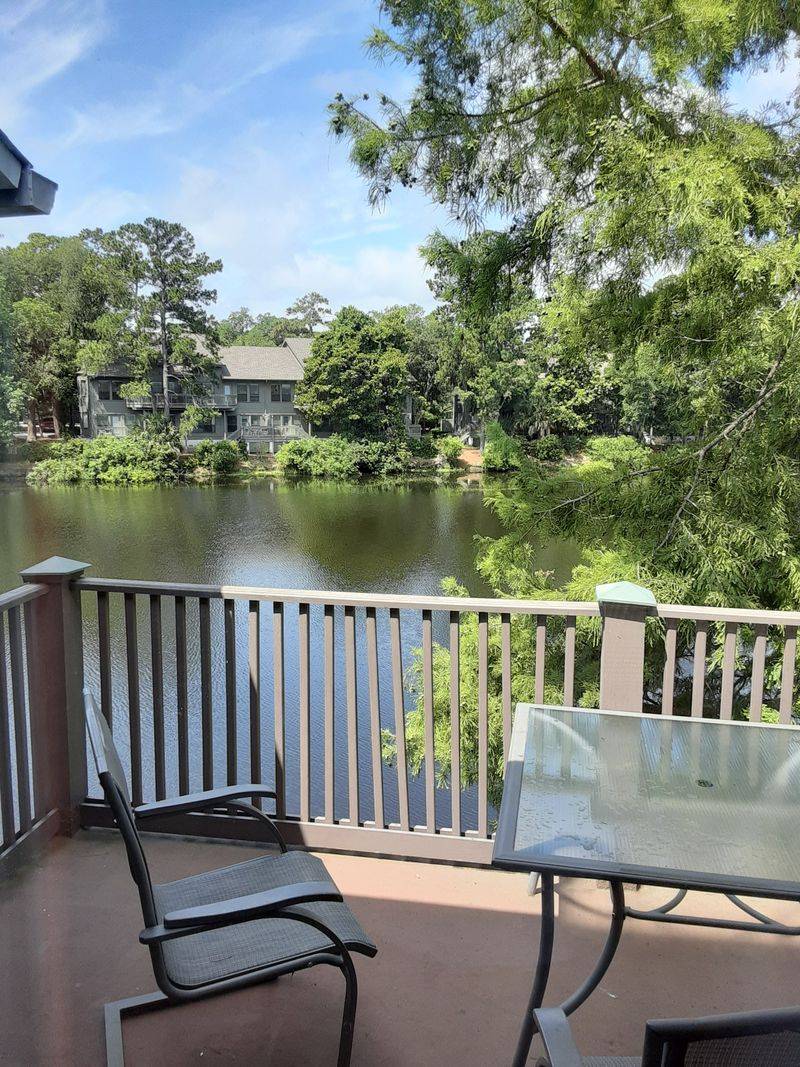
Bluffton’s social opportunities emerge organically rather than through programmed activities or manufactured events.
You’ll find book clubs, art classes, and volunteer organizations, but they operate through genuine interest rather than institutional pressure.
People connect over shared hobbies or neighborhood proximity, and friendships develop at a natural pace without the forced enthusiasm of planned social calendars.
The town supports a surprising number of cultural offerings for its size—galleries, live music venues, and theater groups—but none of it feels obligatory.
You can participate as much or as little as you want without social penalty.
Some retirees throw themselves into community involvement while others maintain quieter routines, and both approaches work equally well.
This flexibility matters to people who’ve left behind professional networks and are building new social lives from scratch.
Bluffton provides enough structure to make connections possible but enough space to let relationships develop authentically, without the sometimes exhausting social engineering that characterizes retirement communities with packed activity calendars and mandatory participation expectations.
Marsh Views Are Part Of Everyday Life
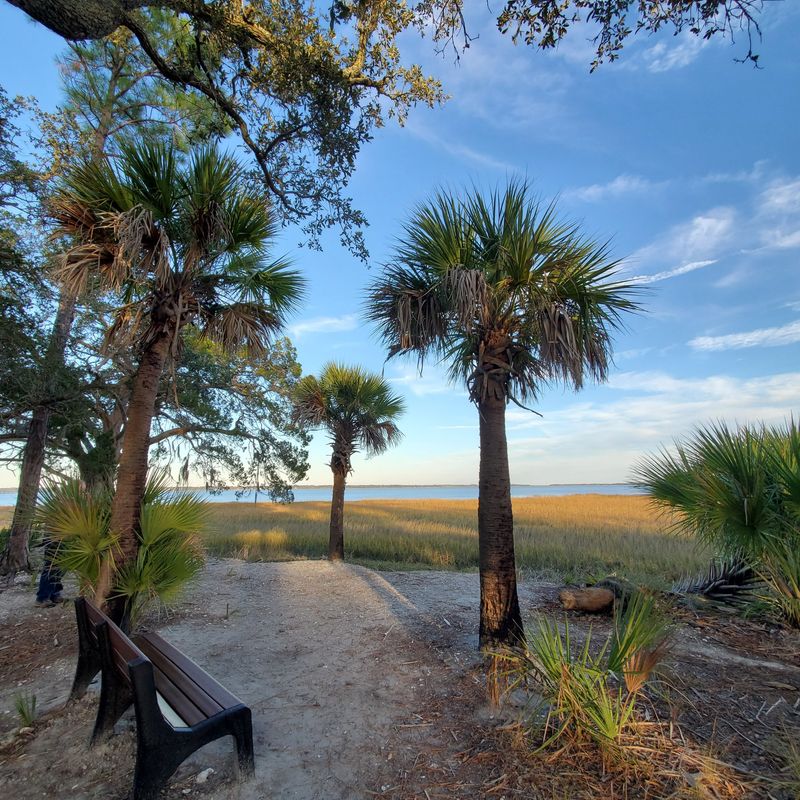
The Lowcountry marsh defines Bluffton’s visual character more than any other single feature.
These vast stretches of spartina grass shift color with the seasons—vivid green in summer, golden in fall, silvery in winter—and they appear constantly as you move through town.
They’re not hidden behind development or reserved for special viewpoints but woven throughout the landscape.
Living here means becoming familiar with marsh ecology almost by accident.
You learn to recognize the patterns of tidal flooding, spot the herons and egrets that hunt the shallows, and understand how these wetlands protect the coast during storms.
The marsh becomes a daily presence rather than occasional scenery, something you check each morning the way others might glance at mountains or forests.
For retirees seeking a strong connection to natural landscapes, this constant marsh presence offers exactly that—an ecosystem that’s both beautiful and functional, changing constantly but fundamentally stable.
It provides a sense of place that’s hard to replicate elsewhere, a reminder that Bluffton exists within a larger natural system rather than apart from it.
A Town That Feels Settled, Not Trendy
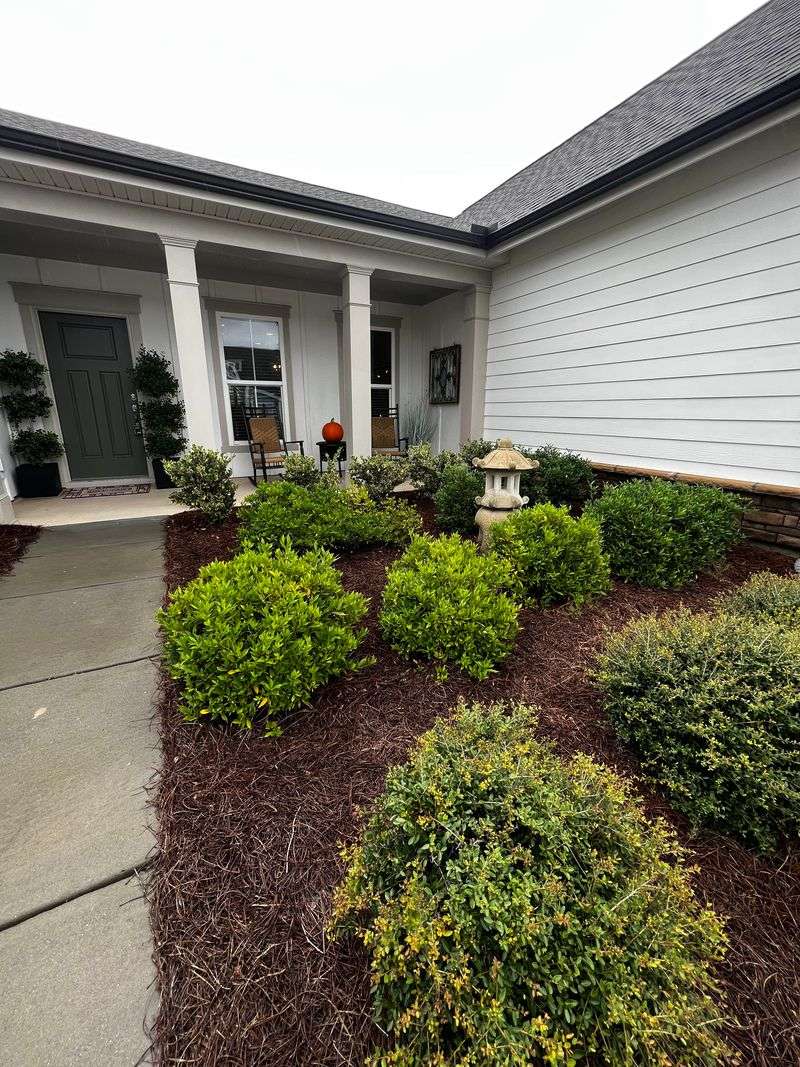
Bluffton has avoided the boom-and-bust cycles that plague many coastal communities, growing steadily rather than explosively.
The town’s population has increased significantly in recent years, but the growth has been absorbed into existing patterns rather than creating entirely new ones.
You won’t find the half-finished developments or speculative construction that signal unstable markets.
The businesses here tend toward longevity rather than trendiness.
Restaurants that opened a decade ago are still serving lunch, and shops maintain consistent hours rather than appearing and vanishing with seasonal changes.
This stability creates a sense of permanence that appeals to retirees who’ve seen too many places transform beyond recognition in just a few years.
There’s nothing flashy about Bluffton’s appeal, and that’s precisely the point.
The town has found a sustainable pace of development that preserves its essential character while accommodating new residents.
For people looking to retire somewhere that will likely remain recognizable in ten or twenty years, this settled quality offers considerable reassurance in an era of rapid and often disorienting change.
Quiet Evenings Are The Norm
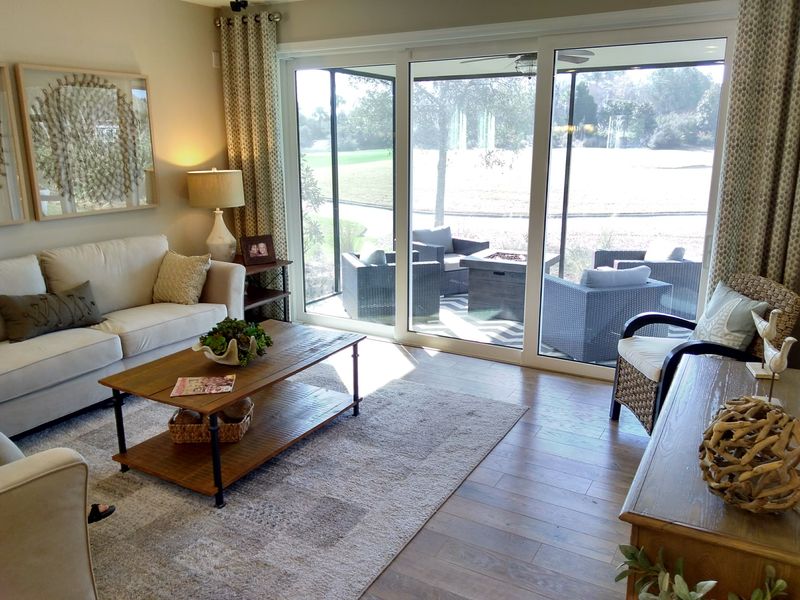
When the sun sets in Bluffton, the town doesn’t shift into a second gear of nightlife and entertainment.
Evenings here are genuinely quiet, marked by porch conversations, walks along dimly lit streets, and early bedtimes that don’t feel premature.
The absence of late-night bars or crowded entertainment districts isn’t a shortcoming but a defining characteristic.
Restaurants close at reasonable hours, and the streets empty early without feeling deserted.
The night sounds are natural—frogs calling from the marsh, wind moving through live oaks, the occasional boat motor on the river.
Light pollution remains minimal compared to larger towns, so stars appear in numbers that surprise people accustomed to suburban skies.
For retirees who’ve spent decades in cities where noise never fully stops, this nighttime quiet represents a profound shift.
Bluffton offers the kind of evenings where you can actually hear yourself think, where sleep comes easily and mornings arrive without the residual fatigue of constant background noise.
It’s a simple pleasure, but one that becomes increasingly valuable with age and experience.