
The Quiet Virginia Coastal Town Most Travelers Overlook
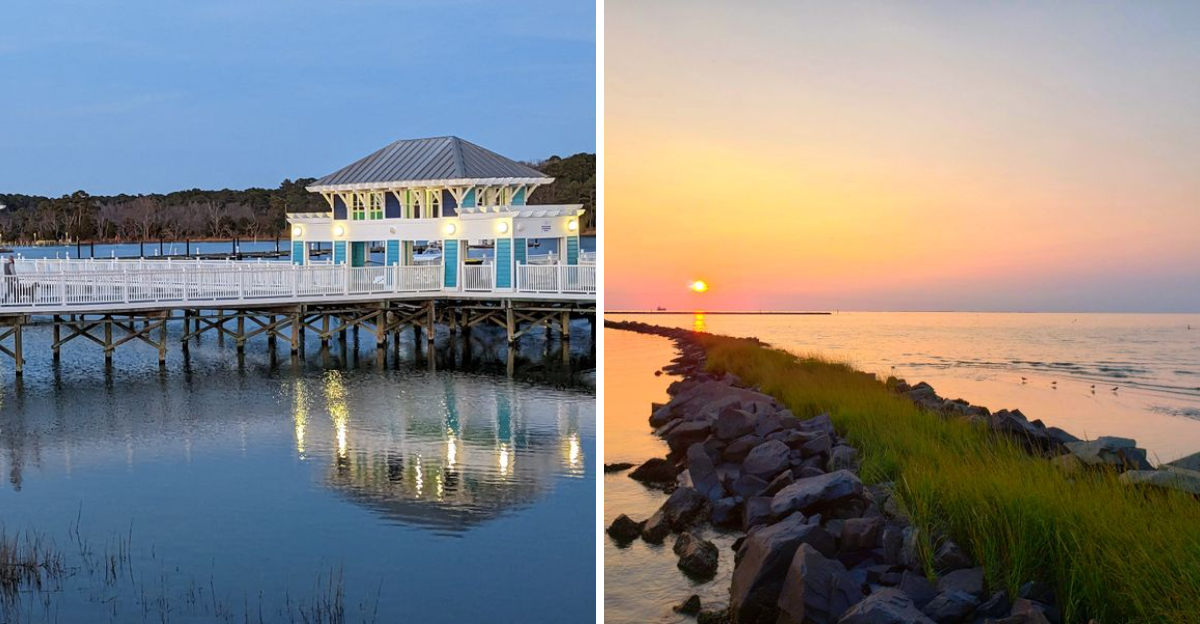
Cape Charles sits at the southern tip of Virginia’s Eastern Shore, a place where time seems to move at a different speed than the rest of the coast.
While most beachgoers rush toward Virginia Beach or the Outer Banks, this small town of just over a thousand residents remains refreshingly uncrowded.
The streets are lined with Victorian homes, the beaches stretch wide and empty, and the sunsets over the Chesapeake Bay paint the sky in colors that feel almost unreal.
If you’re looking for a coastal escape that doesn’t involve fighting for parking or dodging crowds, Cape Charles might be exactly what you’ve been missing.
It Sits On The Chesapeake Bay, Not The Atlantic
Geography matters more than most travelers realize when choosing a beach destination.
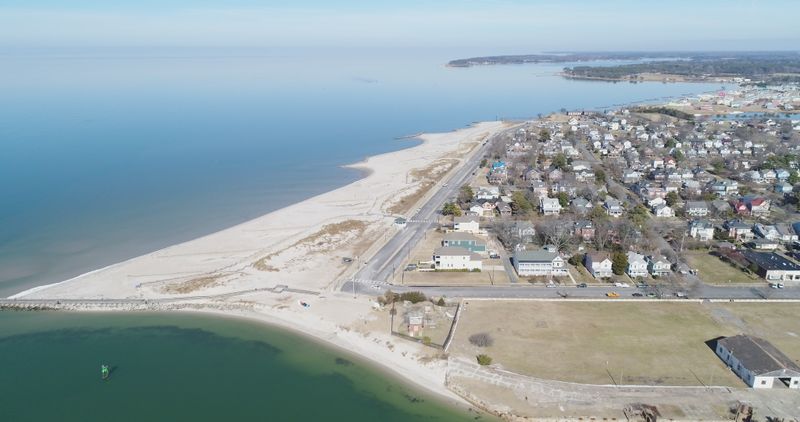
Cape Charles faces west across the Chesapeake Bay rather than east toward the Atlantic Ocean, which changes everything about the experience.
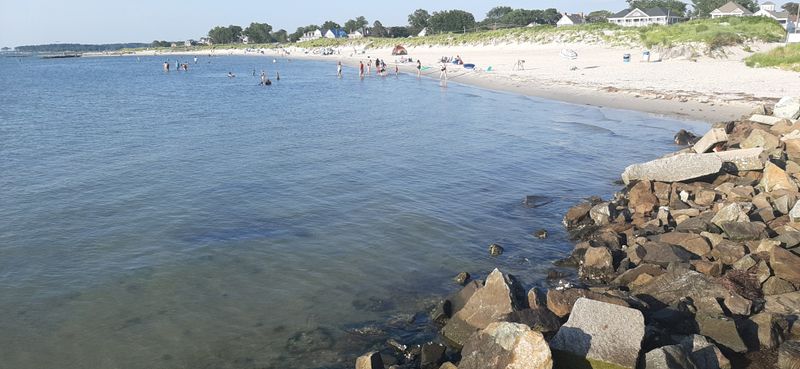
The bay waters are calmer, warmer, and far less intimidating than the crashing waves found along ocean beaches.
Families with young children appreciate the gentle slope of the shoreline and the absence of dangerous riptides.
The water clarity varies with the tides, but the peaceful atmosphere remains constant throughout the season.
Fishing boats dot the horizon instead of jet skis, and the rhythm of the bay feels distinctly different from the relentless push and pull of ocean surf.
This geographical quirk keeps Cape Charles off most people’s radar entirely.
Beach purists who insist on Atlantic waves drive right past without stopping, which suits the locals just fine.
The town has built its identity around bay living, and that choice has preserved its quiet character for generations.
The Beaches Are Calm, Shallow, And Rarely Crowded

Walking onto the public beach at Cape Charles feels like stepping into a postcard from a quieter era.
The sand stretches in both directions with plenty of room to spread out, even on holiday weekends.
You can wade out fifty feet and still be standing waist-deep in water, which makes it ideal for children learning to swim or adults who prefer lounging in the shallows.
The absence of waves means no boogie boards or surfboards cluttering the waterline.
Instead, people float on rafts, build sandcastles without worrying about incoming tides, or simply sit in beach chairs with their feet in the water.
The beach culture here revolves around relaxation rather than competition for the best spot.
Even during peak summer season, you’ll find empty stretches of sand.
The town’s small population and limited lodging options naturally control the number of visitors.
This isn’t a place where you arrive at dawn to claim territory—you simply show up and enjoy the space.
Most Travelers Never Cross The Chesapeake Bay Bridge-Tunnel
The 17-mile Chesapeake Bay Bridge-Tunnel stands as both an engineering marvel and an effective barrier to casual tourism
Created in 1964, this combination of bridges, tunnels, and artificial islands connects Virginia’s mainland to the Eastern Shore.
Many travelers consider it too far out of the way or too expensive to cross just to explore an unfamiliar town.
That reluctance to make the crossing has become Cape Charles’s greatest protection against overdevelopment.
The toll and the distance filter out day-trippers looking for quick beach access, leaving only those who specifically want to experience the Eastern Shore.
Once you cross, you enter a different Virginia—one that feels more connected to Maryland’s bay culture than to the sprawling Hampton Roads region.
The bridge-tunnel itself deserves appreciation as a destination.
The views from the roadway span miles of open water, and the sensation of driving into tunnels beneath the shipping channel creates a memorable journey.
Cape Charles sits just thirty minutes beyond the bridge, making it an easy first stop.
The Town Was Built For Walking, Not Traffic
Cape Charles operates on a grid system designed in the 1880s when the town served as a railroad terminus.
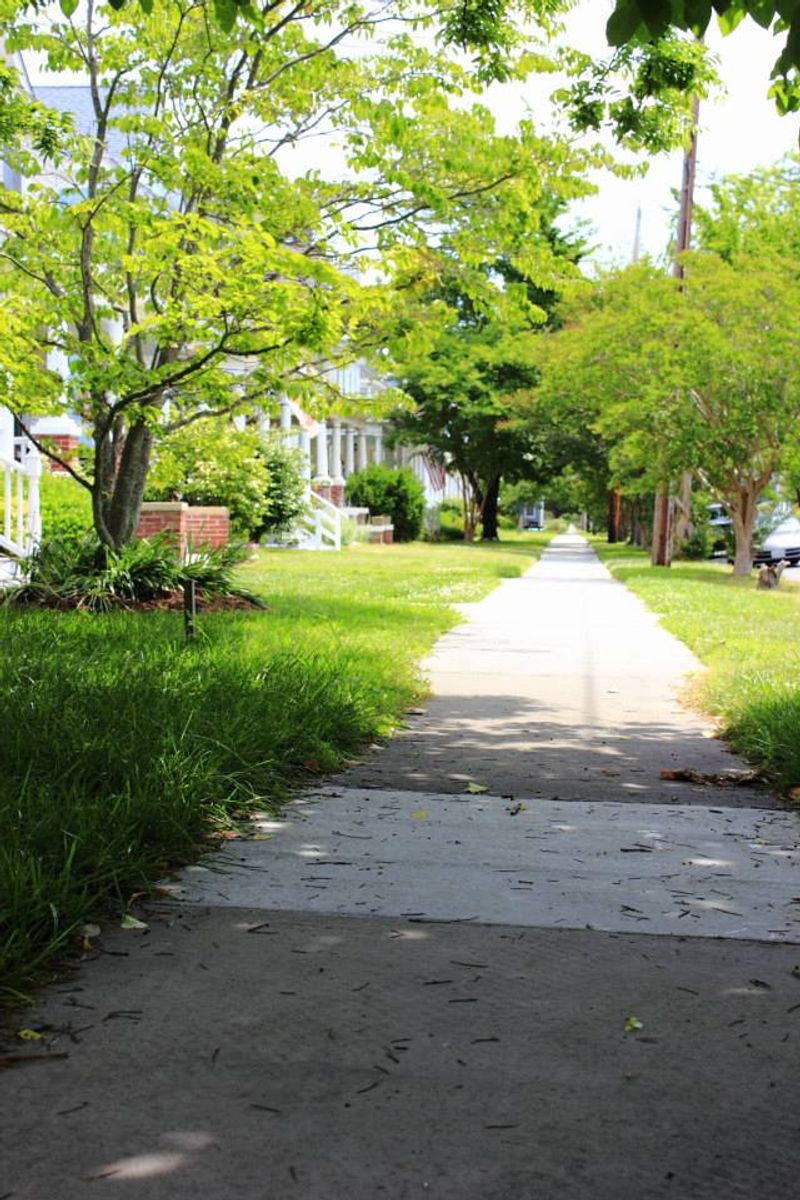
The compact downtown spans just a few blocks, with wide sidewalks and tree-lined streets that encourage exploration on foot.
You can park your car once and forget about it for the rest of your visit.
Mason Avenue serves as the main commercial corridor, lined with locally owned shops, restaurants, and cafes.
Everything you need sits within a ten-minute walk—the beach, the harbor, the restaurants, and the historic district.
The absence of traffic lights and four-lane roads reinforces the sense that this place prioritizes people over vehicles.
Bicycles are popular here, though even they feel unnecessary given the short distances.
Many visitors report rediscovering the pleasure of walking without purpose, simply wandering from street to street admiring the architecture.
The town’s walkability contributes significantly to its relaxed atmosphere, eliminating the stress of navigation and parking that plagues larger beach destinations.
Sunsets Here Are The Main Evening Event
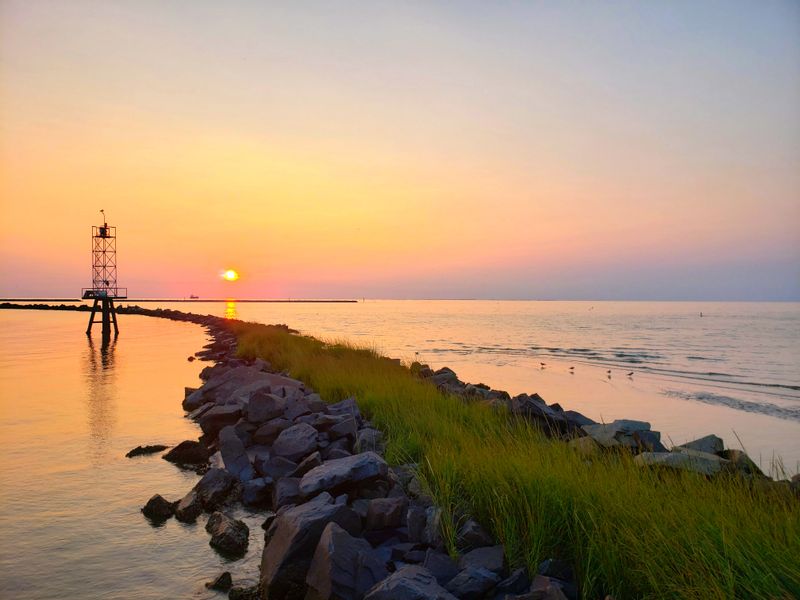
When the sun begins its descent toward the western horizon, the beach at Cape Charles fills with locals and visitors alike.
Bay-facing beaches offer front-row seats to sunsets that unfold slowly across the water, painting the sky in layers of orange, pink, and purple.
This nightly spectacle has become the town’s unofficial gathering time, replacing the need for manufactured entertainment.
People bring chairs, blankets, and glasses of wine to claim their viewing spots.
The ritual feels communal without being intrusive—everyone watches in companionable silence, occasionally commenting on particularly brilliant color shifts.
Photographers line up along the shore, but even smartphone snapshots capture the drama unfolding overhead.
Unlike ocean beaches where the sun rises over water, bay beaches provide the opposite experience.
Mornings are quiet and workmanlike, but evenings transform into celebration.
The predictability of this daily performance gives structure to vacation days, and many visitors plan their dinner reservations around sunset timing to avoid missing the show.
Historic Streets Keep The Town Feeling Frozen In Time
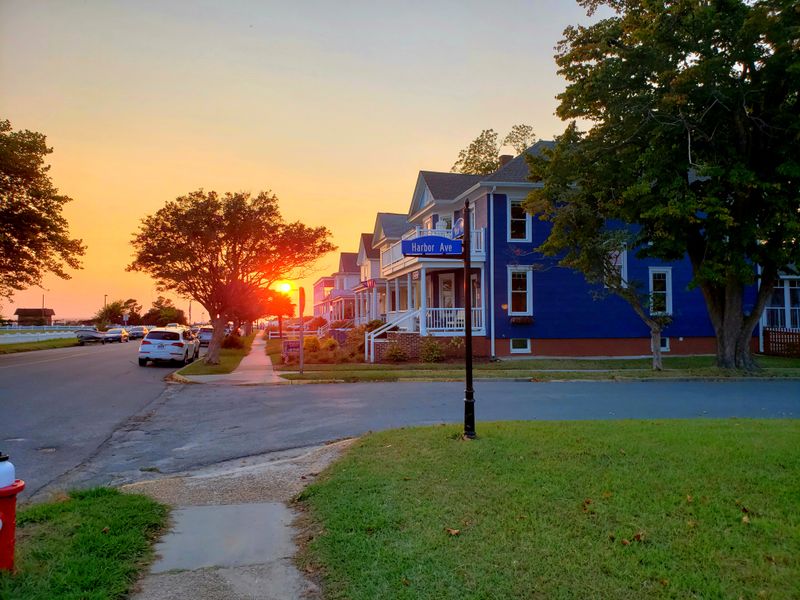
The Cape Charles Historic District contains more than two hundred buildings dating from the late 19th and early 20th centuries.
Victorian homes with wraparound porches line streets named after famous figures like Washington, Madison, and Jefferson.
Many have been meticulously restored by new owners who appreciate their architectural significance and historic charm.
Walking through these neighborhoods feels like touring an outdoor museum without the ropes and placards.
The houses display a variety of styles—Queen Anne, Colonial Revival, and Craftsman bungalows—each telling stories about the town’s railroad boom years.
Front porches remain active social spaces where residents wave to passersby and conversations happen across picket fences.
The town’s commitment to preservation extends beyond individual buildings to the overall streetscape.
Modern chain stores and contemporary architecture are notably absent from the historic core.
This dedication to maintaining period character distinguishes Cape Charles from coastal towns that sacrificed their history for tourism dollars, creating an authentic sense of place that can’t be replicated.
There Are No High-Rise Hotels Or Boardwalk Crowds
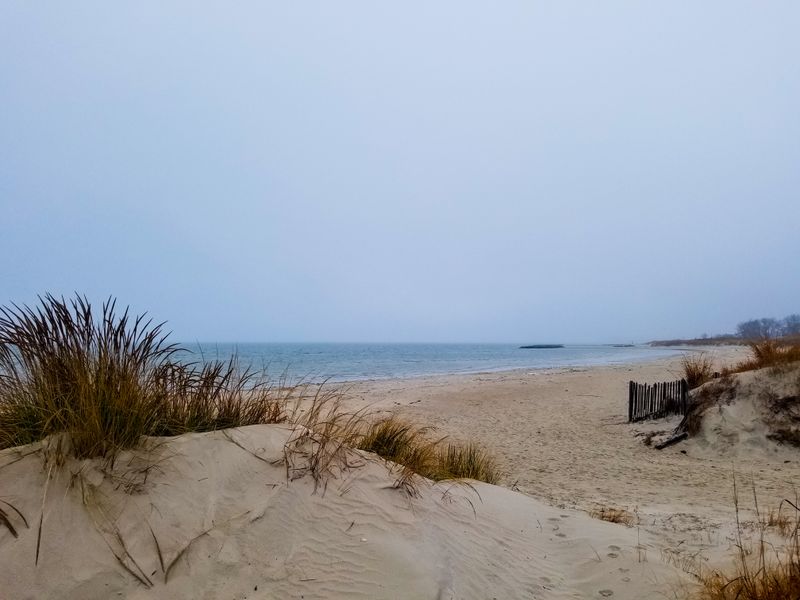
Visitors accustomed to typical beach resort infrastructure will find Cape Charles refreshingly underdeveloped.
The tallest structures in town barely reach three stories, and most lodging options consist of bed-and-breakfasts, small inns, or vacation rental homes.
No boardwalk stretches along the beach, no arcade games compete for attention, and no vendors hawk t-shirts or fried dough.
This absence of commercial tourism infrastructure is intentional rather than accidental.
Local zoning regulations and community resistance have prevented the kind of development that transformed other coastal towns into wall-to-wall resort properties.
The result is a beach experience that feels personal and uncluttered, where natural beauty takes precedence over entertainment options.
Some visitors initially feel disappointed by the lack of activities and attractions.
Those who adjust their expectations discover that the simplicity becomes the main attraction—time to read, walk, think, and disconnect from constant stimulation.
Cape Charles appeals to travelers seeking restoration rather than excitement, offering the kind of coastal experience that has largely disappeared elsewhere along the Atlantic seaboard.
The Pace Of Life Slows The Moment You Arrive
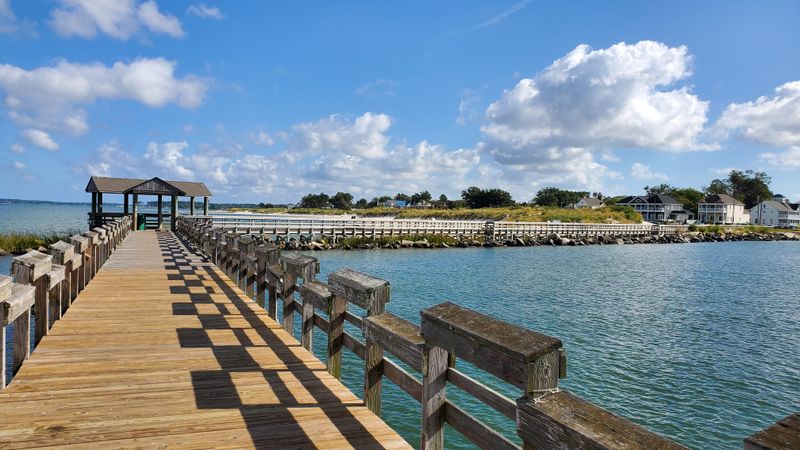
Something shifts in your nervous system when you arrive in Cape Charles.
The absence of traffic noise, the slower movement of pedestrians, and the unhurried service in restaurants all signal that different rules apply here.
People make eye contact, conversations happen between strangers, and nobody seems to be rushing toward the next obligation.
This deceleration happens organically rather than through forced relaxation activities or wellness programs.
The town simply operates at a different tempo, one that matches the rhythm of tides and sunsets rather than appointment schedules.
First-time visitors often report feeling disoriented for the first day as they adjust to having nothing urgent to accomplish.
Long-term residents attribute this quality of life to the town’s isolation and small size.
With limited shopping and entertainment options, people invest time in relationships, outdoor activities, and creative pursuits.
The slower pace isn’t laziness or lack of ambition—it’s a deliberate choice to prioritize quality of experience over quantity of activity, a philosophy that permeates every aspect of life here.
Local Seafood Spots Outnumber Tourist Attractions

Cape Charles takes its seafood seriously, with restaurants sourcing catches directly from local watermen.
Clams, oysters, crabs, and fish appear on menus within hours of being harvested from surrounding waters.
The dining scene favors substance over style, with establishments serving generous portions in casual environments where dress codes don’t exist.
Several restaurants occupy converted houses or simple storefronts along Mason Avenue.
Menus change based on daily availability, and servers can often tell you exactly where your oysters came from.
The emphasis on freshness and local sourcing predates current farm-to-table trends—it’s simply how things have always been done in working waterfront communities.
Visitors seeking traditional attractions like museums or amusement parks will be disappointed.
The town offers a few shops, a historic theater, and the beach, but restaurants serve as the main gathering places.
This focus on food culture reflects the community’s priorities and provides insight into the region’s maritime heritage and ongoing relationship with the Chesapeake Bay’s resources.
Cape Charles Feels More Like A Coastal Village Than A Beach Town
Classification matters when understanding a place’s character.
Cape Charles doesn’t fit the mold of a typical beach town built primarily for tourism.
Instead, it functions as a year-round residential community that happens to sit near beautiful beaches, with an economy based on a mix of retirees, remote workers, and service industries.
The distinction becomes clear when you notice the absence of seasonal business closures and the presence of actual neighborhoods rather than rental property blocks.
Children ride bikes to school, residents shop at the local market, and community events cater to locals first and visitors second.
This authentic residential character prevents the hollow feeling common in places that shut down after Labor Day.
The village atmosphere extends to social interactions and community engagement.
Newcomers report being welcomed into existing social networks, and visitors experience genuine hospitality rather than transactional tourist service.
Cape Charles has managed to maintain its identity as a real place where real people live, which ultimately makes it more interesting than destinations that exist solely to entertain outsiders.