
10 Old West Ghost Towns In Nevada You Can Still Walk Through
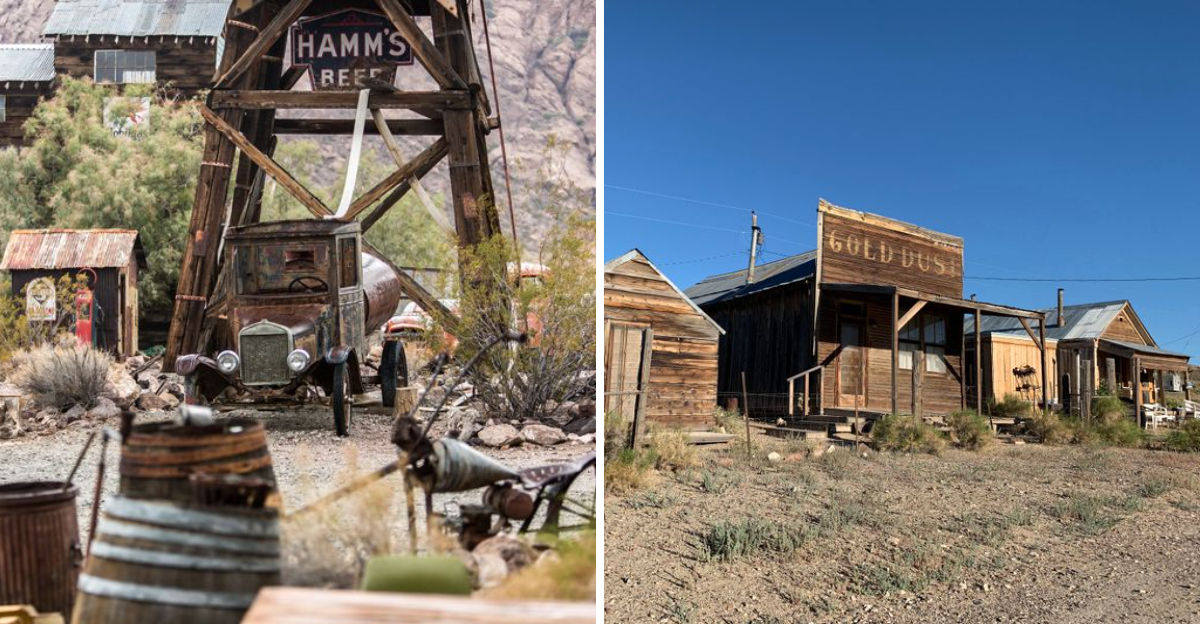
Nevada’s dusty desert landscape holds secrets from the Old West—crumbling buildings, rusted mining equipment, and stories of fortune-seekers who chased silver and gold into the unforgiving wilderness.
Walking through these ghost towns feels like stepping back in time to an era of saloons, shootouts, and boom-then-bust mining camps.
Many of these abandoned settlements are still accessible today, offering adventurous travelers a chance to explore authentic pieces of American frontier history.
From sun-bleached wooden structures to stone ruins reclaimed by the desert, these ten ghost towns invite you to wander their silent streets and imagine what life was like over a century ago.
1. Rhyolite
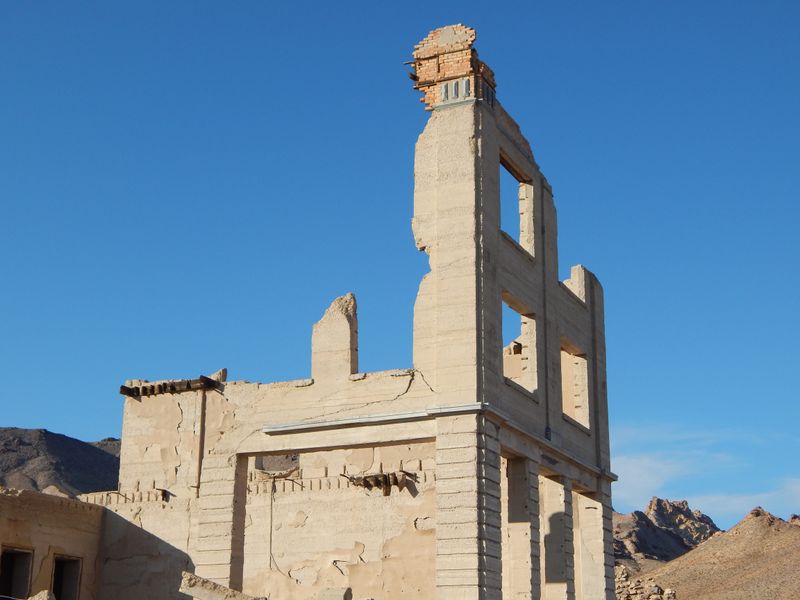
Just outside Death Valley National Park sits one of Nevada’s most photographed ghost towns, where concrete shells and quirky architecture tell tales of a boom that went spectacularly bust.
Rhyolite exploded onto the scene in 1904 after prospectors discovered high-grade gold ore nearby.
Within just two years, the population swelled to nearly 5,000 people, complete with electric lights, a stock exchange, an opera house, and even an ice cream parlor.
The famous Bottle House—built entirely from thousands of beer and liquor bottles—still stands as a testament to frontier ingenuity and perhaps a bit of humor.
You can wander freely among the skeletal remains of the three-story bank building and the old train depot.
By 1916, the gold ran out and Rhyolite became a ghost town almost as quickly as it had risen.
Today, it’s one of the most accessible and photogenic abandoned towns you’ll ever explore.
2. Nelson Ghost Town
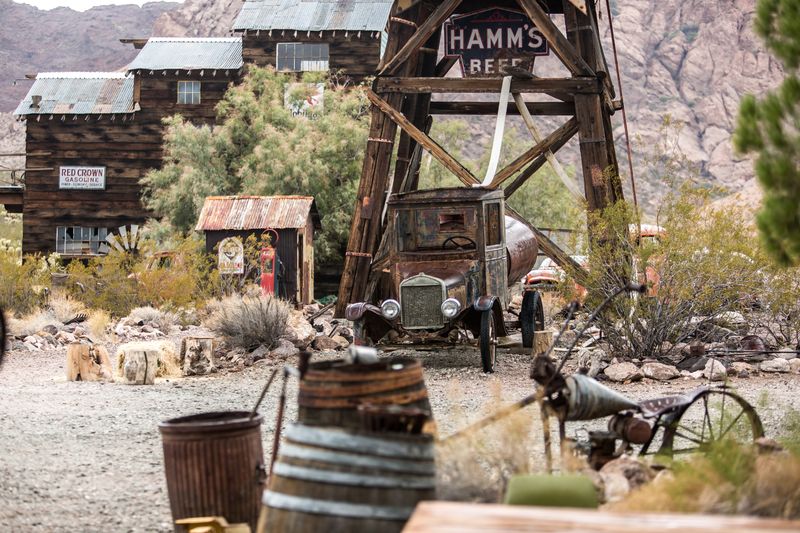
Tucked along the Colorado River near Lake Mohave, this atmospheric ghost town has become a favorite for photographers hunting that perfect Wild West shot.
Gold was discovered here in 1859, making Nelson one of Nevada’s oldest mining camps.
The town survived longer than many others, with mining operations continuing sporadically into the 1940s.
What makes Nelson special today is how well-preserved and artfully arranged everything feels—rusted vintage cars, weathered wooden structures, and antique mining equipment create an almost movie-set atmosphere.
It’s privately owned, so there’s a small entrance fee, but the owners maintain the property beautifully and even offer guided tours.
The Techatticup Mine nearby was once the most productive in southern Nevada.
Walking through Nelson’s sun-baked streets with the river glittering in the distance, you can almost hear echoes of miners celebrating their strikes in the old saloon.
3. Gold Point
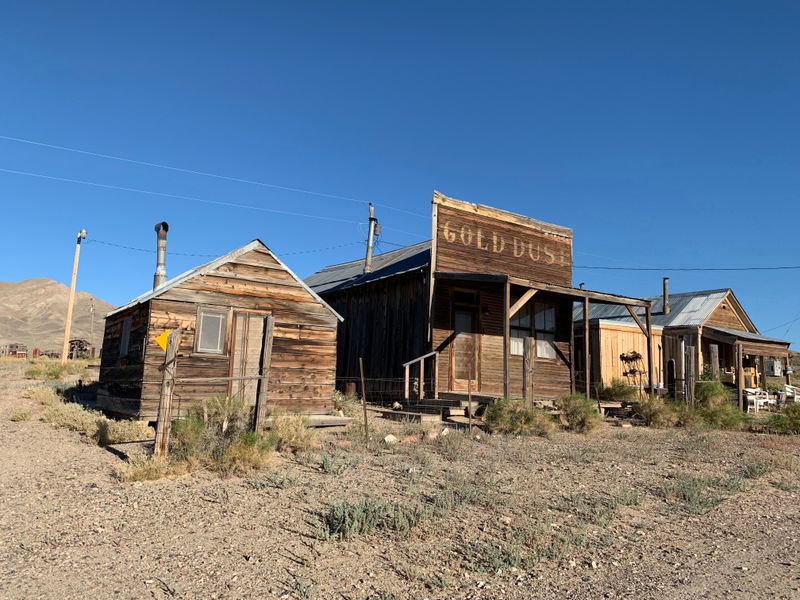
Unlike many ghost towns that have crumbled into dust, Gold Point has been lovingly restored by enthusiasts who want to keep the Old West spirit alive.
Originally called Hornsilver when founded in 1880, this remote mining camp produced millions in gold and silver before fading away.
What’s remarkable is that you can actually stay overnight here—the town offers rustic lodging in restored miner’s cabins, giving you a genuinely immersive experience.
More than twenty original buildings still stand, including a saloon where you can grab a cold drink and swap stories with other visitors.
The town even hosts occasional events that bring the community together for celebrations of frontier heritage.
Gold Point sits far off the beaten path, requiring a drive down dirt roads, but that isolation is part of its charm.
You’ll feel like you’ve discovered a secret piece of history that the modern world forgot.
4. St. Thomas
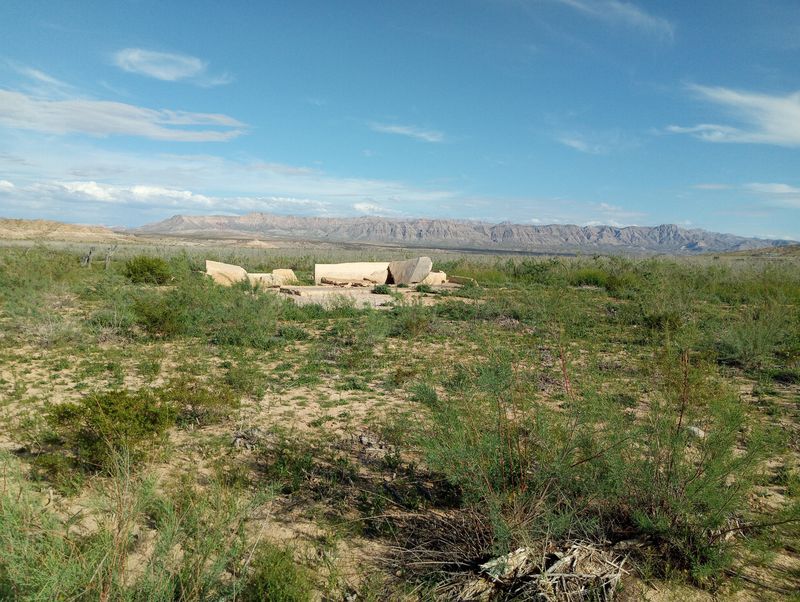
This ghost town has a story unlike any other—it was deliberately drowned beneath Lake Mead, only to mysteriously reappear decades later when water levels dropped.
Mormon settlers established St. Thomas in 1865 along the Muddy River, creating a thriving agricultural community.
The town survived for over seventy years until the construction of Hoover Dam sealed its fate.
In 1938, residents were forced to evacuate as the rising waters of Lake Mead slowly swallowed their homes.
For decades, St. Thomas existed only in memory and old photographs.
Then, during severe droughts starting in the early 2000s, the ruins began emerging from the receding lake like a ghost returning from the grave.
Today, you can walk among the exposed foundations, walls, and even an old ice cream parlor.
It’s haunting and beautiful—a town that died twice and refuses to stay buried.
5. Belmont
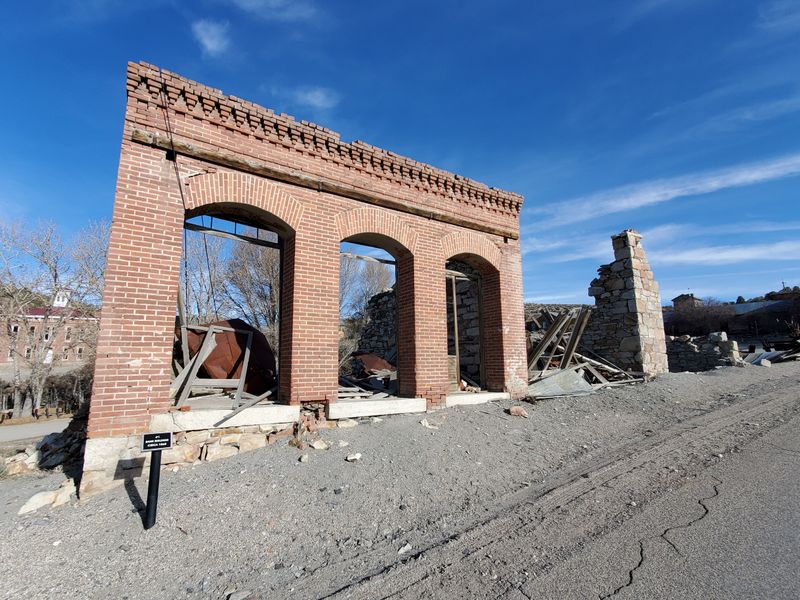
High in the Toquima Range sits Belmont, a remarkably intact ghost town where you can still see the impressive brick courthouse that once served as Nevada’s county seat.
Silver strikes in 1865 brought thousands of fortune-hunters to these remote mountains, and Belmont quickly became one of central Nevada’s most important towns.
The two-story brick courthouse, completed in 1876, still dominates the townscape—a monument to civic pride in the middle of nowhere.
Several other buildings remain standing, including the old Cosmopolitan Saloon and various homes and shops.
Unlike heavily visited ghost towns, Belmont maintains an authentic air of abandonment that makes exploration feel like genuine discovery.
The drive requires navigating mountain roads, but the journey rewards you with stunning high-desert scenery.
A handful of residents still call Belmont home, adding an interesting layer to this place caught between past and present.
6. Lincoln / Pioche Area Ghost Towns
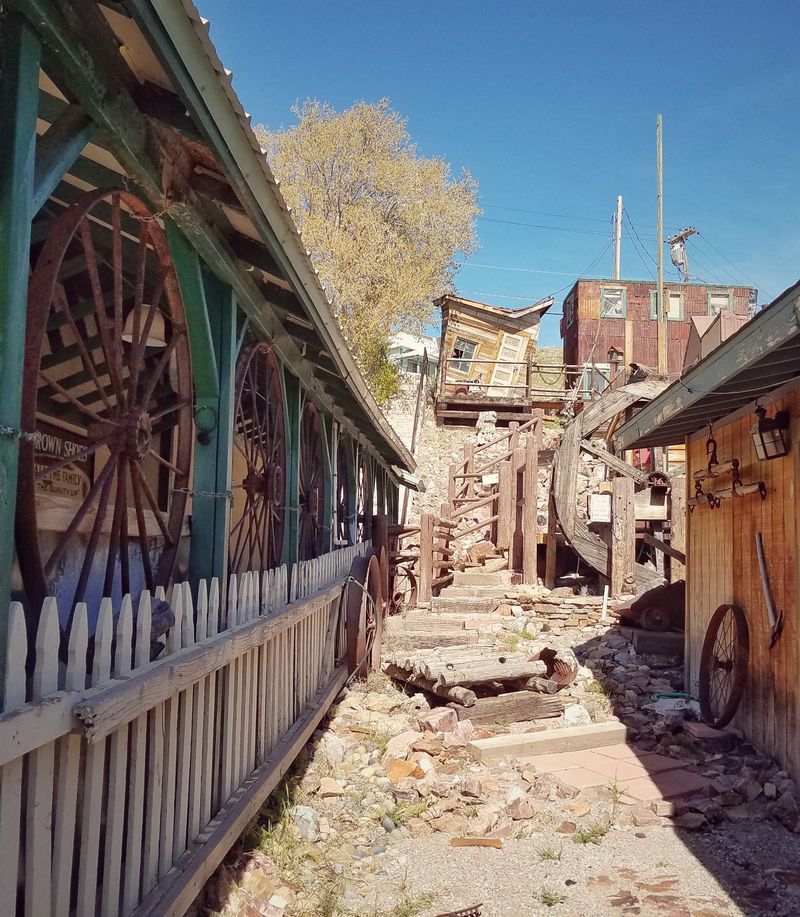
Eastern Nevada’s Lincoln County contains a treasure trove of ghost towns and near-ghost towns, with Lincoln and Pioche serving as the crown jewels of this historic mining region.
Pioche exploded in the 1860s as one of Nevada’s wildest mining camps—so violent that it’s said seventy-two men were buried on Boot Hill before the first natural death occurred.
The Million Dollar Courthouse, which actually cost over $800,000 to build (an astronomical sum in the 1870s), still stands as a monument to corruption and excess.
Nearby Lincoln offers a quieter experience, with well-preserved buildings lining its main street.
Several structures house small museums showcasing pioneer and mining artifacts.
The entire area feels like an open-air museum where you can spend days exploring interconnected ghost towns, abandoned mines, and historic sites.
Both towns have small populations today, creating that fascinating blend of living history and genuine abandonment.
7. Candelaria
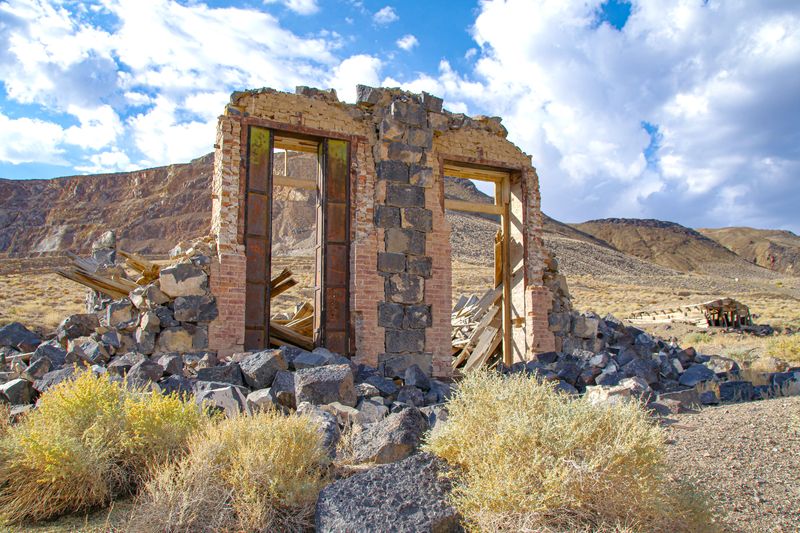
Way out in the Mineral County wilderness, Candelaria’s crumbling adobe and stone ruins whisper stories of a once-thriving silver camp that nearly vanished completely.
Founded in 1864, Candelaria produced over $20 million in silver during its heyday.
At its peak, roughly 2,000 people called this isolated spot home, supporting multiple saloons, stores, and even a red-light district.
Today, reaching Candelaria requires determination—you’ll need a high-clearance vehicle and good navigation skills to find it.
What remains are scattered stone walls, collapsing structures, and an overwhelming sense of isolation.
The cemetery on the hillside offers a poignant glimpse into frontier life, with weathered markers telling stories of young lives cut short by disease, accidents, and violence.
Walking through Candelaria feels different from more accessible ghost towns—there’s a raw authenticity here, an unfiltered connection to the harsh realities faced by those early prospectors and their families.
8. Goldfield
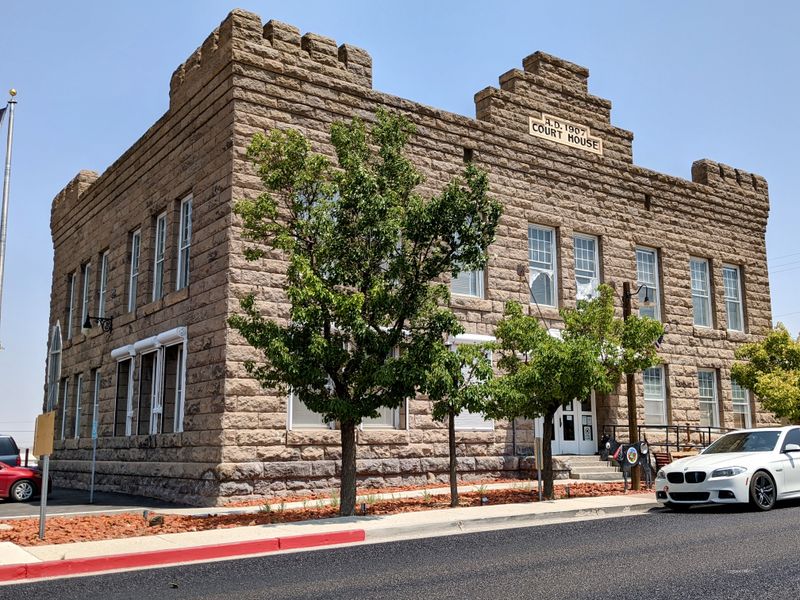
Once Nevada’s largest city, Goldfield represents the ultimate boom-and-bust story, and today it exists as a fascinating hybrid of ghost town and living community.
Gold discoveries in 1902 triggered an explosive rush that brought 20,000 people to this desert location.
By 1906, Goldfield boasted electric streetlights, telephones, five banks, eight newspapers, and the famous Goldfield Hotel—a four-story luxury establishment that still stands today, allegedly haunted.
The magnificent stone courthouse, completed in 1907, dominates the skyline as a testament to the town’s brief but spectacular prosperity.
Several other historic buildings line the main street, many still occupied by hardy residents who maintain this desert outpost.
You can freely wander the streets, peek into abandoned storefronts, and explore the high school that now sits empty.
Goldfield offers something unique—the melancholy beauty of abandonment mixed with the stubborn persistence of those who refuse to let history completely fade away.
9. Goodsprings
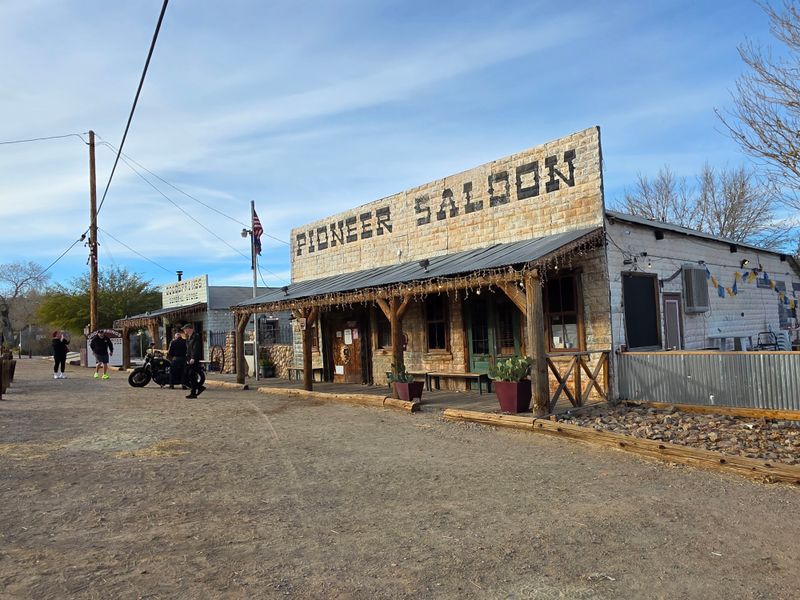
Just thirty-five miles south of Las Vegas, Goodsprings offers an easy ghost town adventure without sacrificing authenticity or atmosphere.
Mining began here in 1856, but the town really flourished after 1900 when zinc, lead, and copper discoveries brought prosperity.
The famous Pioneer Saloon, built in 1913, still operates today and claims to be haunted by the ghost of actress Carole Lombard, who died in a 1942 plane crash on nearby Mount Potosi.
You can grab a cold beer in the saloon while soaking up genuine Old West ambiance—bullet holes in the ceiling, antique wooden bar, and vintage photographs covering the walls.
Outside, explore the old schoolhouse, general store, and various mining structures scattered around town.
Goodsprings strikes a perfect balance for ghost town visitors: accessible enough for a quick afternoon trip, yet authentic enough to satisfy history enthusiasts seeking real frontier atmosphere rather than tourist traps.
10. Seven Troughs
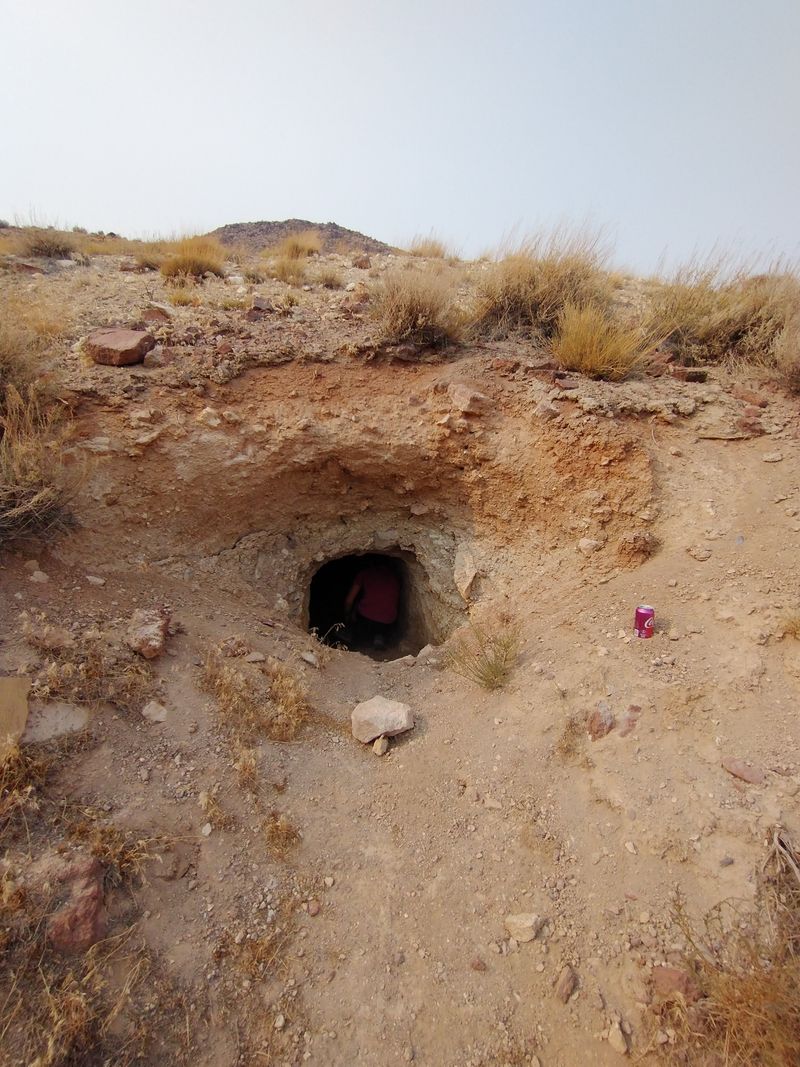
Among Nevada’s most remote and least-visited ghost towns, Seven Troughs rewards adventurous explorers willing to navigate challenging desert roads to reach its isolated location.
Gold discoveries in 1906 sparked a brief but intense mining boom.
Within two years, over 1,500 people had established a town complete with stores, saloons, and a post office in this incredibly harsh environment.
Getting water to Seven Troughs required hauling it from springs miles away—a testament to the desperate determination of gold-seekers.
The boom lasted barely five years before the ore played out and residents abandoned the site to the elements.
Today, scattered ruins, collapsing structures, and rusted equipment mark where the town once stood.
The remoteness means you’ll likely have the entire ghost town to yourself, creating an eerie, powerful experience.
Seven Troughs represents the extreme edge of frontier mining culture—a place where hope and greed drove people to build communities in utterly inhospitable locations.