
12 Historic Lighthouses In Massachusetts You Can Actually Tour
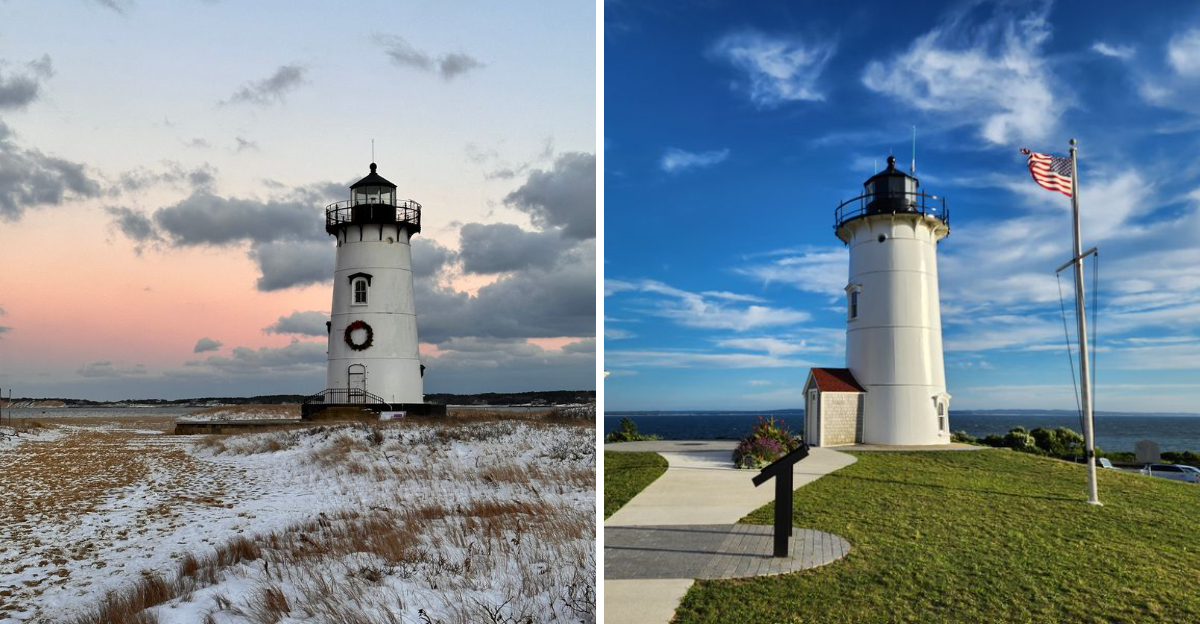
Massachusetts coastline has witnessed centuries of maritime history, and its lighthouses stand as proud sentinels of that legacy.
From rocky shores to sandy beaches, these beacons have guided countless sailors safely home through fog, storms, and darkness.
Today, many of these architectural treasures open their doors to visitors, offering a chance to climb spiral staircases, explore keeper’s quarters, and soak in breathtaking ocean views.
Whether you’re a history buff, photography enthusiast, or just love a good coastal adventure, these working monuments tell stories that will transport you back in time.
1. Boston Light (Little Brewster Island)
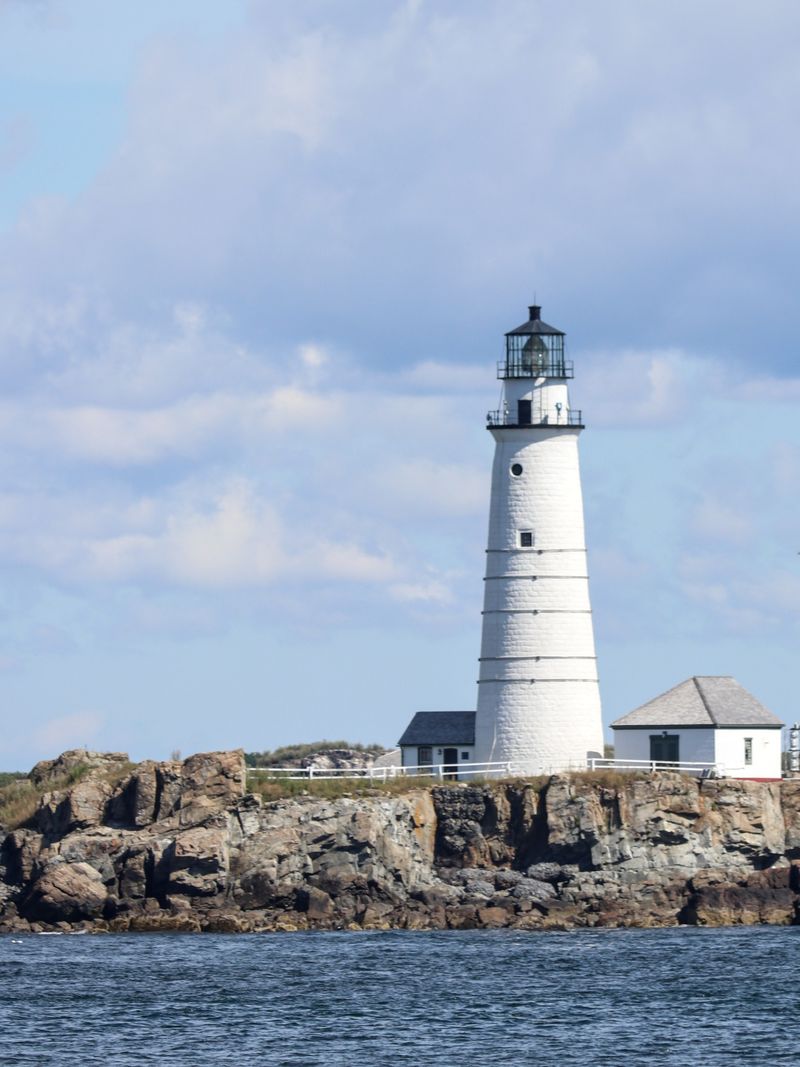
America’s oldest lighthouse station has been warning ships away from treacherous rocks since 1716, making it older than the nation itself.
You’ll need to hop on a boat to reach Little Brewster Island, but the journey is half the adventure as you cruise through Boston Harbor’s historic waters.
Once there, you can climb the 76 spiral steps to the top for panoramic views that stretch for miles.
What makes this place extra special? It’s the only lighthouse in the country that still has an active Coast Guard keeper living on-site.
The tours run during summer months and include fascinating stories about lighthouse keepers who braved isolation and storms.
You’ll explore the keeper’s house, learn about the lens technology, and understand why this beacon was so critical to Boston’s maritime commerce.
Book ahead because spots fill up fast for this genuine slice of American history.
2. Highland Lighthouse (Truro)

Perched on a dramatic cliff 120 feet above the Atlantic, Highland Light commands attention with its bold presence on Cape Cod’s outer shore.
Built in 1797, this tower is actually Cape Cod’s oldest and tallest lighthouse, earning it the nickname Cape Cod Light among locals.
The current structure dates to 1857 and boasts a powerful beam visible for 23 miles out to sea.
Here’s something wild: in 1996, engineers literally moved the entire lighthouse 450 feet inland because erosion was threatening to send it tumbling into the ocean.
When you visit, you can climb to the top during tour season and take in views that inspired Henry David Thoreau during his Cape Cod wanderings.
The adjacent museum showcases maritime artifacts and tells stories of shipwrecks along this dangerous stretch of coastline.
Sunset visits are particularly magical when golden light bathes the cliffs and ocean below.
3. Nauset Light (Eastham)
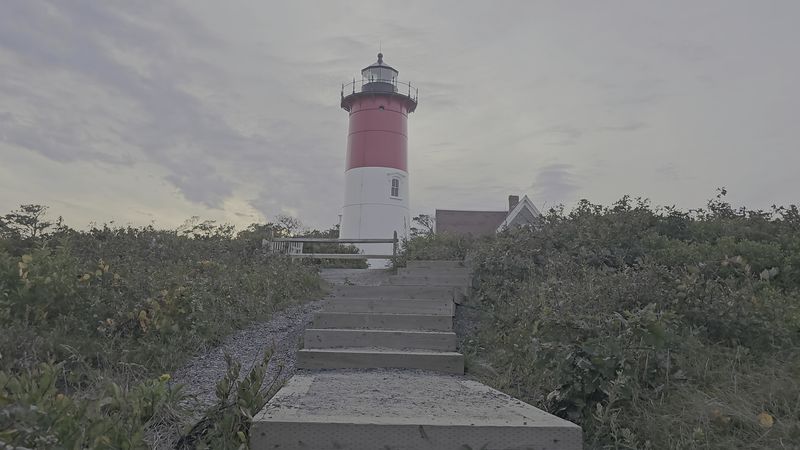
Those iconic red and white stripes make Nauset Light one of the most photographed lighthouses on Cape Cod, and for good reason.
Originally one of three sister lights that stood together, Nauset now stands alone after being relocated from its original Chatham location in 1923.
Like Highland Light, this beacon also got moved back from the eroding cliff edge in 1996, proving that even lighthouses sometimes need saving.
The tower rises 48 feet and sits within the Cape Cod National Seashore, so you’re surrounded by pristine beaches and nature trails.
Tours let you climb the cast-iron spiral staircase to the lantern room where the original Fourth Order Fresnel lens once rotated.
The Nauset Light Preservation Society runs the tours and does incredible work maintaining this beloved landmark.
After your visit, grab your beach gear and head down to the shore—it’s just a short walk through the dunes to some of Cape Cod’s most beautiful swimming beaches.
4. Race Point Lighthouse (Provincetown)
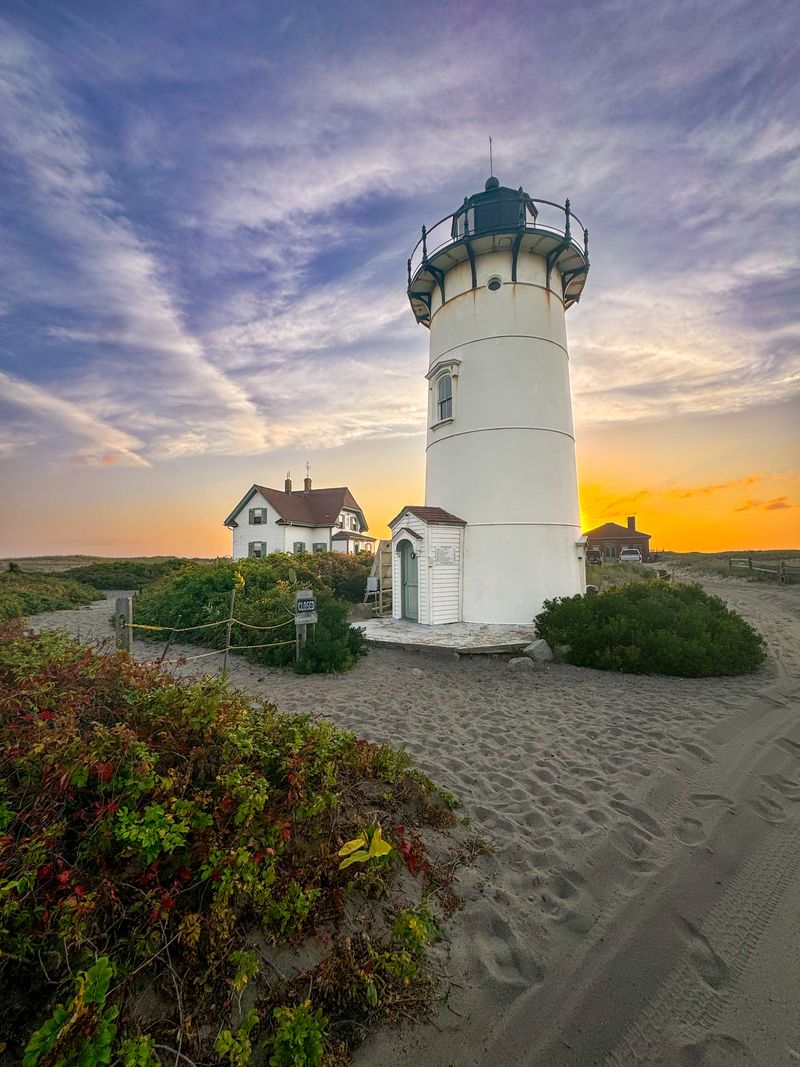
At the very tip of Cape Cod, Race Point Light guards one of the most dangerous stretches of water along the Atlantic coast.
Getting there requires a trek through soft sand or a four-wheel-drive vehicle, adding to the sense of adventure and remoteness.
Built in 1816, this lighthouse has witnessed countless rescues and shipwrecks over two centuries of service.
What’s really unique here is the overnight accommodation option—you can actually stay in the keeper’s house and experience what lighthouse life was like.
Imagine falling asleep to the sound of crashing waves and waking up to sunrise over the Atlantic from your bedroom window.
Day visitors can tour the grounds and climb the tower during scheduled open houses run by the American Lighthouse Foundation.
The surrounding beaches are pristine and often deserted, perfect for beachcombing and whale watching.
Provincetown is just a few miles away when you’re ready for excellent seafood and art galleries.
5. Nobska Point Lighthouse (Woods Hole)
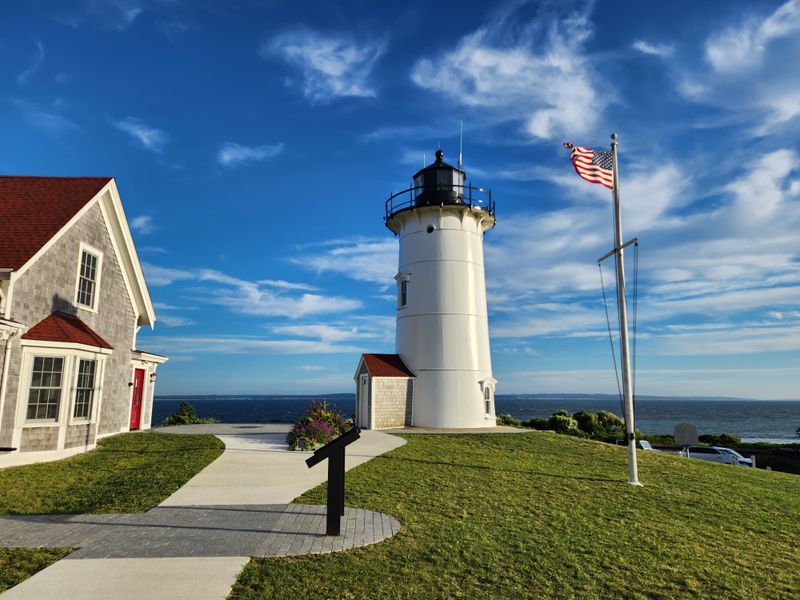
Overlooking the swift currents of Vineyard Sound, Nobska Light has been guiding ferries and fishing boats since 1828 from its prime perch in Woods Hole.
The current 42-foot cast-iron tower dates to 1876 and features a distinctive red light that alternates with white, warning mariners about the dangerous rocks below.
From the grounds, you’ll catch stunning views of Martha’s Vineyard across the water and watch the Steamship Authority ferries glide past.
While the tower itself opens for climbing only on special occasions, the grounds are open year-round and offer some of the best sunset photography spots on Cape Cod.
Woods Hole village is right there, home to world-renowned oceanographic research institutions and charming waterfront restaurants.
The combination of scientific legacy and maritime history makes this area fascinating to explore.
Time your visit with the ferry schedule and you can wave to passengers heading to the islands while standing next to this elegant beacon.
6. Gay Head Lighthouse (Aquinnah)
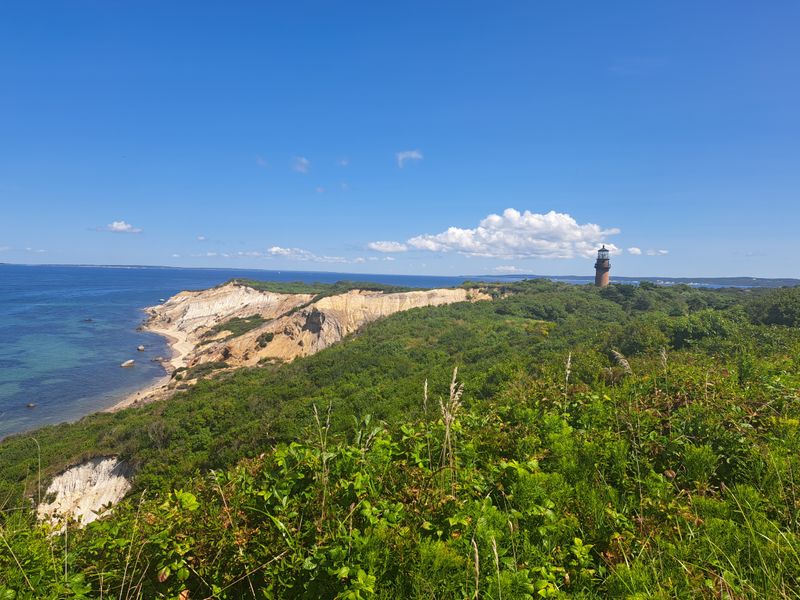
Standing atop the spectacular Aquinnah Cliffs on Martha’s Vineyard, Gay Head Light offers one of the most dramatic lighthouse settings in New England.
Those striped clay cliffs in shades of rust, cream, and gray create a backdrop that looks more like the American Southwest than coastal Massachusetts.
Built in 1856, the red brick tower was originally 160 feet from the cliff edge but erosion brought it dangerously close, prompting a 2015 relocation.
The Wampanoag Tribe of Gay Head (Aquinnah) owns the land, and their presence adds deep cultural significance to your visit.
Tours run during summer months, letting you climb the 44 steps for views that stretch to Cuttyhunk and beyond on clear days.
The sunset here is legendary—photographers arrive hours early to capture the light playing across the ancient cliffs.
There’s a small beach below where you can search for clay deposits, though climbing on the fragile cliffs themselves is prohibited to protect this geological wonder.
7. East Chop Lighthouse (Oak Bluffs)
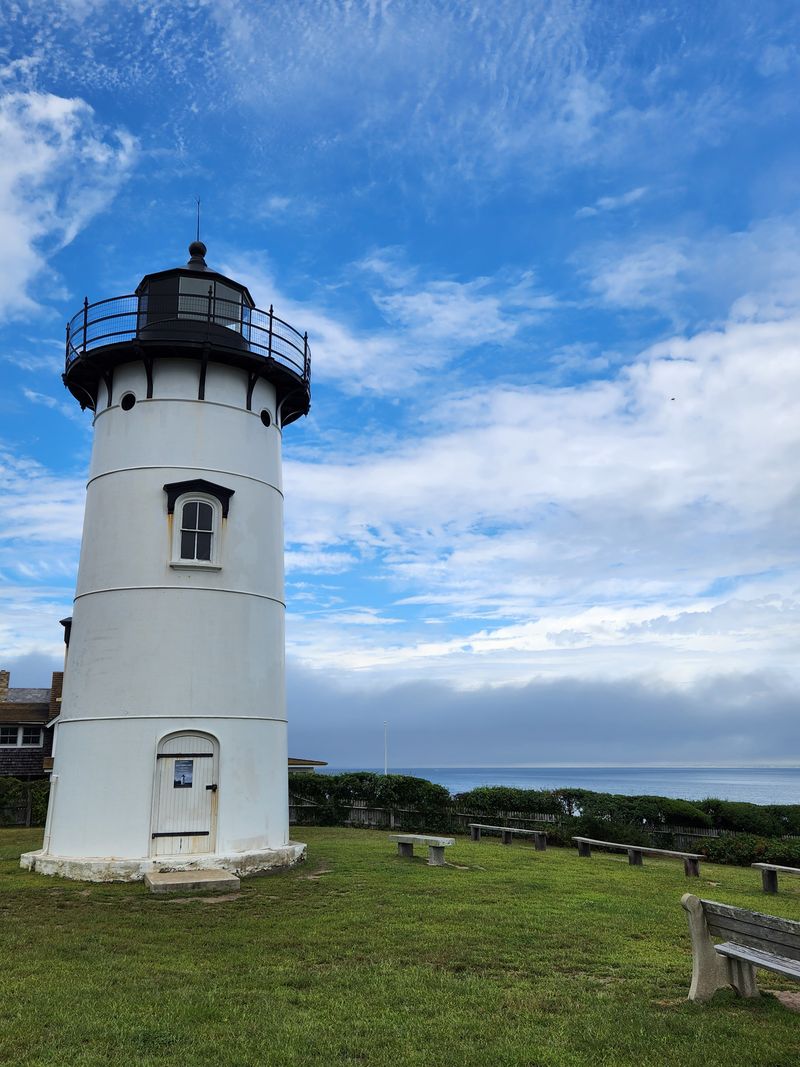
Known affectionately as the Chocolate Lighthouse because of its distinctive brown color, East Chop has welcomed visitors to Oak Bluffs since 1878.
The cast-iron tower stands in a residential neighborhood filled with Victorian homes, creating a charming blend of maritime function and suburban setting.
You can walk right up from the Oak Bluffs ferry terminal in about fifteen minutes, making it one of the most accessible island lighthouses.
During summer Sunday evenings, the Martha’s Vineyard Museum offers sunset tours where you can climb the 40 steps to the lantern room.
The views from the top showcase Oak Bluffs Harbor filled with sailboats, the famous gingerbread cottages, and Nantucket Sound stretching to the horizon.
Kids love spotting the ferries coming and going while learning about how lighthouse keepers maintained the light before electricity.
The surrounding park has benches perfect for picnics, and the nearby town offers ice cream shops and beach access for a full day of island fun.
8. Edgartown Harbor Light (Edgartown)

A picturesque wooden walkway leads you across the beach to this charming white cast-iron lighthouse guarding Edgartown Harbor’s entrance.
Originally built in 1828, the current tower was actually moved here from Ipswich in 1938—yes, they floated it down on a barge!
At just 45 feet tall, it’s smaller than many lighthouses but perfectly proportioned for its setting among Edgartown’s elegant captain’s houses.
The Martha’s Vineyard Museum maintains the property and offers seasonal tours where you can climb to the top for harbor views.
What’s really special is walking out during different tides—at high tide, waves lap at the causeway, while low tide reveals tide pools and shells.
Edgartown itself is worth exploring with its white-picket-fence charm, upscale boutiques, and excellent restaurants serving fresh seafood.
Many visitors combine a lighthouse walk with a stroll through the historic district where whaling captains once lived in grand style.
Bring your camera because this spot is Instagram gold, especially at golden hour.
9. Cape Poge Lighthouse (Chappaquiddick)
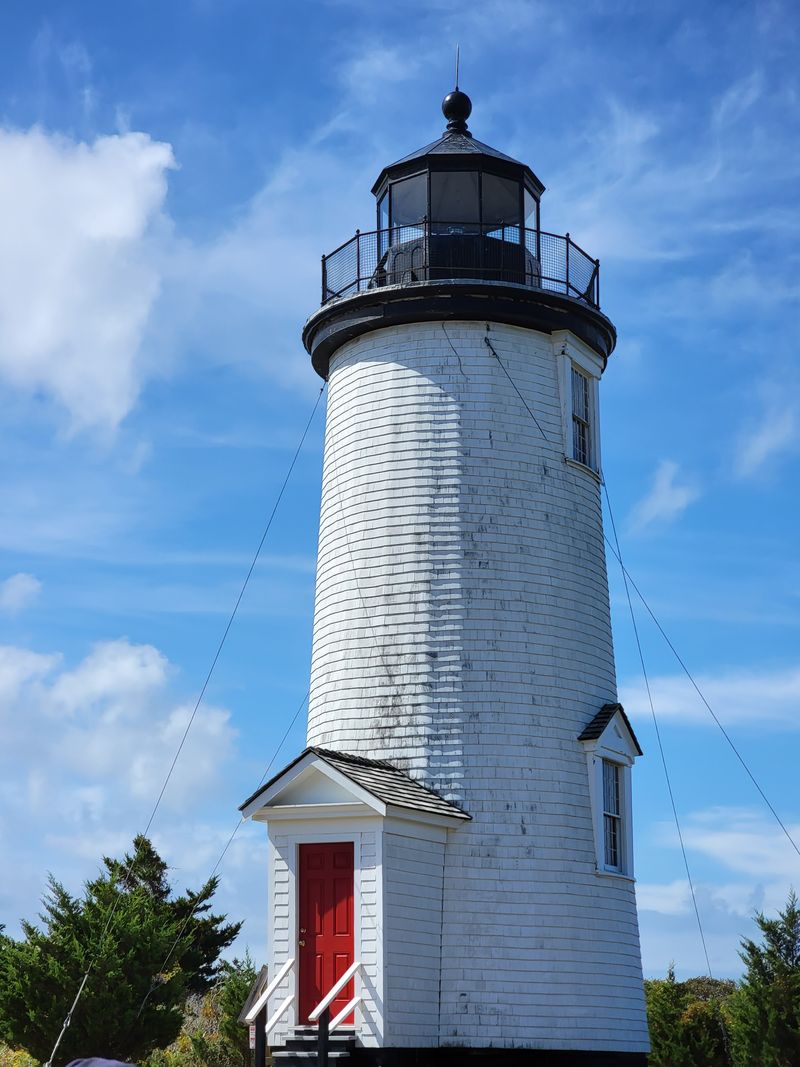
Reaching Cape Poge Light requires serious commitment—you’ll need to take a ferry to Chappaquiddick, then join a guided over-sand vehicle tour through the wildlife refuge.
But adventurous souls find the journey absolutely worth it for the chance to experience one of Massachusetts’ most remote and pristine lighthouse settings.
The current wooden tower, built in 1893, is actually the fifth lighthouse on this site; the others were claimed by storms and erosion.
The Trustees of Reservations run natural history tours that include the lighthouse along with incredible opportunities for bird watching and seal spotting.
You’ll bounce along miles of barrier beach, passing through habitat that’s home to piping plovers, oystercatchers, and other rare shorebirds.
The lighthouse itself sits on a spit of land surrounded by water on three sides, creating a sense of being at the edge of the world.
Tours typically run from June through October, and the guides share fascinating stories about lighthouse keepers who lived in complete isolation here.
10. Sankaty Head Lighthouse (‘Sconset)
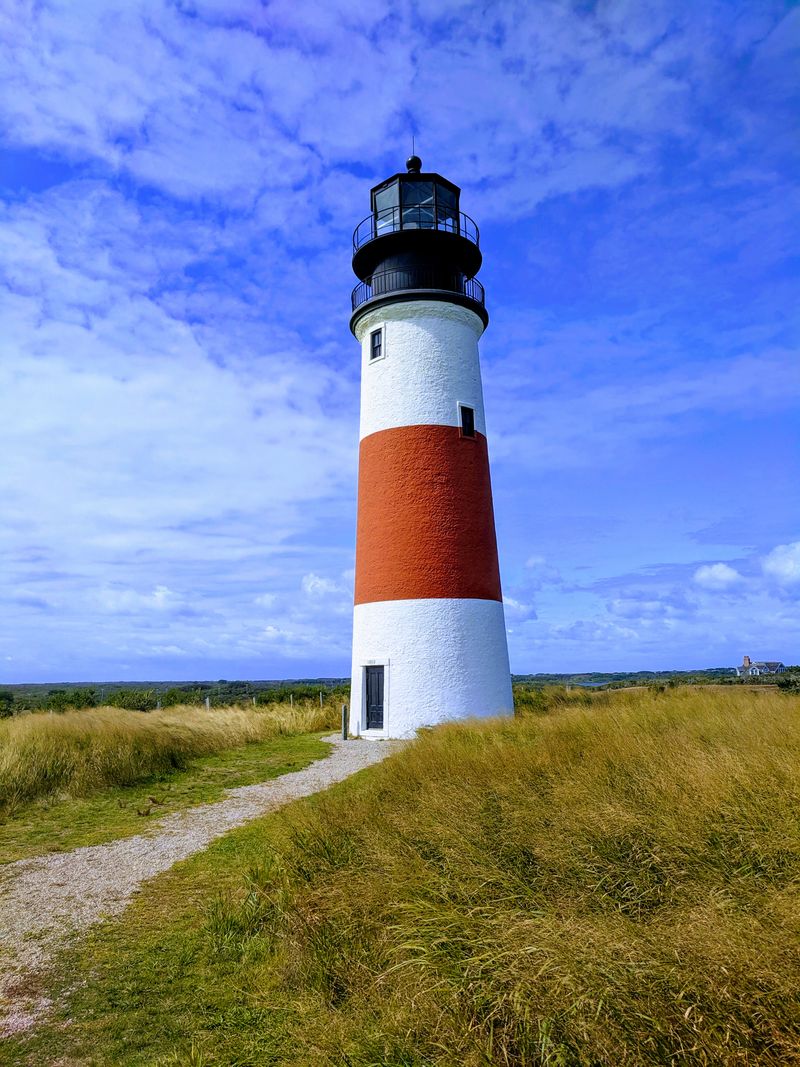
Nantucket’s most famous lighthouse nearly became a casualty of coastal erosion before a dramatic 2007 rescue moved it 400 feet back from the crumbling bluff edge.
Built in 1850, Sankaty’s distinctive red stripe wrapping around its white tower makes it instantly recognizable and beloved by island residents.
The lighthouse stands in the charming village of Siasconset (locals call it ‘Sconset), where rose-covered cottages create a storybook atmosphere.
Though the tower itself isn’t regularly open for climbing, the ‘Sconset Trust organizes special open house events throughout the year.
The surrounding area offers spectacular walking with views across the Atlantic and access to beautiful beaches below the bluffs.
‘Sconset village is worth exploring on its own—tiny lanes wind between cottages barely bigger than playhouses, many dating back to the 1600s when they served as fishing shacks.
The local market makes excellent sandwiches for beach picnics, and the Chanticleer restaurant serves some of Nantucket’s finest cuisine when you’re ready for something special.
11. Plum Island Lighthouse (Plum Island)
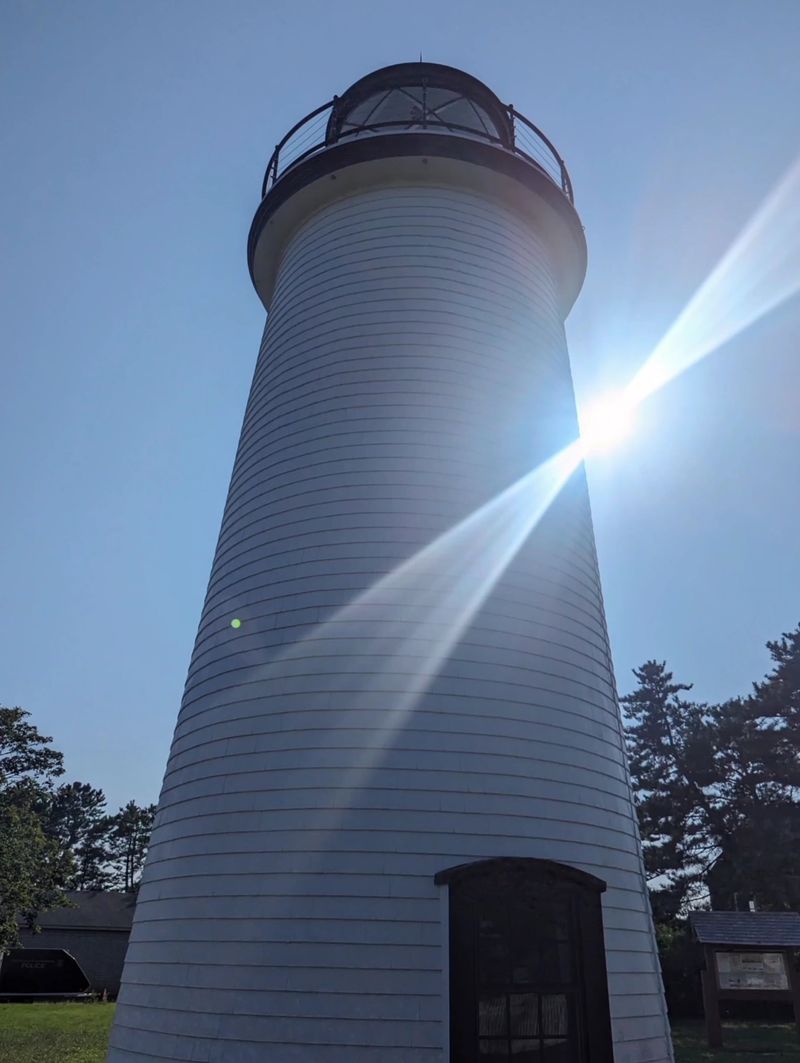
At the northern tip of Plum Island, this 45-foot brick sentinel has marked the entrance to the Merrimack River since 1838.
Unlike many Massachusetts lighthouses, Plum Island Light is privately owned, which means tour opportunities are limited to special events organized by preservation groups.
However, you can view it from nearby beaches and the Parker River Wildlife Refuge offers miles of trails and wildlife viewing opportunities.
The refuge itself is a birder’s paradise with over 300 species recorded, including piping plovers that nest on protected beaches.
Even without going inside the lighthouse, the area rewards visitors with stunning natural beauty—salt marshes, dunes, and beaches that feel wonderfully undeveloped.
Bring binoculars for bird watching and a camera for landscape photography.
The nearby town of Newburyport offers excellent restaurants, shops, and maritime history museums when you’re ready to leave the refuge.
Time your visit for sunrise and you’ll have the beach practically to yourself with the lighthouse silhouetted against the morning sky.
12. Scituate Lighthouse (Scituate)
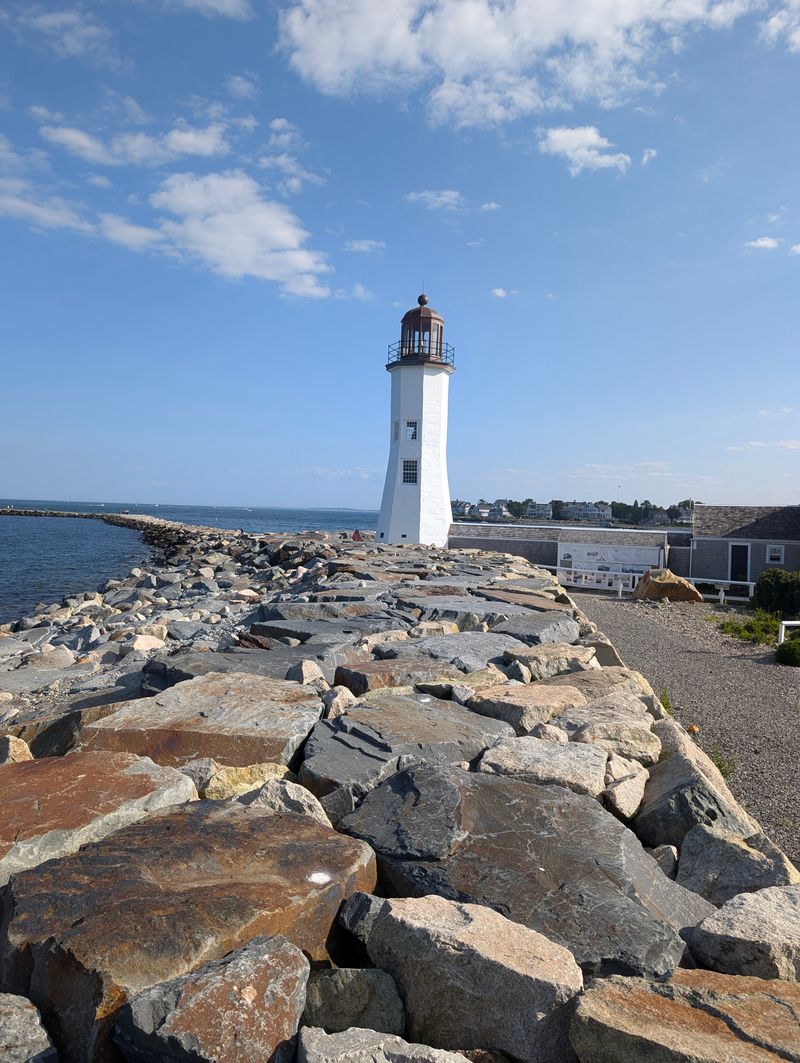
Scituate Light earned its place in history thanks to two teenage sisters who used a fife and drum to scare off British raiders during the War of 1812.
Rebecca and Abigail Bates became known as the American Army of Two, and their clever trick prevented the burning of local ships.
The current lighthouse, built in 1811, features an unusual octagonal tower attached to the keeper’s house, creating a distinctive profile against the harbor.
The Scituate Historical Society maintains the property and offers tours during summer months where you can explore both the tower and keeper’s quarters.
Kids especially love hearing the story of the Bates sisters and seeing the period furnishings in the house.
The surrounding area includes a scenic seawall perfect for walking and tide pool exploration at low tide.
Scituate Harbor is an active fishing port, so you’ll see lobster boats coming and going while enjoying fresh seafood at waterfront restaurants.
The town itself has a lovely New England charm with antique shops and galleries worth browsing.