
This Old-School Wisconsin Diner Might Serve The Best Burger In America

Broadway Diner sits quietly in Baraboo, Wisconsin, serving up what might be the finest burger in the entire country. This isn’t a restaurant chasing trends or building Instagram-worthy towers of excess—it’s a restored 1954 diner car doing what American diners have always done best: cooking honest food with serious skill.
While tourists flock to nearby Devil’s Lake and the Wisconsin Dells, locals know the real attraction is a burger grilled to perfection on a seasoned flat-top, served in a space that honors mid-century dining culture without turning it into a gimmick.
Housed In A Genuine 1950s-Era Diner Car
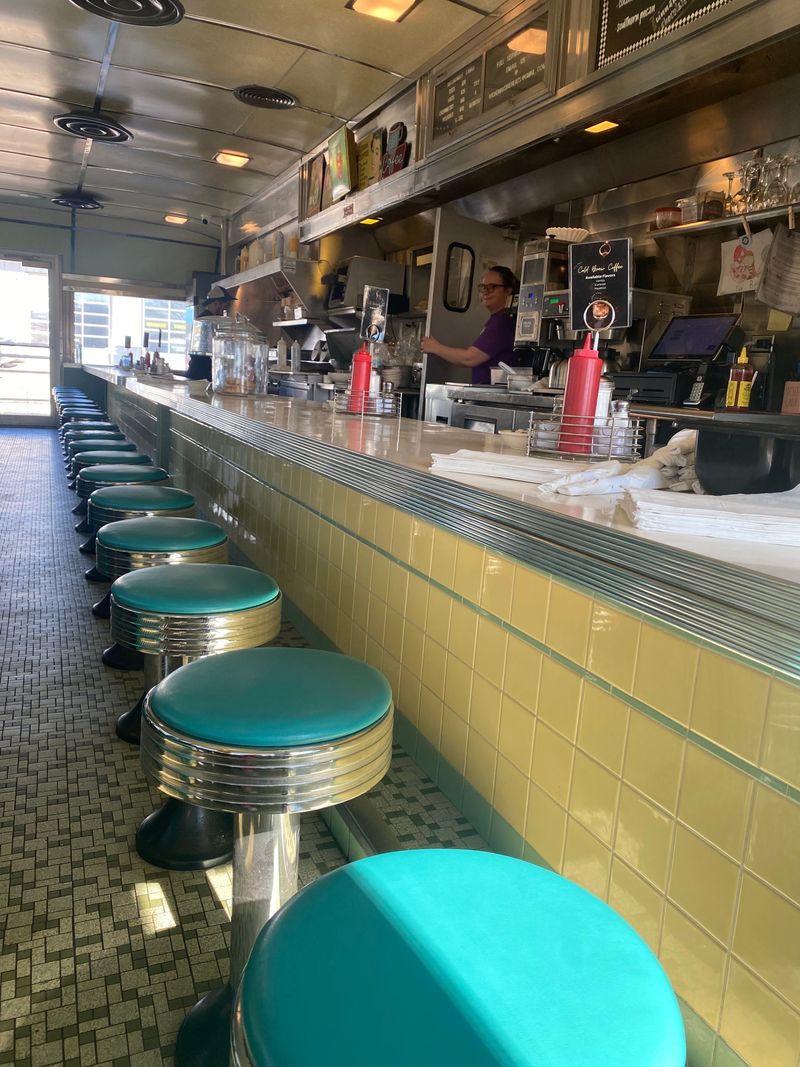
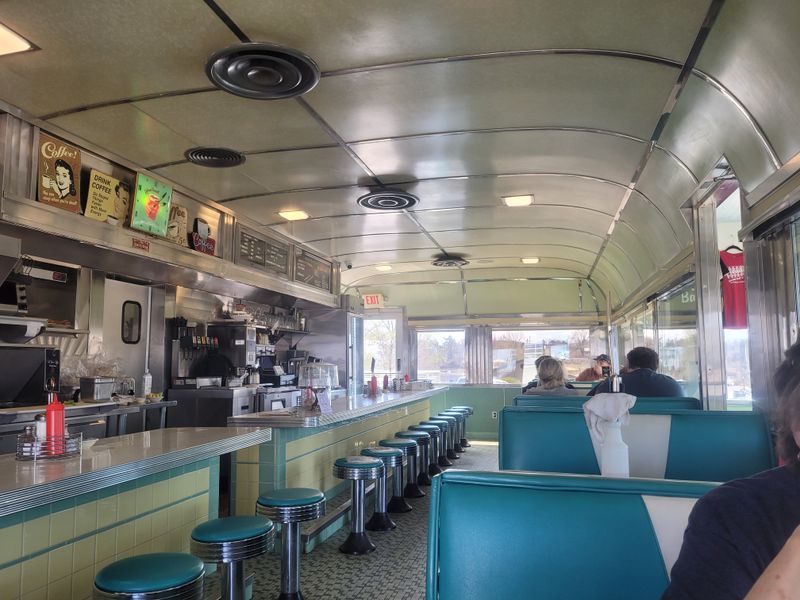
Walking into Broadway Diner feels like stepping through a portal, not because of clever theming, but because the structure itself is authentic. This is a real 1954 diner car, meticulously restored and maintained, complete with stainless steel exteriors, vintage counter seating, and the unmistakable geometry that defined mid-century American roadside architecture.
The building wasn’t designed to look retro—it simply is retro, which gives the entire experience a kind of honest weight that themed restaurants can never replicate.
Located at 304 Broadway St, Baraboo, WI 53913, the diner operates daily from 7 AM to 2 PM, welcoming both early risers and brunch enthusiasts. The interior layout surprises first-time visitors with its depth; what appears compact from the street opens into multiple seating areas, including a counter where you can watch the entire operation unfold on the flat-top grill.
Metal spatulas ring against the cooking surface, creating a rhythm that becomes part of the ambiance rather than a distraction.
The restoration work honors the original design while incorporating necessary modern updates for comfort and efficiency. Everything from the swivel stools to the booth seating reflects thoughtful preservation, creating an environment where the past and present coexist without friction.
A Small-Town Wisconsin Location That Defies Big-City Burger Logic
Baraboo isn’t trying to compete with Milwaukee or Madison when it comes to culinary clout, and that’s precisely why Broadway Diner’s burger carries such authority. Small-town restaurants often face a choice: play it safe with predictable offerings or take risks that might alienate a limited customer base.
Broadway Diner chose a third path—perfecting a simple burger through relentless consistency and refusing to complicate what doesn’t need complication.
The diner benefits from its proximity to Devil’s Lake State Park and the Wisconsin Dells, drawing tourists who arrive hungry and skeptical, expecting standard roadside fare. Instead, they encounter a burger that challenges their assumptions about what small-town diners can accomplish.
The 4.7-star rating from nearly 2,000 Google reviews speaks to this phenomenon—people don’t expect greatness from a random breakfast spot in central Wisconsin, yet they find it anyway.
This location also creates a unique dynamic where locals and visitors converge, each group holding the kitchen to different standards. Tourists might forgive inconsistency, but regulars won’t, and Broadway Diner clearly caters to the latter.
That discipline shows in every burger that leaves the kitchen, regardless of whether it’s ordered by a first-timer or someone who’s been coming here for years.
The Burger Is Built On Simplicity, Not Gimmicks

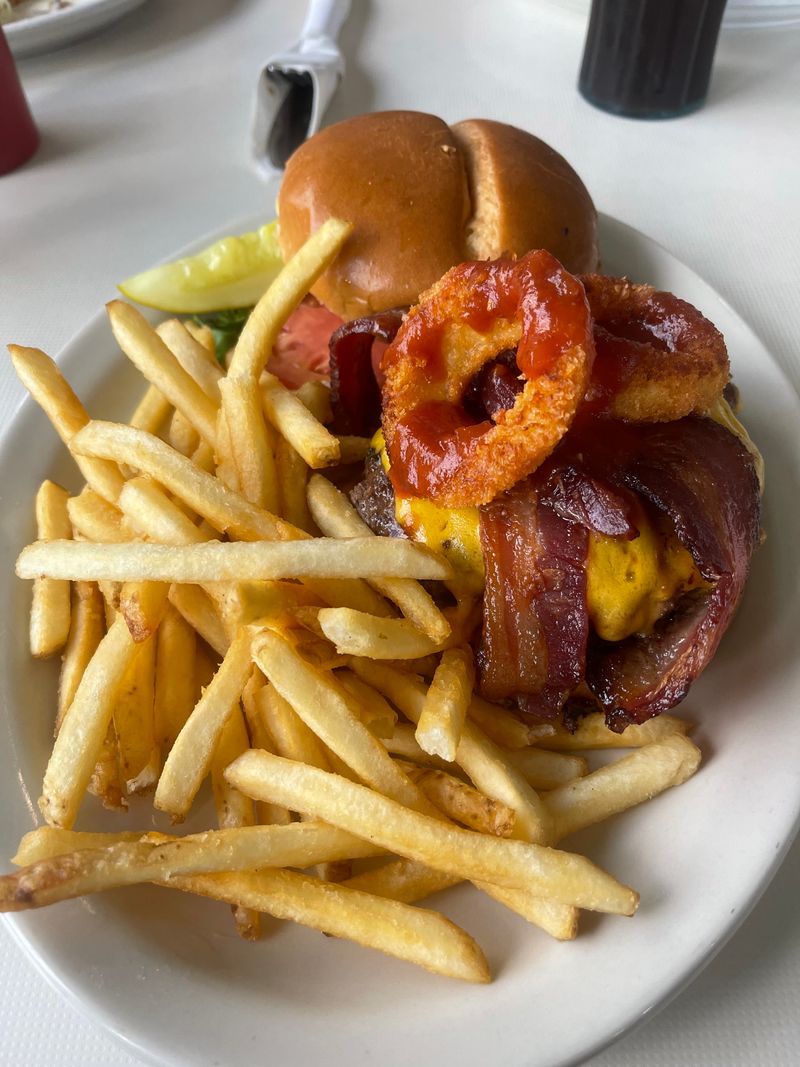
Broadway Diner’s burger succeeds because it respects the fundamentals rather than obscuring them. There’s no bacon jam, no artisanal aioli, no brioche bun pretending to elevate the experience through sheer expense.
What you get instead is a carefully sourced beef patty, grilled with precision, topped with fresh vegetables, and served on a bun that knows its role is to support, not dominate.
One reviewer mentioned ordering the Wisconsin Burger and being genuinely impressed by how straightforward excellence can be when executed properly. The kitchen doesn’t hide behind complexity or try to distract from mediocre ingredients with elaborate sauces.
Every component pulls its weight, and nothing is there just for show. This approach requires confidence—confidence that the beef is good enough to stand on its own, that the grilling technique will deliver proper caramelization, and that customers will appreciate honesty over hype.
In an era when burger culture has become increasingly performative, with stacks so tall they require structural engineering to eat, Broadway Diner’s restraint feels almost radical. The portion size aligns with classic diner standards, generous without becoming absurd.
You leave satisfied, not uncomfortably stuffed, which is exactly how a great burger should make you feel.
Flat-Top Grilling Delivers Old-School Flavor You Can’t Fake
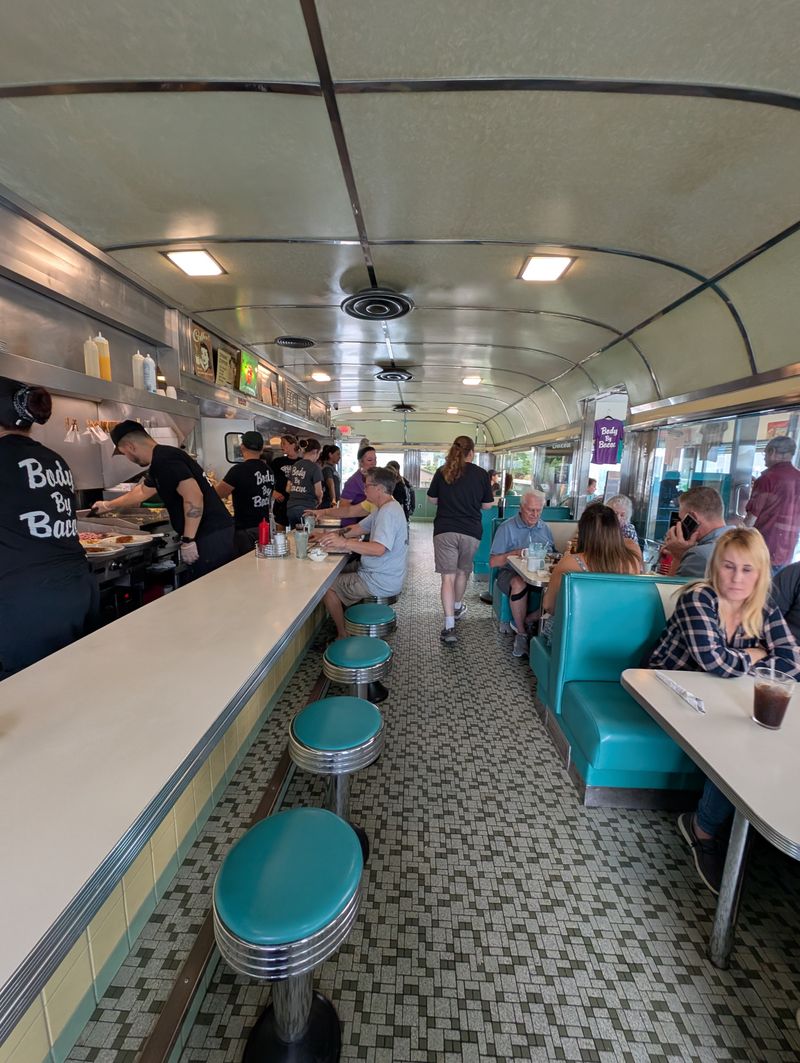
Watch the kitchen staff work the flat-top grill at Broadway Diner and you’re witnessing a technique that built America’s burger culture. Flat-top grilling isn’t just a cooking method—it’s a philosophy that prioritizes even heat distribution, proper crust development, and the kind of caramelization that only happens when beef meets seasoned steel at precisely the right temperature.
Modern flame-grilled burgers have their place, but they can’t replicate the texture and flavor profile that comes from a well-maintained flat-top.
The metal spatulas striking the grill create a soundtrack that signals authenticity. These aren’t line cooks phoning it in; they’re craftspeople who understand that timing, pressure, and heat management separate memorable burgers from forgettable ones.
The open kitchen design means diners seated at the counter can observe the entire process, which adds accountability and theater in equal measure.
Flat-top grilling also allows for better control over doneness, reducing the risk of dry, overcooked patties that plague so many restaurants. The technique encourages proper searing without sacrificing interior moisture, resulting in burgers that deliver both textural contrast and juicy satisfaction.
It’s a method that requires skill, attention, and equipment maintenance—all areas where Broadway Diner clearly excels.
Portion Size Stays True To Mid-Century Diner Standards
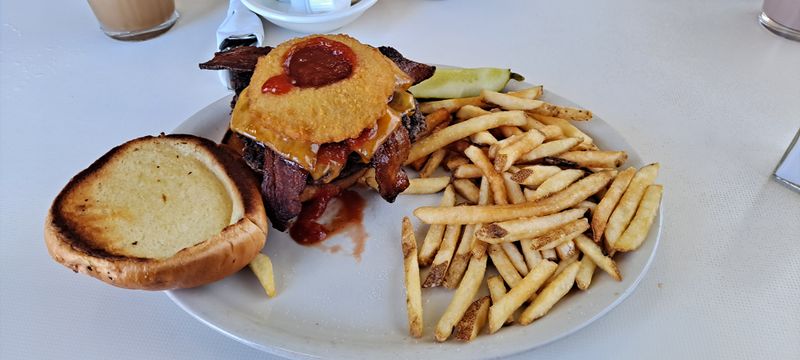
Modern restaurants often confuse generosity with excess, piling plates so high that eating becomes a chore rather than a pleasure. Broadway Diner understands the difference, serving portions that reflect genuine mid-century diner values: substantial enough to satisfy working appetites, but calibrated to complement rather than overwhelm.
The burger arrives at a size that makes sense—large enough to feel like a proper meal, compact enough that you can actually finish it without requiring a nap afterward.
Multiple reviews mention the surprising heartiness of the food without crossing into wasteful territory. One customer noted that the three-egg omelet combinations with hash browns and toast hit the perfect quantity for their appetite.
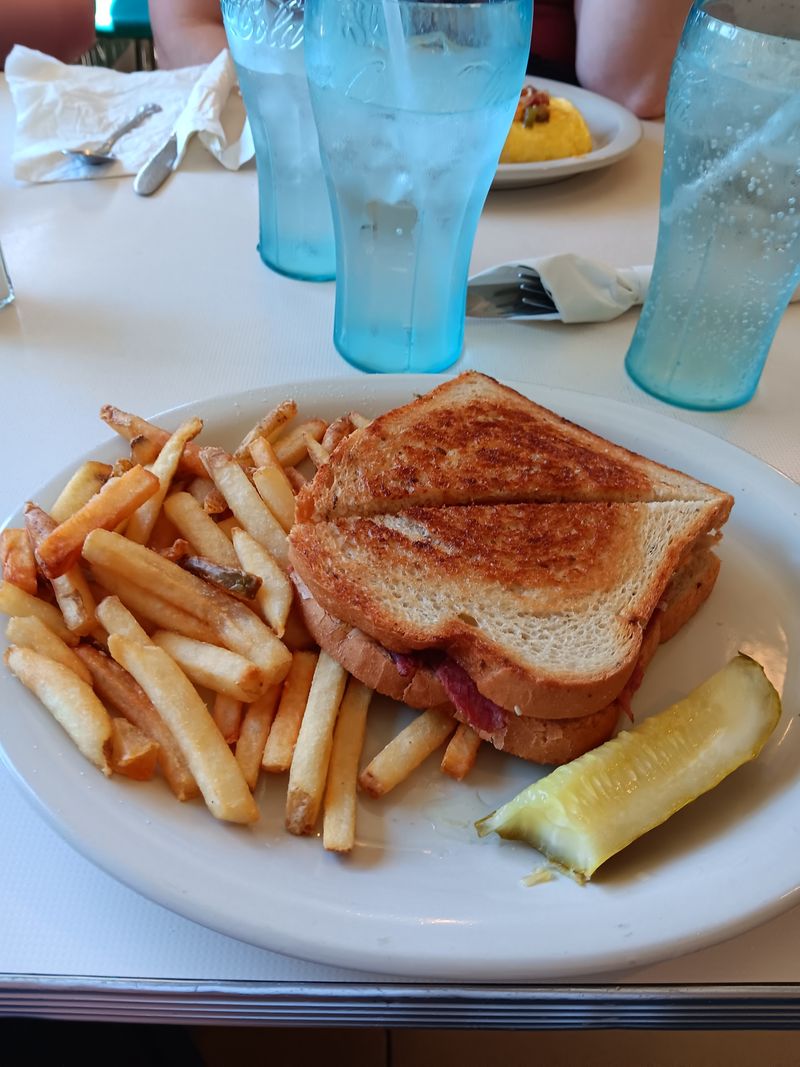
This same thoughtfulness extends to the burger, which pairs naturally with the hand-cut fries that one young diner described as “chef’s kiss” in quality. The kitchen clearly thinks about how components work together rather than treating each element as an opportunity to maximize plate coverage.
This restraint also speaks to sustainability and respect for ingredients. When you’re not trying to shock customers with absurd portions, you can focus resources on quality rather than quantity, ensuring that every ounce of beef, every slice of tomato, and every leaf of lettuce meets higher standards.
Locals Treat The Burger As A Benchmark, Not A Trend
In communities like Baraboo, where population hovers around 12,000, restaurants can’t survive on novelty or tourist traffic alone. Broadway Diner has earned something more valuable than viral fame—it’s become the standard against which other burgers in the area are measured.
When locals discuss where to eat, the conversation doesn’t start with whether Broadway Diner is good; it begins with whether anywhere else comes close.
This benchmark status creates a fascinating dynamic. The kitchen can’t afford an off day because regulars will notice immediately, and in a small town, word travels faster than any Yelp review.
The 4.7-star rating from nearly 2,000 reviews reflects sustained excellence rather than a temporary hot streak. People return weekly, sometimes daily, which means the burger needs to deliver consistent quality that withstands repetition without becoming boring.
The customer reviews reveal this relationship clearly. Locals don’t gush about the burger because it’s trendy or Instagram-worthy; they praise it because it reliably meets their expectations meal after meal, year after year.
One reviewer mentioned making Broadway Diner a must-stop whenever visiting the area, treating it as a destination rather than a convenience. That’s the ultimate compliment for any restaurant—becoming part of someone’s routine, woven into their sense of what makes a place feel like home.
The Diner Experience Is As Important As The Food
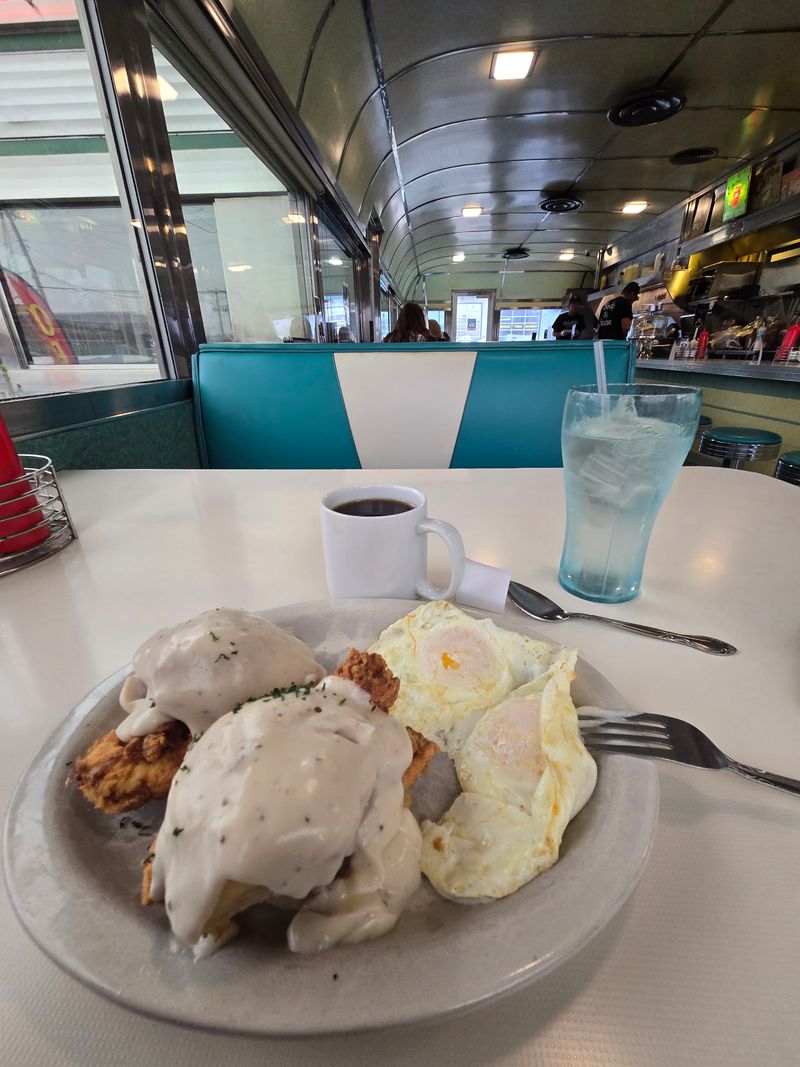
Broadway Diner understands something that many modern restaurants forget: people don’t just eat food, they consume experiences. The restored 1954 diner car provides an atmosphere that can’t be replicated through clever interior design or vintage props.
Sitting at the counter, watching cooks work the flat-top while oldies music plays in the background, creates a multisensory experience that makes the burger taste even better than it would in a sterile, contemporary setting.
Service plays a crucial role in this equation. Multiple reviews mention servers by name—Hannah, Vonnie, and others—who bring efficiency without sacrificing warmth.
One family noted how graciously staff handled a spilled drink, while another praised their server for recommending local attractions beyond just taking their order. This kind of genuine hospitality can’t be trained through corporate modules; it emerges from a workplace culture that values people over profit margins.
The physical space also contributes significantly. The counter seating with swivel stools delighted one family so much that their children now want similar chairs at home.
The dog-friendly patio accommodates groups who might otherwise struggle to find welcoming spaces. Even the noise level—metal spatulas ringing against the grill—adds authenticity rather than annoyance, reminding diners that real cooking is happening mere feet away.
Consistency Is The Real Secret Ingredient
Flashy restaurants can deliver one spectacular meal and coast on that reputation for months. Neighborhood diners like Broadway Diner face a different challenge—they need to execute flawlessly day after day, serving customers who will notice immediately if standards slip.
The burger that impressed someone on their first visit needs to taste equally good on their twentieth, which requires systems, discipline, and a team that takes pride in repetition rather than viewing it as monotony.
The reviews spanning multiple years show remarkably consistent praise, which is rare in the restaurant industry. People mention the same strengths repeatedly: hot food arriving quickly, proper seasoning, attentive service, and that elusive quality of tasting “homemade” despite being prepared in a commercial kitchen.
One reviewer noted that everything looked and tasted scratch-made, from the corned beef hash to the baked goods, suggesting that consistency extends across the entire menu rather than being limited to signature items.
This reliability also extends to operational details. Broadway Diner maintains clear hours—7 AM to 2 PM daily—and sticks to them, which allows staff to develop routines and customers to plan accordingly.
The kitchen can focus on breakfast and lunch service without stretching resources across too many dayparts, maintaining quality through specialization rather than attempting to be everything to everyone.
Baraboo’s Tourism Brings First-Timers, The Burger Brings Them Back
Geography blessed Broadway Diner with proximity to major Wisconsin tourist destinations—Devil’s Lake State Park draws outdoor enthusiasts, while the Wisconsin Dells attracts families seeking entertainment. Many visitors discover the diner by chance, searching for breakfast before hiking or looking for lunch after checking out of their hotels.
They arrive as tourists and leave as advocates, planning their next trip with Broadway Diner already marked on the itinerary.
One reviewer mentioned finding the diner while traveling to Devil’s Lake, describing it as a discovery that elevated their entire trip. Another noted stopping for brunch en route to the Dells, with the meal becoming a highlight that rivaled the main attractions.
This pattern repeats throughout the reviews—people stumble upon Broadway Diner expecting acceptable roadside food and instead encounter something memorable enough to warrant return visits and enthusiastic recommendations to friends.
The burger plays a crucial role in this conversion process. Breakfast items might draw the morning crowd, but the burger appeals to the lunch audience and creates strong enough impressions to override the natural human tendency toward novelty-seeking.
Why try a new restaurant on your next visit when you already know Broadway Diner delivers? That’s the power of consistency meeting quality in a location that benefits from steady tourist traffic.
It Embodies Wisconsin’s Quiet Burger Confidence
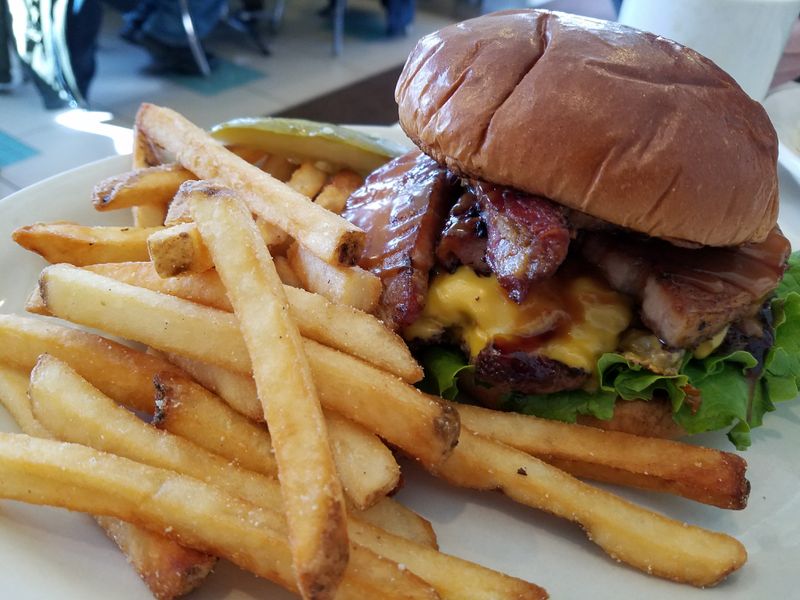
Wisconsin doesn’t shout about its food culture the way some states do, but that doesn’t mean the state lacks culinary identity. From cheese curds to Friday fish fries, Wisconsin’s food traditions run deep, built on European immigrant influences and agricultural abundance.
Broadway Diner’s burger fits perfectly into this tradition—unpretentious, high-quality, and rooted in the belief that good ingredients prepared with skill need no elaborate justification.
The Wisconsin Burger mentioned in reviews likely incorporates local cheese, tying the dish to the state’s dairy heritage without making a big production of it. This subtle regional pride distinguishes Wisconsin restaurants from those in places where every local ingredient gets announced like a press release.
The confidence comes from knowing the product speaks for itself, that customers will taste the quality difference without requiring a lecture about sourcing and terroir.
This same quiet confidence extends to the restaurant’s operations. There’s no aggressive social media presence, no publicity stunts, no celebrity chef narrative.
Broadway Diner simply opens at 7 AM, serves excellent food until 2 PM, and trusts that quality will build its reputation organically. In an age of manufactured food fame, this approach feels almost countercultural, yet it works because the burger genuinely deserves the praise it receives.
It Reminds Us Why Diners Built America’s Burger Culture
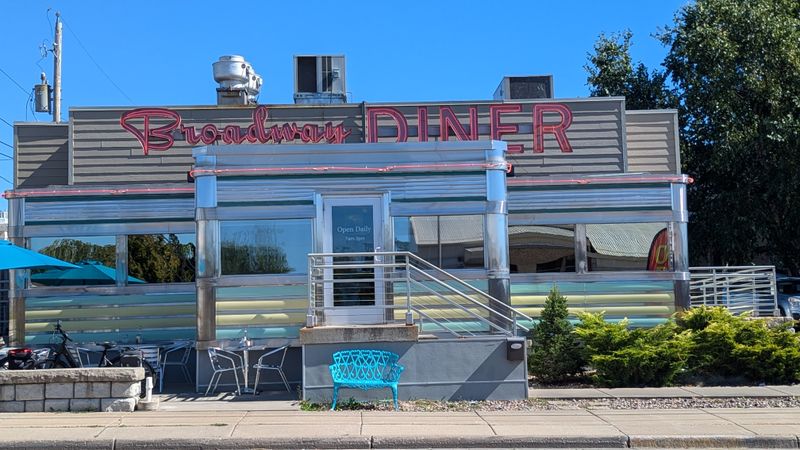
Before burgers became objects of culinary fetishization, they were working-class food served in working-class establishments where efficiency, value, and satisfaction mattered more than presentation or pedigree. Diners like Broadway Diner represent this original burger culture—places where skilled cooks transformed simple ingredients into memorable meals through technique, consistency, and genuine care about the final product.
Eating here isn’t an exercise in nostalgia; it’s a reminder that the fundamentals never went out of style, we just stopped paying attention to them.
The open kitchen design, the flat-top grill, the counter seating—these aren’t decorative choices but functional elements that defined American diner culture for decades. Watching your burger being cooked creates connection and accountability that modern restaurant designs deliberately obscure.
The cook knows you’re watching, which means there’s no hiding behind kitchen doors if something goes wrong. This transparency built trust between diners and cooks, establishing relationships that kept people coming back long before loyalty programs existed.
Broadway Diner proves that this model still works when executed with integrity. The burger succeeds not because it’s trying to reinvent anything, but because it honors the techniques and values that made diner burgers legendary in the first place.
Sometimes the best way forward is remembering what worked all along.