
This Tennessee Forest Trail Feels Like You’ve Stepped Into A Real-Life Fairy Tale
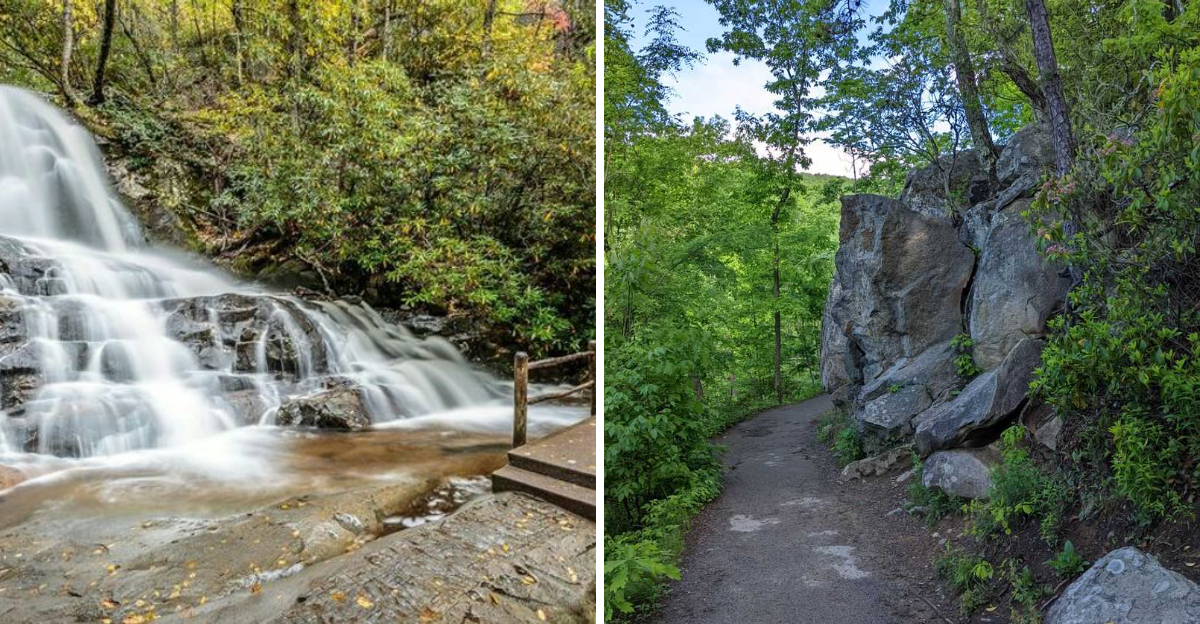
Walking through the Great Smoky Mountains often feels like stepping into a childhood storybook, and Laurel Falls Trail captures that sense of wonder perfectly. Set in Tennessee at coordinates 35.6796706, -83.598758, this 2.6-mile hike blends easy accessibility with natural beauty that sparks a quiet sense of magic.
The paved trail welcomes kids, older visitors, and first-time hikers alike, offering an enchanting experience that feels immersive and rewarding without demanding advanced hiking skills.
A Storybook Forest Path
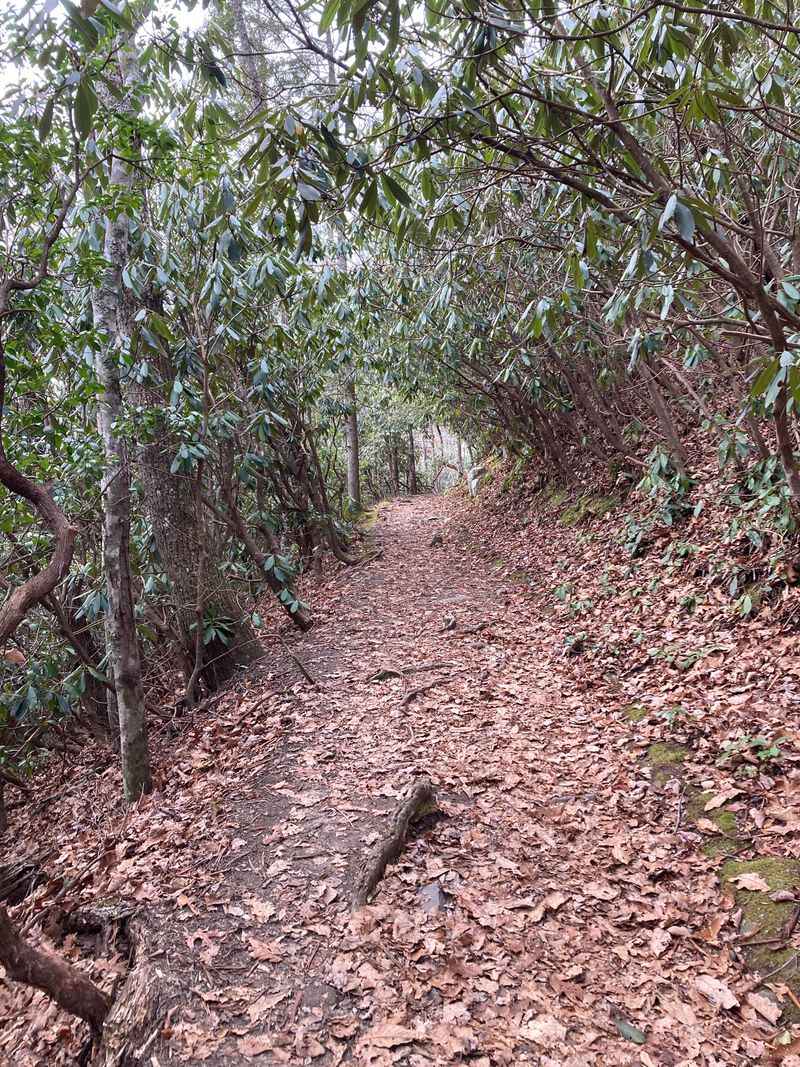
Old-growth forest surrounds you from the moment you begin walking, creating an atmosphere that feels removed from ordinary life. Massive trees arch overhead, their branches forming natural canopies that filter sunlight into soft, shifting patterns on the ground.
The forest itself seems to hum with quiet life—birds calling from invisible perches, leaves rustling in mountain breezes, the distant sound of water promising something worth discovering.
This isn’t wilderness that feels intimidating or remote. Instead, the trail strikes a balance between wild beauty and welcoming accessibility, making it easy to lose yourself in the scenery without worrying about getting lost.
Families walk side by side here, children pointing at interesting rocks and moss-covered logs while adults pause to take photographs. The path invites lingering, and most visitors find themselves stopping frequently, not from exhaustion but from genuine desire to soak in the surroundings and appreciate what feels like a landscape designed specifically for wonder.
A Waterfall Worth The Walk
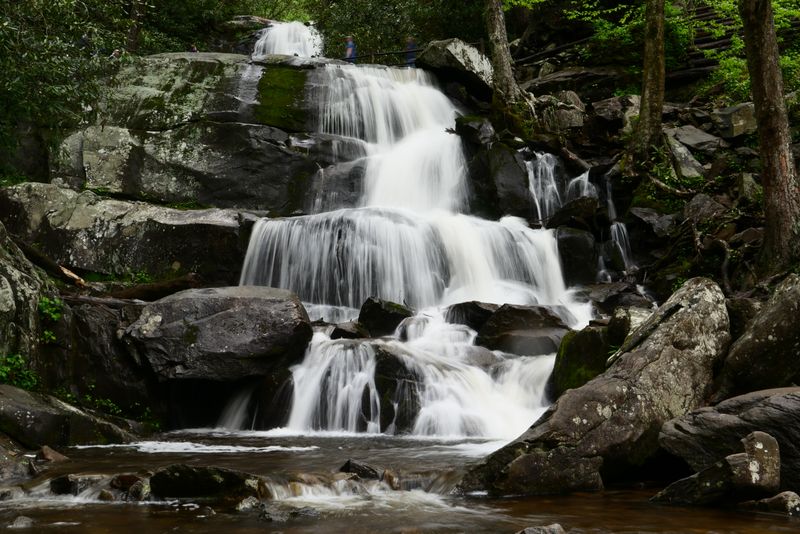
Laurel Falls itself stands as the trail’s grand finale, an 80-foot cascade tumbling down in two distinct tiers that create constant motion and sound. Water rushes over dark rock faces, catching light and throwing up fine mist that cools the air around the viewing area.
After the uphill journey, arriving at this spot feels like a reward that exceeds expectations, particularly for first-time visitors who may not have anticipated such dramatic natural architecture.
Space exists at the base for multiple groups to enjoy the falls without feeling cramped, though weekends and peak seasons do bring crowds. Many hikers sit on the rocks near the water, dangling feet in the cold stream or simply watching the endless flow.
Photography enthusiasts find plenty to work with here—the falls photograph beautifully in any season, though spring runoff increases the water volume considerably. The combination of accessibility and genuine scenic payoff explains why this waterfall ranks among the most visited in the entire national park system.
Mossy Forests Set The Mood
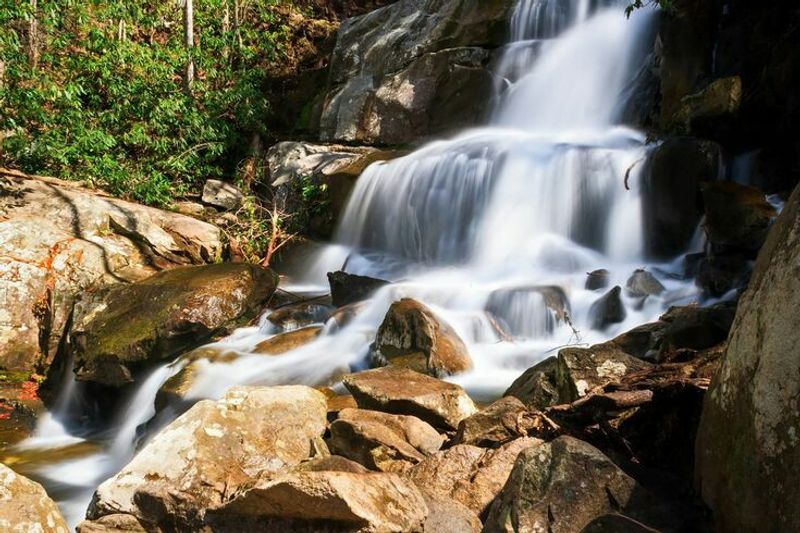
Moss clings to nearly every surface along this trail, transforming ordinary rocks and fallen logs into something that belongs in illustrated fairy tales. The green covering appears impossibly soft, and the temptation to touch it proves difficult for most hikers to resist.
Moisture from mountain air and proximity to water sources creates perfect conditions for these ancient plants, which thrive in the Smokies’ unique microclimate and add layers of texture to the landscape.
Children especially delight in discovering moss-covered stones that look like tiny thrones or woodland furniture scaled for forest creatures. The prevalence of moss also indicates the health of the ecosystem—these plants require clean air and stable moisture levels to flourish in such abundance.
Photographers often focus on these details, capturing close-up shots that reveal intricate patterns and unexpected colors within what first appears to be simple green fuzz. Walking through these mossy sections feels like entering a protected, timeless space where nature operates according to older, slower rhythms.
An Easy But Enchanting Hike
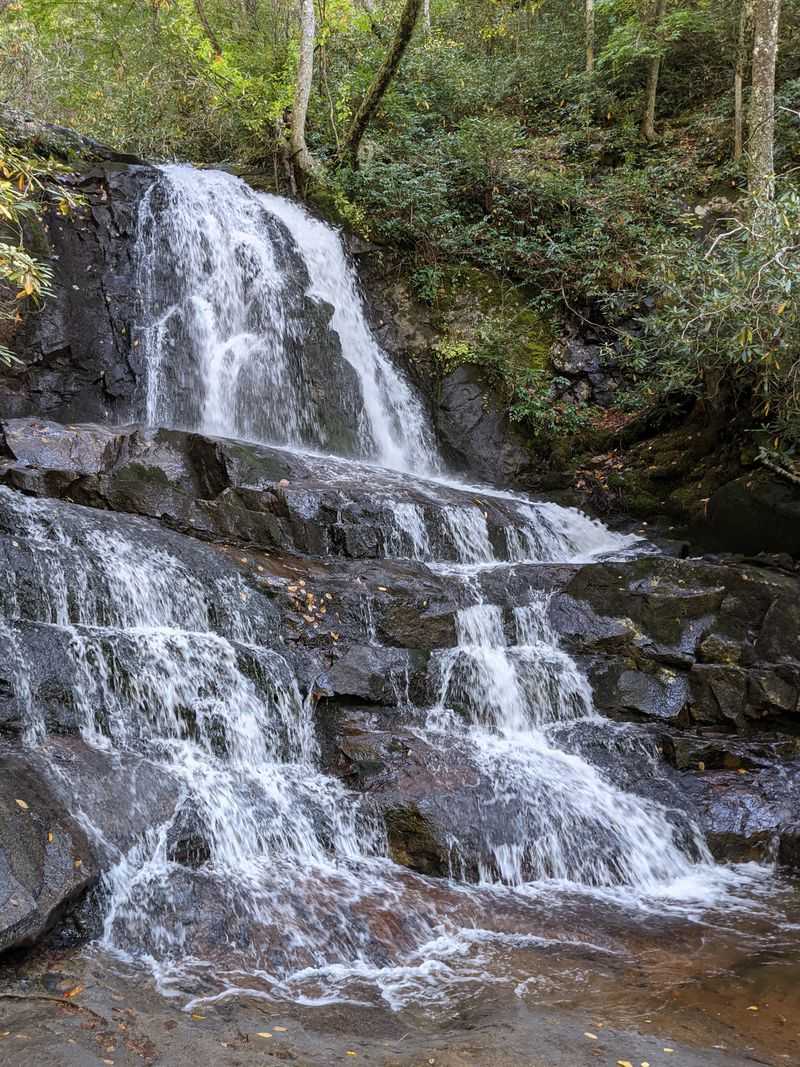
Moderate difficulty describes this trail accurately—the route climbs steadily uphill for most of the outbound journey, but the grade remains manageable for reasonably fit hikers of various ages. Families with elementary-school children complete it regularly, as do older adults who maintain basic fitness levels.
The 2.6-mile round trip typically requires between 90 minutes and two hours, depending on how frequently your group stops to rest or admire views.
Paved surface makes footing more predictable than rocky mountain trails, though sections have deteriorated over time, creating uneven patches that require attention. Proper walking shoes matter here despite the pavement—smooth-soled sneakers can slip on damp sections, and ankles appreciate the support during the descent.
Rest areas appear at intervals, offering benches or flat spots where hikers catch their breath and let faster groups pass. The return journey feels considerably easier since gravity assists rather than resists, and most people find themselves moving more quickly downhill while encouraging upward-bound hikers they meet along the way.
A Paved Path With Wild Charm
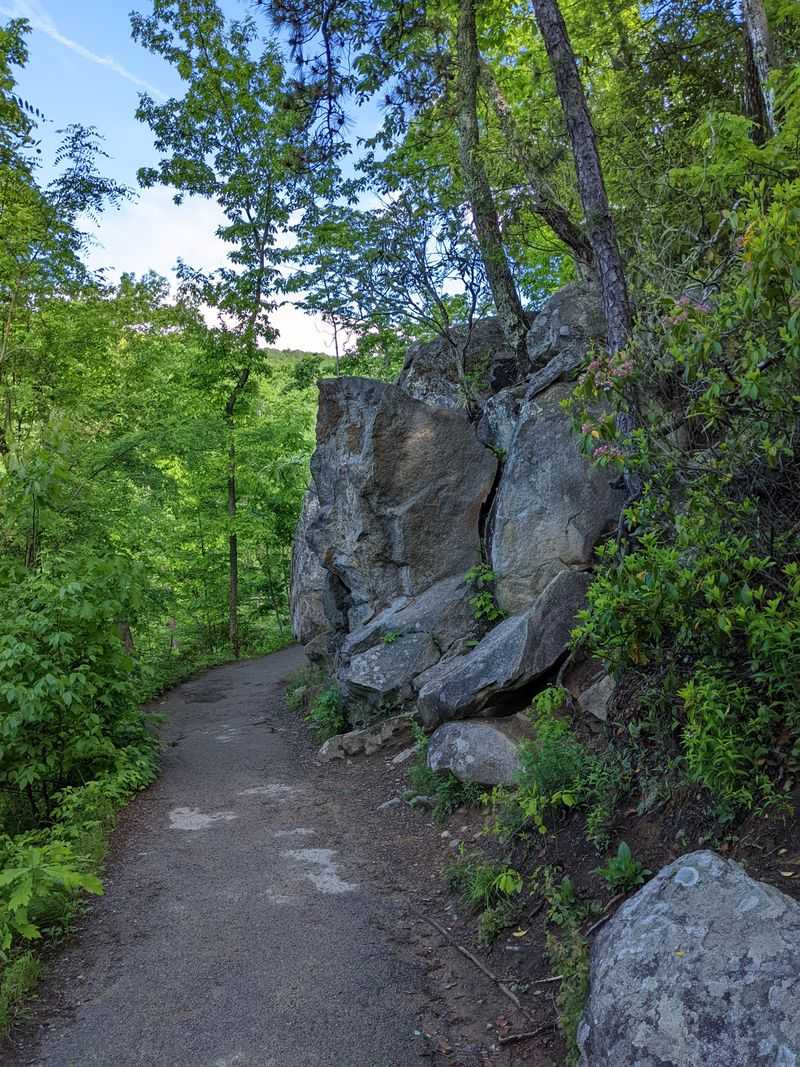
Pavement might seem at odds with wilderness, but on Laurel Falls Trail it serves a practical purpose without diminishing the natural experience. The hard surface makes this route accessible to people who couldn’t manage rocky, root-crossed trails, expanding who gets to experience genuine mountain beauty.
Strollers do appear here occasionally, though reviews consistently note that the deteriorating pavement makes pushing wheels more challenging than parents might expect from the word “paved.”
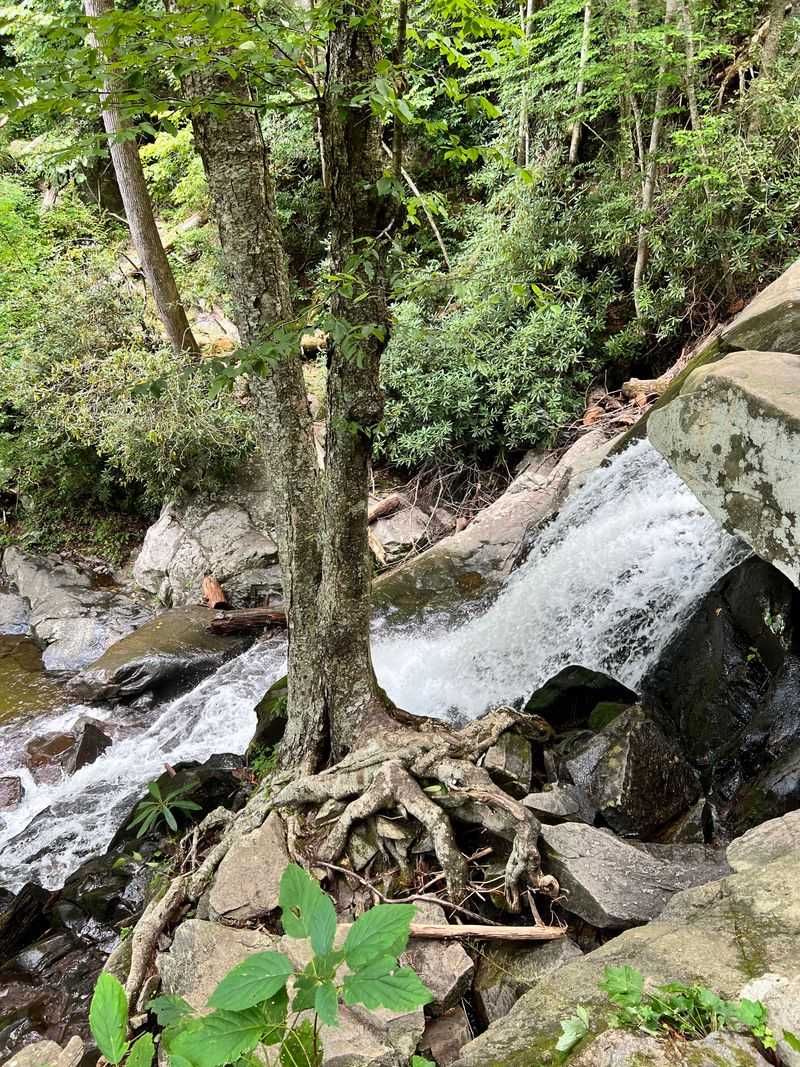
Nature reclaims sections where the asphalt has cracked and crumbled, creating an interesting hybrid surface that feels neither fully developed nor entirely wild. Weeds push through gaps, water erosion creates rough patches, and tree roots buckle the path in places, reminding visitors that the forest existed here long before humans added pavement.
This combination actually enhances rather than detracts from the experience for many hikers. The path provides structure and safety while the surrounding wilderness maintains its authentic character, creating a compromise that works surprisingly well and allows more people to access what might otherwise remain exclusive to experienced trail hikers.
The Sound Of Water All The Way
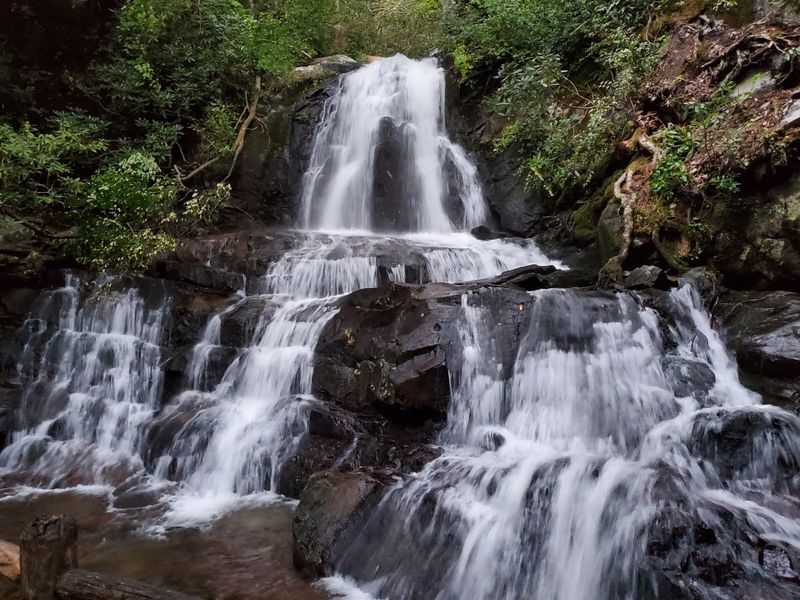
Mountain streams accompany hikers for much of this journey, their constant burbling providing a soundtrack that drowns out highway noise and modern distractions. Water appears in various forms along the route—sometimes rushing visibly alongside the path, other times hidden in dense vegetation but audible as a persistent background presence.
This acoustic element contributes significantly to the trail’s fairy-tale atmosphere, creating the sense that you’re following water toward its source.
The sound changes as you progress, starting as gentle trickles and building toward the more dramatic roar of Laurel Falls itself. Children often become fixated on spotting the water through trees and bushes, turning the hike into a sort of treasure hunt.
On hot summer days, the sound alone provides psychological cooling, and many hikers mention in reviews how pleasant they found the constant water presence. The streams also support abundant plant life, creating lush corridors of green that contrast beautifully with drier forest sections.
Following water uphill feels instinctive, almost like the trail designed itself around this ancient pathway.
Accessible Magic For All Ages
Grandparents hike this trail with grandchildren, creating memories across three generations on a single afternoon. The moderate difficulty and relatively short distance make it possible for families to include members who might get excluded from more demanding adventures.
Five-year-olds manage the walk with encouragement and frequent stops, while older adults in decent health complete it without excessive strain, though everyone should expect some huffing on the uphill sections.
This inclusivity matters more than it might initially seem. National parks can feel intimidating to people without hiking experience, and many families skip them entirely because they assume trails require athletic ability or specialized gear.
Laurel Falls proves otherwise, offering a genuine mountain experience without demanding technical skills or extreme fitness. The result is a trail that introduces people to wild places they might otherwise never encounter, potentially sparking lifelong interest in nature and conservation.
Reviews frequently mention grandparents completing their first real hike here, or children discovering that walking in forests beats watching screens—outcomes that extend far beyond a single afternoon’s entertainment.
Sunlight Creates Constant Wonder
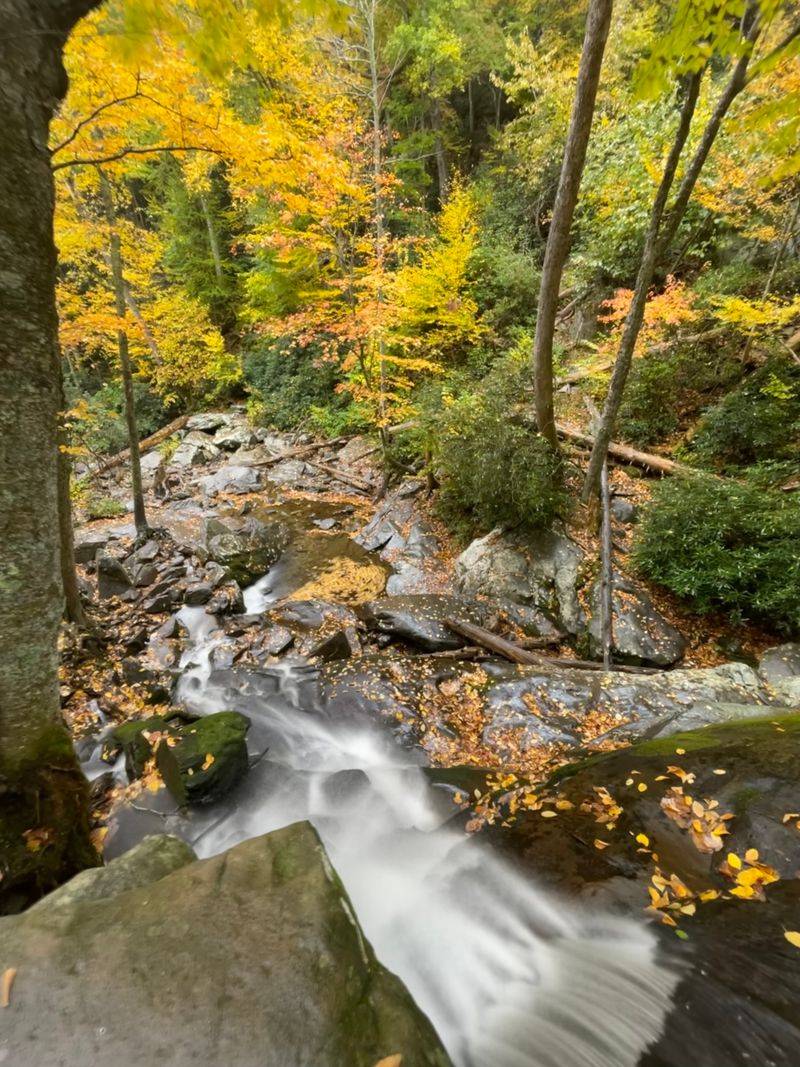
Light behaves differently under forest canopy, and Laurel Falls Trail showcases this phenomenon beautifully throughout the day. Morning sun slants through trees at dramatic angles, creating shafts of illumination that look almost solid in the misty air.
Afternoon light turns warmer and softer, filtering through leaves to create dappled patterns that shift with every breeze. Late-day hikers report spectacular experiences as golden hour transforms ordinary forest into something luminous and otherworldly.
Photography improves dramatically when you pay attention to these lighting conditions. The interplay between shadow and illumination adds depth to images and reveals details that disappear in flat midday light.
Seasonal changes affect the light quality too—spring’s fresh green leaves create a different filter than autumn’s gold and orange canopy. Winter hiking, when deciduous trees stand bare, allows more direct sunlight to reach the forest floor, creating stark contrasts and revealing landscape features hidden during leafy months.
Many experienced hikers time their visits specifically around lighting conditions, understanding that the same trail can look entirely different depending on when you walk it.
A Fairy-Tale Bridge At The Falls
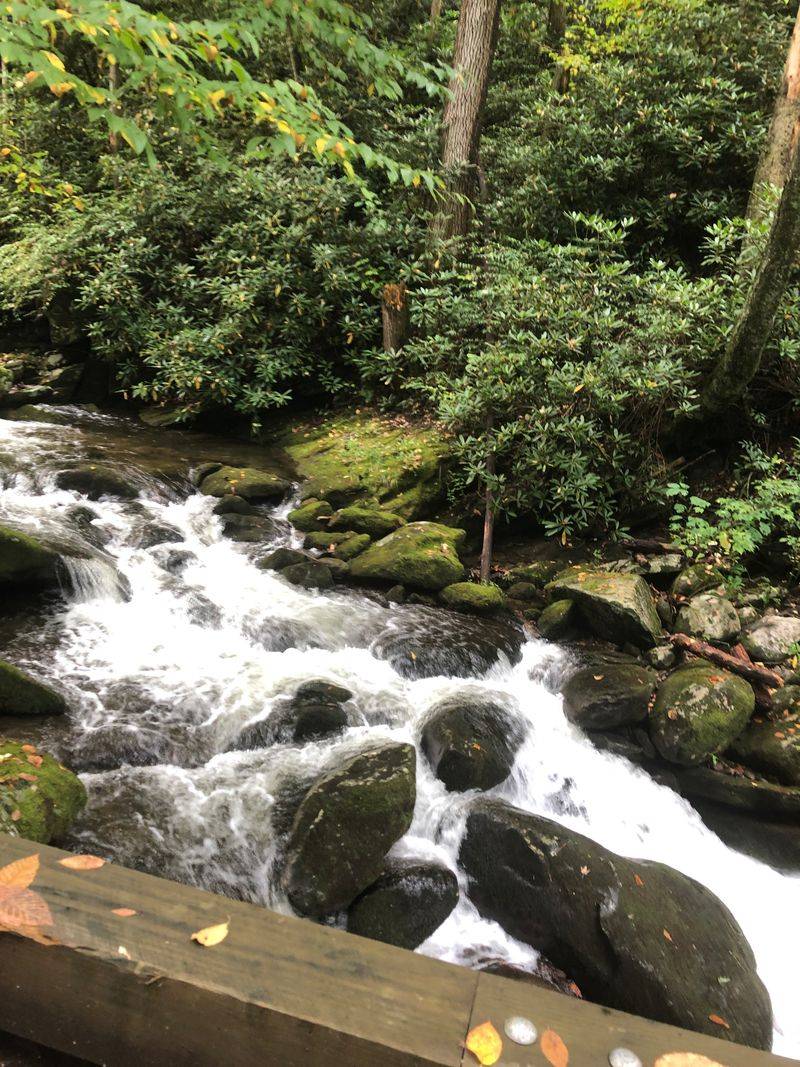
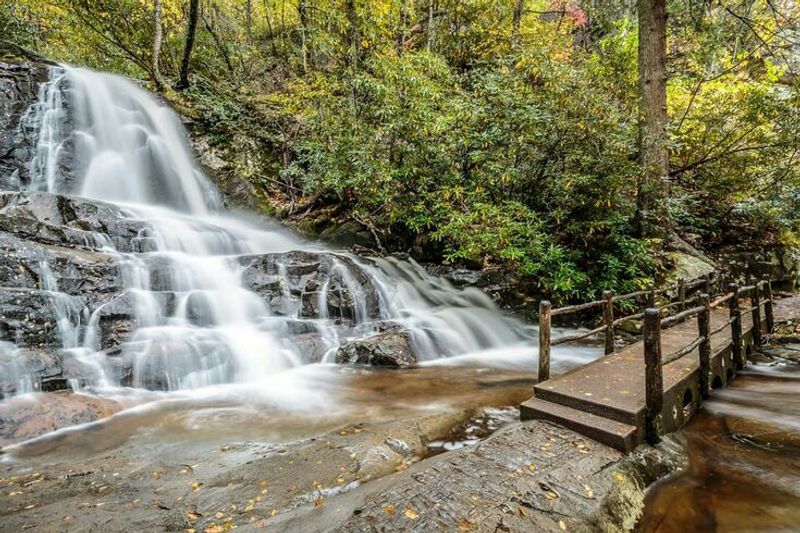
A footbridge crosses directly in front of Laurel Falls, positioning visitors perfectly to experience the cascade from an elevated vantage point. Standing on this structure with water thundering below creates a sensory experience that photographs alone cannot capture—you feel the vibration through the bridge, hear the roar surrounding you, and often get touched by cool mist rising from the impact zones.
The bridge itself, weathered by constant moisture and mountain weather, looks like something from a storybook illustration.
This crossing marks the official end point for most hikers, though some adventurous visitors scramble onto rocks for different perspectives. The bridge provides the safest viewing platform and accommodates multiple groups simultaneously, though crowded days require patience and courtesy.
Children find the bridge particularly thrilling, perhaps because it combines the excitement of height with the drama of rushing water. Parents appreciate the railings, which provide security while still allowing unobstructed views.
This architectural element transforms the destination from mere waterfall viewing into an immersive experience where you occupy the same space as the falling water rather than simply observing from a distance.
Magic Peaks In Spring And Fall
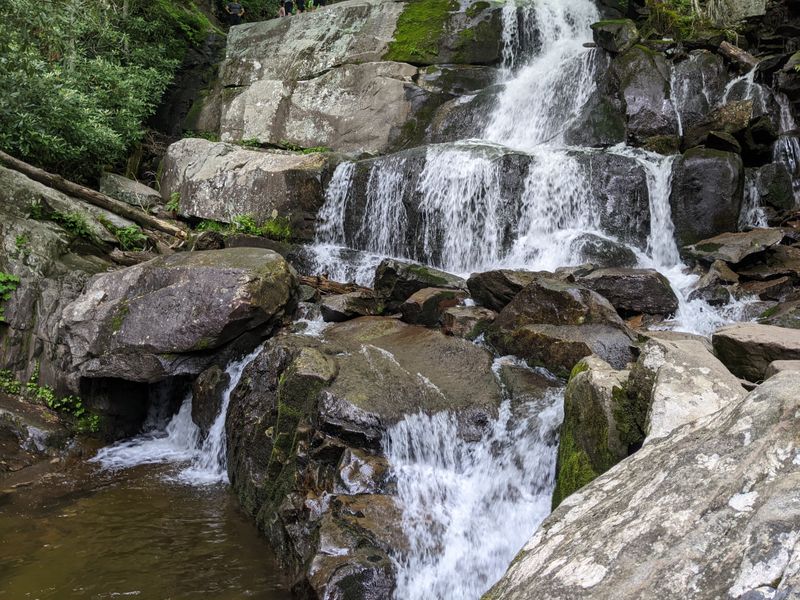
Seasonal timing dramatically affects what you’ll encounter on this trail, with spring and autumn offering particularly rewarding experiences. Spring brings wildflowers carpeting the forest floor, fresh green growth softening every view, and maximum water flow making the falls more powerful and impressive.
Rhododendrons and mountain laurels bloom in late spring, adding splashes of pink and white to the predominantly green landscape. The air smells different in spring too—earthy and alive with growth.
Fall transforms the forest into a tapestry of warm colors as hardwood trees shift through their annual cycle. The trail becomes a corridor of gold, orange, and red, with the waterfall providing a constant cool-toned anchor to all that warmth.
Crowds increase during peak fall foliage season, typically mid-October, as leaf-peepers flock to the Smokies. Summer offers its own appeal—lush growth, warm weather perfect for wading in the stream, and longer daylight hours.
Winter hiking reveals the forest’s bones and occasionally decorates the falls with ice formations, though snow and ice can make the trail treacherous for inexperienced winter hikers.
A Smoky Mountains Classic
Among the hundreds of trails threading through Great Smoky Mountains National Park, Laurel Falls has earned classic status through decades of reliably delivering memorable experiences. Its 4.6-star rating from 268 reviews reflects genuine satisfaction from a wide range of visitors, not just hardcore hiking enthusiasts.
The trail appears in virtually every guidebook covering the region, and rangers recommend it consistently to visitors seeking a taste of mountain beauty without committing to all-day expeditions.
This popularity creates predictable challenges, particularly regarding parking at the trailhead near Tennessee 37862. Reviews unanimously note that parking proves difficult, especially on weekends and during peak seasons.
Arriving early—before 9 a.m. if possible—dramatically improves your chances of finding a spot without extended waiting. The National Park Service requires parking passes, which you can obtain at visitor centers.
Despite the parking hassles and occasional crowds, most visitors conclude that Laurel Falls deserves its reputation. The combination of accessibility, natural beauty, and genuine mountain character creates an experience that works for almost everyone, which explains why this trail has become one of Tennessee’s most beloved outdoor destinations.
Wildlife Encounters Add Excitement
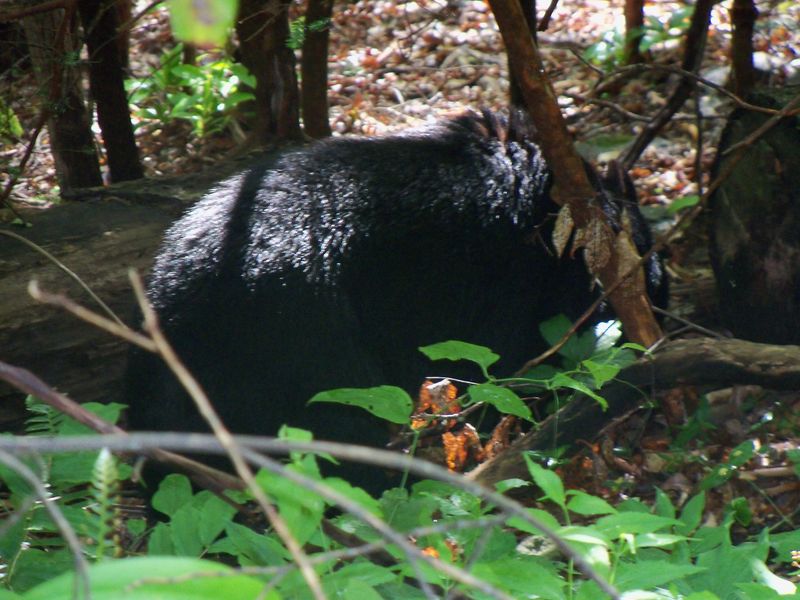
Black bears inhabit these forests, and sightings occur with enough regularity that hikers should prepare mentally and practically for possible encounters. Reviews mention bears appearing along the trail, near the waterfall viewing area, and even approaching benches where visitors rest.
These animals have grown somewhat accustomed to human presence, which makes them less fearful but also more likely to investigate potential food sources. Park regulations prohibit feeding wildlife for excellent reasons—fed bears become dangerous bears.
Proper food storage matters even on short day hikes. Keep snacks secured in backpacks and never leave food unattended.
If you encounter a bear, maintain distance, make yourself appear large, speak calmly, and back away slowly without running. Most bears ignore hikers or move away when they detect human presence.
Beyond bears, the trail offers opportunities to spot deer, various bird species, and smaller mammals like squirrels and chipmunks. These encounters remind visitors that they’re traveling through habitat that belongs to these creatures, not a theme park designed for human entertainment—a valuable perspective that enhances appreciation for the wilderness experience.