
This Colorado Mountain Town Is Still A Secret To Most
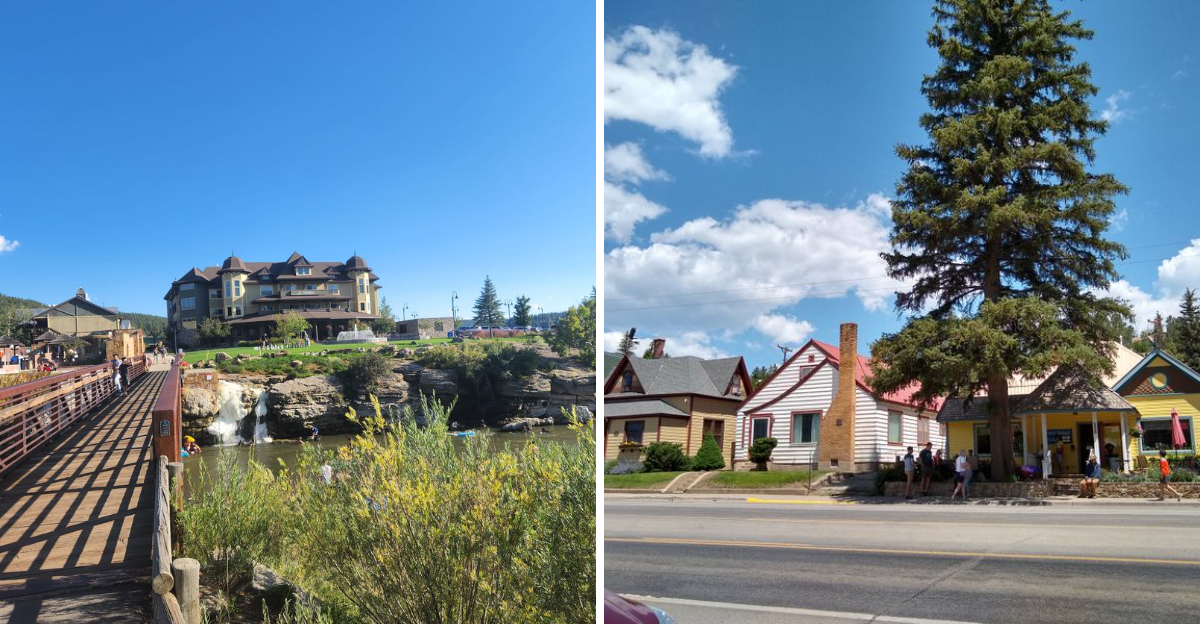
Tucked into the rugged embrace of the San Juan Mountains, Pagosa Springs remains one of Colorado’s best-kept secrets. While crowds flock to Aspen and Vail, this small town offers something rarer: authenticity, affordability, and natural beauty without the tourist frenzy.
Whether you’re drawn by the legendary hot springs, the promise of untouched wilderness, or simply the desire to experience a mountain town that hasn’t sold its soul to resort culture, Pagosa Springs delivers quietly and completely.
A Hidden Gem In Southwestern Colorado
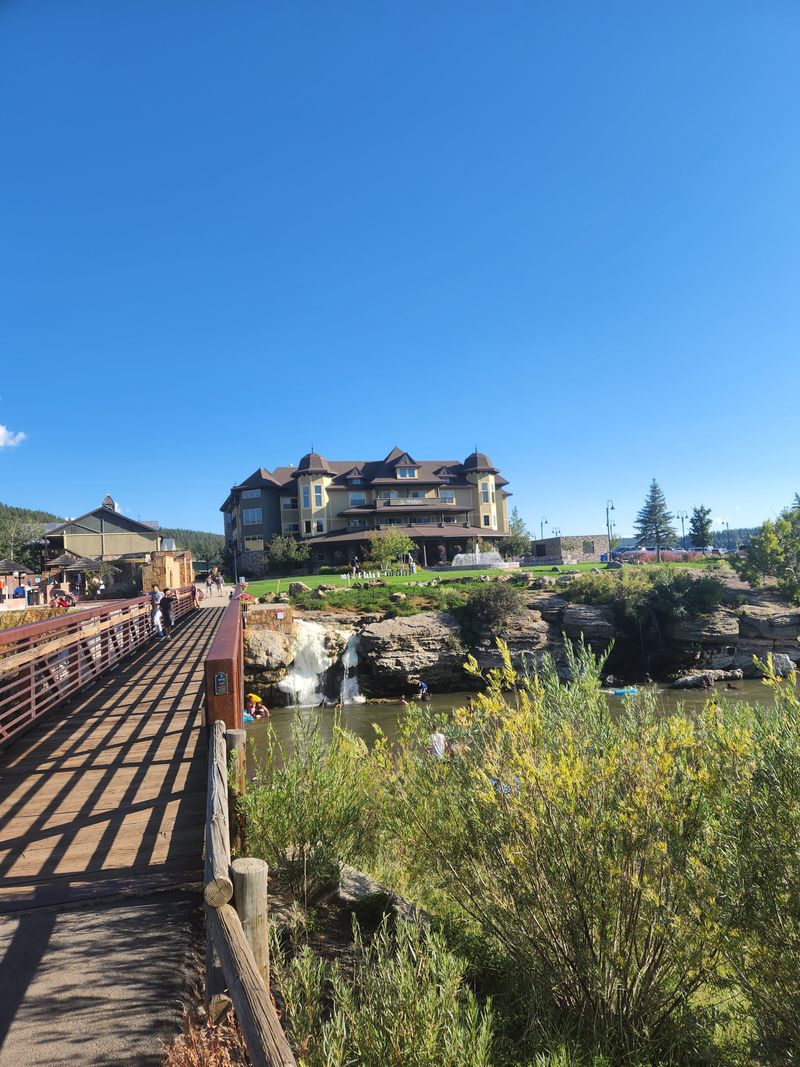
Pagosa Springs sits in Archuleta County, where the high desert meets alpine forest and the landscape shifts with every season. The town itself occupies a valley carved by the San Juan River, surrounded by peaks that rise above thirteen thousand feet.
Few travelers know it exists, and those who do often stumble upon it by accident while driving between Durango and the Great Sand Dunes.
What makes this place unusual is not just its location but its resistance to change. There are no luxury boutiques lining Main Avenue, no valet parking, no rooftop cocktail bars with craft menus.
Instead, you’ll find hardware stores, local diners, and a post office where people still stop to chat.
The address is simple: Pagosa Springs, Colorado 81147. The coordinates place it at 37.26945 latitude and -107.0097617 longitude, but those numbers don’t convey the feeling of arrival.
That comes when you first see the steam rising from the springs and realize you’ve found something worth protecting.
Famous For Its Healing Hot Springs
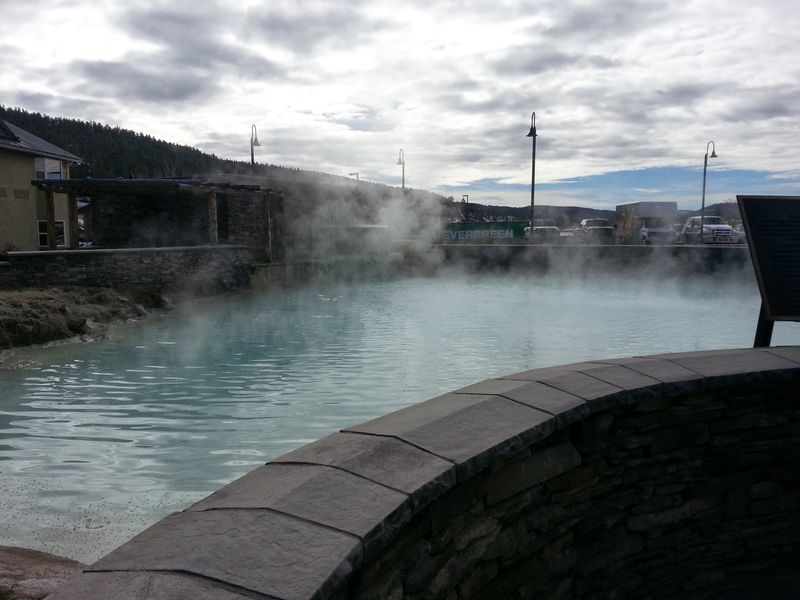
Long before European settlers arrived, the Ute people considered these springs sacred. The name Pagosa comes from a Ute word meaning “healing water,” and the mineral-rich pools have been drawing visitors for centuries.
The geothermal activity here is extraordinary—the Mother Spring is one of the deepest hot springs in the world, reaching temperatures of over 140 degrees Fahrenheit.
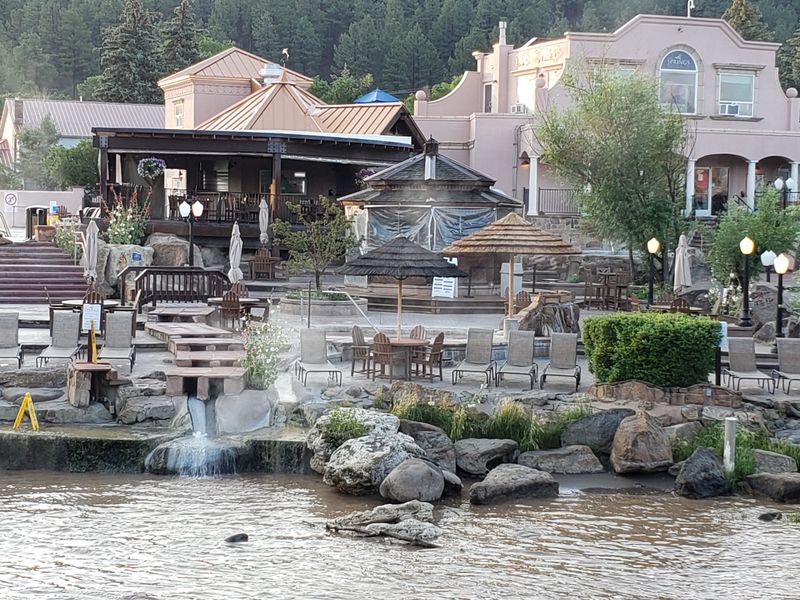
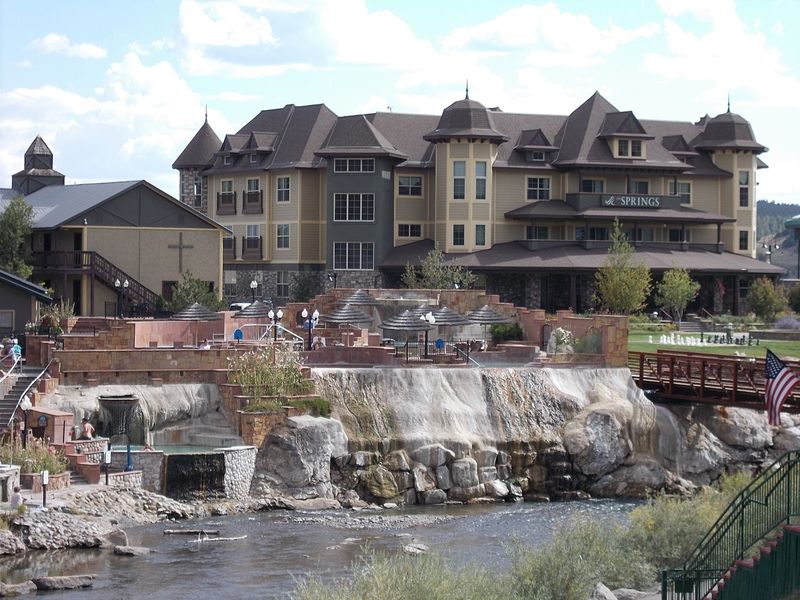
Several facilities now offer access to the springs, each with its own character. Some are modern and spa-like, with multiple pools set along the river.
Others are more rustic, favoring simplicity over luxury.
Soaking in these pools at night, especially in winter, is an experience that borders on the transcendent. Steam rises into cold air, stars appear impossibly bright, and the mineral smell mingles with pine.
Your muscles relax, your thoughts slow, and for a while, nothing else matters. People return year after year not just for the water but for the stillness it creates.
Outdoor Adventures Await Year-Round
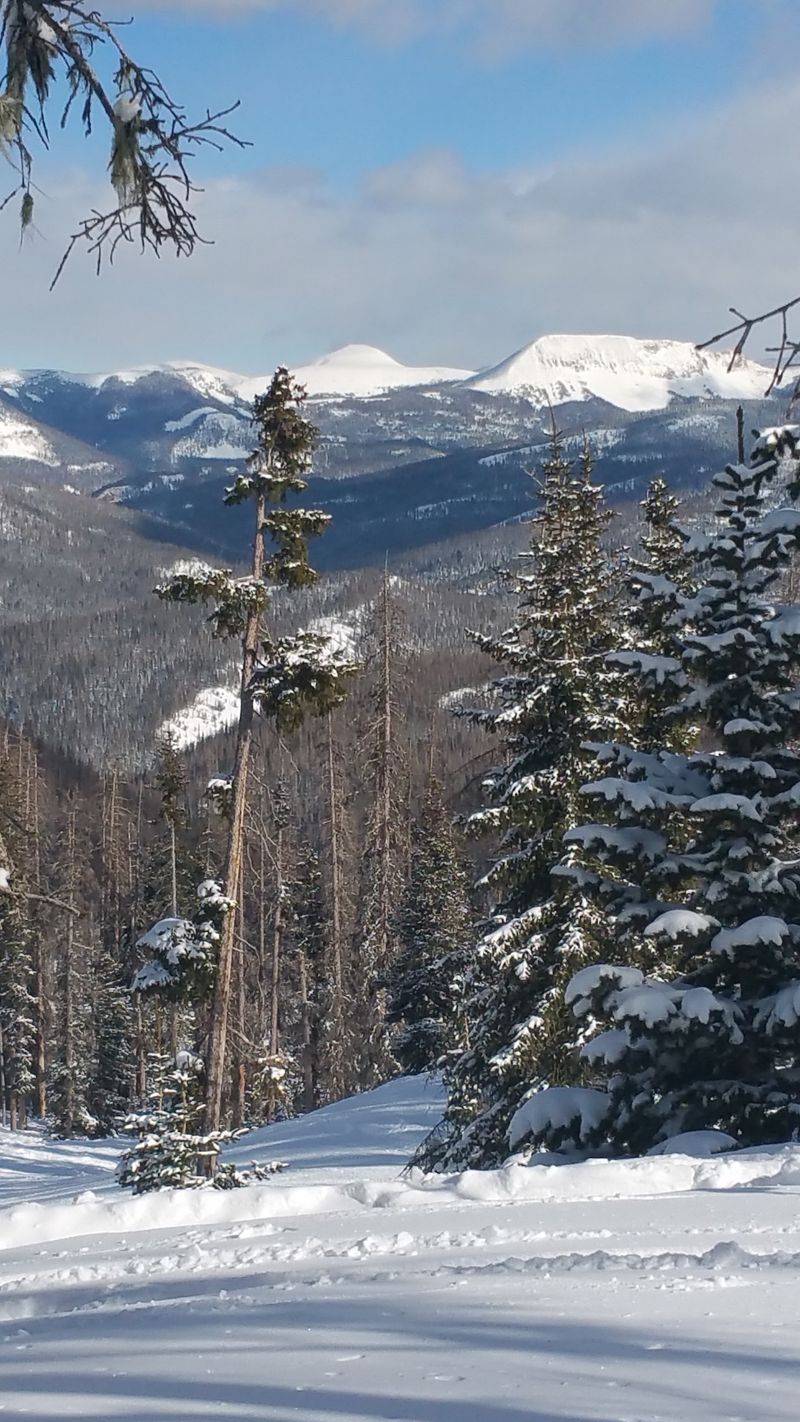
Pagosa Springs offers access to wilderness that feels genuinely wild. Hiking trails lead into the San Juan National Forest, where you can walk for hours without seeing another person.
Routes range from easy riverside strolls to demanding climbs that require navigation skills and stamina. Trout fishing on the San Juan River attracts anglers who know what they’re doing, and the river rarely disappoints.
Winter transforms the area into a quiet snow paradise. Cross-country skiing and snowshoeing trails wind through aspen groves and meadows, and the silence is profound.
Backcountry skiing is possible for those with the right equipment and experience.
Mountain biking trails are plentiful, from mellow dirt roads to technical single-track. The altitude takes some adjustment—most trails start above seven thousand feet—but the views reward the effort.
Horseback riding is available through local outfitters, and some ranches offer multi-day pack trips into the high country. The outdoor culture here is genuine, not performative.
Small-Town Charm With Scenic Mountain Views
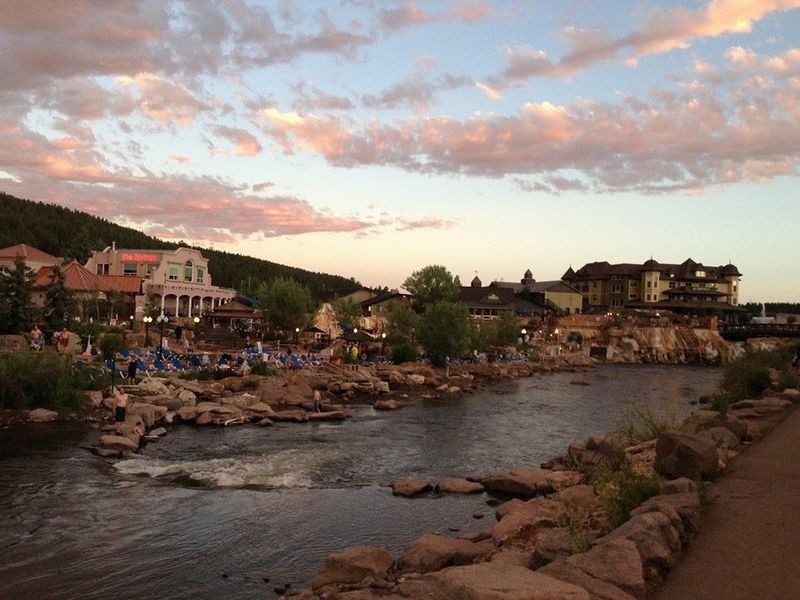
Walking through downtown Pagosa Springs feels like stepping back thirty years. The pace is unhurried, the architecture modest, and the people genuinely friendly without trying too hard.
Local businesses dominate—there are no chain stores cluttering the main drag, no franchises pretending to be local.
The San Juan River runs right through town, and several parks line its banks. Benches face the water, footbridges cross at intervals, and in summer, kids wade in the shallows while their parents watch from the grass.
The mountain views are constant, framing every street and reminding you why you came.
Evenings are particularly pleasant. The light turns golden, the temperature drops, and people emerge for walks or bike rides.
There’s a community theater, a small library, and a few art galleries that showcase regional work. Nothing feels forced or designed for tourists.
The town exists for the people who live here, and visitors are welcome to join in, not take over.
Close To The Beautiful Wolf Creek Ski Area
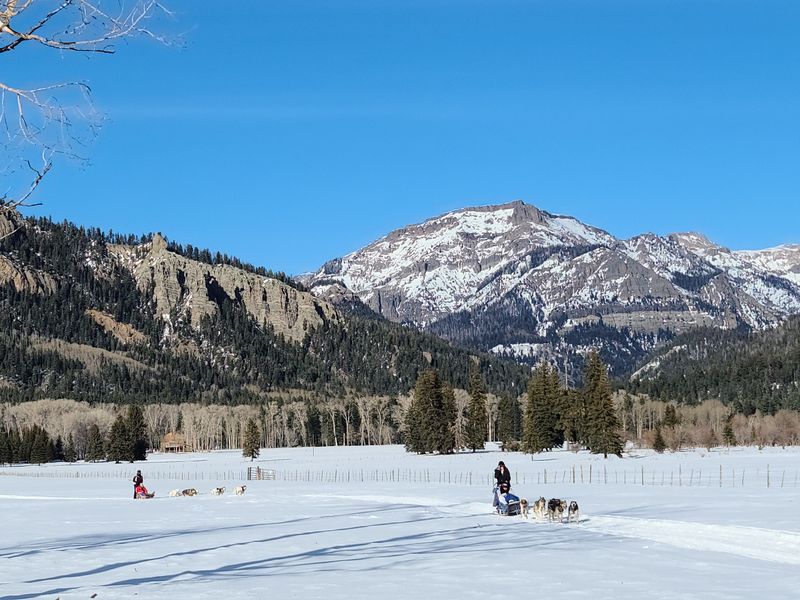
Wolf Creek Ski Area lies about twenty-five miles northeast of Pagosa Springs, straddling the Continental Divide at Wolf Creek Pass. It’s one of Colorado’s best-kept skiing secrets, averaging more than 430 inches of snow annually—more than almost any other resort in the state.
The terrain is varied, with runs for beginners and experts alike, and lift lines are refreshingly short.
What Wolf Creek lacks in luxury amenities, it makes up for in snow quality and authenticity. There are no fancy lodges or celebrity sightings, just good skiing at reasonable prices.
The mountain feels old-school in the best way, focused on the experience rather than the image.
Staying in Pagosa Springs and driving to Wolf Creek each day offers the best of both worlds: excellent skiing without resort-town prices. After a day on the slopes, you return to hot springs and quiet streets instead of crowded après-ski bars.
It’s a rhythm that suits people who care more about the mountains than the scene.
A Local Food Scene To Savor
Pagosa Springs doesn’t pretend to be a culinary destination, but it offers more than you might expect. Several restaurants focus on locally sourced ingredients, and the quality often surprises first-time visitors.
You’ll find excellent barbecue, wood-fired pizza, and a few places that take their craft seriously without being precious about it.
The farmers market runs through summer and early fall, showcasing produce from nearby farms and ranches. Local honey, grass-fed beef, and fresh vegetables are available, along with homemade baked goods and preserves.
The market is small but genuine, a place where vendors know their customers by name.
Coffee shops serve as community hubs, offering strong espresso and a place to linger. Bakeries turn out real bread, not the supermarket kind.
There are a few breweries and distilleries producing small-batch drinks worth trying. The food culture here values substance over style, and meals feel nourishing rather than merely fashionable.
Nobody’s trying to impress anyone, which is precisely what makes it impressive.
Rich History Rooted In Native American And Mining Heritage
The Ute people lived in this region for centuries before European contact, drawn by the hot springs and abundant game. They considered the area sacred, and their presence is still felt in place names and stories passed down through generations.
Spanish explorers passed through in the 1700s, but permanent settlement didn’t begin until the late 1800s.
Mining brought the first wave of outsiders, with prospectors searching for gold and silver in the surrounding mountains. The town was officially established in 1883, and for a time, it thrived on mining, logging, and ranching.
The railroad never reached Pagosa Springs, which probably saved it from the boom-and-bust cycles that devastated other mountain towns.
Today, remnants of that history remain visible. Old mining roads now serve as hiking trails, and a few historic buildings still stand downtown.
The local museum offers context and artifacts, telling the story of a place shaped by indigenous culture, frontier ambition, and the enduring power of the land itself.
The San Juan River: A Hidden Gem For Kayaking And Rafting
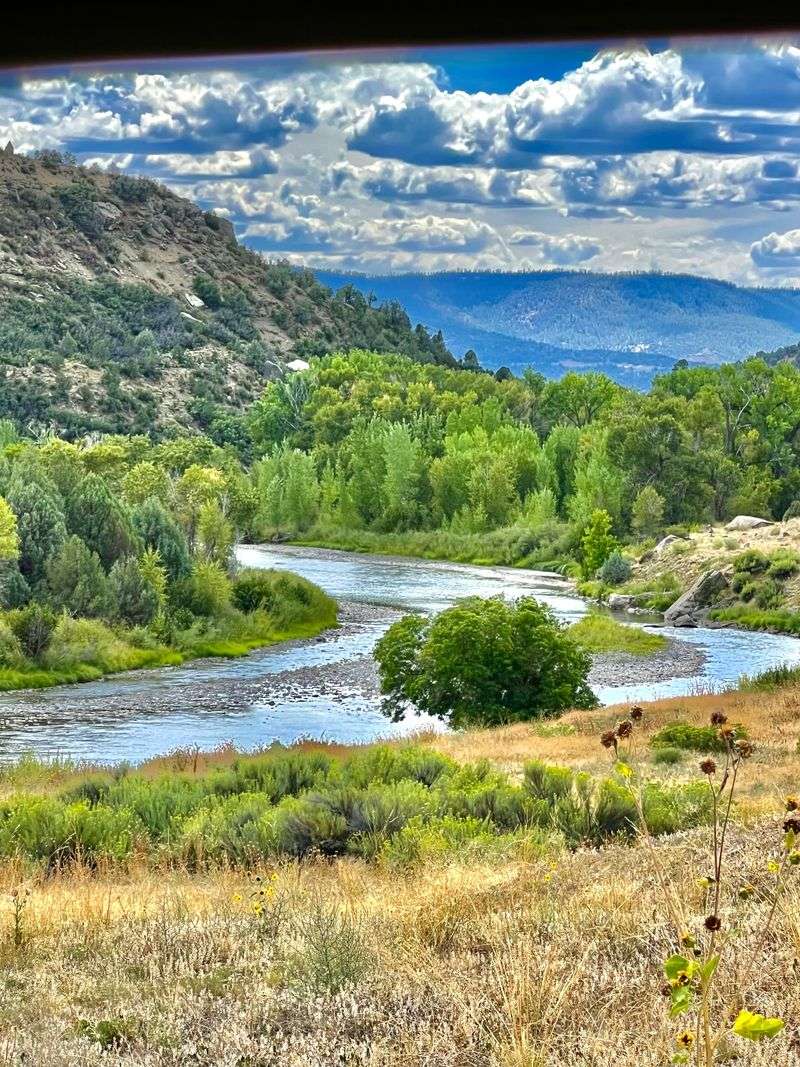
The San Juan River flows directly through Pagosa Springs, offering opportunities for paddling that range from mellow floats to challenging whitewater. In spring, when snowmelt swells the river, experienced kayakers and rafters find technical sections that demand skill and attention.
By summer, the water calms, and families can float downstream in tubes or inflatable kayaks.
Fishing the San Juan is a serious pursuit. The river holds healthy populations of brown and rainbow trout, and fly fishermen wade its riffles and pools with quiet concentration.
Guides are available for those who want local knowledge, but plenty of access points allow independent anglers to find their own water.
What makes the river special is its accessibility and beauty. You can walk to it from downtown, and within minutes, you’re surrounded by willows and cottonwoods, with mountains rising on all sides.
The sound of moving water becomes a constant companion, a reminder that this town exists in harmony with the landscape rather than in spite of it.
A Community That Feels Like Home
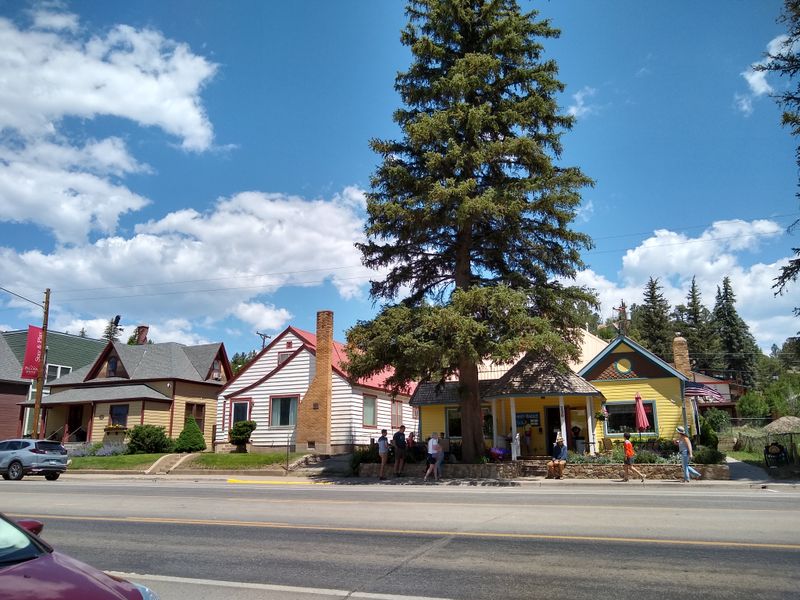
Pagosa Springs has a population of around two thousand people, and the small size creates a sense of connection that’s increasingly rare. People wave to each other on the street, not out of obligation but because they actually know one another.
The schools are small, the churches active, and civic organizations bring people together for everything from volunteer fire departments to community theater productions.
Newcomers report feeling welcomed quickly, as long as they respect the local culture and contribute rather than complain. There’s a strong DIY ethic here—people fix their own trucks, build their own sheds, and help neighbors without being asked.
It’s not perfect, and small-town life comes with its own challenges, but the sense of community is real.
Seasonal workers and retirees mix with multi-generational families, creating a demographic diversity that keeps things interesting. The town has its quirks and its characters, and most people wouldn’t have it any other way.
Living here requires adaptation, but for those who fit, it feels less like a place you moved to and more like a place you’ve always belonged.
A Base For Exploring The San Juan National Forest
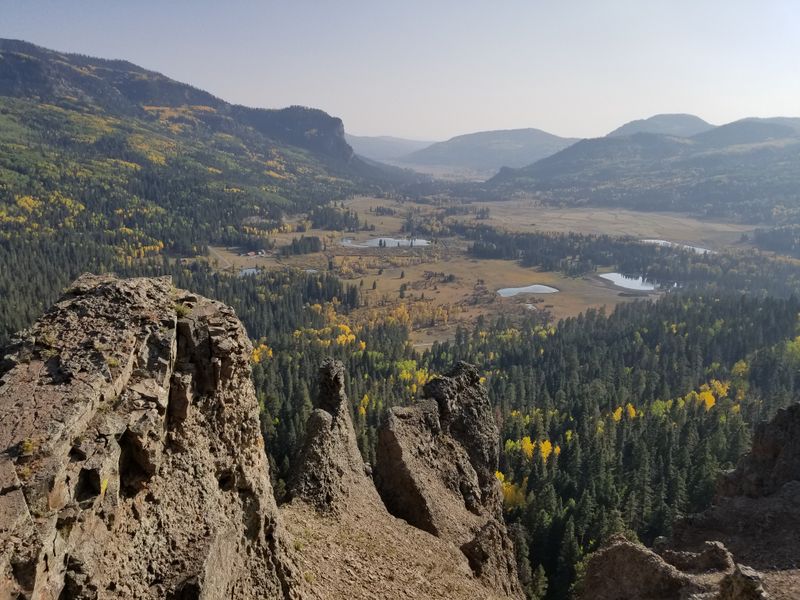
The San Juan National Forest surrounds Pagosa Springs, covering nearly two million acres of mountains, rivers, and wilderness. From town, you can reach trailheads in minutes and disappear into country where cell service vanishes and solitude becomes absolute.
The forest includes several designated wilderness areas, where mechanized equipment is prohibited and nature holds the upper hand.
Hiking possibilities are nearly endless. Day hikes lead to alpine lakes, waterfalls, and ridgelines with views that stretch across four states.
Backpackers can plan multi-day trips into remote basins where elk graze at dawn and the night sky blazes with stars. The Continental Divide Trail passes through the forest, attracting through-hikers each summer.
Wildlife is abundant. Black bears, elk, deer, and mountain lions all inhabit the forest, and birders find species that thrive in high-altitude habitats.
The forest also protects ancient archaeological sites, including remnants of Ancestral Puebloan culture. Exploring here requires respect, preparation, and a willingness to accept the land on its own terms.
Peaceful And Affordable Compared To Nearby Resort Towns
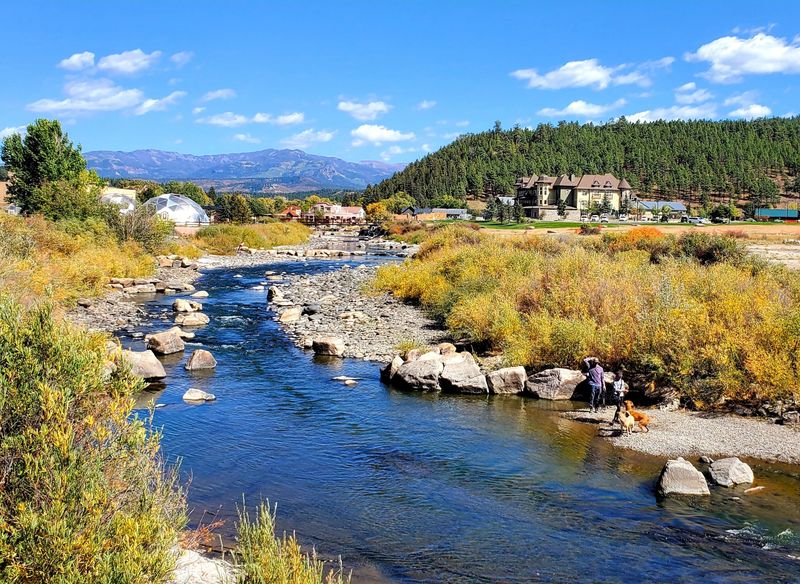
While Telluride, Aspen, and Crested Butte have transformed into playgrounds for the wealthy, Pagosa Springs remains accessible. Housing costs are lower, restaurant prices reasonable, and the overall cost of living manageable for working families.
You won’t find the glitz or glamour of resort towns, but you also won’t need a trust fund to enjoy yourself.
The pace of life here is noticeably slower. Traffic jams don’t exist, noise levels stay low, and the stress that permeates many tourist destinations is absent.
People come here to unwind, not to be seen, and that creates an atmosphere of genuine relaxation.
Visitors often comment on how easy it is to breathe here, both literally and figuratively. The air is clean, the crowds minimal, and the pressure to constantly do something simply doesn’t exist.
You can spend a week soaking in hot springs, reading books, and taking short walks, and nobody will judge you for it. In a state increasingly defined by expensive resorts and overcrowded trails, Pagosa Springs offers an alternative that feels almost radical in its simplicity.