
This New York Hot Dog Spot Plates Classic Dogs Locals Insist No Other Place Can Match
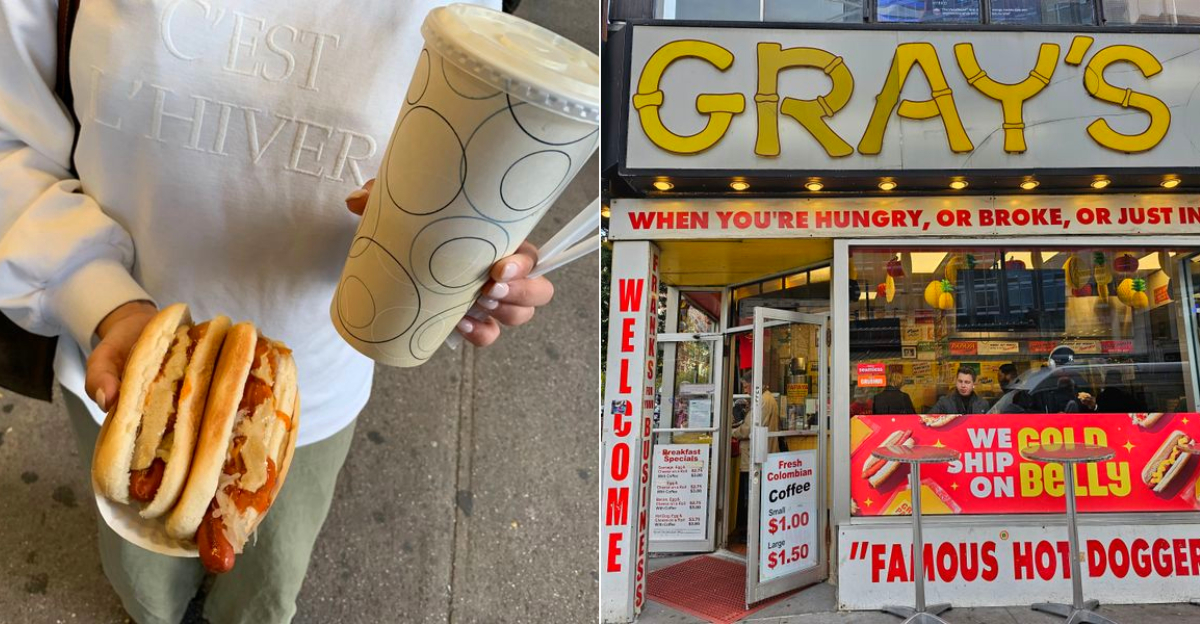
Fast food has become faster than ever, with shortcuts, screens, and endless custom options quietly replacing the simple joy of ordering something that just gets it right. Even classic comfort foods have picked up layers of fuss that nobody really asked for.
That is why a truly old school hot dog still feels like a small miracle. In New York, one neighbourhood spot continues to serve dogs the way locals remember them, straightforward, generously topped, and full of familiar flavour.
Regulars insist nothing else quite compares, and after the first bite, it is easy to understand why some traditions never needed improving in the first place.
A Corner That Feeds Without Pretension
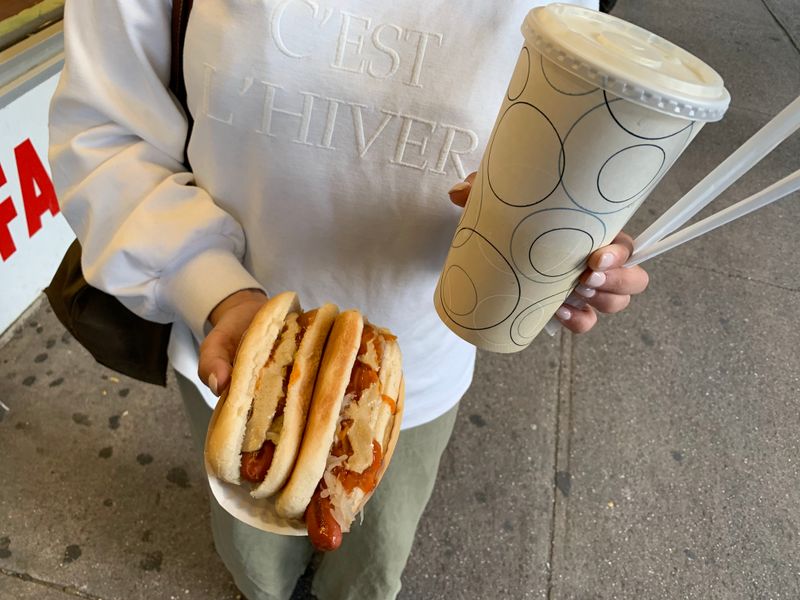
Momentum carries you through the door at Gray’s Papaya, the way a good New York corner seems to gently tug at your sleeve. The first thing you notice is tempo: orders called briskly, buns warmed with care, and franks kissing the griddle until the casing whispers.
There is no ceremony, only repetition practiced into craft. It feels like a pause without stopping.
Only after a beat do you clock the address, 2090 Broadway at West 72nd Street, New York, NY 10023, the sort of coordinates locals remember the way they remember birthdays. The counters are narrow, the music low, the lights unapologetically bright, and the prices posted like friendly warnings.
You could come fanciful, but the room will gently edit your plans. Suddenly, you are ordering precisely what you wanted all along.
The mood here encourages quick decisions and lasting loyalties. People nod rather than linger, and strangers adopt an easy choreography of elbows and napkins.
Conversation stays light, even when weather and wallets feel heavy. By the time you finish, the outside rush seems manageable again.
History That Walks Instead Of Waving
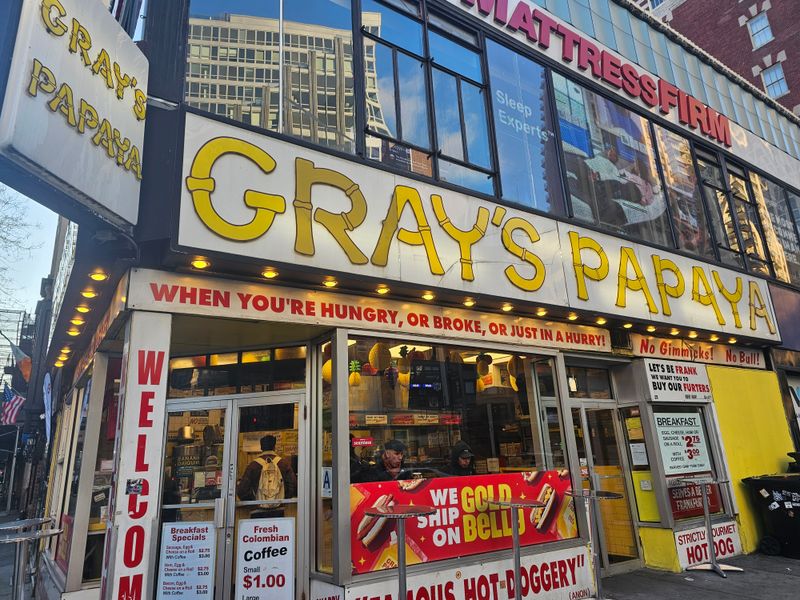
Longevity here operates without pageantry, which may be why it lasts. Gray’s Papaya began in the early seventies, pairing griddled hot dogs with tropical fruit drinks in a combination that sounded eccentric and tasted inevitable.
The concept never needed a manifesto. It needed timing, heat, and a reliable papaya blend.
Through the decades, locations shifted while the Upper West Side stalwart kept the flame. People come because repetition, done well, becomes comfort.
History lives in tiny adjustments you barely perceive: a faster line, a tidier counter, a nudge to pricing when necessary. The essence stays put, insulated by habit and a daily vote of confidence from regulars.
Tourists join the line, then catch on quickly. New Yorkers simply pick up where they left off.
The Discipline Of Simplicity
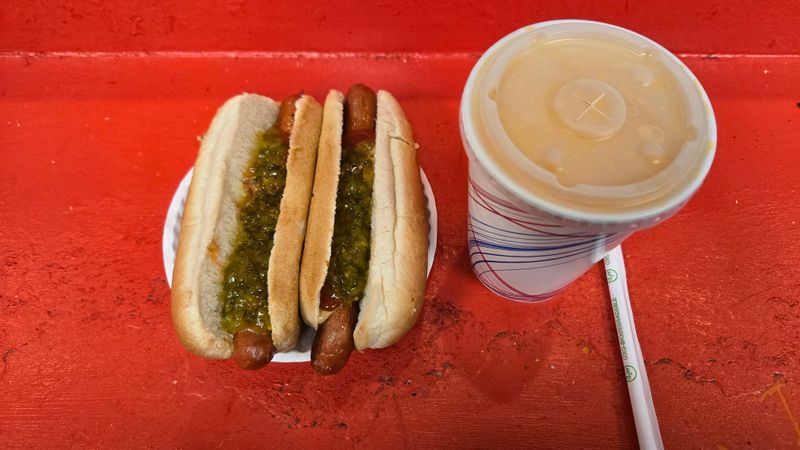
Minimalism sounds easy until you try to repeat it hundreds of times a day. The frank meets the griddle, the casing takes a gentle blister, and the bun waits just long enough to warm without wilting.
Mustard provides lift, sauerkraut brings tang, onions contribute sweetness, and relish nudges the finish. Nothing shouts, yet everything speaks.
Temperature matters, placement matters, patience matters. You taste the attention in the bite rather than in ornament.
The hot dog becomes a lesson in focus.
Restraint, practiced daily, reads as confidence rather than austerity. This is how Gray’s Papaya keeps its center while the neighborhood reinvents itself regularly.
The formula feels simple because the work stays hidden. You leave thinking that simplicity, when honest, feels generous.
The Recession Special Still Speaks
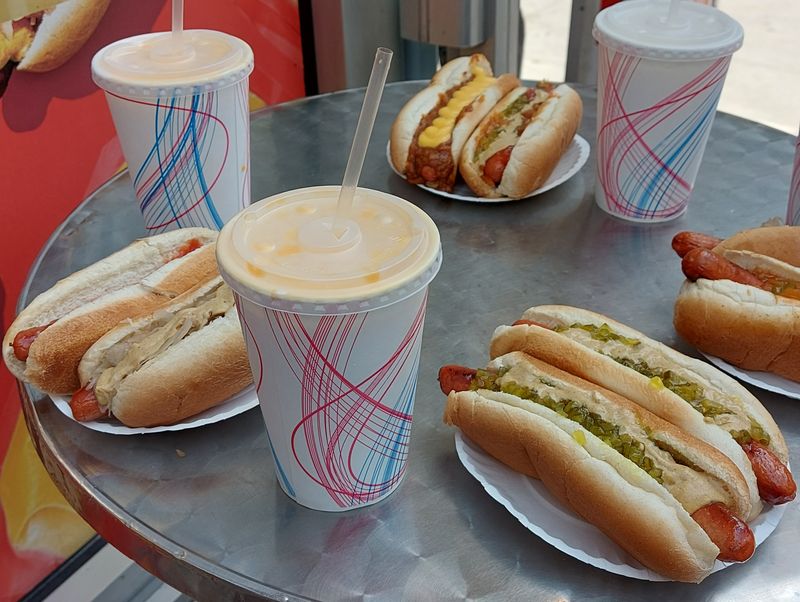
Bargains are common; meaningful bargains are culture. The Recession Special is New York’s way of smiling through clenched teeth, two hot dogs and a drink promising satisfaction without drama.
It invites practical joy, the kind you can repeat tomorrow. The value feels considered rather than gimmicky.
You receive exactly what you paid for and more than you expected, a tiny dividend of good faith. The papaya drink brightens the savory run, resetting your palate for the second dog.
People nod approvingly without needing words.
Price may shift with time, but the spirit holds. Here, thrift partners with flavor instead of apologizing for it.
You get economy with character, which is rarer than abundance. The city’s sense of humor lives in that cup.
Papaya In A Cup, Purpose In A Sip
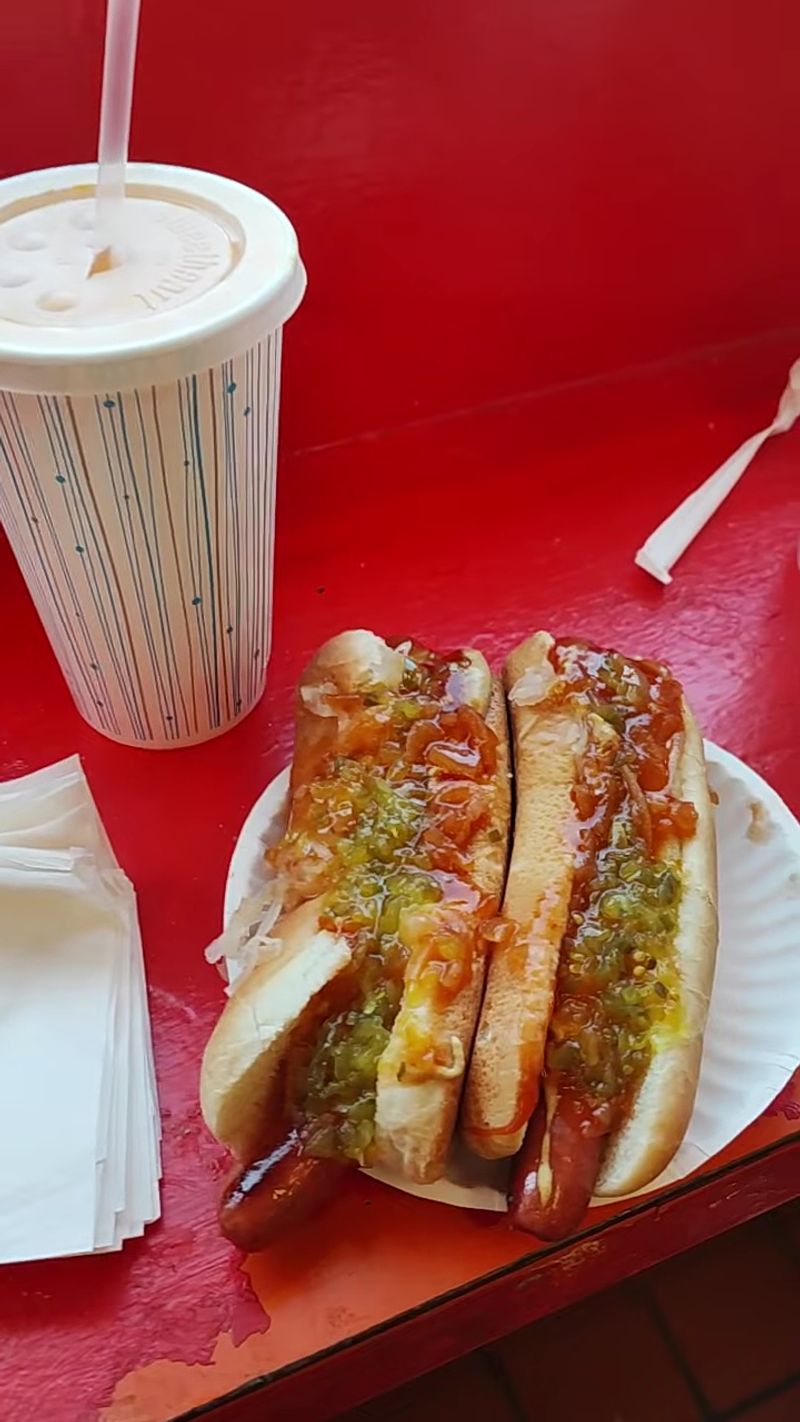
Few drinks deliver such gentle rescue with so little ceremony. The papaya blend tastes creamy without dairy, sweet without stickiness, and soothing without dullness.
It flats the edges after salt and snap, like a courteous friend steering conversation. One sip, and your shoulders drop a fraction.
Alternatives tempt, from piña colada to grape, but the namesake carries nostalgic gravity. The color alone suggests relief on humid afternoons or frigid nights.
It partners with the hot dog rather than competing for attention.
Regulars claim it revives the spirit after long commutes and longer days. Newcomers approach cautiously, then finish quickly.
The pairing becomes memory almost immediately. You understand the logic the moment you taste it.
A Democratic Room With Standing Room Only
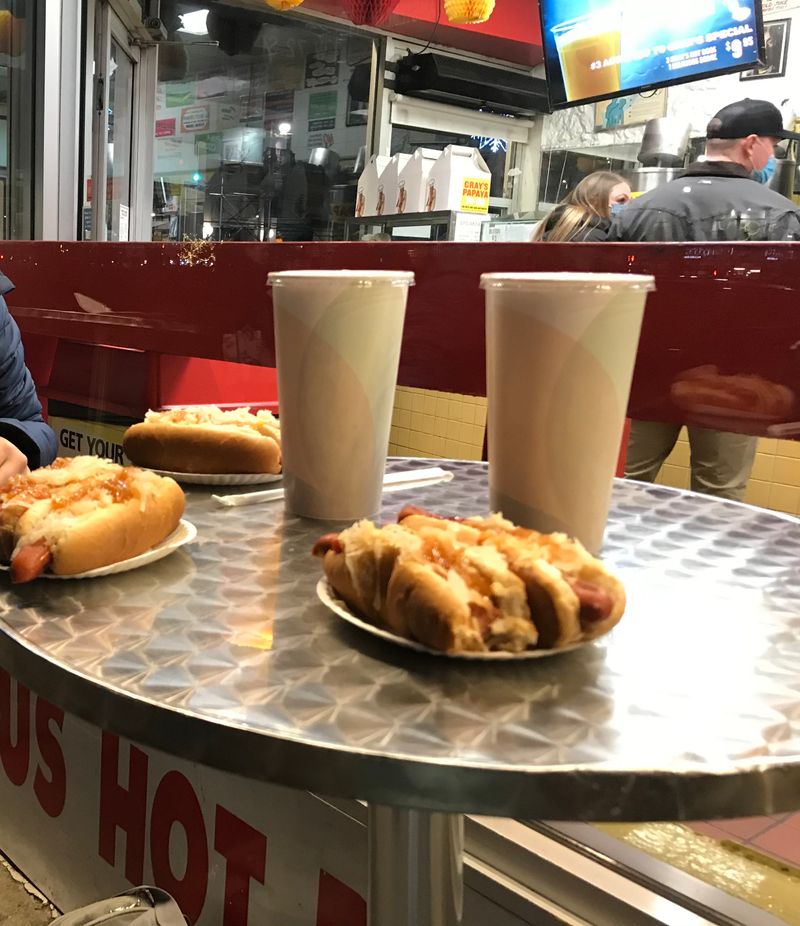
Equality looks like elbows sharing laminate without complaint. Office workers, stagehands, students, and retirees trade space, not glances, while they navigate napkins and mustard packets.
The choreography feels learned, not taught. Nobody lingers, yet nobody hurries you.
There are no premium seats, only equitable ledges. Conversation stays polite and pragmatic.
The counter staff steers the tempo with kindly efficiency.
This is public eating at its best, full of tiny courtesies. Someone slides over; another passes a straw.
The line moves, and with it, a quiet sense of civic order. You leave reminded that shared appetite can still feel communal.
Texture, Balance, And The Snap That Matters
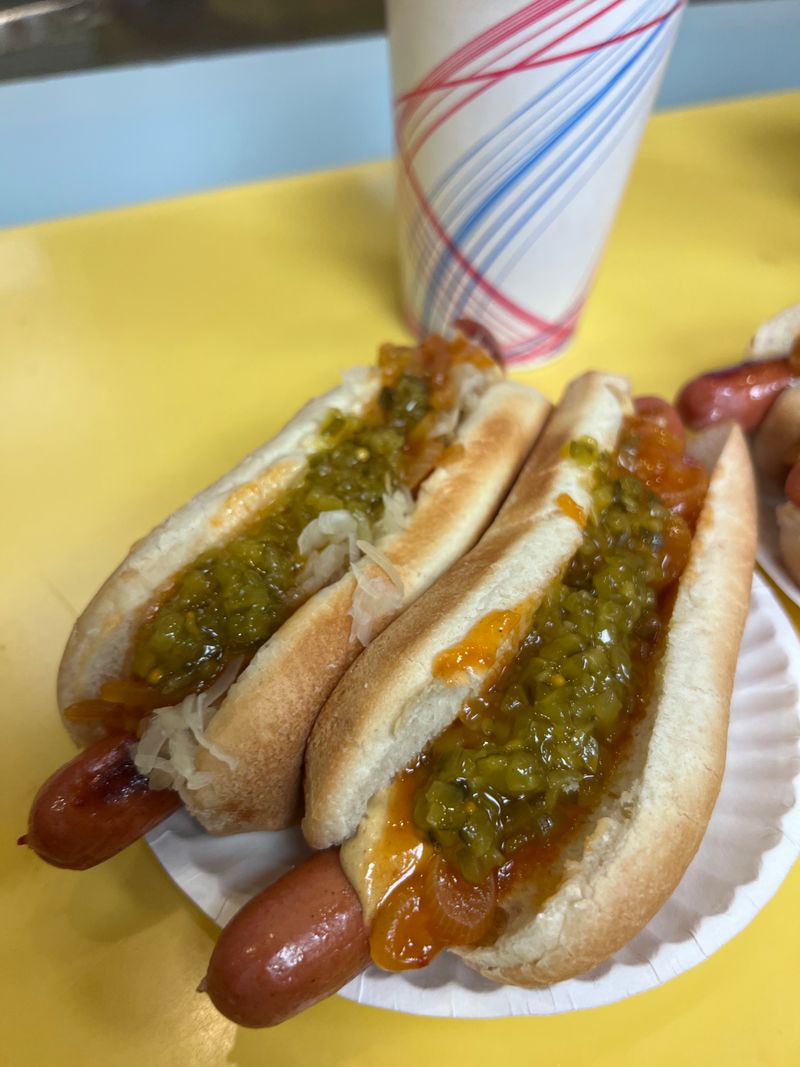
Great hot dogs succeed first in the bite. The casing should announce itself, then give way cleanly, releasing savory juices that stay where they should.
The bun must warm, cushion, and endure. Condiments ought to amplify rather than obscure.
Mustard brings brightness, sauerkraut supplies delicate crunch and acidity, onions add mellow sweetness, and relish contributes playful tang. Each part supports a proper cadence from first bite to last.
Nothing collapses or clobbers.
The result is satisfying without fatigue, the kind of lunch you can carry back into the day. Textures converse like longtime neighbors.
You finish with clarity instead of heaviness. That, more than novelty, keeps people returning.
Why Reinvention Would Miss The Point
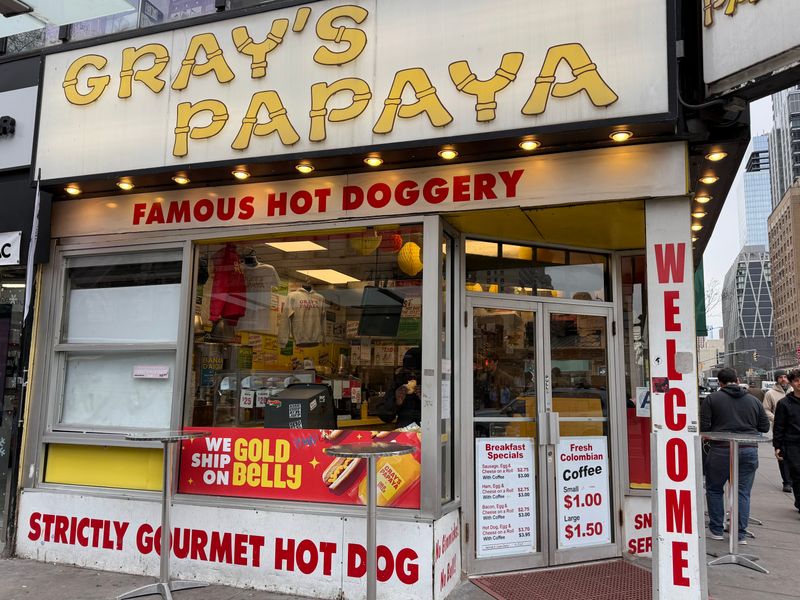
Innovation thrills, but restraint preserves meaning. Gray’s Papaya excels by declining the costume change, keeping the menu focused and the process unadorned.
This is not stubbornness; it is clarity about purpose. The audience already knows the lines.
The value lies in dependable flavor, not surprise. People come to reset expectations, not to scramble them.
Novelty can wait for another meal.
Consistency here feels like a public service rendered daily. The lesson travels beyond hot dogs: do one thing cleanly, repeat it well, and let word of mouth govern.
When food trusts itself, diners return the favor. Reinvention would dilute the promise rather than deepen it.
Geography Of Habit, Rhythm Of Return
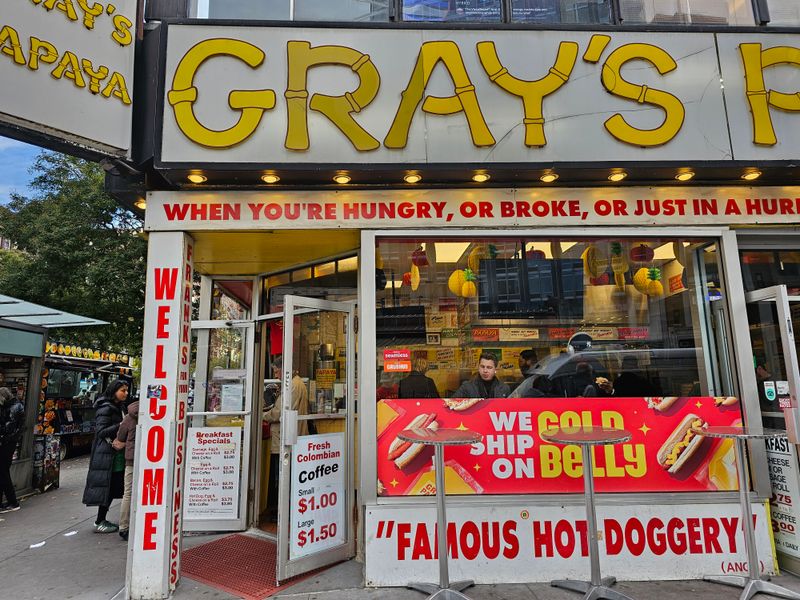
Routines build themselves around trustworthy landmarks. After a rehearsal, between classes, before a movie, the feet just drift toward the corner that solves hunger quickly.
The decision feels less like choice and more like habit. That is how institutions take root.
Late evenings glow; afternoons hum steadily; mornings surprise with early regulars. The line forms and dissolves without ceremony.
Predictability becomes an amenity.
With repetition, the stop graduates from convenience to ritual. Visitors turn into guides for the next visitor, passing along the shorthand for ordering and condiments.
The neighborhood absorbs the shop into its daily loop. Your own loop soon follows.
Late-Night Glow And Everyday Comedy
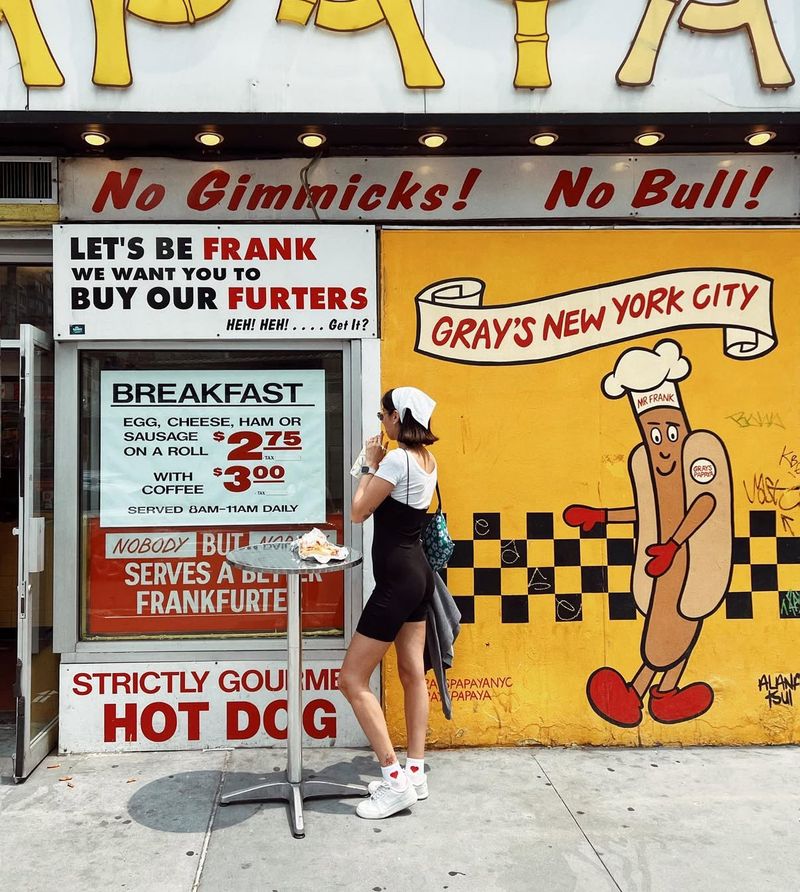
After dark, the storefront throws a steady halo across Broadway like a lighthouse for appetites. People wander in with stories and step out with satisfaction, the exchange measured in napkins and nods.
Laughter catches on the sizzle. Even tired evenings brighten a notch.
Mispronounced papaya earns a grin, never a lecture. The staff keeps things moving with good cheer.
The city’s softer side sneaks through.
Humor works here because nothing feels forced. The food is serious; the mood is not.
A small comedy of manners unfolds nightly, resolved by the final bite. Curtain call comes with the trash bin.
First-Timer Guidance Without The Fuss
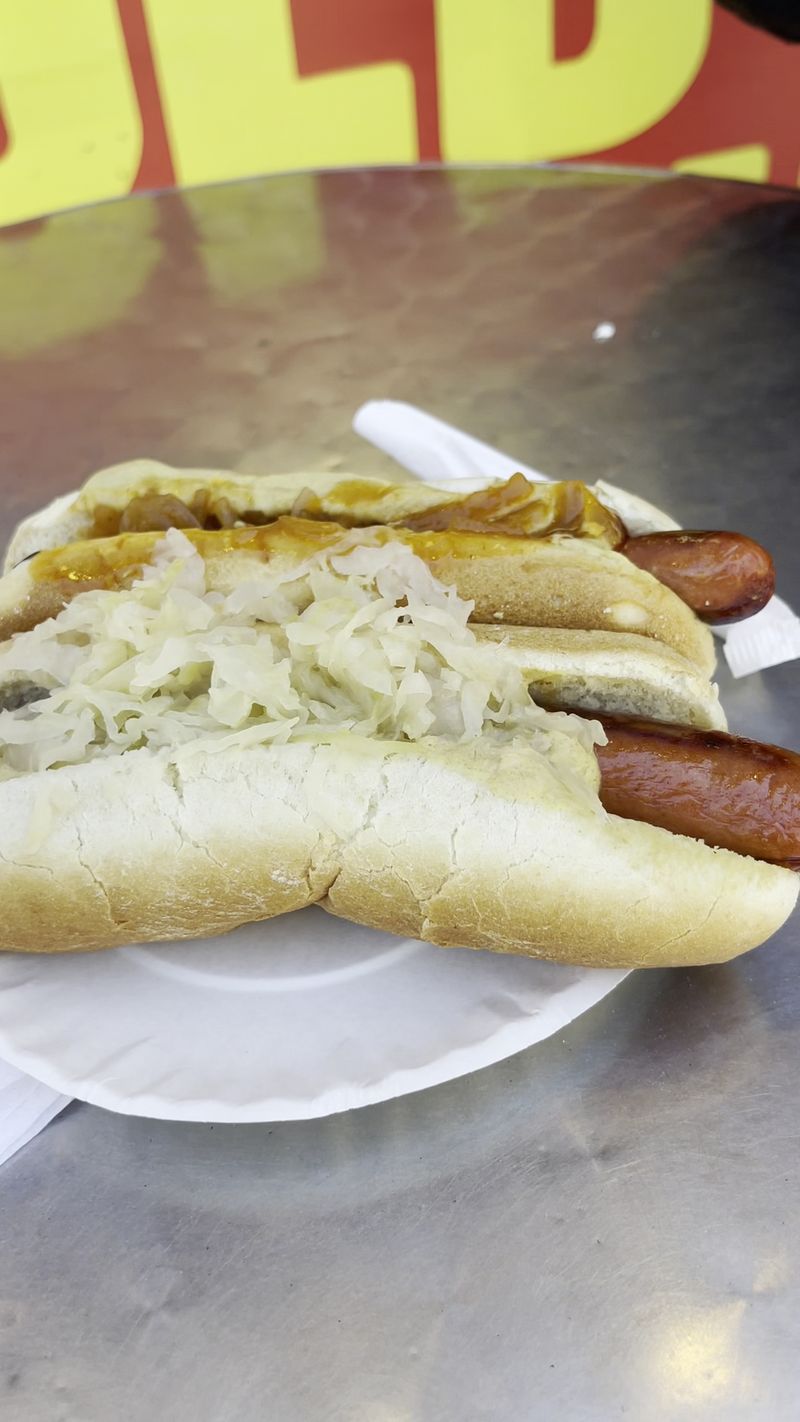
Approach the counter with a plan and an open mind. Order two dogs and a papaya drink to learn the baseline before exploring chili or cheese.
Choose mustard and sauerkraut on one, onions and relish on the other, and notice how each combination lands. Standing to eat feels right once you start.
Have payment ready, speak clearly, and slide to the side while dressing your dogs. Napkins matter more than you expect.
Keep the pace friendly and everyone wins.
Afterwards, take a few steps outside and let the glow follow you. The warmth lingers even in winter.
If you want seconds, nobody will question your judgment. They will likely nod in agreement.
Prices, Value, And Unfancy Generosity
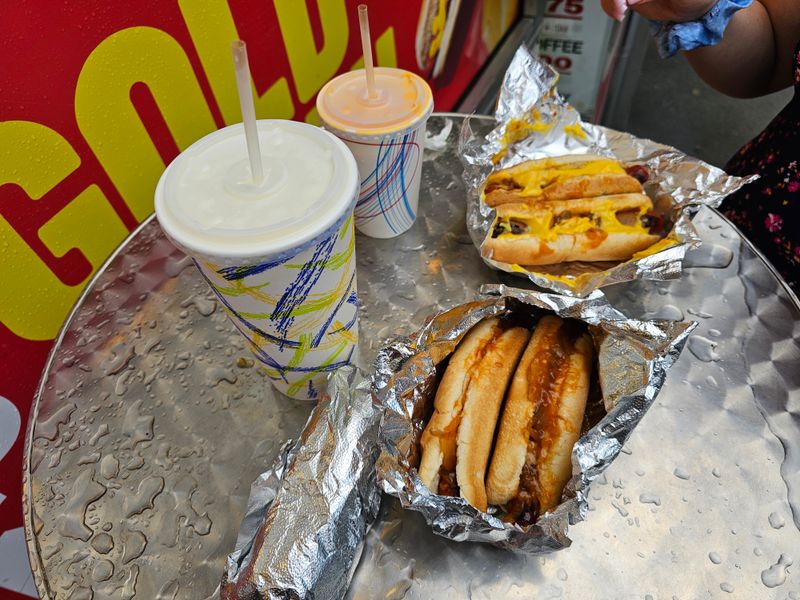
Value here feels like a handshake rather than a headline. You pay a modest sum, receive dependable quality, and exit without buyer’s remorse trailing behind.
In a city where numbers rise like steam, the equation stays humane. Satisfaction arrives promptly and proportionally.
Standard toppings remain free; extras cost pocket change. That transparency builds goodwill.
Your budget breathes easier.
Affordability alone would not earn devotion, but fairness combined with flavor certainly will. The bargain never feels flimsy.
It feels thoughtfully maintained. New Yorkers recognize stewardship when they taste it.
A Hot Dog That Becomes Memory
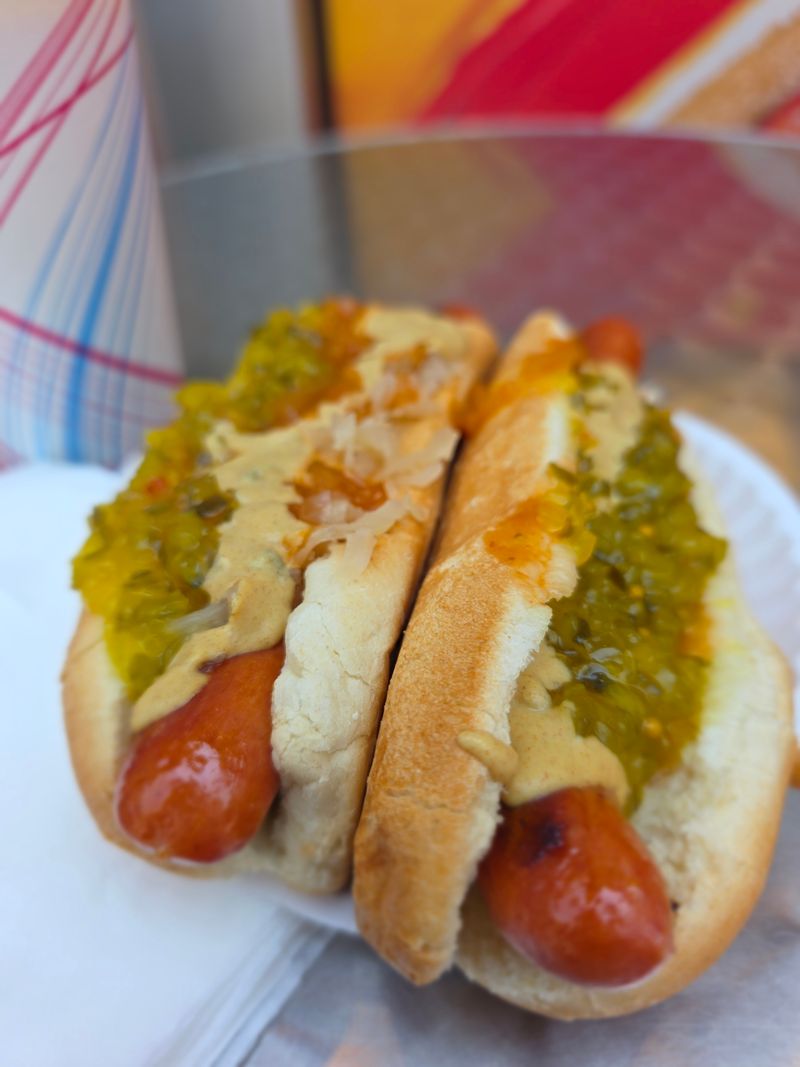
Food turns into memory when repetition attaches to feeling. The first apartment, the late rehearsal, the quick victory before a long walk home, all find punctuation in a paper-wrapped dog and a pastel drink.
You do not plan it that way. It simply settles in.
At 2090 Broadway, New York, NY 10023, Gray’s Papaya becomes part of personal geography almost by accident. People introduce friends, then those friends return alone.
Stories accumulate quietly, layered like condiments under a steady hand. The ritual proves itself durable.
Years later, the glow still means relief. The snap still signals competence.
The cup still offers calm. Memory, it turns out, likes a reliable recipe.