
The Peaceful Arizona Desert Town That Quietly Avoids The Spotlight
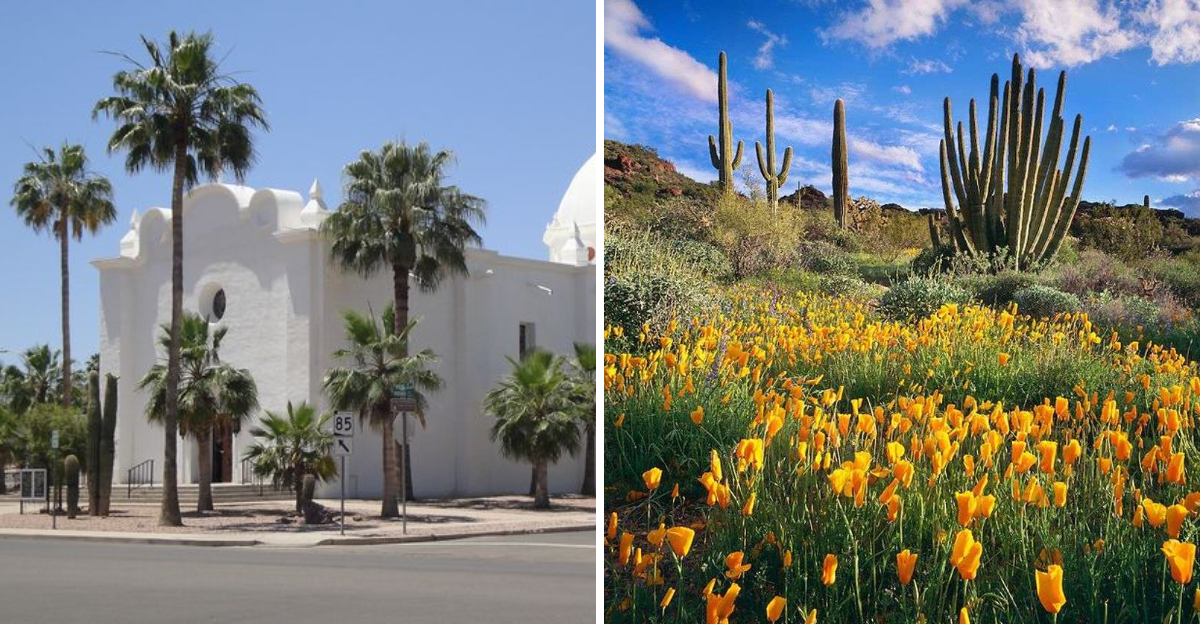
Ajo lies at the edge of the map, a quiet Arizona town where the desert expands endlessly in every direction. Travelers often breeze past on their way to busier destinations, and that suits the locals just fine.
Life in Ajo unfolds at a relaxed pace, shaped by a rich copper mining past, Spanish colonial influences, and a landscape that encourages stillness. It’s a place where time seems to slow down, inviting visitors to embrace a slower, more peaceful rhythm.
Where Ajo Sits In The Heart Of The Sonoran Desert
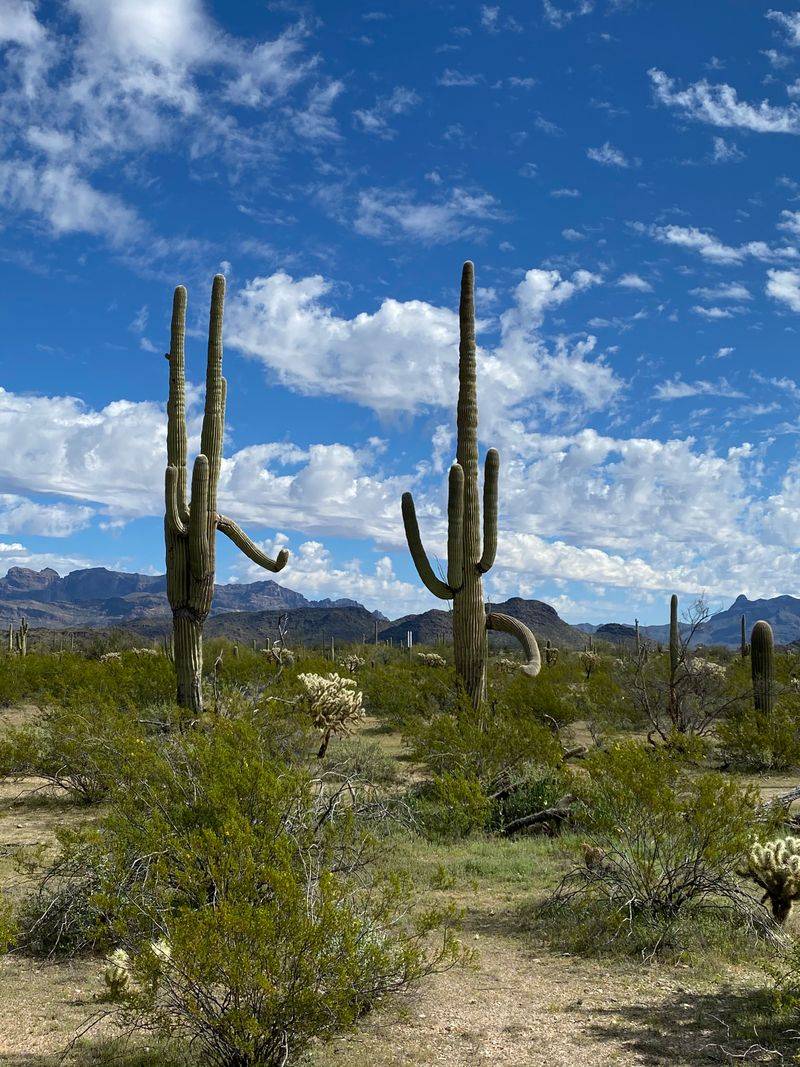
Ajo rests in the Sonoran Desert, roughly forty-three miles north of the Mexican border along State Route 85. The land here is wide open, dotted with saguaro and ocotillo, and backed by distant mountain ridges that change color with the light.
It’s a place where the horizon feels endless and the sky dominates every view.
The town lies in Pima County, Arizona 85321, and serves as the nearest community to Organ Pipe Cactus National Monument. That proximity brings a steady trickle of visitors, but most keep moving after a quick stop.
The desert here is not forgiving, but it is honest, and the people who stay understand that balance.
Summer temperatures climb high, and winter nights drop low, but the climate suits those who prefer solitude over crowds. The surrounding terrain is rugged and bare, with trails that wind through creosote and cholla.
Ajo’s location defines its character, a settlement built where few others would choose to linger.
A History Rooted In Mining And Community
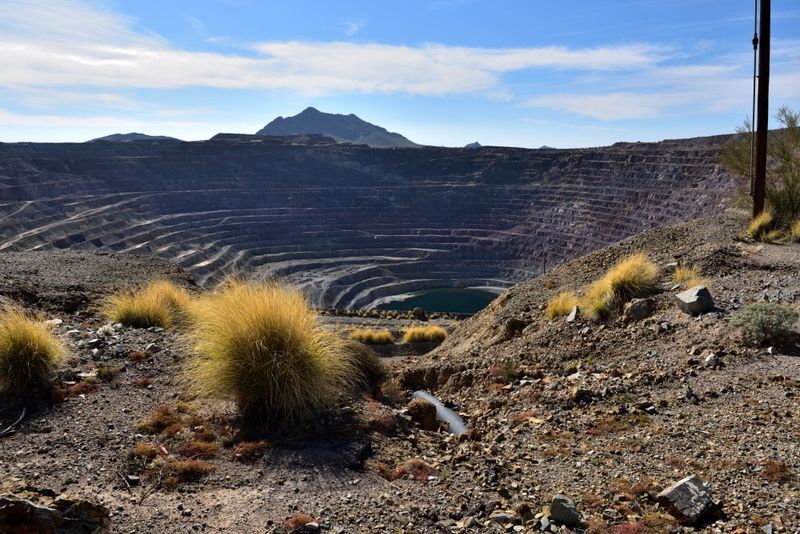
Copper mining brought Ajo to life in the early twentieth century, and for decades the town thrived on the work of the New Cornelia Mine. The mine produced millions of pounds of copper, and the company that ran it built homes, schools, and a central plaza to support the workers.
When the mine closed in 1985, the population dropped sharply, and the town faced an uncertain future.
But Ajo didn’t disappear. The people who remained rebuilt a quieter version of the community, one less dependent on industrial output and more focused on preservation and creativity.
Old mining infrastructure still marks the landscape, reminders of a past that shaped the present.
The town’s history is visible in its architecture, its street layout, and the stories passed down by longtime residents. Ajo’s identity is inseparable from its mining roots, even as it has evolved into something different.
The past here is not buried but acknowledged, a foundation for what comes next.
The Town’s Quiet Plaza And Spanish Colonial Architecture
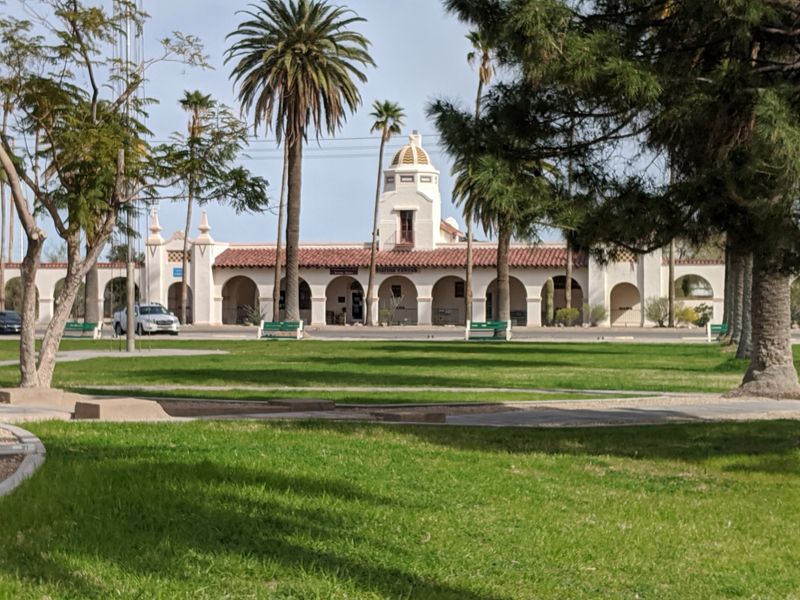
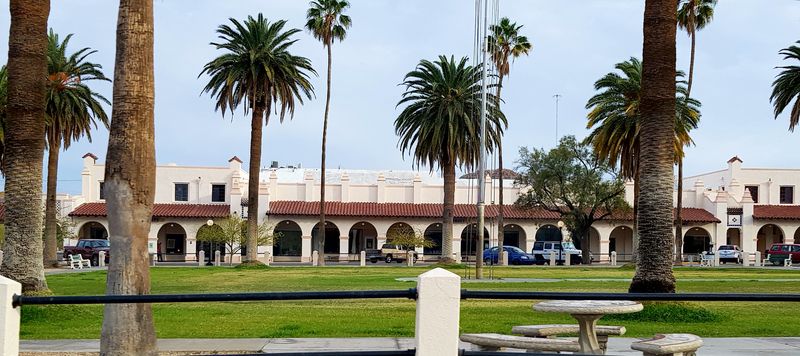
At the center of Ajo sits a plaza designed in the Spanish Colonial Revival style, complete with arched walkways, white stucco walls, and a circular layout. It was built by the mining company in the 1910s and remains one of the most distinctive public spaces in rural Arizona.
The plaza is shaded by palms and surrounded by low buildings that house local businesses and community spaces.
The architecture here feels deliberate, a touch of elegance in a landscape that offers little natural shade. The design reflects an era when company towns invested in beauty as well as function.
Today, the plaza serves as a gathering spot for farmers markets, festivals, and quiet afternoons spent reading on benches.
The buildings around the plaza have been maintained over the decades, though some show signs of age and neglect. Still, the overall effect is one of charm and resilience.
Ajo’s plaza is a reminder that small towns can hold unexpected grace, even when the spotlight has moved elsewhere.
Why Ajo’s Desert Streets Stay Calm Year‑Round
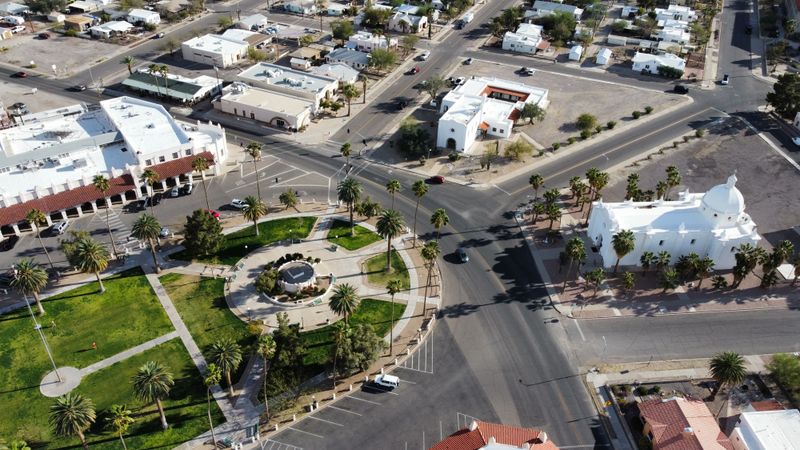
Ajo’s population hovers around three thousand, and the streets reflect that modest count. Traffic is minimal, noise is rare, and the pace of daily life is unhurried.
Most residents know each other by name, and newcomers are noticed quickly.
The town’s isolation contributes to its quiet character. There are no major highways cutting through, no big box stores, and no reason for through traffic to linger.
Visitors come intentionally or not at all. The desert climate also plays a role, discouraging casual tourism during the hottest months and keeping the winter crowds manageable.
Life here follows a rhythm dictated by the sun and the seasons rather than external pressures. Mornings are cool and active, afternoons are still, and evenings bring relief.
The town’s calm is not accidental but cultivated, a quality that residents protect. Ajo offers a counterpoint to the noise and speed that define much of modern Arizona, and that difference is part of its appeal.
Exploring Ajo’s Local Art And Cultural Scene

Art has become a defining feature of Ajo in recent years, as murals, galleries, and creative projects have emerged across town. The International Sonoran Desert Alliance has supported many of these efforts, bringing artists from around the world to paint large-scale murals on building facades.
The result is a visual landscape that surprises first-time visitors and adds color to the desert palette.
Local galleries and studios showcase work by resident artists, many of whom moved to Ajo specifically for its affordability and open space. The town’s creative community is small but active, organizing events and collaborating on public art projects.
The cultural scene here is not polished or commercial but genuine and accessible.
Ajo’s art reflects its environment and history, with themes drawn from the desert, mining heritage, and cross-border culture. The town has embraced creativity as a form of renewal, transforming abandoned spaces into canvases and gathering places.
Art here is not just decoration but a statement of identity and resilience.
Desert Trails And Outdoor Quiet Just Outside Town
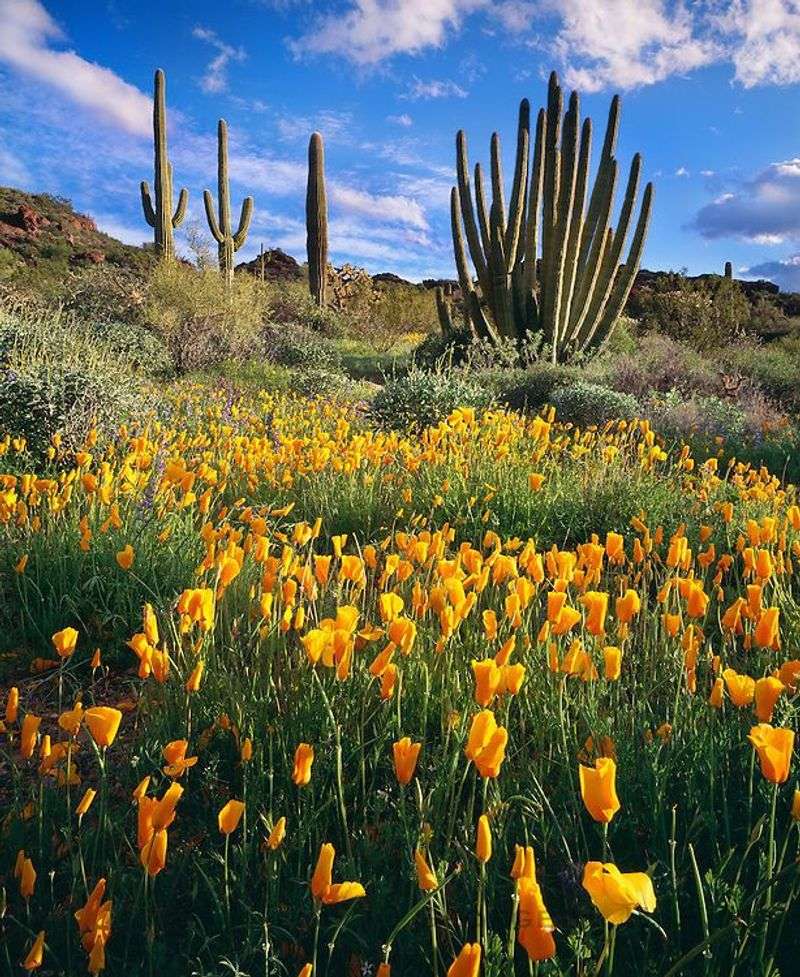
Organ Pipe Cactus National Monument lies just south of Ajo, offering miles of trails through protected Sonoran Desert terrain. The park is home to rare organ pipe cacti, as well as saguaros, ironwoods, and a variety of desert wildlife.
Hiking here requires preparation and respect for the heat, but the rewards are solitude and striking landscapes.
Closer to town, informal trails and dirt roads wind through open desert, accessible to anyone willing to explore on foot or by vehicle. The terrain is rough and unshaded, but it offers a direct encounter with the environment that defines this region.
Birds, lizards, and occasional mammals can be spotted by patient observers.
The outdoor experience near Ajo is not curated or commercialized. There are no visitor centers with gift shops, no paved paths with interpretive signs.
The desert here is left largely to itself, and those who venture out do so on its terms. That rawness is part of the appeal for those seeking genuine quiet.
Ajo’s Small‑Town Eateries And Local Favorites
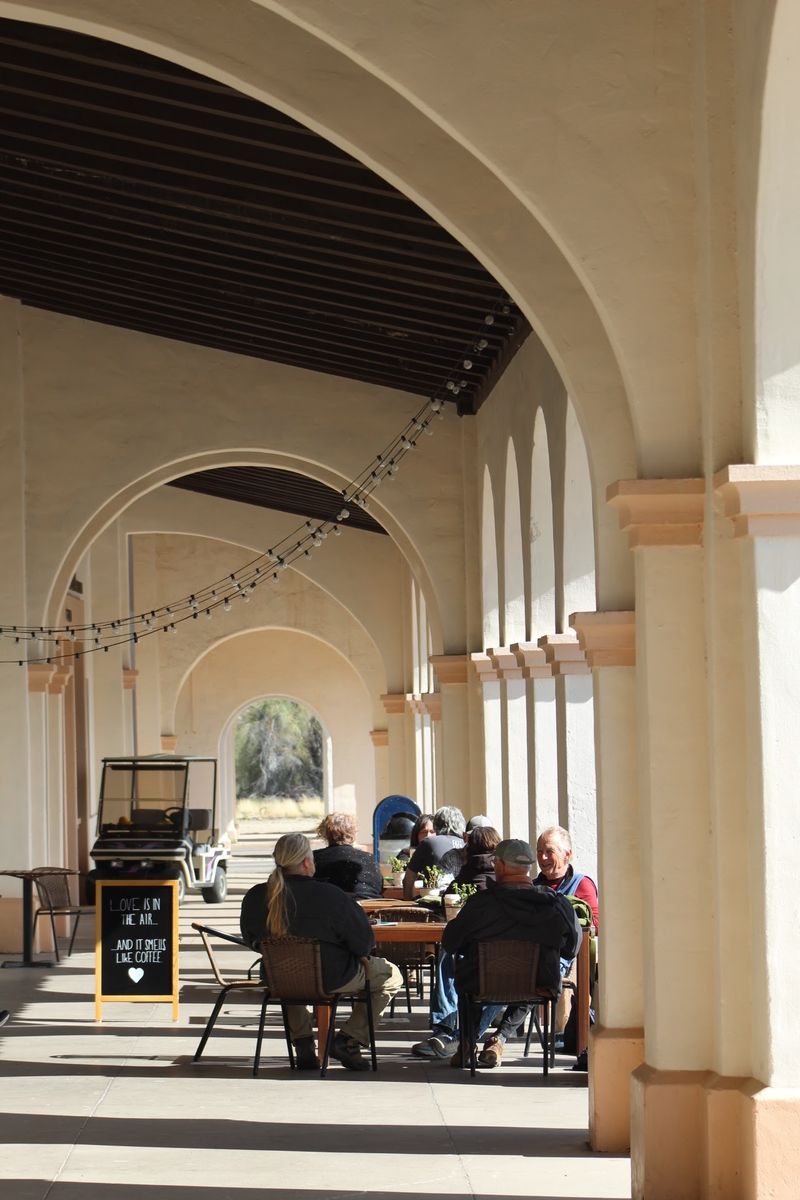
Dining options in Ajo are limited but genuine, with a handful of family-run restaurants and cafes serving straightforward food. Mexican cuisine dominates, reflecting the town’s proximity to the border and its cultural ties.
Tacos, burritos, and homemade salsas are staples, prepared with care and served without pretense.
There are no chain restaurants here, no drive-throughs or franchise menus. The places that do exist operate on their own schedules, sometimes closing early or taking unexpected days off.
Service is friendly, portions are generous, and the atmosphere is casual.
Local favorites include small spots around the plaza and along the main roads, where regulars gather for breakfast or lunch. The food is not fancy, but it is honest, made by people who know their customers by name.
Eating in Ajo means supporting small businesses and experiencing the kind of hospitality that comes from genuine community connection. The town’s dining scene may be modest, but it reflects the values of the place itself.
How Ajo Balances Peace With Community Spirit
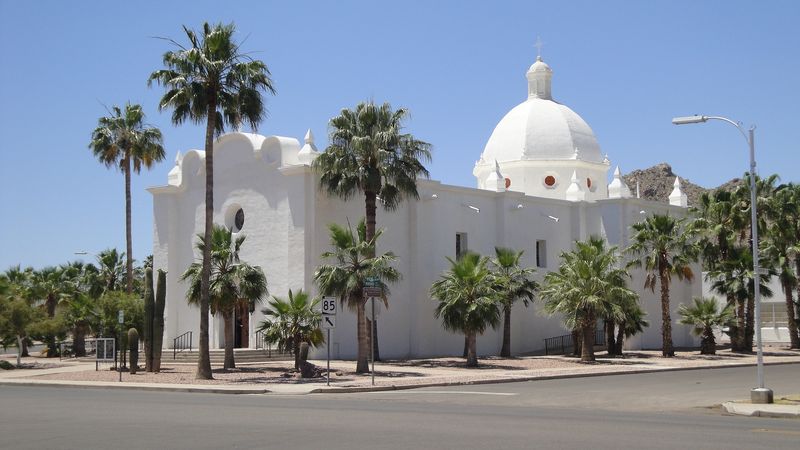
Ajo’s quietness does not mean isolation or indifference. The town maintains a strong sense of community, with residents organizing events, supporting local causes, and looking out for one another.
Festivals, markets, and gatherings bring people together regularly, creating moments of connection in a landscape that can feel vast and empty.
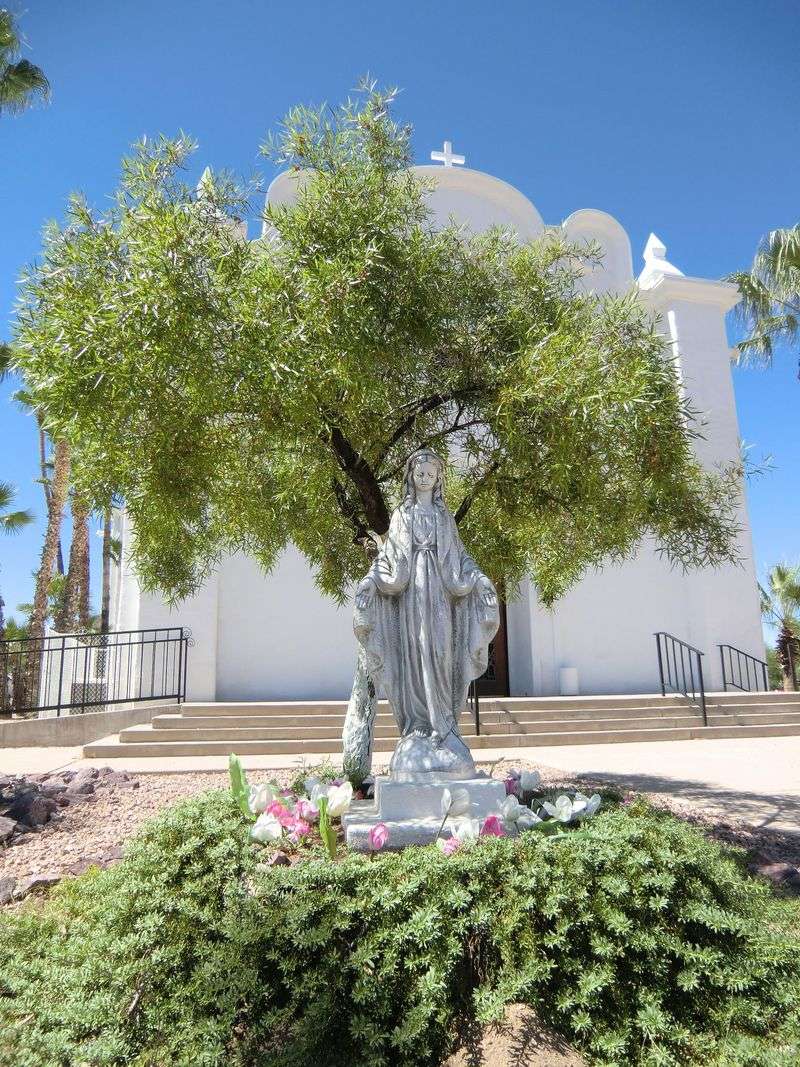
The local library, community center, and church serve as hubs for activity and conversation. Volunteer efforts are common, and newcomers are welcomed if they show genuine interest in contributing.
The town’s small size makes cooperation necessary, and most people seem willing to participate.
Ajo’s balance between solitude and togetherness is one of its defining features. The desert encourages introspection, but the community provides grounding.
People here value their independence but recognize the importance of mutual support. That balance creates a social environment that feels both relaxed and dependable, a rare combination in today’s world.
Wildlife And Natural Beauty That Define Ajo
The Sonoran Desert around Ajo is home to a surprising variety of wildlife, from roadrunners and coyotes to javelinas and desert tortoises. Birdwatchers find the area particularly rewarding, with species ranging from hawks and owls to colorful migrants passing through during seasonal shifts.
The desert may appear barren at first glance, but it is full of life for those who pay attention.
Plant life here is equally diverse, with cacti, shrubs, and wildflowers adapted to extreme conditions. After rare rains, the landscape transforms briefly, with blooms appearing across the desert floor.
The beauty here is subtle and often fleeting, requiring patience and observation to appreciate fully.
Ajo’s natural environment shapes daily life in practical and aesthetic ways. The landscape is harsh but compelling, offering moments of unexpected grace.
Wildlife sightings are common, even within town limits, reminding residents and visitors alike that they share this space with other inhabitants. The natural beauty here is not soft or gentle but striking and real.
Why Ajo Feels Like A Step Back From The Hustle
Ajo offers something increasingly rare in modern Arizona: a place where time moves slowly and distractions are few. There are no shopping malls, no traffic jams, and no constant noise.
The town’s remoteness and small population create an environment where it is possible to think clearly and move at a human pace.
People come to Ajo for different reasons, some seeking retirement, others artistic inspiration, and still others simply a break from the speed of contemporary life. The town accommodates all of them without demanding much in return.
There is space here, both physical and mental, to breathe and reflect.
The contrast between Ajo and larger Arizona cities is stark. Where Phoenix and Tucson buzz with activity and growth, Ajo remains still and self-contained.
That difference is intentional, maintained by residents who value quiet over expansion. For those tired of the hustle, Ajo offers a genuine alternative, a place that has chosen calm over chaos and peace over progress.