
The Texas Salt Lake Locals Have Kept Secret For Generations
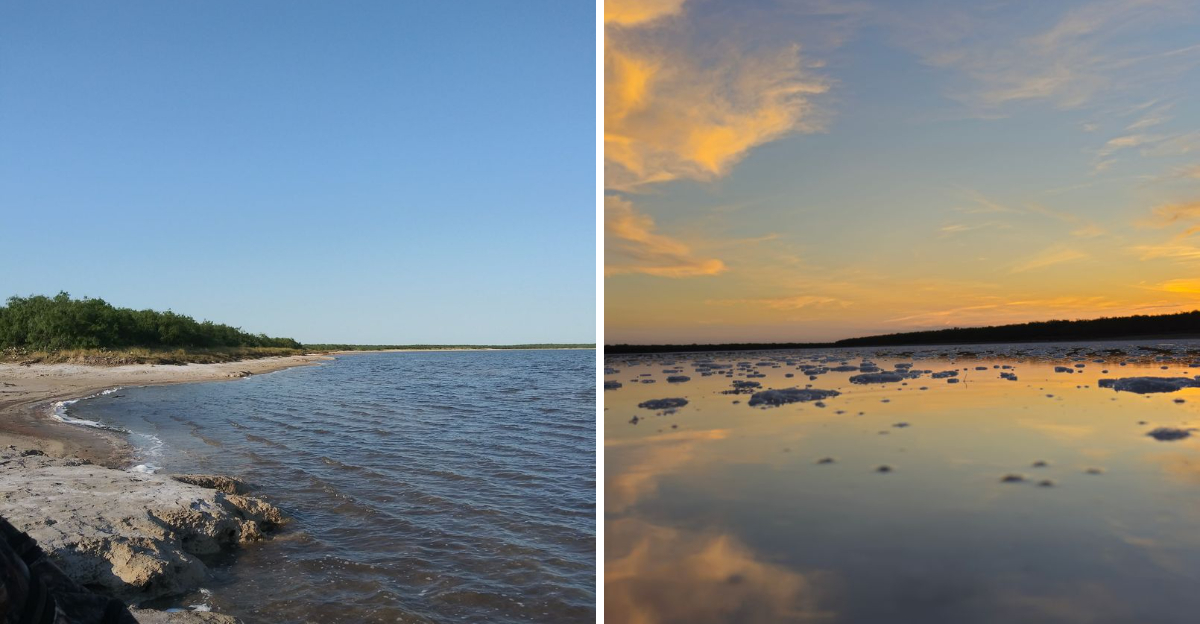
South Texas hides a natural wonder so unusual that many residents of the Rio Grande Valley have never seen it. La Sal Del Rey, a vast salt lake stretching across the flat landscape near Edinburg, has been producing salt for centuries, yet it remains largely unknown outside local circles.
This remarkable body of water transforms into a mirror when conditions are right, reflecting clouds and sky with such clarity that visitors describe it as walking through a dream, and the salt deposits along its edges form crystalline formations that sparkle under the intense Texas sun.
La Sal Del Rey: Texas’ Hidden Salt Lake
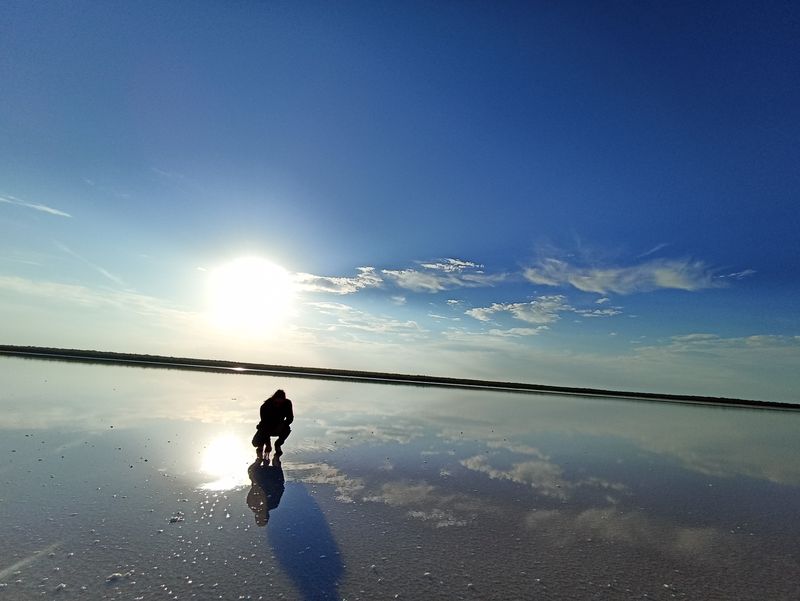
Forty miles north of the Mexican border, a body of water sits in the brushland that defies what most people expect from Texas geography. La Sal Del Rey covers roughly 1,000 acres when filled, though its depth rarely exceeds a few inches.
The lake occupies a shallow depression in the coastal plain, and its mineral content creates an environment found nowhere else in the state.
Generations of families living in the surrounding communities have known about this place. Some came to harvest salt in earlier times, while others simply appreciated its stark beauty.
The lake exists within the Lower Rio Grande Valley National Wildlife Refuge, located along TX-186 near Edinburg, TX 78542.
Visitors today find a landscape that looks more like Bolivia’s salt flats than anything typically Texan. The water level fluctuates with rainfall and evaporation, sometimes leaving vast expanses of crystallized salt that crunch underfoot.
During periods of shallow flooding, the surface becomes a perfect mirror, and the effect stops people in their tracks.
The Largest Salt Lake In South Texas
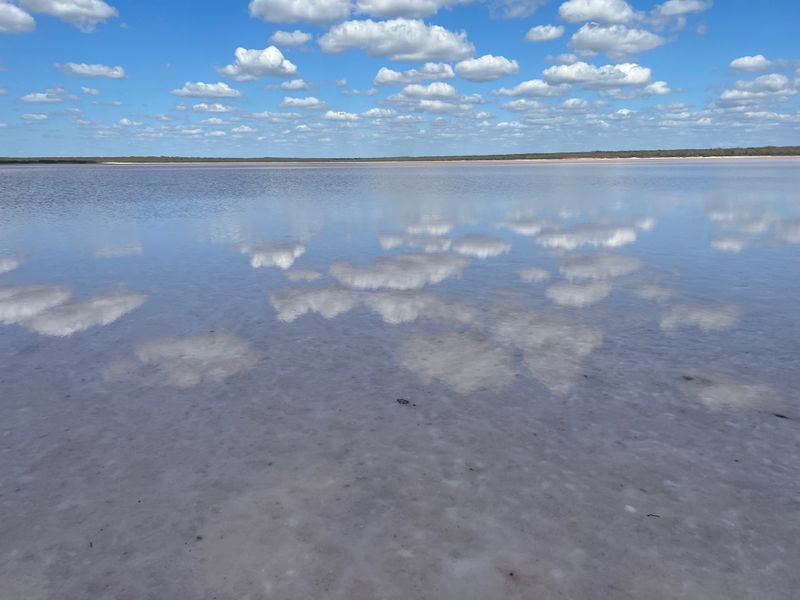
No other salt lake in South Texas comes close to matching the scale of La Sal Del Rey. The lake extends for miles in every direction from its center, creating a sense of openness that feels almost oceanic.
Standing at the viewing platform or walking out onto the flats, you can turn in a complete circle and see nothing but salt and sky in certain directions.
The size becomes apparent during the walk from the parking area. The main trail covers about 1.5 miles each way, and even from that distance, the lake dominates the view.
People often underestimate how much ground they need to cover, which explains why reviews consistently mention bringing water.
This scale also supports the wildlife that depends on the lake. Birds migrate through in substantial numbers, and the surrounding brush provides habitat for mammals ranging from javelinas to bobcats.
The animal tracks pressed into the salt tell stories of nocturnal visitors. During certain seasons, the combination of water, salt, and open space creates conditions that attract species from considerable distances.
La Sal Del Rey’s Salty Waters And Sky Reflections
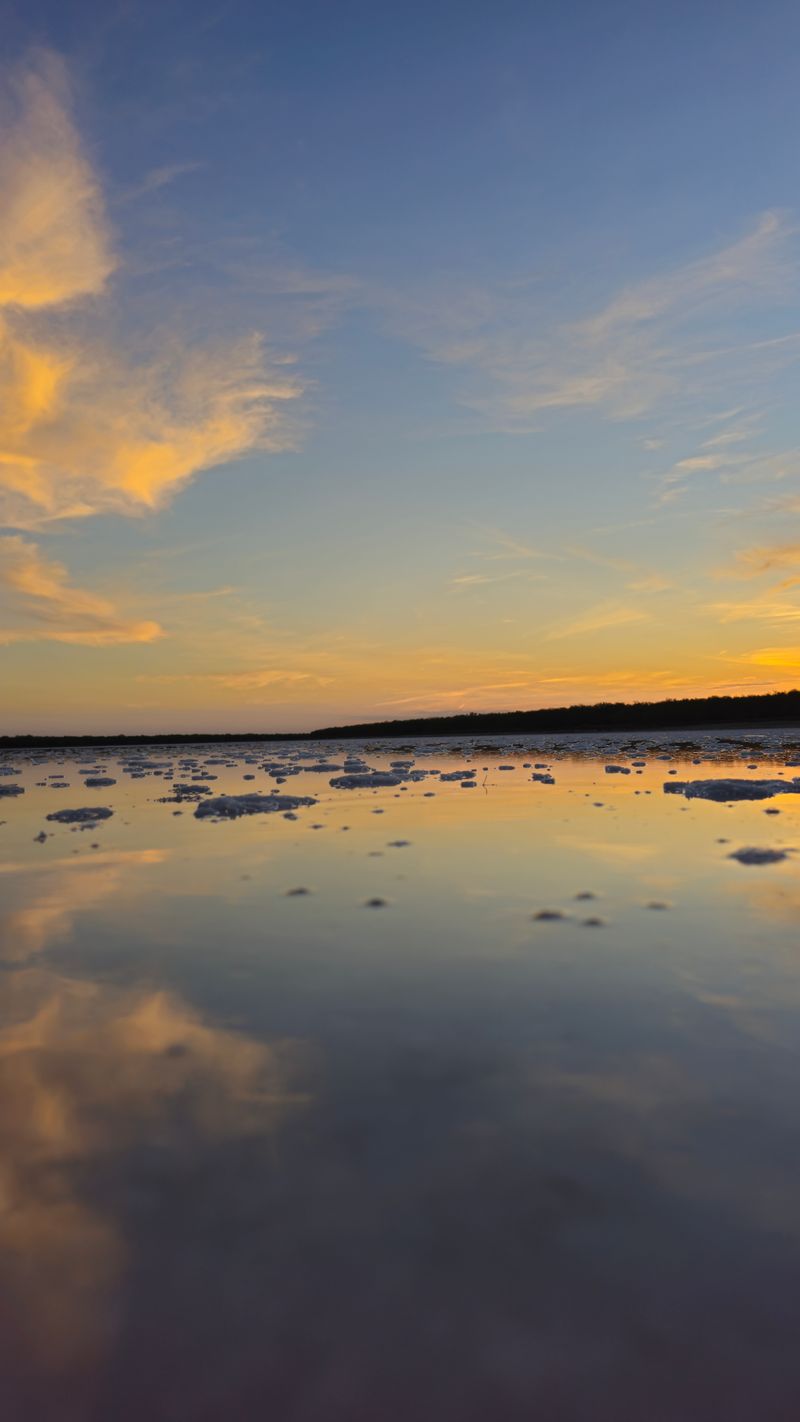
Calm days transform La Sal Del Rey into something photographers dream about. The shallow water becomes perfectly still, and the reflection of the sky appears so complete that the horizon line disappears.
People who have witnessed this effect describe it as disorienting in the best possible way, as if the ground beneath their feet has dissolved into atmosphere.
The salt concentration in the water creates unique optical properties. Light behaves differently here than it does in freshwater, and the mineral content affects how colors appear.
Sunrises and sunsets produce particularly striking results, with pink and orange hues doubling across the mirrored surface.
Wind changes everything. Even a modest breeze creates ripples that break up the reflection, though many visitors find the resulting texture equally beautiful.
The water depth matters too. An inch or two of water over the salt flats produces the best mirror effect, while deeper water or exposed salt creates different visual experiences.
Timing a visit for optimal reflection requires some luck, but even imperfect conditions offer rewards.
La Sal Del Rey’s Role In Texas History
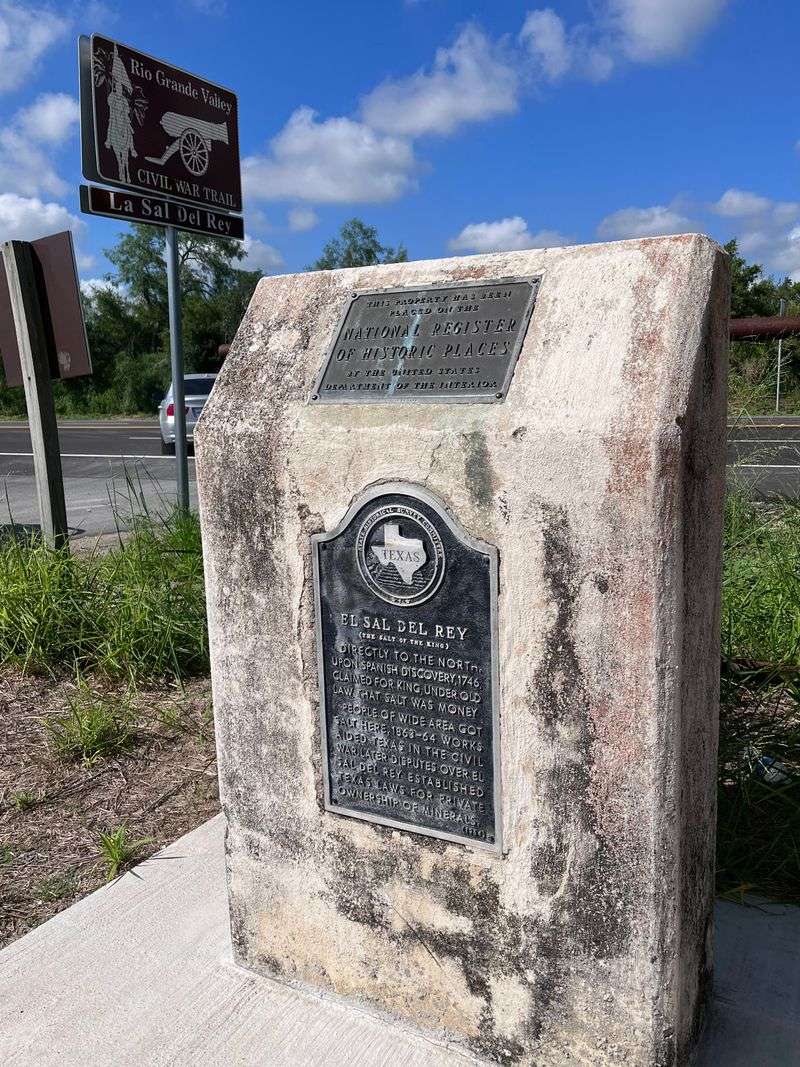
Long before Texas became a state, indigenous peoples harvested salt from this lake. The resource held such value that conflicts arose over access rights.
Spanish colonists recognized the importance of the salt deposits, and the lake’s name reflects that colonial period. “La Sal del Rey” translates to “the King’s salt,” indicating royal claims to the resource.
During the 19th century, salt from this lake supplied communities throughout the region. Ranchers and settlers depended on it for preserving meat and other essential purposes.
The salt trade created economic activity and established routes that later became roads. Some historians argue that control of this natural resource influenced settlement patterns across South Texas.
The Mexican-American War brought additional significance to the area. Military forces recognized the strategic value of salt supplies.
After Texas joined the United States, disputes over mineral rights continued for decades. Today, the lake sits on protected federal land, and commercial salt harvesting no longer occurs, though visitors can still see the evidence of past operations.
The Wildlife Around La Sal Del Rey
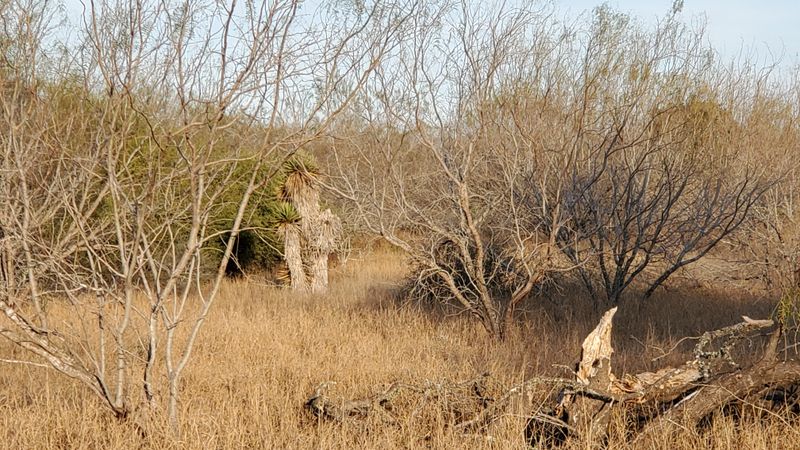
Animal tracks crisscross the salt flats in patterns that reveal the lake’s importance to local wildlife. Javelina prints appear frequently, pressed into the salt crust alongside the smaller marks left by coyotes.
Wild hogs visit the area, and more than one visitor has reported surprise encounters with young boars, followed by hasty retreats when they remembered that mother pigs protect their young aggressively.
Birds use La Sal Del Rey as a critical stopping point during migration. Shorebirds probe the shallow water for invertebrates, while larger species like herons and egrets hunt along the edges.
The surrounding brush provides habitat for dozens of species, and serious birders add this location to their Rio Grande Valley itineraries.
Reptiles thrive in this environment. Lizards dart across the trails, and snakes occasionally appear, though most species avoid human contact.
The combination of water, salt, and vegetation creates microhabitats that support surprising biodiversity. Visitors who take time to observe quietly often see more wildlife than those who rush through.
Best Time To Visit La Sal Del Rey
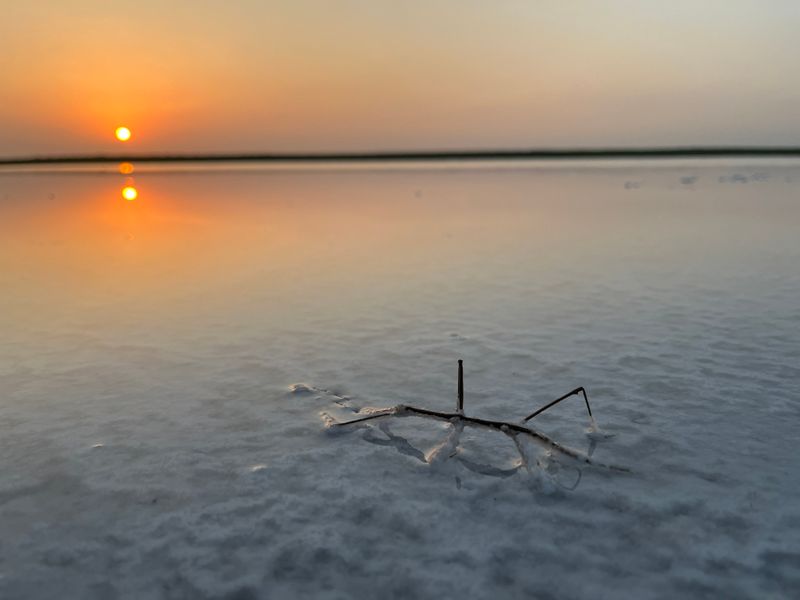
Summer visits to La Sal Del Rey require serious commitment. Temperatures regularly exceed 100 degrees, and the exposed trails offer no shade.
The salt flats amplify the heat, reflecting sunlight upward until the air shimmers. Multiple reviews mention turning back due to heat, and the warnings about bringing water appear for good reason.
People who insist on summer visits should arrive before 8 AM or wait until evening.
Fall through spring offers much better conditions. October through April brings comfortable temperatures for the 3-mile round trip walk.
Winter mornings can actually feel cool, and the lower humidity makes the experience more pleasant. These months also coincide with bird migration periods, adding another reason to choose cooler seasons.
Time of day matters as much as season. Sunrise visits provide good light for photography and comfortable temperatures.
The lake opens at 7 AM, giving early risers plenty of time to reach the flats for dawn. Sunset creates equally beautiful conditions, and the park stays open until 8 PM.
Midday visits work during winter but become punishing from May through September.
How To Reach La Sal Del Rey
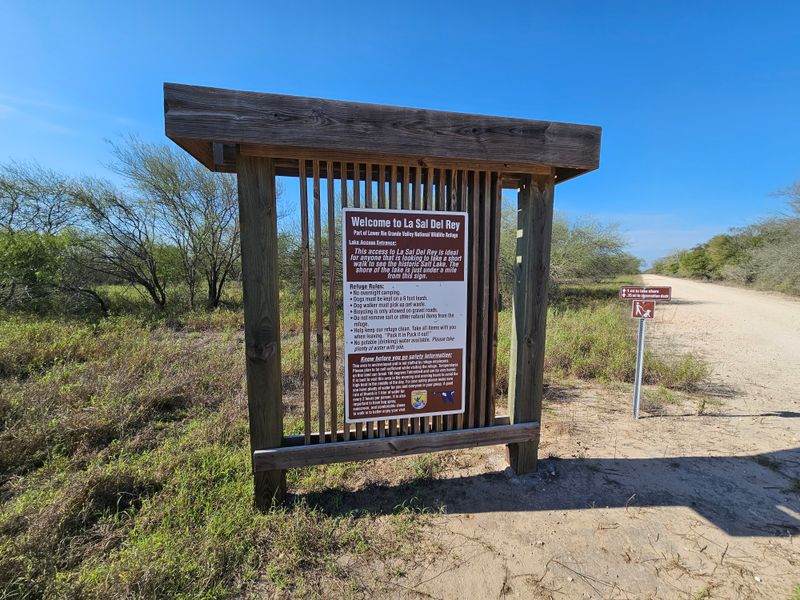
Finding La Sal Del Rey requires attention to directions because GPS coordinates can mislead. The official entrance sits along TX-186 near Edinburg, where a small parking area and information kiosk mark the trailhead.
From there, a well-maintained trail leads about 1.5 miles to the lake. The path stays flat and clear, though it offers no shade.
Cell phone service becomes unreliable or disappears entirely once you leave the highway. Downloading maps before arrival makes sense.
The parking area includes vault toilets, though visitors report they often lack supplies like toilet paper and soap. Bringing your own makes the stop more comfortable.
Two trail options exist, though one sometimes closes. The main entrance on Brushline Road provides the most reliable access.
Some visitors mention a shorter route, but conditions vary and signage may not always be clear. Calling ahead at (956) 784-7500 can confirm which trails are open.
The drive involves some dirt road travel, and the area feels remote once you leave paved surfaces. Bringing a full tank of gas and emergency supplies makes sense for any trip into this part of South Texas.
The Science Behind La Sal Del Rey’s Salt Flats
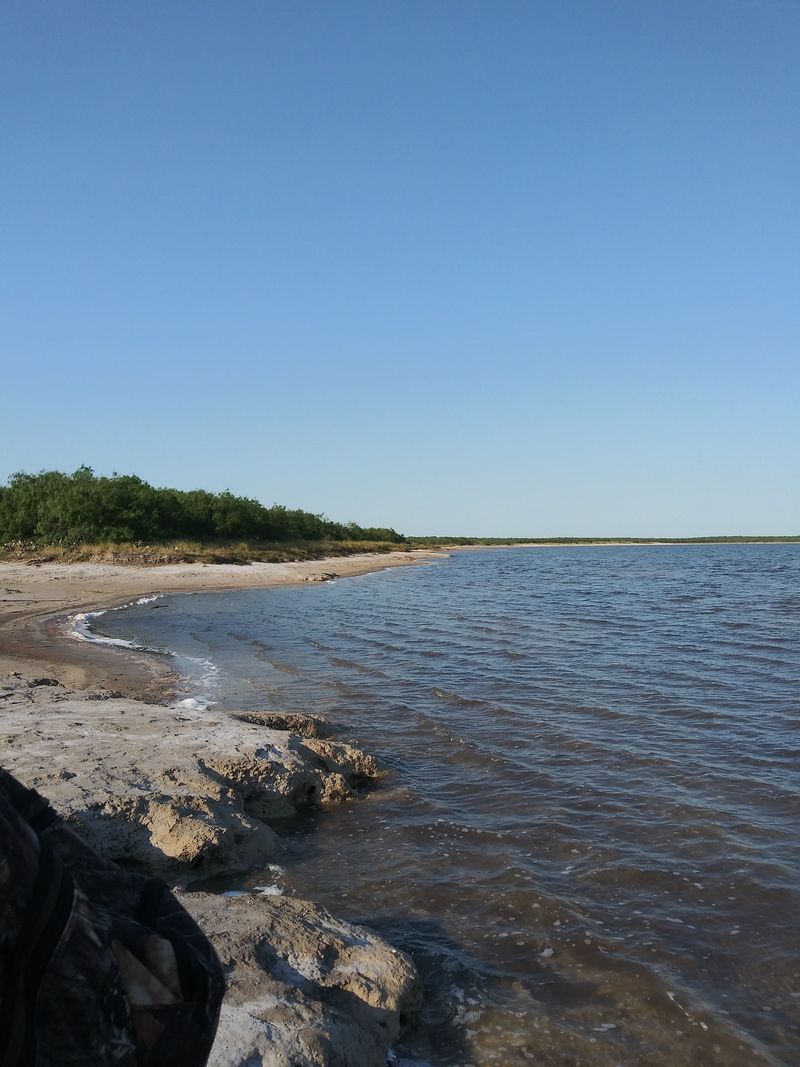
La Sal Del Rey owes its existence to ancient geological processes. The salt deposits formed from evaporated seawater trapped underground millions of years ago.
Over time, these salt beds moved closer to the surface through geological forces. Rainwater dissolves the buried salt and carries it upward, where it concentrates in the shallow depression that forms the lake.
Evaporation drives the entire system. The hot, dry climate of South Texas causes water to evaporate faster than rain can replenish it.
As water evaporates, dissolved salt remains behind, increasing concentration until crystals form. The process repeats endlessly, building up the thick salt crust that visitors walk across.
Some areas develop formations that look almost like frozen waves.
The salt concentration in the water exceeds that of seawater by a significant margin. This hypersalinity limits what can survive here.
Only specially adapted microorganisms and certain brine shrimp can tolerate these conditions. The ecosystem remains simple but fascinating, and the extreme environment creates the unique visual characteristics that make La Sal Del Rey memorable.
La Sal Del Rey: A Local Secret For Generations
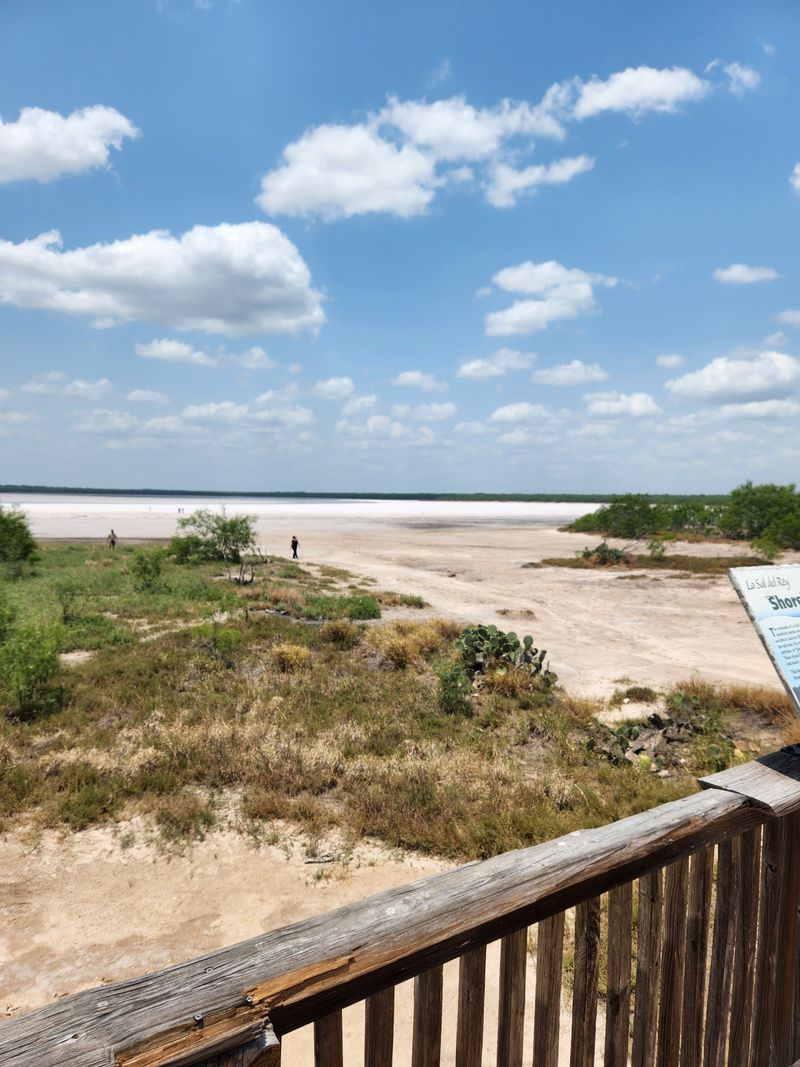
Despite sitting just miles from populated areas, La Sal Del Rey remains relatively unknown. Many residents of the Rio Grande Valley have heard of it but never visited.
The lack of promotion keeps crowds small, and visitors often find themselves alone on the salt flats. This solitude forms part of the appeal for those who make the effort to reach it.
Families have passed knowledge of this place down through generations without broadcasting it widely. Some locals visit regularly, treating it as a personal refuge rather than a tourist destination.
The absence of commercial development preserves the experience. No gift shops or paved paths interrupt the landscape.
What you see is what has existed for centuries.
Social media has started changing this dynamic. Photographs of the mirror-like reflections generate interest, and more people add La Sal Del Rey to their travel plans.
The location still qualifies as hidden compared to major Texas attractions, but it may not stay that way. For now, it offers an experience that feels like discovery rather than tourism, a place where you can walk for miles without seeing another person.