
This Colorado State Park Is So Breathtaking, Photos Barely Do It Justice
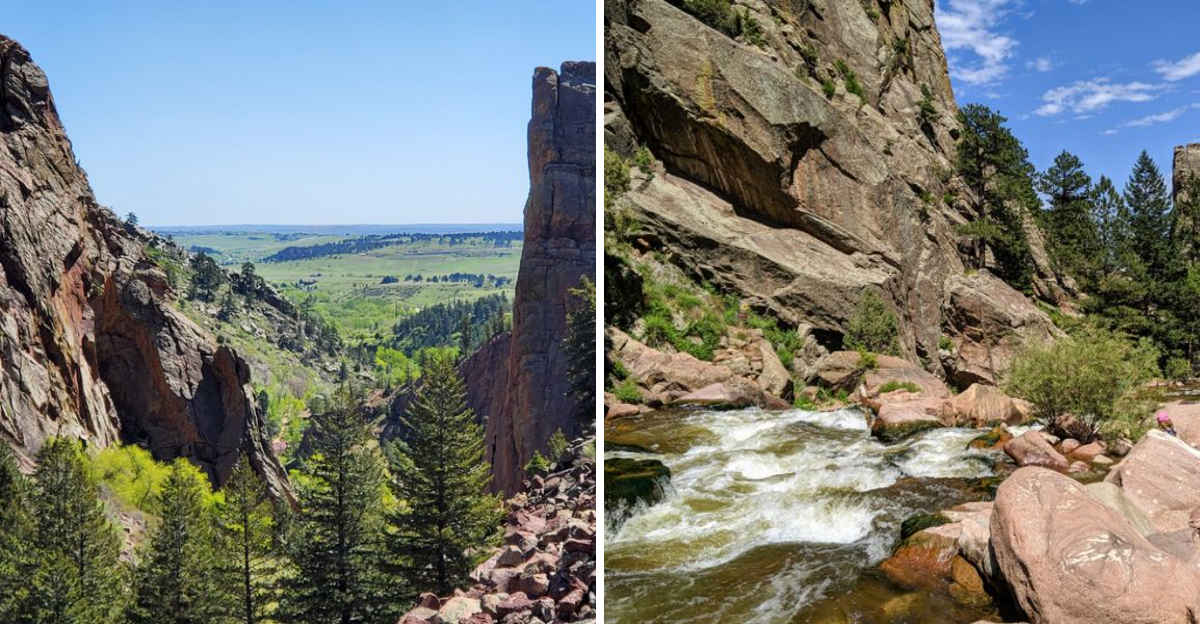
Eldorado Canyon State Park sits just south of Boulder, carved into the earth like something from another planet. Golden sandstone cliffs rise hundreds of feet above a creek that has spent millennia shaping this landscape into one of Colorado’s most dramatic outdoor spaces.
Rock climbers travel from across continents to test themselves on these walls, while hikers find trails that reward effort with views so expansive they border on unbelievable. Located at 9 Kneale Rd in Eldorado Springs, this park delivers an experience that feels far removed from civilization despite being minutes from a college town.
Towering Golden Sandstone Walls
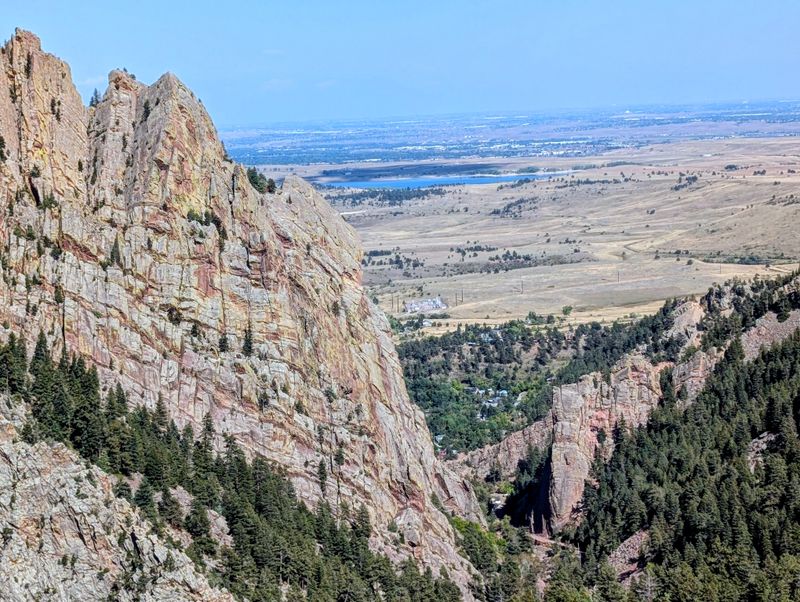
The vertical cliffs that define Eldorado Canyon rise with such sudden authority that your first glimpse feels like a visual trick. These formations climb 700 feet in places, their surfaces marked by centuries of weather and geological patience.
The rock itself carries a warm golden tone that shifts throughout the day, moving from pale amber in morning light to deep copper as afternoon settles in.
Geologists point to the Fountain Formation, a layer of sedimentary rock deposited roughly 300 million years ago, as the source of these walls. What makes them particularly striking is their near-vertical orientation, the result of tectonic forces that tilted the rock layers almost perpendicular to the ground.
Standing at their base, you feel the weight of that history pressing down through stone.
The canyon walls create a natural amphitheater that amplifies sound and concentrates light in ways that make the space feel both enclosed and infinite. Photographers arrive early to catch the way shadows carve definition into every crack and ledge.
World-Class Rock Climbing
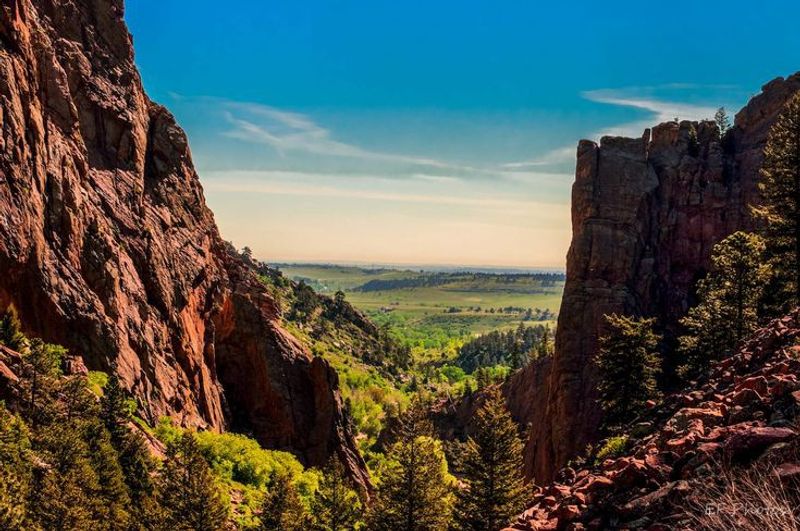
Climbers speak about Eldorado Canyon with a particular reverence, the kind reserved for places that have shaped the sport itself. The park offers more than 500 established routes, ranging from moderate pitches suitable for intermediate climbers to challenges that have humbled professionals.
The rock here provides excellent friction, and the variety of crack systems, face climbs, and overhangs means no two ascents feel alike.
Routes bear names that reflect both humor and history: Bastille Crack, Rotwand, and the Naked Edge among them. The latter, a soaring line that follows an exposed arête, remains one of the most celebrated climbs in North America.
Traditional climbing dominates here, requiring climbers to place their own protection as they ascend rather than relying on permanent bolts.
On any given day, you will see climbers from Japan, Germany, France, and beyond, drawn by the canyon’s reputation. The visitor center staff can point newcomers toward appropriate areas, though the climbing culture here assumes a certain level of self-sufficiency and respect for the environment.
A Sunlit Creek That Cuts Through The Canyon In Mesmerising Ways
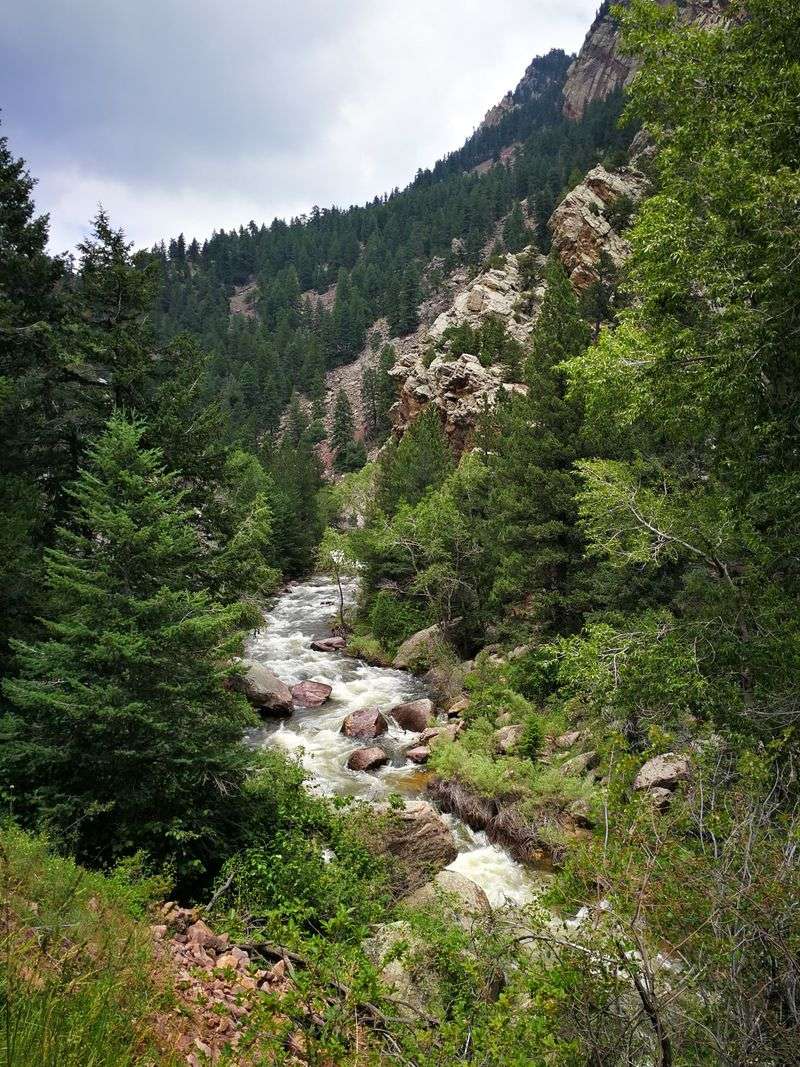
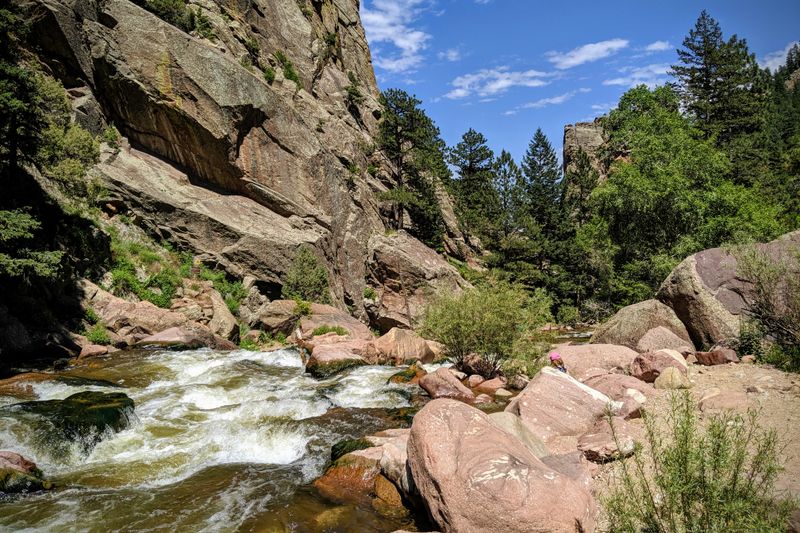
South Boulder Creek runs the length of the canyon floor, its presence both visual and auditory as water moves over and around boulders worn smooth by constant contact. The creek varies considerably with the seasons, swelling with snowmelt in spring and settling into a more contemplative flow by late summer.
Its path through the canyon creates pockets of calm water interspersed with small rapids that generate a steady background rhythm.
The water itself carries remarkable clarity, allowing you to watch trout navigate between rocks and observe the creek bed in detail. Cottonwood trees line portions of the banks, their leaves catching light and creating patterns of shade that shift as the day progresses.
Several picnic areas sit close enough to the water that you can hear it while eating.
Families often wade in the shallower sections during warmer months, though the water maintains a coolness that reminds you of its mountain origins. The creek serves as a natural dividing line through the park, with trails on both sides offering different perspectives of the canyon.
Epic Hiking Trails With Unreal Views At Every Turn
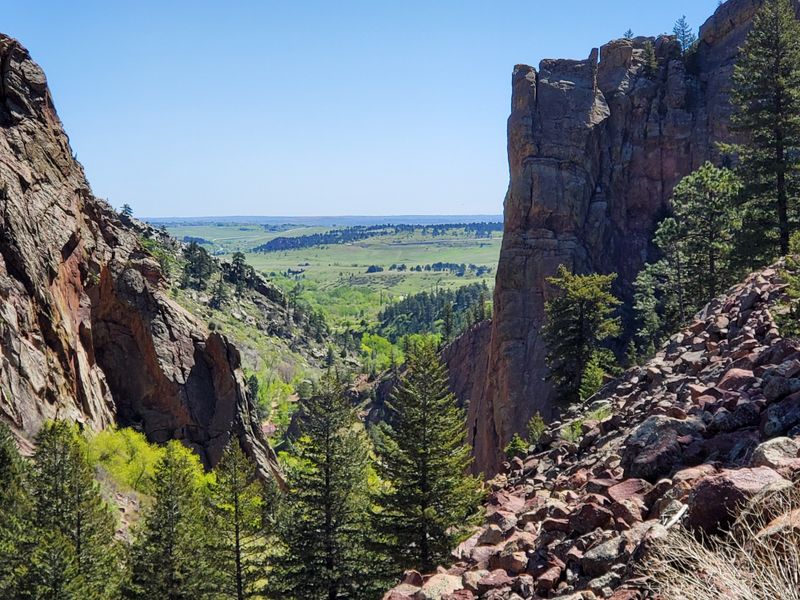
Rattlesnake Gulch Trail stands as the park’s most popular hiking route, climbing roughly 800 feet over 1.6 miles to reach overlooks that frame the Continental Divide on clear days. The trail passes the ruins of the Crags Hotel, a structure built in 1908 and destroyed by fire just four years later.
What remains are stone foundations and a fascinating glimpse into early tourism efforts in this region.
The Fowler Trail offers a gentler alternative, following the canyon floor with minimal elevation gain while providing consistent views of the surrounding cliffs. This path sees heavy use from trail runners and families with younger children, as the terrain remains manageable without sacrificing scenery.
Benches appear at strategic intervals, placed where the views justify a pause.
For those seeking more demanding terrain, the Eldorado Canyon Trail climbs steeply from the visitor center, gaining elevation quickly and rewarding the effort with increasingly expansive vistas. The park maintains its trails well, though sections can become muddy after rain or snow.
Sweeping Front Range Vistas That Feel Almost Impossible
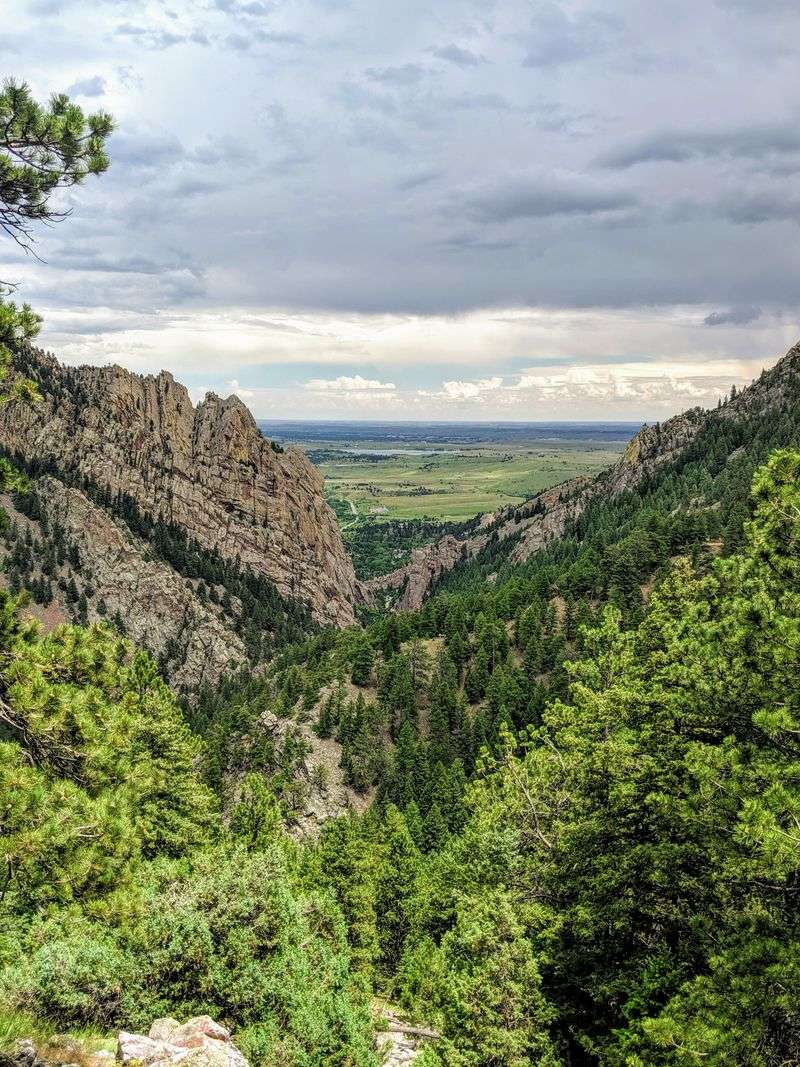
From various high points within the park, the Front Range unfolds in layers that seem to extend indefinitely westward. On days when atmospheric conditions cooperate, you can identify individual peaks more than 50 miles distant, including portions of the Continental Divide.
The perspective from these overlooks places you at an elevation where the geography makes sudden sense, revealing how the plains meet the mountains in a collision of ecosystems.
Mount Evans and Longs Peak both appear on the horizon from certain vantage points, their distinctive profiles recognizable even at distance. The views shift dramatically with weather, as storms moving across the plains create theatrical displays of light and shadow that sweep across the landscape.
Winter brings particular clarity, with cold air scrubbing away haze and allowing views that stretch toward Wyoming.
Photographers time their visits to coincide with optimal light conditions, though the vistas maintain their impact regardless of when you arrive. The scale of what you can see from these overlooks makes the 45-minute drive from Denver feel like a journey into entirely different geography.
A Gold Rush-Era History Hidden Inside The Canyon
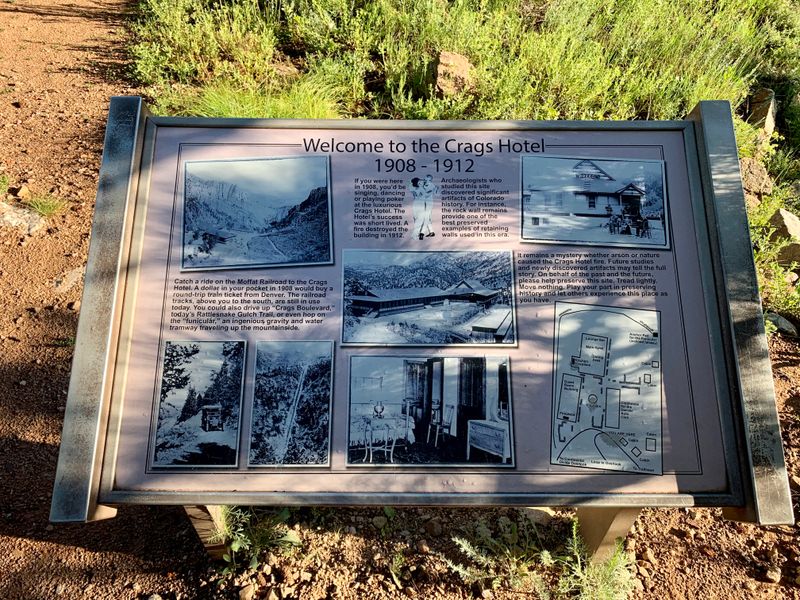
Eldorado Springs, the small community adjacent to the park, emerged during Colorado’s mining boom when prospectors believed the area held mineral wealth worthy of the name. While significant gold deposits never materialized, the springs themselves became the attraction, drawing visitors who believed in the therapeutic properties of the mineral water.
By the early 1900s, the area had transformed into a resort destination complete with a pool, hotel, and railway access from Boulder.
The Crags Hotel, perched dramatically on the canyon rim, represented the peak of this era before fire reduced it to the ruins visible today along the Rattlesnake Gulch Trail. An old railway grade still traces part of the route that once carried tourists up the canyon.
The park’s visitor center displays photographs and artifacts from this period, showing women in long dresses and men in suits attempting the trails.
More colorful still is the history of Ivy Baldwin, a tightrope walker who performed crossings of the canyon 86 times between 1906 and 1948, the last when he was 82 years old. His wire stretched 582 feet across the void.
Wildlife Sightings That Feel Straight Out Of A Nature Documentary
Mule deer move through the canyon with casual familiarity, often appearing near the picnic areas or along trail edges during early morning and evening hours. Their large ears pivot independently to track sounds, and they show little concern for human presence provided you maintain respectful distance.
During autumn, bucks display impressive antler racks as the rut approaches.
Bighorn sheep occasionally descend from higher elevations to navigate the canyon walls with abilities that seem to defy physics. Watching them traverse near-vertical surfaces provides a reminder that different species perceive terrain through entirely different frameworks.
The park’s rocky outcrops also support healthy populations of yellow-bellied marmots, whose piercing whistles serve as alarm calls when predators or hikers approach too closely.
Bird diversity here reflects the transition zone between plains and mountains, with species from both ecosystems present. Canyon wrens deliver their distinctive descending calls from cliff faces, while golden eagles occasionally soar overhead on thermal currents.
Rattlesnakes do inhabit the area, as the trail name suggests, though encounters remain relatively uncommon if you watch where you place hands and feet.
Golden-Hour Lighting That Makes The Canyon Glow
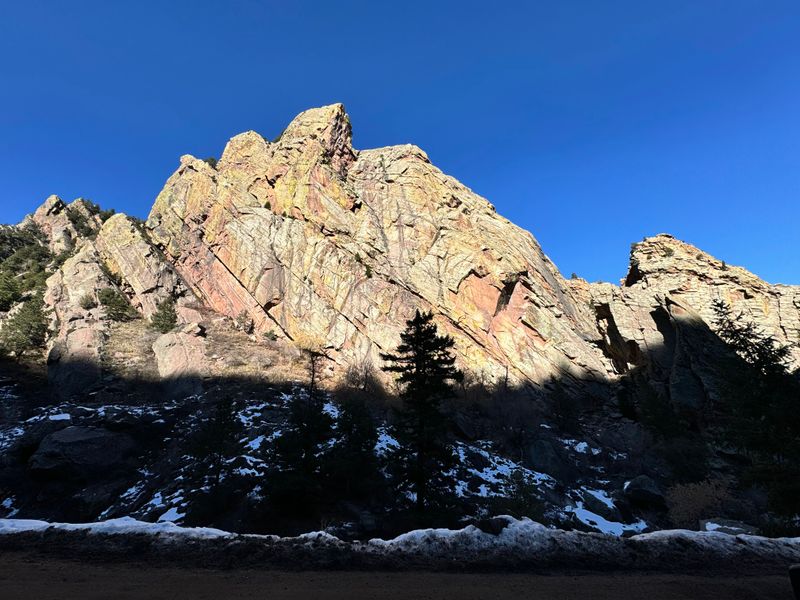
Photographers understand that Eldorado Canyon transforms during the hours bracketing sunrise and sunset, when angled light interacts with the iron-rich sandstone to produce colors that seem digitally enhanced even in person. The cliffs essentially become light reflectors during these periods, glowing with intensities that shift from soft peach to deep crimson depending on cloud cover and atmospheric conditions.
This quality of light has made the canyon a favorite subject for landscape photographers seeking dramatic natural compositions.
Morning light enters the canyon from the east, gradually illuminating the western walls while leaving the eastern faces in shadow that creates stark contrasts. Evening reverses this pattern, with the eastern walls catching the last direct sunlight while the western cliffs reflect ambient light from the sky.
The roughly 30 minutes following sunset often produces the most saturated colors as indirect light continues to activate the rock.
Visitors without cameras still benefit from timing their arrival to coincide with these periods, as the visual experience differs substantially from midday visits when overhead sun flattens the landscape and washes out the stone’s inherent warmth.
A Wild, Remote Feel Just Minutes From Boulder
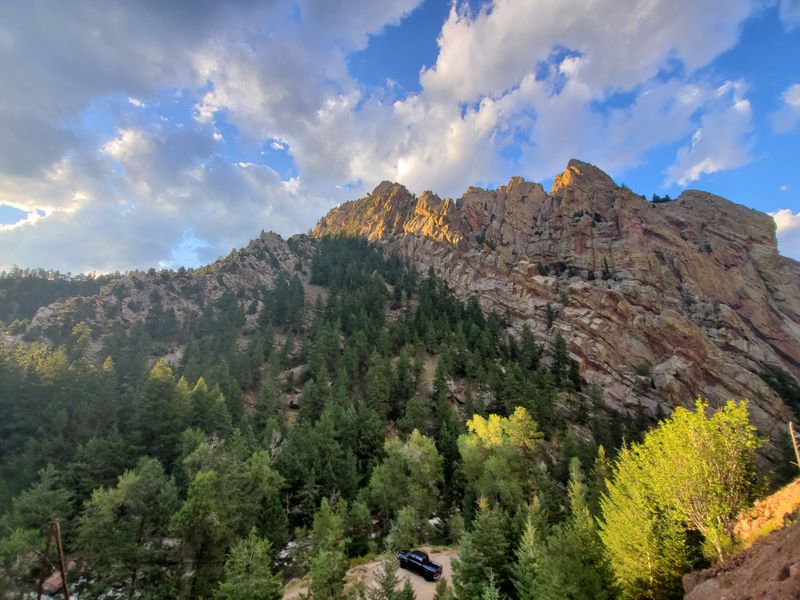
The geographical quirk of Eldorado Canyon lies in its ability to deliver a wilderness experience while sitting barely eight miles from Boulder’s city limits. The drive from downtown takes roughly 20 minutes, following CO-93 south before turning west onto Eldorado Springs Drive, a narrow road that winds into the canyon and immediately signals a shift away from urban environments.
Cell service becomes unreliable once you enter the canyon proper, adding to the sense of separation.
This accessibility makes the park popular with locals who can visit for a few hours after work, yet the canyon’s topography creates natural sound barriers that muffle traffic noise and city hum. Standing on a trail halfway up the canyon wall, you could reasonably believe yourself hours from the nearest town.
The park charges a modest entrance fee of ten dollars per vehicle, with payment available at the staffed entrance station or via automated machines during off-peak hours.
A shuttle system operates during busy periods to reduce congestion on the narrow park road, though most visitors still drive their own vehicles to access trailheads and picnic areas scattered throughout the canyon.
Seasons That Completely Transform The Canyon’s Look
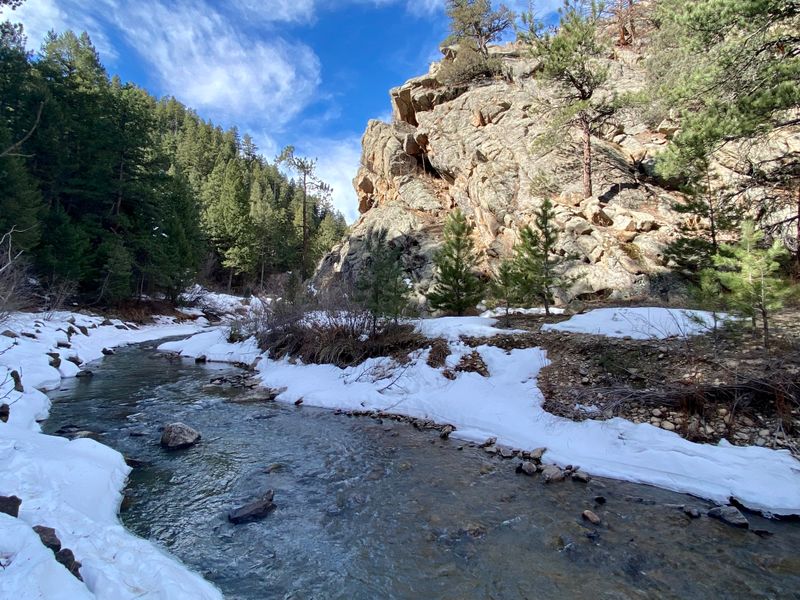
Spring arrives in the canyon with wildflowers that colonize every available patch of soil, their blooms creating color contrasts against the red and gold stone. Snowmelt swells South Boulder Creek to its annual peak, and the cottonwoods leaf out in that particular shade of green that only appears during initial growth.
Temperatures during this season vary wildly, with warm afternoons following mornings that require jackets.
Summer brings heat that concentrates in the canyon, with temperatures often climbing into the 90s during July and August. The rock faces absorb and radiate this warmth, making afternoon climbs uncomfortable for all but the most determined.
Thunderstorms develop with regularity during summer afternoons, creating lightning hazards on exposed trails and routes.
Autumn delivers the canyon’s most comfortable conditions, with moderate temperatures, stable weather patterns, and cottonwoods turning gold in late September and October. Winter transforms the space yet again, with snow highlighting every ledge and crack on the cliff faces while ice forms along the creek edges.
The park remains open year-round, though winter visitors should expect icy conditions on trails and limited facilities.