
This Quiet Florida Town Feels Like Stepping Into The Past
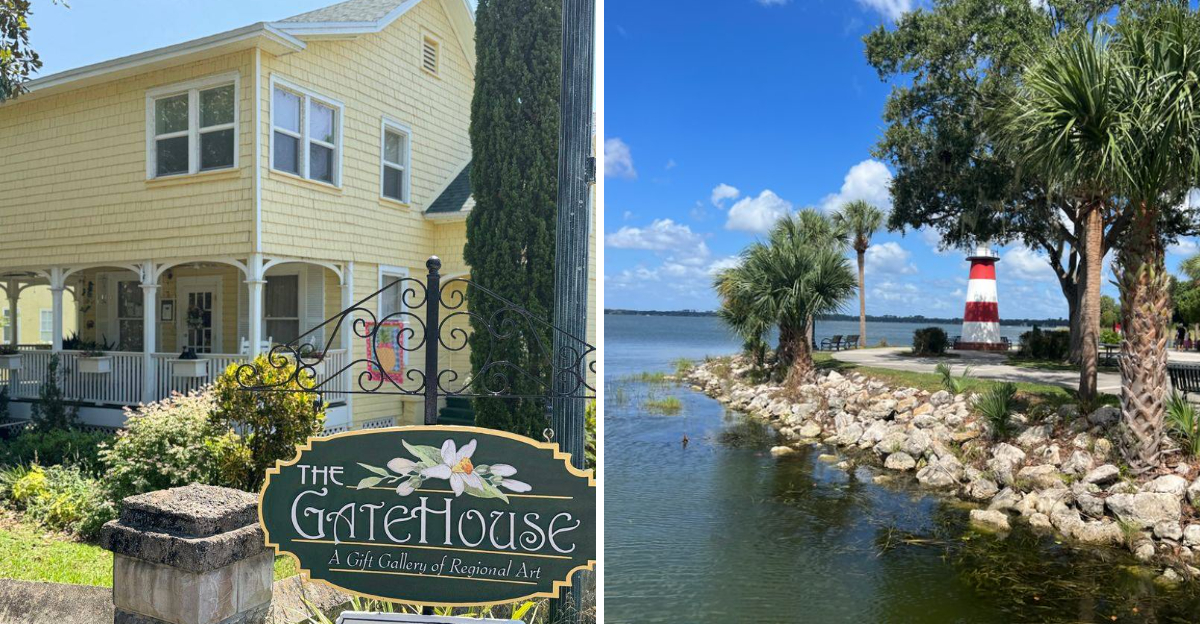
Mount Dora sits on the rolling hills of central Florida like a town that forgot to modernize. The streets remain brick, the buildings hold their original facades, and the pace of life moves at a speed that feels borrowed from another century.
Visitors arrive expecting another Florida tourist destination and instead find a community that has carefully maintained its character through decades of change. It is a place where history is not just preserved in museums but woven into the daily rhythm of life, where antique shops outnumber chain stores, and where the waterfront still serves as the gathering place it has been for generations.
Mount Dora’s Historic Downtown Dates Back To The Late 1800s
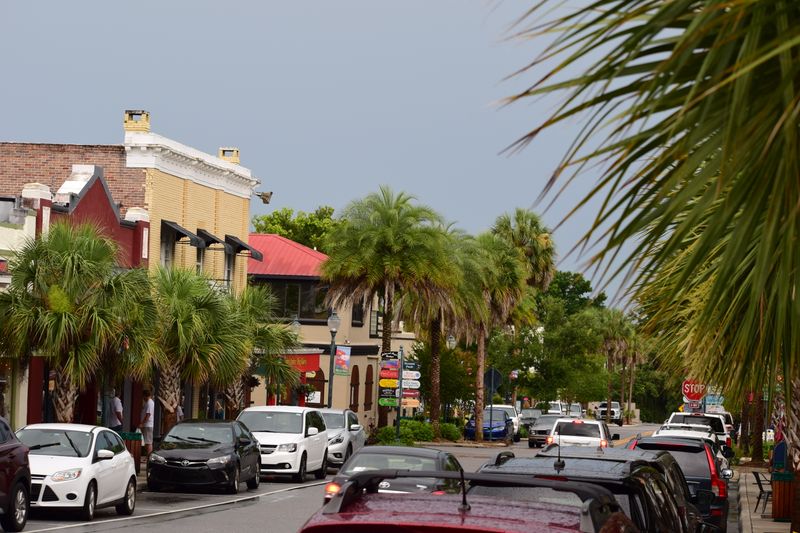
The commercial district that forms the core of Mount Dora began taking shape in the 1880s when settlers recognized the appeal of the high ground overlooking Lake Dora. Buildings from that era still stand along Donnelly Street and Fifth Avenue, their architectural details intact and their original purposes often unchanged.
Walking through the downtown area means passing structures that have housed businesses for more than a century, their foundations laid when the town was little more than a frontier outpost.
The preservation effort here goes beyond simple maintenance. Property owners have committed to keeping the historical integrity of their buildings while adapting them for modern use.
Original wood floors creak underfoot in shops, exposed brick walls show their age with pride, and storefront windows maintain the proportions favored by Victorian-era builders.
Located at the intersection of what is now Highway 441 and Donnelly Street, the downtown district remains the functional heart of Mount Dora. The layout of the streets follows the original plat from the 1880s, and many buildings retain their first-floor retail spaces with residential quarters above, a design that once defined small-town American commerce.
Brick Streets And Vintage Storefronts Shape The Town’s Character
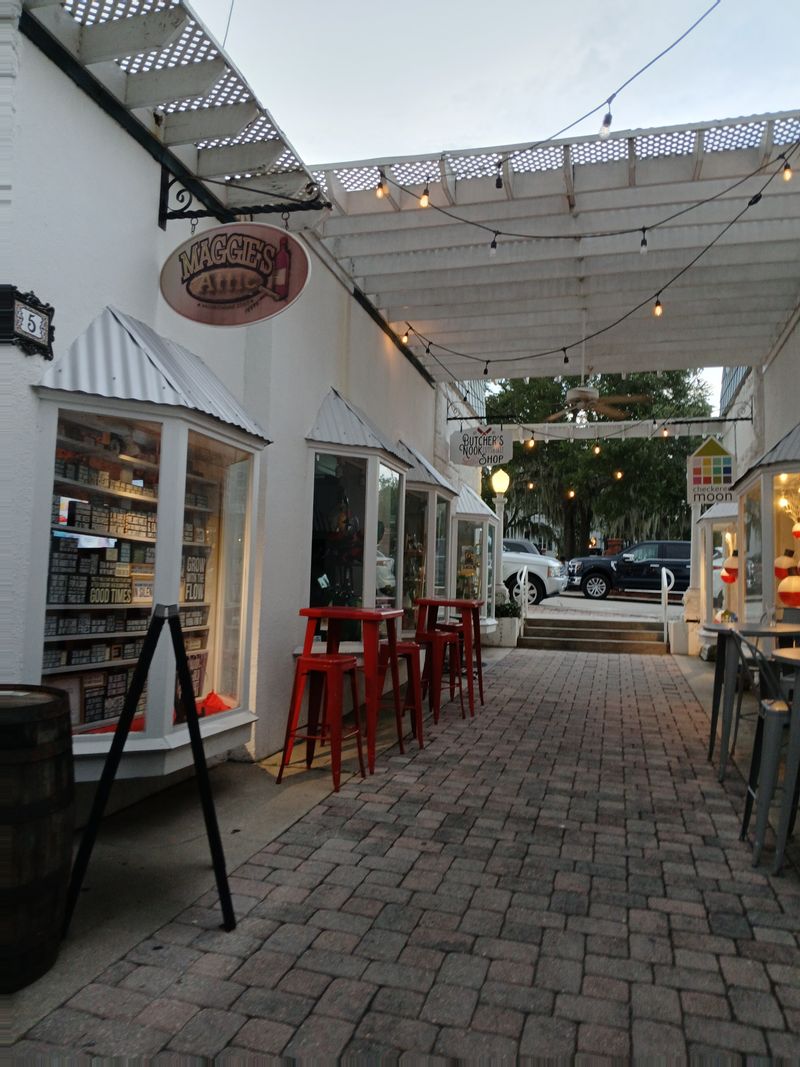
The decision to keep the brick streets rather than pave them over with asphalt speaks to Mount Dora’s commitment to its past. These streets require more maintenance than modern roads, but they provide a tactile connection to the town’s early days.
The bricks were laid by hand in the early 20th century, and their uneven surfaces force drivers to slow down, which inadvertently protects the pedestrian-friendly atmosphere the town is known for.
Storefronts maintain their original configurations with large display windows, recessed entries, and decorative cornices that were standard features when the buildings were constructed. Many retain their original transoms above the doors, allowing natural light into the interiors just as they did a century ago.
The color palettes lean toward muted tones that would have been available in the late 1800s.
Walking these streets feels different from navigating a modern downtown. The brick underfoot, the narrow sidewalks, and the human scale of the buildings create an environment that encourages lingering rather than rushing.
It is urban design from an era that prioritized community interaction over traffic flow, and the effect remains powerful.
Antique Shops Help Preserve Mount Dora’s Old-World Charm
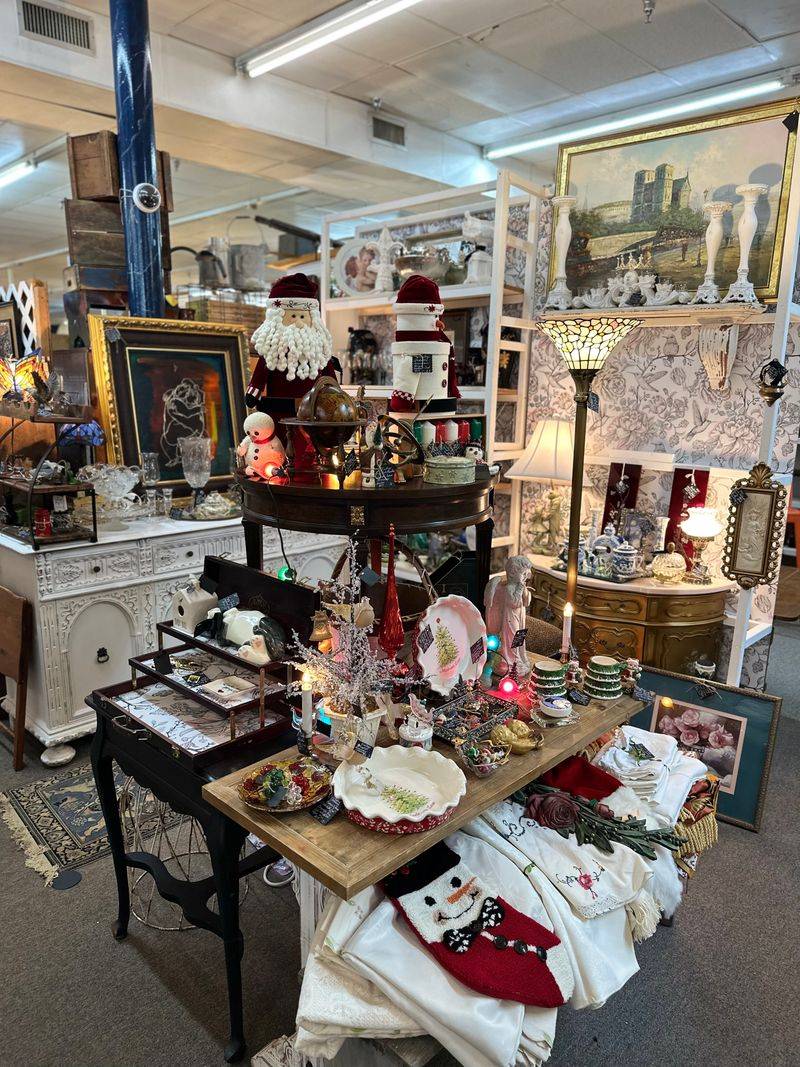
More than 30 antique shops operate within a few blocks of each other in Mount Dora, creating what amounts to an open-air museum of American material culture. These are not themed tourist traps but serious businesses run by dealers who understand the provenance and value of what they sell.
The inventory ranges from Victorian furniture to mid-century modern pieces, from Depression glass to vintage tools, each item representing a specific moment in the past.
The concentration of these shops is no accident. Mount Dora began attracting antique dealers in the 1970s when the downtown real estate was affordable and the historic buildings provided atmospheric settings for displaying old goods.
The dealers recognized that the town itself was an antique, and the synergy between location and merchandise created a destination for collectors throughout Florida and beyond.
Browsing these shops means encountering objects that once filled homes and businesses across America. A child’s school desk from the 1920s sits beside a pharmacy cabinet from the 1950s, each piece carrying the wear patterns of its use.
The shops function as informal archives, preserving not just objects but the aesthetic sensibilities of past generations.
Lake Dora Has Been The Heart Of The Community For Generations
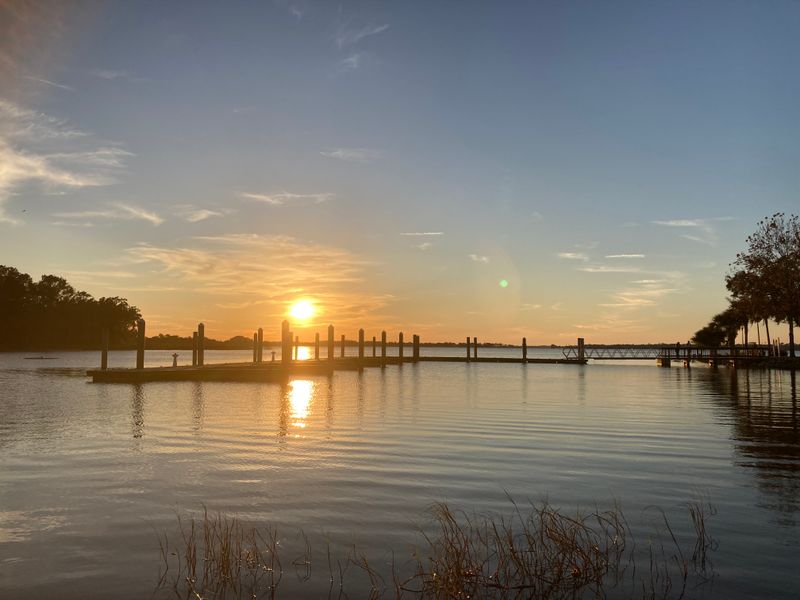
The lake that gave Mount Dora its name remains central to the town’s identity more than 140 years after the first settlers arrived. The waterfront has always been the natural gathering place, first for transportation when steamboats connected the town to other settlements, then for recreation as fishing and boating became popular pastimes.
The shore has been developed carefully, with parks and walking paths that maintain public access rather than privatizing the view.
Generations of Mount Dora residents have learned to fish from the public dock, watched sunsets from the waterfront park, and attended community events on the lawn that slopes down to the water. The lake provides continuity in a changing world, its presence a constant that connects current residents to all who came before.
The cypress trees that line portions of the shore have stood for centuries, witnessing the transformation from wilderness to settlement to established town.
The water itself supports an ecosystem that predates human habitation, with bass, catfish, and bream thriving in depths that reach 18 feet in places. Boaters still launch from the public ramp, and the sight of sailboats on the water remains common on weekend afternoons.
Historic Inns And Bed-And-Breakfasts Reflect The Town’s Heritage
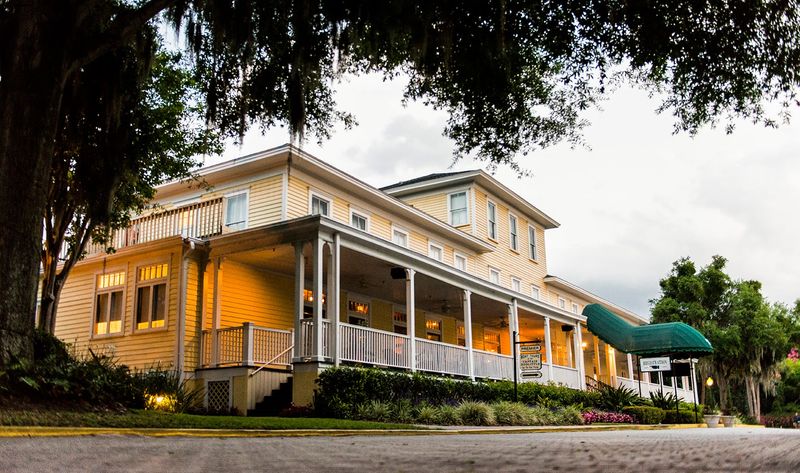
Staying in one of Mount Dora’s historic inns means sleeping in buildings that have housed guests since the late 1800s. The Lakeside Inn, which opened in 1883, claims the distinction of being Florida’s oldest continuously operating hotel.
Its rooms have been updated with modern plumbing and climate control, but the architecture and many original furnishings remain, offering guests an experience that approximates what travelers encountered more than a century ago.
Other properties have been converted from private residences into guest accommodations, their Victorian and Edwardian architectural details preserved through careful restoration. High ceilings, original woodwork, period light fixtures, and antique furniture create environments that feel authentically historical rather than merely decorated in vintage style.
The owners of these properties often serve as informal historians, sharing stories about the buildings and the families who originally occupied them.
These accommodations provide more than lodging. They offer immersion in the town’s past, with morning coffee served on wraparound porches, conversation in parlors furnished with period pieces, and the experience of occupying spaces that have witnessed generations of Mount Dora’s evolution.
The hospitality reflects an older model of travel, when personal service and local knowledge mattered more than standardized amenities.
Annual Festivals Celebrate Mount Dora’s Long-Standing Traditions
Mount Dora has built a calendar of festivals that draw visitors throughout the year while serving as anchors for community identity. The Mount Dora Arts Festival, established in 1975, has grown into one of the top-rated outdoor art shows in the nation, with more than 250 artists displaying work along the downtown streets each February.
The event transforms the town into a temporary gallery, but the setting itself contributes to the experience, with historic buildings providing a backdrop that enhances rather than competes with the art.
Other festivals celebrate specific aspects of local culture and history. The annual Craft Fair in October showcases traditional handwork, from woodturning to quilting, skills that were once common household practices.
The Christmas Walk in December recreates a Victorian-era holiday celebration, with period costumes, carolers, and decorations that reflect 19th-century traditions rather than contemporary commercial Christmas culture.
These festivals are not recent inventions designed to boost tourism. Many have roots extending back decades, evolving from smaller community celebrations into larger events while maintaining their original character.
They function as annual reaffirmations of the town’s values, bringing residents together in shared experiences that reinforce collective identity.
The Mount Dora Lighthouse Adds To The Waterfront’s Historic Appeal
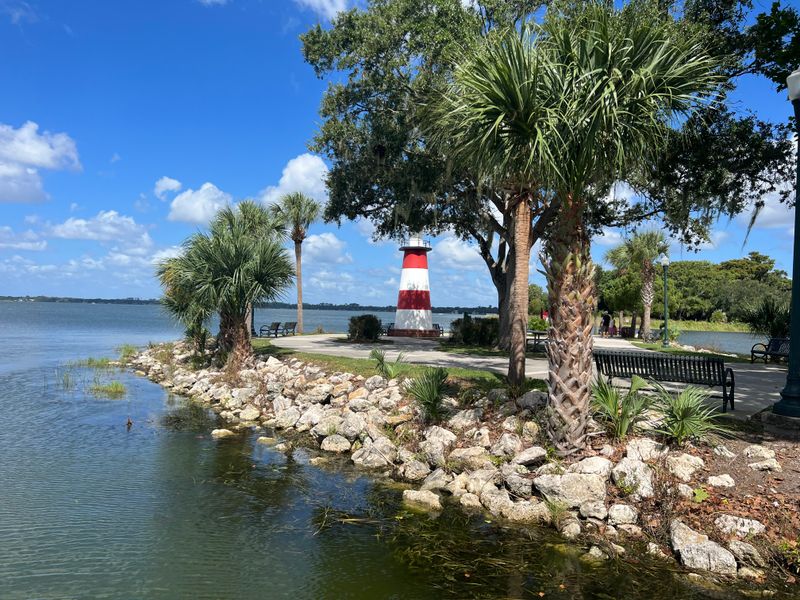
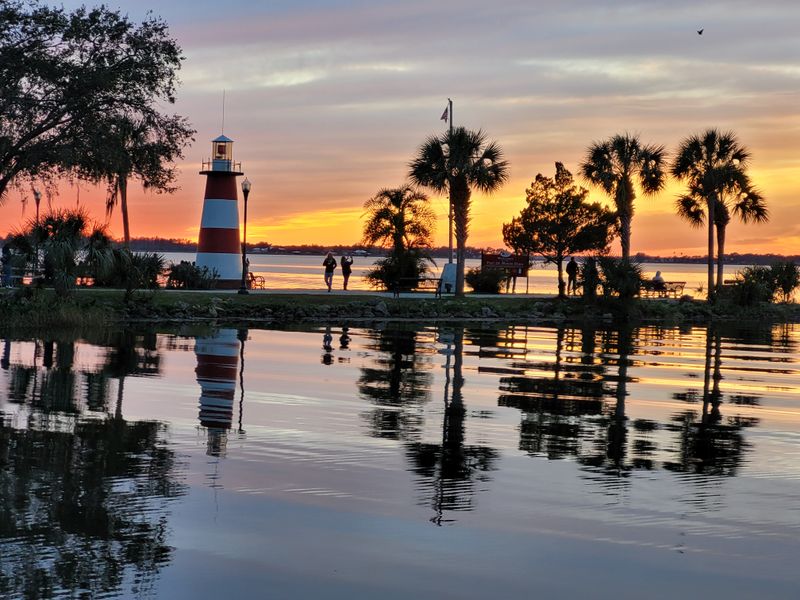
The lighthouse that stands on the shore of Lake Dora is younger than it appears, built in 1988 as a functional navigation aid rather than a historical reconstruction. Yet it fits seamlessly into the town’s historic landscape because its design references the maritime traditions that shaped Florida’s coastal and inland waterway communities.
The structure serves as a reminder that Mount Dora’s history is tied to water-based transportation and trade, when lakes and rivers were highways before roads connected settlements.
Standing 35 feet tall, the lighthouse remains operational, its light guiding boats across the lake after dark. The building also houses the harbormaster’s office and serves as a landmark visible from multiple points around town.
Its presence on the waterfront creates a focal point for the park that surrounds it, and visitors naturally gravitate toward it when exploring the lakefront area.
The lighthouse represents a conscious decision to add to Mount Dora’s historic character rather than simply preserve what already existed. It demonstrates that new construction can enhance rather than diminish a town’s sense of continuity with the past, provided the design respects the established architectural vocabulary and serves a genuine function within the community.
The Town’s Railroad History Still Influences Its Identity
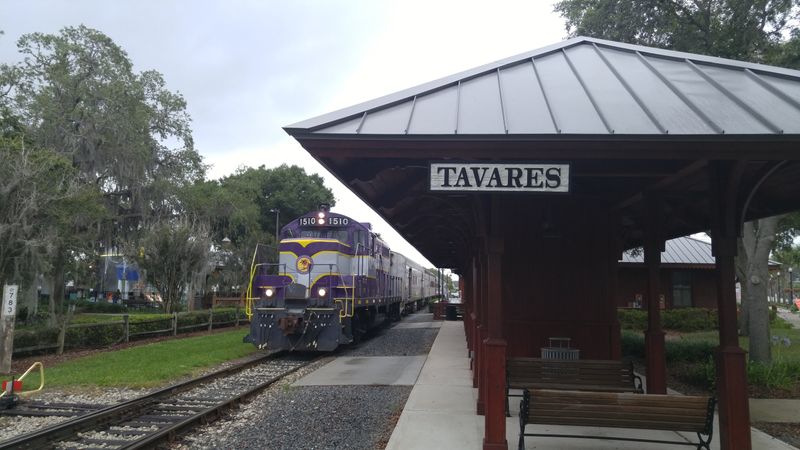
The railroad arrived in Mount Dora in 1887, fundamentally altering the town’s prospects and connecting it to larger markets for the citrus and vegetables grown in the surrounding area. The original depot building still stands, now repurposed but retaining its distinctive architecture and its position at what was once the edge of the commercial district.
The railroad brought not just transportation but also the standardization of time, the regular arrival of newspapers and mail, and the possibility of travel beyond the immediate region.
Although passenger service ended decades ago, the influence of the railroad era remains visible in the town’s layout and economy. The warehouse district that once handled freight has been adapted for other uses, but the buildings retain their industrial character.
The wide streets near the former rail yard were designed to accommodate wagons hauling goods to and from the depot, and they still provide generous space for parking and pedestrian movement.
The town celebrates this heritage through preserved equipment and interpretive displays that explain how the railroad shaped development patterns. Understanding Mount Dora’s past requires recognizing that for several generations, the sound of train whistles and the rhythm of scheduled arrivals and departures structured daily life in ways that are difficult to imagine in the automotive age.
Tree-Lined Streets And Preserved Architecture Create A Timeless Atmosphere
The live oaks that shade Mount Dora’s residential streets were planted generations ago, their spreading canopies now creating tunnels of green that filter sunlight and lower temperatures by several degrees compared to treeless areas. These trees were intentionally placed by early residents who understood that comfort in Florida’s climate required shade, and their survival through hurricanes and development pressures represents a form of living historical preservation.
Walking beneath their branches means experiencing the town as residents did 70 or 80 years ago, when these same trees were younger but already providing relief from the subtropical sun.
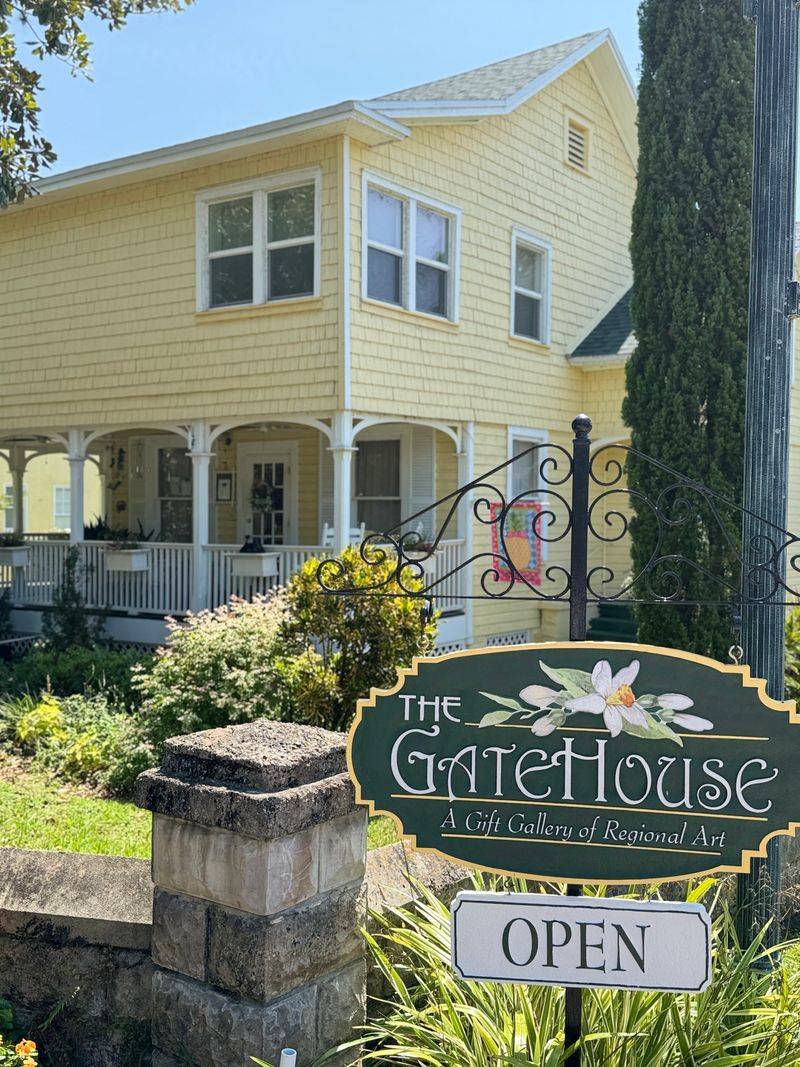
The architecture beneath this canopy spans styles from the late 1800s through the 1940s, with Victorian cottages standing near Craftsman bungalows and Mediterranean Revival homes. The variety reflects different waves of development, but the consistent scale and setbacks create visual harmony.
Front porches remain common features, physical evidence of an era when social life occurred outdoors and neighbors interacted regularly.
This combination of mature landscaping and preserved buildings produces an atmosphere that photographs cannot fully capture. The quality of light, the temperature differential under the trees, and the spatial relationships between structures create an environment that feels fundamentally different from modern suburban developments.
Local Museums Highlight Mount Dora’s Early Settlement Story
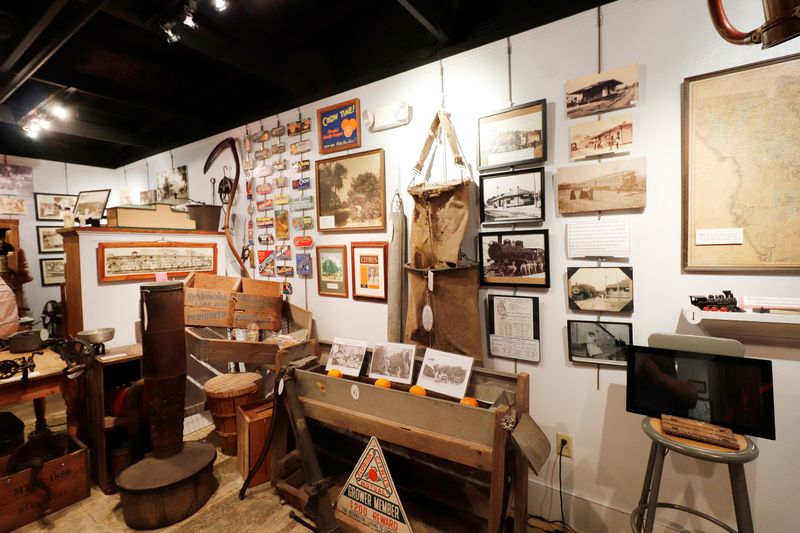
The Mount Dora History Museum occupies the old city jail and fire station, a 1923 building that is itself a historical artifact. The exhibits inside document the town’s development from its founding in the 1870s through the mid-20th century, using photographs, documents, and objects donated by local families.
The collection includes items that would be mundane except for their age and context: ledgers from early businesses, tools used by citrus growers, household goods from pioneer homes, and clothing that shows how residents dressed in different eras.
What makes this museum valuable is its focus on ordinary life rather than exceptional events. The story it tells is one of gradual settlement, economic adaptation, and community building, the unglamorous work of creating a functioning town in a challenging environment.
Visitors learn about the practical problems early residents faced, from securing reliable water sources to establishing schools and churches, and the solutions they devised with limited resources.
The Modernism Museum, located in a separate downtown building, documents a different chapter in Mount Dora’s history, focusing on the mid-20th century design movement and its expression in furniture and decorative arts. Together, these institutions preserve knowledge about the town’s past while making it accessible to residents and visitors who want to understand how Mount Dora became what it is today.