
This 1600s Coastal Fort Sits Quietly Along New York’s Shoreline, And You Should Totally Visit In 2026
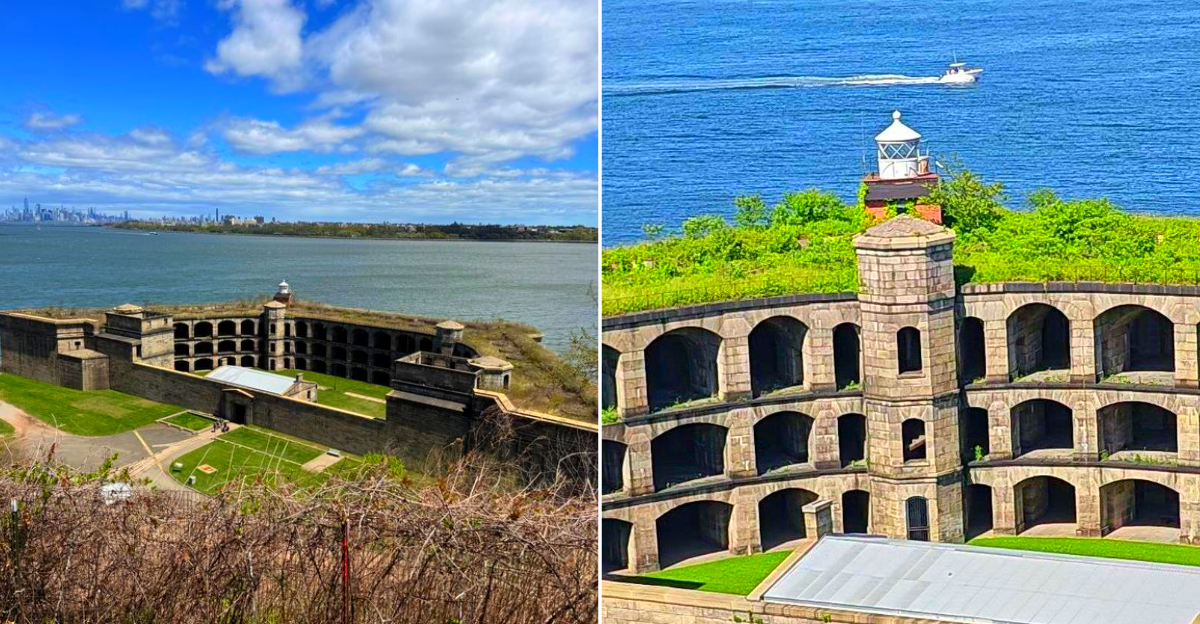
History settles differently when it stands beside open water. Along New York’s shoreline, Fort Wadsworth holds its ground with a calm authority, watching over the Narrows where ships slip between ocean and harbor. The setting feels reflective rather than grand, shaped by salt air, weathered stone, and wide views that place past and present in the same frame.
New York rarely feels this patient, which makes the first impression surprisingly grounding.
The experience unfolds best at a slower pace. Trails wind past old batteries, grassy overlooks invite lingering, and the steady presence of the Verrazzano-Narrows Bridge adds a quiet contrast between centuries. Footsteps echo across paths that once guarded the harbor, while seabreezes carry a rhythm that encourages unhurried wandering.
For a site so close to the pulse of New York, the atmosphere feels remarkably contemplative.
Gateway To The Narrows
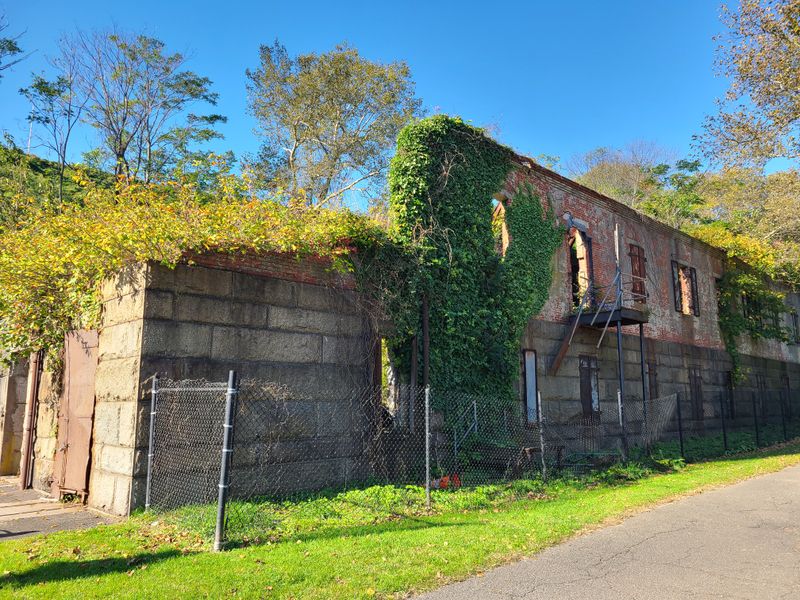
First impressions begin with the sweep of water where New York Harbor tightens into The Narrows, and Fort Wadsworth sits like a patient sentinel. You can stand above the old ramparts and watch the tide slide past pilings while ferries and tugs move with workmanlike focus. The wind carries salt and a faint echo of traffic from the bridge, the two elements meeting without fuss.
Curiosity grows as the terrain folds downward toward the batteries, and your eye lines up with ship channels. Subtle sightlines remind you that this site guarded one of the busiest maritime doors on the Atlantic coast. You read the landscape as geometry and purpose, each angle cut to command a field of fire long surrendered to peacetime motion.
Patience rewards the walker who lingers near the overlook railings and steps carefully along the paths. You sense how the fort’s posture shaped the harbor’s rhythm, even as skyline towers now set the horizon. The Narrows feels narrow only in name here, because the view seems to widen your thoughts.
A Brief March Through Centuries
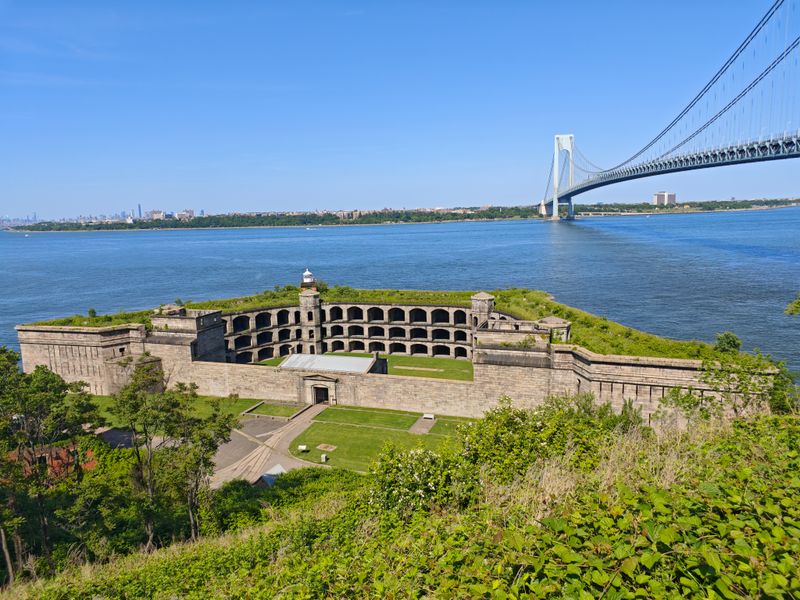
History slips in quietly at Fort Wadsworth, preferring measured facts to spectacle. The site carries roots back to mid 17th century defenses, then gathers momentum through the Revolution, the Civil War, and twentieth century coastal artillery. Each era left a layer, and walking the grounds feels like leafing through a careful archive.
Interpretive panels set the record straight about Flagstaff Fort and Fort Richmond, then the renaming to honor General James Wadsworth in 1865. Those placards do not shout, they simply frame stone, earth, and iron with context. You find clarity in dates, but you feel meaning in the way the place still holds its ground beside the channel.
Patrols once paced these walls and watched for hostile sails, then steel hulls, then the aerial age. Now joggers, photographers, and families keep time across the same slopes. The continuity is modest but steady, like a drumbeat the fort never fully forgot.
Verrazzano’s Constant Companion
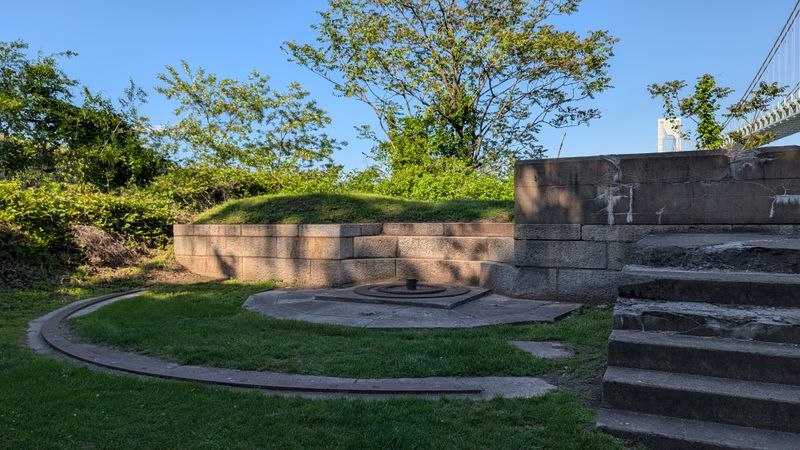
Standing beneath the Verrazzano Narrows Bridge from Fort Wadsworth, you feel the scale without strain. The roadway hum above drifts like distant surf while the fort’s brick and stone keep their measured silence. Together they form an odd partnership, one built for speed and one for endurance.
Angles stack in pleasing layers when you frame casemates against cables. The bridge seems to lift the harbor’s horizon as if the city took a long breath, and the fort answers by grounding the view. You read a century’s difference in materials, yet both structures serve the harbor with unshowy practicality.
Sunsets treat the steel with warm copper and leave the masonry a shade darker, as if saving its stories for quieter hours. The best vantage sits near the lower path that tucks under the span. You do not need many words here, only a patient gaze and comfortable shoes.
Battery Weed’s Reserved Grandeur
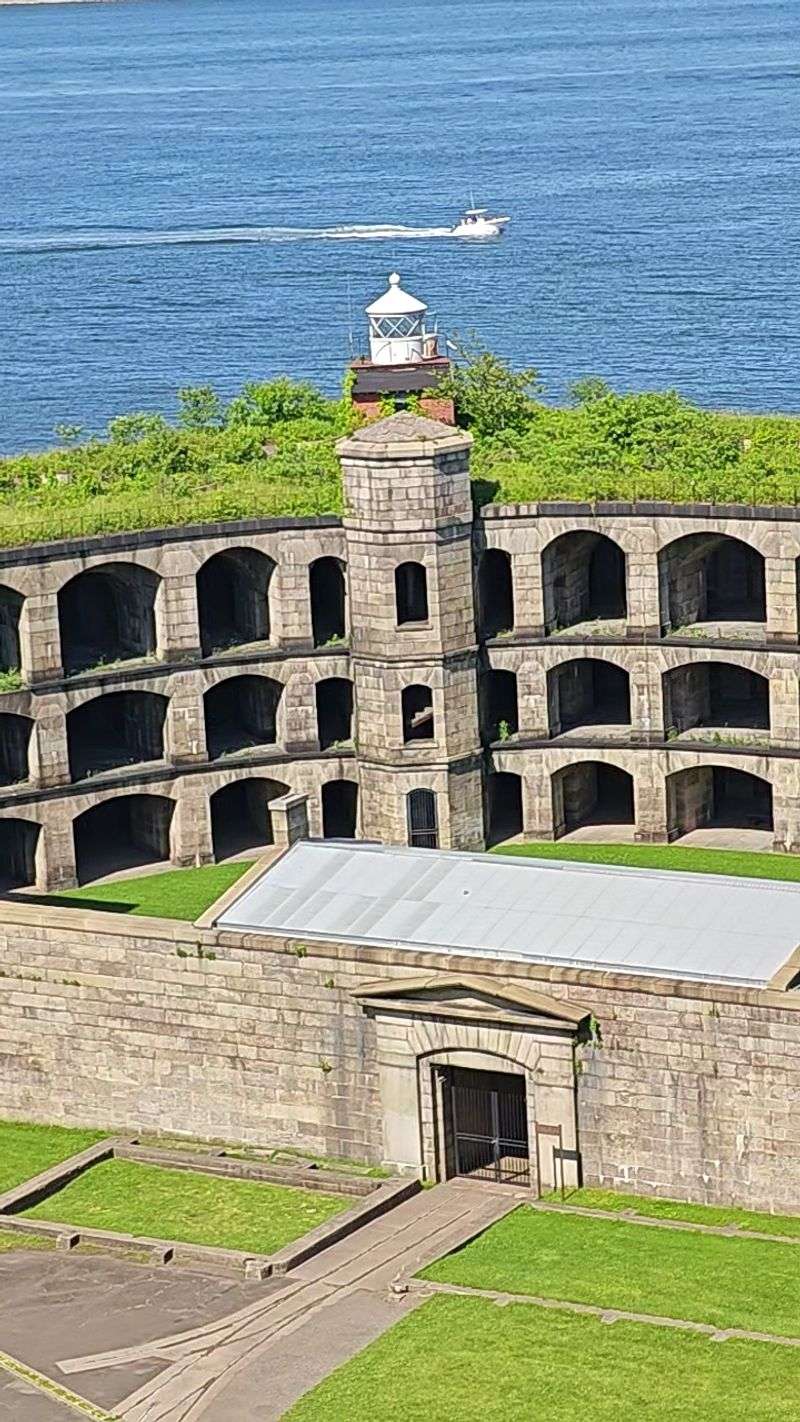
Battery Weed holds court along the water with a dignity that asks you to lower your voice. The granite tiers curve with a sailor’s sense of balance, meeting the harbor like the hull of a grounded ship. Windows and embrasures look patient rather than severe.
Walk the perimeter and you notice seams where stone met regulation and budget. The details reward unhurried study, from iron hardware to careful coursing of blocks. You can picture powder, shot, and routines that relied on precision under pressure.
Guided tours sometimes open select areas, and the contrast between shadowed interiors and bright water outside is striking. Even from the exterior, the structure explains itself to anyone paying attention. It was built to persuade threats to keep moving, and it still does.
Fort Tompkins And The High Ground
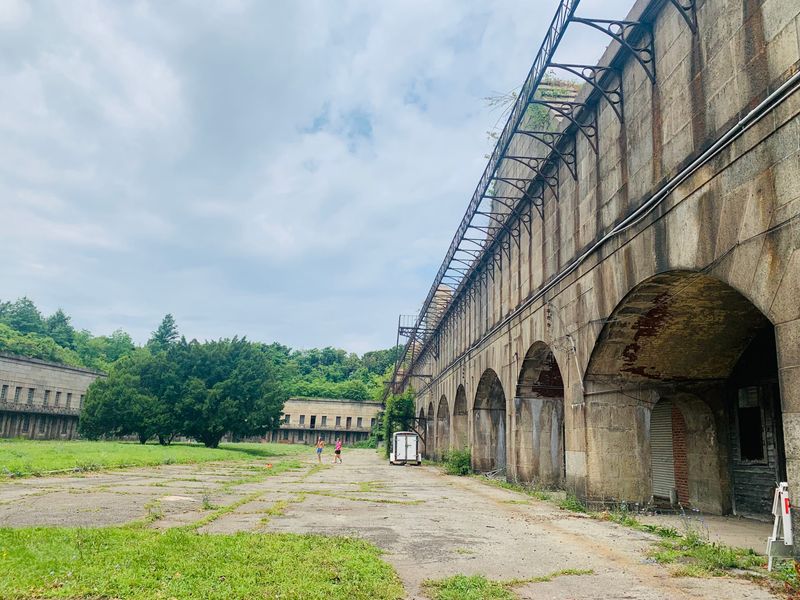
Fort Tompkins occupies the bluff with a steady confidence that suits the site’s long military habit. Grass trims the parapets while brick and stone show the craftsman’s hand. The air up here feels a touch cleaner, as if the hill stores a private breeze.
Climb toward the esplanade and the view opens into a study of channels and city grids. The positioning explains every later decision, from artillery placement to range finding. You can almost feel officers measuring angles with trained patience.
Rangers sometimes lead tours that thread interior corridors, and their stories fill the quiet with careful detail. Between tours, the exterior paths are enough to work up a modest appetite and a respectful mood. The high ground still earns its title without raising its voice.
Walking The Shoreline Paths
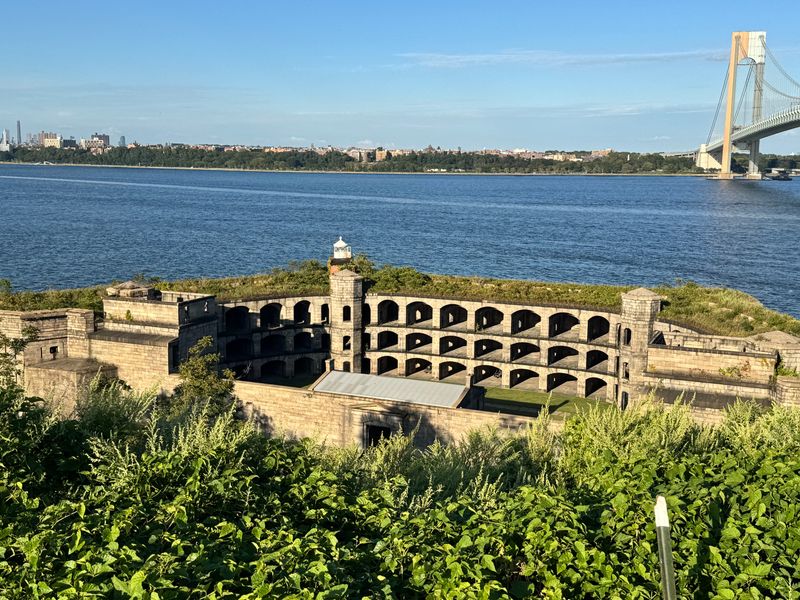
Trails ribbon along the lower shore where you can hear the water tap the rocks. Walkers, runners, and the occasional fisherman keep their own pace and give polite space. The ground rolls just enough to make your legs notice.
Views shift with every bend, setting ferries against the bridge or pulling your eye toward Brooklyn’s shore. Benches appear right when you need them, and the breeze finds its way through the scrub. Even busy days manage to feel unhurried in this stretch.
Morning brings crisp light and sea birds working the tide, while late afternoon smooths the edges of everything. Take a bottle of water and a small snack, because the calm invites lingering. The paths return your effort with clean air and an honest sense of place.
Visitor Basics And Gentle Etiquette
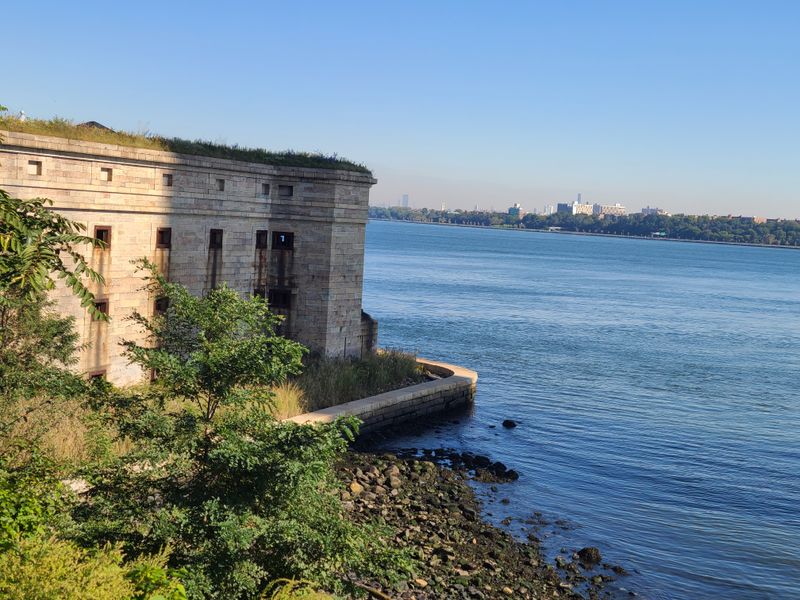
Practicalities shape a good visit, and Fort Wadsworth keeps them straightforward. The entrance off Bay Street leads you into the grounds near 150 S Weed Road, where signage quickly sets your bearings. Parking varies by level, with more space below and steep walks between tiers.
Hours typically run early to evening, and ranger programs are listed through the National Park Service gateway site. Some interiors open only by guided tour, and restricted areas are marked with clear authority. Keep to paths where posted and let fences do their quiet work.
Simple courtesies go far here, from giving photographers room to minding voices near overlooks. Dogs stay leashed, litter leaves with you, and drones remain a question best asked at the visitor desk. A little care helps the fort stay dignified for the next set of footsteps.
Photography Without The Rush
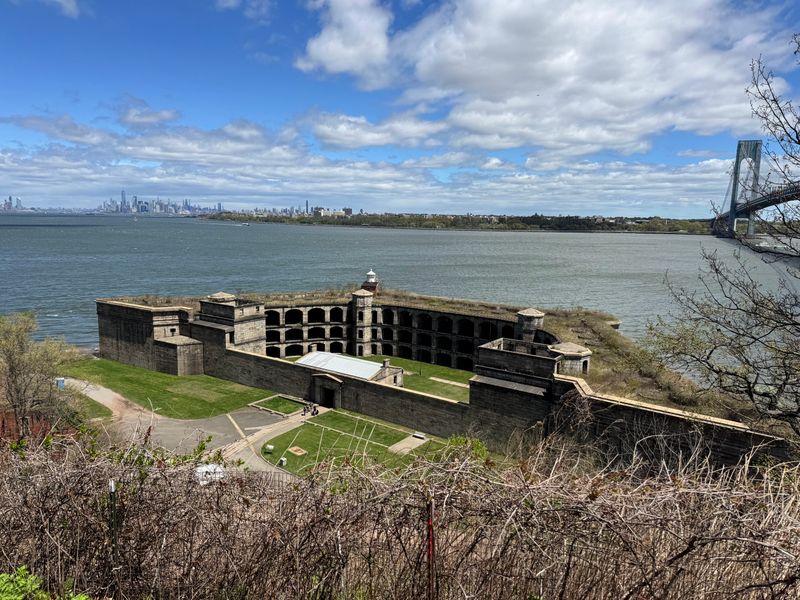
Light moves differently across this harbor, and Fort Wadsworth gives you room to study it. Golden hour warms the bridge and leaves the casemates thoughtful, while blue hour folds the skyline into a measured hush. Wind can be a partner or a nuisance depending on your patience.
Compositions reward a careful eye that balances stone with steel. Foregrounds matter here, whether brick textures or tidy grass along a parapet. Long exposures smooth passing wakes into a quiet band of silver.
Tripods fit comfortably along rails if you mind fellow visitors. Check weather, arrive with extra battery, and keep a microfiber cloth ready for sea spray. The fort does not hurry you, and that may be its finest gift to a camera.
Nature Holding The Edges
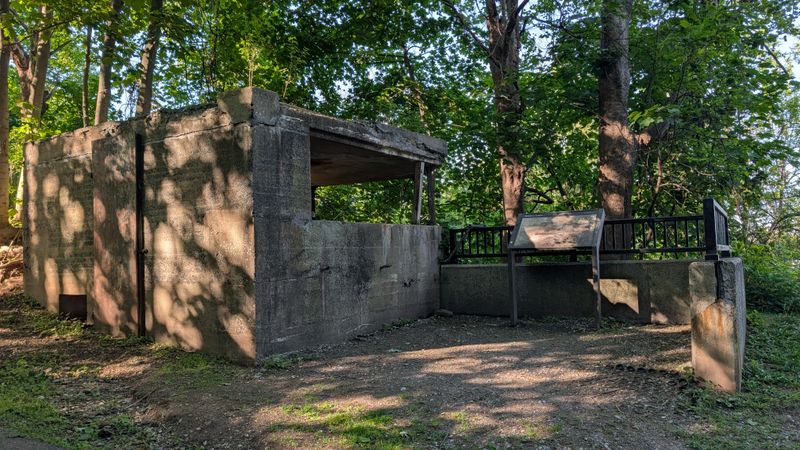
Nature tucks itself along the margins here and steadies the scene. Gulls patrol like locals who know the schedule better than you do, and grasses anchor the soil along the slopes. Trees throw small pockets of shade that show up right when the sun seems boldest.
Wildlife sightings are modest but cheering, a rabbit in the brush or a hawk riding the thermals over the bluff. The harbor adds its own cadence with tides that breathe against stone. You realize the fort’s defense now favors erosion control and habitat.
Respect for plants and birds makes the walk more satisfying than any souvenir. Stay to paths, pocket your wrappers, and leave branches where they stand. The landscape looks better for it, and so does your mood on the way out.
A Measured Pause Above The City
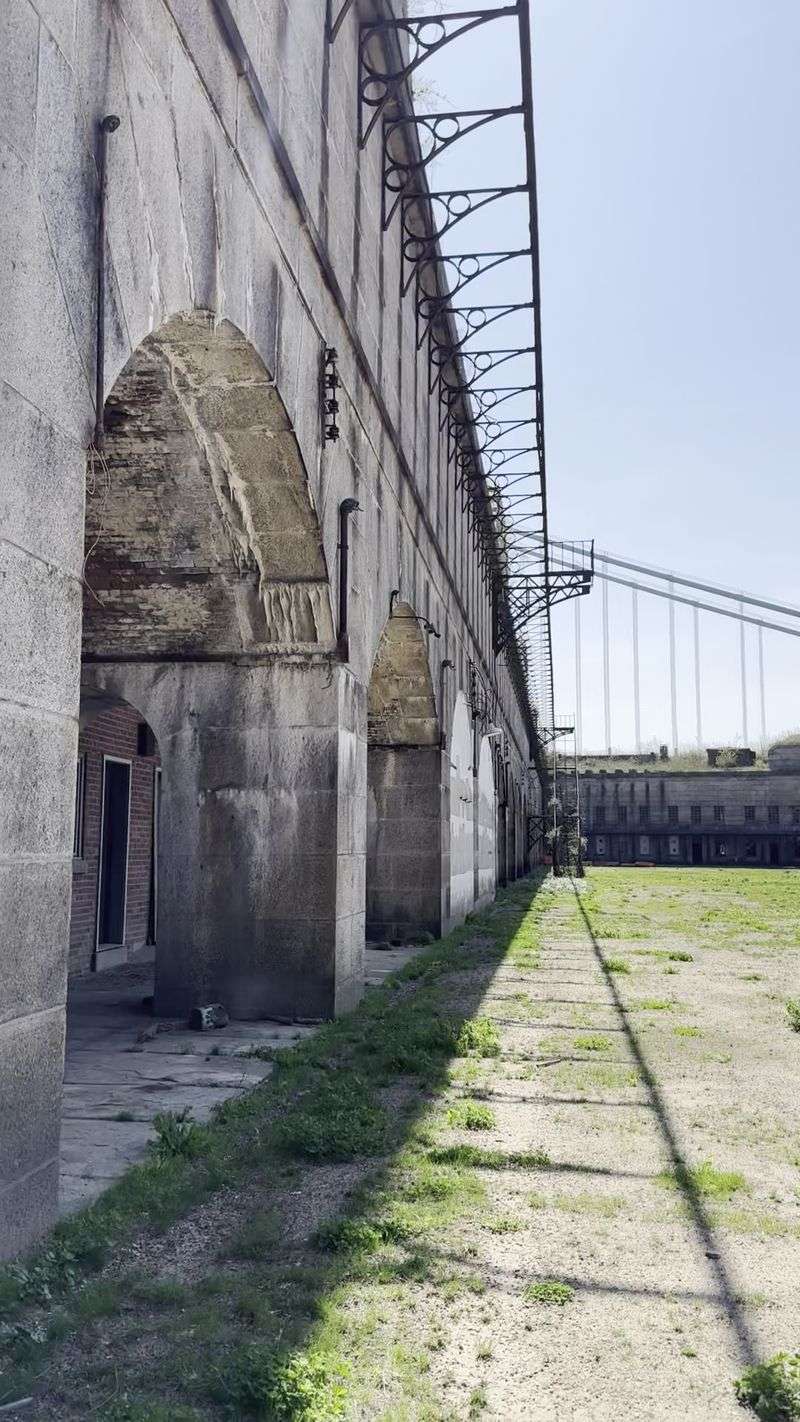
Benches face the harbor as if chosen by someone who tested each angle for quiet. You sit, and the city falls to a respectful murmur beyond the water. Coffee tastes better with a view you did not have to fight for.
Conversation comes softly here, trimmed to fit the space. The bridge offers movement enough to keep your thoughts from drifting too far. Bikers and walkers slide past with nods that feel neighborly rather than hurried.
Time stretches just a little, and the pause helps you sort your plans without strain. A map in your pocket, a phone on airplane mode, and the sense that the fort is on your side. The bench holds the rest of the work.
Connecting Staten Island’s Story
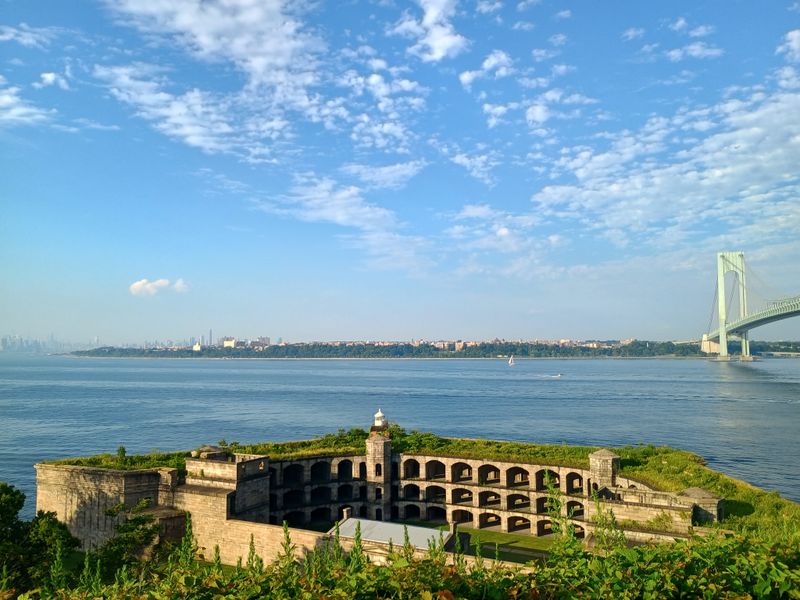
Place the fort within Staten Island and the larger city begins to make more sense. Roads feed down from hillside neighborhoods and find their way to these old defenses. The island’s slower cadence meets the harbor’s commerce without apology.
Interpretive signs pull threads between forts, lighthouses, and shipping lanes. You see why this bluff mattered to generations who guarded the gate. The present inherits a habit of watchfulness that now serves education over arms.
Leaving the grounds, you carry a clearer map in your head and an appetite for something simple nearby. The story holds, not as nostalgia, but as working knowledge of the shoreline. Fort Wadsworth teaches by standing where it must.
Planning A Return Visit
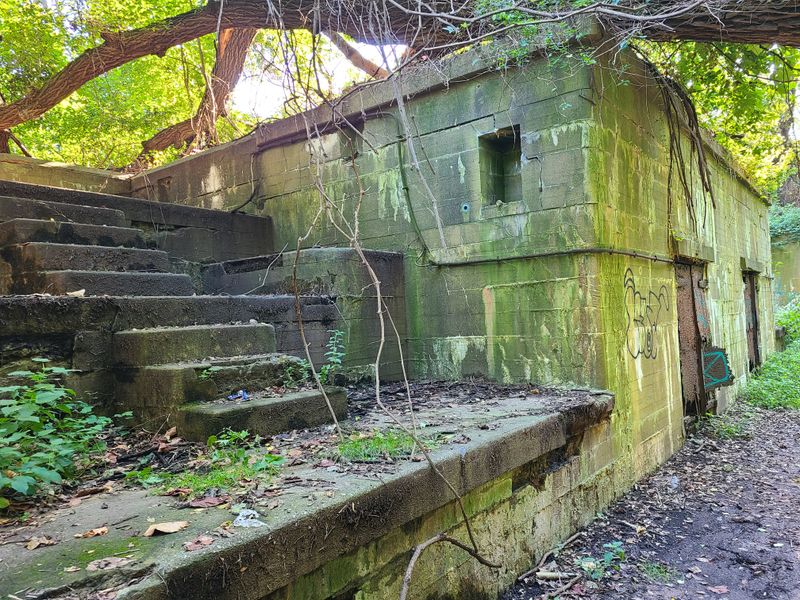
Good places invite second looks, and Fort Wadsworth does so without ceremony. One visit might focus on Battery Weed, another on the upper paths near Fort Tompkins. A third could follow a ranger tour that threads interior corridors you missed before.
Check the National Park Service site for hours, closures, and occasional special programs. Weekday mornings feel especially calm, while late afternoons deliver the softest light. Parking on the lower level pairs well with a shoreline loop that finishes under the bridge.
Leaving through 150 S Weed Road, you notice how the harbor keeps working whether or not you watch. That continuity makes plans easy to keep. The fort will be here when you return, steady as a metronome at the city’s edge.