
This Peaceful Texas Hill Country Town Feels Miles Away From The Crowds
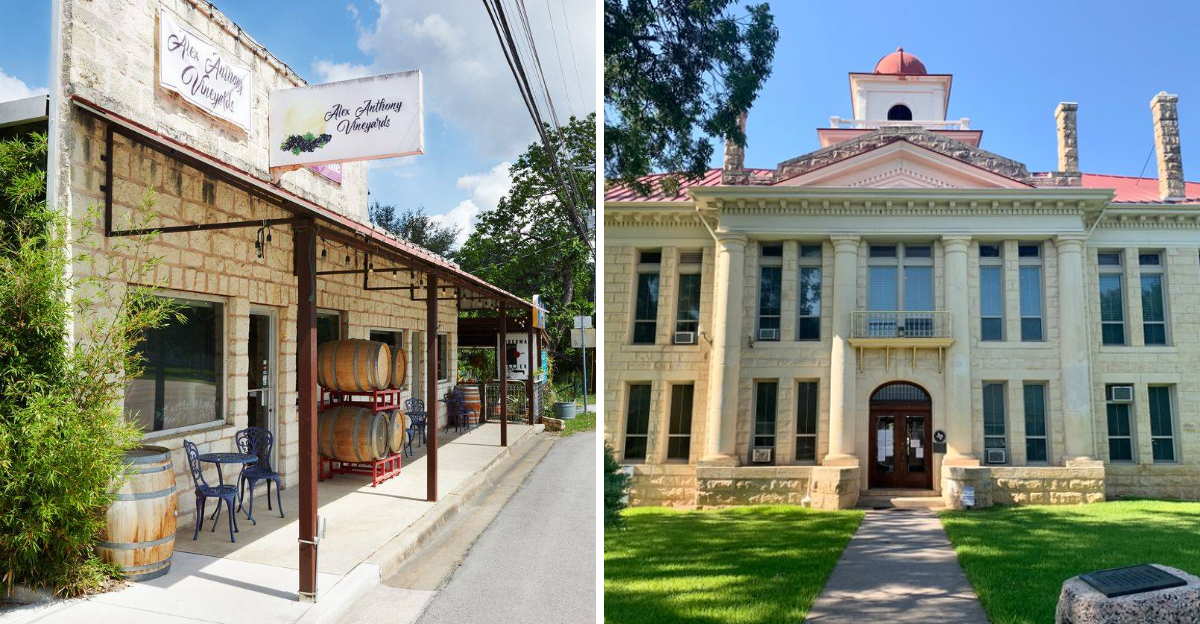
Johnson City offers a rare kind of quiet that feels deliberate rather than accidental. Located in Blanco County with a population hovering around 1,600, this small town moves at a pace that allows visitors to notice details often missed in busier destinations.
The streets are walkable, the historic courthouse stands proudly at the center, and the surrounding Hill Country landscape provides a backdrop that changes with the seasons. For those seeking a destination where presidential history, natural beauty, and unhurried exploration converge, Johnson City presents itself without pretense or fanfare.
Johnson City Sits In The Heart Of The Texas Hill Country
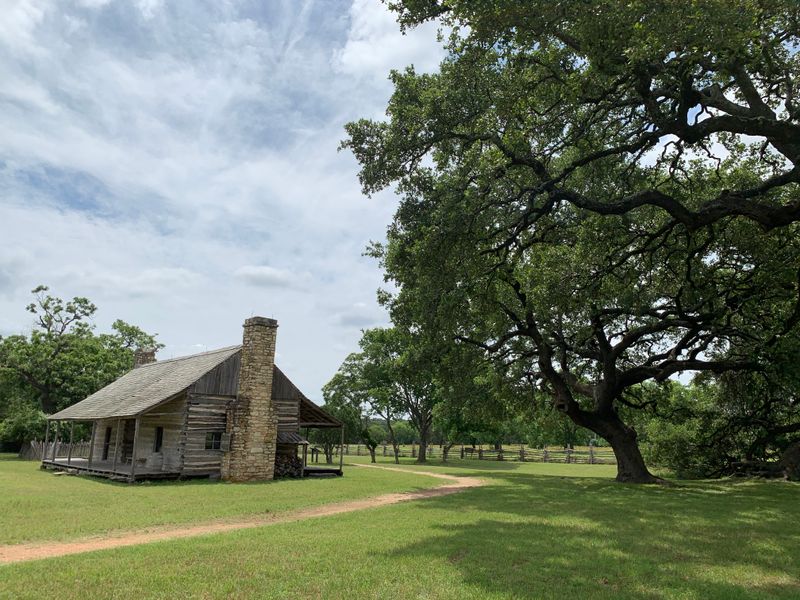
Geography has been kind to Johnson City. The town rests at coordinates that place it squarely within the Texas Hill Country, a region known for its limestone outcroppings, spring-fed rivers, and oak-covered slopes.
Driving into town from any direction, you pass through countryside that rolls gently rather than dramatically, with ranch land stretching between clusters of live oak and cedar.
The elevation here sits around 1,200 feet, high enough to offer cooler evenings during summer months and crisp mornings in winter. This positioning makes the town a natural stopping point for travelers exploring the larger Hill Country circuit.
State Highway 290 runs directly through Johnson City, connecting it to Austin roughly an hour to the east and Fredericksburg about half that distance to the west.
The surrounding landscape shapes daily life in subtle ways. Ranching remains visible in the area, and the terrain supports the kind of outdoor recreation that draws visitors looking for hiking, birdwatching, and photography opportunities without the infrastructure of larger tourist towns.
It’s The Hometown Of President Lyndon B. Johnson
Lyndon Baines Johnson was born in nearby Stonewall in 1908 but spent much of his youth in Johnson City, attending school here and forming connections that would last throughout his political career. His grandfather, Sam Ealy Johnson Sr., helped settle the area in the 1800s, and the family name became woven into the town’s identity long before LBJ reached the presidency.
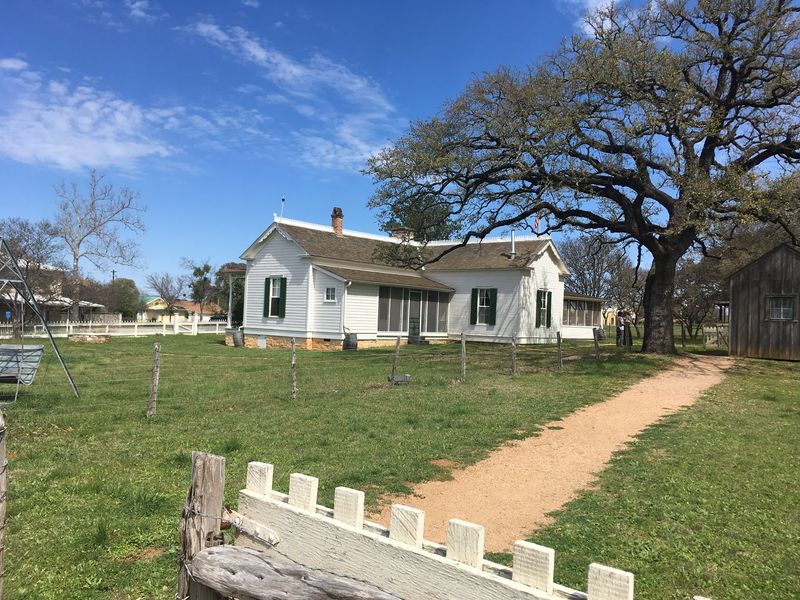
The Johnson family home still stands on Ninth Street, preserved as part of the national historical park. Walking through the modest house offers a window into early 20th-century Texas life, with period furnishings and personal items that belonged to the Johnson family.
The boyhood home reflects the practical construction common to the era, built for function rather than display.
Johnson’s connection to the town extended beyond childhood. Even during his years in Washington, he returned regularly, and after leaving office, he spent considerable time at his nearby ranch.
The town has embraced this heritage without turning itself into a theme park, maintaining a balance between historical preservation and contemporary small-town life.
The Lyndon B. Johnson National Historical Park Draws History Lovers
The National Park Service operates two distinct units in the area, with the Johnson City location centered on the boyhood home and a visitor center that provides context for understanding Johnson’s early years. Rangers lead tours through the house at scheduled times, and the interpretive exhibits trace his path from rural Texas to the White House.
Admission to the park comes without charge, and the staff maintains a depth of knowledge that goes beyond standard tourist information. Questions about Johnson’s legislative achievements, his relationships with other political figures, or the social dynamics of Texas during his youth receive thoughtful responses.
The visitor center also houses exhibits on Lady Bird Johnson’s conservation work and the family’s ranching operations.
Located at 100 Ladybird Lane, the park sits just off the main highway, making it accessible for travelers passing through. Most visitors spend between one and two hours exploring the grounds and exhibits.
The site sees steady traffic from history enthusiasts but rarely feels crowded, even during peak tourist months in spring and fall.
Pedernales Falls State Park Is Just Minutes Away
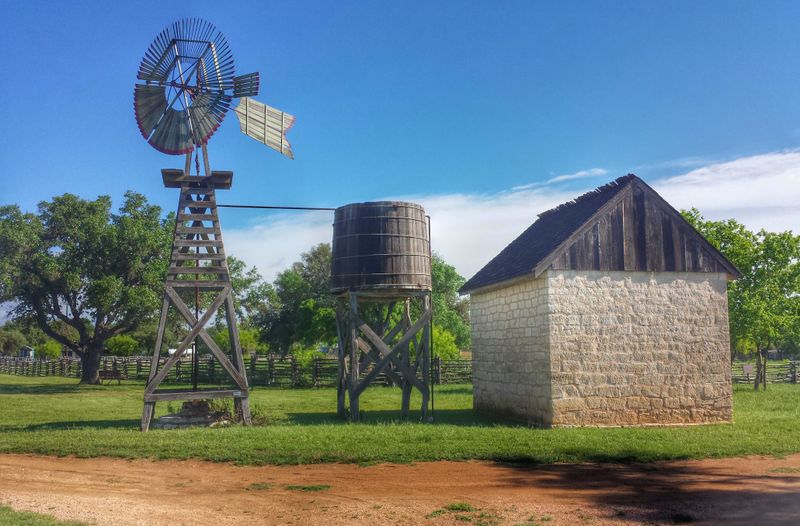
Nine miles east of Johnson City, Pedernales Falls State Park protects a stretch of the Pedernales River where water flows over layered limestone shelves, creating a series of cascades that vary dramatically depending on rainfall. During dry periods, the falls appear as gentle ripples over exposed rock.
After storms, the river transforms into a powerful rush of water that demonstrates why swimming in the falls area remains prohibited.
The park encompasses more than 5,200 acres, with trails ranging from easy riverside walks to more challenging routes that climb into the surrounding hills. The Pedernales Falls Trail covers about three miles round trip and offers the best views of the water features.
Wildlife sightings are common, particularly white-tailed deer in early morning and evening hours.
Camping facilities include sites with water and electric hookups, plus primitive areas for backpackers. Day-use visitors pay a modest entrance fee, and the park rarely reaches capacity except during major holiday weekends.
The landscape here captures the essence of Hill Country terrain without requiring extensive travel from Johnson City.
The Downtown Square Keeps Things Small And Walkable
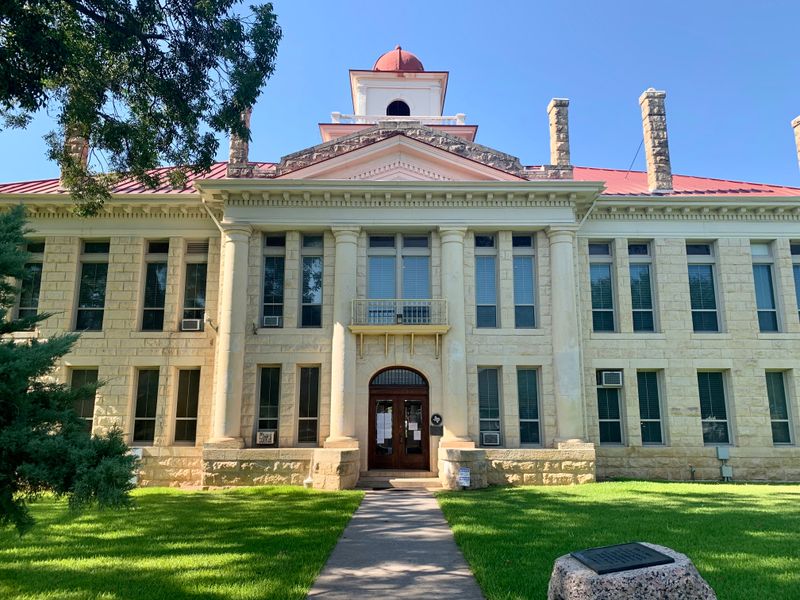
Johnson City’s downtown centers on a traditional square layout with the county courthouse occupying the middle ground. The commercial buildings surrounding the square date primarily from the late 1800s and early 1900s, constructed of limestone and native stone that has weathered to warm earth tones.
Storefronts house a mix of local businesses, including a few antique shops, a bookstore, and cafes that serve both residents and visitors.
Walking the perimeter of the square takes less than ten minutes at a leisurely pace. Parking spaces line the streets, and finding a spot rarely presents difficulty.
The scale of downtown makes it approachable for visitors who want to stretch their legs without navigating complex street grids or dealing with traffic congestion.
Several buildings display historical markers detailing their original purposes and the families who operated businesses there. The architecture reflects practical construction methods of the period, with wide porches providing shade and tall windows allowing for cross-ventilation before air conditioning became standard.
This downtown remains functional rather than preserved as a museum piece, with local residents conducting everyday business alongside tourists exploring the area.
Spring Wildflowers Paint The Roadsides In Colour
Late March through early May brings the wildflower season that draws photographers and nature enthusiasts to the Hill Country. Bluebonnets receive the most attention, their deep blue clusters appearing along roadsides and in pastures throughout the region.
Indian paintbrush adds splashes of red and orange, while various species of phlox, coreopsis, and evening primrose contribute additional colors to the display.
The intensity and timing of wildflower blooms depend entirely on winter rainfall patterns. Wet winters produce spectacular shows, while drought years result in more modest displays.
Local residents and businesses track bloom progress, and the Johnson City area typically sees peak color slightly earlier than locations further north in the Hill Country.
Ranch Road 2766 between Johnson City and Stonewall offers particularly good wildflower viewing, with pull-offs that allow safe stopping for photographs. The roadsides near Pedernales Falls State Park also produce reliable displays.
Visitors should remember that picking bluebonnets on private property requires permission, though photographing them from public right-of-ways is welcomed. The flowers typically last three to four weeks before summer heat ends the show.
The Blanco County Courthouse Anchors The Historic Centre
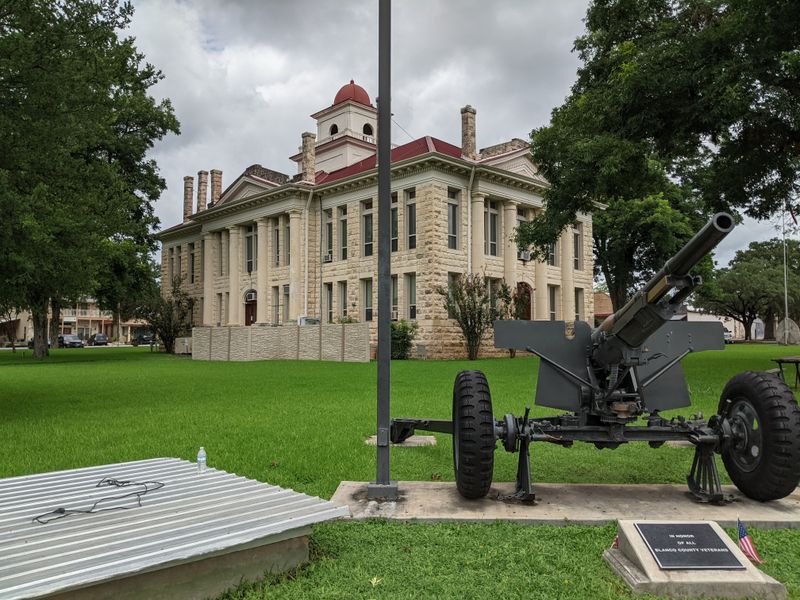
Built in 1916, the Blanco County Courthouse stands as the third structure to serve this function in Johnson City. The building displays Classical Revival architecture executed in limestone, with a central dome and clock tower that rises above the surrounding commercial buildings.
The courthouse underwent restoration work in the 1990s that preserved its original character while updating systems for modern use.
The building continues to house county offices and courtrooms, making it a working government facility rather than purely a historical attraction. Visitors can enter during business hours to view the interior spaces, which feature terrazzo floors, wooden banisters, and period light fixtures.
The second-floor district courtroom maintains much of its original appearance, with wooden benches and a pressed tin ceiling.
The courthouse grounds include mature pecan trees that provide shade across the lawn, and several historical markers detail the building’s construction and the county’s development. The structure serves as both a functional center for county government and a visual anchor for downtown Johnson City, visible from multiple approach roads into town.
Photography enthusiasts find the building particularly photogenic during golden hour when warm light illuminates the limestone facade.
Art Galleries And Boutiques Add Quiet Character
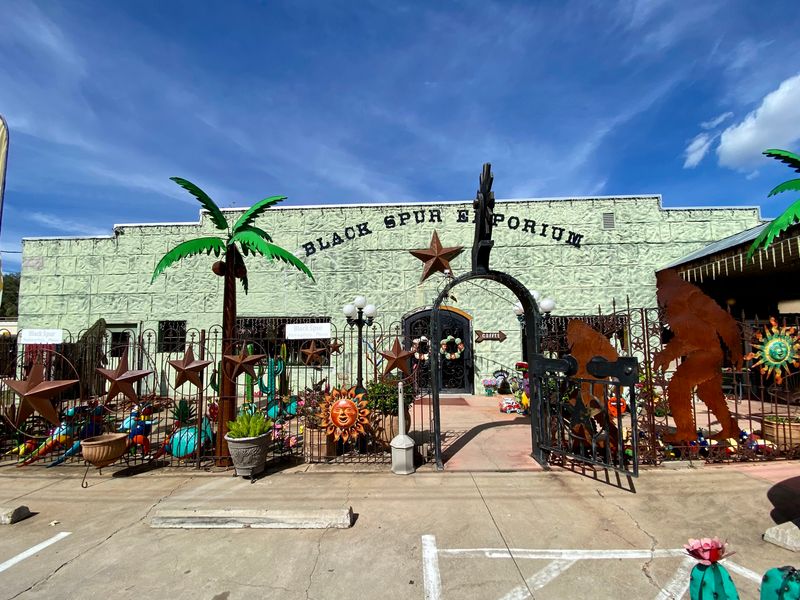
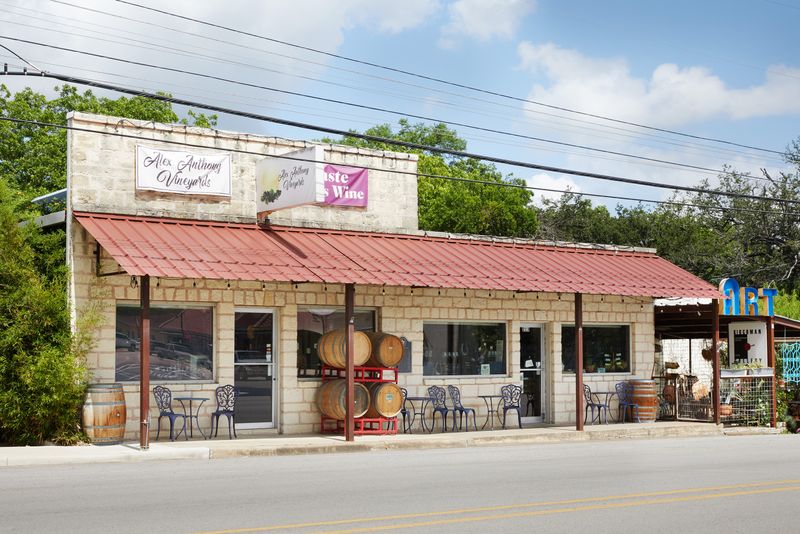
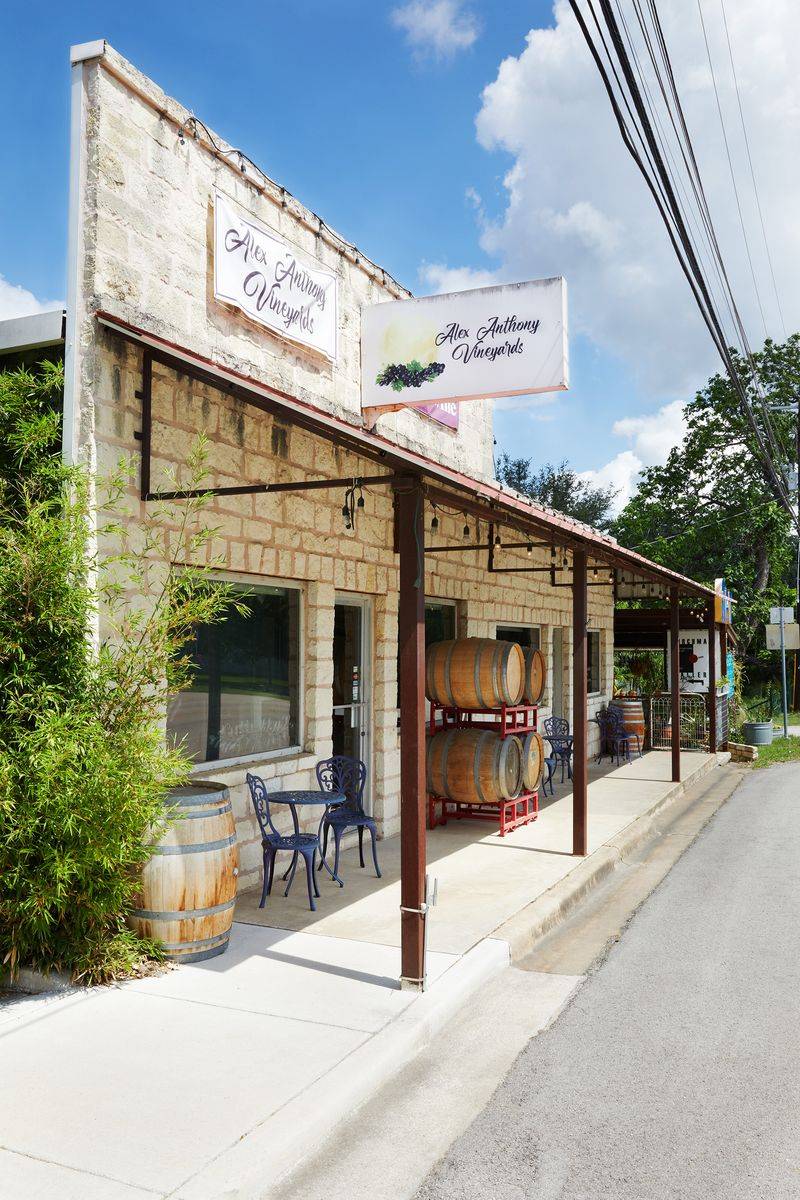
Several small galleries and specialty shops operate in downtown Johnson City, offering locally made art, handcrafted items, and vintage finds. These businesses maintain irregular hours compared to chain retail, often opening Thursday through Sunday or by appointment.
The inventory reflects individual owner tastes rather than market research, resulting in collections that feel curated rather than calculated.
One gallery focuses on Hill Country landscapes painted by regional artists, while another specializes in handmade jewelry using Texas stones and metals. A boutique near the courthouse carries clothing and home goods selected for quality rather than trend-chasing.
These shops provide alternatives to the mass-produced souvenirs found in larger tourist towns.
Owners typically work their own shops, allowing for conversations about the origins of specific pieces or recommendations for other local businesses worth visiting. The shopping experience here rewards browsers willing to spend time examining individual items rather than rushing through displays.
Prices reflect the handmade nature of many goods but remain reasonable compared to similar items in more heavily touristed areas. These businesses contribute to downtown character without overwhelming the town’s essential small-scale atmosphere.