
This Florida Park Lets You Walk High Above The Trees On A Stunning Canopy Trail
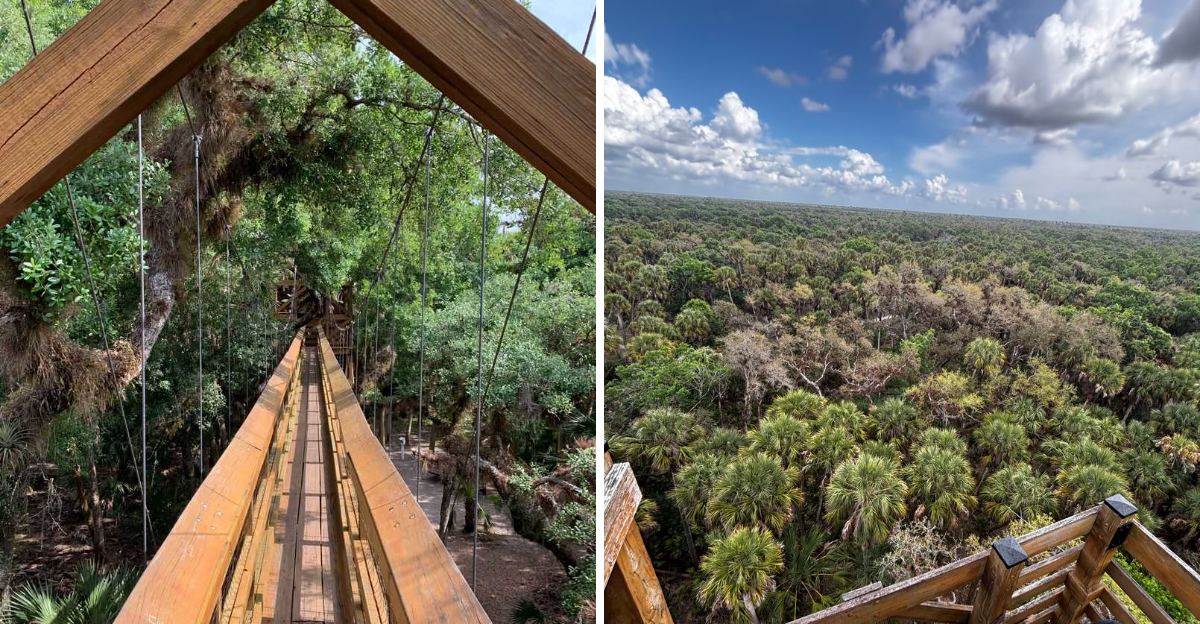
Most people explore Florida’s wild landscapes from the ground, here, you rise above them. At Myakka River State Park in Sarasota, a suspended canopy walkway lifts visitors high into the treetops, revealing sweeping views you simply don’t get at eye level.
It’s a rare chance to see the forest from above, with birds, branches and open sky all around you. Best of all, the experience blends a touch of adventure with easy accessibility, making treetop exploration possible for families, solo travellers and nature lovers of every age.
Home To North America’s First Public Canopy Walkway
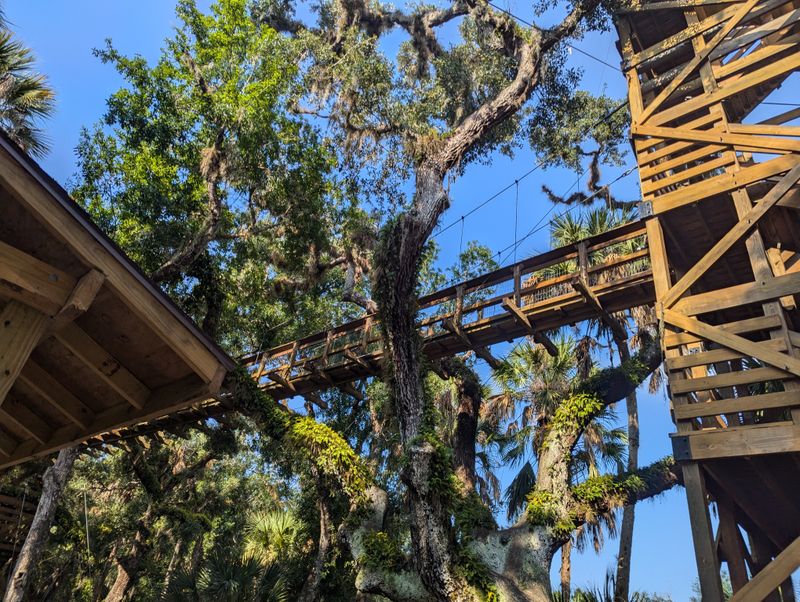
Myakka River State Park broke new ground when it opened North America’s first public canopy walkway in 2000. Before this, only researchers and scientists had regular access to treetop environments, studying ecosystems from elevated platforms.
The park decided to share that perspective with everyday visitors, creating a structure that would be both safe and thrilling.
The walkway represented a shift in how state parks approached visitor experiences. Instead of keeping people on ground level, park planners recognized the value of vertical exploration.
They wanted guests to understand forest layers, observe wildlife behavior from above, and gain appreciation for canopy ecosystems.
Located at 13208 State Road 72 in Sarasota, the park has maintained this pioneering attraction for over two decades. The canopy walk remains a centerpiece of the visitor experience, drawing curious travelers from across the country who want to see what walking among the treetops feels like without technical climbing gear or research credentials.
The Suspended Walkway Sits About 25 Feet Above The Forest Floor
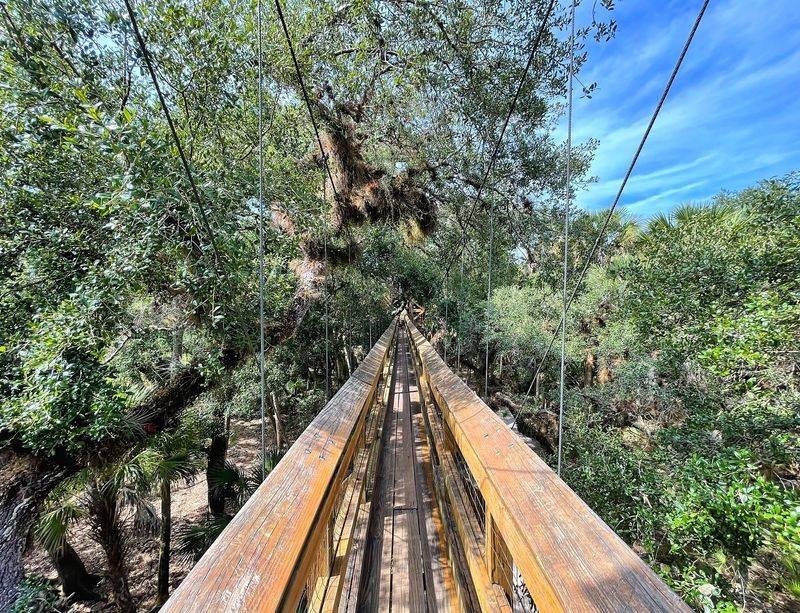
Standing on the canopy walkway puts you roughly two and a half stories above the forest floor. That height changes everything about how you perceive the landscape below.
What looked like dense undergrowth from the ground becomes a layered tapestry of ferns, palmettos, and fallen logs creating habitat for countless creatures.
The elevation also shifts your relationship with the trees themselves. Trunks that seemed massive from below now meet you at eye level or slightly above.
You can examine bark textures, spot epiphytes growing on branches, and watch birds moving through the mid-story without craning your neck.
The walkway sways gently when people move across it, a subtle reminder that you’re suspended in space. Some visitors find this movement exhilarating, while others grip the railings a bit tighter.
Either reaction is normal. The structure is engineered for safety, with weight limits and regular inspections ensuring stability even when multiple people cross simultaneously.
A 74-Foot Observation Tower Offers Sweeping Treetop Views
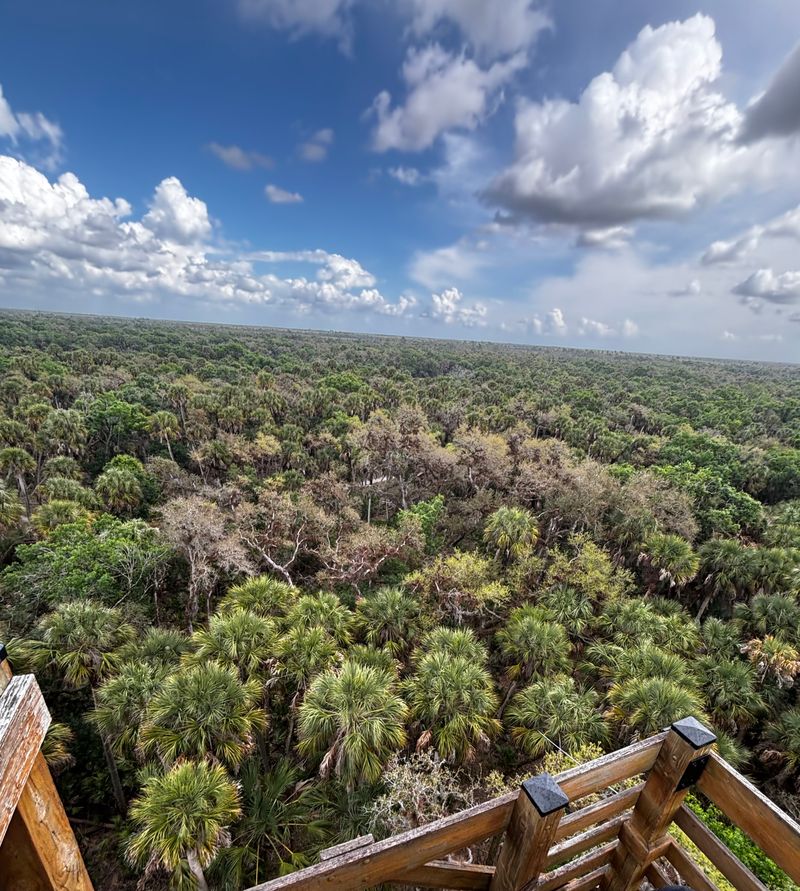
The observation tower stands as the vertical exclamation point of the canopy walk experience. Climbing its stairs takes you far above the suspended bridge, reaching a height that transforms your view from intimate forest detail to sweeping landscape panorama.
On clear days, you can see for miles across the park’s diverse ecosystems.
Reaching the top platform requires climbing several flights of stairs, but the effort pays off immediately. From this vantage point, you can distinguish the different vegetation zones that make Myakka special.
Prairie grasslands spread in one direction, while dense hammocks cluster in another. The Myakka River winds through the landscape like a dark ribbon.
Early morning visits often reward climbers with exceptional light and active wildlife below. Birds that seemed distant from the canopy walk now appear at eye level as they circle and soar.
Some visitors report seeing deer, wild turkeys, and even alligators from this height, their movements visible through gaps in the canopy.
The Canopy Walk Is Part Of The William S Boylston Nature Trail
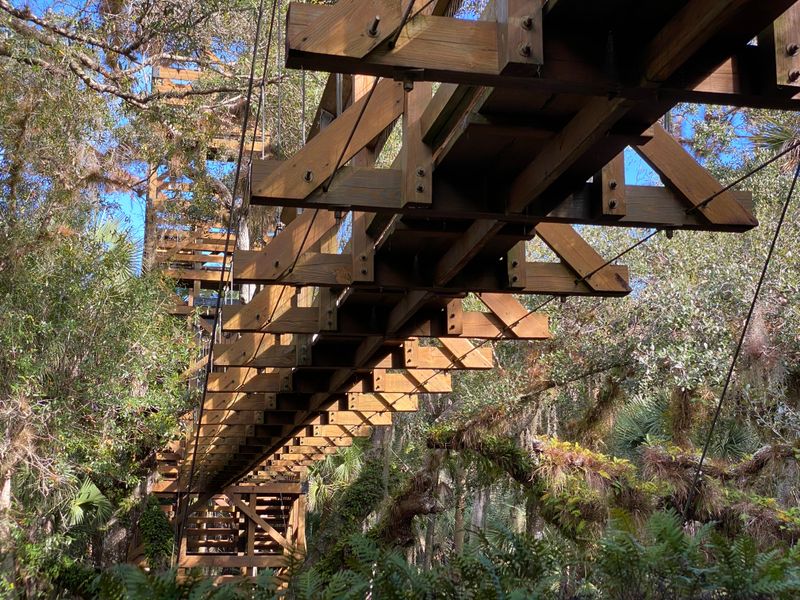
The canopy walkway doesn’t exist in isolation but forms part of a longer nature trail named for William S. Boylston, a conservationist who helped preserve this land.
The trail offers context for what you see from above, taking you through ground-level habitats before and after your elevated journey. This combination creates a complete sensory experience of the forest environment.
Walking the full trail means encountering educational signage that explains plant species, animal behavior, and ecosystem relationships. These interpretive elements help visitors understand what they’re observing rather than simply passing through.
You learn to identify oak species, recognize palm varieties, and spot signs of wildlife activity along the path.
The trail design encourages a slower pace than many park paths. Benches appear at intervals, inviting rest and observation.
Side paths branch off occasionally, leading to particularly interesting trees or viewpoints. This thoughtful layout reflects a philosophy that nature education happens best when people have time to pause, look closely, and ask questions about their surroundings.
The Entire Trail Loop Is Just Under One Mile And Easy To Navigate
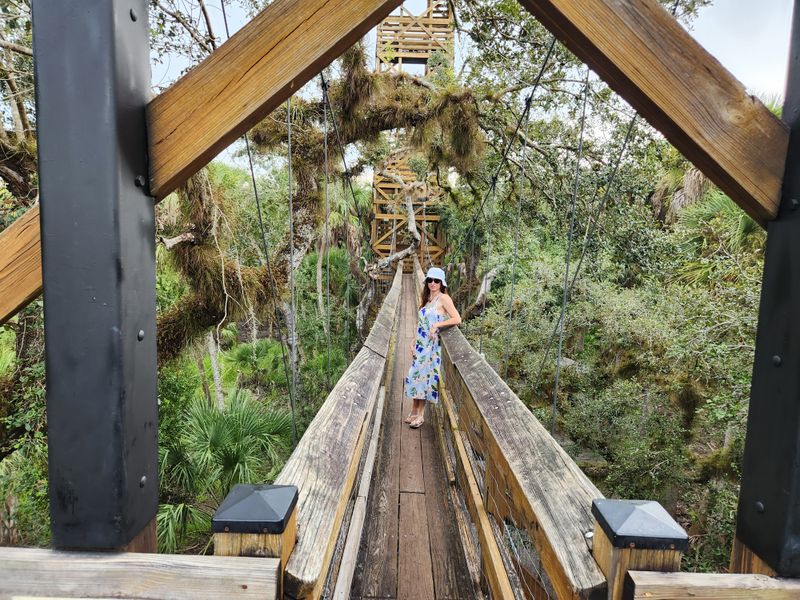
The trail measures approximately nine-tenths of a mile, making it manageable for most fitness levels without feeling rushed or too brief. You can complete the loop in thirty to forty minutes at a leisurely pace, though many visitors take longer to stop for photos and wildlife observation.
The relatively short distance means families with young children can tackle it without complaint.
The path surface varies between packed earth, boardwalk sections, and the suspended bridge itself. All segments are well-maintained, with clear markings at any junctions or decision points.
You won’t need navigation skills or trail maps to stay on course, though having a park map helps you understand where you are within the larger landscape.
Accessibility considerations were part of the design, though the tower stairs and some trail sections present challenges for visitors with mobility limitations. The canopy bridge itself has railings on both sides and a stable walking surface.
Park staff can provide specific information about which portions work best for different physical abilities and mobility devices.
You’ll Walk Through Oak Hammocks And Palm Forests
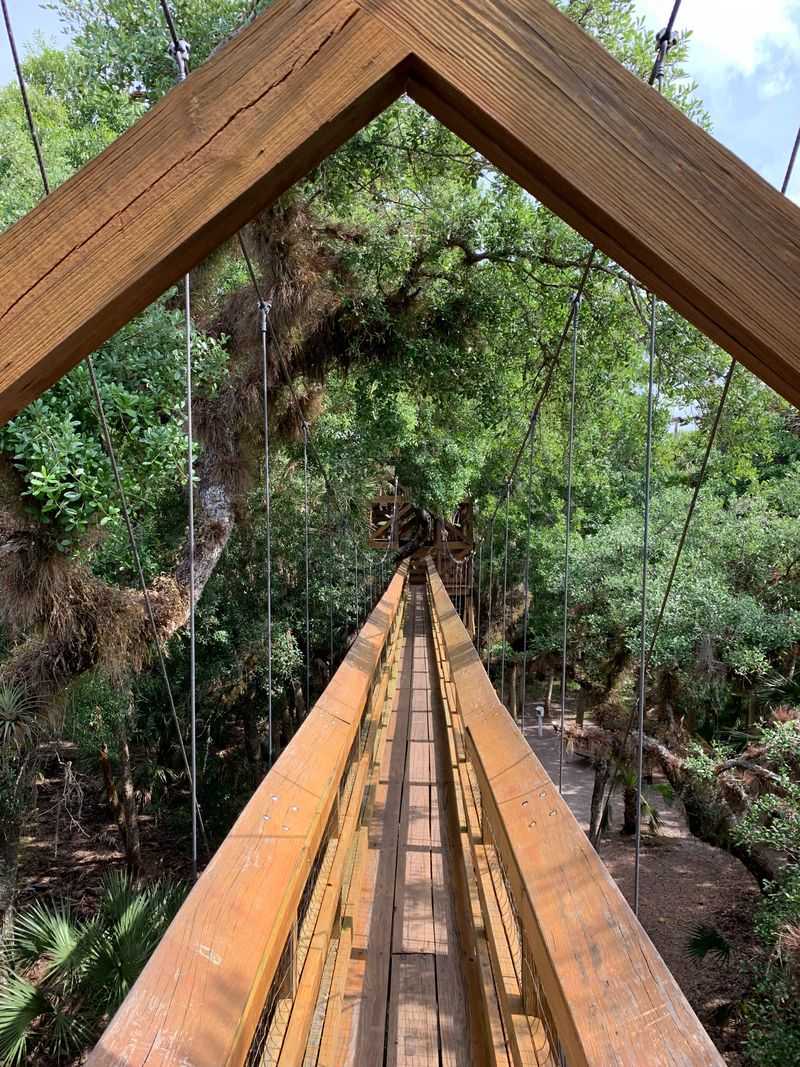
The trail winds through two distinct forest types that showcase Florida’s ecological diversity. Oak hammocks create dense, shaded environments where live oaks spread their branches wide, often draped with Spanish moss that sways in the breeze.
These hammocks stay relatively cool even on hot days, offering respite from the intense Florida sun.
Palm forests present a different character entirely. Cabbage palms rise straight and tall, their fronds rustling overhead with a distinctive sound unlike deciduous tree leaves.
Saw palmettos cluster beneath the taller palms, their fan-shaped leaves creating patterns of light and shadow on the forest floor. This layered structure provides habitat for different species than the oak zones.
Moving between these forest types happens gradually along the trail. You notice the shift in temperature, light quality, and even smell as one ecosystem transitions into another.
These changes illustrate how varied environments can exist within a relatively small geographic area, each supporting its own community of plants and animals adapted to specific conditions.
Wildlife Sightings Are Common Along The Trail
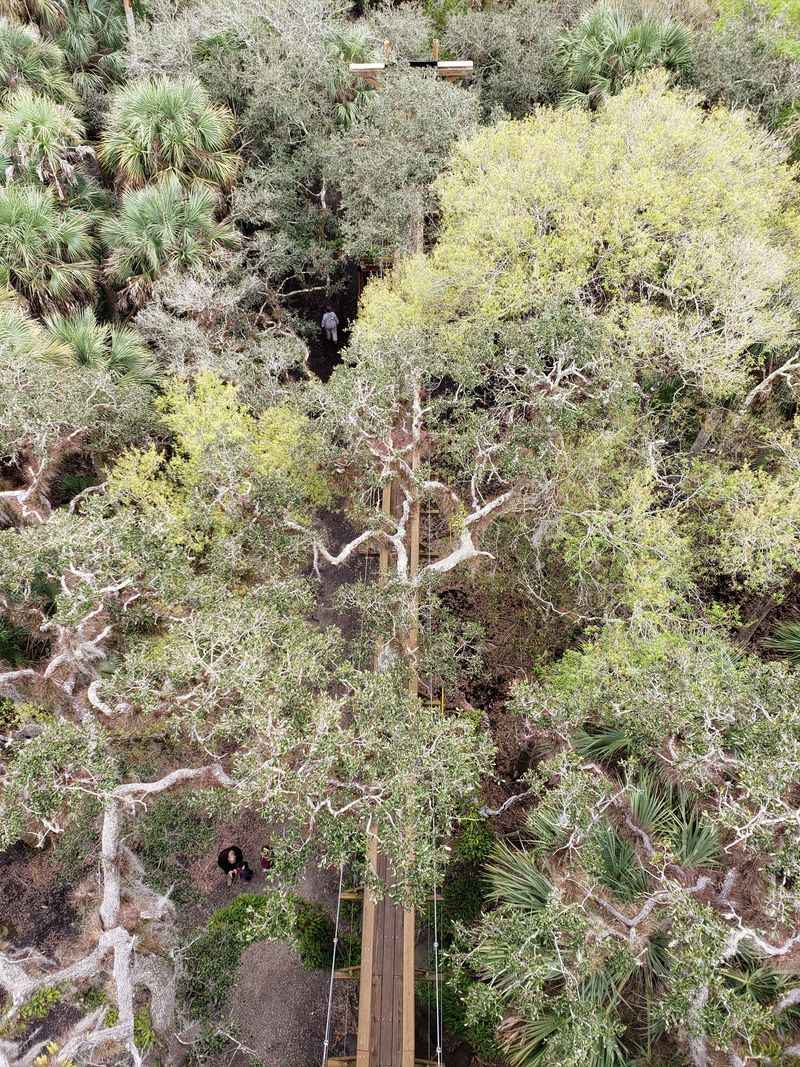
Visitors regularly encounter wildlife throughout the trail system, from the forest floor to the canopy level. White-tailed deer browse through the understory, often remarkably unconcerned by human presence.
They’ve grown accustomed to hikers and will sometimes continue feeding while you watch from a respectful distance. Their calm behavior offers excellent photo opportunities for patient observers.
Bird diversity impresses even casual watchers. Woodpeckers drum on dead snags, their rhythmic hammering echoing through the forest.
Hawks and vultures circle overhead, visible through gaps in the canopy or from the observation tower. Smaller songbirds flit through the mid-story vegetation, their calls creating a constant soundtrack to your walk.
Alligators appear less frequently on the nature trail itself but can be spotted from the nearby bridge area that many visitors combine with their canopy walk experience. The park’s reptile population includes various snake species, turtles, and lizards that sun themselves on logs or scurry across the path ahead of approaching footsteps.
The Elevated Perspective Changes How You See Florida’s Forests
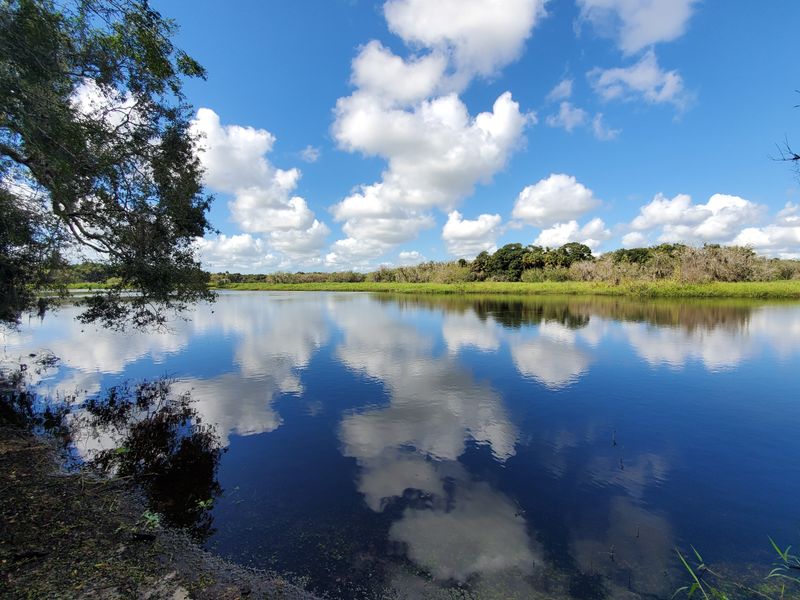
Walking above the forest floor fundamentally alters your understanding of how these ecosystems function. From ground level, forests often appear as collections of individual trees.
From the canopy walkway, you begin to see the interconnected nature of the environment. Branches interweave, creating highways for squirrels and pathways for climbing vines that link separate trees into a unified community.
The elevated view also reveals forest layers that remain invisible from below. You can distinguish the canopy itself, where the tallest trees spread their crowns to capture sunlight.
Below that, the understory consists of smaller trees and shrubs competing for whatever light filters through. The forest floor, now visible as a distant carpet, supports yet another community of plants adapted to shade.
This perspective shift often sparks curiosity about forest ecology in visitors who never considered themselves particularly interested in science. Seeing the structure laid out visually makes abstract concepts concrete.
You understand why certain birds prefer certain heights, why vines climb, and how fallen trees create gaps that let new growth emerge.
The Park Is One Of Florida’s Oldest And Largest State Parks
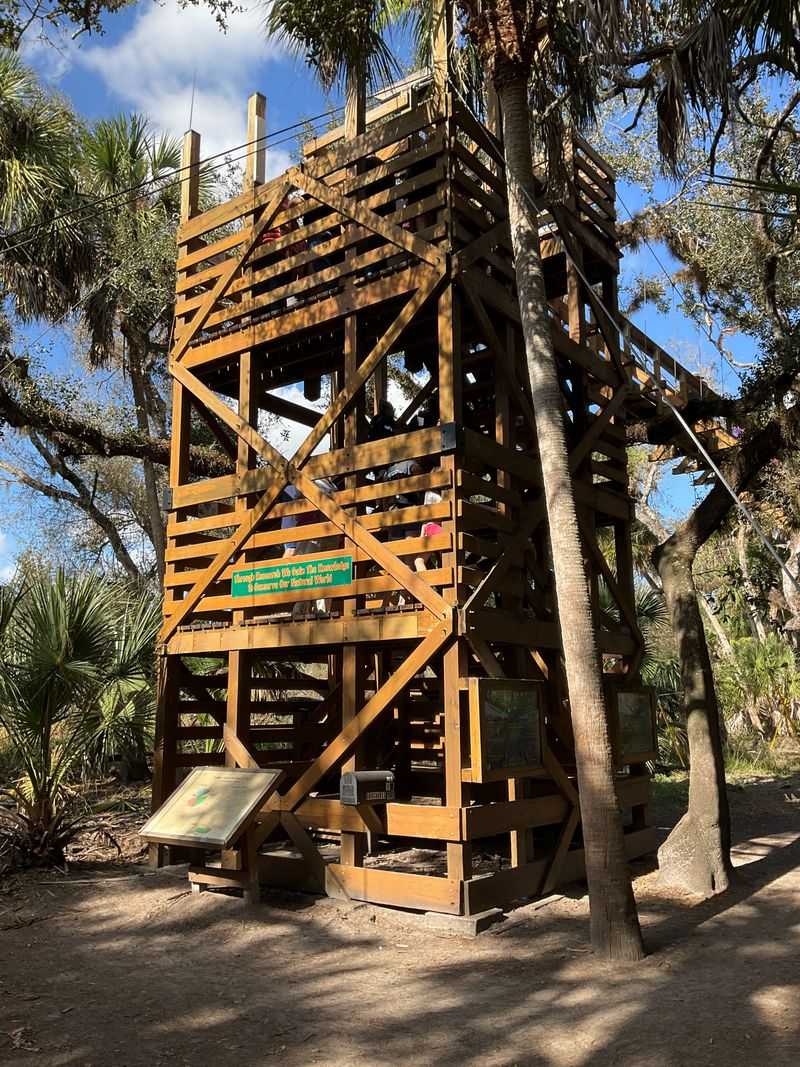
Myakka River State Park encompasses over 37,000 acres, making it one of Florida’s largest state park properties. The park was established in the 1930s through a combination of land purchases and donations, protecting a significant portion of the Myakka River watershed.
This long history means the ecosystems here have enjoyed protection for nearly a century, allowing natural processes to continue with minimal human interference.
The park’s age shows in the maturity of its forests and the diversity of its wildlife populations. Old-growth characteristics appear in some areas, with trees reaching impressive sizes and dead snags providing crucial habitat for cavity-nesting birds.
The lengthy protection period has also allowed predator-prey relationships and plant communities to stabilize into functioning ecosystems.
Beyond the canopy walk, the park offers extensive hiking trails, camping facilities, kayaking opportunities, and a scenic drive that winds through different habitat types. This variety means visitors can return multiple times and have entirely different experiences, exploring prairies one visit and focusing on wetlands the next.
The Experience Feels Adventurous Yet Family-Friendly
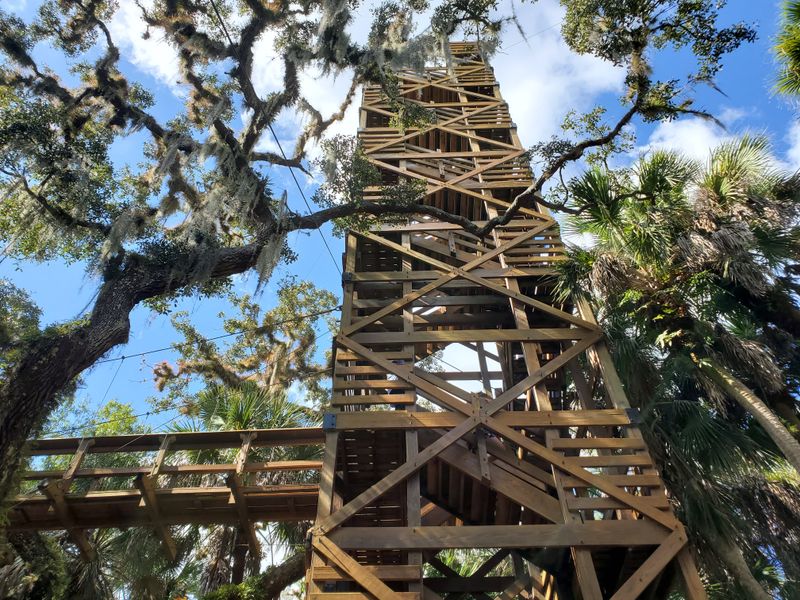
The canopy walk strikes an unusual balance between genuine adventure and broad accessibility. Walking a suspended bridge above the forest creates a sense of mild risk and excitement without requiring special skills or equipment.
Children find it thrilling, while adults appreciate the engineering that makes it safe. This combination explains why the attraction appeals to such a wide demographic.
Park rangers emphasize that the structure meets rigorous safety standards and undergoes regular inspections. Weight limits are posted and enforced, and the bridge design includes safety features that aren’t immediately obvious to casual visitors.
These precautions allow people to enjoy the adventure without genuine danger, though the height and movement still produce that flutter of excitement in your stomach.
Families particularly appreciate that everyone can participate together regardless of outdoor experience level. No special preparation is needed beyond wearing appropriate shoes and bringing water.
The relatively short distance means younger children won’t tire out, and the frequent interesting sights keep everyone engaged throughout the walk rather than asking when it will be over.