
The Breathtaking Minnesota Castle That Deserves A Spot On Your Bucket List
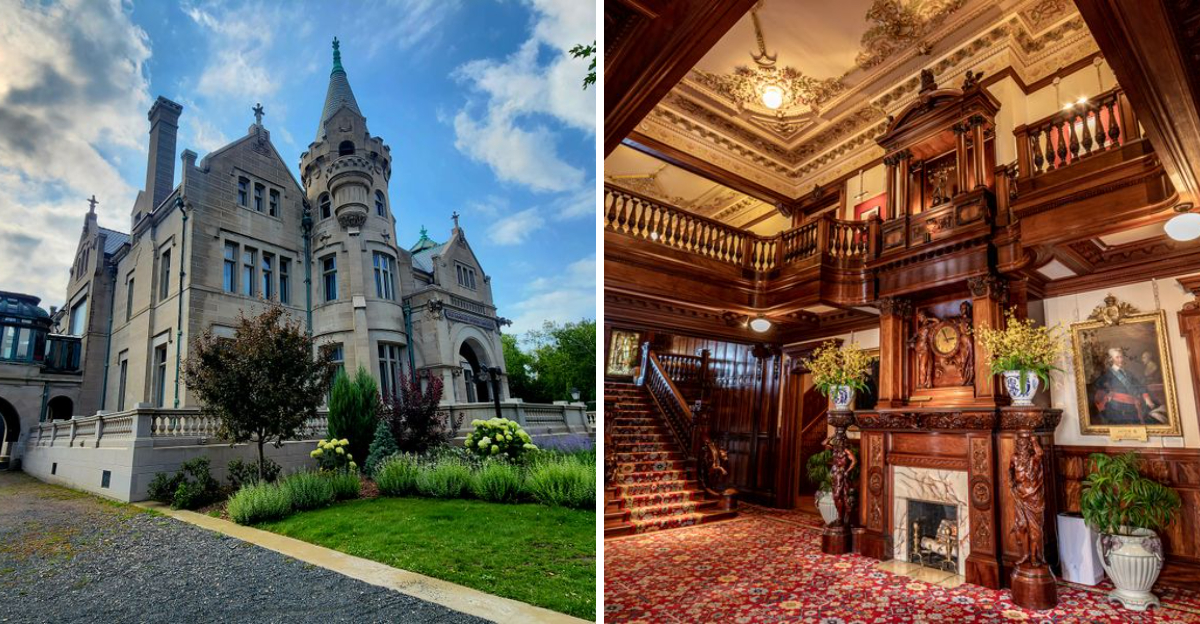
Imagine stumbling upon a French château in the heart of Minneapolis. The Turnblad Mansion, now home to the American Swedish Institute, stands as a testament to craftsmanship, history, and the spirit of immigrant success.
Located at 2600 Park Avenue, this stunning mansion features an elaborate stone exterior, intricately hand-carved interiors, and Swedish heritage exhibits that transport visitors to another time and place. It’s not just a building, it’s an experience, drawing guests year-round to explore its rich history and architectural beauty.
A Minneapolis Mansion Often Nicknamed “The Castle”
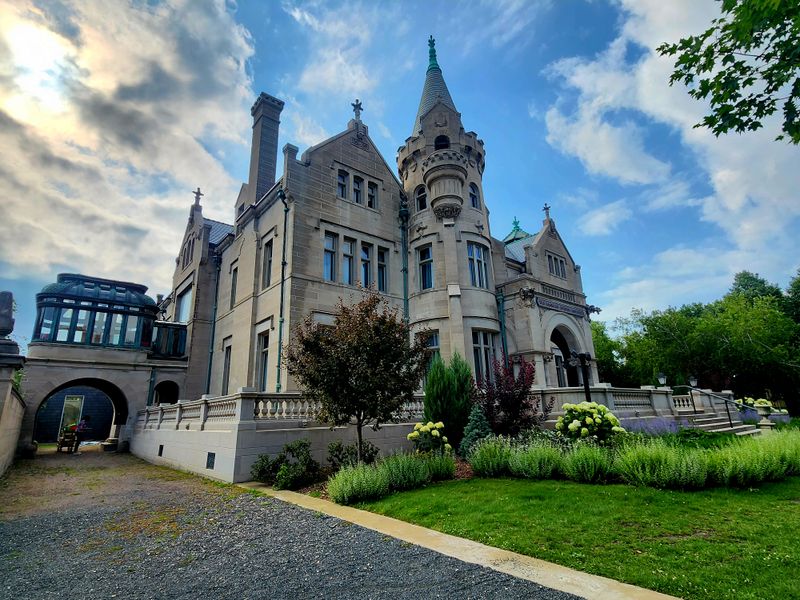
Passersby on Park Avenue often stop mid-stride when they first glimpse this structure. The building commands attention with its limestone walls and dramatic roofline that seems lifted from a European storybook.
Locals have long referred to it as “the castle,” and the nickname fits perfectly.
The mansion occupies an entire city block in the heart of Minneapolis. Its imposing presence contrasts sharply with the residential neighborhood surrounding it.
Visitors approaching from any direction can spot the turrets rising above nearby trees and homes.
The structure represents one of the finest examples of French Renaissance architecture in the upper Midwest. Few buildings in Minnesota can match its grandeur or historical significance.
The American Swedish Institute maintains the property with meticulous care, preserving every architectural detail for future generations to admire and study.
Built Between 1904 And 1908 By Newspaper Publisher Swan Turnblad
Swan Turnblad arrived in America as a poor Swedish immigrant with ambitions that far exceeded his circumstances. He worked his way up through the newspaper industry until he owned Svenska Amerikanska Posten, the most widely circulated Swedish-language newspaper in the country.
His publishing success generated the wealth needed to construct this palatial residence.
Construction began in 1904 and required four years to complete. Turnblad spared no expense during the building process.
He imported materials from across Europe and hired master craftsmen to execute his vision of combining Swedish heritage with French architectural grandeur.
The family lived in the mansion for only a short period. In 1929, Turnblad donated the entire property to establish the American Swedish Institute.
His generosity ensured that Swedish culture and immigrant history would have a permanent home in Minneapolis.
Inspired By French Renaissance Château Architecture
Turnblad traveled extensively through Europe before commissioning his mansion. The châteaux of the Loire Valley particularly captured his imagination.
He wanted his Minneapolis home to reflect the elegance and sophistication of those legendary French estates.
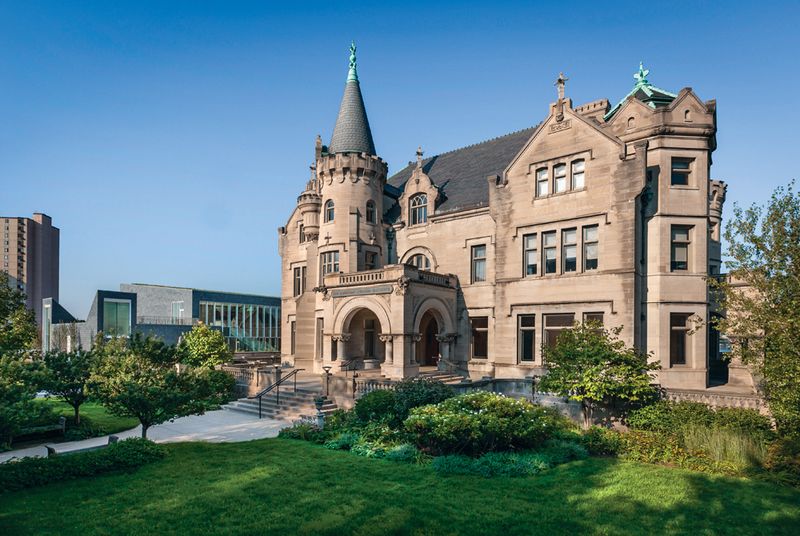
Architects Boehme and Cordella translated his vision into reality using Indiana limestone and careful proportions. The design incorporates steep roof pitches, decorative dormers, and elaborate window treatments characteristic of sixteenth-century French nobility.
Every exterior element serves both functional and aesthetic purposes.
The architectural style was highly unusual for early twentieth-century Minneapolis. Most wealthy residents built in Colonial Revival or Tudor styles.
Turnblad’s choice to embrace French Renaissance design made his home immediately distinctive and memorable throughout the region.
The Exterior Features Turrets, Gargoyles And Ornate Stone Carvings
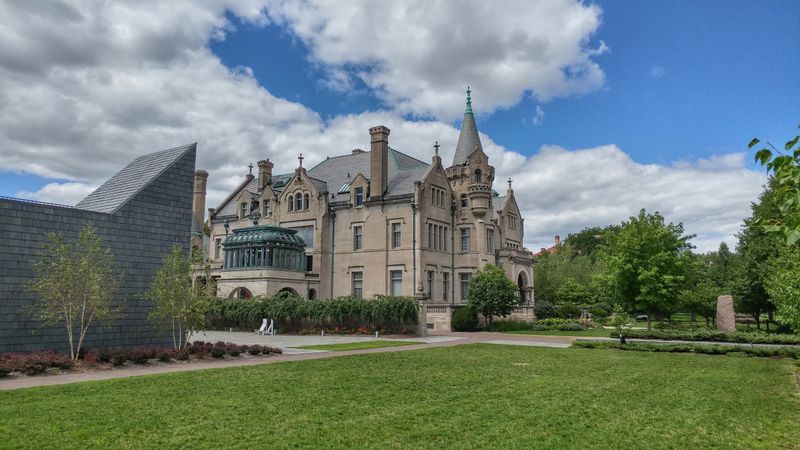
The mansion’s exterior functions as a gallery of sculptural artistry. Stone carvers spent months creating the gargoyles, floral motifs, and decorative panels that adorn the facade.
Each element was carefully positioned to enhance the building’s vertical lines and create visual interest from every angle.
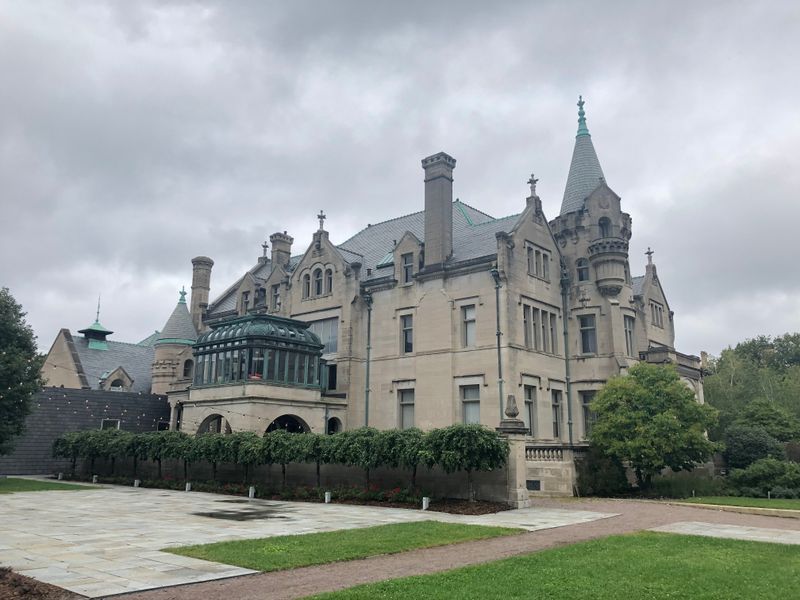
Two prominent turrets anchor opposite corners of the structure. These cylindrical towers rise above the main roofline and feature conical caps that add to the castle-like appearance.
The turrets contain small rooms that offer panoramic views of the surrounding neighborhood.
Gargoyles peer down from various perches along the roofline and cornices. These grotesque figures serve as both decorative elements and functional water spouts.
The stone carvings have weathered more than a century of Minnesota winters while maintaining their crisp details and expressive features that continue fascinating visitors today.
The Mansion Contains 33 Distinctly Designed Rooms
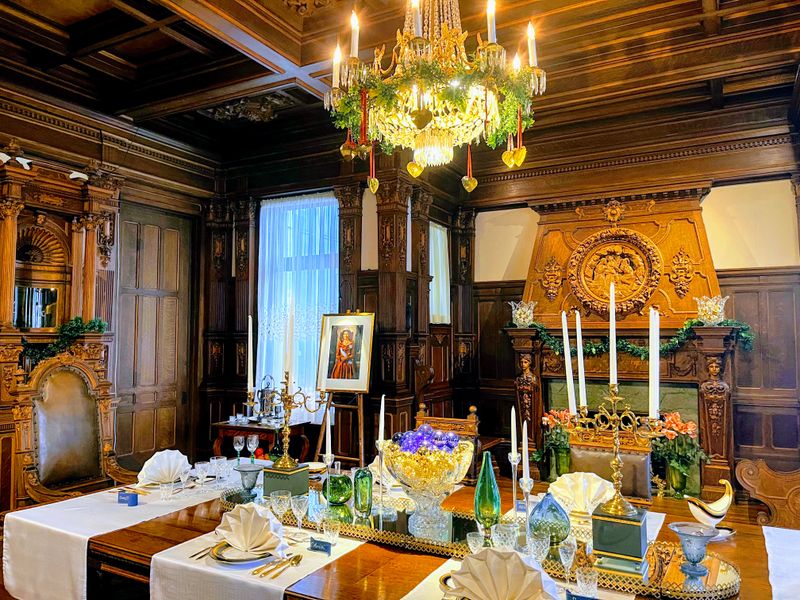
Walking through the mansion feels like exploring thirty-three separate works of art. Each room received individual attention during the design phase.
Turnblad insisted that no two spaces should look alike, and the architects honored that request with remarkable creativity.
The rooms range from intimate family spaces to grand entertaining areas. Some feature Swedish folk art motifs while others embrace French or German design traditions.
The variety reflects the cosmopolitan tastes of the Turnblad family and their appreciation for multiple European cultures.
Visitors can explore most of these rooms during regular museum hours. The Institute preserves the original furnishings and decorative schemes in many spaces.
Other rooms host rotating exhibitions that highlight Swedish culture, immigrant experiences, and contemporary Nordic art, ensuring that each visit offers something new to discover and appreciate.
Hand-Carved Woodwork And Decorative Ceilings Showcase European Craftsmanship
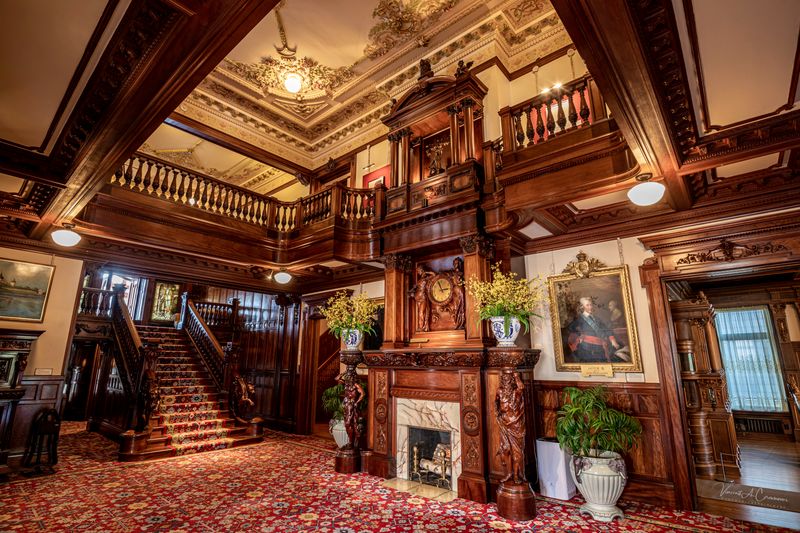
Master woodcarvers from Sweden spent years creating the interior millwork. They used mahogany imported from Africa, oak from Europe, and other premium hardwoods to craft paneling, door frames, and built-in furniture.
The level of detail in these carvings exceeds what most people expect to find in an American home.
Ceilings throughout the mansion feature hand-painted designs and elaborate plasterwork. Some rooms display geometric patterns while others showcase naturalistic scenes with flowers and vines.
The ceiling in the music room particularly impresses visitors with its coffered design and gold-leaf accents.
Modern craftspeople study these interiors to understand traditional European techniques. The woodwork demonstrates joinery methods and carving styles rarely practiced today.
Preservation specialists regularly inspect and maintain these surfaces to ensure they survive for future generations to examine and admire.
The Grand Staircase Is One Of Its Most Striking Interior Features
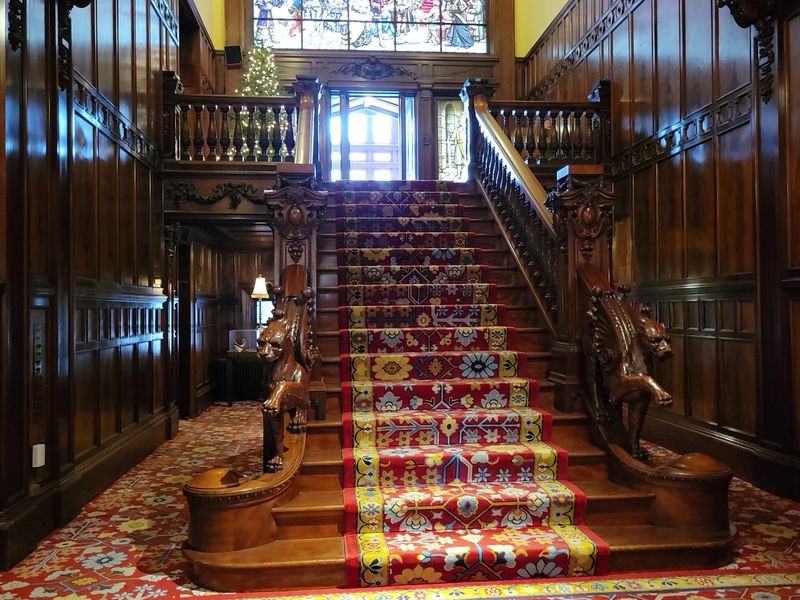
The main staircase rises three full stories through the center of the mansion. Carved oak balustrades guide visitors upward past stained glass windows that filter colored light across the treads.
The staircase serves as both a functional element and a sculptural centerpiece that demonstrates the wealth and taste of its original owner.
Each newel post features a different carved design. The handrails curve smoothly around landings without visible joints.
Craftsmen shaped these elements by hand, fitting each piece together with precision that modern power tools struggle to match.
Photographers frequently focus on this staircase when documenting the mansion. The interplay of light, shadow, and carved wood creates dramatic compositions from multiple angles.
Visitors often pause on the landings to appreciate the craftsmanship and imagine the Turnblad family ascending these same steps more than a century ago.
It Now Serves As The Historic Centrepiece Of The American Swedish Institute
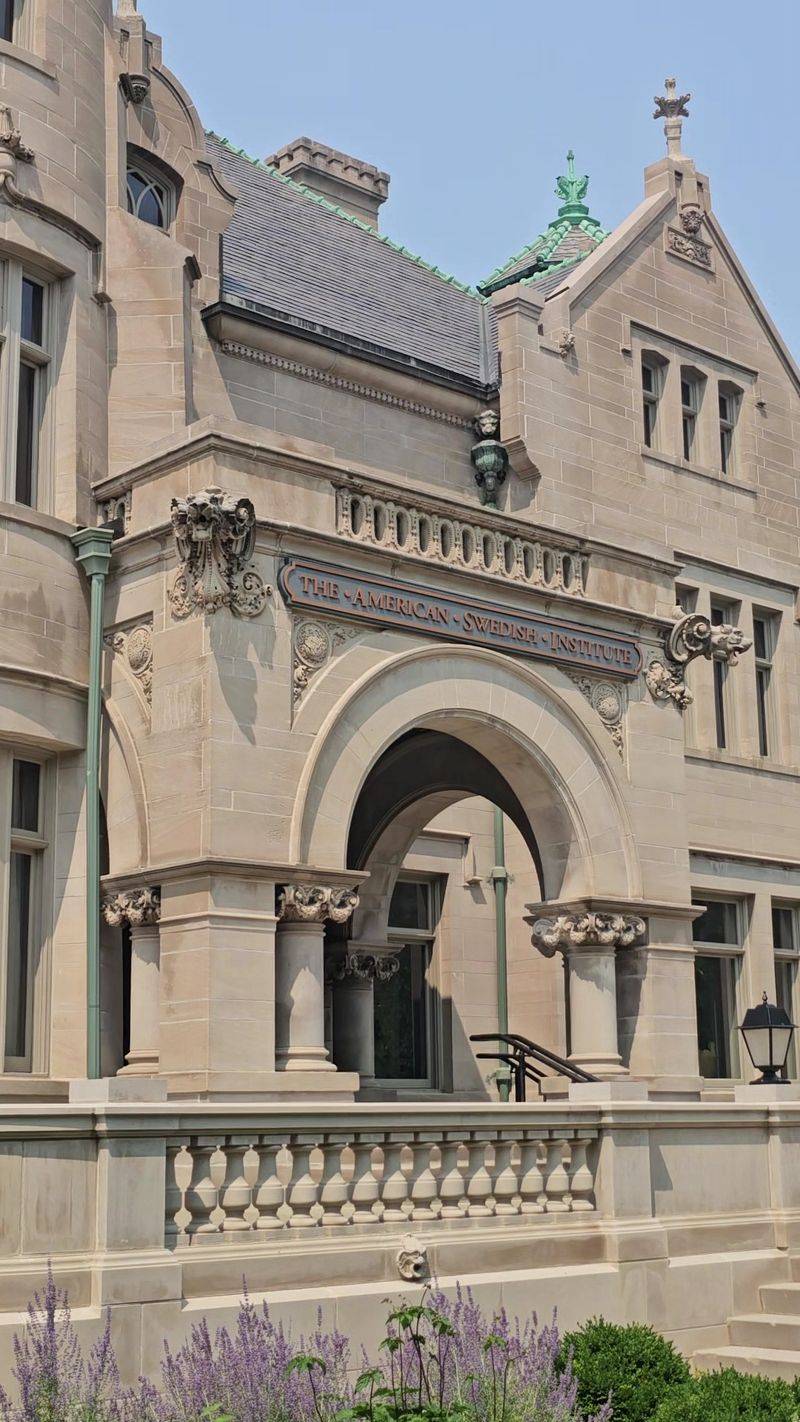
The American Swedish Institute has occupied the mansion since 1929. This cultural organization preserves Swedish heritage and promotes understanding of Nordic culture throughout Minnesota and beyond.
The mansion provides an authentic setting for exhibitions, educational programs, and community gatherings that connect modern audiences with immigrant history.
The Institute added a contemporary wing in 2012 that contrasts architecturally with the historic mansion. This glass and steel addition houses additional gallery space, a café called Fika, and modern amenities.
The two buildings connect seamlessly while maintaining their distinct architectural identities.
More than forty thousand people visit the Institute annually. Some come for the architecture while others attend concerts, lectures, or seasonal celebrations.
The mansion remains the emotional and historical heart of the campus, drawing visitors into stories of Swedish immigration and American success.
Visitors Can Explore The Mansion With Museum Admission
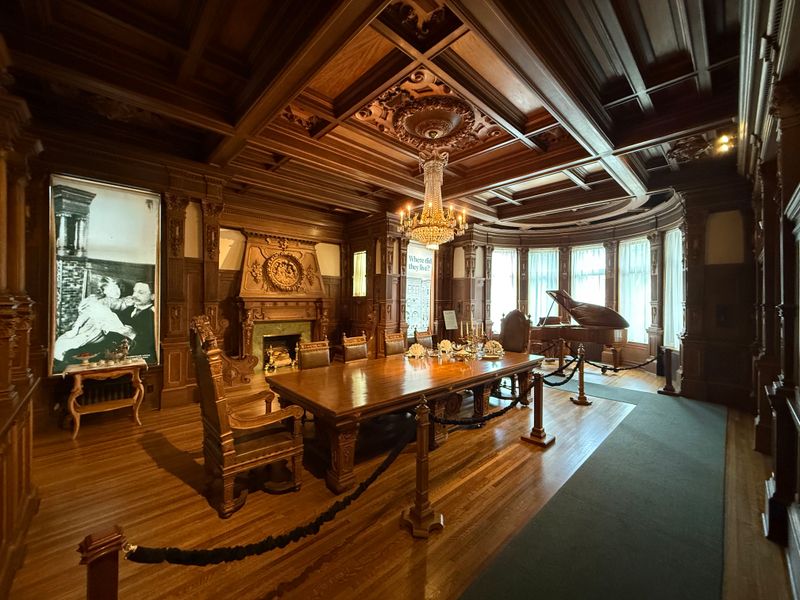
Museum admission grants access to most of the mansion’s rooms. Visitors can wander freely through the public spaces, examining architectural details and reading interpretive panels that explain the building’s history.
Self-guided exploration allows guests to move at their own pace and focus on elements that interest them most.
Admission costs eighteen dollars for adults, with discounts available for seniors and students. The Institute offers free admission on Thursday evenings from three to eight, making the mansion accessible to budget-conscious visitors.
Membership options provide unlimited visits and other benefits for frequent guests.
Guided tours led by knowledgeable docents offer deeper insights into the mansion’s construction and the Turnblad family story. These tours highlight details that casual visitors might overlook.
The gift shop sells Swedish foods, crafts, and books, while the Fika café serves traditional Swedish fare including meatballs and bread pudding.
Seasonal Exhibitions Transform The Rooms Throughout The Year
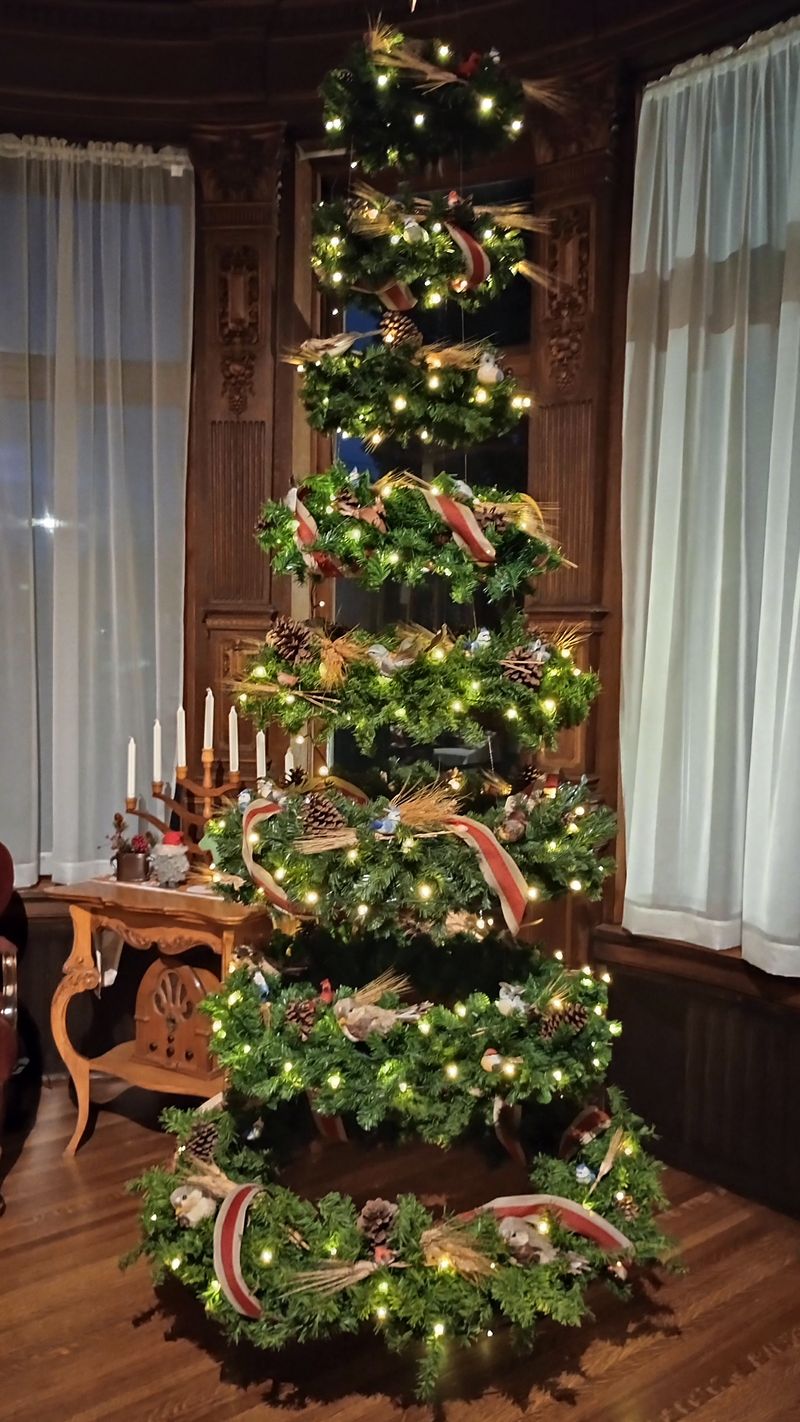
The Institute refreshes its exhibitions several times annually. Holiday displays prove particularly popular, with Christmas decorations transforming the mansion into a winter wonderland.
Traditional Swedish ornaments, tomte figures, and evergreen garlands fill the rooms with festive atmosphere. Families return year after year to experience these seasonal transformations.
Summer exhibitions might focus on Swedish design, contemporary Nordic art, or immigrant experiences. The Institute collaborates with museums in Sweden and other Scandinavian countries to bring unique artifacts and artworks to Minneapolis.
These rotating displays ensure that repeat visitors always encounter something new.
Special events throughout the calendar complement the exhibitions. Winter solstice celebrations, midsummer festivals, and cultural demonstrations bring the mansion to life with music, food, and traditional activities.
The building serves as more than a static museum; it functions as a living cultural center where Swedish traditions continue evolving and engaging new generations.