
15 Architectural Wonders Across New York Worth Seeing Up Close
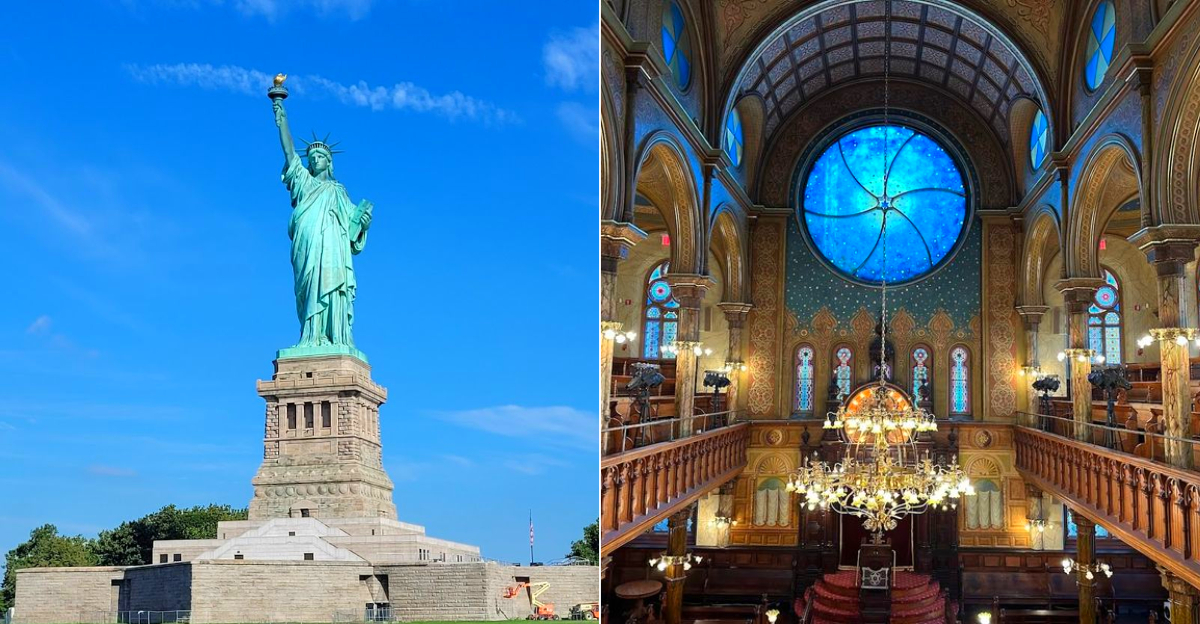
New York does not do subtle when it comes to architecture. Skyscrapers that look like they’re flexing. Old buildings that feel like they’ve seen everything.
Corners where you turn your head and immediately go, “Wait, what is that?” It’s a full visual experience if you’re paying attention. These architectural wonders aren’t just pretty in photos. They hit differently in person. The scale feels bigger.
The details feel sharper. You start noticing carvings, textures, shapes you’d never catch scrolling online. In New York, design isn’t background noise, it’s part of the city’s personality.
Some of these spots feel grand and dramatic. Others are quietly impressive. But up close? They all remind you why New York has a reputation for doing things on a completely different level.
1. Statue Of Liberty
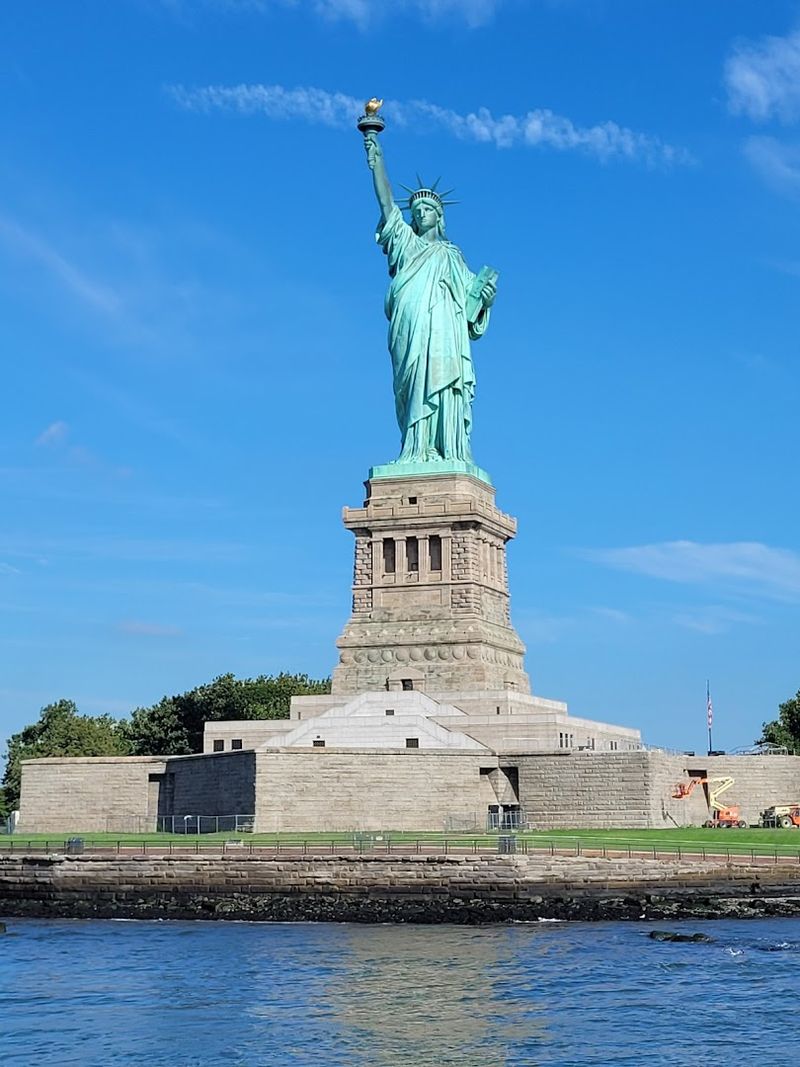
You’ve seen her in a million pictures, but standing at the base changes everything. The green copper skin, all those rivets holding together sheets of metal, the iron skeleton inside designed by Gustave Eiffel himself, it’s an engineering masterpiece from 1886 that still blows minds today.
Most people don’t realize she’s actually pretty thin. The copper is only about as thick as two pennies stacked together. Walking around Liberty Island, you can spot the incredible craftsmanship in every fold of her robe and the way the torch catches light.
Climbing up into the crown is wild if you can snag tickets. The views are great, sure, but being inside this hollow monument, feeling the space between the copper exterior and the iron framework, that’s when you understand the genius of it. She’s held up through hurricanes and a century of weather because someone really knew what they were doing.
The whole monument represents freedom, obviously, but up close it’s a reminder that humans can build things that last. Pretty cool for something that arrived in 350 pieces from France.
2. Empire State Building
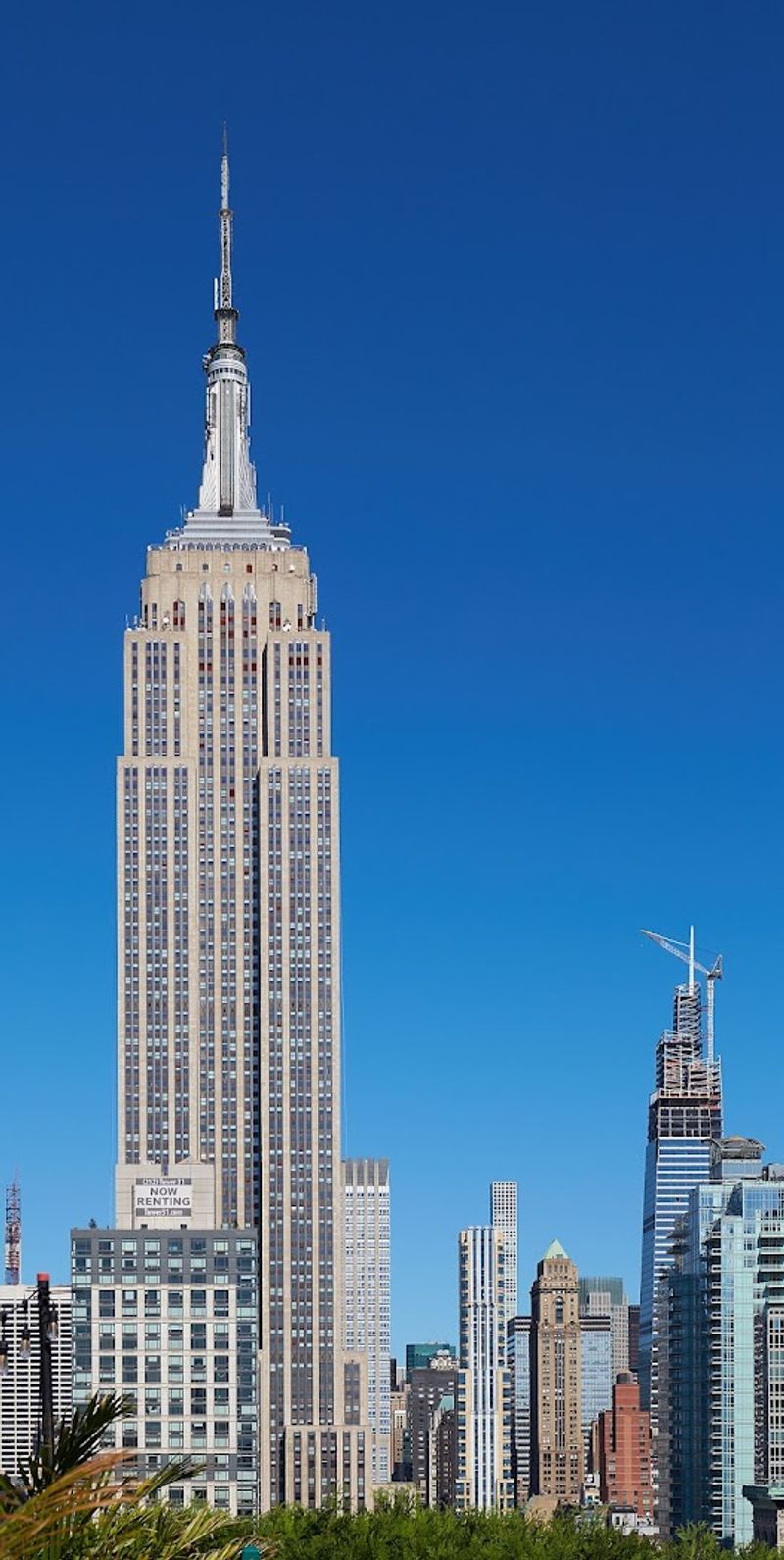
Built during the Great Depression in just over a year, this 102-story giant became the definition of New York ambition. The Art Deco style is everywhere once you step inside. That lobby ceiling?
Geometric gold and aluminum panels that look like they belong in a palace, not an office building.
The limestone façade outside has this clean, vertical emphasis that makes the whole thing feel like it’s shooting straight into the clouds. And honestly, on foggy days, it kind of does. The setbacks as the building rises were required by zoning laws, but architects turned restrictions into one of the most recognizable silhouettes on Earth.
Head up to the observation deck and yeah, the views are insane. But take a second to appreciate the speed of the elevators and the engineering that lets this 1,454-foot tower sway slightly in strong winds without anyone inside feeling a thing. That’s next-level design from 1931.
Fun fact: it was the world’s tallest building for nearly 40 years. Standing beneath it, craning your neck up, you’ll understand why it became the symbol of reaching higher, literally and figuratively.
3. Brooklyn Bridge
Walking across this thing never gets old. Opened in 1883, it was the longest suspension bridge in the world and people thought it might collapse. Spoiler: it didn’t.
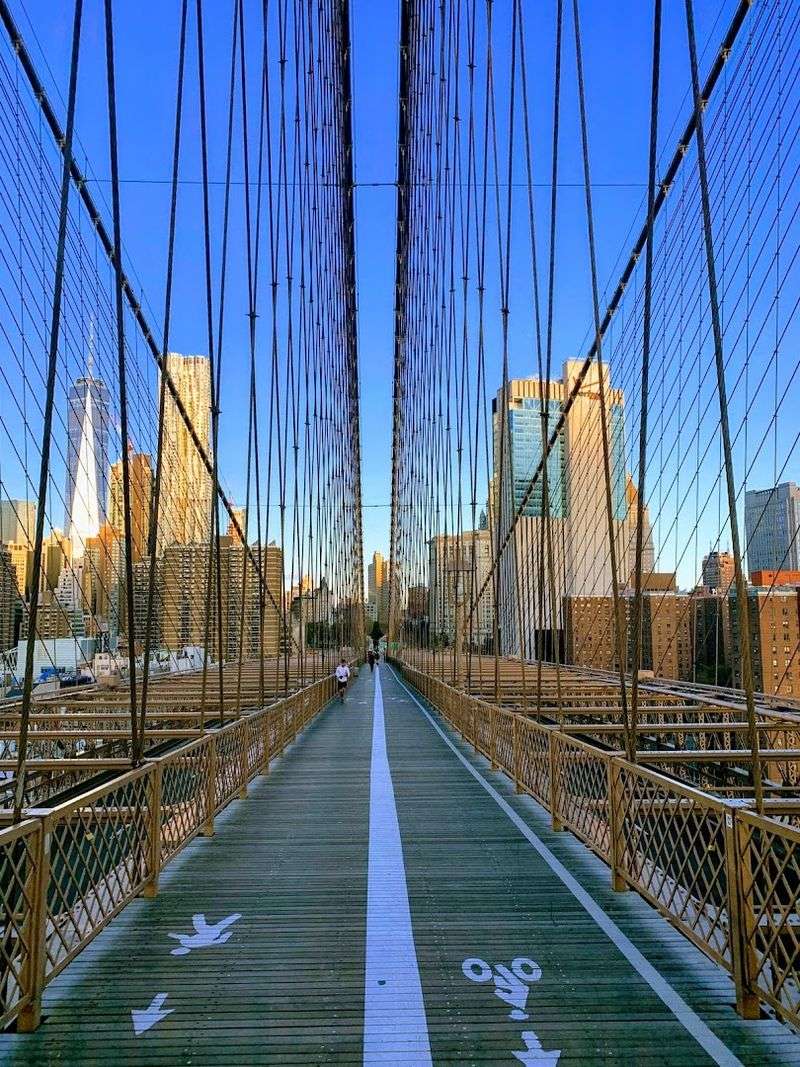
Those massive Gothic-style stone arches feel more like a cathedral than a bridge, and the web of steel cables fanning out overhead is pure industrial poetry.
John Roebling designed it, but he died before construction even started. His son Washington took over, got decompression sickness working underwater, and finished the project from his apartment window with his wife Emily doing the on-site work. Talk about a family effort.
The wooden pedestrian walkway puts you above the cars, and halfway across, the view of Manhattan on one side and Brooklyn on the other is unbeatable. But look down at the cables and towers. Every rivet, every stone block was placed by hand over 14 years.
It’s held up millions of commutes, countless proposals, and more Instagram photos than anything else in the city. Standing on it, you’re on a piece of history that still does its job perfectly every single day.
4. Radio City Music Hall
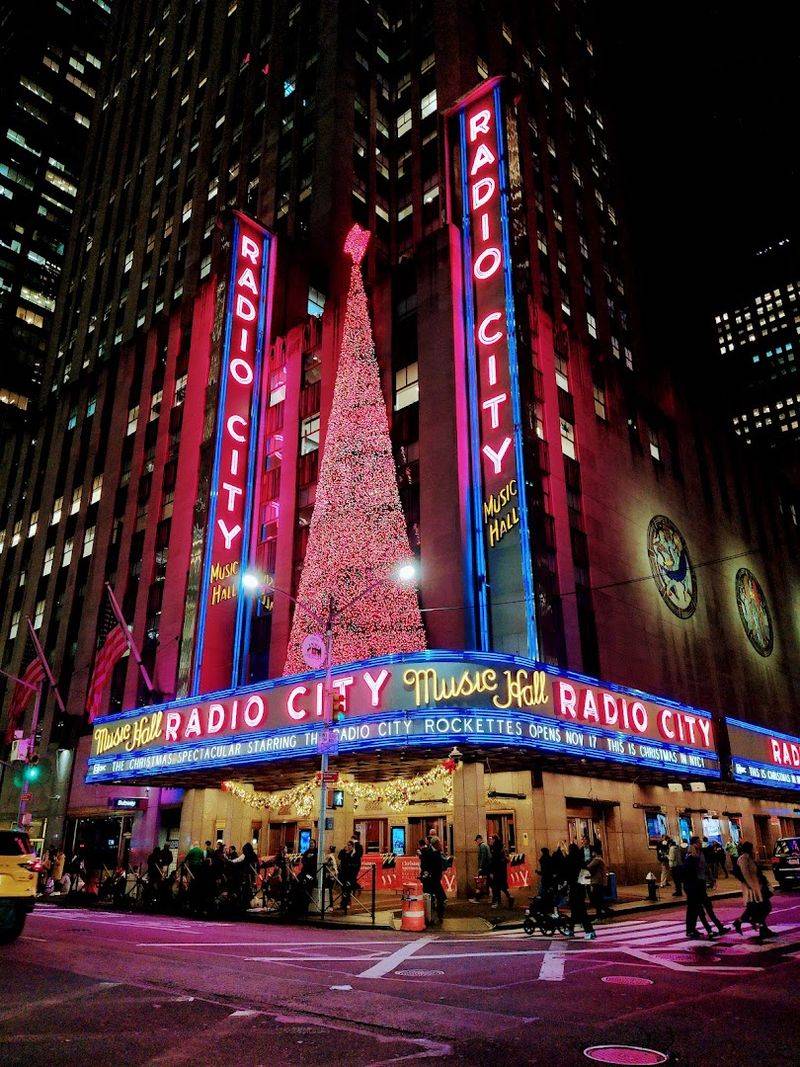
This place is an Art Deco fever dream in the best way possible. Built in 1932, Radio City was designed to be the ultimate entertainment palace, and walking up to that massive marquee, you instantly get it. The curves, the gold trim, the neon lights, it’s all screaming glamour from a bygone era.
Inside, the auditorium is even more stunning. The ceiling looks like a sunset with these sweeping arches in shades of gold and bronze. The stage is huge, one of the largest in the world, and the whole space was designed so every seat has a clear view.
No bad angles here.
The Rockettes perform here during the holidays, and seeing them on that stage is iconic. But even if you’re just taking a tour, the details are everywhere. The carpets, the light fixtures, the bathrooms, yes, even those, everything got the deluxe Art Deco treatment.
It’s been a movie palace, a concert venue, and a cultural landmark for nearly a century. Standing in the lobby, you can almost hear the echoes of opening night and every show since.
5. New York State Capitol
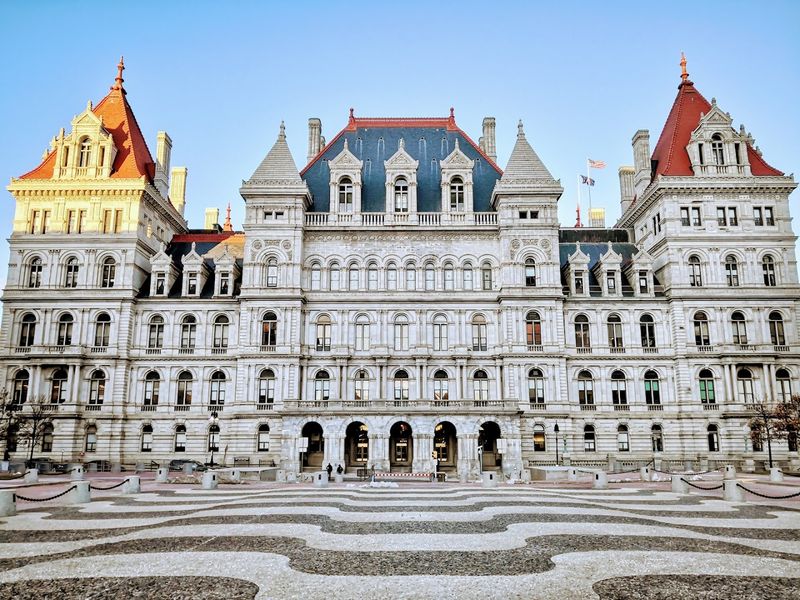
Albany’s capitol building is a showstopper that took 32 years to finish. Mixing Romanesque and Renaissance styles, the result is this wildly ornate structure with more carved stone than you’d think possible. The highlight?
The Million Dollar Staircase, which actually cost way more than that by the time it was done in 1899.
This staircase has 77 faces carved into the stone, portraits of famous figures and random people the workers thought looked interesting. Climbing it feels like walking through a sculpture gallery. Every surface has some kind of detail, from floral patterns to historical scenes.
The exterior is just as impressive, with thick stone walls and towers that make it look more like a castle than a government building. Architects kept changing the plans during construction, which is why the styles clash a bit, but somehow it all works together.
Tours are free, and honestly, it’s worth the trip to Albany just for this. Standing in the rotunda, looking up at the vaulted ceilings and intricate stonework, you realize they don’t make government buildings like this anymore. Probably because they can’t afford to.
6. Frank Lloyd Wright’s Martin House
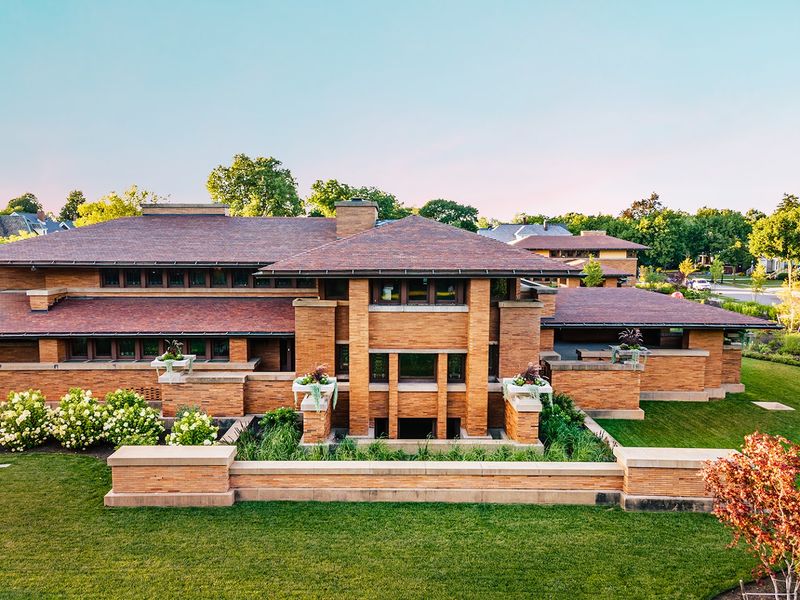
Buffalo might not be the first place you think of for architectural pilgrimages, but the Darwin D. Martin House is a masterpiece. Completed in 1905, it’s one of Frank Lloyd Wright’s most significant Prairie-style homes, and everything about it screams his vision of organic architecture blending with the landscape.
The horizontal lines, low-pitched roofs, and bands of art glass windows make the house feel like it’s spreading out rather than rising up. Wright designed everything, and I mean everything, from the furniture to the light fixtures. Walking through, you see his obsessive attention to every detail.
The art glass is unreal. Over 600 individual windows with geometric patterns that filter light in these beautiful, colorful ways. Each room has its own character, but the whole house flows together seamlessly.
It’s like being inside a work of art that you can actually live in.
Restoration took decades, but now you can tour it and see Wright’s genius up close. Standing in the living room, surrounded by his custom furniture and those glowing windows, you understand why people call him the greatest American architect.
7. Boldt Castle
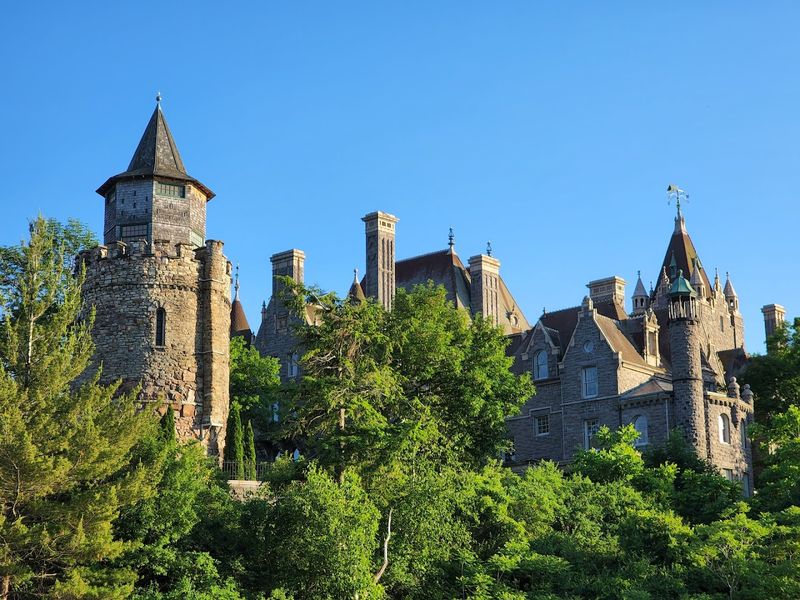
Heart Island in the Thousand Islands region holds one of the most romantic and tragic architectural stories in New York. George Boldt, a hotel magnate, started building this 120-room castle in 1900 as a tribute to his wife Louise. Then she died suddenly in 1904, and he stopped construction immediately, never returning to the island.
For decades, the castle sat abandoned, exposed to weather and vandals. Now restored, it’s this stunning Gilded Age fantasy with turrets, towers, and intricate stonework that looks like it was plucked from a European countryside and dropped into the St. Lawrence River.
Walking through the rooms, you see the level of craftsmanship Boldt demanded. Imported materials, detailed woodwork, grand staircases, all of it designed to be the ultimate expression of love. The powerhouse on a separate island generated electricity for the whole estate, which was cutting-edge technology back then.
Standing on the grounds, looking at the castle against the water, it’s hard not to feel the weight of the story. It’s beautiful and heartbreaking at the same time, a monument to ambition and loss frozen in stone.
8. The Vessel
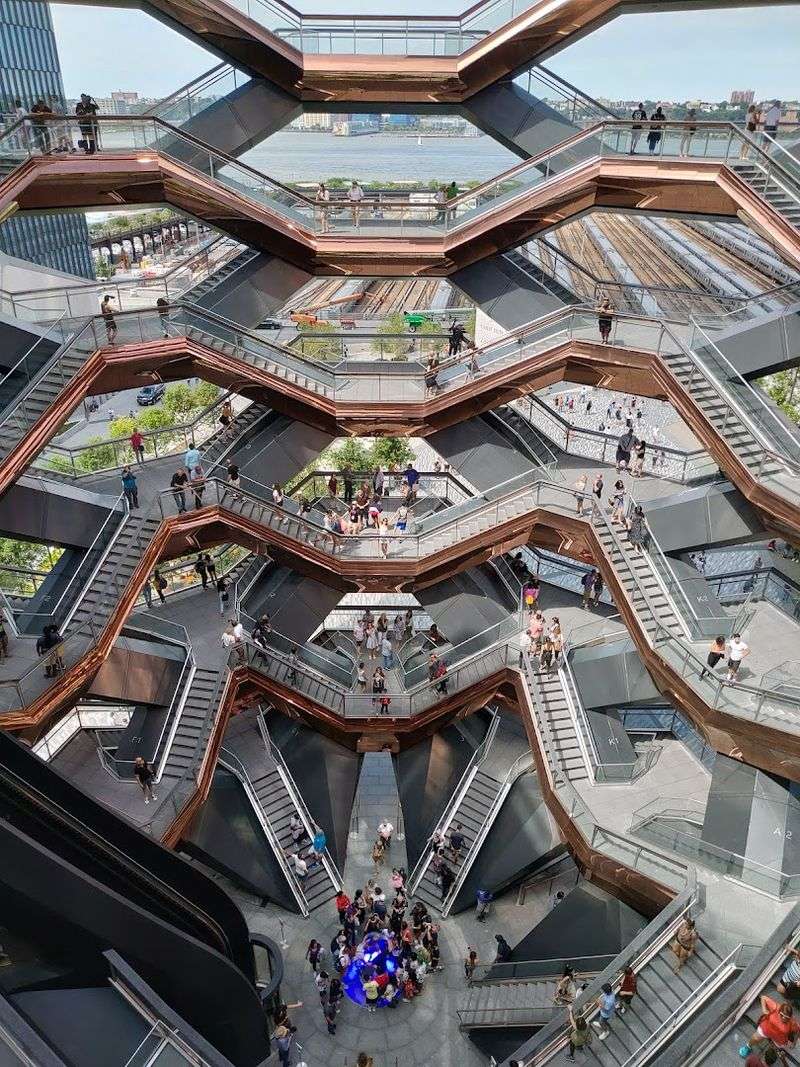
Hudson Yards dropped this wild honeycomb structure in 2019, and people either love it or think it’s the strangest thing they’ve ever seen. Designed by Thomas Heatherwick, The Vessel is 16 stories of interconnected staircases, 154 flights total, going absolutely nowhere but up and around.
It’s made of copper-colored steel, and the whole thing weighs 13,000 tons. Climbing it, you’re surrounded by geometric patterns and constantly shifting perspectives. Every level offers a different view of the city, and the structure itself becomes this interactive sculpture you’re walking through.
Some critics call it a billionaire’s jungle gym, and okay, fair. But standing underneath and looking up at all those stairs spiraling above you is pretty mesmerizing. The design is bold, contemporary, and completely unlike anything else in the city.
It’s been closed periodically for safety reasons, so check before you go. When it’s open, it’s a unique experience. You’re not just looking at architecture, you’re inside it, moving through it, becoming part of the design.
That’s the whole point, and it’s either brilliant or bizarre depending on who you ask.
9. New York Public Library Stephen A. Schwarzman Building
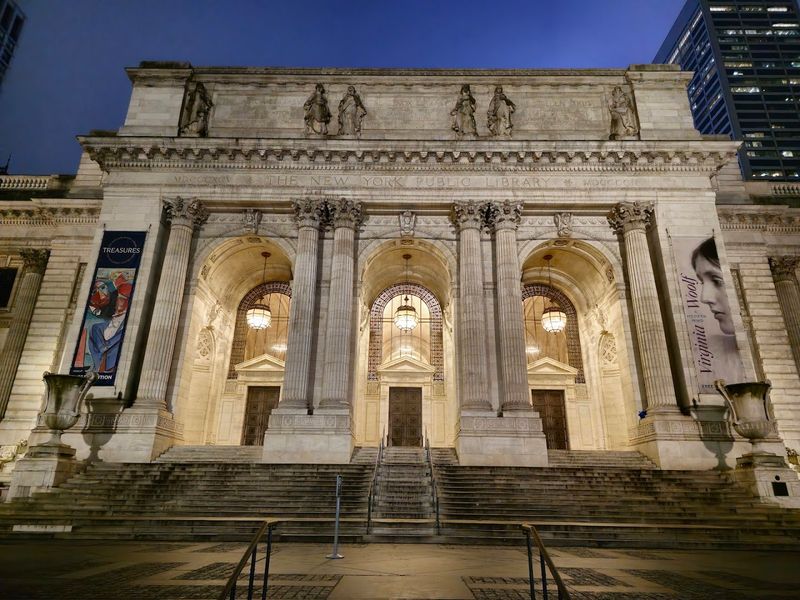
Those two marble lions out front, Patience and Fortitude, have been guarding this Beaux-Arts beauty since 1911. The main branch on Fifth Avenue is one of the most stunning public buildings in America, and walking up those steps between the lions feels like entering a temple of knowledge.
Inside, the Rose Main Reading Room is absolutely breathtaking. It’s almost two city blocks long with 52-foot ceilings, chandeliers, and row after row of wooden tables where people actually study and work. The light pouring in through the arched windows makes the whole space feel sacred.
The architecture is classic Beaux-Arts, all symmetry and grandeur, with marble staircases, ornate plasterwork, and enough detail to keep you staring at ceilings for hours. Architects Carrère and Hastings designed it to be both functional and inspiring, and a century later, it still nails both.
Free to enter, and you can wander through the exhibits and rooms even if you’re not there to read. Standing in the reading room, surrounded by millions of books and that incredible architecture, you remember why libraries matter. This one just happens to be a masterpiece.
10. Solomon R. Guggenheim Museum
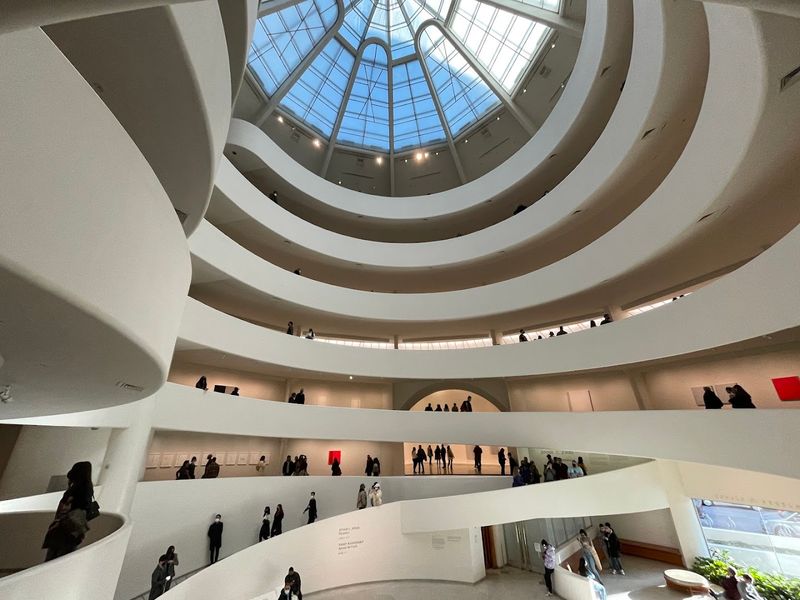
Frank Lloyd Wright designed a building that made every museum professional lose their minds when it opened in 1959. Instead of boxy galleries, he created this continuous spiral ramp that winds up six stories. You take an elevator to the top and walk down, experiencing art along a curve.
Revolutionary? Absolutely. Controversial?
You bet.
The exterior is just as wild, a white cylindrical tower that looks like a giant seashell or a spaceship, depending on your imagination. It stands out dramatically against the traditional buildings on Fifth Avenue, and that was entirely the point. Wright wanted to challenge everything about how we experience art.
Inside, the central atrium opens up all the way to the skylight, and you can see the entire spiral from the ground floor. The ramp means you’re never in a traditional rectangular room, which some artists love and others hate. But there’s no denying it’s an unforgettable experience.
Critics said it would never work. Wright died six months before it opened. But here we are, decades later, and it’s one of the most iconic buildings in the world.
Standing in that atrium, looking up at the spiral, you see pure architectural vision realized.
11. One World Trade Center
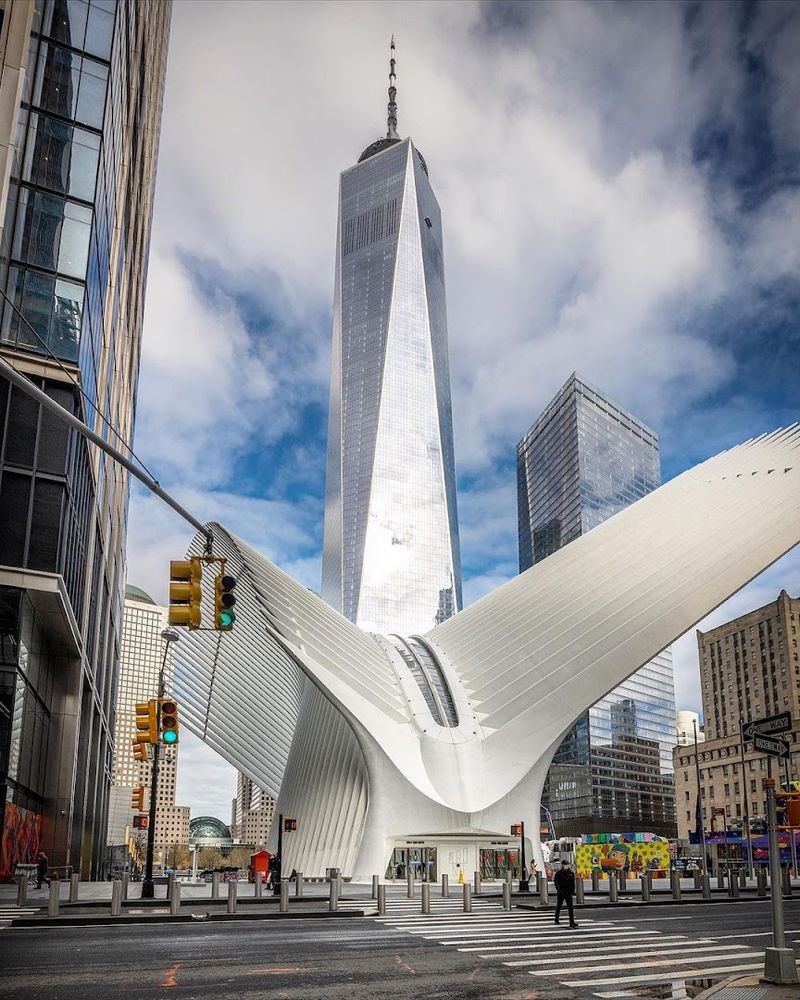
Rising from the site of the original Twin Towers, One World Trade Center stands exactly 1,776 feet tall, a deliberate nod to American independence. Opened in 2014, it’s the tallest building in the Western Hemisphere and a powerful symbol of resilience and renewal.
The design by David Childs is sleek and modern, all glass and steel, with a square base that transforms into eight tall isosceles triangles as it rises. The façade reflects the sky, changing throughout the day, and the spire at the top lights up at night. It’s both elegant and defiant.
Standing at the base, looking up, you feel the weight of what this building represents. It’s not just architecture, it’s a statement. The observation deck on the 100th floor offers 360-degree views, but honestly, the building itself is the real attraction.
The surrounding memorial and museum add to the experience, but One World Trade Center stands on its own as a testament to what can be rebuilt. It’s modern, it’s beautiful, and it’s a reminder that cities and people move forward, no matter what.
12. Eldridge Street Synagogue
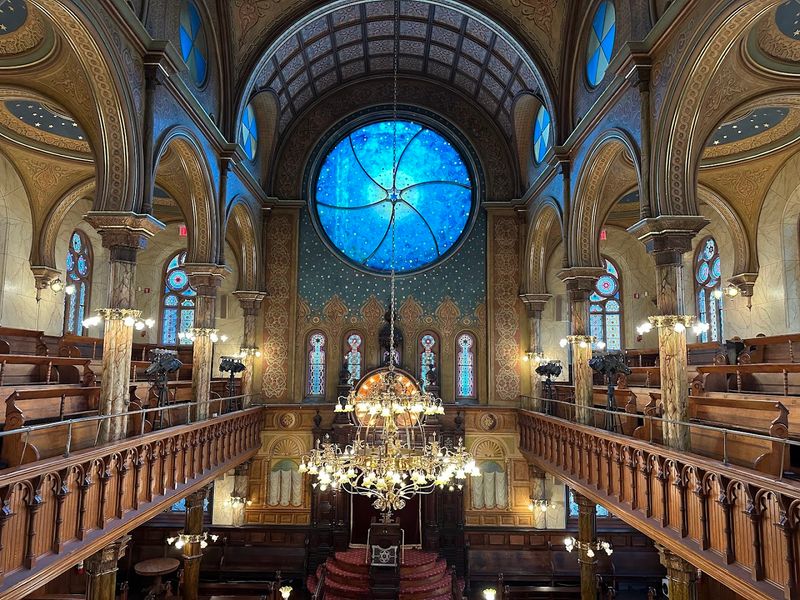
Built in 1887, this was the first grand synagogue constructed by Eastern European Jews in America, and it’s an absolute stunner. The Moorish Revival style brings together pointed arches, intricate stained glass, and rich decorative details that make the interior feel like stepping into another world.
For decades, the building fell into disrepair as the neighborhood changed. Then a massive restoration project brought it back to life, and now you can see the craftsmanship in all its glory. The main sanctuary has a soaring ceiling, ornate woodwork, and a massive rose window that fills the space with colored light.
The blend of architectural styles, Moorish, Gothic, Romanesque, creates something totally unique. Every surface has some kind of decoration, from the painted walls to the brass fixtures. Walking through, you get a sense of the community that built this place and the pride they took in creating something beautiful.
It’s a museum now, with tours that explain the history and architecture. Standing in the sanctuary, surrounded by all that restored beauty, you see how architecture can preserve cultural identity and tell stories that matter. This building survived because people refused to let it disappear.
13. Grand Central Terminal
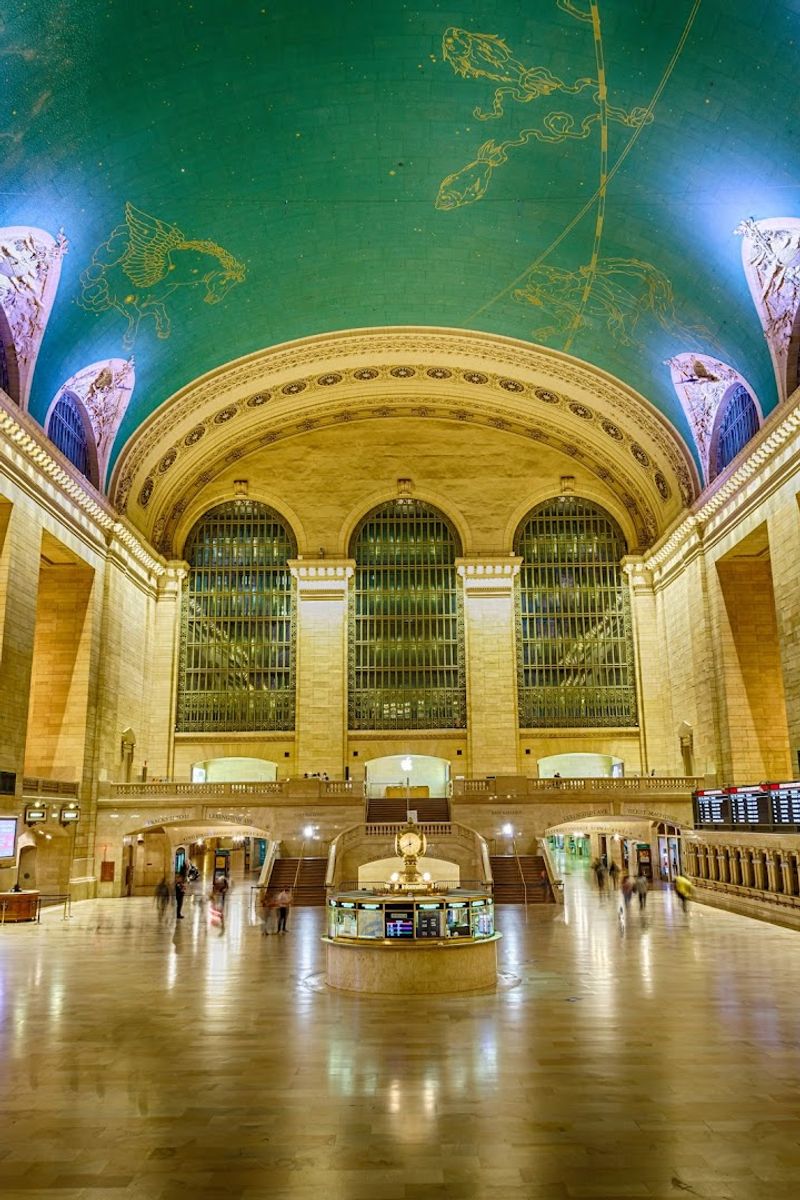
Opened in 1913, Grand Central isn’t just a train station, it’s a Beaux-Arts palace that happens to move half a million people through it every day. The main concourse is massive, with that famous celestial ceiling mural showing constellations in gold leaf. Fun fact: they’re actually painted backwards, like you’re looking at the sky from outside the universe.
The architecture is all about grandeur and flow. Ramps instead of stairs, massive arched windows pouring in light, and the iconic four-sided clock in the center that’s worth millions just for the opal in its faces. Every detail was designed to make travel feel special.
Beneath the main level, there’s a whole network of tunnels and lower concourses, plus the famous Whispering Gallery where the arched tile ceiling carries sound so clearly you can hear someone whispering from across the room. Try it, it’s trippy.
The terminal was almost demolished in the 1960s to build a skyscraper. Jacqueline Kennedy Onassis led the fight to save it, and thank goodness she did. Standing in that main concourse, looking up at the ceiling, you’re in one of the most beautiful public spaces in the world.
14. TWA Flight Center At JFK
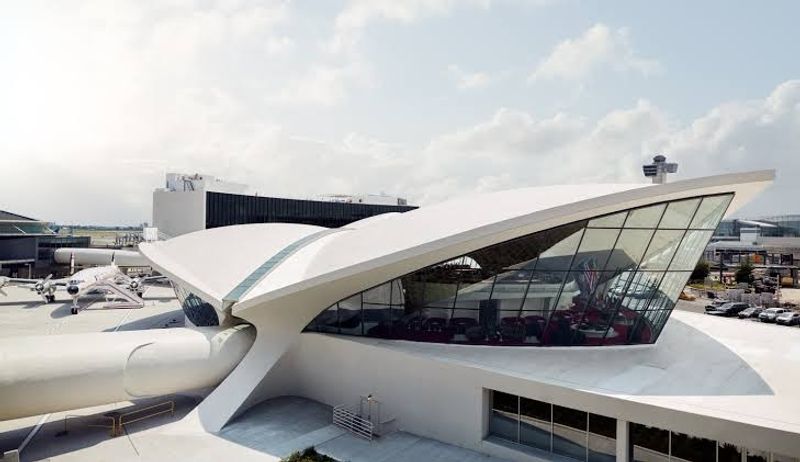
Eero Saarinen designed a building that looks like it’s about to take off. Completed in 1962, the TWA Flight Center at JFK was revolutionary, a swooping, wing-shaped terminal made of concrete that captured the excitement of the jet age. Walking in, you feel like you’ve entered a retro-futuristic dream.
The interior is all curves, no right angles anywhere. The flowing staircases, the organic shapes, the way light pours through the windows, everything was designed to make passengers feel the thrill of flight before they even boarded. It’s architecture as experience, not just structure.
The terminal was abandoned for years after TWA went under, but it’s been restored and turned into a hotel. Now you can stay overnight in this mid-century modern icon, surrounded by period-accurate furniture and design details that transport you back to when air travel was glamorous.
Saarinen died before it opened, but his vision lives on in every curve and line. Standing in the main terminal, looking at those sweeping concrete wings overhead, you see what happens when an architect thinks beyond function and creates pure art. It’s a building that still feels futuristic 60 years later.
15. Olana State Historic Site
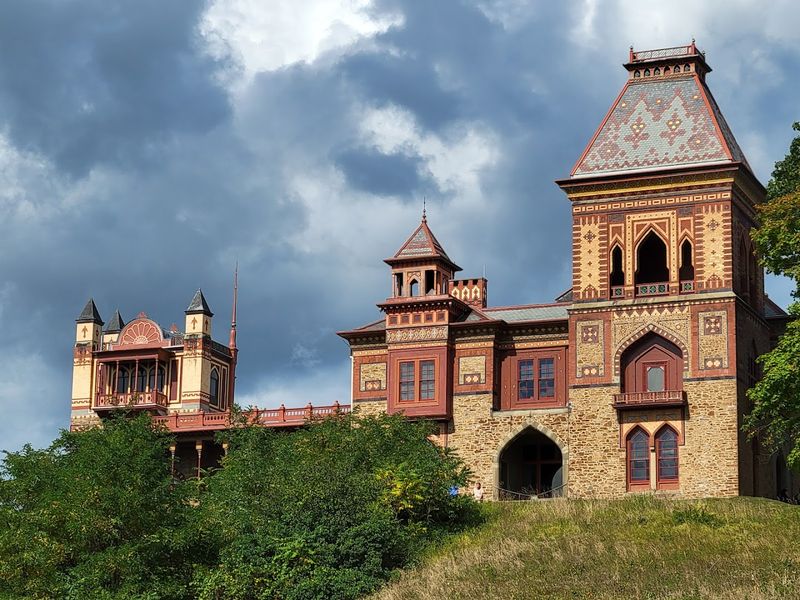
Perched on a hill overlooking the Hudson River, Olana is the wildest house you’ll see in New York. Frederic Edwin Church, a Hudson River School painter, designed this Persian-inspired mansion himself in the 1870s. It’s a mix of Middle Eastern, Victorian, and whatever else Church felt like throwing in, and somehow it all works.
The exterior is painted in vibrant colors, reds, yellows, greens, with stenciled patterns and decorative brickwork that make it look like a palace from a fairy tale. Church treated the whole property as a work of art, designing the landscape, the views, and even the approach roads to create specific visual experiences.
Inside, the rooms are packed with art, artifacts, and architectural details from Church’s travels. The studio has massive windows framing views of the river and mountains, and you can see why he chose this spot. The house and landscape work together as a single artistic vision.
Tours take you through the house and grounds, and honestly, the setting is as impressive as the architecture. Standing on the hilltop, looking out over the Hudson Valley with this eccentric mansion behind you, you see how one artist’s vision shaped an entire landscape. It’s architecture, art, and nature all blended together.