
The Under-The-Radar Aviation Museum In New York You’ve Probably Never Heard Of, But Should Visit This Year

You don’t expect to stumble into something this cool in New York, especially not when it’s flying so far under the radar. From the outside, it looks low-key.
Step inside and suddenly you’re surrounded by aircraft, stories, and pieces of history that feel way bigger than the building itself.
It’s not crowded. It’s not flashy.
It’s just quietly impressive. You move from exhibit to exhibit thinking, wait… how did I not know about this?
Old planes with real backstories. Interactive displays that pull you in.
In New York, where attractions compete loudly for attention, this place just does its thing.
By the time you leave, you’re already telling someone about it like you personally discovered it. And honestly, that’s half the fun.
The Jet Age Gallery Will Blow Your Mind

Walking into the Jet Age Gallery feels like stepping onto an active aircraft carrier deck. The space houses some of the most recognizable military aircraft ever built, arranged in a way that lets you get ridiculously close to these engineering marvels.
An F-14 Tomcat sits there looking exactly like it could launch into combat at any moment, while an A-6 Intruder shows off its distinctive profile that made it perfect for all-weather attack missions.
The coolest part? You can actually climb into a real Boeing 707 cockpit and sit where pilots once controlled these massive jets.
Every switch, dial, and instrument remains intact, giving you a genuine feel for what commercial aviation looked like during its golden age. The docents stationed throughout this gallery know their stuff and love sharing stories about these aircraft and the people who flew them.
Republic Aviation and Grumman both called Long Island home, and their legacy dominates this gallery. The F-105 Thunderchief, A-10 Warthog, and other jets represent decades of innovation that happened right in this region.
Interactive displays explain how jet engines work, what makes supersonic flight possible, and why certain designs became legendary while others faded into obscurity. The lighting creates dramatic shadows that make these machines look even more impressive than they already are.
Quick Snapshot: What Makes This Place Special

Name: Cradle Of Aviation Museum.
Type: Aerospace museum showcasing historic aircraft, spacecraft, and hands-on exhibits that trace the full story of flight.
Setting: Massive hangar-style galleries filled with suspended fighter jets, vintage biplanes, and space exploration artifacts, including a real lunar module.
Location: Garden City on Long Island at Charles Lindbergh Boulevard, on the historic grounds where Grumman, Republic, and other major manufacturers once built aircraft that shaped American aviation.
Arrival: Large, completely free parking lot, which feels like a small victory compared to city parking struggles.
Collection: More than seventy-five aircraft and spacecraft, ranging from a Curtiss JN-4 Jenny to an A-10 Thunderbolt II, covering everything from the Wright Brothers era to modern space travel.
Space Exploration Exhibits That Rival The Smithsonian
The museum houses an actual Lunar Excursion Module that represents one of humanity’s greatest achievements. Standing beneath this spindly looking spacecraft, you realize how brave those astronauts were to trust their lives to something that looks like it was built from aluminum foil and prayer.
Grumman built these modules on Long Island, making this display particularly meaningful since local workers literally sent humans to the moon.
Two genuine moon rocks sit protected behind glass, brought back from Apollo missions and loaned to the museum for public viewing. Touching actual pieces of another world remains impossible, but seeing them up close creates a connection to space exploration that photographs never capture.
The exhibit includes spacesuits, mission patches, flight plans, and personal items that astronauts carried during their journeys beyond Earth’s atmosphere.
Interactive displays let visitors experience what launching into space feels like, how astronauts eat and sleep in zero gravity, and why getting to the moon required such precise calculations. The Space Shuttle program gets extensive coverage too, with displays explaining how these reusable spacecraft changed our approach to space travel.
Kids especially love the hands-on elements that turn abstract concepts into tangible experiences they can understand and remember long after leaving the museum.
Early Aviation Gallery: Where Dreams First Took Flight
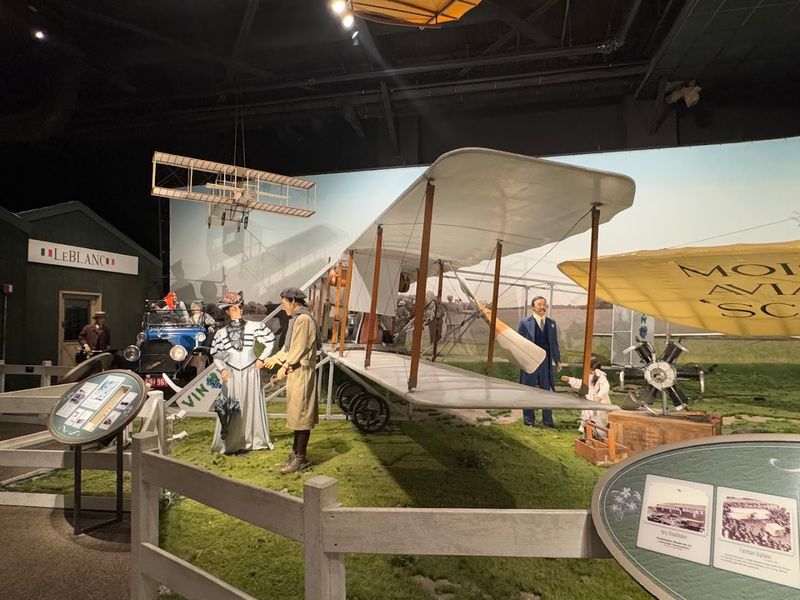
Aviation’s earliest days come alive in a gallery that showcases the fragile machines that first conquered the sky. A Curtiss JN-4 Jenny hangs overhead, the same type of biplane that barnstormers flew across America, thrilling crowds and proving that flight was more than a temporary fad.
These wooden and fabric contraptions look impossibly delicate compared to modern aircraft, yet they started a revolution that changed human civilization forever.
The exhibit traces Long Island’s crucial role in aviation development, starting with the Hempstead Plains where countless test flights occurred. Glenn Curtiss, the Wrights, and other pioneers recognized that this flat, open landscape provided perfect conditions for experimental aircraft.
Photographs show fields now covered by suburbs where history-making flights once took place, creating a strange contrast between past and present.
Mannequins dressed in period clothing demonstrate what early aviators wore, from leather helmets to heavy goggles that protected against wind and engine oil. Original flight logs, handwritten notes, and correspondence reveal the personalities behind these aviation breakthroughs.
The gallery doesn’t shy away from discussing the dangers either, acknowledging the crashes and fatalities that accompanied progress. Understanding what these pioneers risked makes their achievements even more impressive and their courage undeniable.
World War Galleries: Long Island Built The Arsenal Of Democracy

Long Island factories produced thousands of aircraft that helped win World War II, and these galleries document that massive industrial effort. Republic Aviation’s P-47 Thunderbolt dominates one section, a beast of a fighter plane that pilots nicknamed the Jug because of its bulky appearance.
This aircraft could absorb tremendous battle damage and still bring pilots home safely, earning a reputation as one of the war’s toughest fighters.
Grumman’s contributions receive equal attention, with displays featuring the F6F Hellcat that dominated Pacific skies and the TBF Avenger torpedo bomber that George H.W. Bush flew during his service.
The exhibits don’t just show pretty planes but explain the human cost of aerial warfare through personal stories, recovered artifacts, and photographs that capture both triumph and tragedy.
The home front story matters too, with displays showing how Long Island transformed into a massive war production center. Women who built these aircraft get recognition for their essential contributions, challenging the stereotype that only men participated in wartime manufacturing.
Ration books, propaganda posters, and civilian defense materials illustrate how the entire community mobilized for victory, making this more than just a military history lesson.
Interactive Experiences That Make Learning Actually Fun
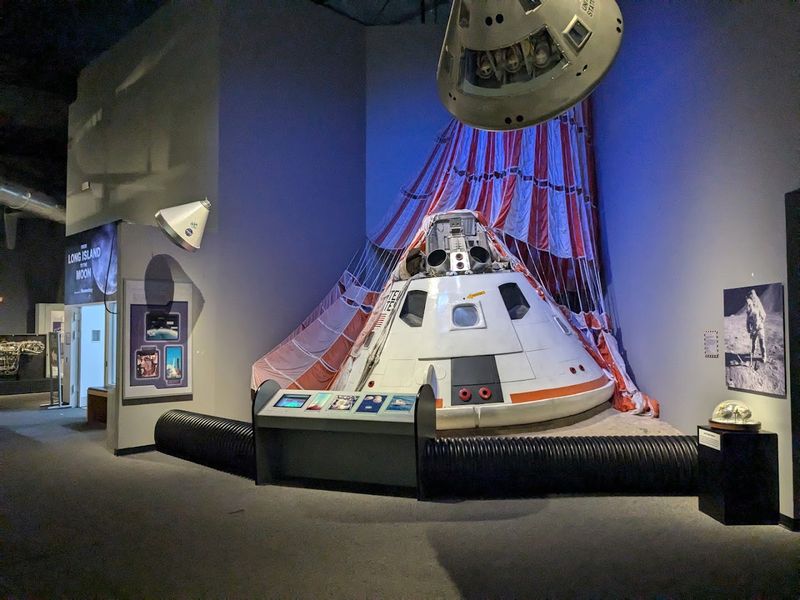
Forget standing around reading plaques until your feet hurt. This museum packed interactive elements throughout every gallery, turning passive observation into active learning that works for all ages.
Flight simulators let visitors experience takeoffs, landings, and aerial maneuvers without the risk of actual crashes. The controls respond realistically enough to give you genuine appreciation for pilot skill while remaining accessible to complete beginners.
Buttons, levers, and touchscreens appear everywhere, controlling demonstrations that explain aerodynamics, propulsion, navigation, and other concepts that make flight possible. A wind tunnel lets you test different wing shapes and see how air flows around various designs.
Another exhibit demonstrates how radar works, using interactive displays that show how invisible radio waves detect distant objects. These hands-on elements transform abstract physics into concrete experiences that stick in your memory.
Pro tip: The museum designed a dedicated play space for toddlers whose attention spans can’t handle hours of aircraft viewing. This area features age-appropriate activities that introduce basic aviation concepts through play rather than instruction.
Who this is for: Older kids and adults can spend serious time exploring detailed exhibits that go deep into technical subjects. The planetarium adds another dimension entirely, with shows that connect aviation to space exploration and help visitors understand our place in the cosmos.
Final Verdict: Why This Museum Deserves Your Time

The Cradle of Aviation Museum punches way above its weight compared to better-known institutions. Its collection rivals anything you’ll find at the Smithsonian, the focus on Long Island’s aviation heritage provides unique stories you won’t encounter elsewhere, and the admission price makes this accessible to families on reasonable budgets.
The museum staff clearly loves what they do, and that enthusiasm shows in how well-maintained exhibits remain and how knowledgeable docents answer questions with genuine passion.
Location works in your favor too since Garden City sits easily reachable from New York City via the Long Island Railroad or car. Free parking eliminates one major headache that plagues most museum visits, and the surrounding area offers plenty of dining options for before or after your visit.
Plan on spending at least three hours to properly explore the galleries, though serious aviation enthusiasts could easily fill an entire day without getting bored.
This museum proves that you don’t need Manhattan zip codes or massive marketing budgets to create world-class cultural institutions. Long Island’s aviation history deserves celebration, and the Cradle of Aviation Museum does that job brilliantly while remaining welcoming to casual visitors and hardcore enthusiasts alike.
Insider note: Skip the crowded tourist traps and discover this gem that most New Yorkers somehow overlook despite its significance and quality.