
This Massive Ohio Car Museum Showcases Over 140 Vintage Classics
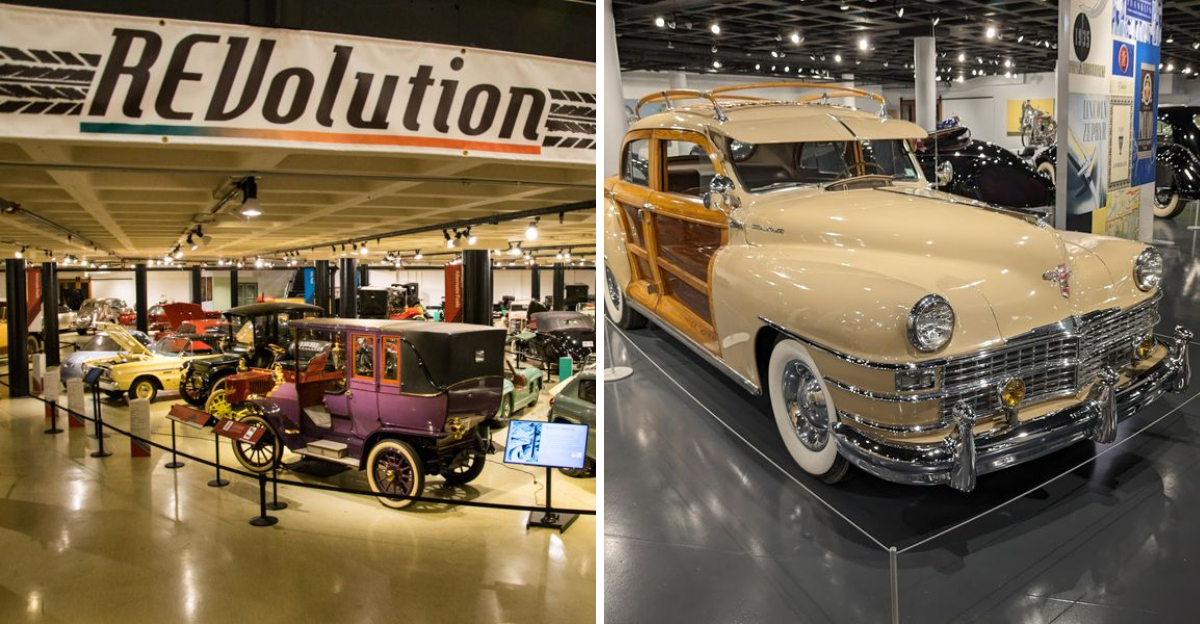
Step inside and you’re instantly surrounded by more than a century of automotive history. More than 170 historic vehicles trace the evolution of American transportation, from early electric experiments to elegant luxury cars once used by presidents.
Rare Ohio-built models highlight the state’s role in shaping the industry, offering a closer look at innovation born in the Midwest. Aviation exhibits add an unexpected twist, connecting the story of cars with the broader history of mechanical progress.
Every polished fender and restored engine reflects the craftsmanship and ambition that transformed how Americans move.
Home To More Than 170 Historic Vehicles Under One Roof
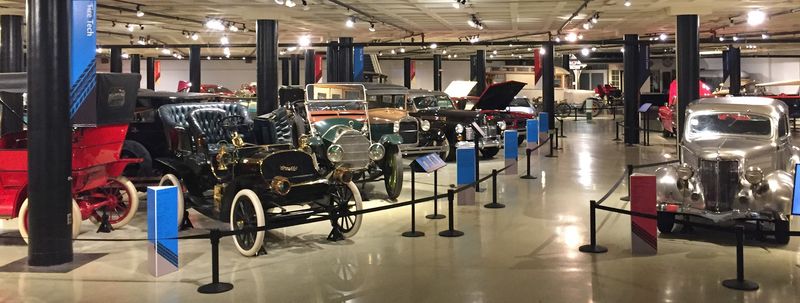
Walking through the Crawford Auto-Aviation Museum feels like stepping into a time machine that spans more than a century of transportation history. The collection extends across two floors, with the basement level holding the majority of vehicles in a carefully curated arrangement that allows visitors to move chronologically through automotive evolution.
Motorcycles, carriages, and automobiles share the space with aviation artifacts, creating a comprehensive view of how Americans learned to move faster and farther.
The museum’s size surprises first-time visitors who often expect a modest regional collection. Instead, they encounter row after row of gleaming vehicles, each one restored to showroom condition or preserved in its original state to demonstrate authentic aging.
The spacing between exhibits allows for photography without crowds blocking views, a detail that enthusiasts particularly appreciate.
Every vehicle comes with descriptive signage explaining its historical significance and technical specifications. Volunteers throughout the museum carry binders with additional information and can answer detailed questions about specific makes and models, adding a personal dimension to the self-guided experience.
A Collection That Spans The Birth Of The Automobile To Modern Classics
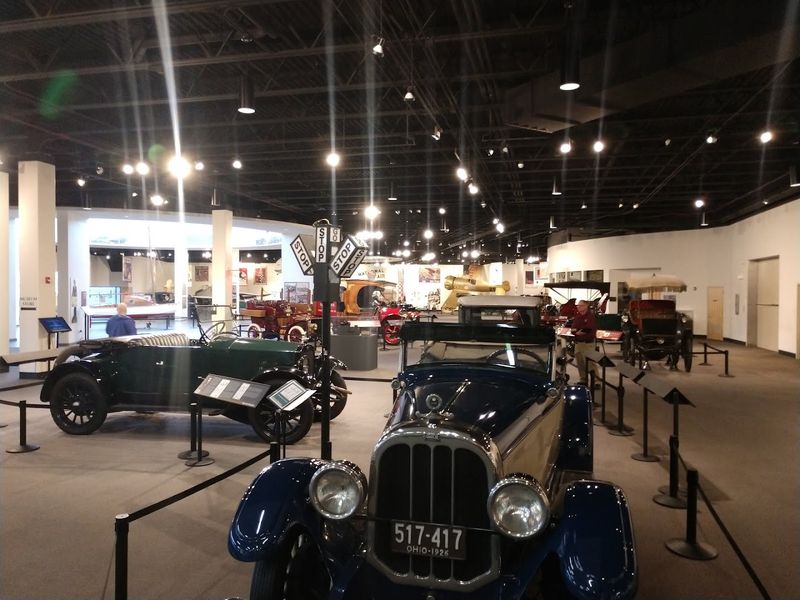
The chronological arrangement at Crawford tells the complete story of automotive development without gaps or missing chapters. Early horseless carriages from the dawn of the twentieth century sit near the entrance, their wooden wheels and brass fittings representing the experimental phase when nobody quite knew what shape a car should take.
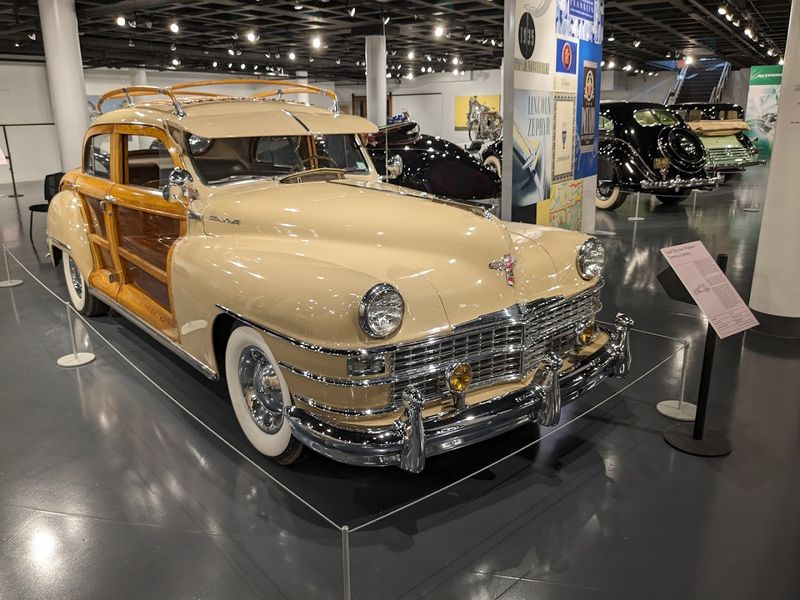
Moving through the decades, visitors watch as running boards disappear, headlights become integrated into fenders, and streamlining transforms boxy shapes into aerodynamic forms.
The progression reveals how quickly automotive technology advanced during its first fifty years. A vehicle from 1910 looks primitive compared to a 1930 model, yet only twenty years separate them.
The collection includes representative examples from each major era, allowing visitors to understand not just individual vehicles but broader trends in engineering and design philosophy.
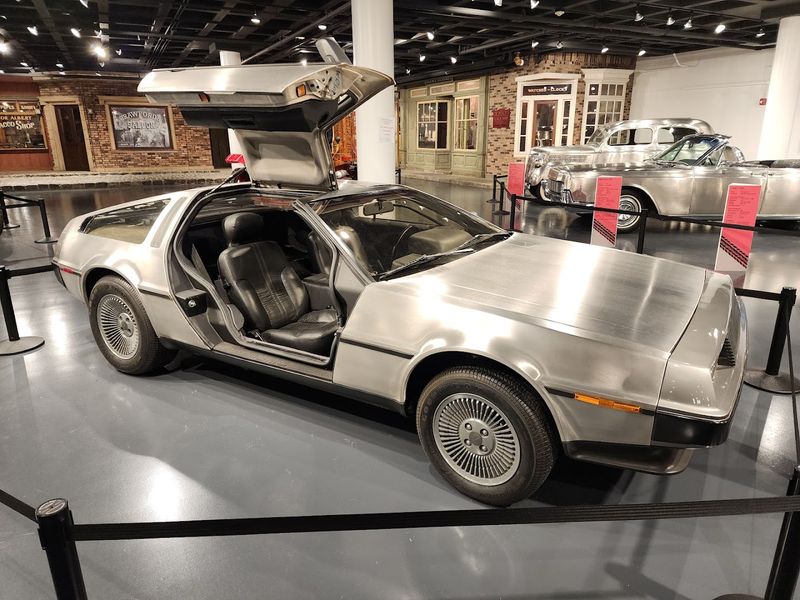
Later sections showcase muscle cars from the 1960s and 1970s alongside luxury vehicles that defined American prosperity. The museum even includes a DeLorean, which consistently draws attention from younger visitors familiar with its Hollywood fame.
Rare Cleveland-Built Cars Tell Ohio’s Automotive Story
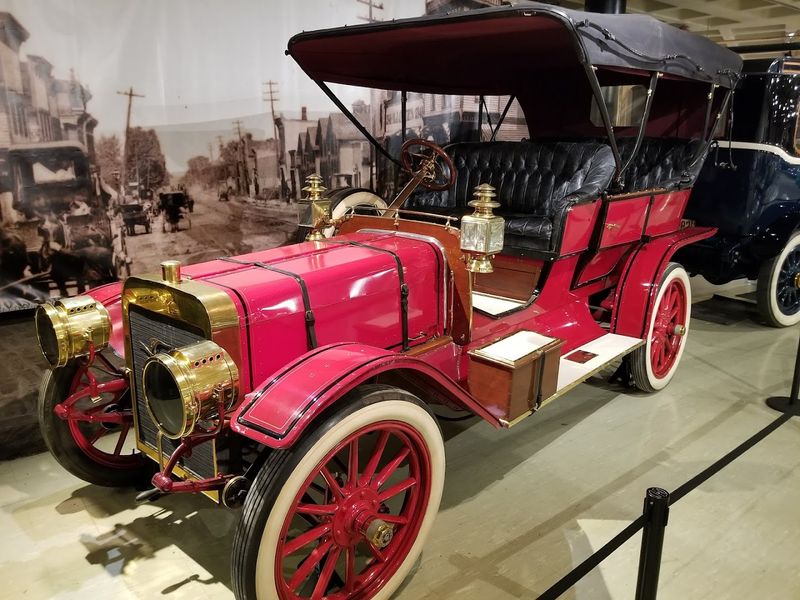
Cleveland once ranked as a major center of automobile manufacturing, producing dozens of brands that have since disappeared from public memory. The Crawford collection preserves these local manufacturers, reminding visitors that Detroit did not hold a monopoly on automotive innovation.
Vehicles bearing names like Peerless, Jordan, and White sit proudly among the exhibits, representing an era when nearly every industrial city attempted to stake its claim in the booming car business.
These Cleveland-built machines often featured innovations that later became industry standards. Local manufacturers experimented with different engine configurations, body styles, and manufacturing techniques, contributing to the rapid evolution of automotive design.
Some succeeded for decades before consolidation eliminated smaller independent makers, while others lasted only a few years before financial pressures forced closure.
The museum’s focus on regional automotive history gives Cleveland residents a particular reason to visit. Learning that their city played a significant role in transportation history adds local pride to the general fascination with vintage vehicles, making the experience more personally meaningful than viewing cars built elsewhere.
Early Electric Cars That Prove Innovation Isn’t New
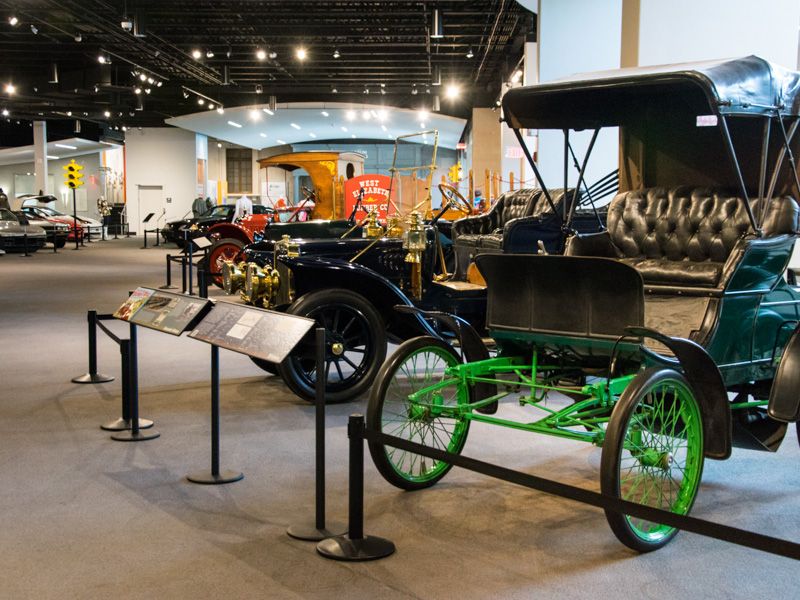
Long before Tesla made electric vehicles fashionable, early twentieth-century manufacturers produced battery-powered cars that appealed to urban drivers seeking quiet, clean transportation. The Crawford collection includes several electric vehicles that demonstrate how this technology actually predates widespread gasoline adoption.
These machines operated silently, produced no exhaust, and required no hand-cranking to start, advantages that made them particularly popular with women drivers who found gasoline cars physically demanding and socially inappropriate.
The electric cars on display reveal surprisingly sophisticated engineering for their era. Battery compartments, motor housings, and control mechanisms show thoughtful design, even if the limited range and slow speeds eventually doomed these vehicles to obscurity.
Most electric cars could travel only twenty to forty miles before requiring a lengthy recharge, a limitation that became fatal as Americans demanded greater mobility and faster speeds.
Seeing these century-old electric vehicles prompts reflection on how technology cycles through phases of popularity. What seemed inevitable in 1910 disappeared by 1920, only to return a century later with better batteries and different social priorities driving adoption.
Aviation Exhibits That Add A Surprising Twist
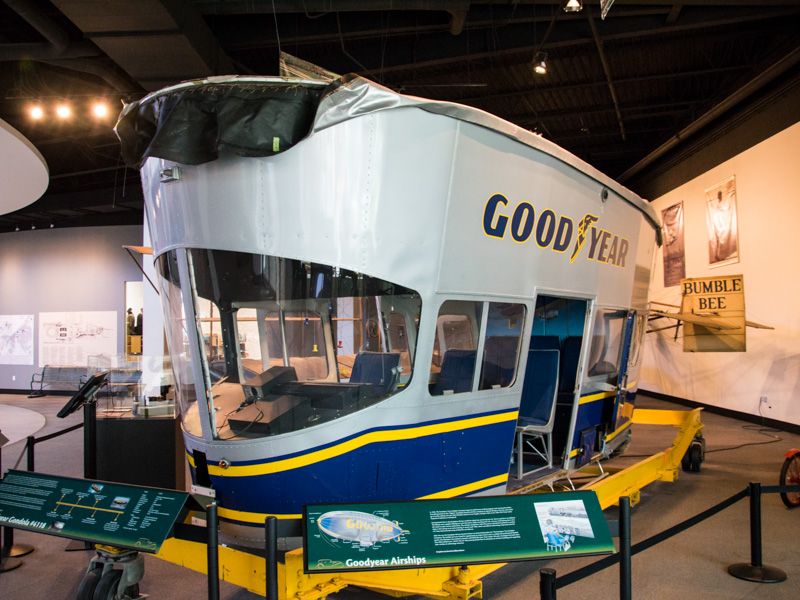
The aviation component of the Crawford collection catches many visitors by surprise, adding vertical dimension to what they expected would focus solely on ground transportation. Small aircraft suspended from ceilings or positioned on the floor demonstrate that Cleveland’s transportation history extends beyond automobiles into the development of flight.
The museum includes exhibits on women aviators, acknowledging their contributions from aviation’s earliest days when flying remained dangerous and socially unconventional.
A Goodyear blimp gondola allows visitors to peer inside and imagine floating above the city, while displays explain Cleveland’s role in lighter-than-air craft development. Racing planes showcase the intersection of aviation and competition, revealing how speed records drove technological advancement in both cars and aircraft.
The museum occasionally features special exhibits on airplane racing history, including appearances by famous military aircraft like the P-51 Mustang.
These aviation exhibits remind visitors that the early twentieth century witnessed multiple transportation revolutions simultaneously. Engineers and entrepreneurs pursued progress on every front, creating machines that transformed human mobility in ways that would have seemed impossible just decades earlier.
A 1913 Baker Electric That Once Carried A U.S. President
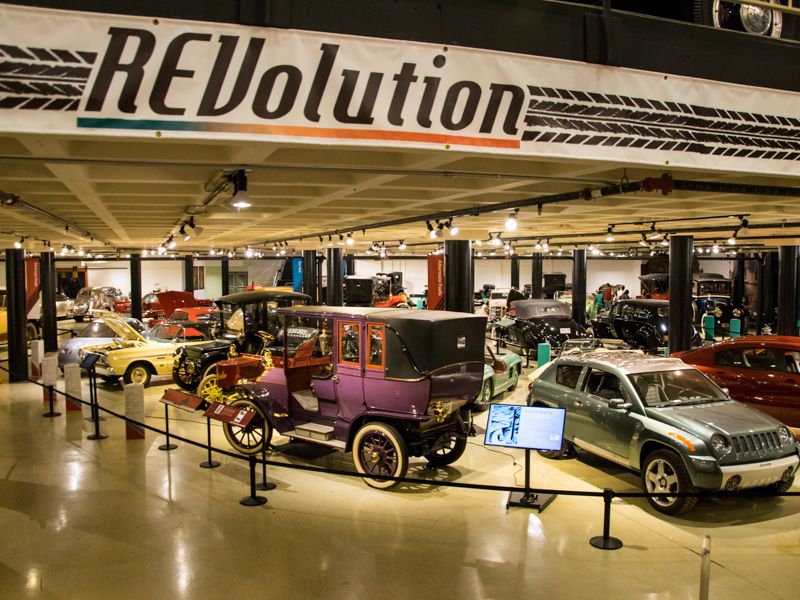
Among the museum’s most historically significant vehicles sits a 1913 Baker Electric that once served presidential transportation duties. This elegant machine represents the peak of electric vehicle refinement before gasoline cars dominated the market.
The Baker company built some of the finest electric automobiles available, with luxurious interiors, smooth operation, and styling that conveyed dignity appropriate for important passengers.
Presidential use elevated certain vehicles to historical artifact status, transforming them from mere transportation into tangible connections with national leadership. The Baker Electric’s association with White House service makes it more than just another antique car; it becomes a piece of political history that happened to have wheels.
Visitors often pause longer at this vehicle, imagining the president of that era riding through Washington in silent electric comfort.
The Baker also demonstrates how electric vehicles once competed at the highest levels of society. Wealthy buyers and government officials chose electric cars for their refinement and reliability, not as compromises but as premium options.
This historical context challenges modern assumptions about electric vehicles representing new or experimental technology rather than a revival of old ideas.
Rotating Exhibits Keep Every Visit Fresh
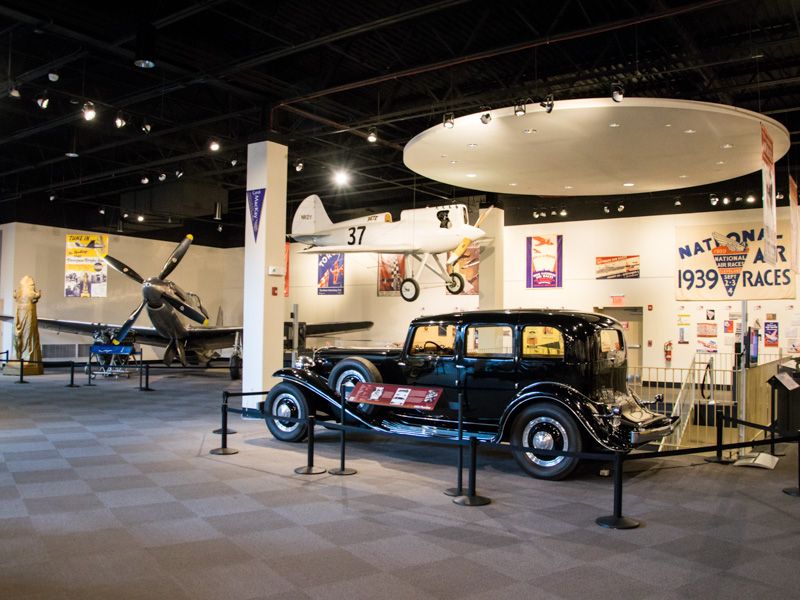
The Crawford avoids static presentation by regularly introducing temporary exhibits that focus on specific themes, manufacturers, or automotive phenomena. Recent exhibitions have explored Ford Mustang history across multiple generations, allowing visitors to see how one iconic nameplate evolved over sixty years.
These rotating displays ensure that repeat visitors always encounter something new, providing incentive to return rather than assuming they have seen everything the museum offers.
Special event days add further variety to the museum calendar. Euclid Beach Day celebrates Cleveland’s historic amusement park with games, treats, and unlimited carousel rides, creating a festive atmosphere that appeals to families.
Other events might focus on specific car clubs, restoration techniques, or automotive history topics that draw enthusiasts seeking deeper knowledge.
This commitment to changing exhibits demonstrates institutional vitality and prevents the museum from becoming a dusty warehouse where nothing ever changes. The collection remains dynamic, with vehicles rotating between display and storage, ensuring that the basement treasure trove continues revealing surprises even to visitors who have explored the museum multiple times over the years.
Luxury Icons From Packard, Pierce-Arrow, And Cadillac
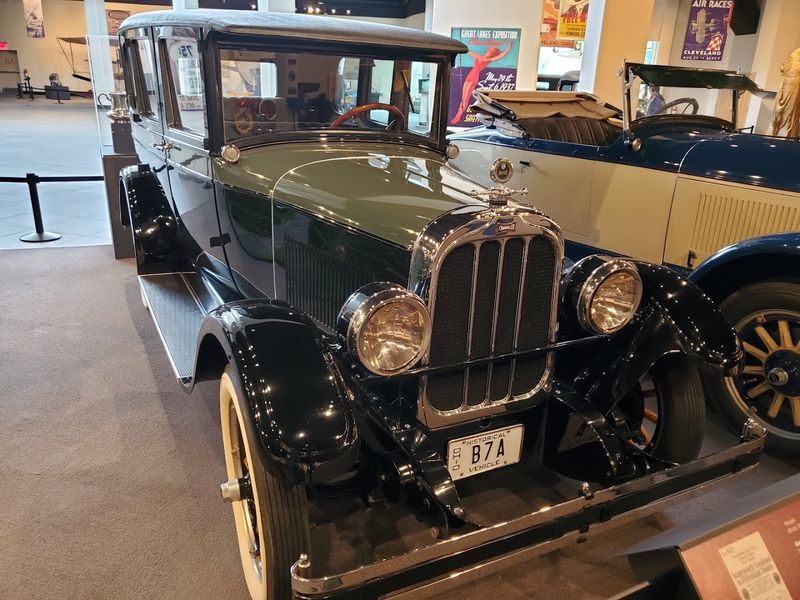
American luxury automobiles from the pre-World War II era represent some of the finest craftsmanship ever applied to transportation. The Crawford collection includes examples from manufacturers who competed to build the most prestigious, expensive, and beautifully engineered cars money could buy.
Packard, Pierce-Arrow, and Cadillac each developed distinct approaches to luxury, with hand-built bodies, powerful engines, and details that required hundreds of hours of skilled labor to complete.
These vehicles served as rolling statements of wealth and taste during an era when social hierarchy remained more rigid and visible than today. Owning a Packard or Pierce-Arrow announced success in unmistakable terms, much like wearing expensive jewelry or living in a mansion.
The cars featured innovative engineering alongside their luxury appointments, with advanced suspension systems, powerful engines, and construction quality that allowed many to survive nearly a century.
Walking among these luxury icons reveals how much automotive design has changed. Modern luxury cars prioritize technology and performance over the decorative excess and massive proportions that defined prestige in earlier eras, reflecting broader shifts in cultural values and manufacturing economics.
A Museum Located Inside Cleveland’s History Center
The Crawford Auto-Aviation Museum occupies space within the larger Cleveland History Center at 10825 East Boulevard, creating an integrated experience that goes beyond automotive history. Visitors purchasing admission gain access to multiple collections and exhibits exploring Cleveland’s broader past, including the famous Euclid Beach Carousel that operates with free rides every fifteen minutes.
This carousel survived the amusement park’s closure and now serves as a beloved feature that appeals especially to families with children.
The History Center location means visitors can easily spend an entire day exploring different aspects of regional heritage. After viewing automobiles and aircraft, they might tour period rooms, examine Cleveland sports memorabilia including the neon Chief Wahoo sign from old Municipal Stadium, or explore exhibits on local industry and culture.
The mansion tours offer glimpses into how wealthy Clevelanders lived during the city’s industrial peak.
This integration benefits both institutions by drawing diverse audiences who might visit for cars but discover interest in broader history, or vice versa. The shared admission structure encourages comprehensive visits rather than quick stops focused on a single collection.
Interactive Displays That Explain How Cars Changed America
Understanding why old cars matter requires context about their broader impact on American life, work, and landscape. The Crawford provides this framework through interactive displays and educational materials that explain how automobiles transformed everything from courtship patterns to suburban development.
Worksheets available at the entrance help children engage with exhibits through age-appropriate activities that turn museum visiting into active learning rather than passive observation.
These educational components address questions that naturally arise when viewing historical vehicles. Why did running boards disappear?
How did electric starters change who could drive? What role did highways play in reshaping cities?
The displays answer such questions through clear explanations, photographs, and artifacts that illustrate automotive influence beyond the machines themselves.
Families particularly appreciate these interactive elements, which prevent children from becoming bored during extended museum visits. The combination of beautiful vehicles, hands-on activities, carousel rides, and varied exhibits creates an experience that appeals across age groups, making the Crawford suitable for multigenerational outings where everyone finds something engaging rather than tolerating displays that interest only automotive enthusiasts.
One Of The Most Significant Automotive Collections In The Midwest
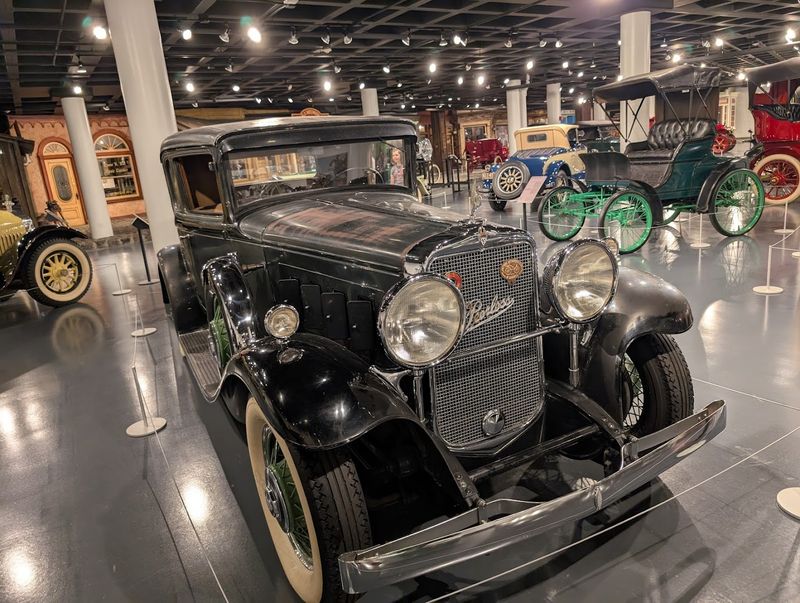
Regional automotive museums exist throughout the Midwest, but few match the Crawford’s combination of size, quality, and historical significance. The collection earns comparison to larger institutions like the Henry Ford Museum in Detroit, though on a smaller scale more appropriate to Cleveland’s resources and focus.
What distinguishes the Crawford is its emphasis on regional automotive history alongside nationally significant vehicles, creating a collection that serves both local pride and broader historical documentation.
The museum’s reputation extends beyond casual visitors to serious automotive historians and collectors who recognize the rarity and condition of vehicles in the collection. Having more than 170 historic vehicles available for study and display represents decades of careful acquisition and preservation work.
Many vehicles exist in only single-digit surviving examples, making each one irreplaceable documentation of automotive evolution.
Visitors from other states consistently express surprise at discovering such an impressive collection in Cleveland, revealing how the museum remains somewhat underappreciated outside Ohio. Those who do visit invariably recommend it enthusiastically, suggesting that wider recognition would come if more people simply knew the Crawford existed and understood the scope of what it preserves.