
This Landmark In New York Lets You Stand In Three States At Once
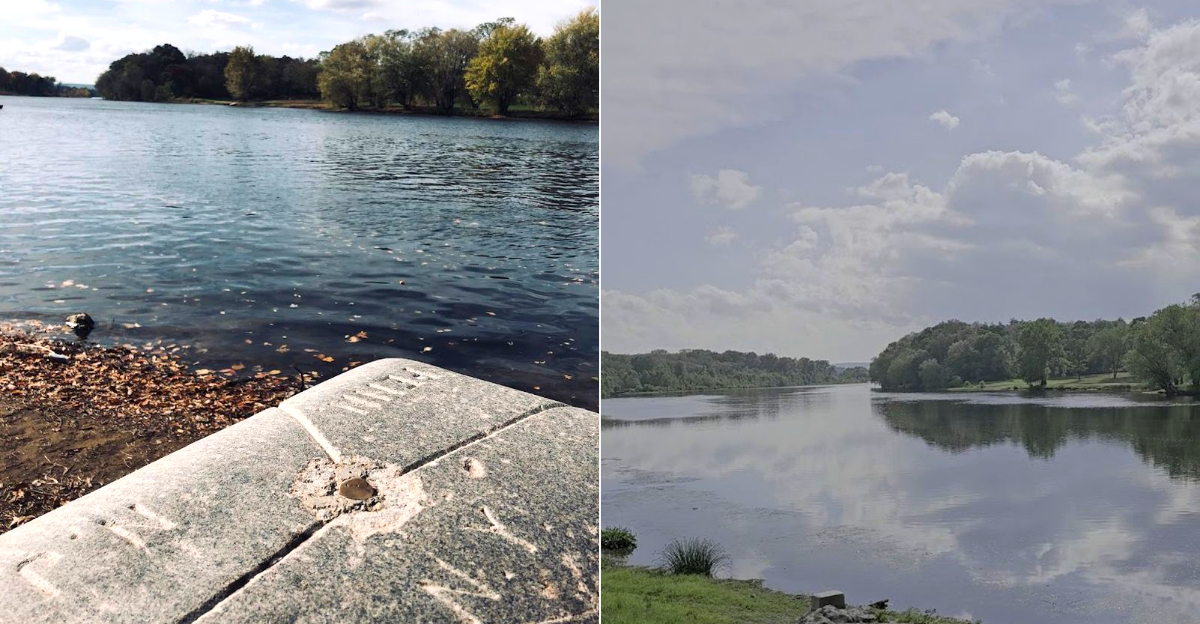
It sounds like one of those things that can’t be real… until you’re actually standing there doing it. One step here, one step there, and suddenly you’re in three places at the same time.
It’s simple, a little surreal, and way more fun than you’d expect.
New York has a spot where three states meet, and you can stand in all of them at once.
There’s no big setup or over-the-top attraction, just a marker that quietly makes the moment feel special. People take photos, test the lines, and laugh at how something so small can feel so unique.
This New York landmark isn’t about size or flash. It’s about that one moment where you realise exactly where you’re standing, and it sticks with you longer than you’d think.
One Rock, Three States, And Zero Explanation Needed
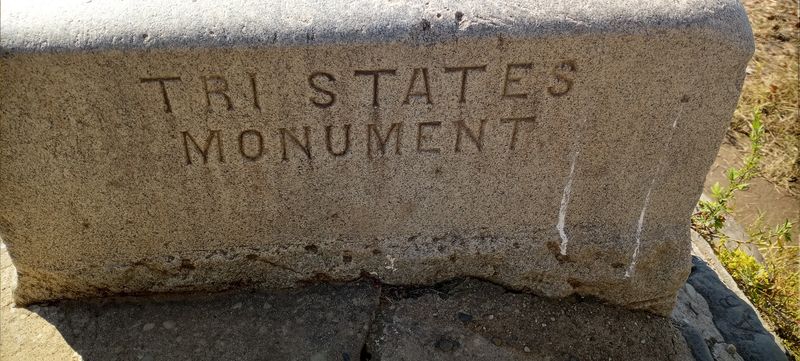
Imagine texting a friend: “Hey, I was in three states today and never got in a car between them.” The confused reply you receive is entirely worth the trip. The Tri-States Monument in Port Jervis, New York, is exactly the kind of place that sounds like an exaggeration until you are actually standing on it, looking down at the stone marker beneath your feet.
The monument is a modest granite block, almost understated in its appearance, but the idea it represents is genuinely remarkable. Carved into its surface are the boundary lines separating New York, New Jersey, and Pennsylvania, with a brass stake at the center marking the precise meeting point.
It sits at Carpenter’s Point, a narrow peninsula where the Neversink River flows into the Delaware River, giving the location both geographic significance and a quietly dramatic natural backdrop.
Established in the 1880s, the marker has attracted curious visitors for well over a century. The tripoint itself technically rests about 475 feet west in the middle of the Delaware River, but the monument serves as the symbolic and accessible stand-in that visitors can actually reach and stand upon.
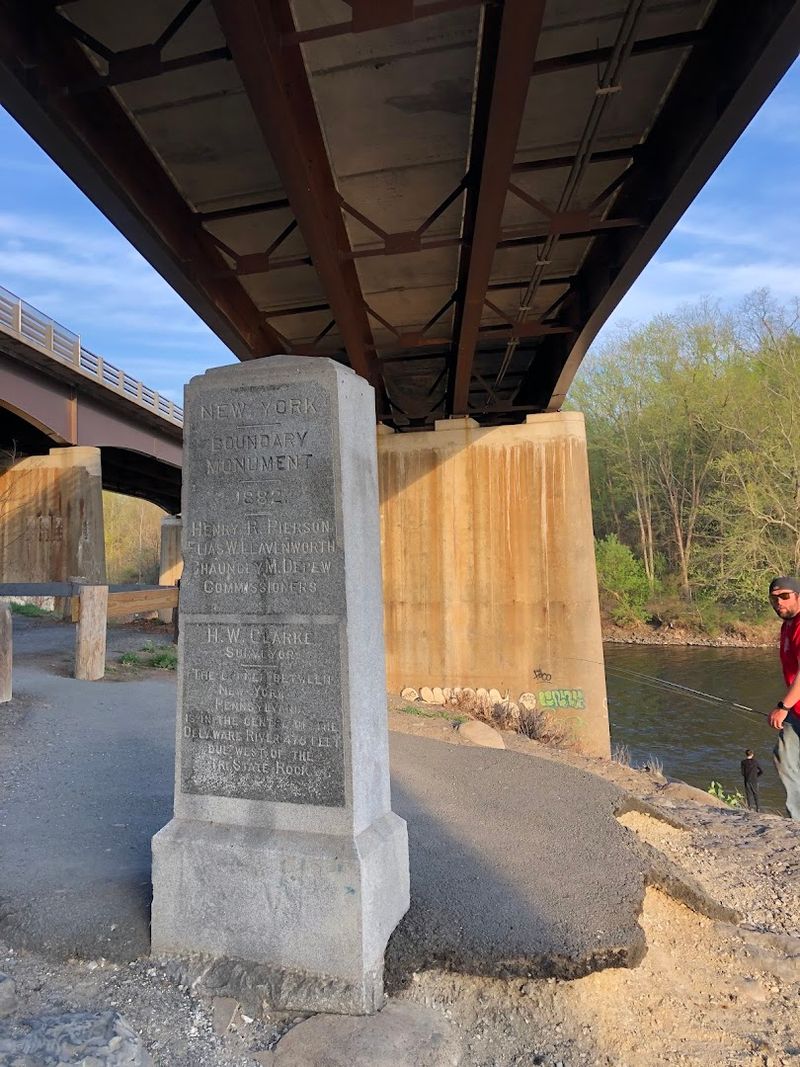
Nearby, the Witness Monument, a taller granite structure beneath the I-84 bridge, commemorates the boundary between New York and Pennsylvania along the river.
For anyone who collects unusual experiences the way others collect stamps or coffee mugs, this one earns its place at the top of the list. It is small, it is specific, and it is completely one of a kind.
The Geography Behind The Magic Of This Unusual Corner
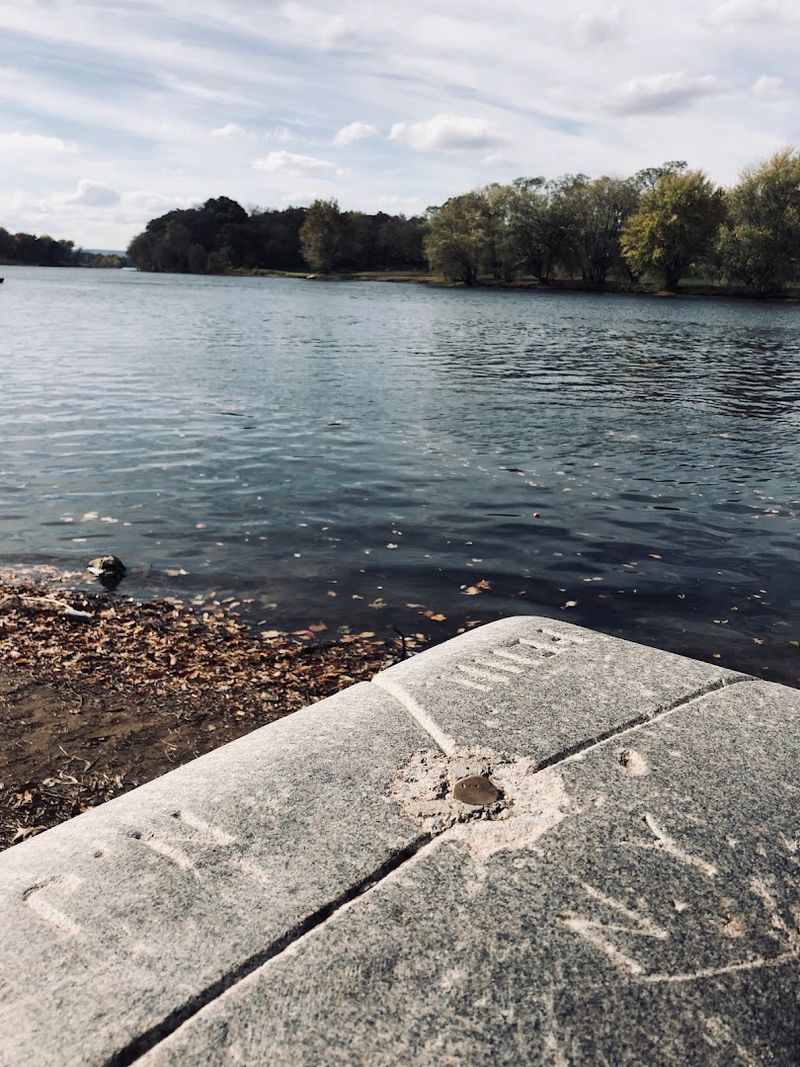
Geography rarely makes headlines, but every so often the way land and water arrange themselves creates something genuinely worth paying attention to. Carpenter’s Point, the narrow finger of land jutting into the Delaware River at Port Jervis, is one of those arrangements.
Two rivers converge here, the Delaware flowing south and the Neversink joining it from the northeast, forming a natural boundary point that surveyors in the nineteenth century formalized into an official tripoint marker.
The three states that meet at this location, New York, New Jersey, and Pennsylvania, each occupy a distinct section of the surrounding landscape. New York sits to the north and east, Pennsylvania lies across the Delaware to the west, and New Jersey runs along the southern bank.
The rivers themselves serve as natural state lines in several directions, which is why standing on the rocky peninsula feels like occupying a genuinely peculiar geographic position.
Tripoints, places where three political boundaries meet, exist across the United States, but most of them fall in remote or inaccessible locations. The Tri-States Monument stands out because it is reachable, walkable, and surrounded by enough natural beauty to make the visit feel worthwhile beyond the novelty alone.
The confluence of two rivers, the open sky above the water, and the quiet of the surrounding area all contribute to an atmosphere that feels surprisingly serene given how close the I-84 overpass looms overhead.
Walking Through Laurel Grove Cemetery To Reach The Monument
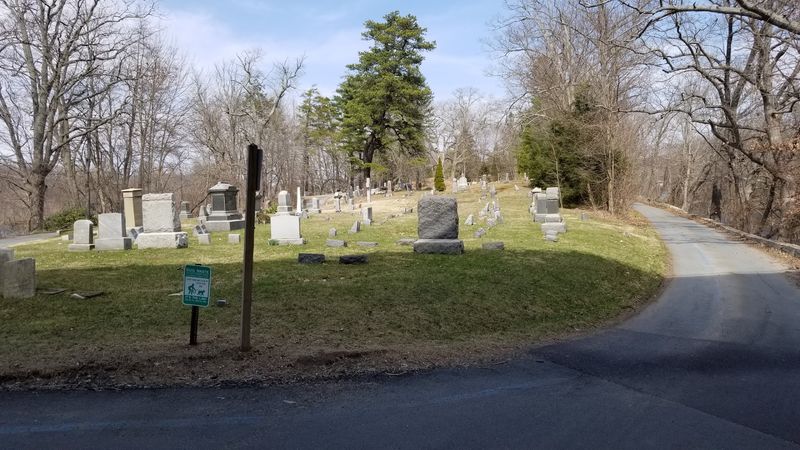
The route to the Tri-States Monument is not your average trailhead experience, and that is precisely what makes it memorable. Access to the monument runs directly through Laurel Grove Cemetery, a historic burial ground that dates back well into the nineteenth century.
Visitors enter from the cemetery’s main entrance near South Street, follow the road southward through the grounds, and eventually arrive beneath the I-84 overpass near the water’s edge.
Walking through the cemetery adds an unexpected layer of texture to the visit. The headstones lining the path carry dates from the 1800s, and there is something quietly absorbing about reading names and years carved into stone while making your way toward a geographic curiosity that was formalized around the same era.
Several visitors have noted spotting bald eagles along this stretch, which adds a genuinely wild element to an already unusual outing.
Drivers can navigate through the cemetery all the way to a small parking area beneath the bridge, which is helpful for those who prefer a shorter walk. From the parking area, the monument requires a brief descent down an embankment to the water’s edge, and the terrain is uneven and can be slippery when wet.
A second, more accessible marker near the path provides an alternative for those who cannot manage the climb down to the main granite block.
One practical note worth mentioning: Google Maps has reportedly directed visitors to an incorrect entrance on occasion, so following signs for Laurel Grove Cemetery from South Street is the more reliable approach. The cemetery closes at dark, so timing your visit accordingly is simply good planning.
What The Monument Actually Looks Like Up Close
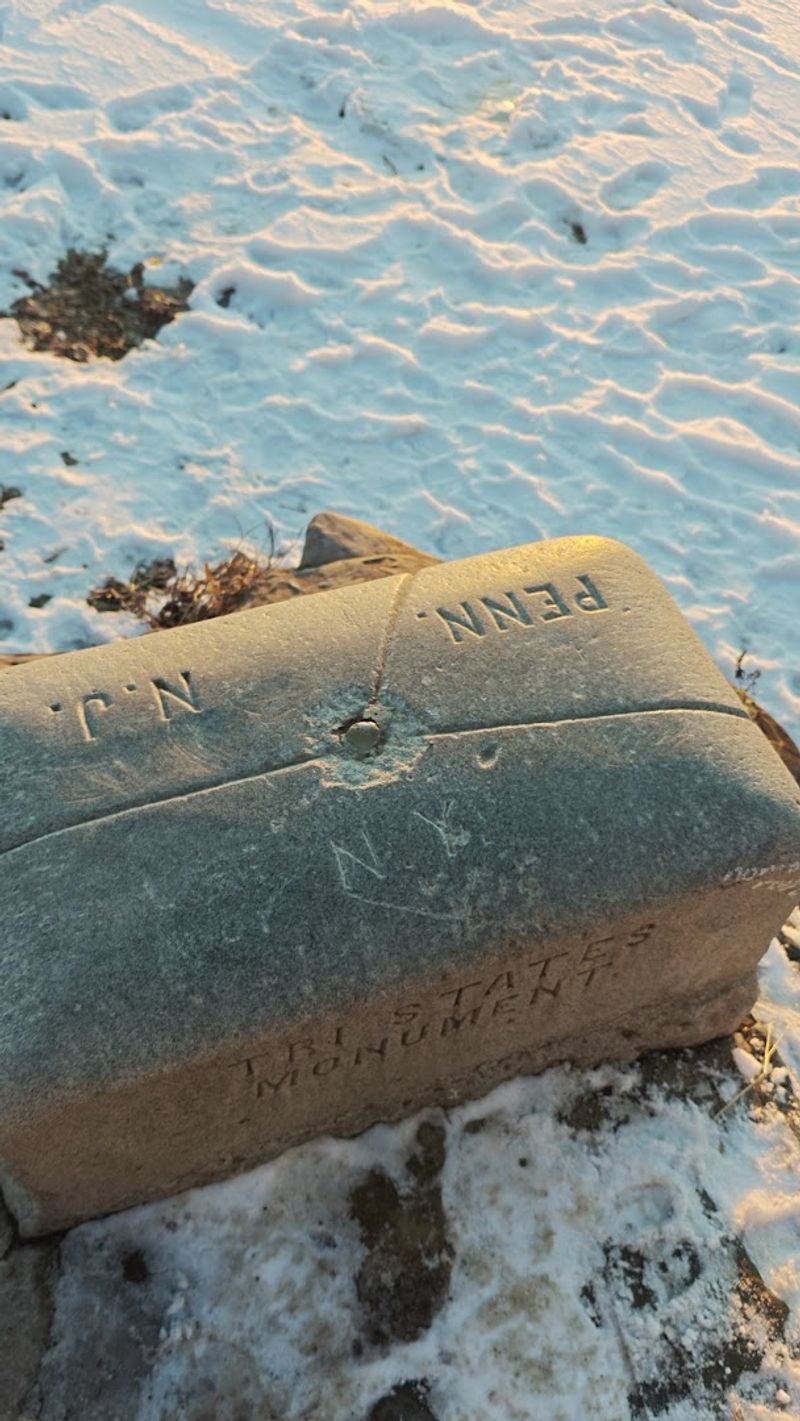
There is a certain kind of traveler who arrives at a famous landmark expecting grandeur and leaves pleasantly surprised by something much more understated. The Tri-States Monument falls squarely into that category.
Up close, it is a relatively simple block of granite set into the rocky ground near the river’s edge, marked with the boundary lines of three states and a brass stake at its center indicating the convergence point.
The stone’s surface shows its age, worn and weathered in the way that objects exposed to a century and a half of river air tend to look. Some visitors have noted that the inscriptions can be difficult to read due to weathering and accumulated grime, which is a fair observation.
The monument does not announce itself with fanfare, and that restraint is part of its appeal. Standing on something that has occupied that spot since the 1880s carries a quiet weight that a shiny new installation simply could not replicate.
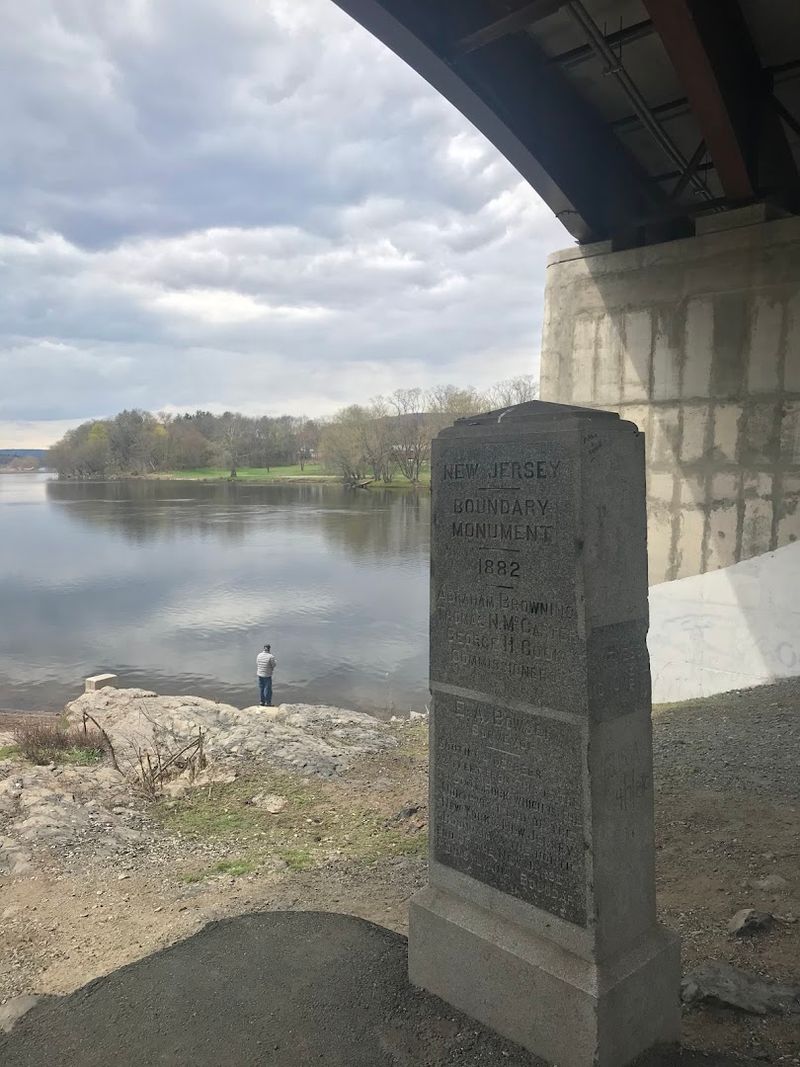
Adjacent to the main tripoint marker stands the Witness Monument, a taller and more visually prominent granite structure located just south of the cemetery and beneath the I-84 bridge. This second marker commemorates the New York-Pennsylvania boundary line where it meets the Delaware River and was erected in 1882.
Together, the two monuments give visitors a fuller picture of the boundary-marking effort that took place in that era.
Photographing the monument is straightforward, though getting a clean shot without the highway infrastructure in the background requires some creative framing. Most visitors seem to find the industrial backdrop part of the charm rather than a distraction.
The Rivers, The Views, And The Surprisingly Peaceful Atmosphere
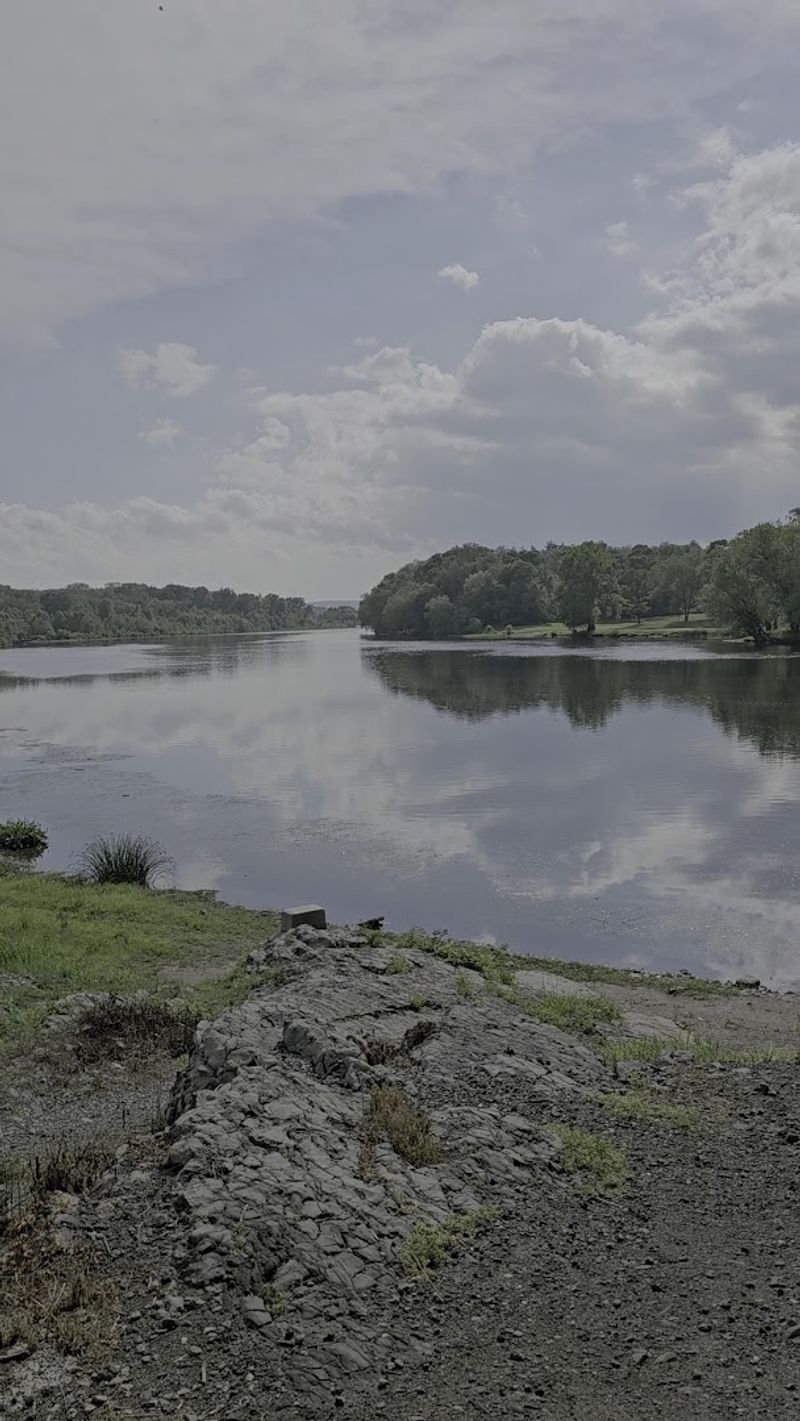
Rivers have a way of making everything feel slower, and the Delaware River at Carpenter’s Point is no exception. From the rocky shoreline near the monument, the water stretches wide and unhurried toward the south, flanked by wooded banks on the Pennsylvania side and the open sky above.
The Neversink River joins from the northeast, and at certain water levels, the distinction between the two currents is visible from the bank, a subtle but satisfying detail for anyone paying close attention.
Visitor reviews consistently describe the spot as clean, peaceful, and surprisingly uncrowded for a location that sits within driving distance of New York City and Philadelphia. A handful of visitors mention light fishing from the banks, and the area does attract the occasional bald eagle, which adds a genuinely wild and unexpected dimension to what might otherwise be a purely historical stop.
The combination of moving water, open sky, and relative quiet creates an atmosphere that rewards a slower pace.
The I-84 overpass that spans the area does introduce highway noise, and a few visitors have acknowledged that the ambient sound takes some getting used to. That said, most accounts suggest the natural setting absorbs enough of the noise that the experience remains enjoyable.
The monument is open daily from 8 AM to 8 PM, which allows for both morning visits when the light on the water is particularly clear and late afternoon stops when the river takes on a warmer tone.
For anyone who appreciates the meeting of two rivers as its own kind of spectacle, this location delivers that experience alongside the geographic novelty of the state boundaries.
Port Jervis Itself Deserves A Closer Look After Your Visit
Port Jervis is the kind of small city that rewards a second look. Situated at the southwestern tip of New York State, it carries the particular character of a river town that has lived through multiple economic chapters without losing its sense of place.
The downtown area offers a handful of local restaurants, and several visitors who have made the trip to the monument recommend extending the afternoon with lunch or dinner in town before heading home.
The city itself sits at a geographic crossroads that mirrors the monument nearby. Three states converge at its edge, two rivers define its borders, and a historic railroad presence shaped its growth through the nineteenth and twentieth centuries.
Visitors who arrive by train, which is an option via NJ Transit from New York Penn Station, have noted that the walk from the station to the monument and back makes for a satisfying and self-contained day trip without a car involved.
Local dining options in Port Jervis give the visit a grounded, everyday quality that contrasts pleasantly with the unusual geography of the monument itself. One reviewer mentioned a meal at Village at Bruno’s and praised the pizza, which is the kind of specific, reliable recommendation that tends to hold up.
The downtown area is compact enough to explore on foot, and the historic architecture along the main streets adds context to a city that has been here, quietly going about its business, for a very long time.
Treating Port Jervis as a destination rather than a pass-through point transforms the monument visit from a brief stop into a genuinely full afternoon worth planning around.
Practical Tips For Planning Your Trip To The Tri-States Monument
A visit to the Tri-States Monument is straightforward to plan, but a few details make the difference between a smooth outing and an avoidable detour. The monument is accessible through Laurel Grove Cemetery, and the correct entrance is the one located near South Street in Port Jervis.
Following the cemetery road southward all the way to its end leads to a small parking area beneath the I-84 overpass, where the monuments are within short walking distance.
The terrain between the parking area and the main tripoint marker is uneven, rocky, and can become slippery after rain or during periods of high water. Wearing shoes with decent grip is a sensible precaution rather than an overstatement.
Visitors who prefer flat, stable ground can use the secondary marker located closer to the path, which represents the same boundary without requiring a descent down the embankment. The site is not ADA accessible at the main monument level.
The monument is open every day of the week from 8 AM to 8 PM, which provides a reasonable window for most travel schedules. The phone number on record for the site is (845) 858-4000 if any questions arise before the visit.
Water levels on the Delaware can rise significantly after heavy rain or snowmelt, so checking conditions before a visit during spring months is worth the extra step.
Arriving on a weekday morning tends to mean fewer visitors and a quieter experience overall. The whole outing, including the walk through the cemetery and time spent at the water, typically takes between thirty minutes and an hour, making it an ideal addition to a longer road trip through the region.