
This Vintage Pinball Museum In Tennessee Will Take You Back To The Good Old Days
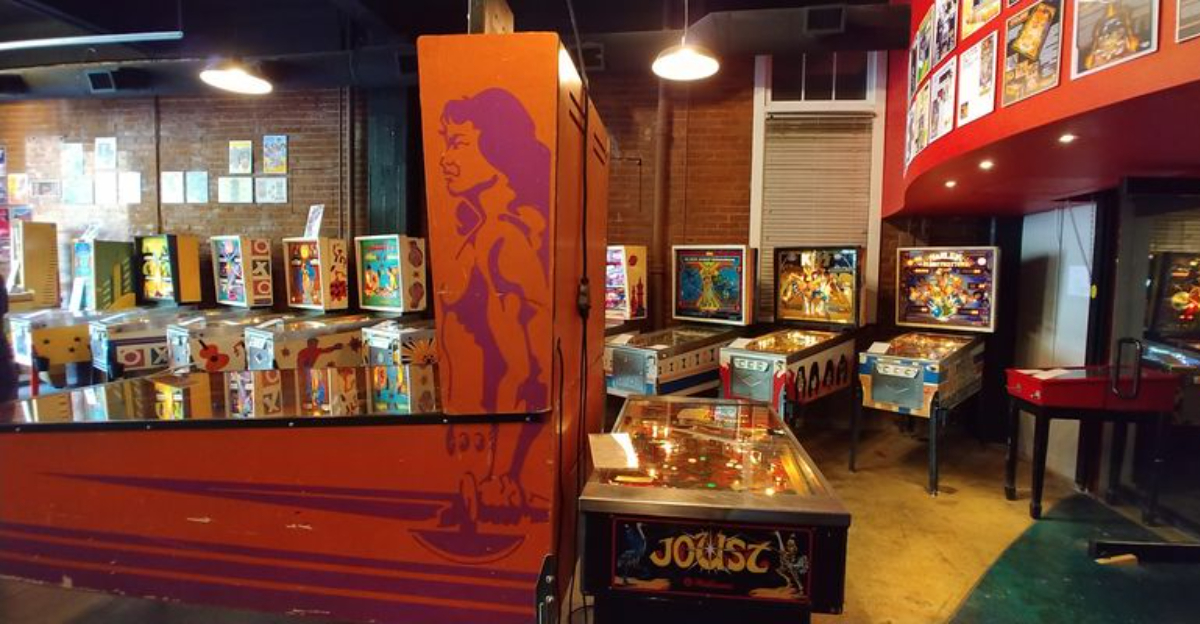
Lights flash. Bells ring.
A silver ball rockets across a playfield and suddenly it feels like 1985 again. Tennessee has plenty of places that celebrate history, but this vintage pinball museum turns nostalgia into a full-on experience you can hear, see, and play.
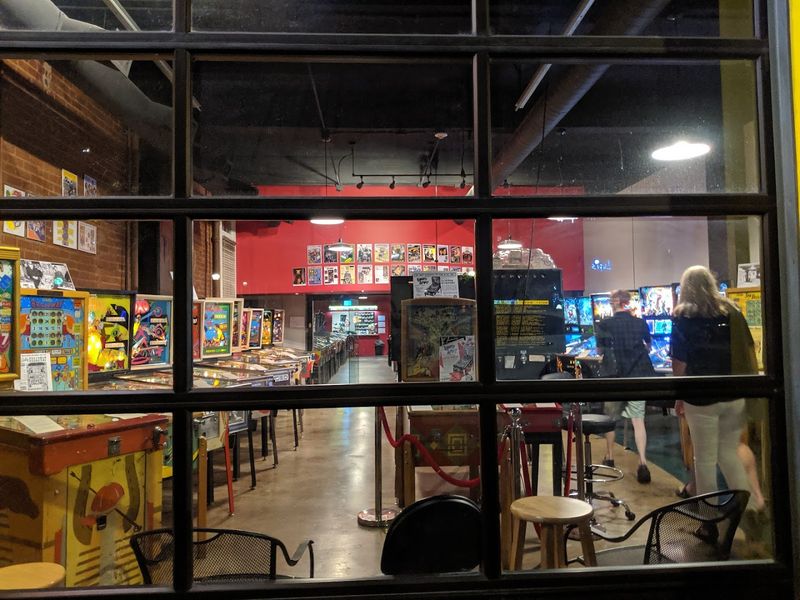
Rows of brightly lit machines line the room, each one buzzing with the sounds of bumpers, chimes, and cheering players. Classic artwork, glowing scoreboards, and fast-paced action pull visitors right into the golden age of arcades.
One minute you’re admiring the artwork, the next you’re flipping the paddles like a seasoned pro, chasing that next high score.
A Museum Where Every Machine Tells A Story

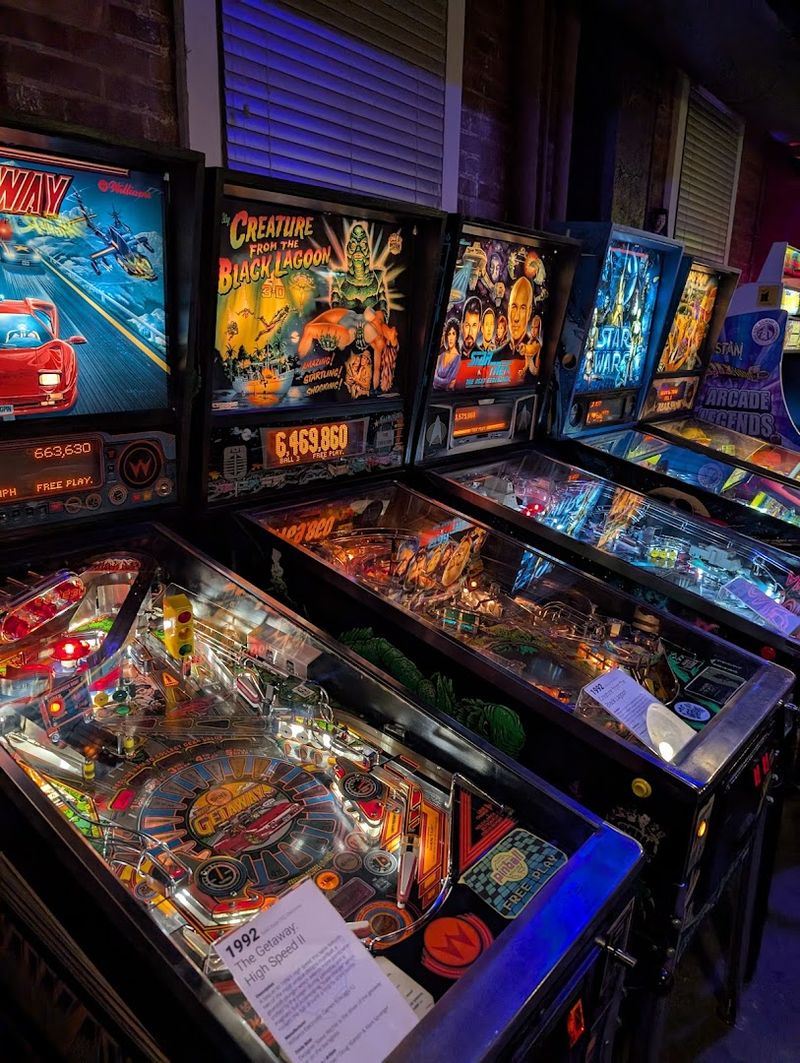
Walking into this museum feels less like entering an arcade and more like stepping into a living timeline of American entertainment. Each machine carries a small information sheet detailing its history, production year, and quirks, giving the space a genuine museum quality that sets it apart from any ordinary game room.
The collection spans from a 1931 machine all the way to 2025 releases, so the range is genuinely remarkable. You can move from decade to decade simply by walking a few steps across the floor.
Visitors who grew up in the 1980s will recognize machines they played at bowling alleys and corner stores, while younger guests will discover just how inventive analog game design could be.
The staff clearly take pride in maintaining this collection. Information cards on each machine are not just decorative.
They add context, turning a casual visit into something educational. The museum holds a 4.9-star rating across nearly 400 reviews, which speaks to how consistently the experience delivers on its promise.
The All-Day Wristband That Changes Everything
One of the most practical and genuinely appreciated features of this museum is the wristband system. Pay your admission once, receive a wristband, and you are free to come and go throughout the entire day.
That flexibility transforms the visit from a fixed experience into something far more relaxed and personal.
Plenty of visitors have taken full advantage of this setup. Some arrive in the morning, play for a couple of hours, head out for lunch along Broad Street, and return later in the afternoon to continue where they left off.
Others have made an evening of it by exploring the city first and then closing out the night at the museum.
Adult admission runs around twenty dollars, with a lower rate for children. Given that every single machine is set to free play, the value compounds quickly.
An hour of play barely scratches the surface. Most visitors end up staying two to three hours without even noticing the time passing.
The wristband policy removes any pressure to rush, and that alone makes the atmosphere noticeably more enjoyable and unhurried.
Hercules, The World’s Largest Pinball Machine
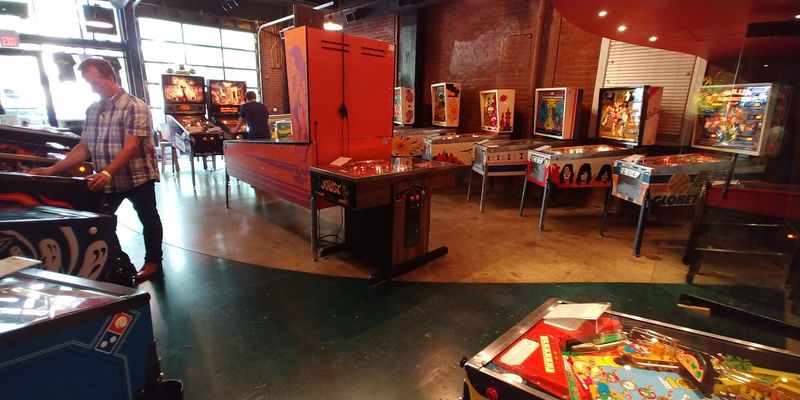
Among everything the museum offers, one machine commands immediate attention. Hercules holds the distinction of being the world’s largest pinball machine, and seeing it in person is a genuinely different experience from reading about it online.
The machine uses a pool cue ball instead of a standard pinball, and its scale makes every other machine in the room look compact by comparison.
Playing Hercules requires a different kind of physical engagement. The flippers are enormous, the ramps are wide, and the ball moves with a weight and momentum that standard machines simply cannot replicate.
Visitors who have played pinball their entire lives describe the experience as surprisingly unfamiliar in the best possible way.
Several reviewers have specifically called out Hercules as the highlight of their visit, and it is easy to understand why. It is not just a novelty.
It is a functional, playable artifact of pinball engineering that pushes the boundaries of what the format can be. Arriving at the museum without playing Hercules at least once would be a genuine missed opportunity.
Plan to spend a few extra minutes at this machine.
Classic Arcade Games Beyond The Pinball Machines
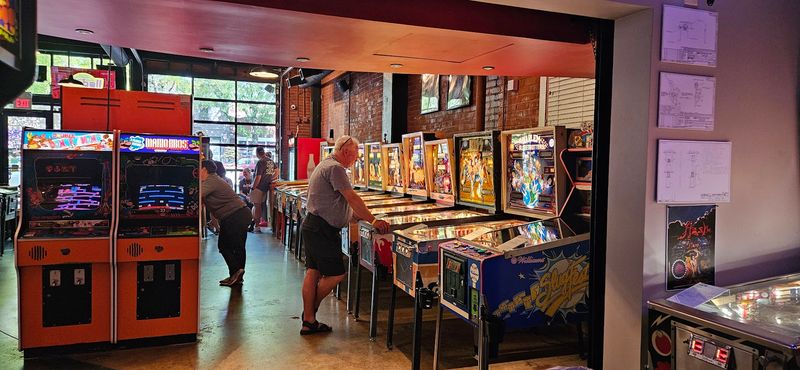
Pinball is clearly the centerpiece of this museum, but the experience does not stop there. Alongside the rows of pinball tables, you will find a solid lineup of classic arcade cabinets including Galaga, Pac-Man, Frogger, Centipede, Donkey Kong, and Dig Dug.
These games are all set to free play as part of your admission, so there is no need to carry quarters.
For visitors who grew up in the late 1970s and 1980s, these cabinets carry a particular kind of emotional weight. Pac-Man and Galaga were the machines that defined after-school afternoons and weekend visits to the mall arcade.
Playing them now, in a clean and well-maintained environment, brings back those memories with surprising clarity.
Younger visitors who have only experienced these games through digital emulators will appreciate playing on the original hardware. The controls feel different, the sound design hits differently, and the physical presence of the cabinet changes the experience entirely.
The Classic Arcade Pinball Museum manages to serve both audiences simultaneously, making it a genuinely cross-generational destination that works for families with children of any age.
The Atmosphere And Vibe Inside The Museum
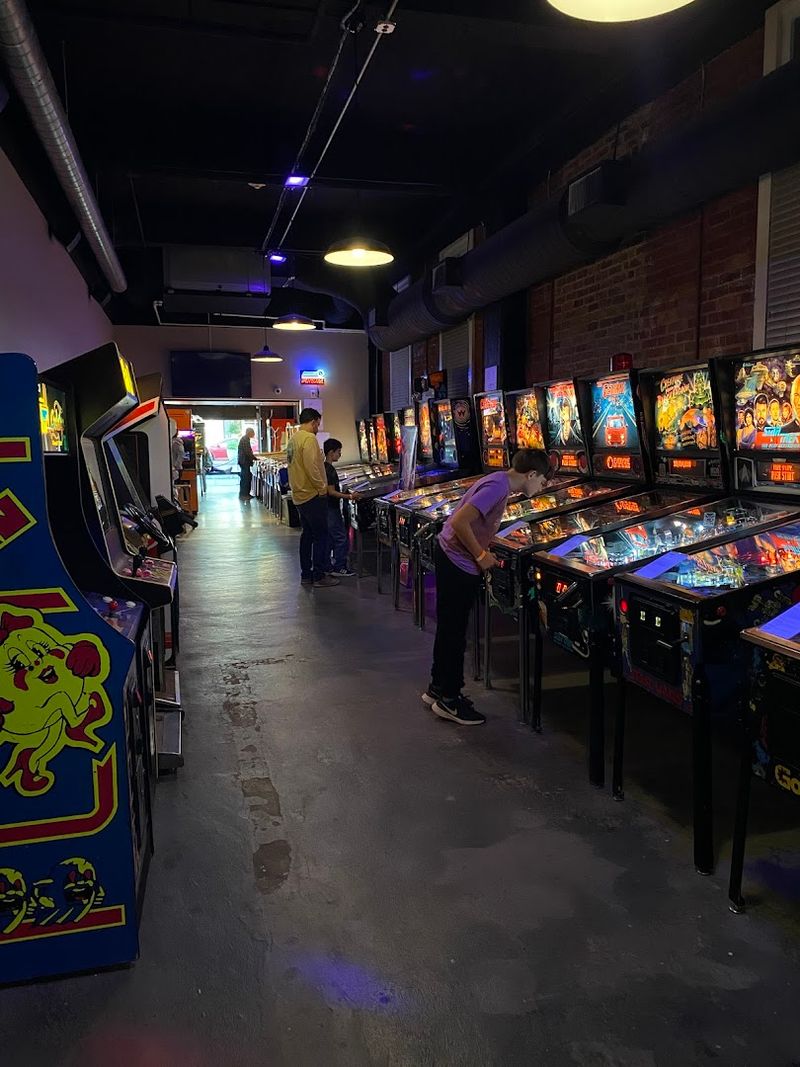
The moment you step inside, the atmosphere does most of the work. The lighting is warm and ambient, the soundtrack leans heavily into 1980s music, and the collective sound of dozens of pinball machines running simultaneously creates a kind of sensory backdrop that is both stimulating and oddly comforting.
It is loud in the best possible way.
The space is kept clean and well-organized. Multiple reviewers have specifically noted that the bathrooms are clean, which might seem like a minor detail but says a great deal about how the place is managed overall.
The museum is also smoke-free, a notable contrast to the arcades of the past where cigarette smoke was simply part of the environment.
The overall vibe is unhurried and welcoming. Nobody is rushing you toward a machine or away from one.
Staff members circulate through the floor, ready to help if a machine needs attention or if a visitor has questions about a particular game. The combination of good music, clean surroundings, and attentive staff creates an atmosphere that encourages visitors to relax and stay longer than they originally planned.
Pinball Machines Spanning Nearly A Century Of History
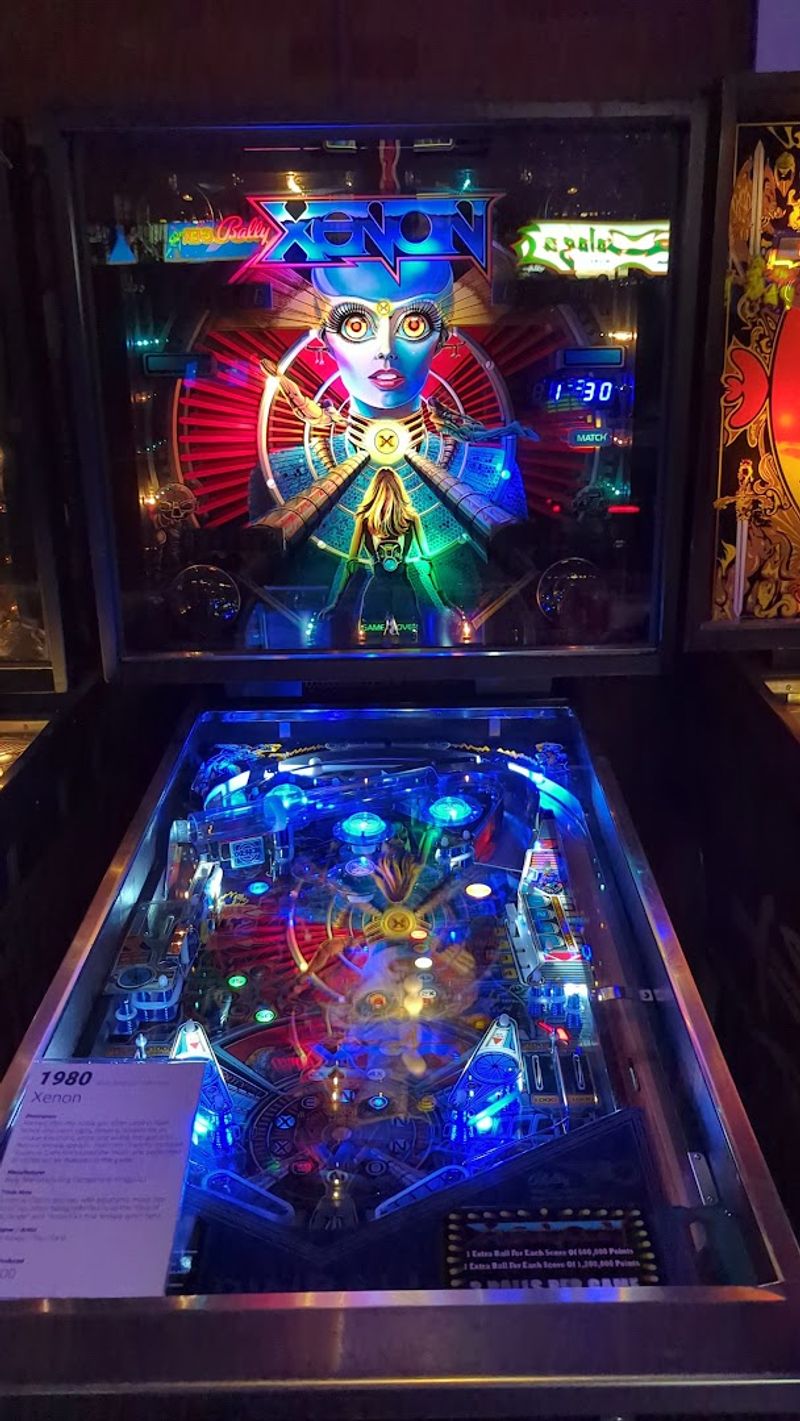
The depth of the collection at this museum is what separates it from most arcade spaces you will encounter. Machines here range from a 1931 model to a brand-new 2025 release, meaning the collection represents nearly a century of pinball design evolution.
That kind of scope is rare anywhere in the country, let alone in a single room on Broad Street in Chattanooga.
Each era of pinball brought its own design philosophy. Early machines were purely mechanical, relying on gravity and simple bumpers.
The 1970s introduced solid-state electronics. The 1980s brought themed machines tied to movies and bands.
Modern machines now feature multi-screen displays, holographic elements, and complex digital scoring systems. You can trace all of that progression just by moving through the museum floor.
Machines themed around properties like KISS, Star Trek: The Next Generation, The Mandalorian, Terminator, Venom, and Star Wars are part of the lineup. A Star Wars machine with a holographic display has drawn particular attention from visitors.
Seeing how pinball adapted to each decade of popular culture makes the collection feel like a cultural document as much as a game room.
How The Museum Handles Families And All Ages
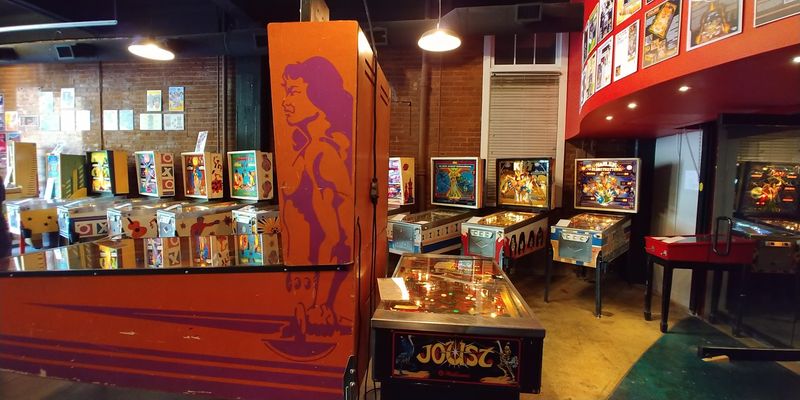
One of the more pleasant surprises about the museum at 409 Broad St, Chattanooga, TN 37402 is how well it accommodates visitors across a wide age range. Parents who grew up playing these machines in the 1970s and 1980s can introduce their children to the same games they loved, which creates a natural and unforced kind of shared experience.
That generational handoff is genuinely touching to witness.
Children who have never seen a pinball machine before tend to take to them quickly. The physical nature of the game, the immediate visual feedback, and the satisfying mechanical sounds are engaging in ways that a touchscreen simply cannot replicate.
Kids who were initially skeptical have been reported by multiple reviewers to have thoroughly enjoyed themselves once they started playing.
The museum is kid-friendly in its layout and management. The environment is safe, the staff are approachable, and the flat admission price means parents do not have to worry about children burning through tokens or quarters.
Several families have made the museum a regular stop on every Chattanooga visit, which is perhaps the clearest possible indicator that the experience holds up across repeated visits and across generations.
Snacks, Drinks, And The Small Bar At The Back
Toward the back of the museum, there is a modest concession area that functions somewhere between a snack bar and a small bar. The selection includes candy, chips, canned sodas, and notably, local craft beers at prices that reviewers have described as genuinely reasonable.
For a museum experience, having a cold drink available without paying a premium is a welcome touch.
The concession stand is not trying to be a restaurant, and it works precisely because of that restraint. It serves the purpose of keeping visitors comfortable during long sessions without pulling attention away from the machines.
You grab a drink, you return to the floor, and the rhythm of the visit continues without interruption.
Several visitors have noted that the snack prices are fair compared to what you might find at similar entertainment venues. The museum does not appear to rely on food and beverage sales to subsidize the experience, which allows them to keep those prices accessible.
For visitors planning a full day, knowing that affordable refreshments are available removes one logistical concern from the equation entirely.
Operating Hours And Planning Your Visit
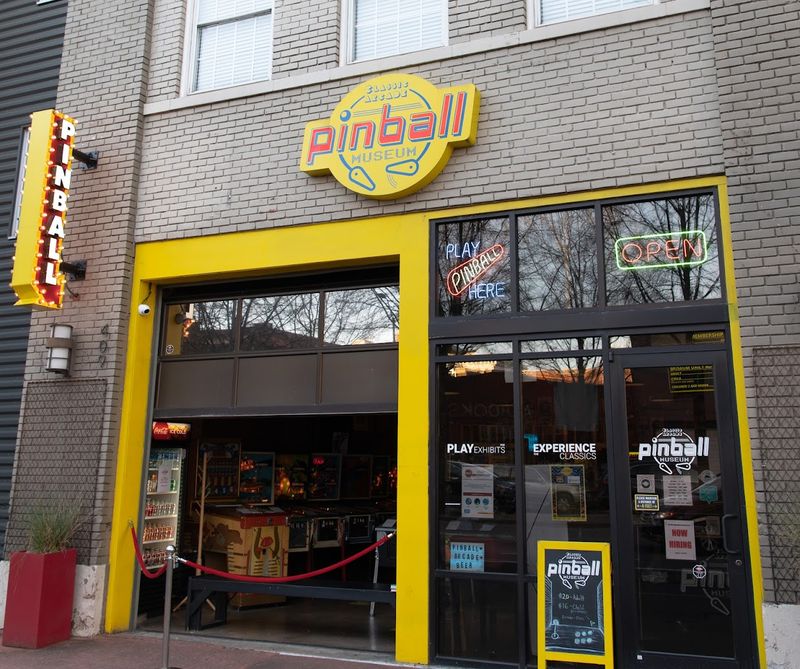
Planning your visit to the Classic Arcade Pinball Museum requires a quick look at the schedule, since the hours vary by day. The museum is closed on Mondays.
Tuesday through Thursday, doors open at 1 PM and close at 9 PM. Friday hours extend slightly, running from 1 PM to 10 PM.
Saturday offers the longest window, with the museum open from 10 AM all the way to 10 PM. Sunday runs from 11 AM to 9 PM.
Saturday is the obvious choice for visitors who want maximum time, particularly those traveling from out of town who want to arrive early and stay late. The all-day wristband policy means that every extra hour available translates directly into more play time.
Friday evenings have also been noted by visitors as a good option, with the museum reportedly uncrowded even on weekend nights.
The museum is located at 409 Broad St, Chattanooga, TN 37402, which places it in a walkable part of downtown. For reservations or questions, the museum can be reached at 423-541-4097.
Their website at chattanoogapinballmuseum.com provides current pricing and any updated scheduling information before your visit.
Why This Museum Earns Its Near-Perfect Rating
A 4.9-star rating across nearly 400 reviews is not an accident. It reflects a consistent, well-managed experience that delivers on its premise without overcomplicating things.
The museum knows exactly what it is, and it executes that identity with care. That clarity of purpose is something that many entertainment venues struggle to maintain over time.
Visitors from New York, from neighboring states, and from across Tennessee have made the museum a recurring destination. Some have purchased memberships after their first visit.
Monthly pinball tournaments draw a competitive crowd that keeps the community around the museum active and engaged beyond casual drop-in visits. That layer of ongoing programming adds depth to what might otherwise be a one-time experience.
The staff are consistently praised across reviews for being friendly, knowledgeable, and genuinely enthusiastic about the collection. That human element matters enormously in a space like this.
A well-maintained machine in a cold, indifferent environment would not produce the same response. The Classic Arcade Pinball Museum succeeds because the people running it clearly care about what they have built, and visitors can feel that the moment they walk through the door.