
Michigan Is Home To The World’s Largest Artificial Ski Jump And It’s A Sight To See
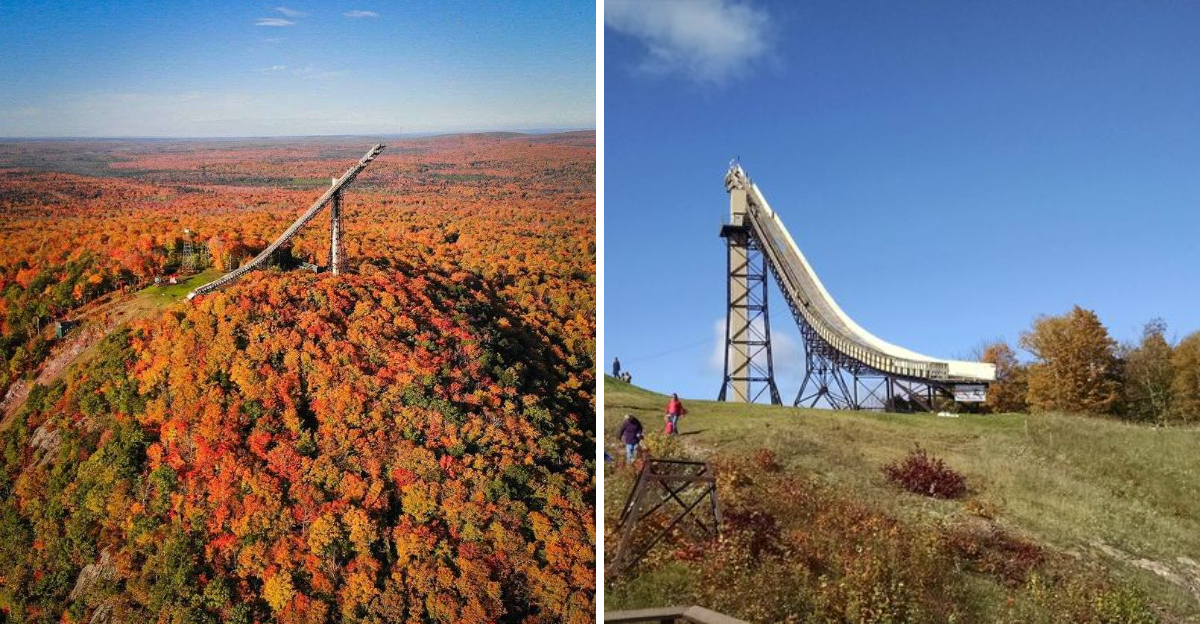
Standing tall above the forests of Michigan’s Upper Peninsula, Copper Peak is a structure that stops people mid-sentence when they first see it. Built in 1970 near the city of Ironwood, it holds the record as the world’s largest artificial ski jump, rising an astonishing 469 feet into the sky.
For decades, it drew elite athletes from around the globe and sent them soaring through cold northern air at speeds most people reserve for highway driving. Today, it welcomes curious visitors who want a front-row seat to one of the most dramatic views in the entire Midwest.
The World’s Largest Artificial Ski Jump Stands In Michigan’s Upper Peninsula
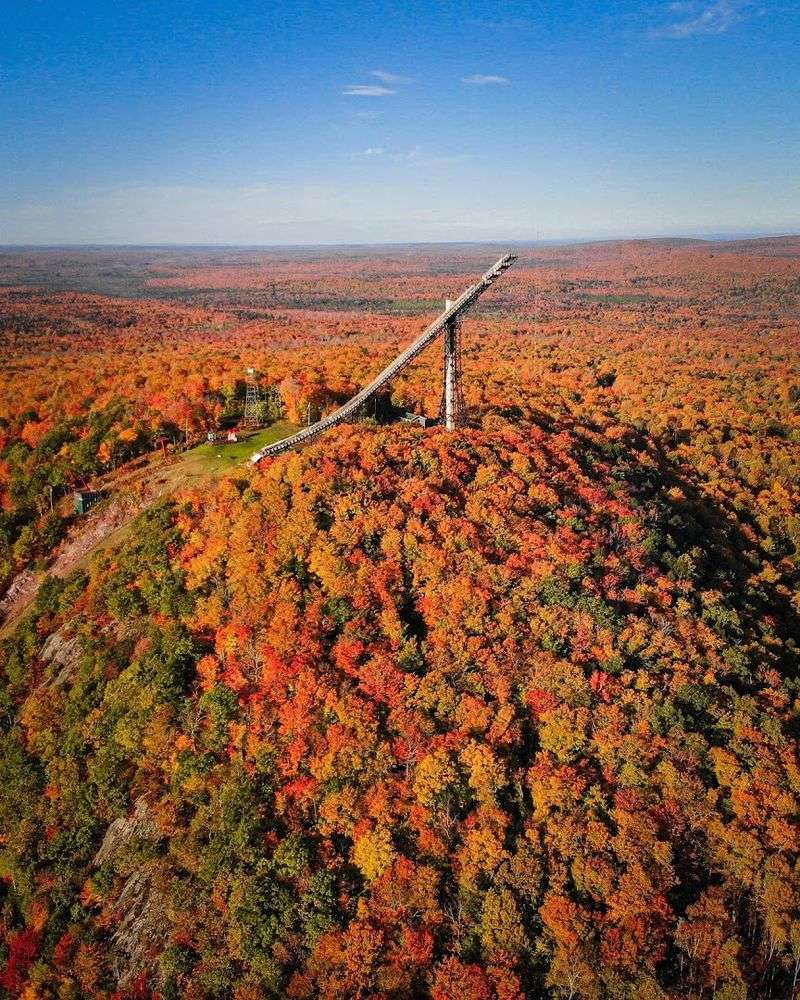
Few structures in the American Midwest carry the kind of physical presence that Copper Peak commands the moment it appears through the tree line. Constructed using 300 tons of COR-TEN steel and completed in 1970, this 469-foot tower near Ironwood, Michigan, is officially recognized as the world’s largest artificial ski jump.
The engineering alone is worth the drive.
The inrun features a dramatic 35-degree cantilever angle, which means jumpers were essentially launched into open air above a steep forested hillside. For scale, that angle is steeper than most residential staircases.
Copper Peak sits at N13870 Copper Peak Rd, Ironwood, MI 49938, accessible from Memorial Day weekend through mid-October.
What makes this structure genuinely impressive is that it was built not for spectacle but for serious athletic competition. The ambition behind its construction speaks to an era when Upper Peninsula communities believed they could host the world, and for a time, they absolutely did.
A Towering Structure Rising Above The Forest Near Ironwood
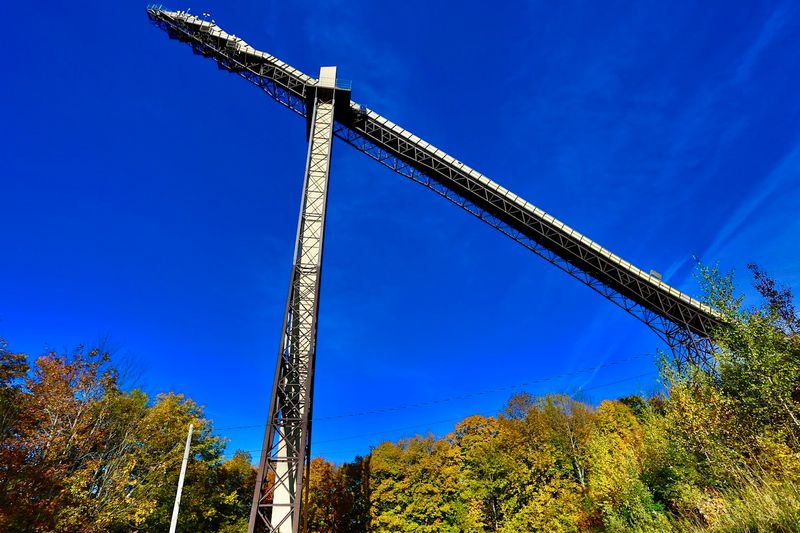
From the base of the hill, looking upward at Copper Peak produces a particular kind of silence in most visitors. The tower clears the surrounding tree canopy by a considerable margin, and on overcast days, the upper platform disappears into low cloud.
It is the sort of view that recalibrates your sense of scale in a matter of seconds.
Ironwood itself is a small, quietly proud city in the far western corner of Michigan’s Upper Peninsula, bordered by Wisconsin and close to Lake Superior. The landscape around Copper Peak is defined by rolling forested ridges, seasonal streams, and the kind of clean air that reminds you how far you are from any major urban center.
The structure’s COR-TEN steel develops a distinctive rust-colored patina over time, which actually protects the metal beneath. Against the surrounding greenery in summer or the gold of autumn maples, that warm reddish tone gives the tower an almost sculptural quality that photographs never quite capture fully.
Visitors Can Ride A Chairlift And Elevator To The Summit
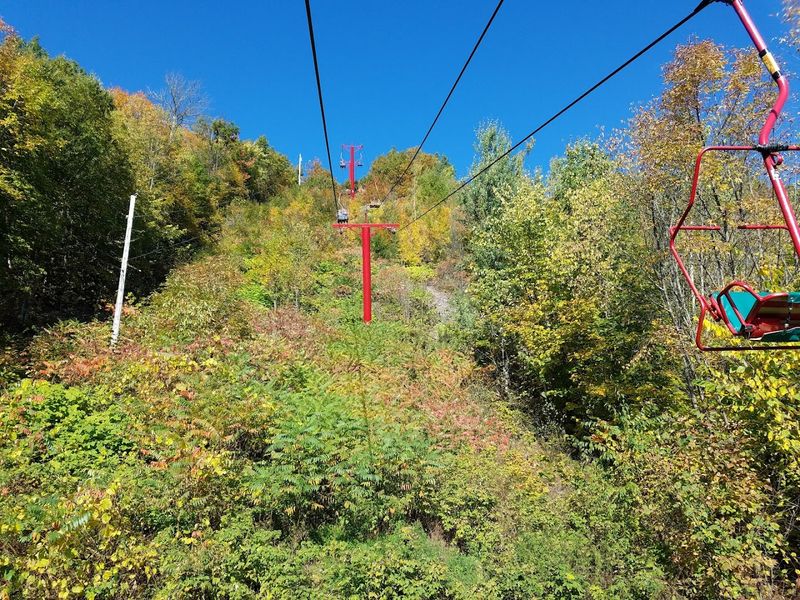
Getting to the top of Copper Peak is an experience that begins long before you reach the summit. The Adventure Ride starts with an 800-foot chairlift that carries visitors up the wooded hillside at a leisurely pace, offering early views of the surrounding forest and a chance to appreciate just how much vertical gain lies ahead.
From the chairlift exit, a short walk leads to the base of an 18-story elevator built into the jump structure itself. The elevator ride takes roughly two minutes and deposits visitors at the main observation deck, where the full panorama of the region opens without warning.
It is a genuinely abrupt transition from enclosed steel to open sky.
For those who want to go further, additional stairs lead to the very top of the inrun structure. The grated steps are not for everyone, but the reward for those who make the climb is a perspective on the landscape that very few vantage points in the Midwest can match.
The Observation Deck Offers Sweeping Views Across Michigan And Wisconsin
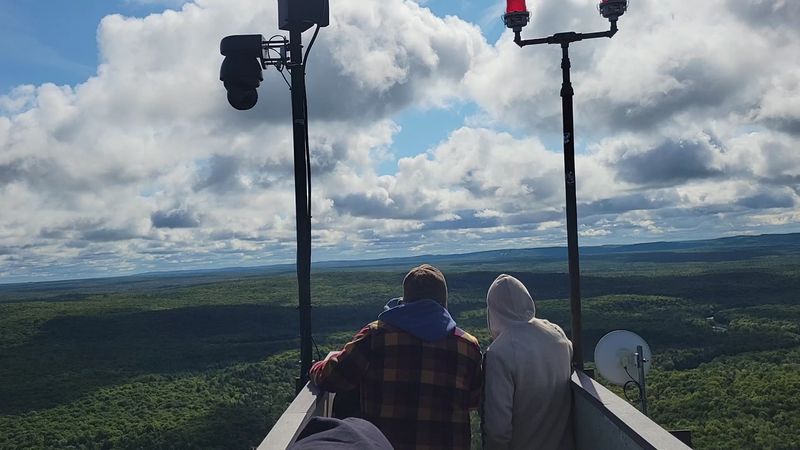
Standing on the Copper Peak observation deck, the geography of the upper Great Lakes region arranges itself in a way that no map quite prepares you for. On a clear day, the view stretches across more than 2,500 square miles, taking in portions of Michigan, Wisconsin, Minnesota, and on the clearest days, the distant Canadian shoreline across Lake Superior.
Lake Superior itself appears as a broad silver expanse to the north, its scale only reinforcing how remote and beautifully undeveloped this corner of the continent remains. The observation deck sits roughly 1,000 feet above the lake’s surface, which gives the view a commanding quality that feels earned rather than simply given.
Wind is a consistent companion at the summit, and it shifts the experience depending on the season. In summer it carries the scent of pine resin from the canopy below.
In autumn it arrives colder and sharper, pushing the colors of the surrounding hardwood forest into vivid relief against the darker evergreens.
Built In 1970, The Ski Jump Quickly Became A World Record Holder
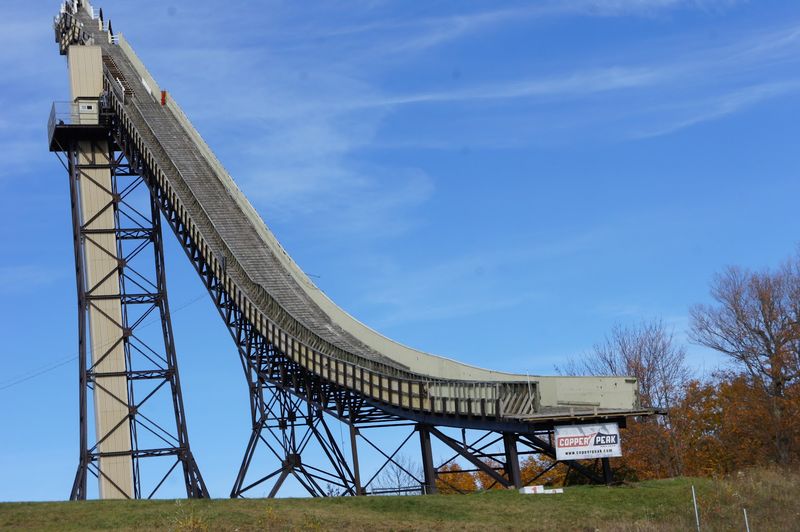
Copper Peak opened in 1970 with considerable fanfare, and the athletic world took notice almost immediately. The structure was purpose-built for ski flying, a discipline distinct from standard ski jumping in that athletes travel considerably greater distances through the air.
World-record distances were recorded at Copper Peak in its early competitive years, cementing its reputation on the international circuit.
The jump attracted competitors from Norway, Finland, Austria, and across North America throughout the 1970s and 1980s. Ironwood, a city of modest size, found itself hosting events that drew international television coverage and crowds that filled the hillside below the landing zone.
It was a remarkable chapter for a community in the far reaches of the Upper Peninsula.
Competitions continued through 1994, after which the facility fell into a period of dormancy. The structure remained standing throughout those quiet decades, and restoration efforts launched in 2025 aim to return Copper Peak to active ski flying status, with a projected completion of the landing hill and outrun by December 2026.
The Structure Rises More Than 240 Feet Above The Ground
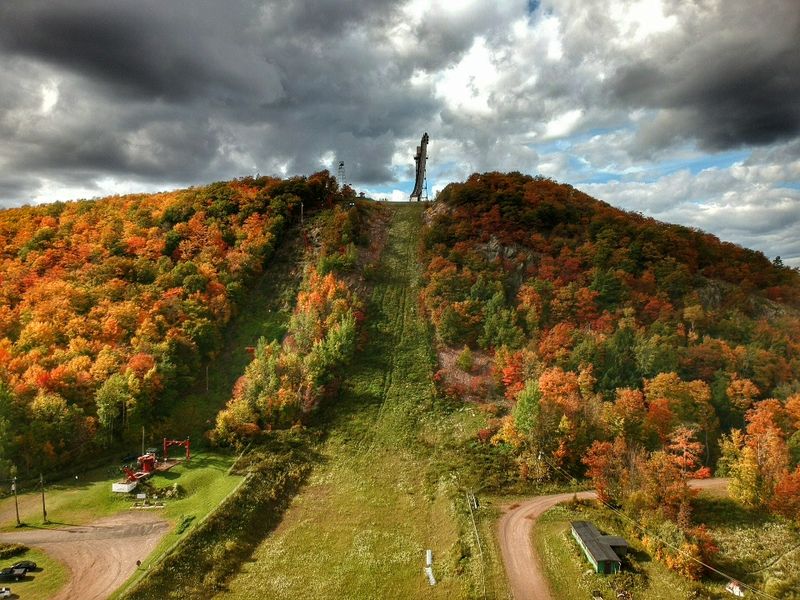
Numbers help, but they do not fully communicate what 240-plus feet of steel scaffolding actually looks like when you are standing at its base. The inrun structure at Copper Peak rises dramatically from the hillside, its angle and height combining to produce something that reads less like a sports facility and more like an industrial monument to human confidence.
Ski flying athletes who competed here reached speeds approaching 60 miles per hour before leaving the ramp, then spent several seconds airborne above a hillside that dropped away sharply beneath them. The distances achieved here during peak competition years remain among the longest ever recorded in North America.
For visitors who have no intention of skiing anywhere near it, the height still registers in a visceral way. Walking beneath the inrun and looking up along its length gives a perspective that most people describe as simultaneously thrilling and quietly humbling.
The structure demands attention, and it receives it without any apparent effort on its part.
At The Top, Visitors Can Look Out Over Miles Of Northern Wilderness
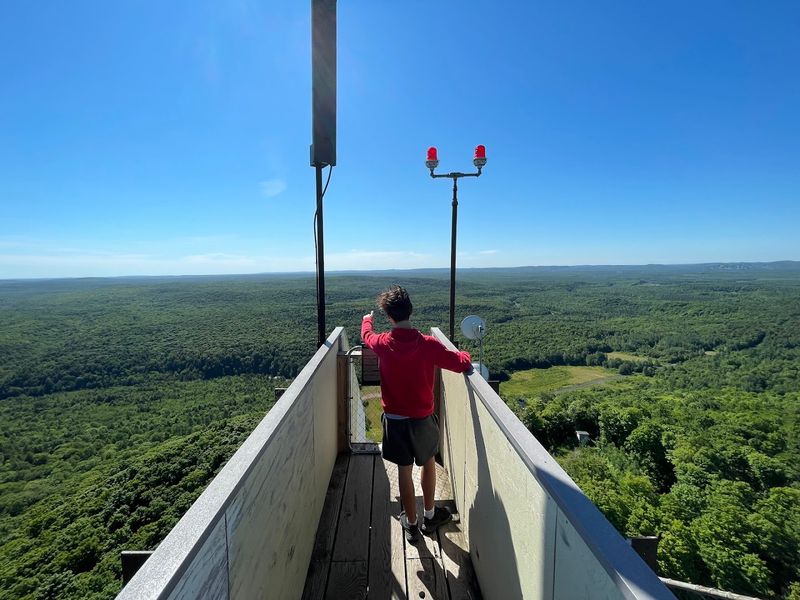
Reaching the topmost platform of Copper Peak requires navigating a series of grated stairs above the elevator level, and the openness of those final flights concentrates the mind in a useful way. Each step upward reveals a slightly broader slice of the horizon, until the full panorama arrives all at once at the summit platform.
From that elevation, the forest below appears as an unbroken canopy extending in every direction, interrupted only by the occasional road or waterway. The silence at the top is notable.
Wind aside, there is very little sound, and the absence of urban noise makes the landscape feel genuinely vast rather than simply large on a map.
The view encompasses a portion of northern wilderness that remains largely undeveloped, which is increasingly rare anywhere in the continental United States. Copper Peak gives visitors access to that perspective without requiring a backcountry expedition, and that accessibility is part of what makes the summit experience so unexpectedly affecting for first-time visitors.
Fall Is One Of The Most Beautiful Times To Visit Copper Peak
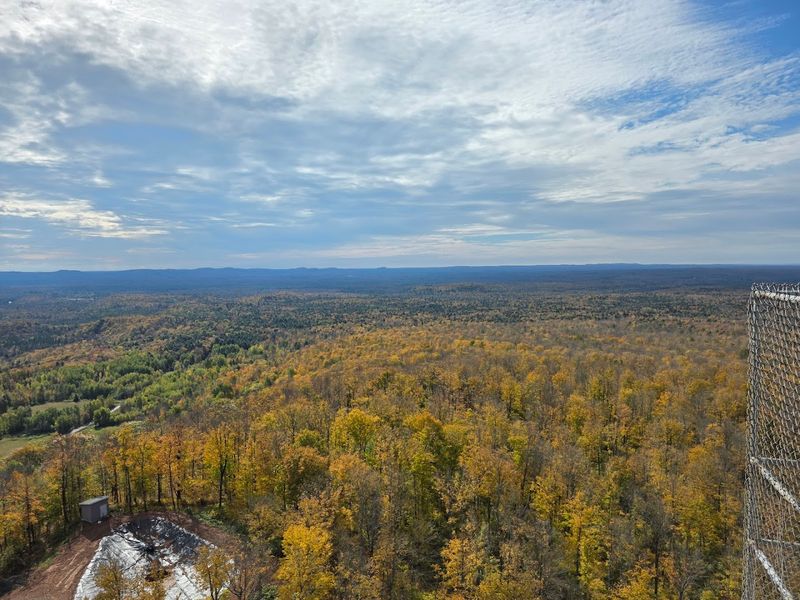
Autumn arrives deliberately in Michigan’s Upper Peninsula, moving through the hardwood forest in waves of color that shift week by week from late September into October. Copper Peak sits at the center of one of the region’s finest fall foliage zones, and the combination of elevation, open sky, and surrounding forest makes the site particularly striking during this season.
From the observation deck in mid-October, the canopy below presents a tapestry of amber, crimson, and gold that extends to the visible horizon. Lake Superior’s surface takes on a deeper, more pewter-toned quality in the autumn light, and the contrast between the water and the colored forest along the shore is the kind of thing that stays with a person for a long time.
The facility operates through mid-October, which means visitors have a reasonable window to catch peak color without rushing. Weekday visits during the fall season tend to be quieter, offering a more contemplative experience at the summit without the weekend crowds that the foliage season predictably attracts.
The Site Once Hosted International Ski Flying Competitions
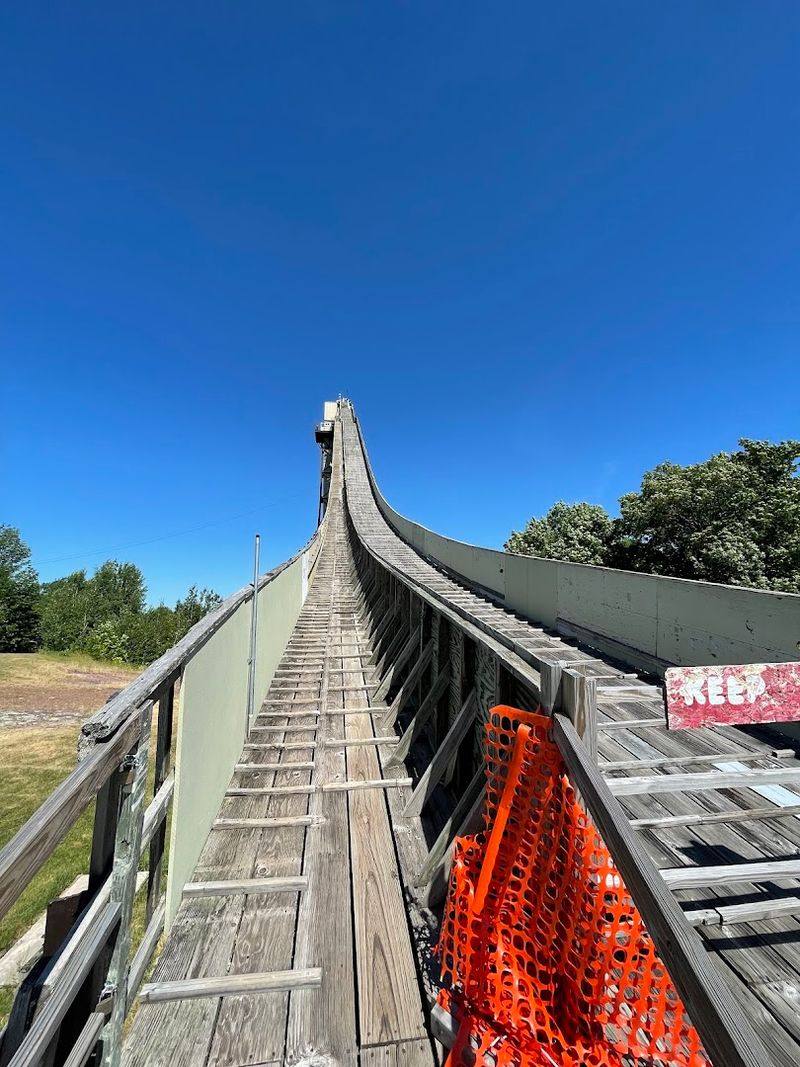
Ski flying is not a discipline that many people outside the Nordic countries follow closely, but it occupies a specific and serious place in winter sport history. Copper Peak hosted sanctioned international competitions throughout its active years, drawing athletes who specialized in covering the greatest possible distance through the air after leaving a ramp at high speed.
The competitions held here brought a genuinely international character to the Upper Peninsula. Norwegian and Finnish jumpers, whose nations have long dominated the discipline, competed alongside North American athletes on a hill that met the technical specifications for world-class ski flying events.
The crowds that gathered on the hillside below the landing zone were substantial for a region of this population density.
A museum on-site documents this competitive history with photographs, records, and equipment from the active era. Spending time in that collection before or after the Adventure Ride adds meaningful context to the structure itself, transforming what might otherwise be a scenic excursion into something closer to a genuine historical encounter.
Today It Serves As One Of Michigan’s Most Unique Scenic Attractions
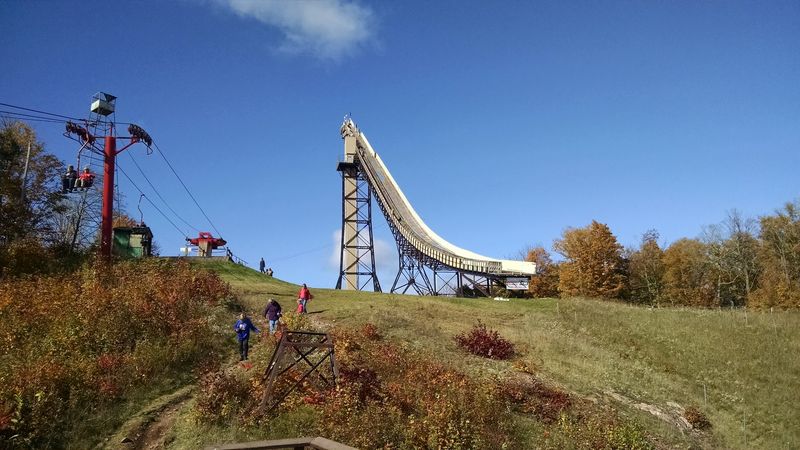
Since competitive ski flying ended at Copper Peak in 1994, the site has found a second identity as a scenic destination that draws visitors from across the Midwest and beyond. The Adventure Ride operates from Memorial Day weekend through mid-October, offering the chairlift and elevator experience to anyone willing to make the trip to Ironwood.
Hiking and mountain biking trails extend from the base area, giving active visitors additional ways to engage with the landscape around the jump. A gift shop and museum occupy the lower facilities, providing context and a comfortable starting point before the ride to the summit begins.
The staff at the site are known for their familiarity with both the structure’s history and the broader region.
Restoration work that began in 2025 signals an ambitious future for Copper Peak. The plan to install plastic matting on the landing hill will allow summer ski jumping, potentially returning competitive events to the site for the first time in decades.
For a structure this singular, that prospect feels entirely appropriate.